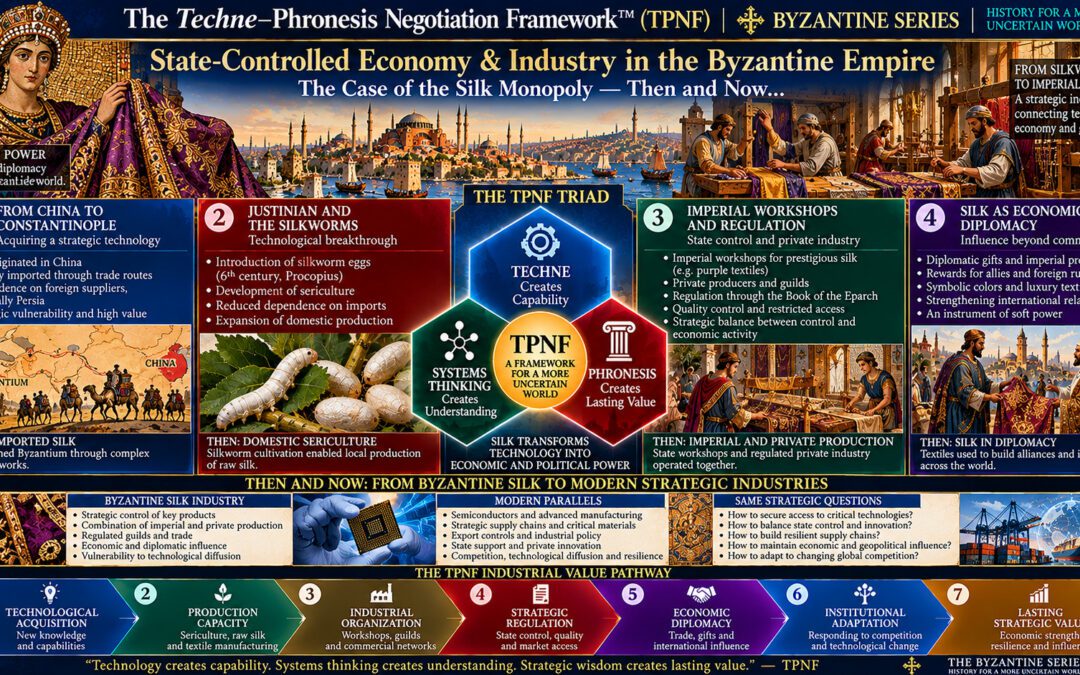
by Nikos Chatzis | 15 Oct, 2026 | Byzantine Empire, The Techne–Phronesis Negotiation Framework™
This seventh essay in the TPNF Byzantine Series examines silk as a case of strategic industrial organization. It explores technological acquisition, imperial workshops, regulated guilds, international trade and diplomatic applications. The essay also investigates functional parallels with contemporary industrial policy, technological sovereignty and strategic supply chains.
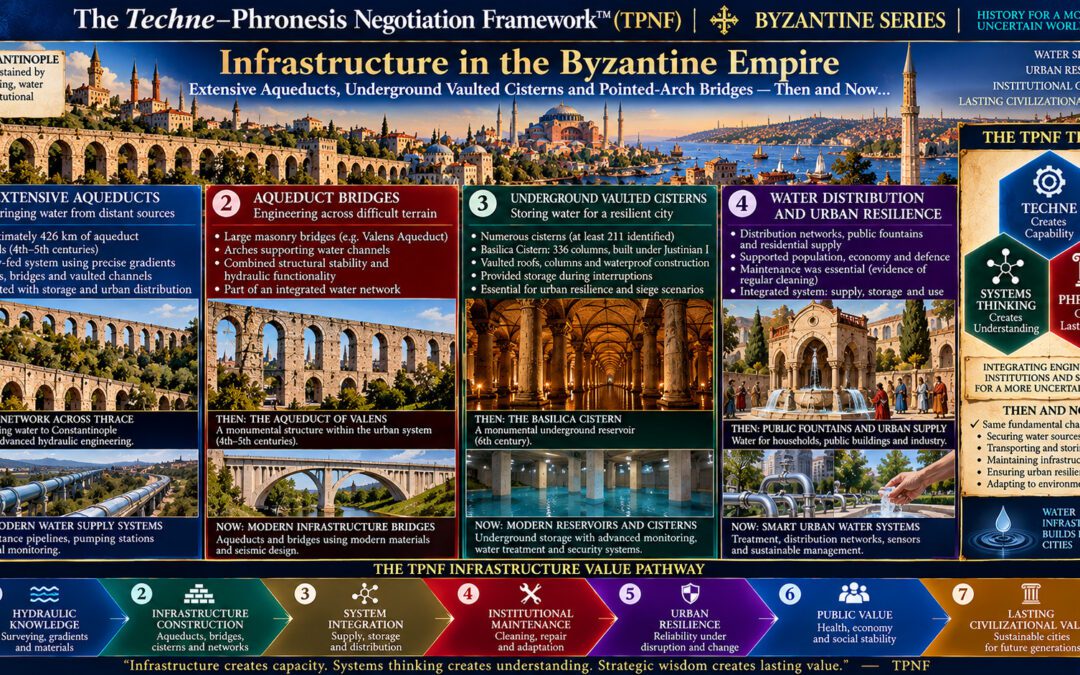
by Nikos Chatzis | 15 Oct, 2026 | Byzantine Empire, The Techne–Phronesis Negotiation Framework™
This sixth essay in the TPNF Byzantine Series examines Constantinople’s water infrastructure as an example of technological integration and institutional resilience. It explores extensive aqueduct networks, masonry bridges, underground vaulted cisterns and water-storage strategies. It also investigates how these historical systems illuminate contemporary challenges involving water security, infrastructure governance and sustainable urban development.
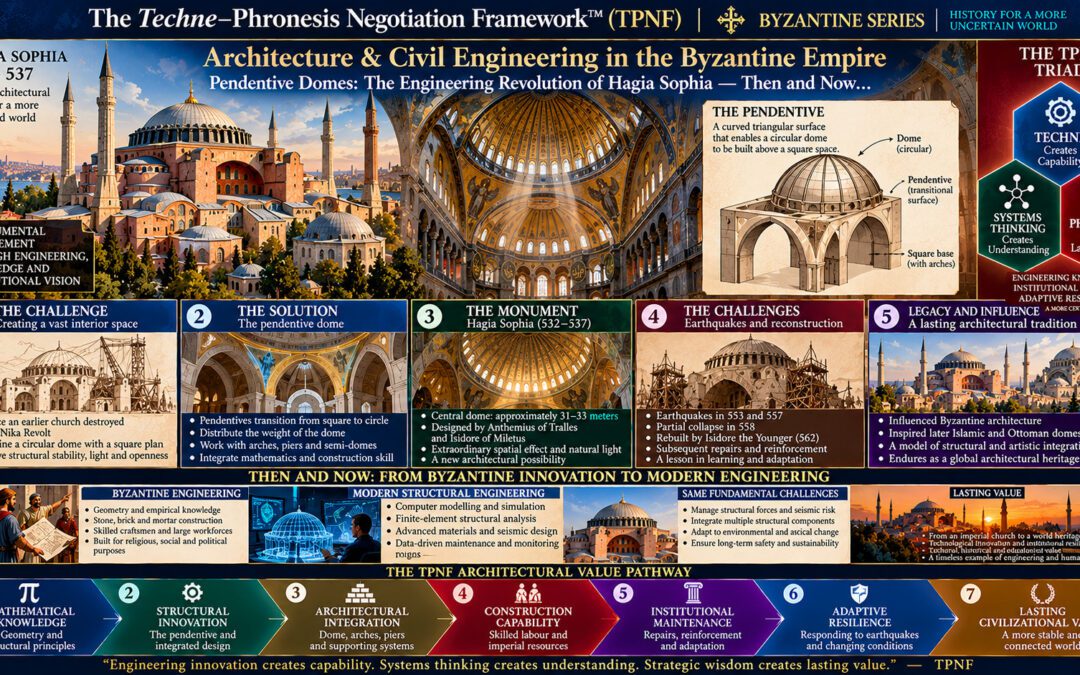
by Nikos Chatzis | 14 Oct, 2026 | Byzantine Empire, The Techne–Phronesis Negotiation Framework™
This fifth essay in the TPNF Byzantine Series examines the pendentive dome as an architectural and engineering achievement. It focuses on Hagia Sophia, its construction under Emperor Justinian I, the structural challenges encountered by its designers and the subsequent adaptations that contributed to its survival. The essay also explores conceptual parallels with contemporary civil engineering, seismic resilience and sustainable infrastructure.
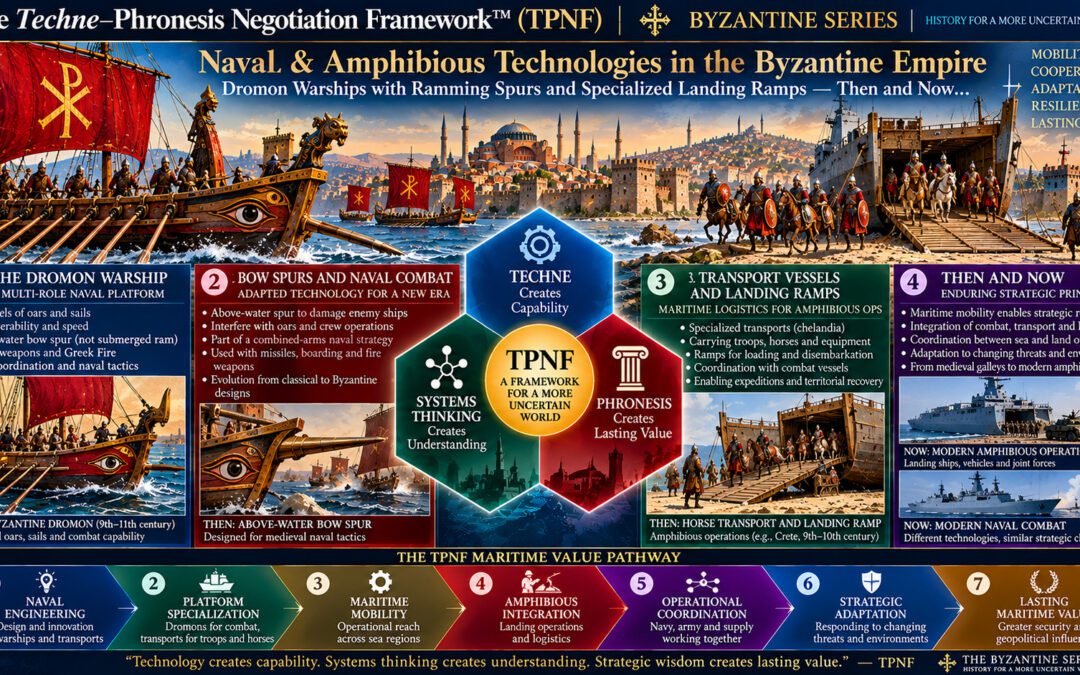
by Nikos Chatzis | 14 Oct, 2026 | Byzantine Empire, The Techne–Phronesis Negotiation Framework™
This fourth essay in the TPNF Byzantine Series examines the evolution of Byzantine naval and amphibious technologies. It explores dromon warships, their above-water bow spurs, specialized transport vessels and landing arrangements. Its purpose is to identify how naval engineering, logistical organization and strategic decision-making contributed to Byzantine military operations, and to examine functional parallels with contemporary maritime defense.
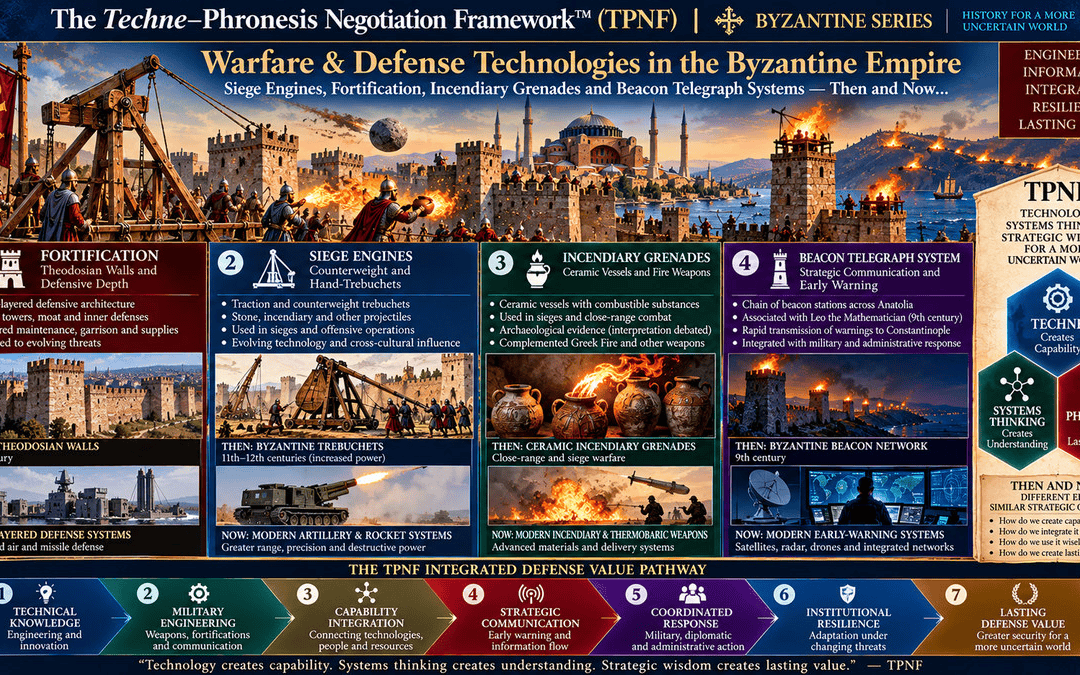
by Nikos Chatzis | 13 Oct, 2026 | Byzantine Empire, The Techne–Phronesis Negotiation Framework™
This third essay in the TPNF Byzantine Series examines the relationship between military engineering, fortification and strategic communication. It explores mechanical artillery, including traction and counterweight trebuchets, portable incendiary weapons and the Byzantine beacon network. Its objective is to identify the institutional and strategic principles connecting these historical technologies with modern defense ecosystems.
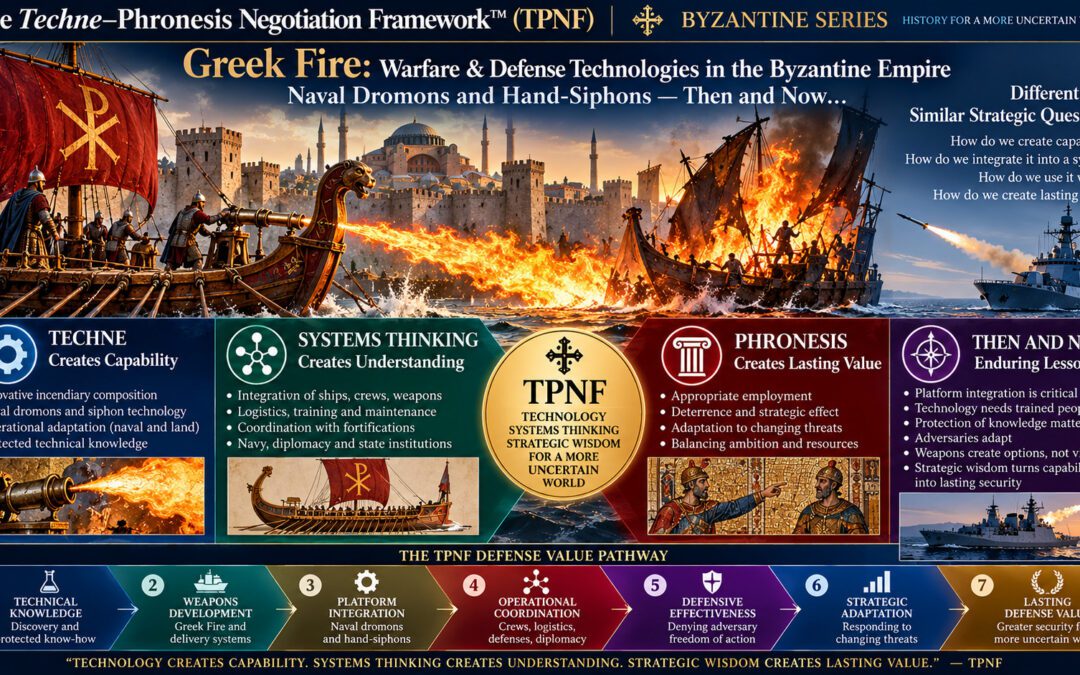
by Nikos Chatzis | 13 Oct, 2026 | Byzantine Empire, The Techne–Phronesis Negotiation Framework™
This second essay in the TPNF Byzantine Series examines Greek Fire as a historical case of military technological innovation and strategic integration. It focuses on naval dromons, ship-mounted siphons and portable hand-siphons, investigating how these technologies contributed to Byzantine defensive capabilities. The essay also identifies conceptual parallels with modern military innovation, without treating medieval incendiary weapons as direct technological predecessors of contemporary systems.
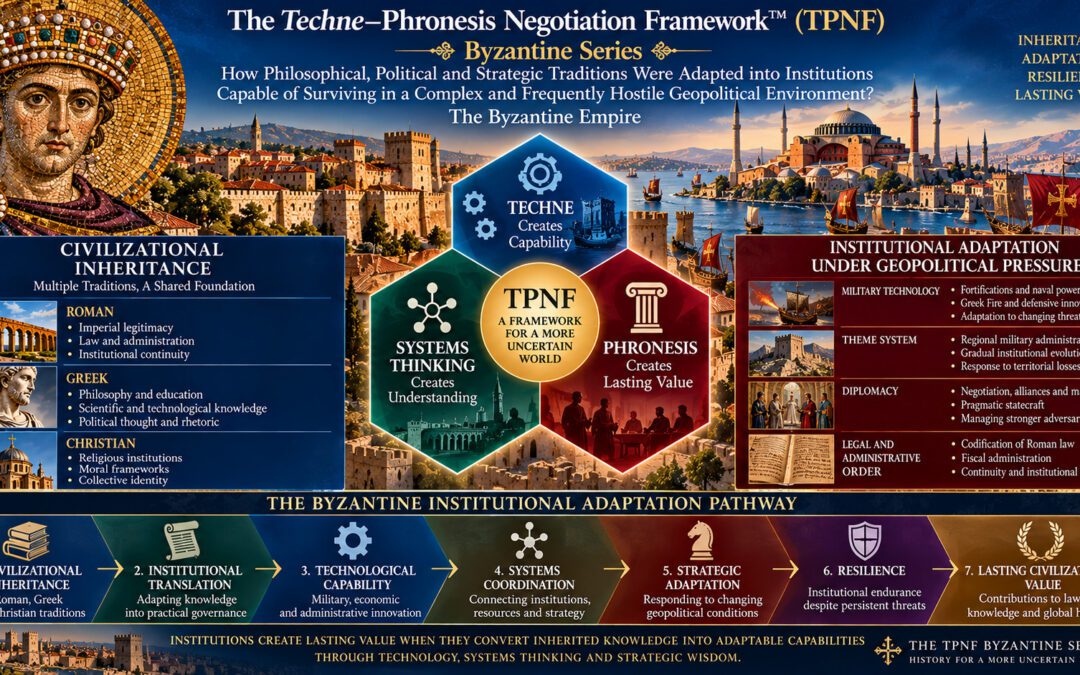
by Nikos Chatzis | 12 Oct, 2026 | The Byzantine Empire, The Techne–Phronesis Negotiation Framework™
This essay inaugurates a TPNF research series examining Byzantine civilization through technology, Systems Thinking and strategic wisdom. Its purpose is to investigate how inherited philosophical, political and strategic traditions contributed to institutional adaptation under persistent geopolitical pressure. It also explores what Byzantine experience can teach contemporary societies confronting technological disruption, geopolitical rivalry and institutional uncertainty.
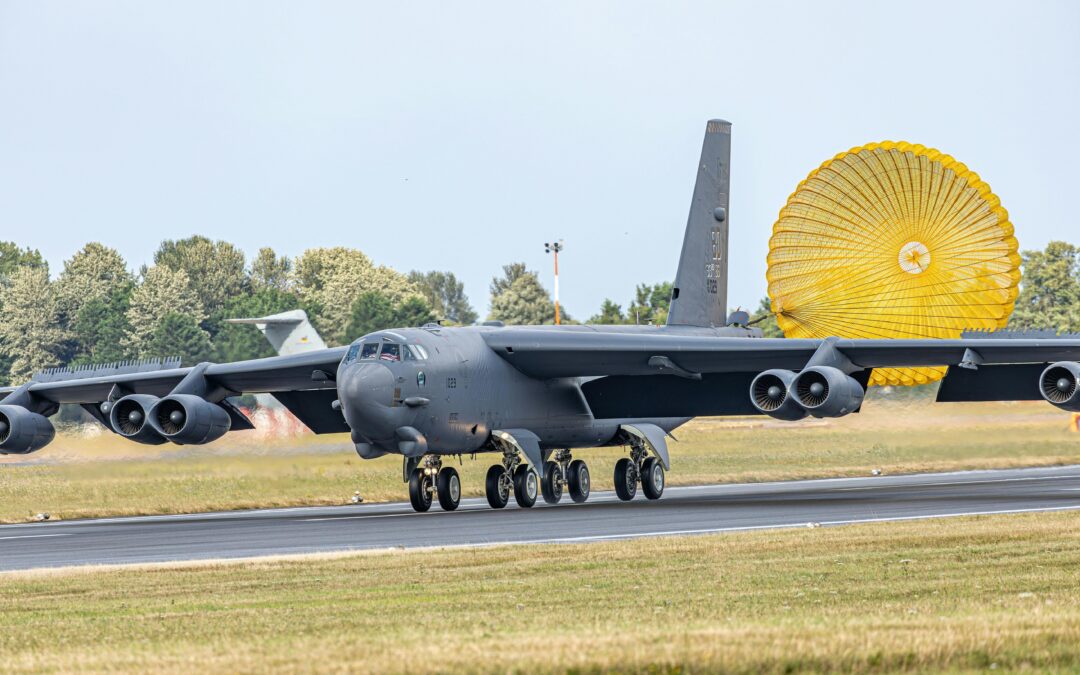
by Nikos Chatzis | 12 Oct, 2026 | Defense & Security, Defense Systems, The Techne–Phronesis Negotiation Framework™
This TPNF essay evaluates the proposed B-52–LRASM integration through the TPNF analytical framework. It examines the relationship among technological capability, defense modernization, maritime deterrence, operational coordination and long-term strategic outcomes. Its objective is to distinguish successful weapons integration from sustainable defense value creation.
by Nikos Chatzis | 11 Oct, 2026 | Super Intelligence (SI), The Techne–Phronesis Negotiation Framework™
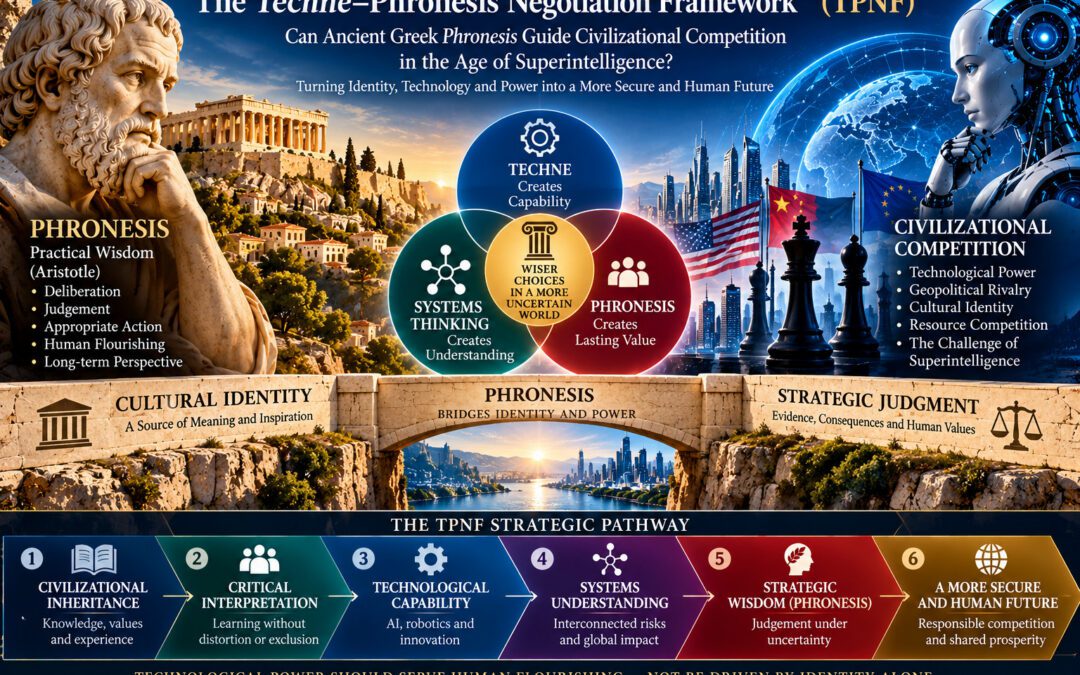
This TPNF essay examines whether ancient Greek practical wisdom can contribute to managing civilizational competition in the emerging age of advanced artificial intelligence. It distinguishes cultural inheritance from political rhetoric and explores how technological rivalry can be governed without sacrificing strategic judgment. Its objective is to develop a TPNF analytical approach connecting civilizational identity, technological capability, Systems Thinking and phronesis.
by Nikos Chatzis | 11 Oct, 2026 | Ancient Greek Philosophy, Technological Civilization, The Techne–Phronesis Negotiation Framework™
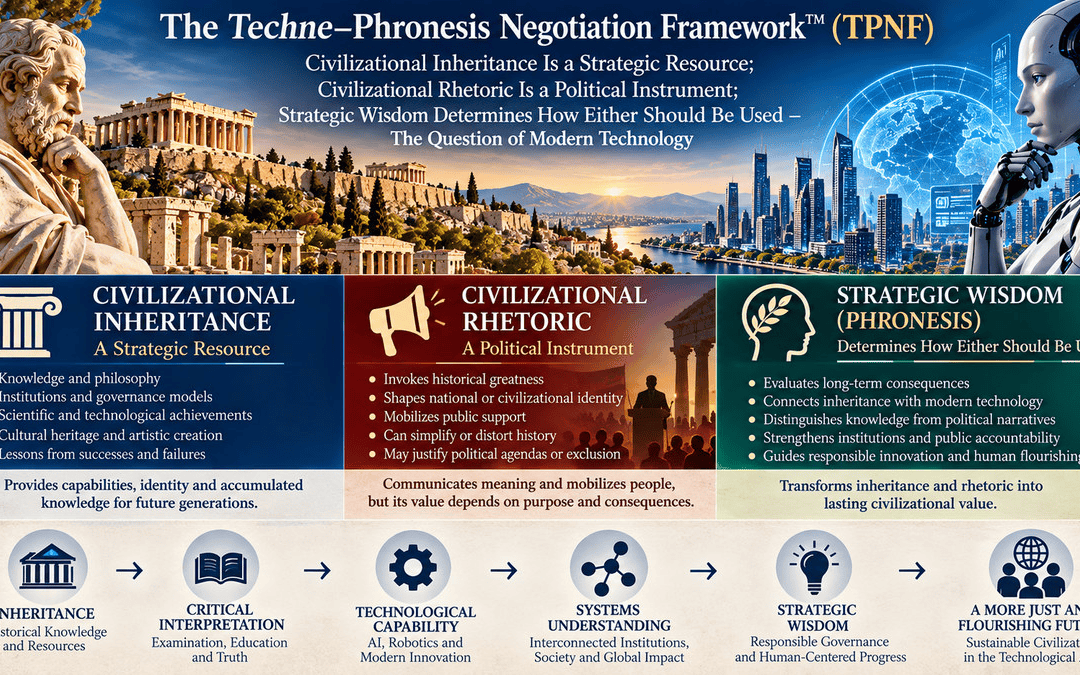
This TPNF essay examines the relationship between civilizational inheritance, political rhetoric and modern technological evolution. It investigates how societies can transform historical knowledge into contemporary capabilities while avoiding the instrumentalization of civilization as an unquestionable political justification. Its purpose is to develop a TPNF analytical distinction between inherited resources, political narratives and the practical wisdom required to govern technological change.
by Nikos Chatzis | 11 Oct, 2026 | Ancient Greek Philosopphy, Technological Civilization, Technology Ecosystems, Technology Evolution, Technology Transfer, The Techne–Phronesis Negotiation Framework™
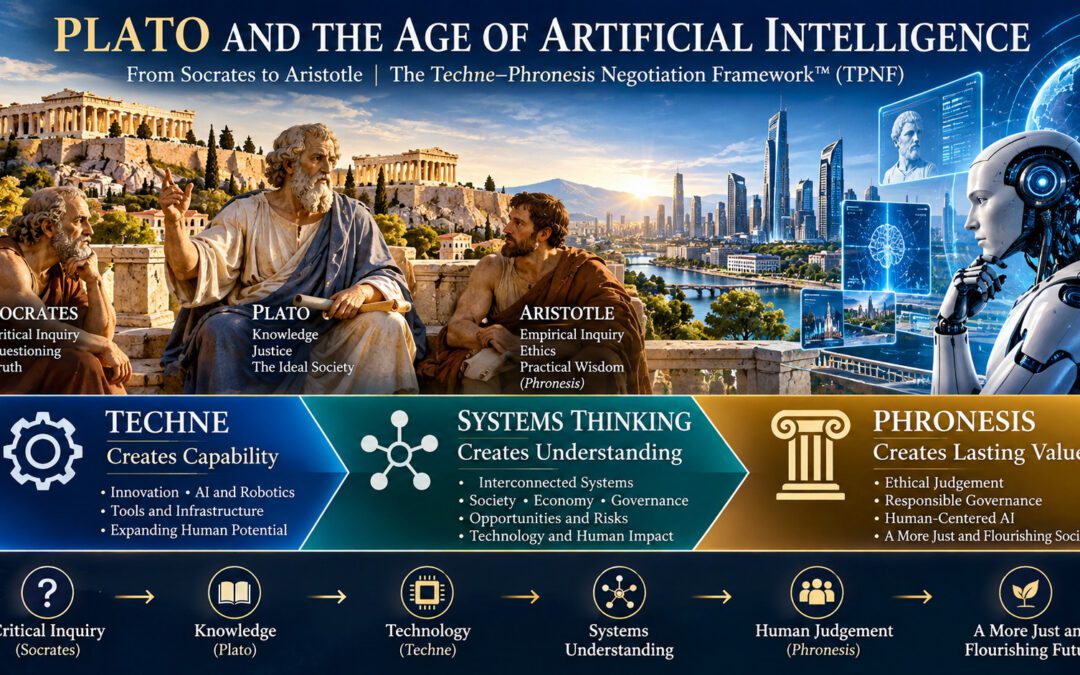
This TPNF essay examines the intellectual progression from Socrates through Plato to Aristotle and explores its relevance to contemporary technological evolution. Its purpose is not to suggest that ancient Greek philosophers anticipated artificial intelligence. Rather, it investigates how their questions about knowledge, human judgement, education and governance can help societies evaluate emerging technological capabilities.
by Nikos Chatzis | 9 Oct, 2026 | Geopolitics, The Techne–Phronesis Negotiation Framework™, War
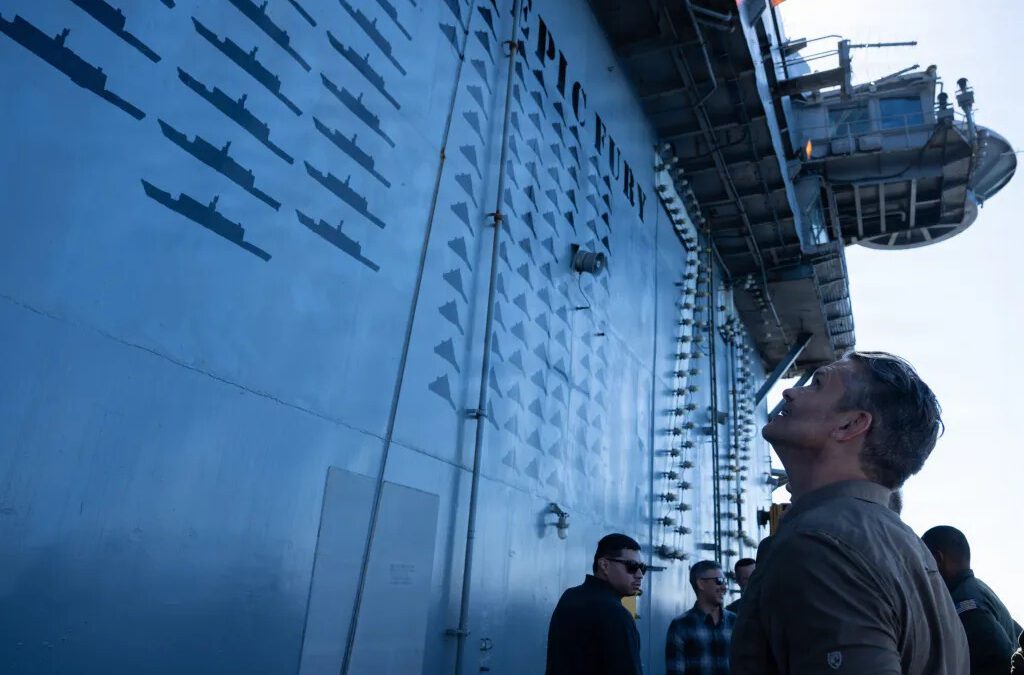
This TPNF essay examines the operational significance of the Abraham Lincoln Carrier Strike Group during Operation Epic Fury and evaluates its achievements through TPNF. It explores carrier aviation, unmanned aerial threats, layered defense, operational endurance and the relationship between battlefield success and strategic outcomes.
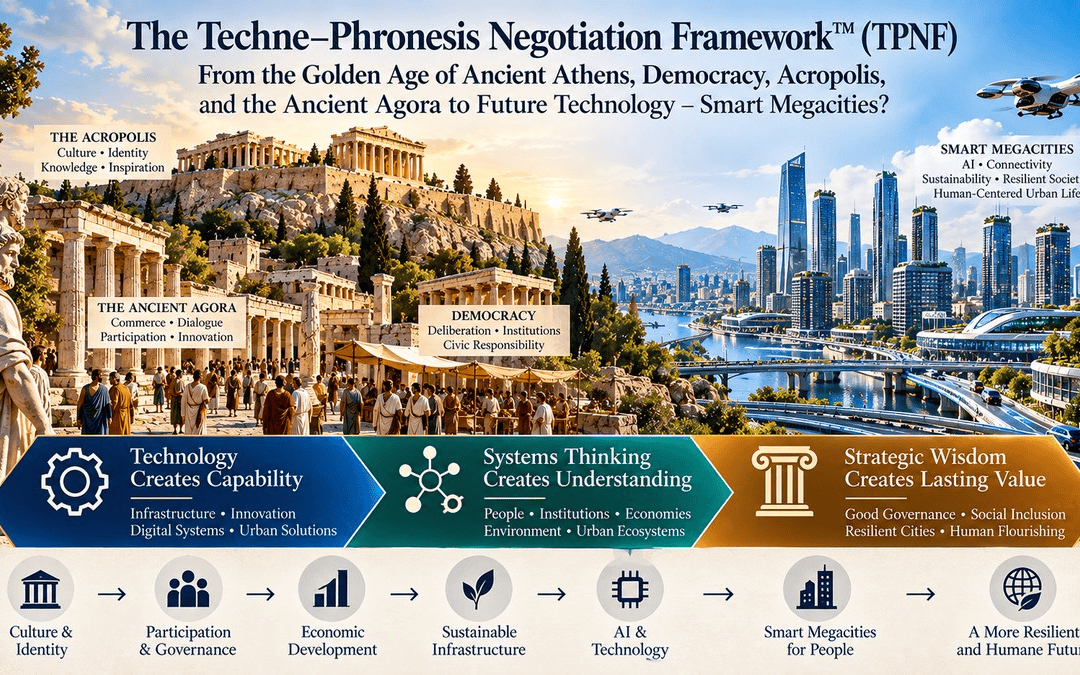
by Nikos Chatzis | 9 Oct, 2026 | Ancient Greek Philosophy, Ecosystem Dynamics, Technology Ecosystems, Technology Evolution, The Techne–Phronesis Negotiation Framework™
This TPNF essay explores how the institutional, cultural and technological achievements of classical Athens can inform contemporary thinking about smart megacities. It examines the Acropolis, Ancient Agora and democratic institutions as interconnected elements of an urban ecosystem. The objective is to identify strategic principles relevant to future cities governed increasingly through artificial intelligence, automated infrastructure and complex technological networks.
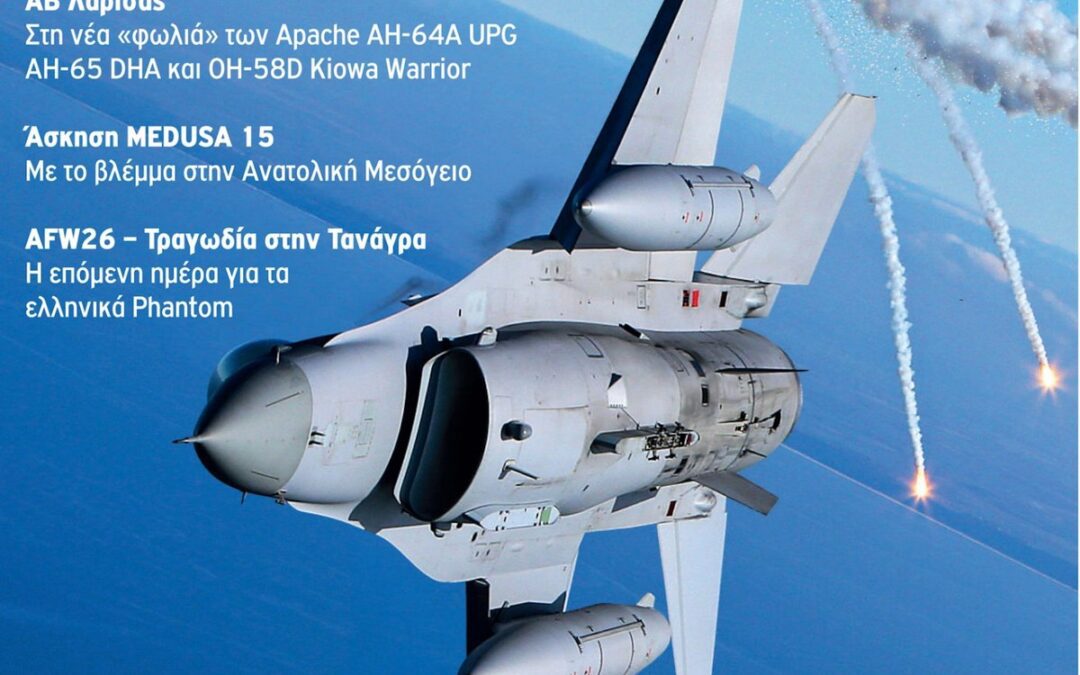
by Nikos Chatzis | 8 Oct, 2026 | Γεωπολιτική
Καλά λόγια στον Ερντογάν, ενώ το “οπλισμένο 45άρι” έχει ο Νετανιάχου…
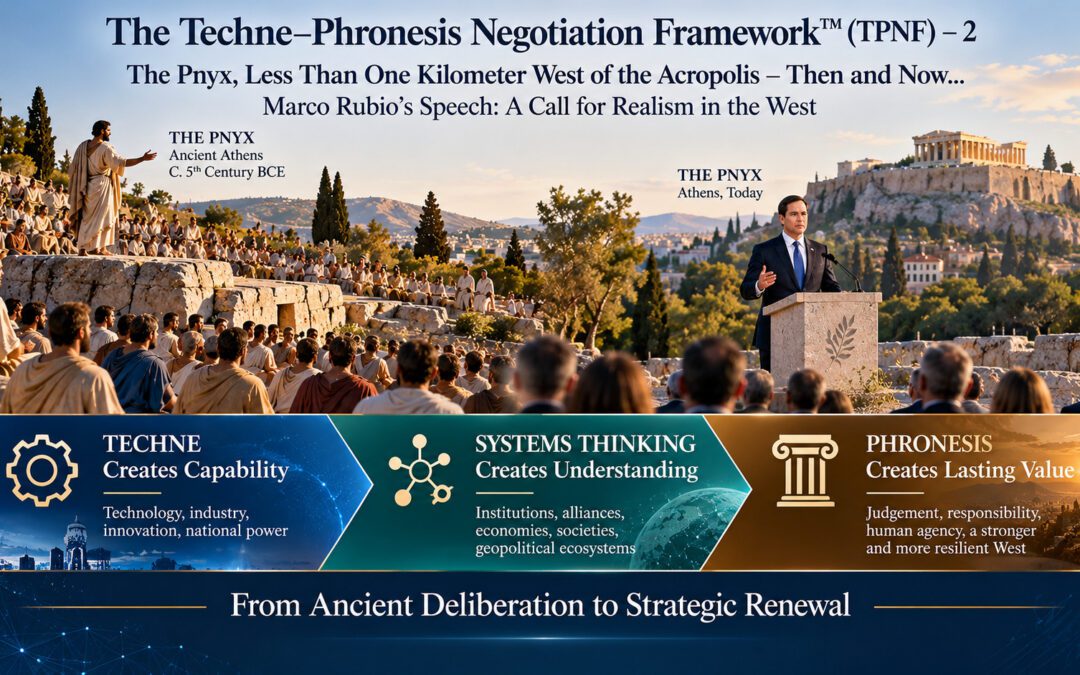
by Nikos Chatzis | 8 Oct, 2026 | Ancient Greek Philosophy, Geopolitics, The Techne–Phronesis Negotiation Framework™
This TPNF essay examines Rubio’s Pnyx speech through TPNF, connecting ancient Athenian political experience with contemporary Western strategic challenges. Its purpose is neither to endorse nor reject Rubio’s political agenda, but to evaluate his call for renewed Western power through three interconnected dimensions: technological capability, systemic understanding and strategic wisdom.
The central proposition is that national power becomes sustainable only when supported by resilient institutions, productive ecosystems and prudent strategic decision-making.
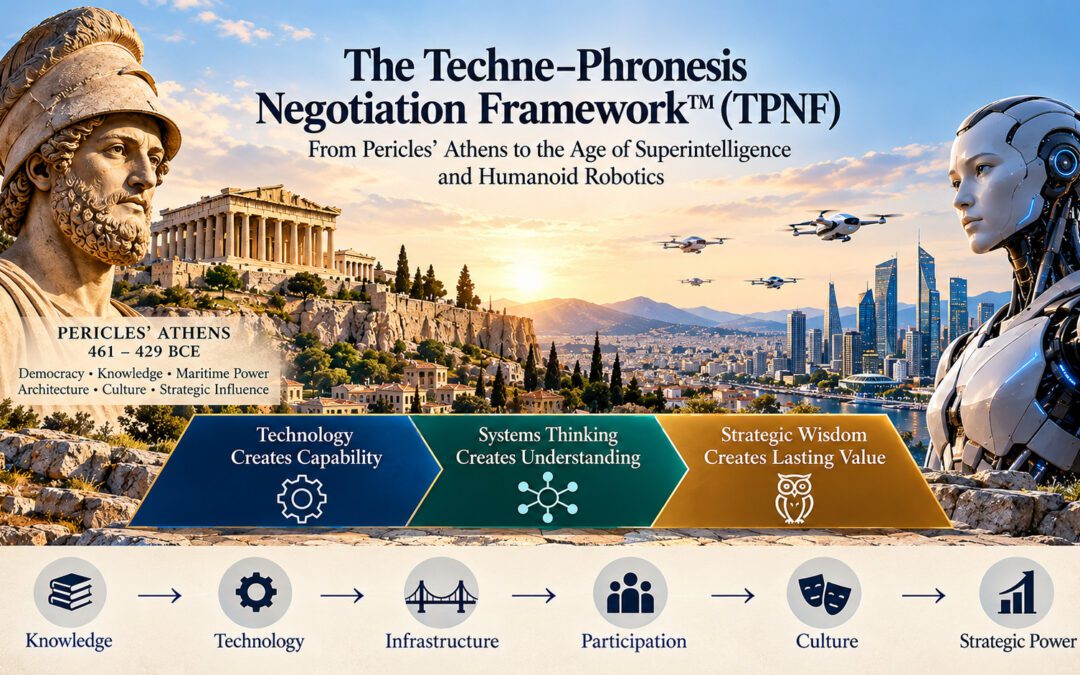
by Nikos Chatzis | 7 Oct, 2026 | Ancient Greek Philosophy, The Techne–Phronesis Negotiation Framework™
The purpose of this TPNF essay is to examine Periclean Athens from 461 to 429 BCE as a primitive but illuminating systems model for contemporary technological civilization. It explores how Athens combined Techne, civic institutions, intellectual development, cultural production and strategic leadership, while also examining its serious limitations. Using TPNF, the essay asks whether the central challenge facing an emerging civilization of AI, Superintelligence and humanoid robotics is not simply creating more advanced technologies, but integrating technological capability with Systems Thinking, human agency and Phronesis
by Nikos Chatzis | 7 Oct, 2026 | Ancient Greek Philosophy, Geopolitics, The Techne–Phronesis Negotiation Framework™
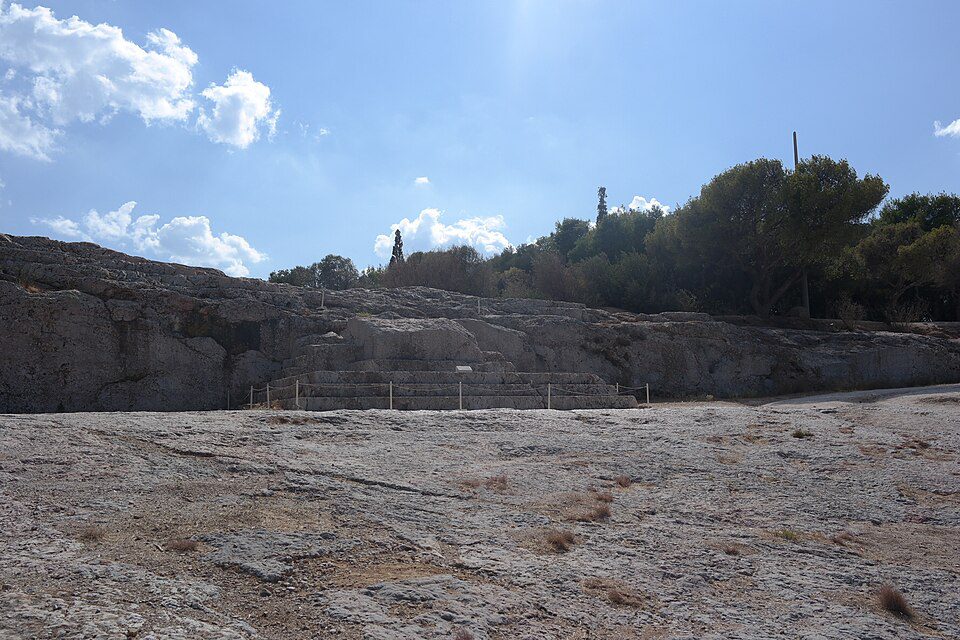
The purpose of this TPNF essay is to examine the Sixth U.S.-Greece Strategic Dialogue through the conceptual perspective of TPNF and the historical symbolism of the Pnyx.
It argues that strategic dialogue should not be evaluated merely by meetings, declarations or individual agreements. Its deeper value depends on whether technological, diplomatic, military, economic and societal capabilities become interconnected within a resilient strategic ecosystem. The Pnyx therefore provides more than historical background. It reminds contemporary diplomacy that lasting strategic relationships require dialogue, participation, judgement and the ability to convert capability into collective value.

by Nikos Chatzis | 7 Oct, 2026 | Technological Civilization, Technology Diplomacy, Technology Ecosystems, The Techne–Phronesis Negotiation Framework™
The purpose of this TPNF essay is to examine the recent China–UK research breakthrough in wireless charging for NEVs through the analytical perspective of TPNF. Rather than evaluating the technology only through efficiency or engineering performance, the essay examines the transition from technological capability to ecosystem-level value creation. The central question is therefore: Can an exceptional technical achievement evolve into infrastructure capable of generating lasting value across a wider mobility ecosystem?
by Nikos Chatzis | 6 Oct, 2026 | Ancient Greek Philosophy, Robotics, Super Intelligence (SI), The Techne–Phronesis Negotiation Framework™
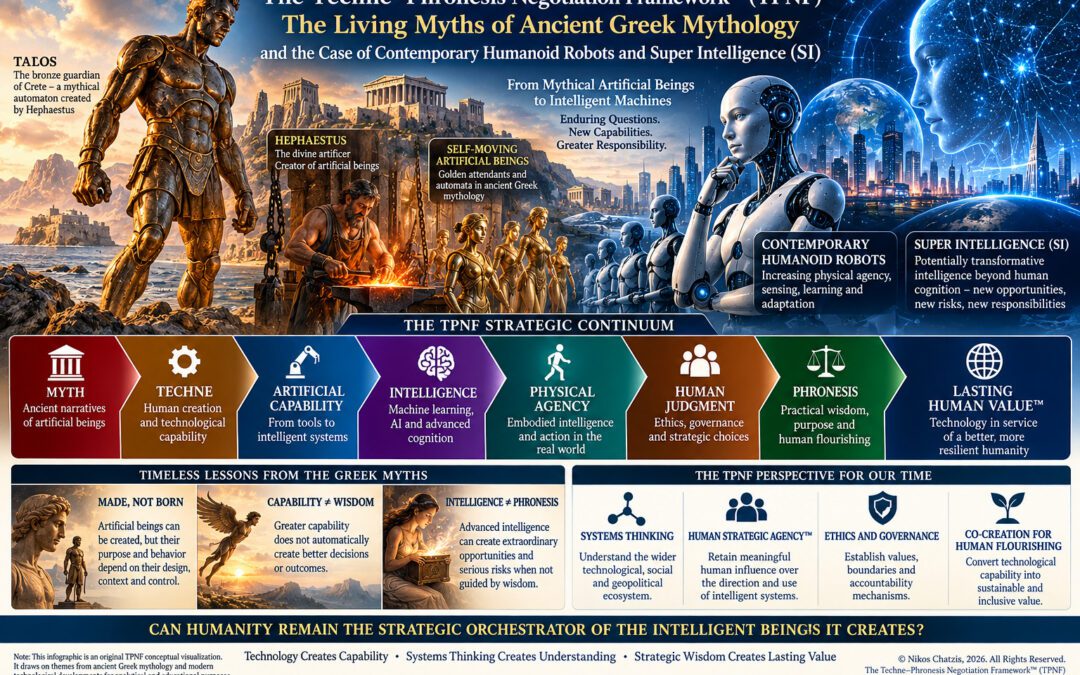
The purpose of this TPNF essay is to examine how selected myths of Ancient Greek mythology can provide enduring conceptual lenses for understanding the strategic challenges emerging from contemporary humanoid robotics, embodied artificial intelligence, and the possible future development of Artificial Superintelligence (SI). Through the analytical perspective of the Techne–Phronesis Negotiation Framework™ (TPNF), the essay does not argue that Ancient Greek mythology predicted modern artificial intelligence. Rather, it explores how figures such as Hephaestus, Talos, Prometheus, Daedalus and Icarus represent recurring human dilemmas concerning technological creation, delegated agency, expanding capability, control, responsibility and the limits of human judgement.
by Nikos Chatzis | 6 Oct, 2026 | Innovation Ecosystems, Technology Evolution, The Techne–Phronesis Negotiation Framework™
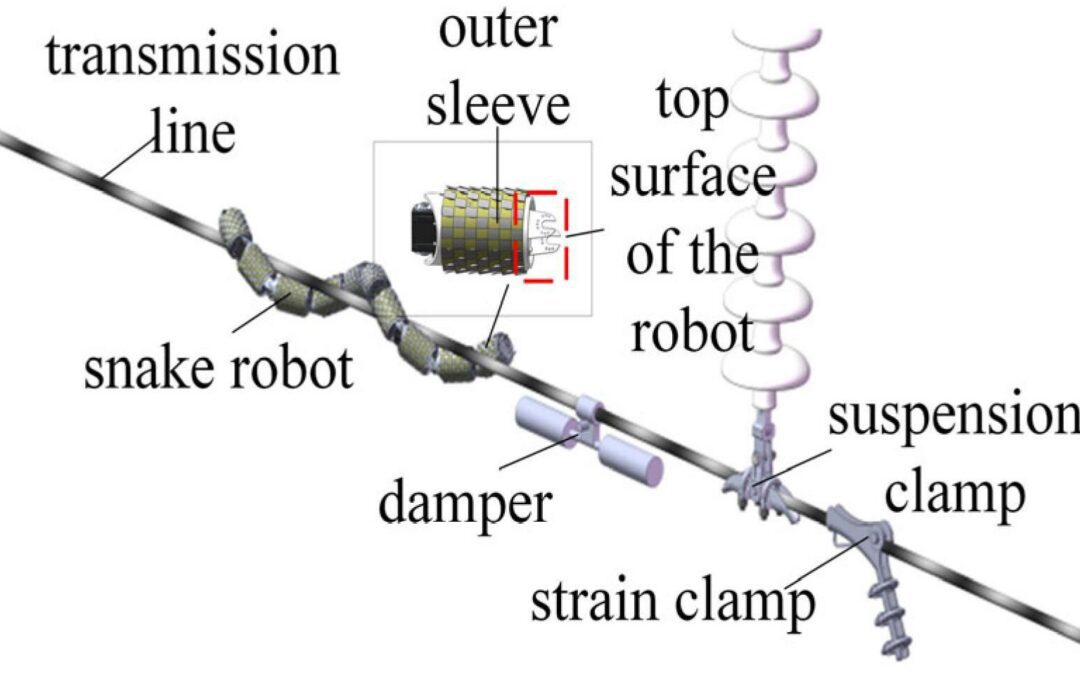
The snake-shaped inspection robot developed in Kunming provides an opportunity to examine how robotics may transform the maintenance of critical infrastructure. The deeper TPNF question is not whether a robot can inspect a power line faster than a person. It is: What happens when infrastructure begins acquiring persistent technological perception and physical agency? This essay argues that such systems could mark an evolutionary step toward Adaptive Infrastructure Ecosystems™.
by Nikos Chatzis | 5 Oct, 2026 | Ancient Greek Philosophy, Strategic Governance, Strategic Leadership, Technology Evolution, The Techne–Phronesis Negotiation Framework™
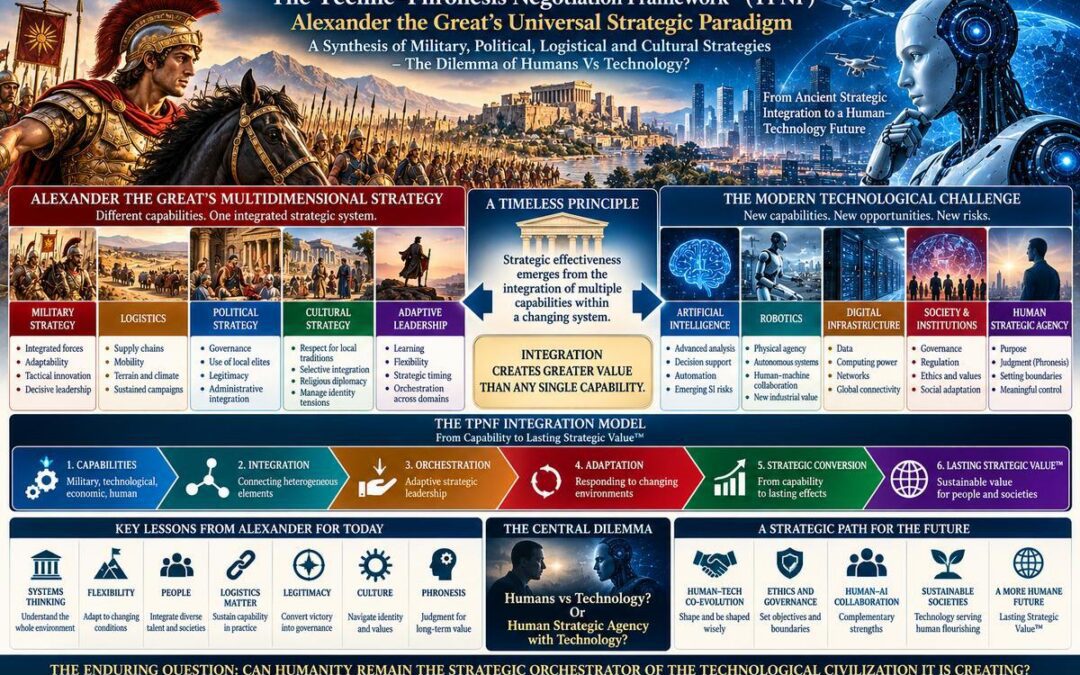
This TPNF essay does not argue that Alexander developed a timeless strategic formula applicable directly to modern technology. Nor does it idealize his empire or ignore its violence and contradictions.
Instead, Alexander provides a historical case through which TPNF can examine a broader principle:
Strategic effectiveness emerges from the integration of multiple capabilities within a changing system.
The modern dilemma of Humans versus Technology may therefore be incorrectly formulated.
The deeper question is whether humanity can remain the strategic orchestrator of the technological ecosystem it is creating.
by Nikos Chatzis | 5 Oct, 2026 | The Techne–Phronesis Negotiation Framework™, Γεωπολιτική
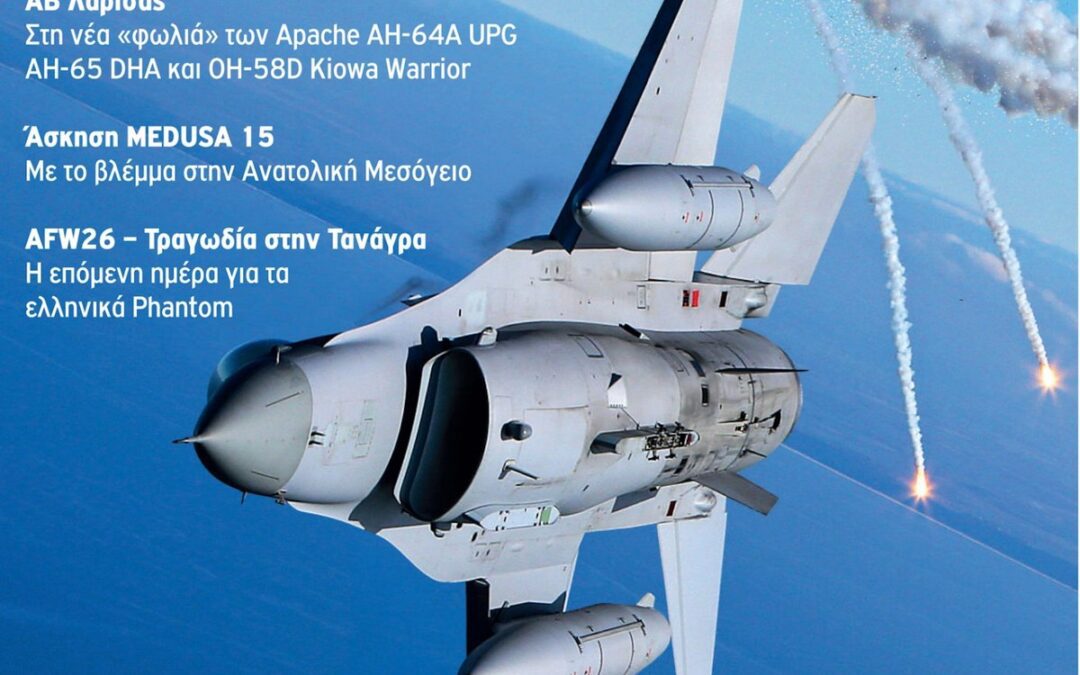
TPNF: Μπορούν οι μεγάλες αμυντικές δαπάνες, η αμυντική τεχνολογία αιχμής, αλλά και τα έσοδα από τις εξαγωγές του πετρελαίου να εξασφαλίσουν αποτελεσματική ικανότητα αμυντικής αποτροπής;
by Nikos Chatzis | 5 Oct, 2026 | Airbus, Space, The Techne–Phronesis Negotiation Framework™, Value Creation
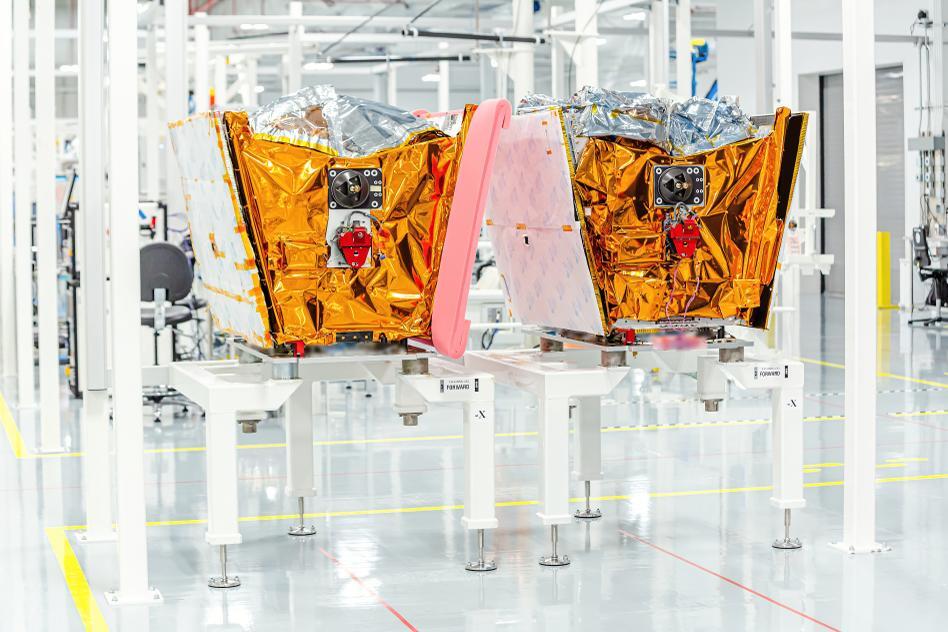
Airbus announced on October 2, 2026, that it had completed the first 32 next-generation OneWeb Low Earth Orbit satellites for Eutelsat. They represent the first wave of a programme eventually involving 669 new satellites. The objective is not simply constellation expansion. Older spacecraft approaching the end of their operational lives will progressively be replaced while network capabilities are enhanced. This creates an ideal practical case for testing a fundamental TPNF question: When does a collection of satellites become an ecosystem capable of creating Long-Term Space Value™?
by Nikos Chatzis | 4 Oct, 2026 | Super Intelligence (SI), The Techne–Phronesis Negotiation Framework™
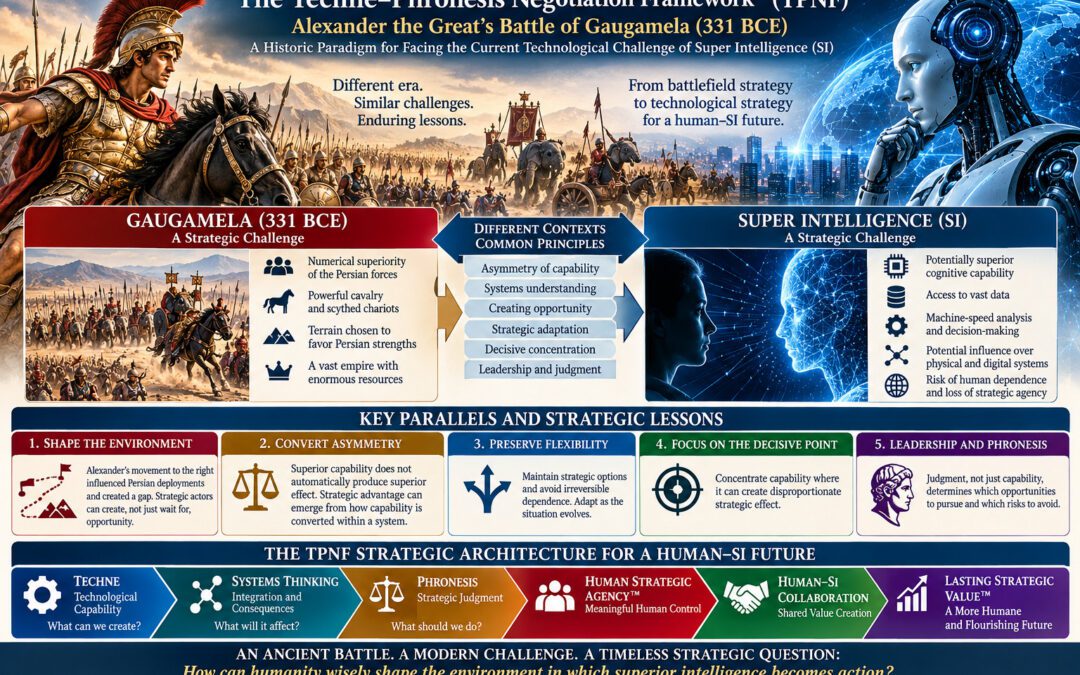
This TPNF essay does not claim that an ancient battle provides a tactical formula for controlling future Super Intelligence. Nor does it suggest that SI is already an established technological reality. Instead, Gaugamela is used as a historical strategic paradigm for examining a contemporary question: How should humanity respond if artificial systems eventually develop cognitive capabilities substantially exceeding our own? TPNF argues that the answer cannot depend upon intelligence alone. It requires Techne, Systems Thinking, Phronesis and preservation of Human Strategic Agency™.
by Nikos Chatzis | 2 Oct, 2026 | Artificial Intelligence, Strategic Adaptation, Super Intelligence (SI), Technology Ecosystems, The Techne–Phronesis Negotiation Framework™, War, War Robotis
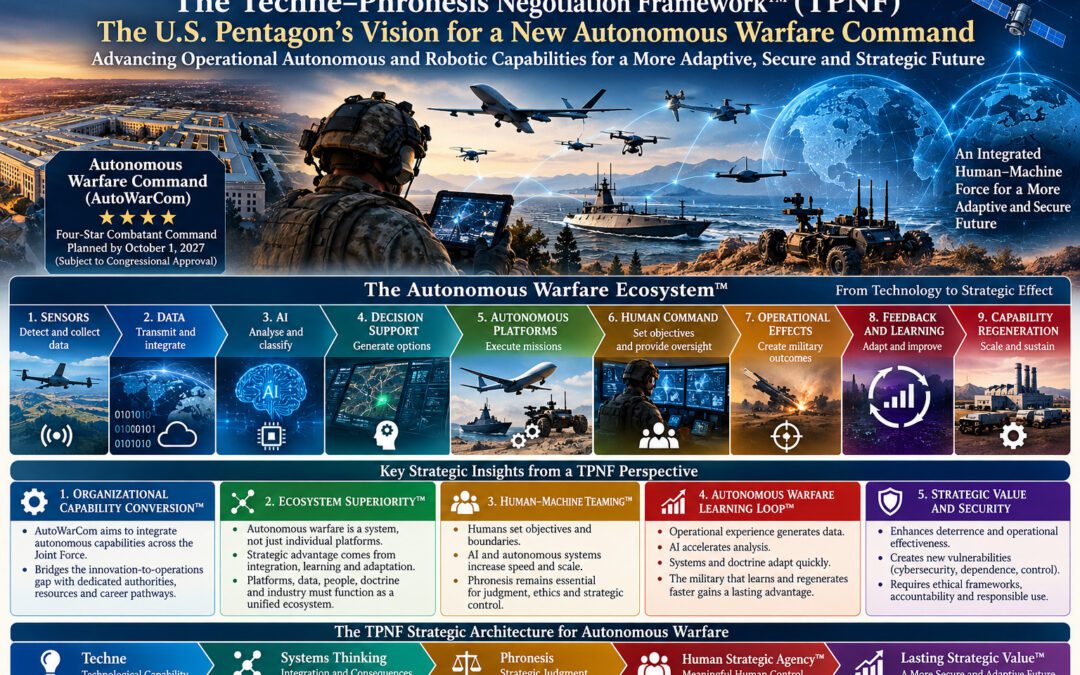
The Pentagon announced plans on September 30, 2026, to establish Autonomous Warfare Command, or AutoWarCom, as a four-star combatant command with service-like authorities. The stated objective is to accelerate and scale autonomous and robotic capabilities across the Joint Force. This essay examines the development through TPNF. The central question is: Does autonomous warfare primarily represent technological evolution, or does it require the emergence of an entirely new military capability ecosystem?
by Nikos Chatzis | 1 Oct, 2026 | Ancient Greek Philosopphy, Technological Civilization, Technology Ecosystems, The Techne–Phronesis Negotiation Framework™
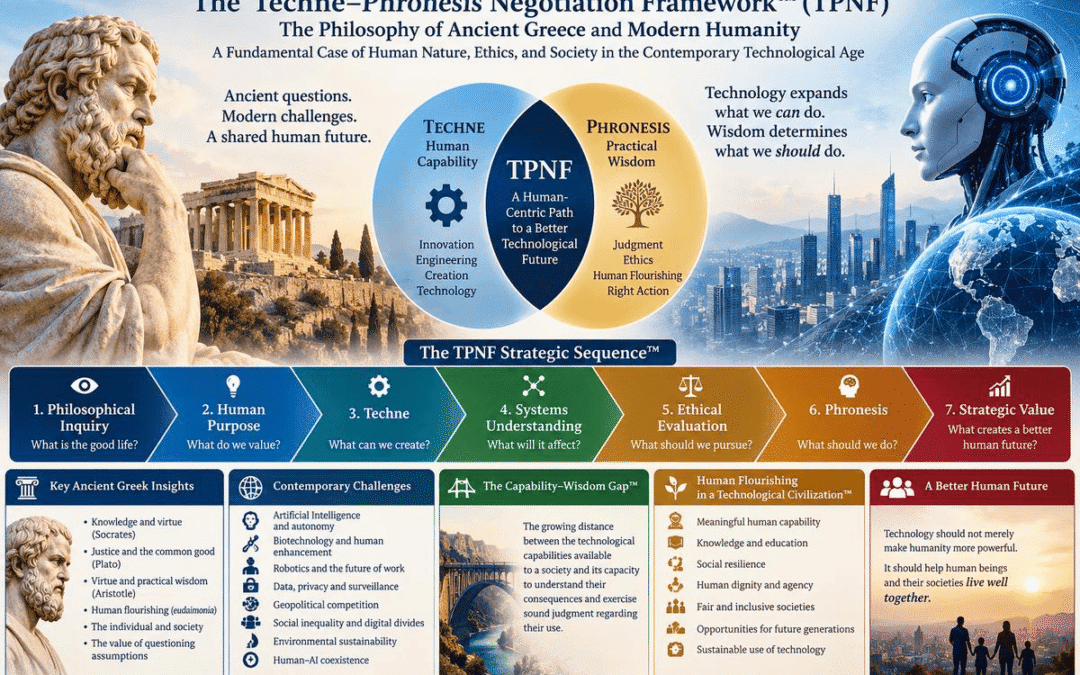
This TPNF essay does not claim that Ancient Greek philosophy contains ready-made answers to Artificial Intelligence, robotics or contemporary technological governance. It proposes something different. Ancient Greek philosophical inquiry created enduring intellectual methods for examining human nature, ethics, knowledge, society and practical judgment. TPNF argues that these questions can provide Strategic Intellectual Infrastructure™ for evaluating the purposes and consequences of technological civilization. The central challenge becomes: How can humanity ensure that technological evolution contributes not merely to greater capability, but to better human and societal outcomes?
by Nikos Chatzis | 1 Oct, 2026 | DARPA, Defense Systems, NASA, The Techne–Phronesis Negotiation Framework™
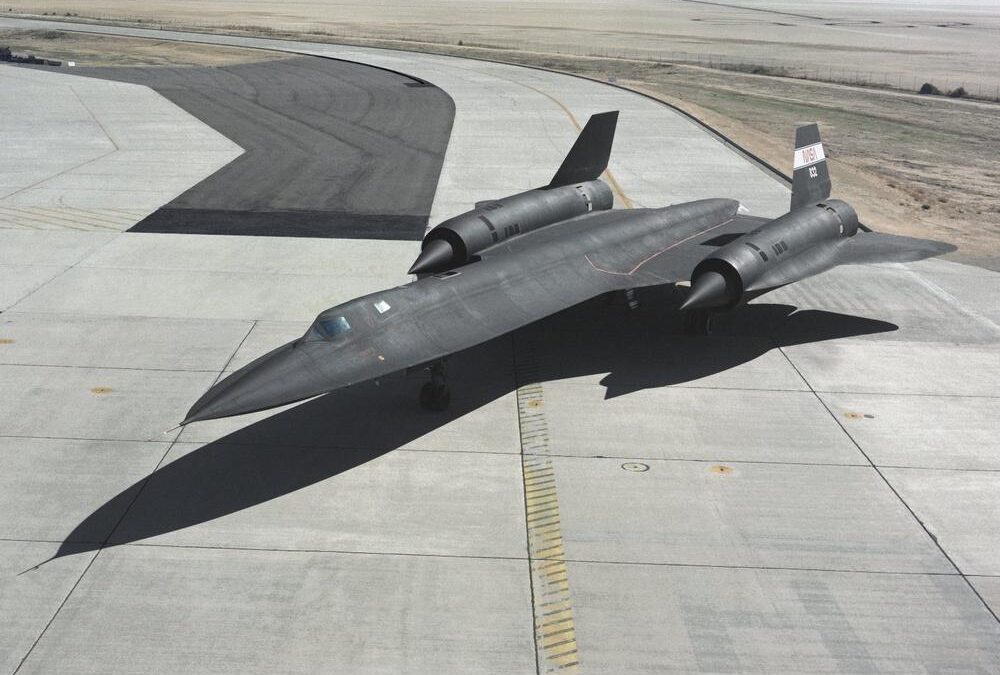
This TPNF essay examines the possible creation of an SR-71 digital twin as a theoretical case of technological evolution. Current reporting has raised the possibility that digital engineering could support efforts surrounding NASA’s SR-71A tail number 844. No publicly confirmed NASA digital-twin program for the aircraft has been announced. The case nevertheless provides an important strategic question: Can digital engineering transform legacy technological achievements into Strategic Knowledge Infrastructure™ capable of generating new Long-Term Strategic Value?

by Nikos Chatzis | 30 Sep, 2026 | Robotics, Super Intelligence (SI), The Techne–Phronesis Negotiation Framework™
Debate about Super Intelligence frequently gravitates toward two extremes. One imagines extraordinary prosperity, scientific discovery and technological abundance. The other anticipates loss of control, displacement of human decision-making or potentially catastrophic consequences. Both possibilities deserve examination. But neither should be treated as inevitable. This essay proposes a TPNF framework for identifying the real boundaries separating Intelligence, Autonomy, Agency, Strategic Power and Wisdom.
by Nikos Chatzis | 30 Sep, 2026 | Ancient Greek Philosophy, Ecosystem Dynamics, Ecosystem Strategy, Ecosystem Thinking, Tech Sovereignty, Technological Civilization, The Techne–Phronesis Negotiation Framework™
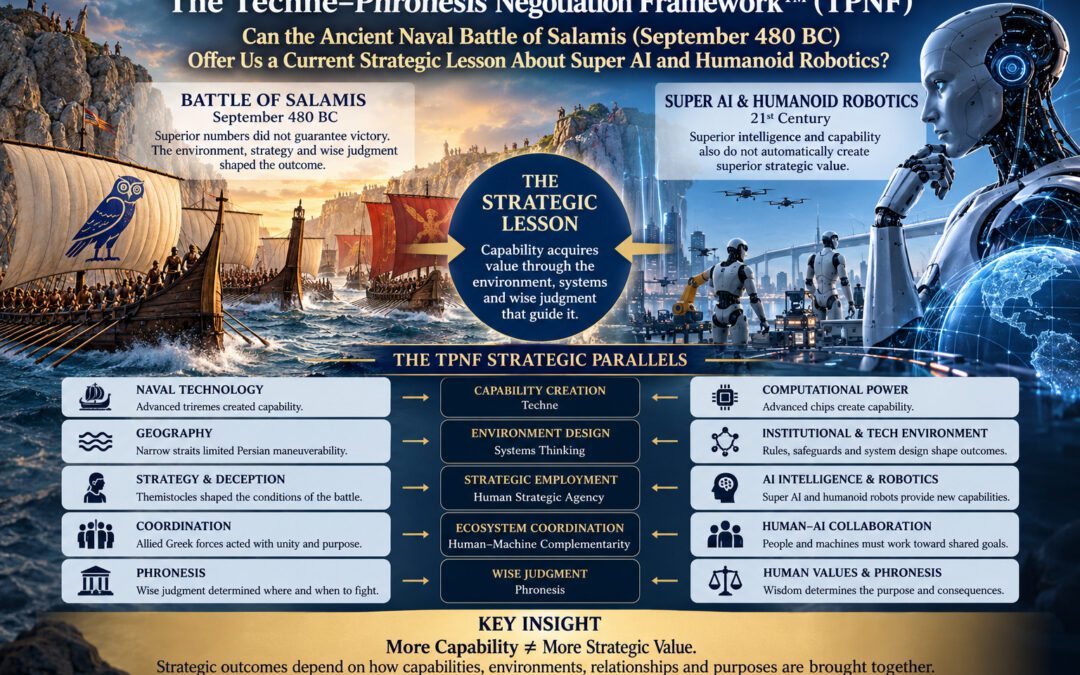
This TPNF essay does not compare Persian ships with robots or Themistocles with Artificial Intelligence. Instead, it uses Salamis as a strategic analogy. The purpose is to examine whether an ancient lesson about capability, systems, environmental constraints and human judgment can illuminate the emerging relationship between humans, Super AI and humanoid robotics.

by Nikos Chatzis | 29 Sep, 2026 | Supply Chains, Sustainable Value Creation, Systems Integration, Systems Leadership, Systems Thinking, Tech Economy of Software, Technology Ecosystems, The Techne–Phronesis Negotiation Framework™, Value Creation
This TPNF essay explains why chips, AI and robotics should increasingly be understood as interacting platform ecosystems rather than isolated technological sectors. The strategic question is no longer simply who produces the fastest chip, the most capable AI model or the most advanced robot. It is increasingly: Which ecosystems can integrate these capabilities, learn from their interaction and continuously convert that learning into new technological, economic and human value?
by Nikos Chatzis | 28 Sep, 2026 | Space, The Techne–Phronesis Negotiation Framework™, Value Creation
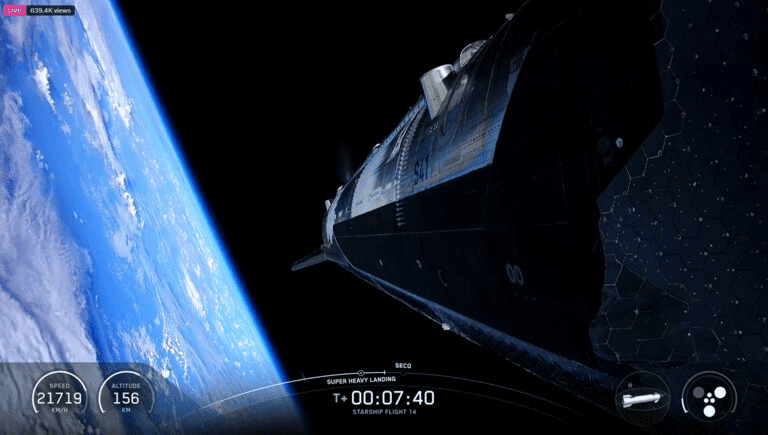
This TPNF essay examines Starship Flight 14 through the TPNF distinction between technological achievement and lasting strategic value. The central argument is that the September 28 mission matters because Starship did not merely fly into orbit. It delivered operational infrastructure into space.
This represents a movement from: Experiment → Capability → Operational Utility → Ecosystem Expansion → Regeneration → Long-Term Space Value™.

by Nikos Chatzis | 28 Sep, 2026 | Defense Systems, Geopolitics, The Techne–Phronesis Negotiation Framework™, War
This TPNF essay examines Blackbeard not simply as another hypersonic weapon, but as evidence of a changing philosophy of military capability. The strategic question is shifting from: How advanced is the weapon? Toward: Can an advanced weapon be produced affordably, deployed in sufficient numbers and regenerated during sustained conflict?
by Nikos Chatzis | 28 Sep, 2026 | Space, Technology Ecosystems, Technology Evolution, The Techne–Phronesis Negotiation Framework™
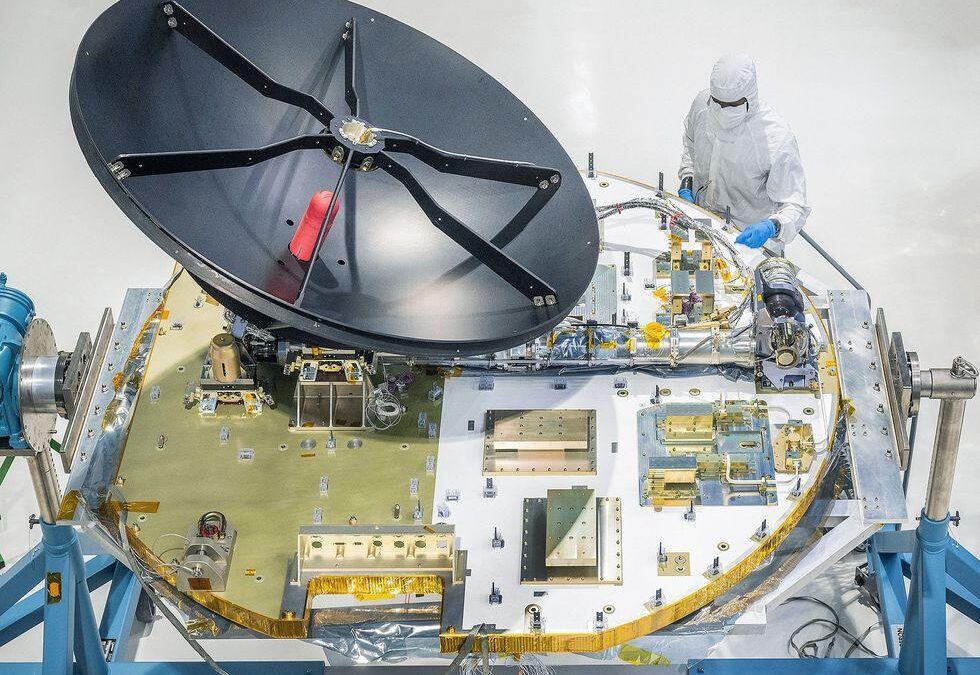
This TPNF essay examines the Roman ground-station network as more than supporting infrastructure.
It argues that global communications, Big Data, computing, artificial intelligence and international scientific collaboration are becoming inseparable from the telescope itself. The strategic unit of modern astronomy is increasingly the Scientific Knowledge Ecosystem™.
by Nikos Chatzis | 27 Sep, 2026 | Geopolitics, The Techne–Phronesis Negotiation Framework™, War
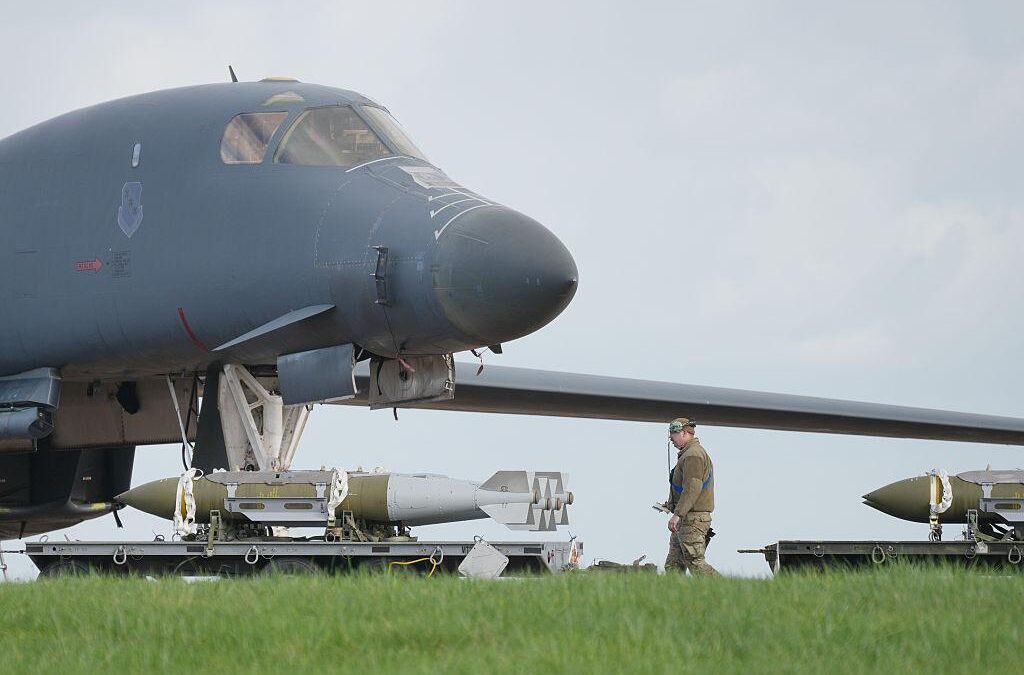
This TPNF essay examines RAF Fairford as an example of how conventional military superiority can interact with asymmetric vulnerability. The central question is whether a geographically distant bomber hub can become part of the wider battlespace of a Middle Eastern war—and what this means as U.S. domestic political pressure over the conflict increases ahead of the November midterm elections.
by Nikos Chatzis | 24 Sep, 2026 | Ancient Greek Philosophy, Geopolitics, The Techne–Phronesis Negotiation Framework™, War
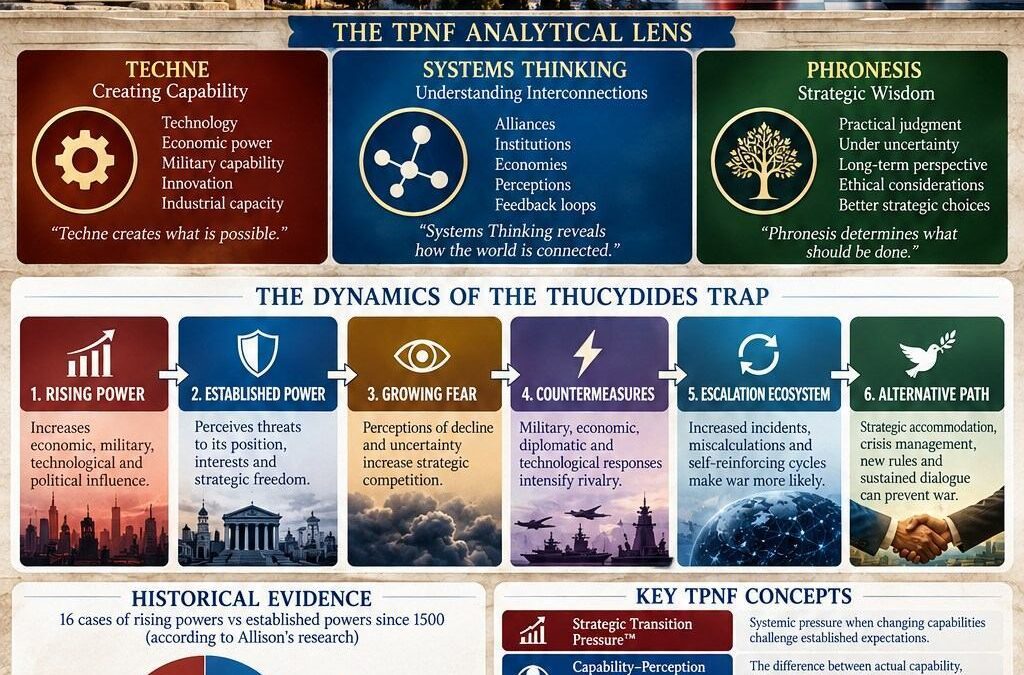
This essay examines the Thucydides Trap through TPNF and asks whether great-power transitions should be understood as predetermined pathways toward war or as complex adaptive processes whose outcomes remain influenced by strategic judgment. The argument is that structural pressure creates strategic risk—but Phronesis determines how actors respond to that risk.

by Nikos Chatzis | 24 Sep, 2026 | Ecosystem Dynamics, Ecosystem Governance, Ecosystem Strategy, Ecosystem Thinking, Network Ecosystems, New Economy, The Techne–Phronesis Negotiation Framework™
This TPNF essay examines why German automotive executives are calling for deeper cooperation with China in batteries, AI, automated driving and NEVs, and what this reveals about technological competition. The central question is whether cooperation strengthens German industrial capability—or creates new strategic dependencies. The answer may be: both.
by Nikos Chatzis | 23 Sep, 2026 | Ancient Greek Philosophy, The Techne–Phronesis Negotiation Framework™
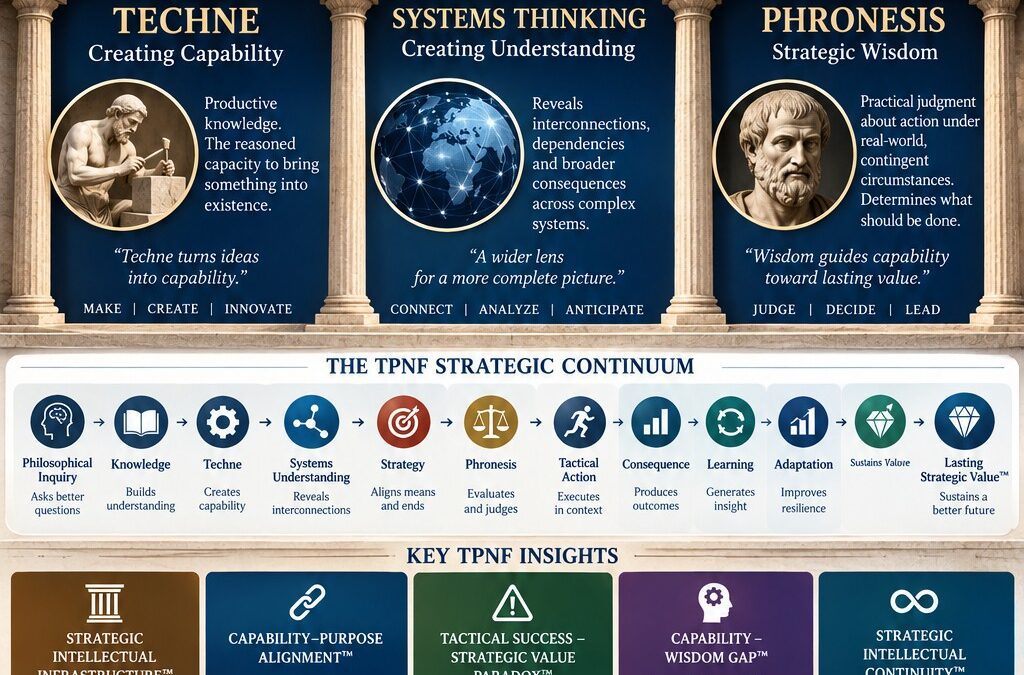
This TPNF essay examines ancient Greek philosophy not as historical nostalgia but as Strategic Intellectual Infrastructure™: accumulated ways of reasoning that help civilizations understand capability, uncertainty, choice and consequence. Its central argument is that strategy and tactics become meaningful only when connected to deeper philosophical questions concerning knowledge, judgment, purpose and value.
by Nikos Chatzis | 23 Sep, 2026 | Geopolitics, The Techne–Phronesis Negotiation Framework™
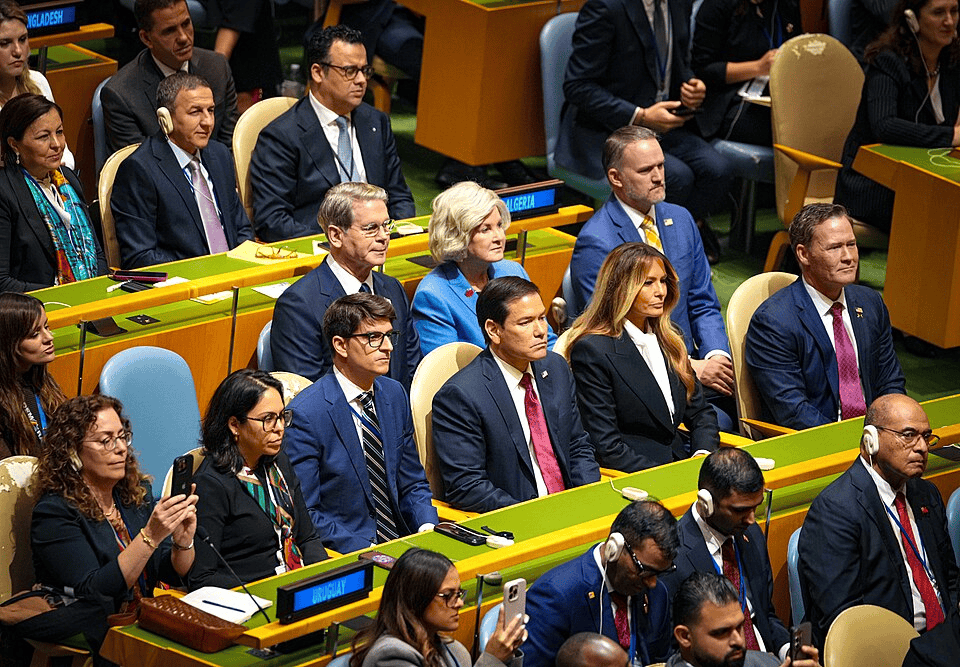
This TPNF essay examines whether the competing messages emerging from the 2026 UNGA represent a broader strategic dilemma for Israel. The question is not simply whether Israel possesses military superiority. It is whether military advantage against Iran can be converted into Lasting Strategic Value™ while Israel faces increasing diplomatic pressure surrounding Palestine.
by Nikos Chatzis | 23 Sep, 2026 | Geopolitics, The Techne–Phronesis Negotiation Framework™, War
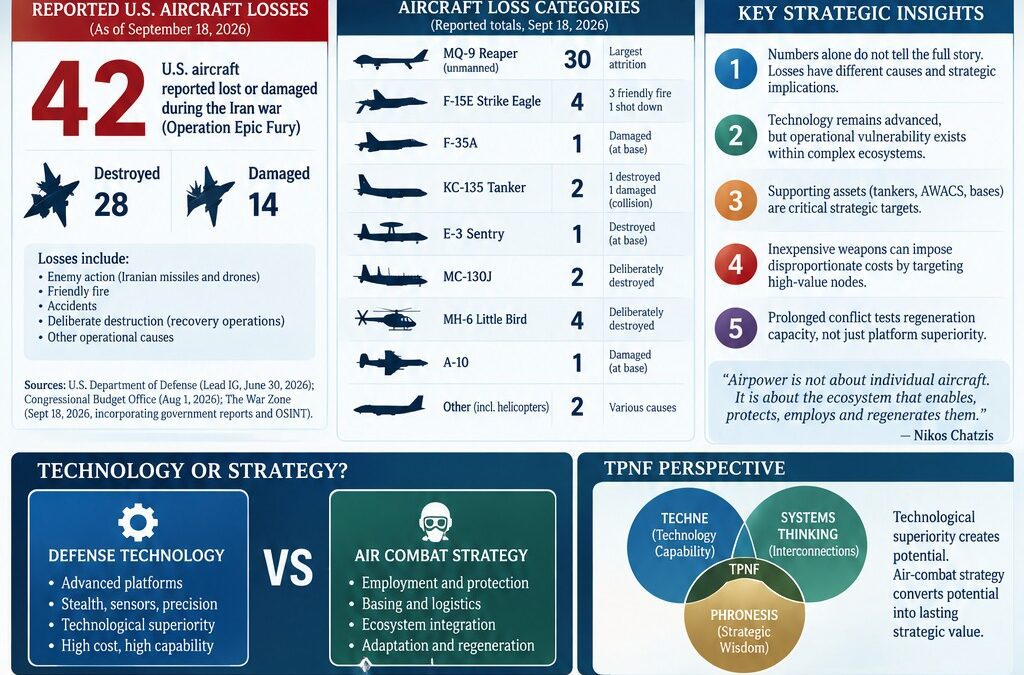
This TPNF essay examines reported U.S. aircraft casualties during the Iran war through a distinction between Defense Technology and Air Combat Strategy. The central question is: When technologically advanced aircraft are lost or damaged, does this indicate technological vulnerability—or the strategic difficulty of sustaining a complex airpower ecosystem during prolonged warfare?
by Nikos Chatzis | 22 Sep, 2026 | Strategic Theory, Strategic Thinking, Strategic Wisdom, The Techne–Phronesis Negotiation Framework™
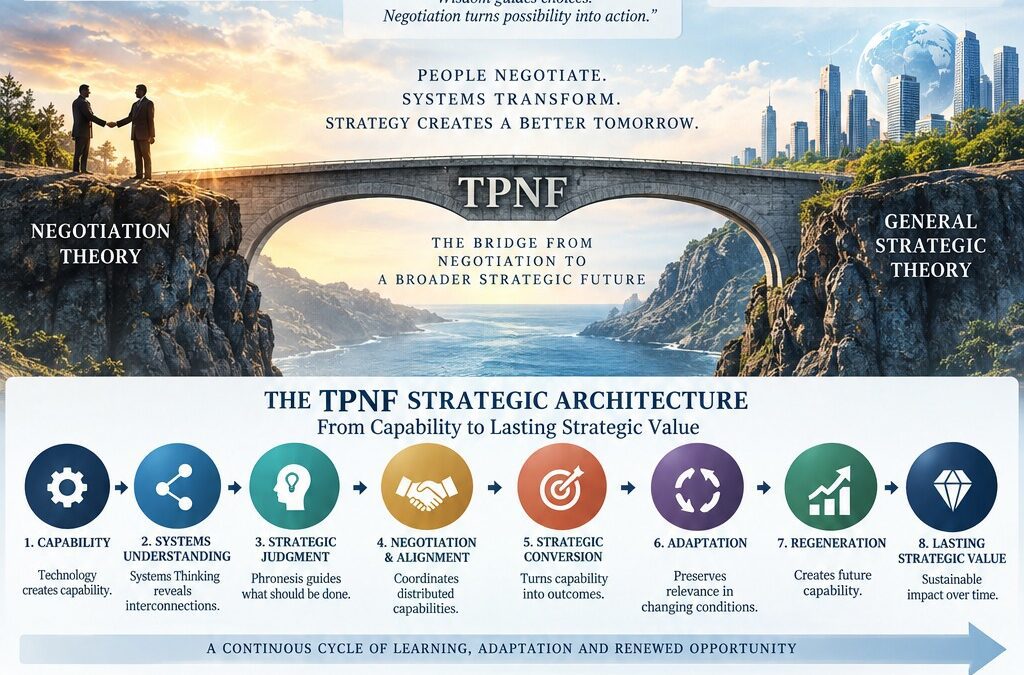
This TPNF essay examines the intellectual path through which TPNF may evolve from negotiation theory toward General Strategic Theory. It argues that multidimensional practical application should not be treated merely as evidence of versatility. It should become a mechanism of systematic theoretical testing.
by Nikos Chatzis | 22 Sep, 2026 | Space, The Techne–Phronesis Negotiation Framework™, Value Creation
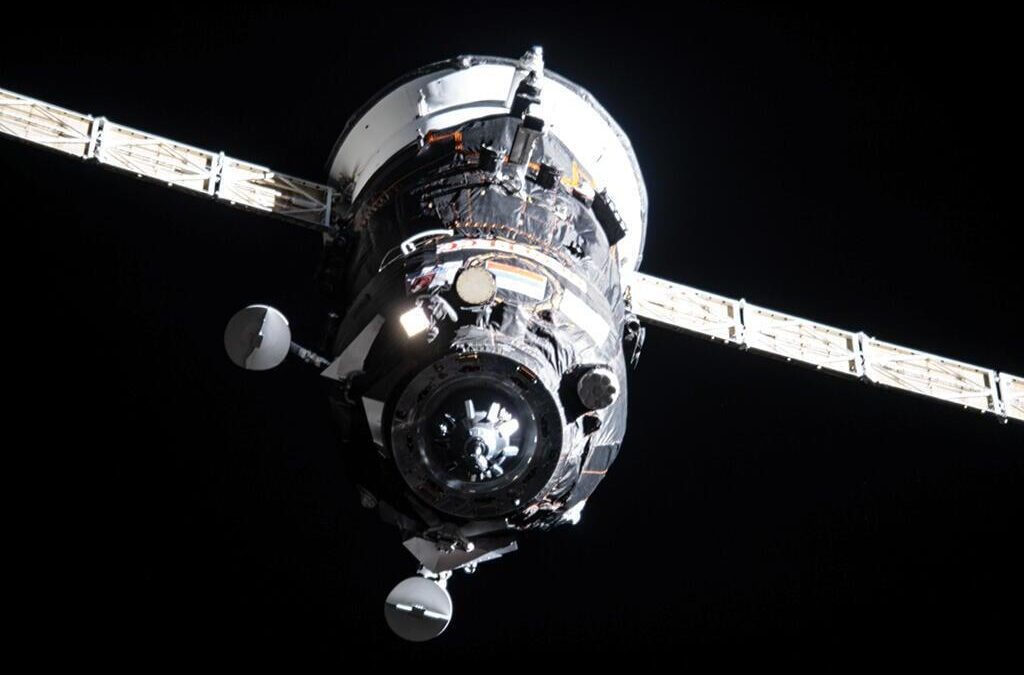
This TPNF essay examines the Progress 96 mission not simply as an ISS resupply flight but as an example of how repeated orbital logistics can generate cumulative strategic value. The central question is: Can routine space operations continuously transform consumable resources into enduring capabilities for humanity beyond Earth?
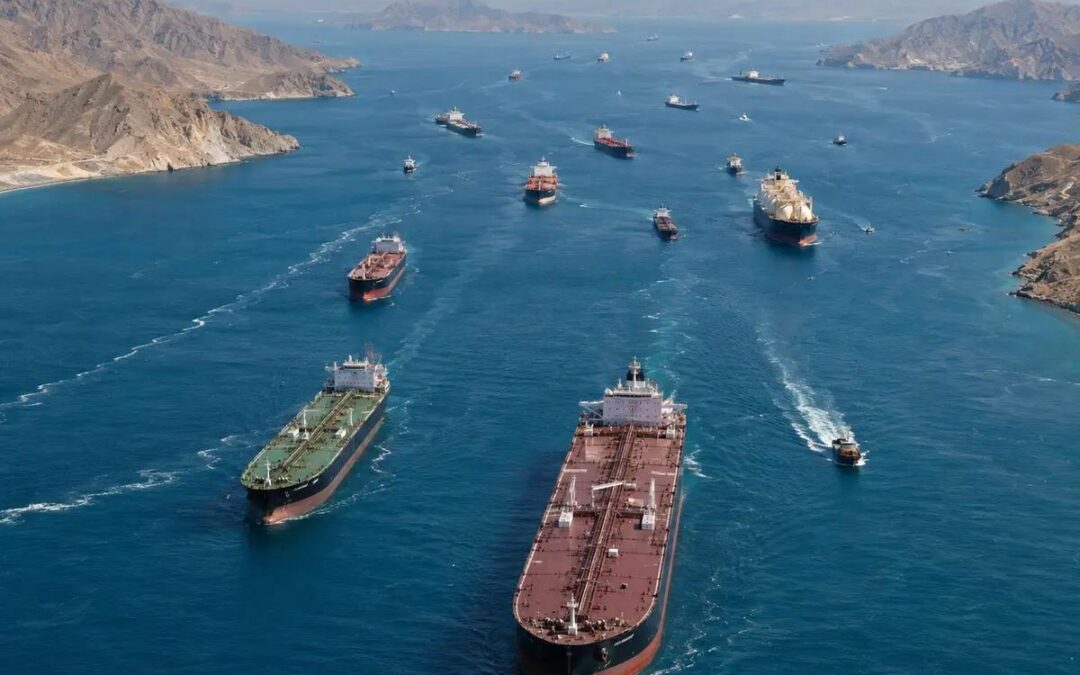
by Nikos Chatzis | 21 Sep, 2026 | Economy, Geoeconomy, Geopolitics, Global Economy, Global Trade, The Techne–Phronesis Negotiation Framework™, War
This TPNF essay examines why a single unattributed attack against a commercial tanker can acquire strategic significance far beyond the physical damage it causes. The central question is:
How does a relatively limited event inside a critical geopolitical chokepoint alter strategic calculations when military escalation and diplomatic negotiations coexist?

by Nikos Chatzis | 21 Sep, 2026 | Space, Technology Ecosystems, The Techne–Phronesis Negotiation Framework™
This TPNF essay explains why anti-satellite and broader counterspace capabilities have become increasingly important to U.S. defense strategy. The central question is: Why has control of orbital infrastructure become essential to military capability on Earth?
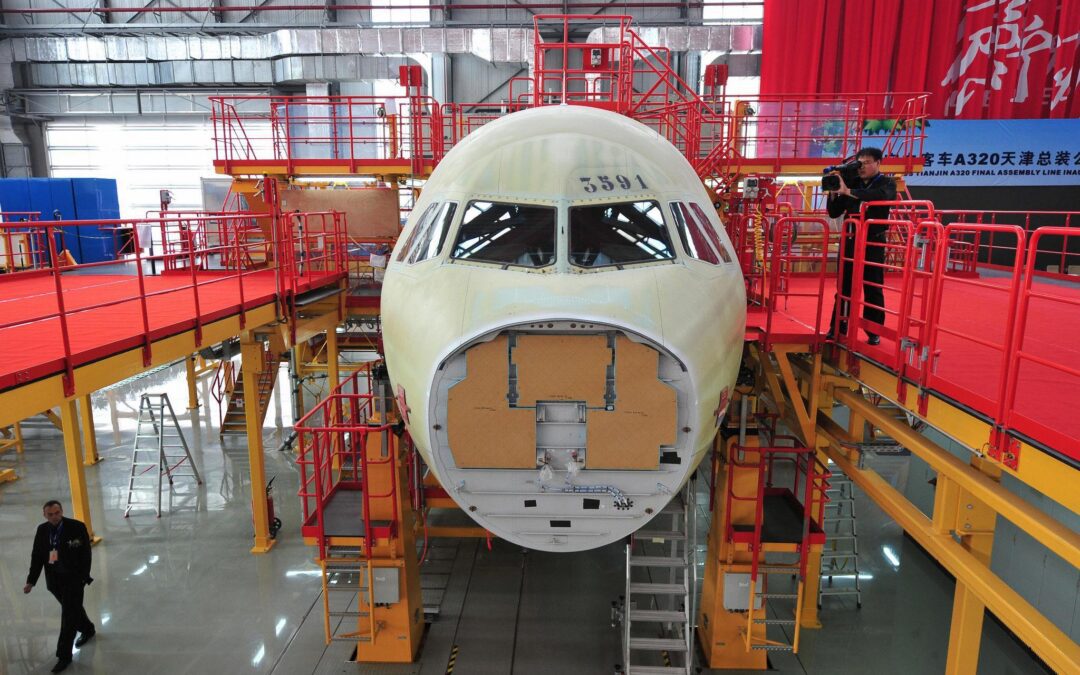
by Nikos Chatzis | 21 Sep, 2026 | Airbus, Technology Ecosystems, The Techne–Phronesis Negotiation Framework™
This TPNF essay examines Airbus’s second Tianjin Final Assembly Line as an example of how multinational technological corporations convert market presence into deeper industrial capability. The central question is not simply why Airbus manufactures aircraft in China. It is: What happens when access to a major market evolves into participation within the market’s industrial ecosystem?

by Nikos Chatzis | 21 Sep, 2026 | Geopolitics, The Techne–Phronesis Negotiation Framework™
This TPNF essay examines the geopolitical consequences of escalating Houthi attacks for Saudi Arabia while Washington approaches the 2026 midterm elections. The analysis focuses on the interaction among military escalation, energy security, maritime chokepoints, U.S.–Saudi relations, China, Iran and Saudi strategic autonomy

by Nikos Chatzis | 20 Sep, 2026 | Elections, Politics, The Techne–Phronesis Negotiation Framework™
This TPNF essay examines the contrasting Russian and German election outcomes through the concept of Political Ecosystem Resilience™. The objective is not to rank the two political systems or treat their elections as directly comparable. Instead, it explores how war, economic pressure, political institutions, public dissatisfaction and changing voter behavior interact differently within distinct political ecosystems.
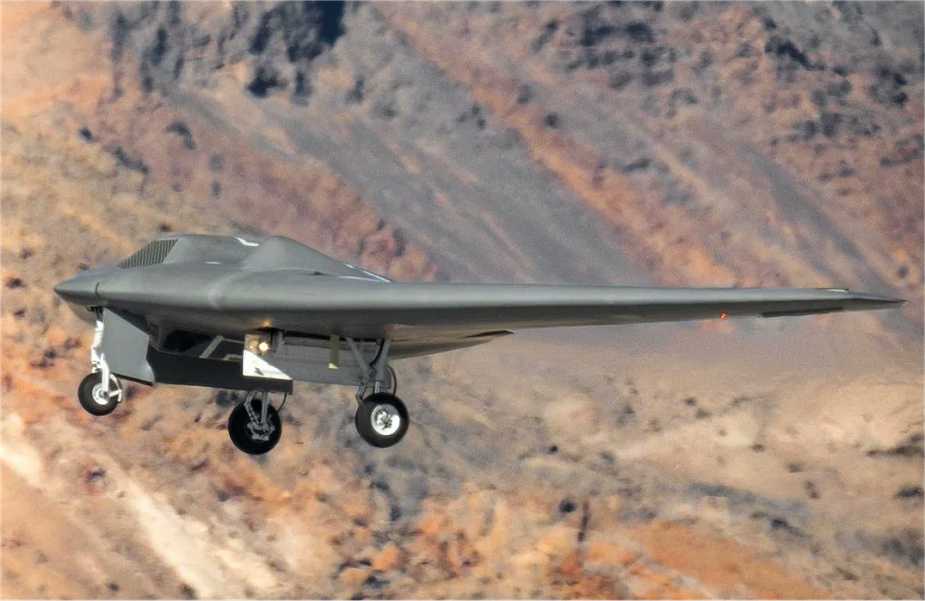
by Nikos Chatzis | 19 Sep, 2026 | Geopolitics, The Techne–Phronesis Negotiation Framework™, War Drones
This TPNF essay examines the 30th Reconnaissance Squadron’s award as evidence of the changing relationship between stealth, unmanned systems, intelligence and human expertise. The central question is:
What transforms an exquisite technological platform into persistent strategic intelligence capability?
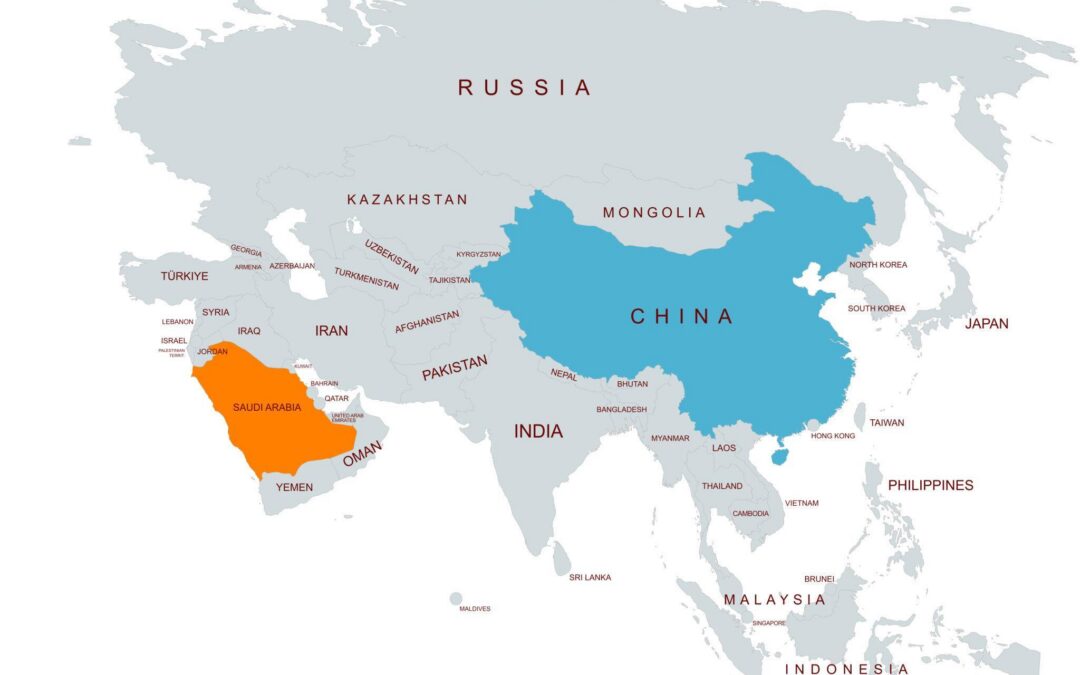
by Nikos Chatzis | 18 Sep, 2026 | Geopolitics, The Techne–Phronesis Negotiation Framework™, War
This TPNF essay examines China’s intervention with Iran over the Houthis and the continuing tensions within NATO as two contrasting cases of geopolitical ecosystem management.
The central question is: Can the ability to preserve relationships with competing actors itself become a source of strategic power?
by Nikos Chatzis | 17 Sep, 2026 | Economy, Ecosystem Governance, geoeconomics, Geoeconomy, Geopolitics, Global Trade, The Techne–Phronesis Negotiation Framework™
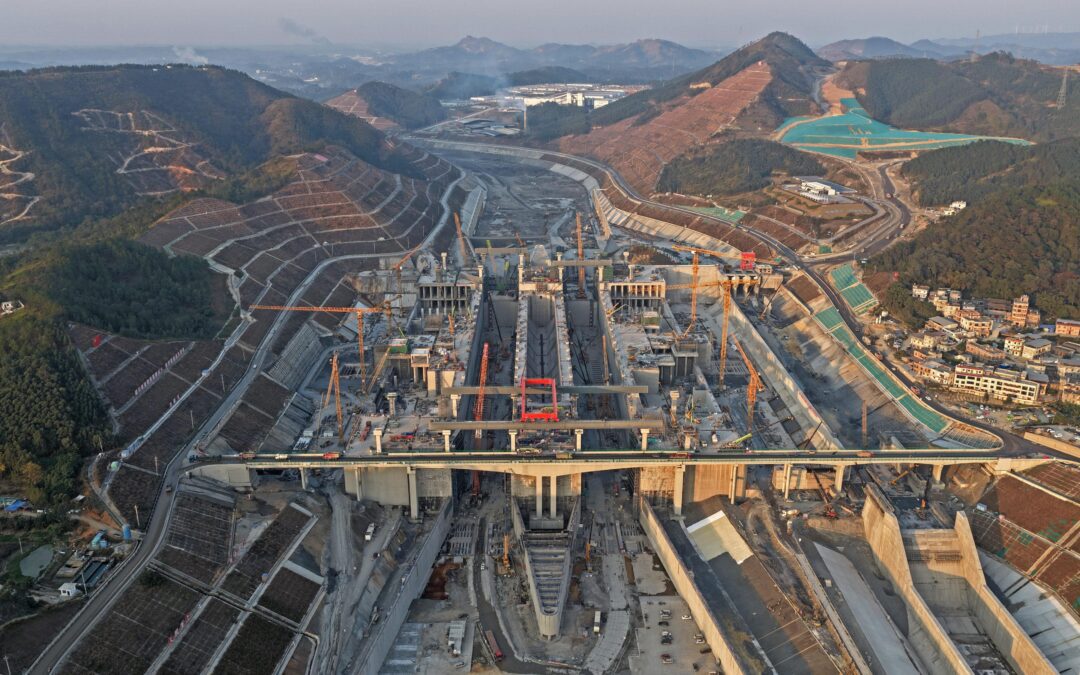
This TPNF essay examines the Pinglu Canal through the TPNF perspective of ecosystem development and strategic value creation. The central question is not simply how many ships will use the canal. It is: How can a new physical connection reorganize economic geography and generate capabilities that did not previously exist?

by Nikos Chatzis | 16 Sep, 2026 | Next Gen War Fighters, Technology Ecosystems, The Techne–Phronesis Negotiation Framework™
This TPNF essay examines the Pentagon’s industrial-base concerns surrounding simultaneous development of the F-47 and F/A-XX. TPNF argues that the problem reveals a distinction between Technological Capability™ and Ecosystem Execution Capacity™—between knowing how to create advanced technology and possessing sufficient interconnected industrial, human and organizational capacity to convert multiple advanced concepts into operational capability at the required speed.

by Nikos Chatzis | 16 Sep, 2026 | Electric Vehicle, Gasoline Price, The Techne–Phronesis Negotiation Framework™, War
This TPNF essay examines the employment and industrial consequences of the Trump administration’s reversal of U.S. EV policy and compares them with China’s continuing development of an integrated electric-vehicle ecosystem.
by Nikos Chatzis | 15 Sep, 2026 | Geopolitics, The Techne–Phronesis Negotiation Framework™, Value Creation, War
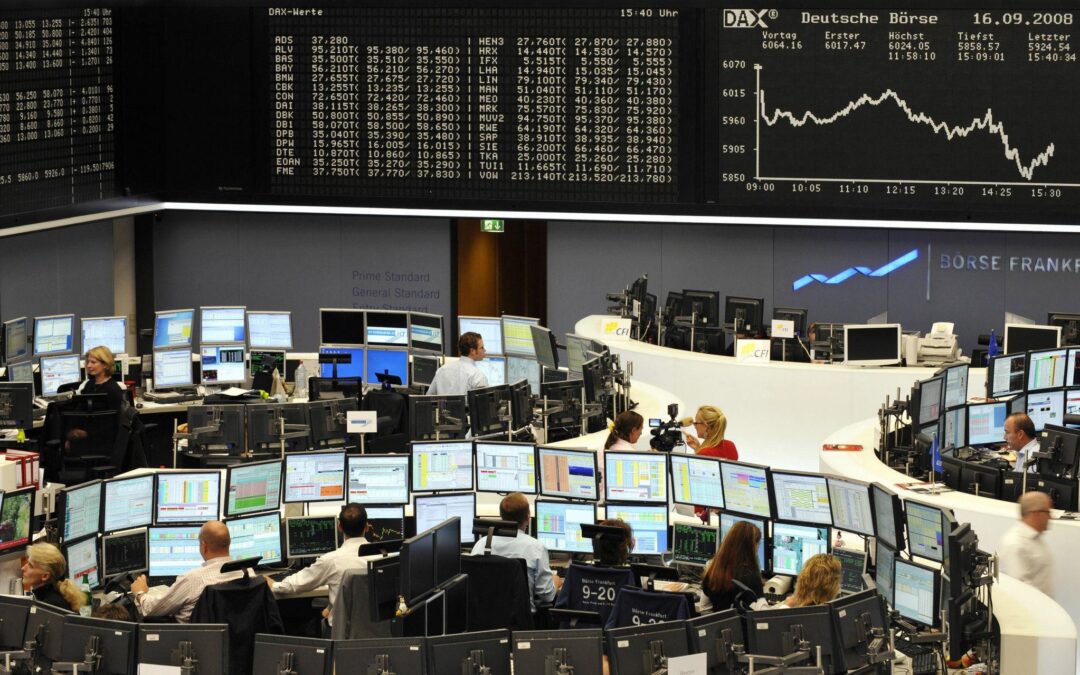
This TPNF essay examines how financial ecosystems can respond strategically to geopolitical disruption. Using the Houthi crisis and wider Middle East conflict as a contemporary case, it argues that financial resilience depends not merely on preventing instability but on connecting monetary policy, banking, capital markets, governments, technology and institutional coordination into an adaptive ecosystem.
by Nikos Chatzis | 15 Sep, 2026 | Space, The Techne–Phronesis Negotiation Framework™
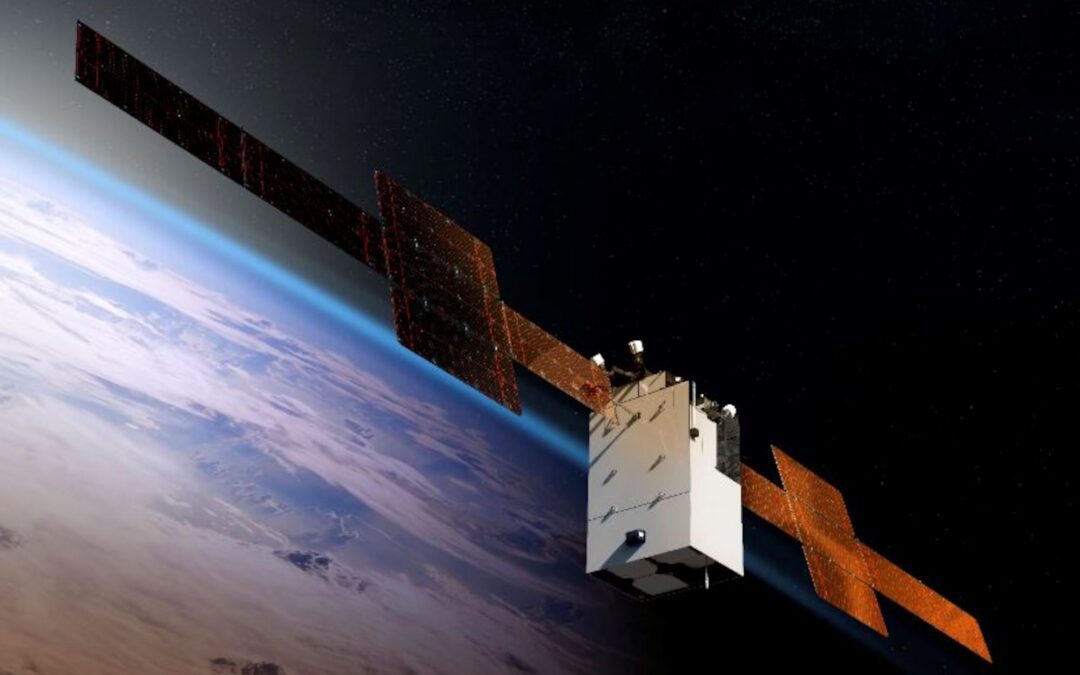
This TPNF essay examines the technological reality behind emerging space weapons and their geopolitical implications. TPNF argues that orbital military power should not be understood through individual weapons alone. Strategic advantage will increasingly emerge from interconnected ecosystems combining satellites, sensors, artificial intelligence, communications, cyber capabilities, launch infrastructure, autonomous spacecraft and human decision-making.

by Nikos Chatzis | 14 Sep, 2026 | Ecosystem Dynamics, Ecosystem Governance, Ecosystem Strategy, Ecosystem Thinking, The Techne–Phronesis Negotiation Framework™, Value Creation
The purpose of this TPNF essay is to develop a general TPNF theory of ecosystem strategic value.
It challenges the assumption that accumulating technologies, institutions, knowledge, capital or infrastructure automatically produces strategic advantage. Instead, TPNF argues that ecosystem performance depends upon the relationships connecting capabilities and upon the mechanisms through which those capabilities can be activated, coordinated, adapted and converted into sustainable outcomes.
by Nikos Chatzis | 13 Sep, 2026 | geoeconomics, Geoeconomy, Geopolitics, Oil Economy, The Techne–Phronesis Negotiation Framework™, War
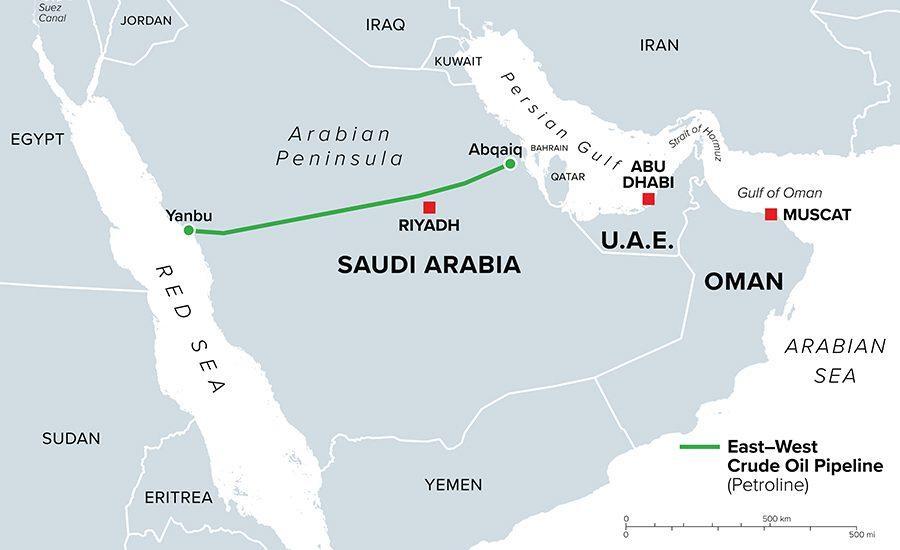
This TPNF essay examines how the Houthi advance in Yemen, attacks against Saudi energy infrastructure, disruption around Hormuz and increasing inflationary pressures are becoming interconnected components of the same strategic system. Through the Techne–Phronesis Negotiation Framework™ (TPNF), it asks whether military escalation can become strategically self-constraining when its economic consequences progressively reduce the freedom of action of the power pursuing it.
by Nikos Chatzis | 13 Sep, 2026 | Technology Ecosystems, The Techne–Phronesis Negotiation Framework™, War Drones
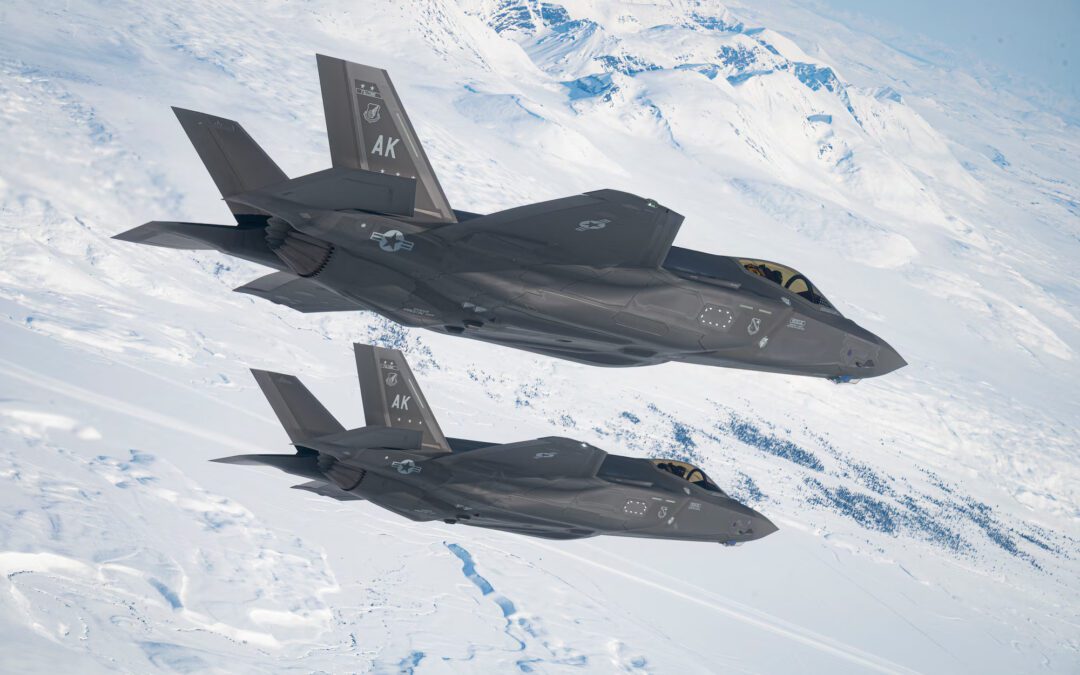
This TPNF essay uses Lockheed Martin’s latest teaser—and the technological trajectory represented by Vectis—to examine the transformation of future air warfare. The objective is not to speculate about classified capabilities. Rather, through the Techne–Phronesis Negotiation Framework™ (TPNF), it examines how autonomy, artificial intelligence, stealth, open architectures and human-machine collaboration may change the fundamental unit of air power from the individual aircraft to the technological ecosystem.

by Nikos Chatzis | 12 Sep, 2026 | The Techne–Phronesis Negotiation Framework™, UAS Investment, UAV, UAVs, UCAV, War Drones
This TPNF essay examines how Greece can convert indigenous unmanned technology from individual platforms into sustainable national strategic capability. Using ARCHYTAS as the starting point, it argues that the greatest long-term value would emerge by connecting domestic UAVs, unmanned maritime systems, counter-UAS technologies, artificial intelligence, sensors, communications, command-and-control, universities, defence companies and operational users within a common learning ecosystem.

by Nikos Chatzis | 11 Sep, 2026 | Geopolitics, The Techne–Phronesis Negotiation Framework™, War
This TPNF essay examines the economic consequences of the Houthi advance along Yemen’s Red Sea coast and the associated increase in risks surrounding Saudi oil exports. It connects developments around Bab el-Mandeb with rising oil prices, increasing government bond yields, inflation expectations and monetary-policy pressures. Its central argument is that contemporary geopolitical shocks increasingly propagate through interconnected ecosystems.

by Nikos Chatzis | 10 Sep, 2026 | Space, The Techne–Phronesis Negotiation Framework™, Value Creation
This TPNF essay examines human space exploration as both an inspirational civilizational project and an emerging foundation for extraterrestrial value creation. It argues that scientific exploration, human spaceflight, robotics, communications, energy systems, autonomous technologies and space infrastructure gradually create capabilities that future generations may transform into forms of value that cannot yet be completely predicted.

by Nikos Chatzis | 10 Sep, 2026 | Geopolitics, Operational Capability, The Techne–Phronesis Negotiation Framework™, War
This TPNF essay examines the current disposition of U.S. aircraft carriers and distinguishes between numerical fleet strength, active deployment and effective operational capability. It argues that evaluating naval power requires understanding not only where carriers are located but also readiness, air-wing capability, logistics, crew endurance, maintenance, ammunition, escort availability and the capacity to rotate forces without creating strategic gaps elsewhere.
by Nikos Chatzis | 10 Sep, 2026 | Artificial Intelligence AI, Big Data, Robotics, The Techne–Phronesis Negotiation Framework™, trade diversification
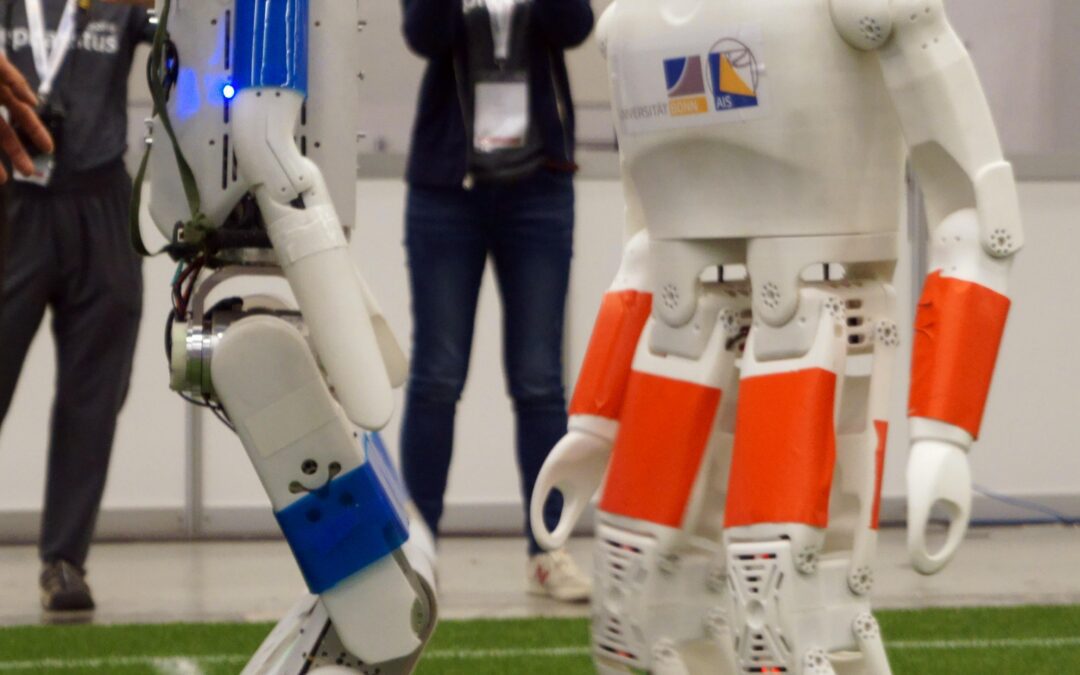
This TPNF essay examines why humanoid robot competitions should be interpreted not merely as sporting spectacles but also as technological experimentation. It explores how artificial intelligence, Big Data, sensors, robotics engineering and repeated physical testing interact to improve humanoid reliability and prepare robots for everyday applications.
by Nikos Chatzis | 9 Sep, 2026 | MALE UAVs, Military UAS Technology, Modern Network-Centric Warfare, The Techne–Phronesis Negotiation Framework™, UCAV, War, War Drones
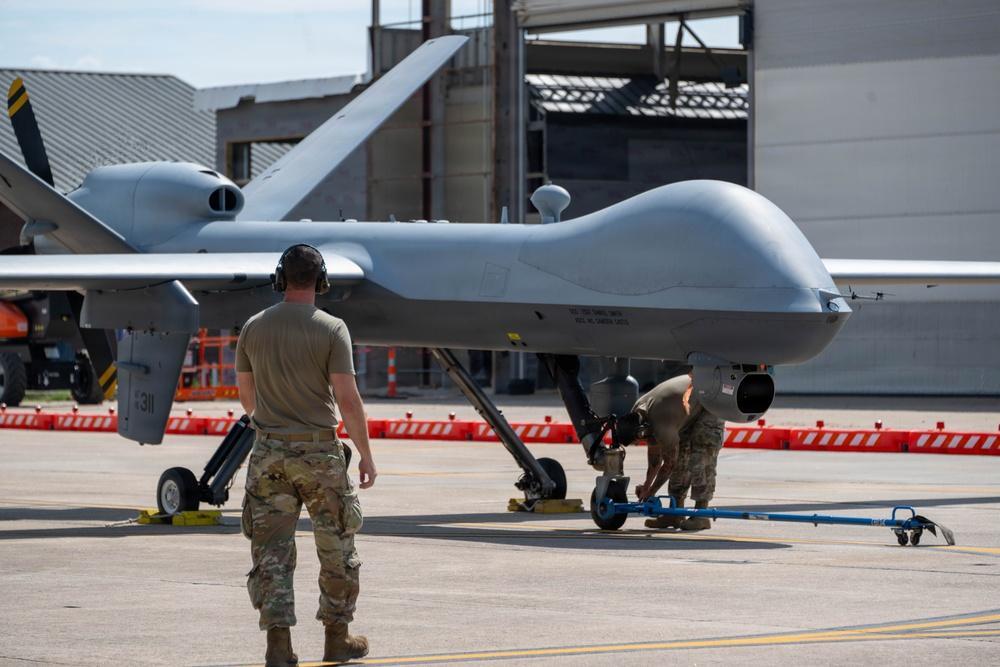
This TPNF essay examines General Atomics’ Wildfire concept within the Pentagon’s search for a new generation of lower-cost, modular MALE unmanned aircraft. It asks whether the evolution beyond the MQ-9 represents primarily technological innovation or something more fundamental: a reassessment of the relationship between capability, cost, survivability, quantity and operational sustainability.
by Nikos Chatzis | 9 Sep, 2026 | Economy, The Techne–Phronesis Negotiation Framework™, Value Creation
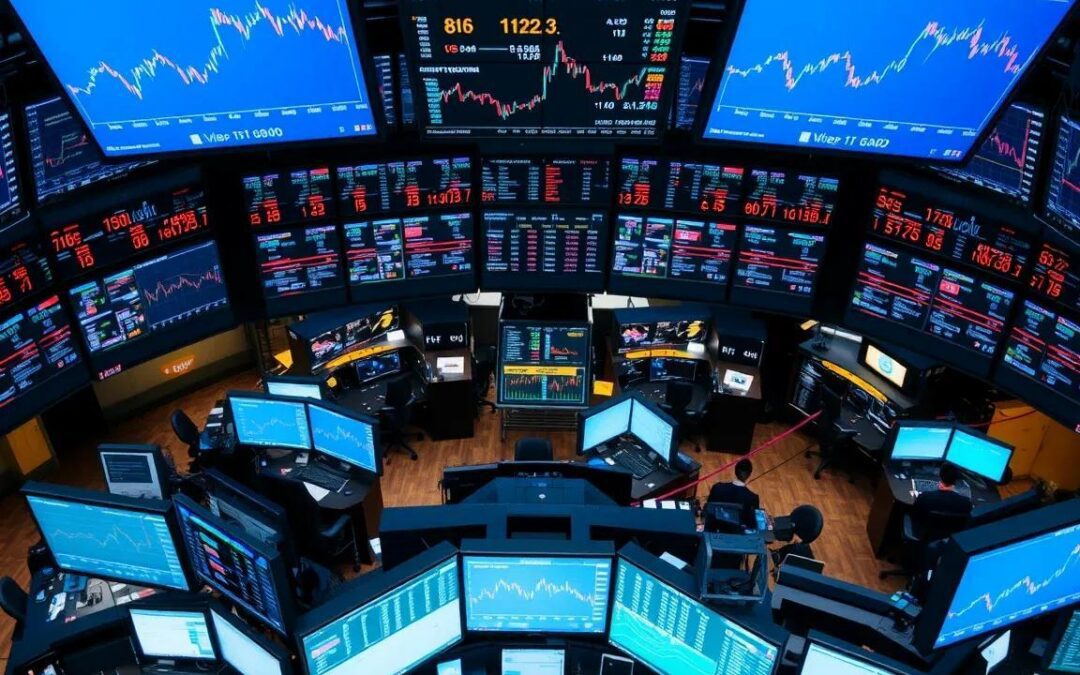
This TPNF essay explains how monetary institutions, governments, financial markets, technology platforms and private actors interact in creating—or undermining—long-term economic stability.
It moves beyond the traditional question of which institution is responsible for economic stability and asks instead: How must different economic actors interact so that stability does not merely preserve today’s economy but increases its capacity to adapt to tomorrow’s disruptions?
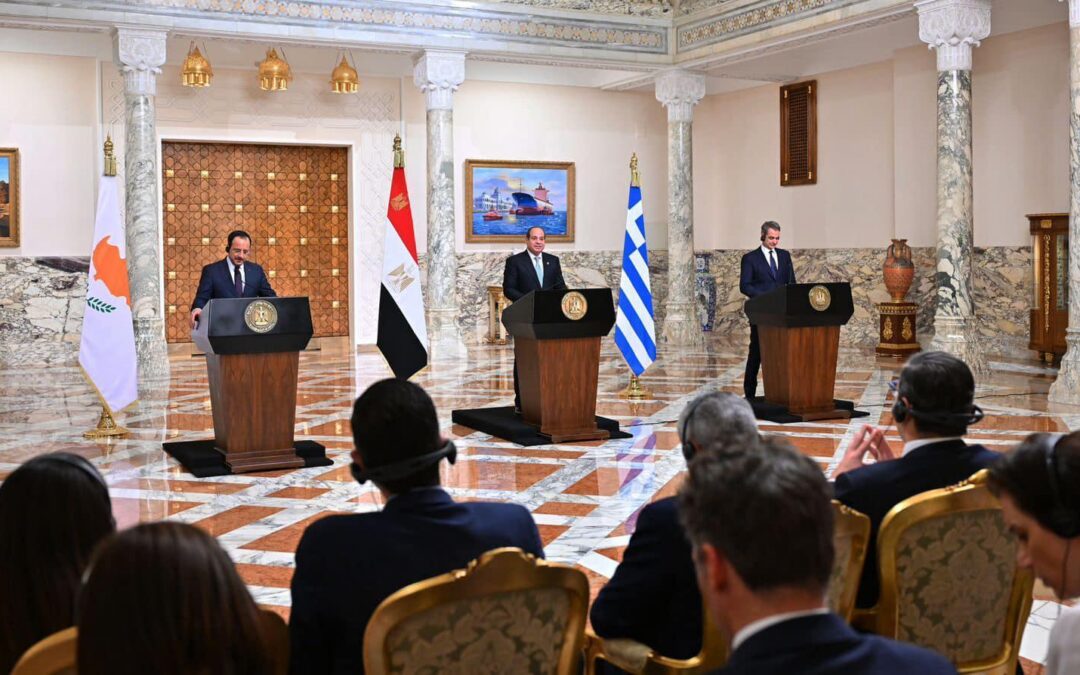
by Nikos Chatzis | 9 Sep, 2026 | Geopolitics, The Techne–Phronesis Negotiation Framework™
This TPNF essay examines the geopolitical significance of Greece–Cyprus–Egypt cooperation as the U.S.–Iran confrontation expands geographically. It asks how an established regional partnership can contribute to security, energy resilience, diplomatic coordination and crisis management without becoming another mechanism of escalation. The deeper question is: Can regional cooperation create strategic stability precisely because it is designed to connect rather than divide?
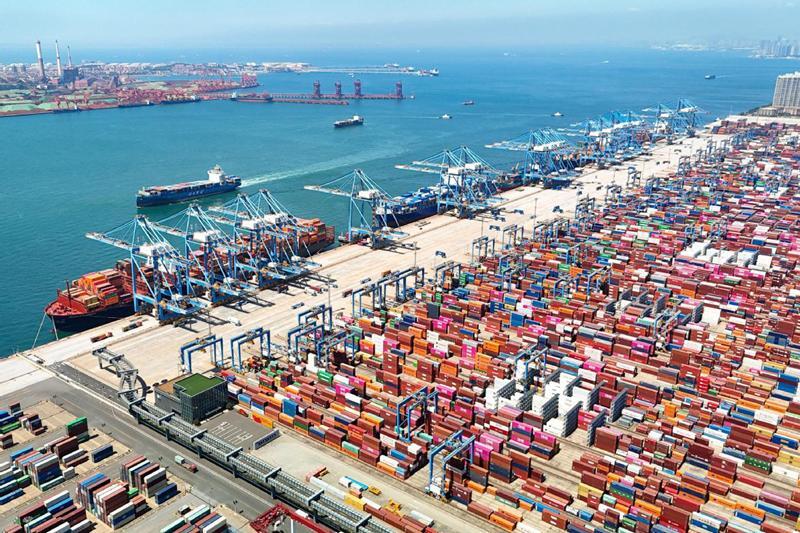
by Nikos Chatzis | 8 Sep, 2026 | Economy, The Techne–Phronesis Negotiation Framework™, Value Creation
This TPNF essay explains how global supply-chain cooperation can contribute to China’s economic stability through long-term value creation. It examines trade, foreign investment, intermediate goods, logistics, industrial learning, market diversification and international production networks as interconnected components of economic resilience.The deeper TPNF question is: How can participation in global supply chains be converted from economic connectivity into lasting strategic capability?
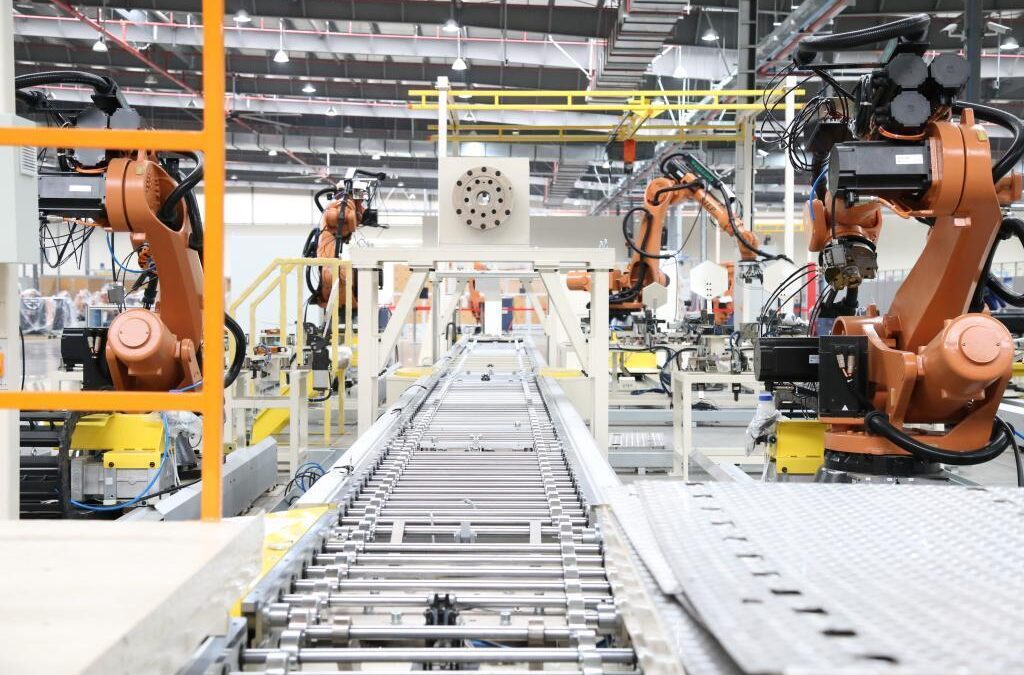
by Nikos Chatzis | 8 Sep, 2026 | Artificial Intelligence AI, Big Data, Cloud Computing, The Techne–Phronesis Negotiation Framework™
This TPNF essay examines how blockchain, Big Data, cloud computing and AI contribute to China’s industrial production and why their convergence matters strategically. Its purpose is not to portray technology as automatically creating industrial superiority. Rather, it asks a more important TPNF question: How can multiple digital technologies be converted into productive capability, adaptive industrial ecosystems and long-term strategic value?
by Nikos Chatzis | 8 Sep, 2026 | Γεωπολιτική
Ιράν-Βόρεια Κορέα: Ο πρόεδρος Τραμπ προσπαθεί ν’ αλλάξει γήπεδο επιζητώντας ένα αμφίβολο αποτέλεσμα εξωτερικής πολιτικής
by Nikos Chatzis | 8 Sep, 2026 | NASA, The Techne–Phronesis Negotiation Framework™
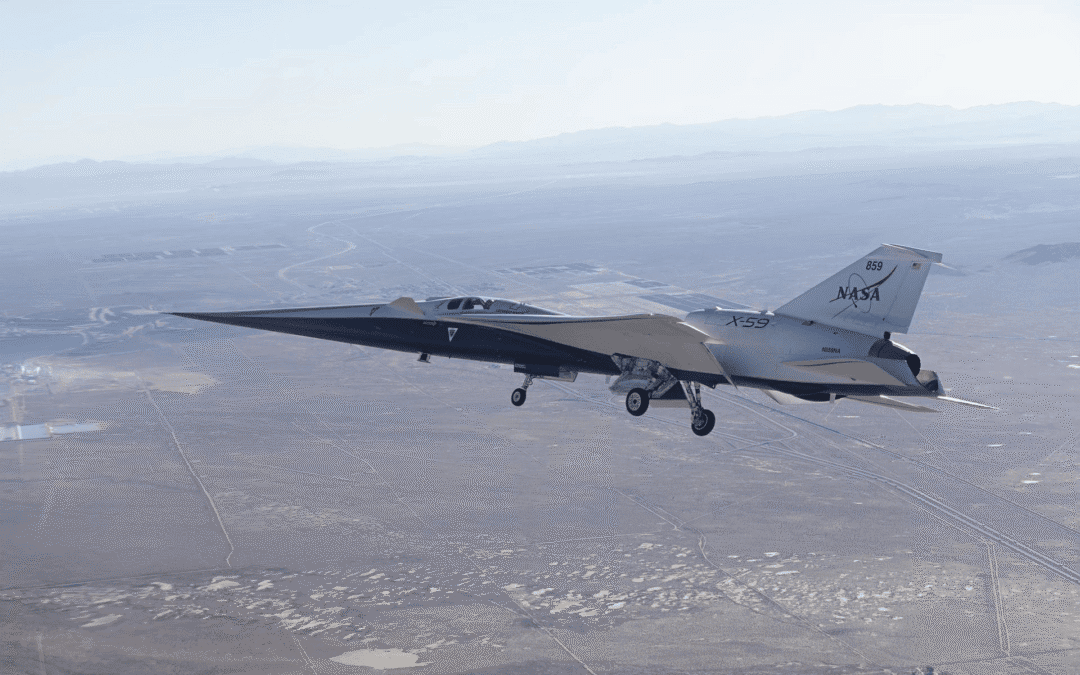
This TPNF essay examines NASA’s X-59 milestone not simply as an aviation achievement but as a paradigm of long-term technological value creation. The central question is: How can an experimental aircraft that will never become a commercial airliner nevertheless create substantial long-term economic, technological and societal value? The answer lies in understanding experimentation itself as strategic infrastructure.

by Nikos Chatzis | 7 Sep, 2026 | Geopolitics, The Techne–Phronesis Negotiation Framework™, US Politics
This TPNF essay examines whether the 2026 midterms should primarily be interpreted as a referendum on Donald Trump or as a broader contest over congressional representation and governance. It also examines what a Democratic House victory could mean strategically for the remaining two years of Trump’s presidency. The purpose is not to predict the election result. It is to understand how presidential power, voter dissatisfaction, congressional competition and institutional checks interact within the American political ecosystem.

by Nikos Chatzis | 7 Sep, 2026 | Artificial Intelligence AI, Technological Civilization, Technology Ecosystems, The Techne–Phronesis Negotiation Framework™
This TPNF essay examines the boundary between myth and reality surrounding claims that AI and digital technologies will fundamentally transform human existence. It rejects two extremes.
The first is technological fatalism: the assumption that AI will inevitably determine humanity’s future.
The second is technological trivialization: the belief that AI is merely another neutral tool whose effects depend entirely upon individual users.

by Nikos Chatzis | 7 Sep, 2026 | Technology Ecosystems, The Techne–Phronesis Negotiation Framework™, War, War Drones
This TPNF essay examines the development of a stealth UCAV designed to operate alongside the future Rafale F5 and asks what this tells us about the continuing strategic relevance of advanced 4.5-generation fighters. The purpose is not to argue that 4.5-generation aircraft become equivalent to purpose-designed stealth fighters. They do not.
by Nikos Chatzis | 6 Sep, 2026 | Space, The Techne–Phronesis Negotiation Framework™
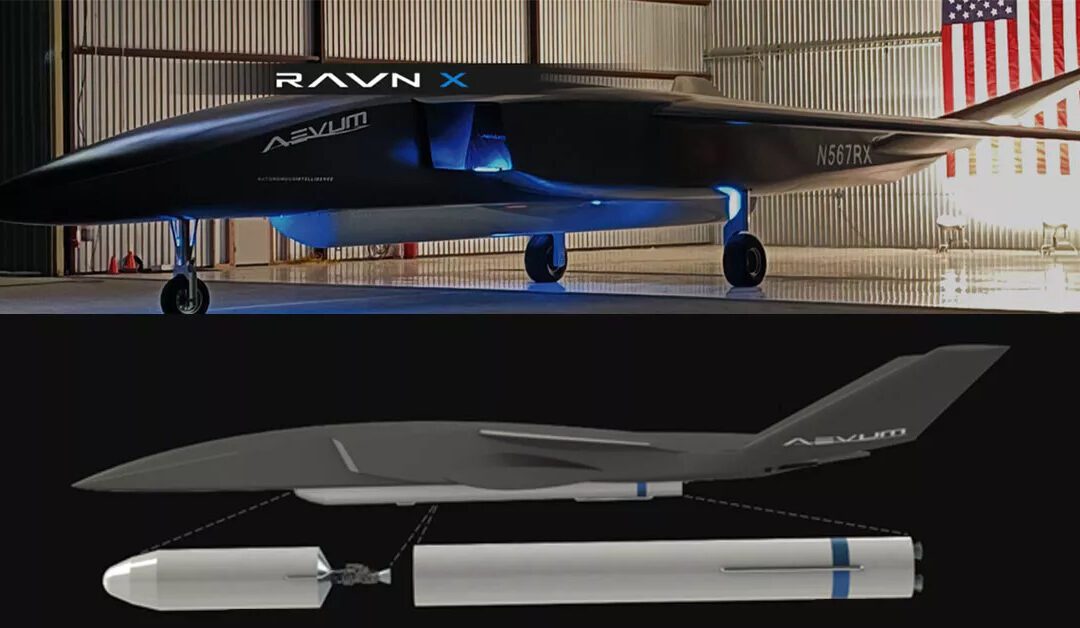
This TPNF essay examines RAVN X as a technological concept within the wider evolution of modern space warfare. The central question is not whether this particular aircraft will ultimately become operational. It is: What strategic value would an autonomous, mobile and rapidly responsive space-launch architecture create in a contested space environment?
by Nikos Chatzis | 6 Sep, 2026 | Technology Diplomacy, Technology Ecosystems, Technology Evolution, Technology Geopolitics, Technology Transfer, The Techne–Phronesis Negotiation Framework™, Value Creation
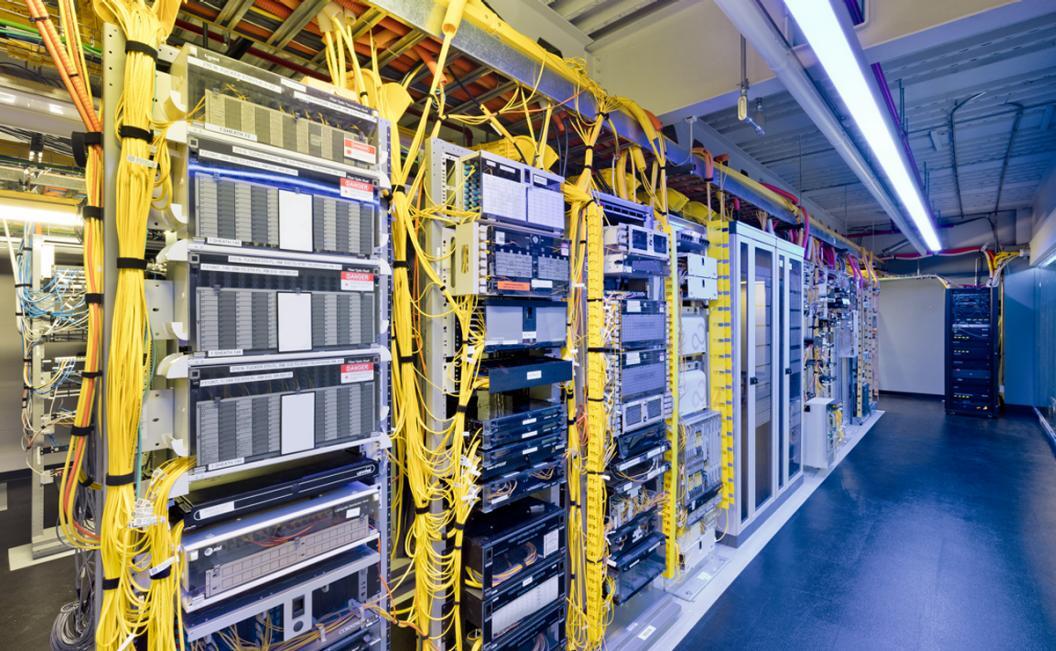
This essay examines technological determinism through the emerging ecosystem structure of contemporary technological civilization. Its central question is: If technology creates increasingly powerful possibilities, what determines whether those possibilities produce lasting human, economic and strategic value? TPNF argues that the answer lies increasingly in the interaction among technology, human agency, institutions, systems and ecosystems.
by Nikos Chatzis | 5 Sep, 2026 | Drones' Technology Management, Economy, Low Altitude Economy (LAE), The Techne–Phronesis Negotiation Framework™
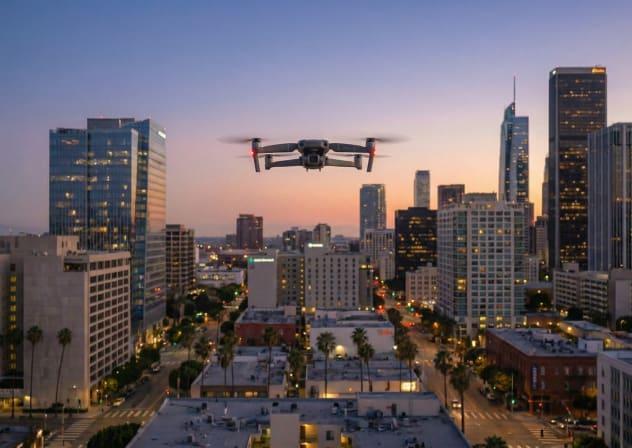
This essay through TPNF examines the Low-Altitude Economy as an emerging dimension of technological civilization and asks a central strategic question: How can societies convert access to low-altitude airspace into sustainable economic, technological and societal value? The answer depends not simply upon producing more drones.
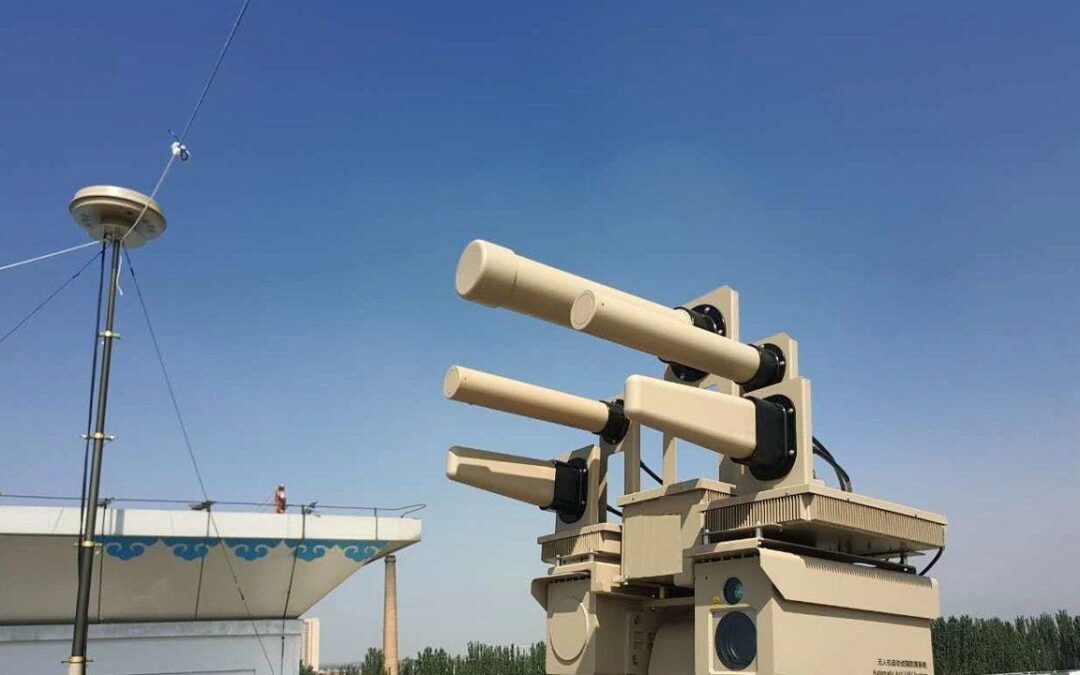
by Nikos Chatzis | 4 Sep, 2026 | anti-Drone Warfare, Artificial Intelligence AI, drone ecosystems, Drone warfare, The Techne–Phronesis Negotiation Framework™, War
This essay examines through TPNF how AI-enabled autonomy is transforming drone warfare and consequently changing the technological requirements of drone detection and counter-UAS systems. Using Greece’s Centaurus, Telemachus and Hyperion programs, it argues that future counter-drone superiority will depend not upon one permanent technological solution, but upon the ability to continuously adapt the detection and response architecture faster than the threat evolves.
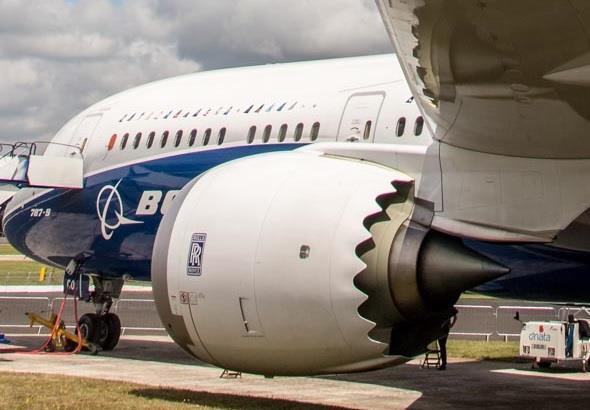
by Nikos Chatzis | 3 Sep, 2026 | Aviation Technology, The Techne–Phronesis Negotiation Framework™
This essay examines RRPF’s decision through TPNF as a case of long-term value creation through localization, ecosystem participation and aviation lifecycle services.
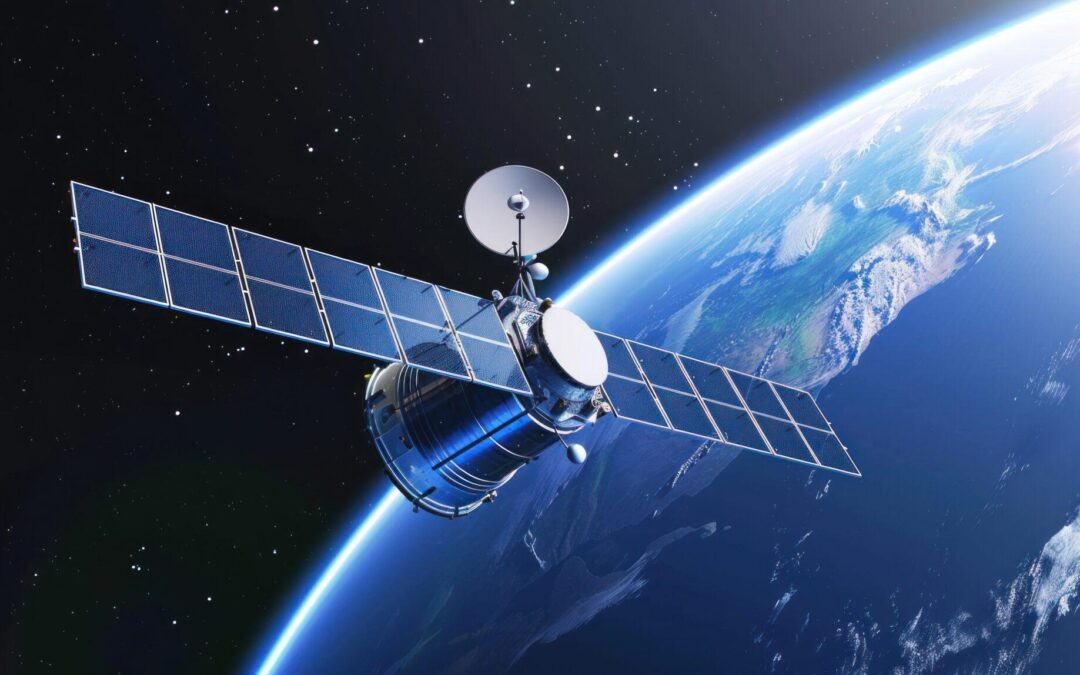
by Nikos Chatzis | 3 Sep, 2026 | Biotechnology, Space, The Techne–Phronesis Negotiation Framework™
This essay examines by applying TPNF the strategic roles of energy, quantum technologies, space infrastructure and biotechnology within contemporary technological civilization. Rather than treating them as separate industries, it analyzes their growing interdependence through Systems Thinking and technology convergence.

by Nikos Chatzis | 2 Sep, 2026 | Geopolitics, The Techne–Phronesis Negotiation Framework™, War
This essay examines the extraordinary deployment of the USS Abraham Lincoln as a case study in military operational sustainability. Through TPNF, the deeper question becomes: How should military leadership balance immediate mission requirements against the long-term preservation of people, platforms and future combat readiness?

by Nikos Chatzis | 2 Sep, 2026 | The Techne–Phronesis Negotiation Framework™
This essay examines the Japanese concept of Takumi through the TPNF perspective of technological evolution and long-term value creation. It explores how craftsmanship, human knowledge, manufacturing, automation and technological innovation interact within Japan’s broader tradition of monozukuri.
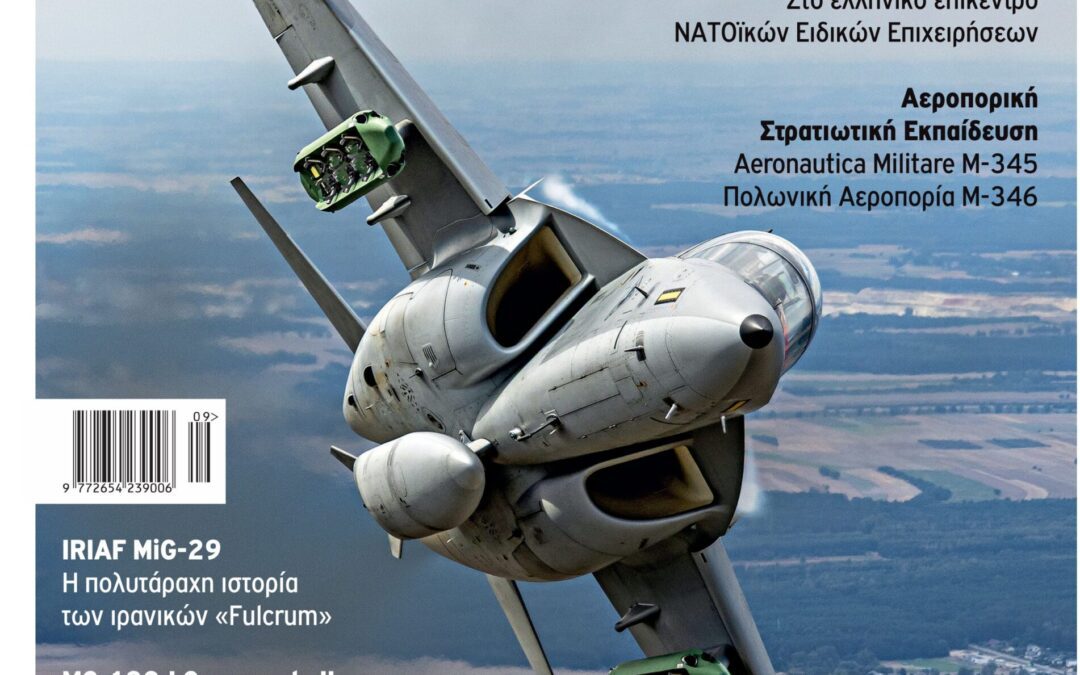
by Nikos Chatzis | 2 Sep, 2026 | Γεωπολιτική
Η Τουρκία ενισχύει τη ναυτική παρουσία της στην Ανατολική Μεσόγειο μέσω Συρίας. Σε ευρύτερο σχεδιασμό εντάσσεται η κλιμάκωση των τουρκικών διεκδικήσεων στο Αιγαίο. ΠΤΗΣΗ ΣΕΠΤΕΜΒΡΙΟΣ...

by Nikos Chatzis | 1 Sep, 2026 | Geopolitics, The Techne–Phronesis Negotiation Framework™, War
This essay examines the geopolitical significance of Xi Jinping’s arrival in Egypt as renewed U.S.–Iran hostilities intensify around the Strait of Hormuz. Through TPNF, it analyzes the contrast between military power projection and ecosystem-building influence, Egypt’s pursuit of strategic autonomy, China’s expanding Middle Eastern role, and the broader transition toward a more complex regional order.

by Nikos Chatzis | 1 Sep, 2026 | Ecosystem Dynamics, Ecosystem Governance, Ecosystem Strategy, Ecosystem Thinking, The Techne–Phronesis Negotiation Framework™, Value Creation
This essay examines ecosystem collaboration as a fundamental mechanism of long-term value creation.
Through TPNF, it explores why technological convergence makes collaboration increasingly necessary, why collaboration frequently fails, how negotiation and governance enable ecosystem alignment, and how successful collaboration can generate Strategic Future Value™ and ultimately Lasting Strategic Value™.

by Nikos Chatzis | 31 Aug, 2026 | Strategic Adaptation, Strategic Analysis, strategic autonomy, Strategic Financial Ecosystems, Strategic Governance, Strategic Leadership, Strategic Management, Sustainability, Sustainable Value Creation, The Techne–Phronesis Negotiation Framework™
This essay examines one of the most fundamental problems of strategy: the conversion of power into sustainable outcomes. Through TPNF, it argues that strategic power must pass through several stages—understanding, orchestration, negotiation, conversion, stabilization and adaptation—before it can generate Lasting Strategic Value™.
by Nikos Chatzis | 31 Aug, 2026 | Space, The Techne–Phronesis Negotiation Framework™, Value Creation
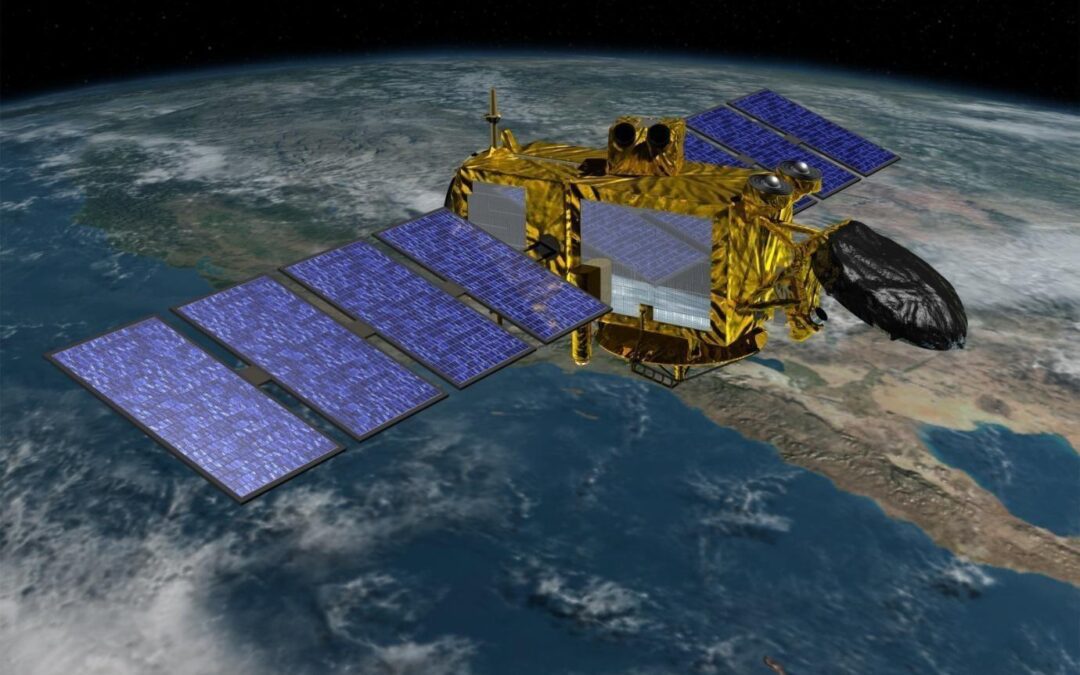
This essay examines China’s emerging space computing cloud through the TPNF perspective of long-term value creation. Its purpose is to explore the strategic transition from satellites as hardware platforms toward space infrastructure providing persistent computational services.
by Nikos Chatzis | 30 Aug, 2026 | Defense & Security, The Techne–Phronesis Negotiation Framework™
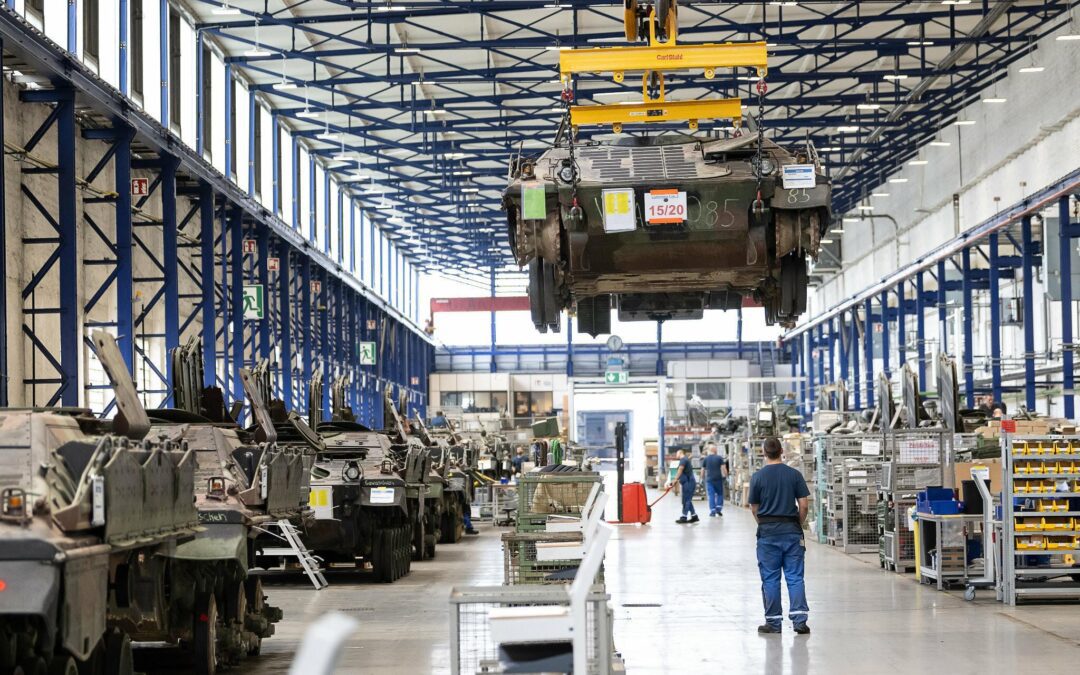
This essay examines the emerging Defence, Security and Resilience Bank through the TPNF perspective of long-term value creation. The objective is to explore whether innovative multilateral financing can strengthen not only defence expenditure but also technological innovation, industrial capacity, supply-chain resilience, interoperability and the strategic autonomy of participating states.

by Nikos Chatzis | 30 Aug, 2026 | Strategic Theory, Strategic Thinking, Systems Thinking, The Techne–Phronesis Negotiation Framework™
This essay examines the transition of TPNF from conceptual integration toward systematic theoretical testing. Its purpose is not to abandon theoretical development. Strong concepts remain essential.
Rather, the objective is to introduce a second stage: Concept → Proposition → Observation → Comparison → Testing → Refinement → Stronger Theory.

by Nikos Chatzis | 29 Aug, 2026 | Geopolitics, The Techne–Phronesis Negotiation Framework™
This essay through TPNF examines the accelerating expansion of China’s remote Lop Nur flight-test facility and its geopolitical implications. It focuses particularly on what the development reveals about China’s aerospace ambitions, sixth-generation combat-aircraft programs, unmanned systems, possible future strategic aircraft, military innovation infrastructure and long-term technological competition with the United States.

by Nikos Chatzis | 29 Aug, 2026 | Strategic Theory, Strategic Thinking, Strategic Wisdom, The Techne–Phronesis Negotiation Framework™
This essay by using TPNF analytical lenses explores the role of strategic thought in Ancient Greek political and daily life and examines what that intellectual tradition can contribute to strategic decision-making in contemporary technological civilization. Its purpose is not to romanticize Ancient Greece or suggest that ancient political institutions can simply be transferred into modern societies. Instead, it asks whether the Greek tradition of connecting politics, practical judgment, civic responsibility, rhetoric, strategy and human purpose offers useful intellectual foundations for navigating an age increasingly organized through technology.

by Nikos Chatzis | 27 Aug, 2026 | Strategic Theory, Technological Civilization, Technology Corridors, Technology Ecosystems, Technology Evolution, Technology Geopolitics, Technology Transfer, The Techne–Phronesis Negotiation Framework™, Value Creation
This essay develops an integrative TPNF interpretation of contemporary technological civilization. Its purpose is to connect technology evolution, convergence, Systems Thinking, ecosystems, negotiation, human–AI collaboration, institutional adaptation and Phronesis into a unified strategic architecture.
by Nikos Chatzis | 26 Aug, 2026 | The Techne–Phronesis Negotiation Framework™, Value Creation
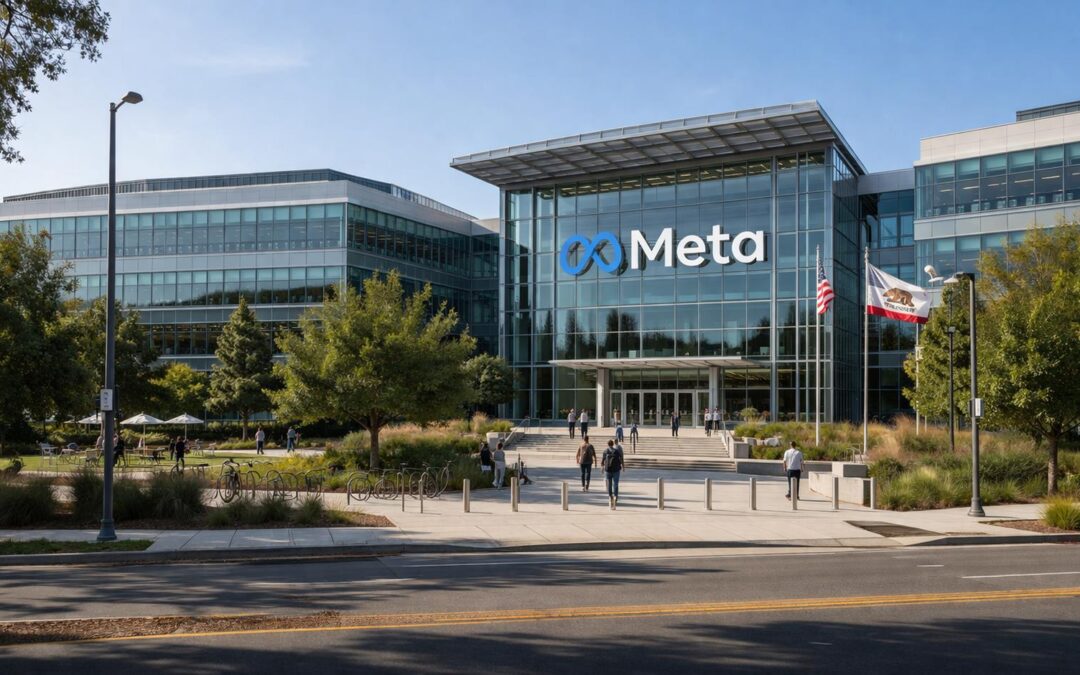
This essay examines Meta’s settlement over children’s use of social media alongside its attempt to reorganize parts of its workforce around artificial intelligence. Its purpose is not to judge Meta through either development in isolation. Instead, TPNF asks a broader strategic question relevant to every organization navigating technological transformation: How should technological capability be converted into future value without creating hidden human, institutional and systemic liabilities?

by Nikos Chatzis | 26 Aug, 2026 | Economy, Technology Ecosystems, Technology Evolution, The Techne–Phronesis Negotiation Framework™, Value Creation
This essay explains the role of technology evolution in today’s economy through the TPNF perspective.
It examines how technological progress affects productivity, industries, business models, investment, employment, ecosystems and competitive advantage while distinguishing technological invention from economically meaningful value creation.
by Nikos Chatzis | 25 Aug, 2026 | Space, The Techne–Phronesis Negotiation Framework™
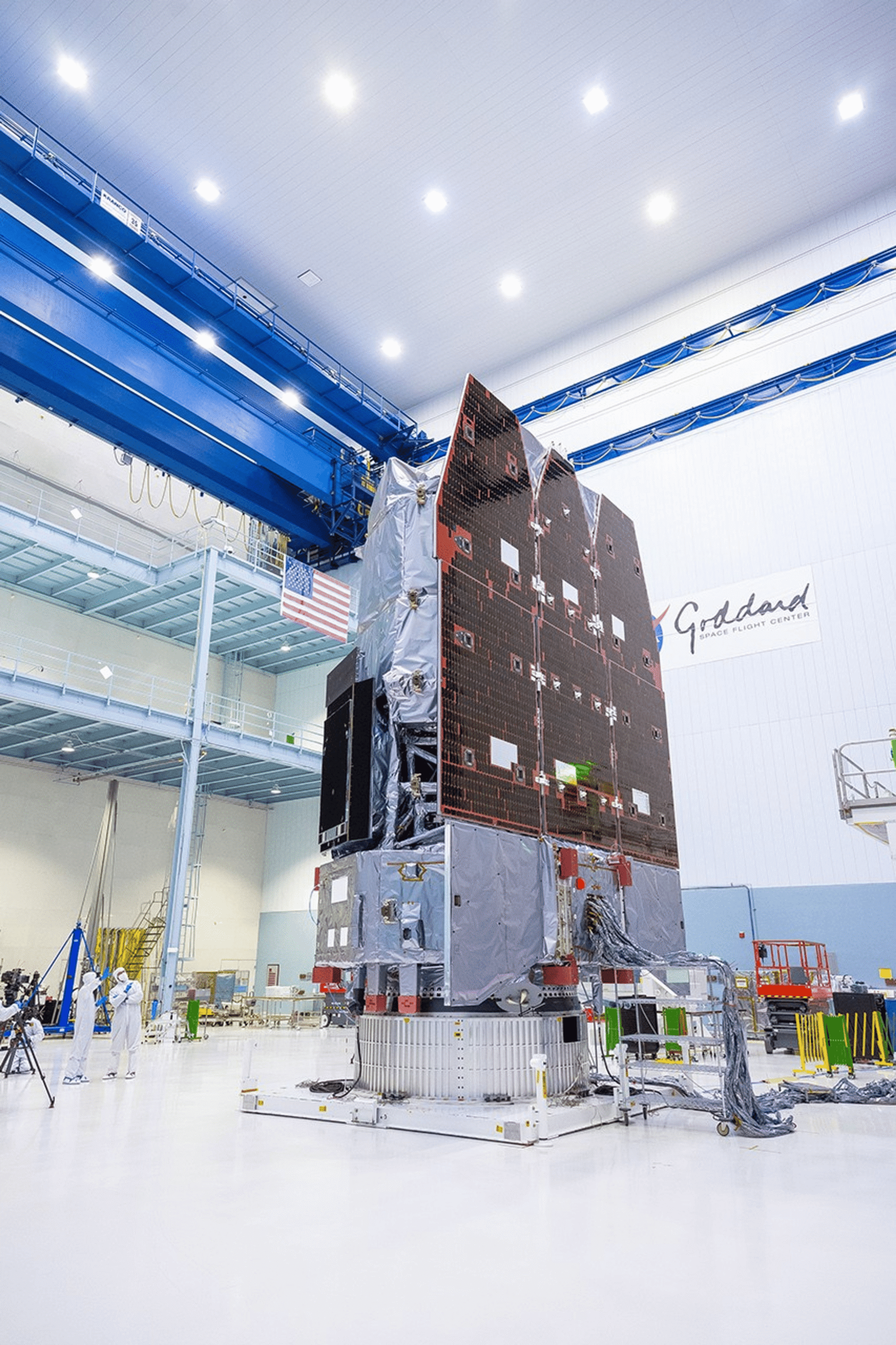
This essay examines the upcoming launch of the Nancy Grace Roman Space Telescope through the TPNF perspective of long-term value creation. Rather than treating Roman exclusively as an astronomical instrument, it considers the observatory as part of a broader Space Knowledge Ecosystem™ connecting science, technology, data, institutions, industry, international cooperation and future generations of researchers.

by Nikos Chatzis | 25 Aug, 2026 | Strategic Financial Ecosystems, Strategic Governance, Strategic Leadership, Strategic Management, Strategic Negotiation, Strategic Resilience, Strategic Theory, Strategic Thinking, Strategic Wisdom, Strategy Evolution - Business Strategy, Technological Civilization, Technology Ecosystems, Technology Evolution, Technology Geopolitics, The Techne–Phronesis Negotiation Framework™
This essay examines how strategic decision-making is changing as artificial intelligence, technological convergence, autonomous systems and complex ecosystems reshape organizations, markets and geopolitics. Its purpose is to explain how TPNF can provide an integrative framework connecting technological capability, systems understanding, human judgment, negotiation and adaptive learning.

by Nikos Chatzis | 25 Aug, 2026 | Geopolitics, The Techne–Phronesis Negotiation Framework™, War
This essay examines the latest Reuters/Ipsos polling through the TPNF lens and asks how Tehran may interpret declining American support for the Iran war. Its purpose is not to suggest that opinion polls determine military strategy. Rather, it examines public opinion as one component within a wider strategic ecosystem connecting war, energy prices, economic pressure, elections, political legitimacy and negotiation.

by Nikos Chatzis | 24 Aug, 2026 | Economic Sanctions, Geopolitics, The Techne–Phronesis Negotiation Framework™, War
This essay through TPNF examines Iran’s principal options for responding to Washington’s intensified economic campaign and evaluates their wider geopolitical consequences.
It argues that Tehran’s strategic response is likely to depend less upon symmetrical retaliation against American economic power than upon asymmetric escalation across interconnected systems—particularly energy, maritime transportation, Gulf infrastructure, regional security and cyber networks.

by Nikos Chatzis | 24 Aug, 2026 | Strategic Analysis, Strategic Governance, Strategic Leadership, Strategic Management, Strategic Negotiation, Technological Civilization, Technology Ecosystems, Technology Transfer, The Techne–Phronesis Negotiation Framework™, Value Creation
This essay explores one of the foundational questions of TPNF: What makes strategic value last?
Its purpose is to distinguish temporary advantage from sustainable strategic value and explain why long-term value increasingly depends upon adaptability, ecosystem relationships, institutional legitimacy, learning and practical wisdom.
by Nikos Chatzis | 24 Aug, 2026 | Geopolitics, The Techne–Phronesis Negotiation Framework™
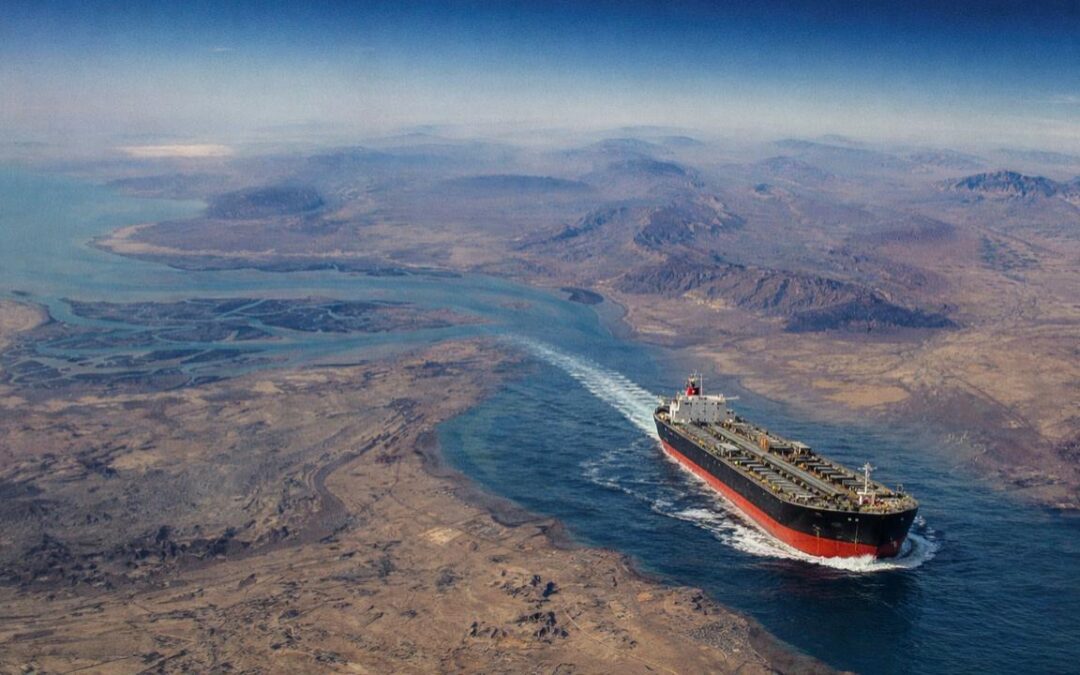
This essay examines the geopolitical significance of Washington’s threatened “Economic D-Day” against Iran and the simultaneous decline in international oil prices. Using TPNF, it explores economic warfare, energy markets, the Strait of Hormuz, coercive diplomacy and the relationship between geopolitical events and market expectations.
by Nikos Chatzis | 23 Aug, 2026 | Robotics, Technology Ecosystems, Technology Evolution, Technology Geopolitics, The Techne–Phronesis Negotiation Framework™
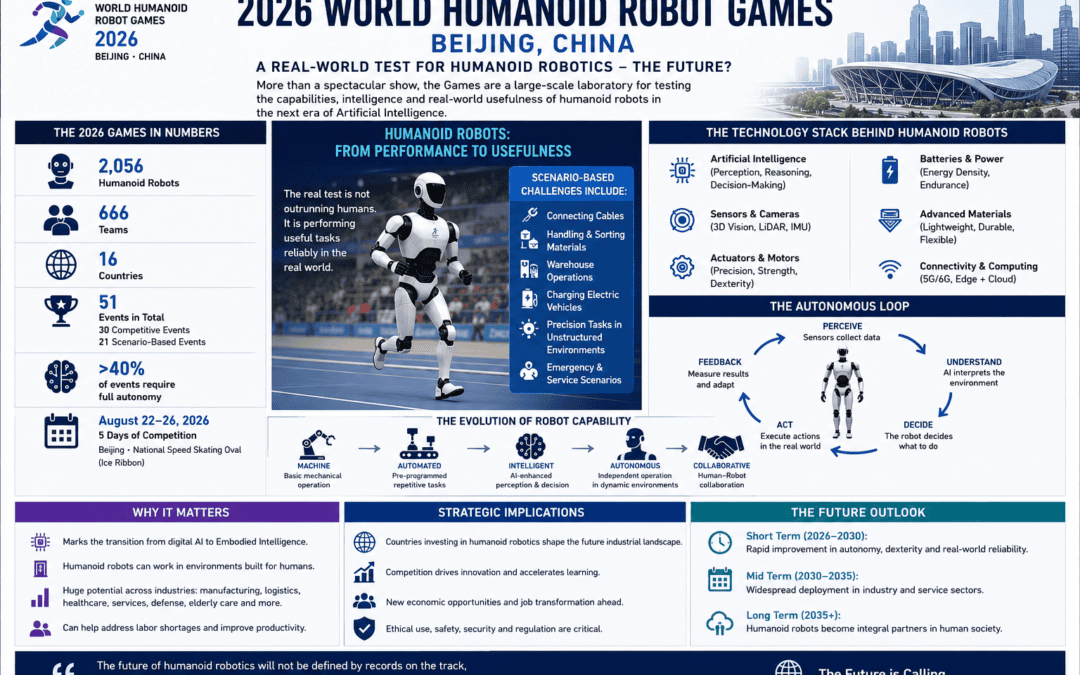
This essay examines the five-day 2026 World Humanoid Robot Games as a real-world testing laboratory for humanoid robotics. Using TPNF, it explores the convergence of artificial intelligence, robotics, sensors, autonomous decision-making, manufacturing and human–machine collaboration, while asking a larger question: Are we approaching the transition from the Information Age toward the age of Physical AI?

by Nikos Chatzis | 23 Aug, 2026 | Technology Corridors, Technology Diplomacy, Technology Ecosystems, Technology Evolution, Technology Geopolitics, Technology Transfer, The Techne–Phronesis Negotiation Framework™, Value Creation
The purpose of this essay is to explain why TPNF should increasingly be understood beyond the conventional boundaries of negotiation theory. Negotiation remains fundamental because technological civilization continuously requires choices among competing interests, capabilities, risks and visions of the future. But TPNF addresses a broader strategic challenge: How can individuals, organizations, states and societies understand, negotiate and govern technological transformation in ways that create lasting value? This question places TPNF at the intersection of technology, systems thinking, strategy, negotiation and practical wisdom.
by Nikos Chatzis | 21 Aug, 2026 | Industry 4.0, Internet of Things (IoT), The Techne–Phronesis Negotiation Framework™
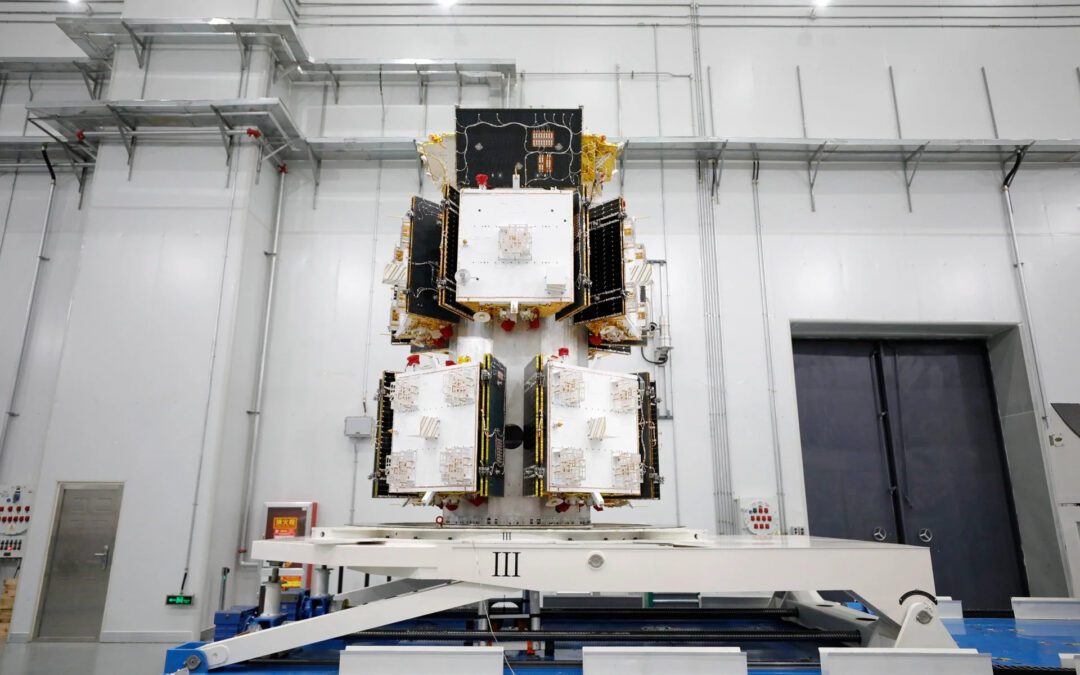
This essay examines China’s decision to authorize Zhejiang Geespace Technology to conduct commercial satellite-IoT trials. Using TPNF, it argues that satellite IoT should be interpreted not merely as communications infrastructure but as an emerging connectivity architecture connecting physical assets with digital intelligence.
by Nikos Chatzis | 21 Aug, 2026 | Geopolitics, The Techne–Phronesis Negotiation Framework™
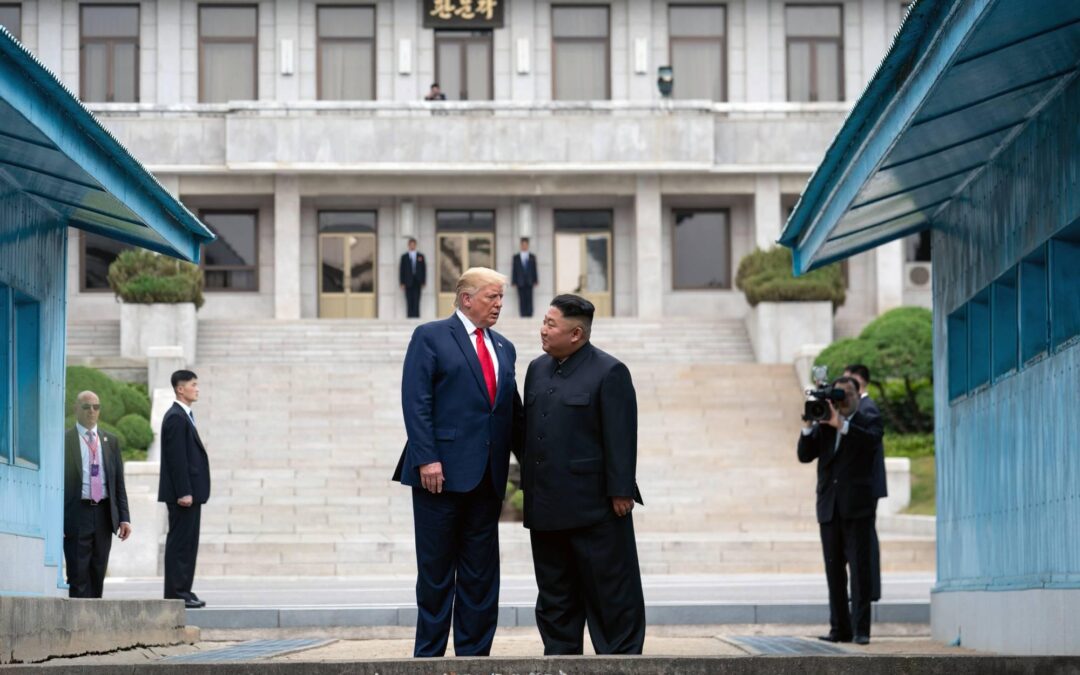
This essay uses the Techne–Phronesis Negotiation Framework™ (TPNF) to examine President Donald Trump’s attempt to reopen dialogue with Kim Jong Un while the U.S. remains trapped in a prolonged confrontation with Iran.

by Nikos Chatzis | 19 Aug, 2026 | Geopolitics, The Techne–Phronesis Negotiation Framework™, War
The purpose of this essay is to analyze the geopolitical implications of Iran’s reported consideration of attacks against U.S. military targets in Europe. Using TPNF, it examines the possible transition from regional escalation toward cross-ecosystem conflict, particularly through the interaction of U.S. military infrastructure, European security, NATO, Mediterranean geography, critical infrastructure and Iran’s strategy of raising the costs of American military action.
by Nikos Chatzis | 14 Aug, 2026 | Military UAS Technology, The Techne–Phronesis Negotiation Framework™, War Drones
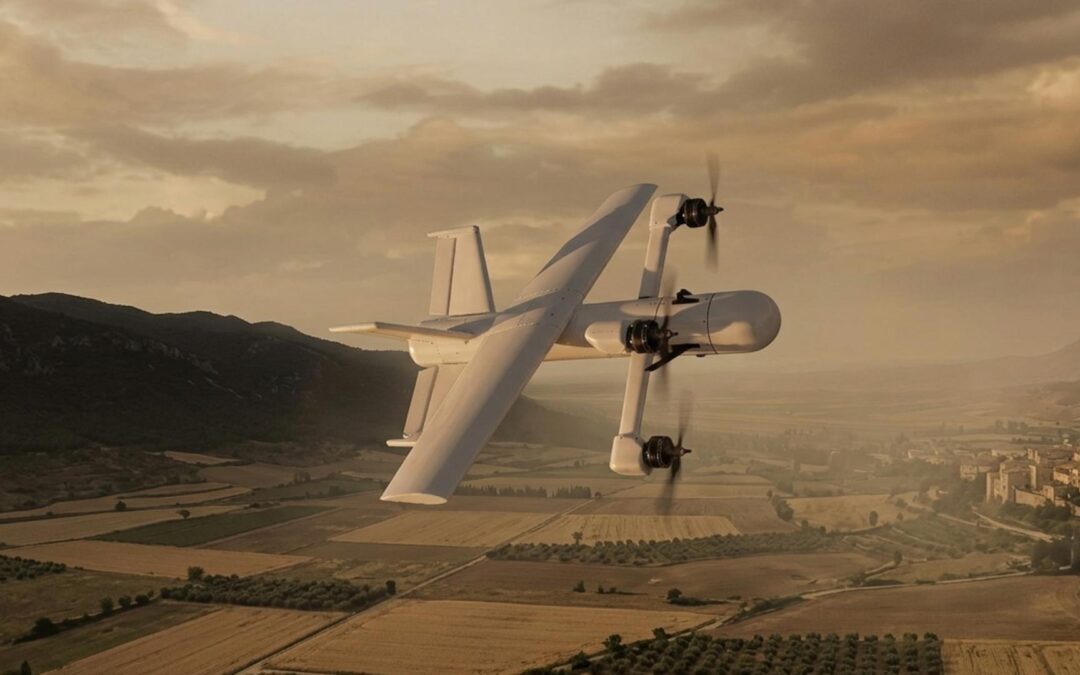
The purpose of this essay is to analyze MORFIUS through TPNF as an emerging example of airborne directed-energy counter-swarm capability. The essay examines how drone swarms are changing the economics of air defense; why reusable HPM systems may offer an alternative to conventional one-target/one-interceptor models; and how autonomous platforms, electronic effects, command networks and layered defense increasingly form integrated technological ecosystems.

by Nikos Chatzis | 14 Aug, 2026 | Platform Ecosystems, Strategic Adaptation, The Techne–Phronesis Negotiation Framework™
The purpose of this essay is to analyze Microsoft’s changing China strategy through the TPNF and explain what it reveals about the future relationship between technology, geopolitics and global business. The essay argues that the emerging U.S.–China technological order should not be interpreted exclusively through the binary concept of decoupling versus globalization. Instead, corporations increasingly need to negotiate where to withdraw, where to remain connected, which dependencies to reduce and which ecosystem relationships continue creating strategic value. Microsoft provides an important contemporary example of this emerging model.
by Nikos Chatzis | 13 Aug, 2026 | Drone Economy, Drone Training, Technology Ecosystems, Technology Evolution, The Techne–Phronesis Negotiation Framework™
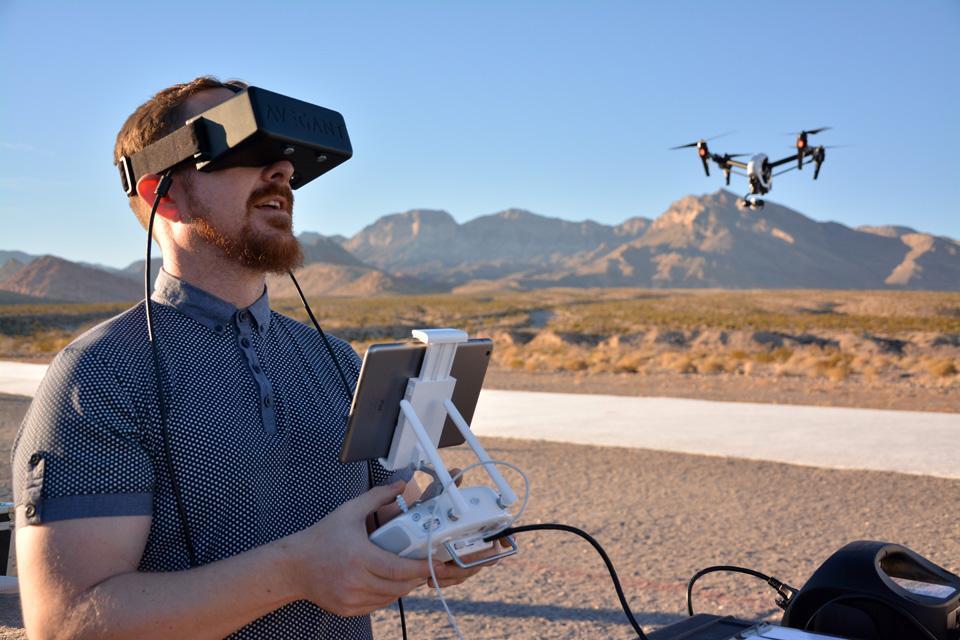
The purpose of this essay is to examine the competencies, educational philosophy and strategic role required of the Drone Instructor of 2035. Using TPNF, it explores how instructors will need to negotiate three continuously evolving dimensions: Technology ↔ Regulation ↔ Human Capability
by Nikos Chatzis | 13 Aug, 2026 | Drone Economy, drone ecosystems, Drone Training, The Techne–Phronesis Negotiation Framework™
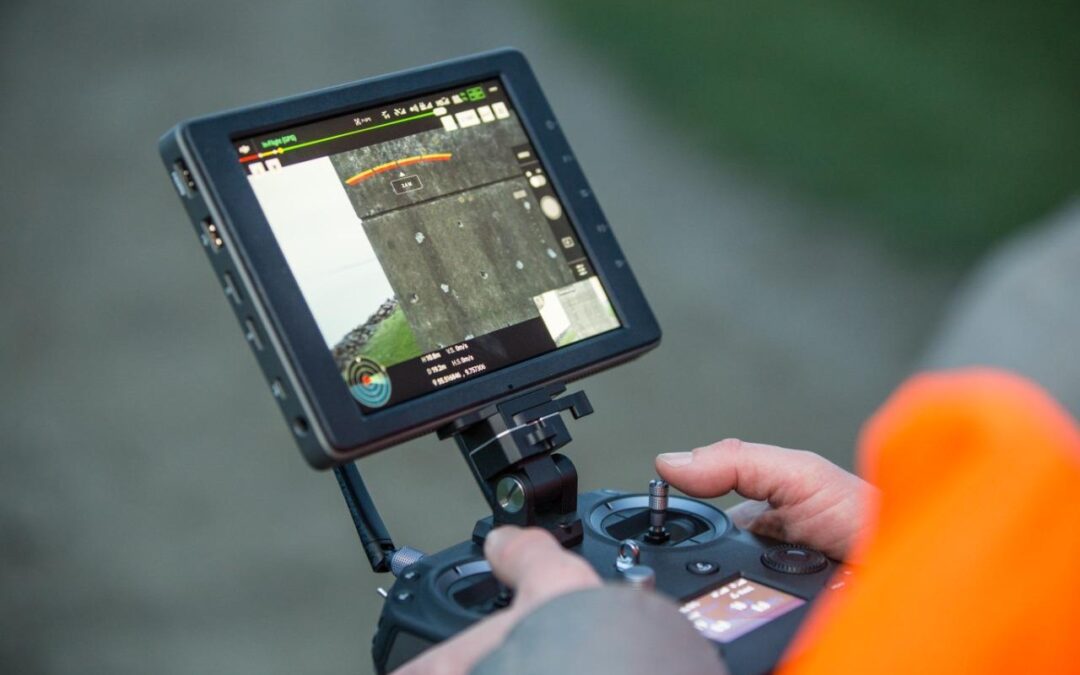
The purpose of this essay is to examine how innovative drone training can become a source of comparative advantage and sustainable future value creation within the rapidly evolving UAS ecosystem. Using the Techne–Phronesis Negotiation Framework™ (TPNF), the essay moves beyond the conventional understanding of drone education as a certification process and evaluates training as a strategic capability-development ecosystem.
by Nikos Chatzis | 13 Aug, 2026 | Drone Training, The Techne–Phronesis Negotiation Framework™
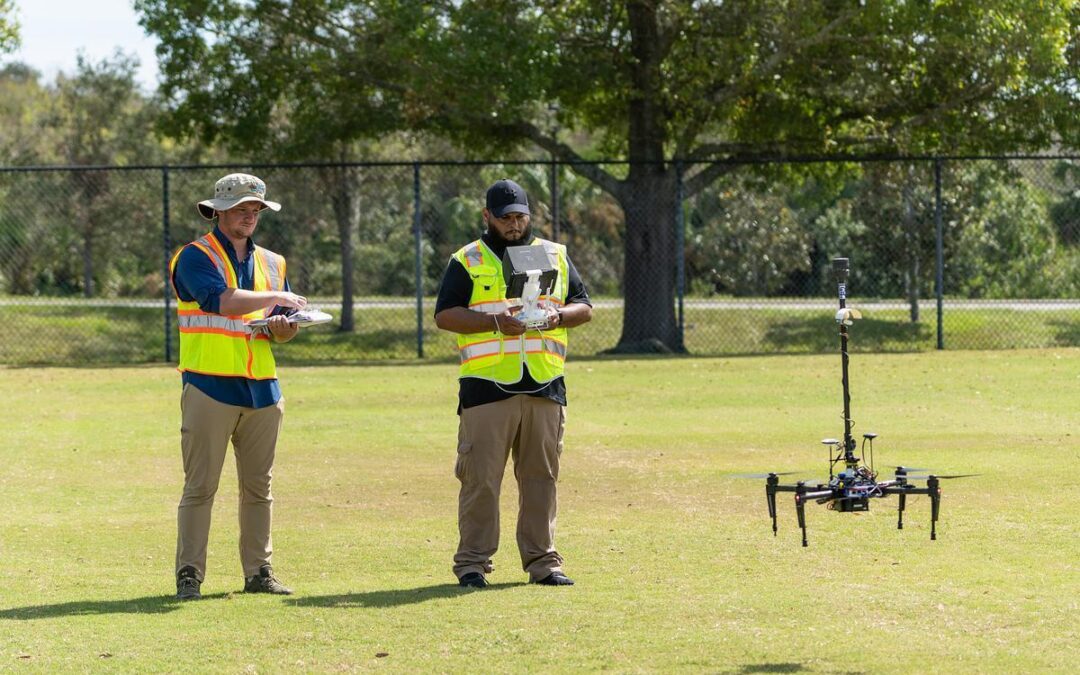
This essay examines contemporary challenges facing drone training and proposes a TPNF interpretation of its future development. Its central argument is that regulation and certification provide an essential safety foundation, but sustainable professional value requires continuous competency development integrating technology, aviation judgment, risk management and real-world operational applications.
by Nikos Chatzis | 12 Aug, 2026 | Geopolitics, The Techne–Phronesis Negotiation Framework™, War
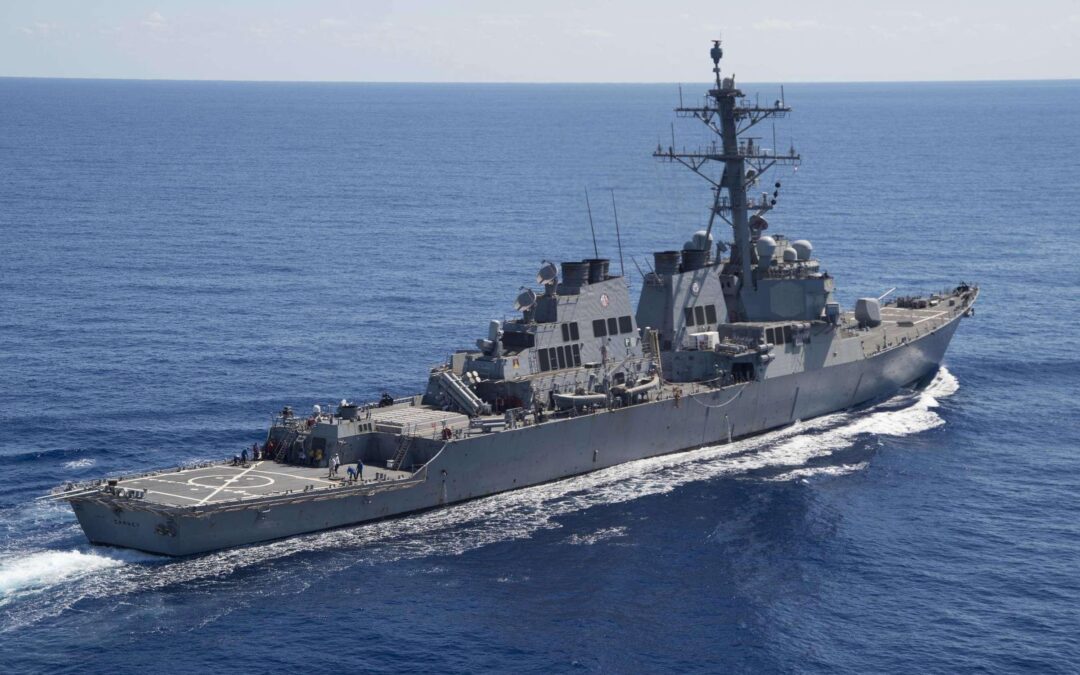
This essay examines the emerging divergence between U.S. and Israeli objectives alongside continuing maritime escalation involving the Houthis and the United States. TPNF argues that the Middle East should increasingly be understood not as a collection of separate conflicts but as a Negotiating–Security Ecosystem in which actions on one front alter bargaining positions across several others.

by Nikos Chatzis | 11 Aug, 2026 | Geopolitics, Global Economy, Strategic Financial Ecosystems, The Techne–Phronesis Negotiation Framework™
This essay explains Strategic Financial Ecosystems through TPNF and examines how their transformation affects geopolitical competition, economic resilience and international negotiation. Its central argument is that financial strategy can no longer be analyzed independently from technology, trade, energy, security and geopolitics.

by Nikos Chatzis | 11 Aug, 2026 | Artificial Intelligence AI, Robotics, Semiconductors, The Techne–Phronesis Negotiation Framework™
This essay examines why robotics, semiconductors and AI increasingly constitute a central geopolitical capability of the twenty-first century. It argues that strategic advantage will depend not simply upon leadership in any individual technology, but upon the capacity to connect research, chips, computing infrastructure, AI models, energy, robotics, manufacturing, talent, capital and institutions into resilient technological ecosystems.
by Nikos Chatzis | 11 Aug, 2026 | The Techne–Phronesis Negotiation Framework™
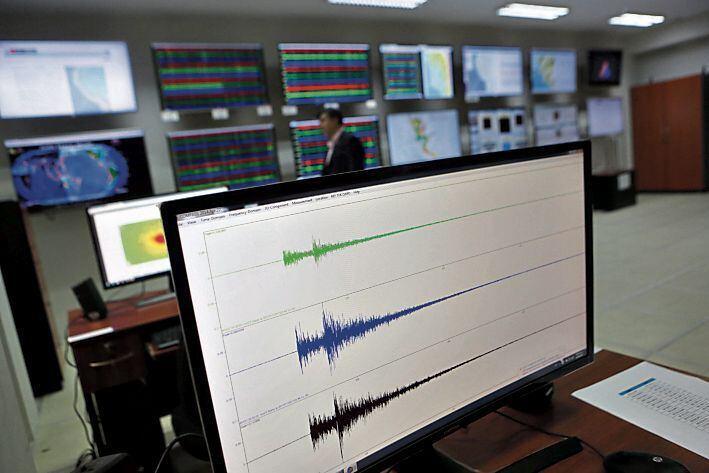
This essay applies TPNF to the Colombian earthquake as a case of Platform-Ecosystem Disruption.
It examines how physical destruction can propagate beyond the epicentral area through interconnected infrastructures and identifies the wider peripheral consequences for transportation, healthcare, economic activity, communications, governance, and regional resilience.
by Nikos Chatzis | 10 Aug, 2026 | Artificial Intelligence AI, Strategic Leadership, Strategic Management, Strategic Thinking, The Techne–Phronesis Negotiation Framework™
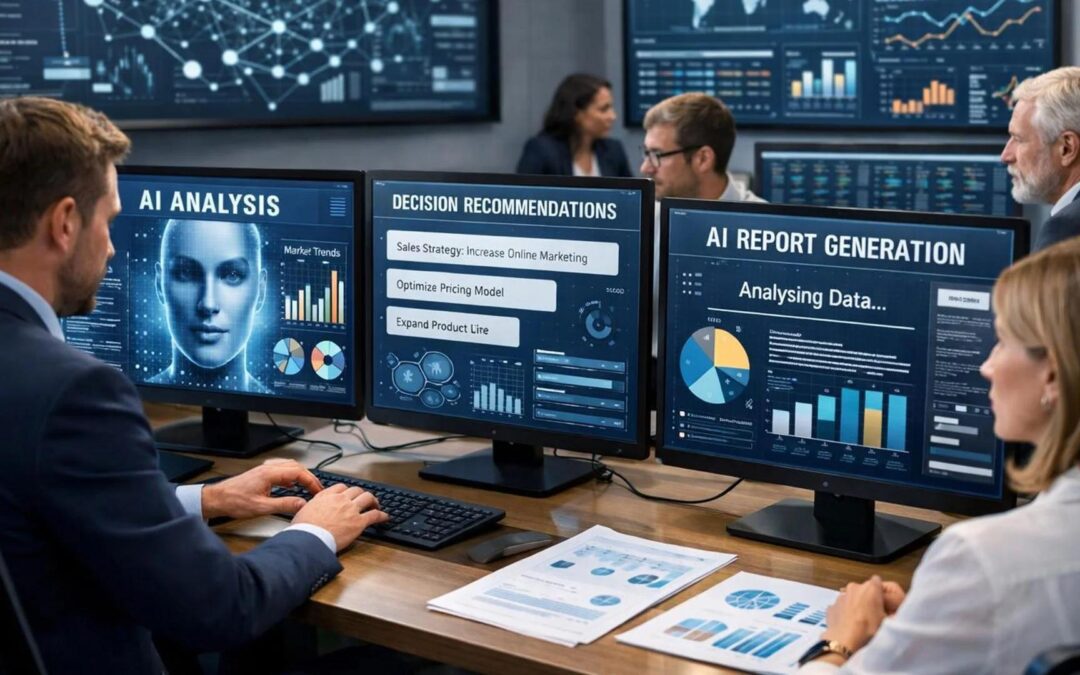
This essay examines how AI is changing the role of business decision strategy in technological civilization. Using TPNF, it argues that AI should not be understood merely as another productivity technology. It increasingly becomes part of the strategic decision architecture of the firm, influencing how organizations perceive markets, allocate resources, manage risk, negotiate, innovate, and create long-term value.

by Nikos Chatzis | 10 Aug, 2026 | Cyber Attacks, Geopolitics, The Techne–Phronesis Negotiation Framework™
This essay examines Taiwan’s deliberate throttling of mobile internet during defense exercises and the reported development of advanced AI-enabled cyber capabilities by Kimsuky as two dimensions of the same strategic transformation.

by Nikos Chatzis | 9 Aug, 2026 | Practical Innovation, Strategic Analysis, Technological Civilization, Technology Ecosystems, Technology Evolution, The Techne–Phronesis Negotiation Framework™
The purpose of this essay is to explain how TPNF can function as a practical strategic-analytical framework for examining the increasingly complex technological and strategic challenges of the twenty-first century.

by Nikos Chatzis | 9 Aug, 2026 | Geopolitics, Oil Economy, The Techne–Phronesis Negotiation Framework™, War
This essay examines why an Iran–Oman arrangement concerning shipping through the Strait of Hormuz may be necessary but insufficient for restoring normal maritime traffic. Using the analytical architecture of the Techne–Phronesis Negotiation Framework™ (TPNF), it explains how regional conflict increasingly operates through interconnected strategic ecosystems in which maritime access, energy infrastructure, proxy warfare, sanctions, insurance markets, diplomatic bargaining and military deterrence continuously influence one another.

by Nikos Chatzis | 9 Aug, 2026 | Strategic Theory, Strategic Thinking, Strategic Wisdom, Technological Civilization, The Techne–Phronesis Negotiation Framework™
The purpose of this essay is to define what it means to describe TPNF as a General Strategic Theory, identify its principal analytical components, establish its potential explanatory domain, and clarify the conditions under which such a theoretical claim should be evaluated.
by Nikos Chatzis | 8 Aug, 2026 | Geopolitics, Greece-Turkey, Strategic Theory, Strategic Thinking, Strategic Wisdom, The Techne–Phronesis Negotiation Framework™
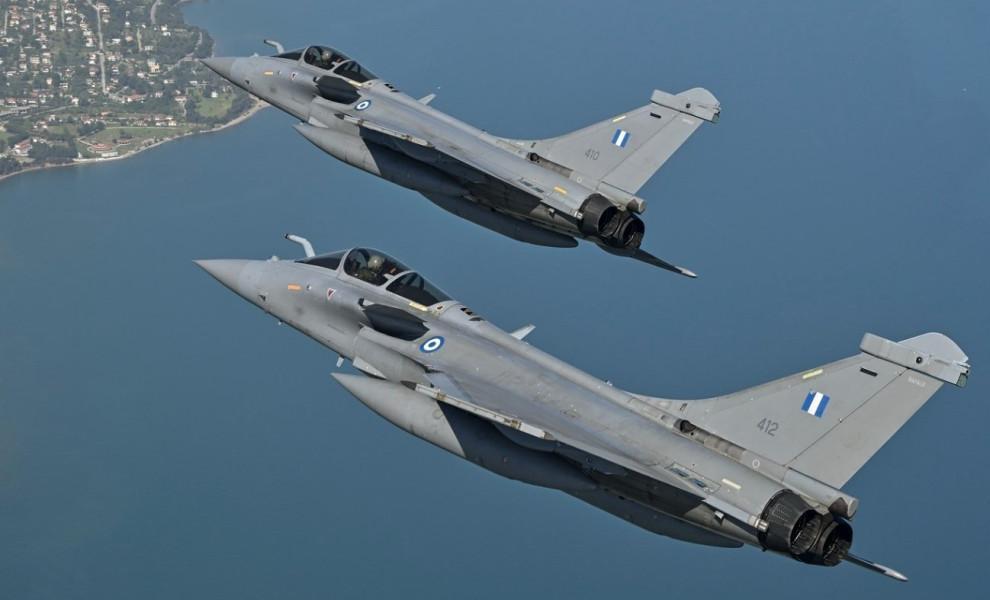
This essay examines Turkey’s draft maritime-jurisdiction legislation and the broader Greek–Turkish strategic relationship through the analytical architecture of the Techne–Phronesis Negotiation Framework™ (TPNF). A sophisticated state must combine law and power, legitimacy and deterrence, diplomacy and technology, alliances and national capability.
For Greece, the strategic objective should therefore be neither confrontation nor accommodation under pressure, but the construction of an ecosystem in which coercion becomes progressively less attractive, less effective and more costly.
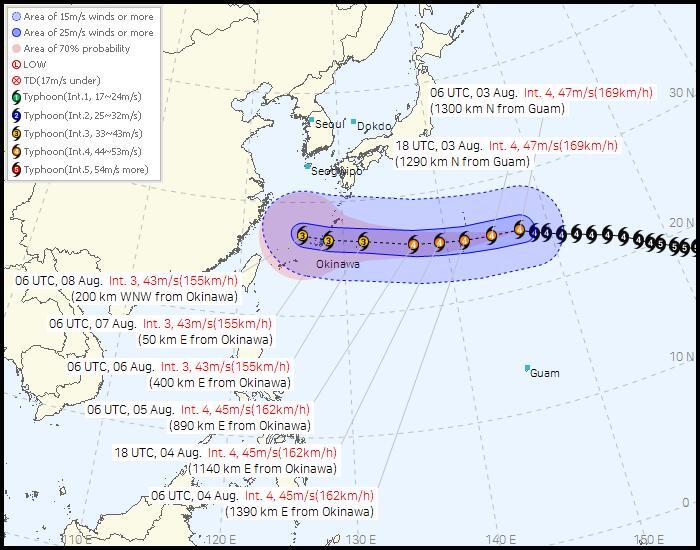
by Nikos Chatzis | 8 Aug, 2026 | Geopolitics, The Techne–Phronesis Negotiation Framework™
Rather than examining the typhoon solely as a weather emergency, TPNF analyzes how disruption propagates through networks and how technology, systems thinking, strategic coordination, adaptive governance and practical wisdom can collectively strengthen Networked Strategic Resilience.

by Nikos Chatzis | 8 Aug, 2026 | Intellectual System, The Techne–Phronesis Negotiation Framework™, Value Creation
The essay argues that TPNF connects Techne, Systems Thinking, Strategic Negotiation, Strategia, Adaptive Governance, Institutional Adaptation, Networked Strategic Resilience, and Phronesis into an integrated process through which individuals, organizations, societies, and states can generate multidimensional value under conditions of technological acceleration and strategic uncertainty.

by Nikos Chatzis | 7 Aug, 2026 | Platform Ecosystems, The Techne–Phronesis Negotiation Framework™
This essay analyzes the strategic significance of the New Mexico court decision involving Meta through the analytical perspective of the Techne–Phronesis Negotiation Framework™ (TPNF). It argues that disputes over social media, artificial intelligence, and digital platform design increasingly concern not only legal compliance but also the governance of technological ecosystems and the creation of long-term societal value.
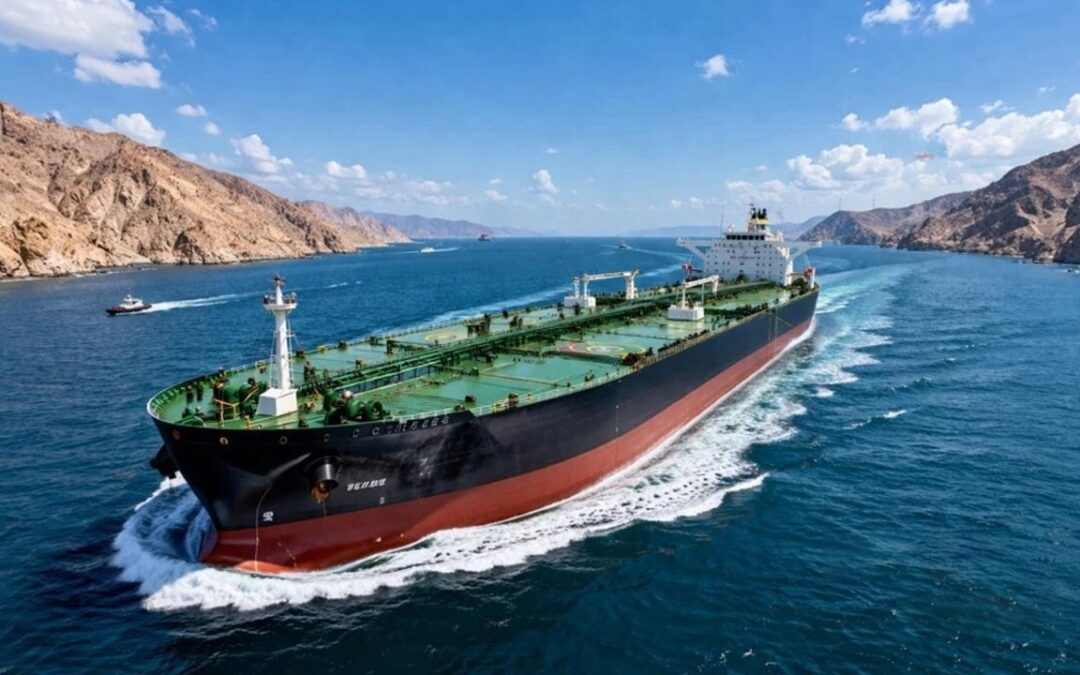
by Nikos Chatzis | 7 Aug, 2026 | Geopolitics, The Techne–Phronesis Negotiation Framework™, War
This essay analyzes the emerging regional dynamics through the analytical perspective of the Techne–Phronesis Negotiation Framework™ (TPNF). It argues that current developments demonstrate how negotiations, maritime chokepoints, alliance politics, domestic political pressures, and technological capabilities interact within a single complex adaptive ecosystem.
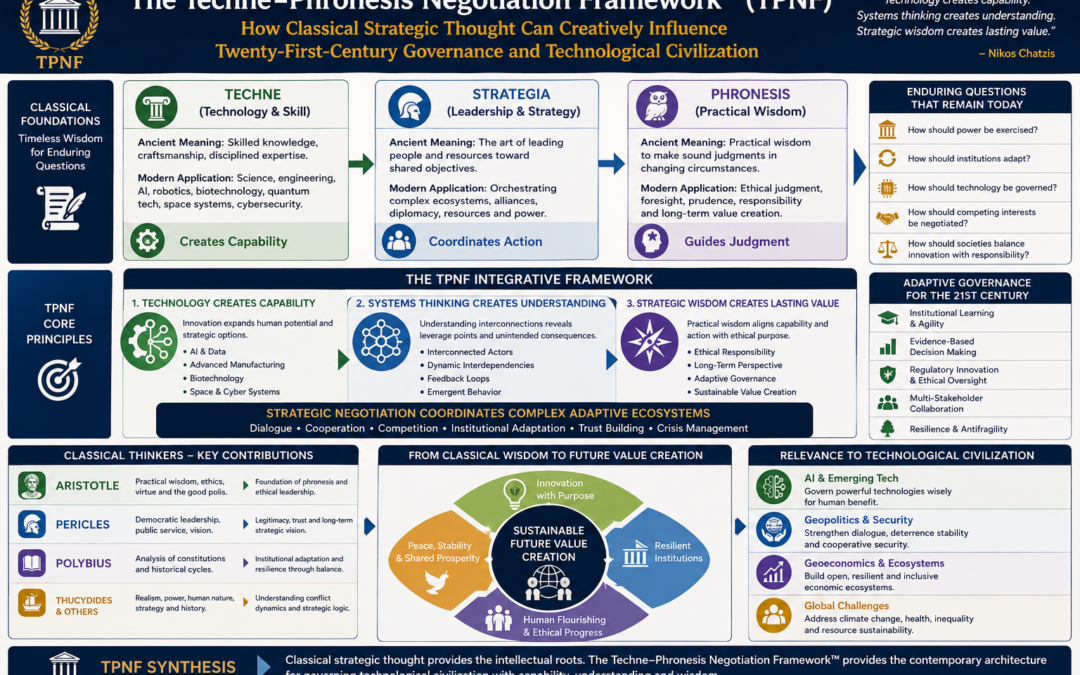
by Nikos Chatzis | 6 Aug, 2026 | Ancient Greek Philosophy, Strategic Theory, Strategic Thinking, Strategic Wisdom, The Techne–Phronesis Negotiation Framework™
This essay examines how classical strategic thought can contribute creatively to contemporary governance and technological civilization. Through the analytical perspective of the Techne–Phronesis Negotiation Framework™ (TPNF), it argues that the wisdom of classical thinkers should not be regarded merely as historical heritage but as an active intellectual resource for understanding and governing complex technological ecosystems.

by Nikos Chatzis | 6 Aug, 2026 | Geopolitics, History, Nuclear bomb, The Techne–Phronesis Negotiation Framework™
This essay examines the enduring strategic significance of the Hiroshima bombing through the analytical perspective of the Techne–Phronesis Negotiation Framework™ (TPNF). It argues that Hiroshima remains highly relevant because contemporary nuclear deterrence, emerging technologies, artificial intelligence, and geopolitical competition continue to confront leaders with many of the same fundamental questions regarding capability, responsibility, and long-term strategic stability.
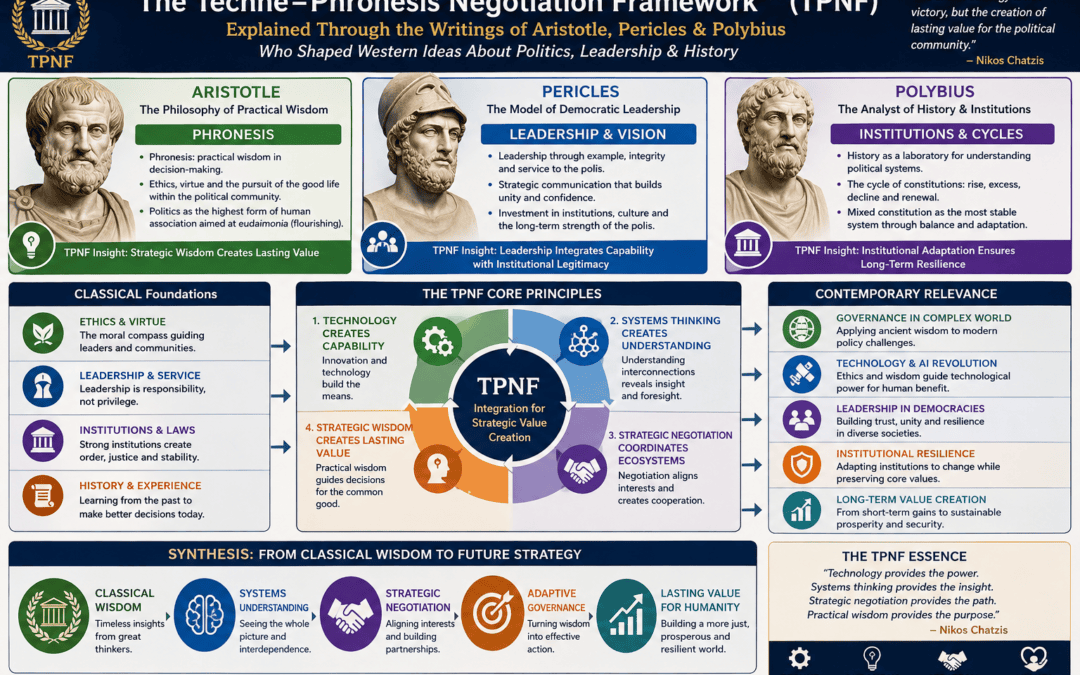
by Nikos Chatzis | 5 Aug, 2026 | Ancient Greek Philosophy, Ancient Greek Philosopphy, The Techne–Phronesis Negotiation Framework™
This essay explores how Aristotle’s philosophy of practical wisdom, Pericles’ vision of democratic leadership, and Polybius’ analysis of political systems and historical cycles collectively illuminate the theoretical foundations of the Techne–Phronesis Negotiation Framework™ (TPNF). It argues that these classical thinkers provide complementary perspectives that help explain strategic adaptation, governance, institutional resilience, and long-term value creation in the twenty-first century.
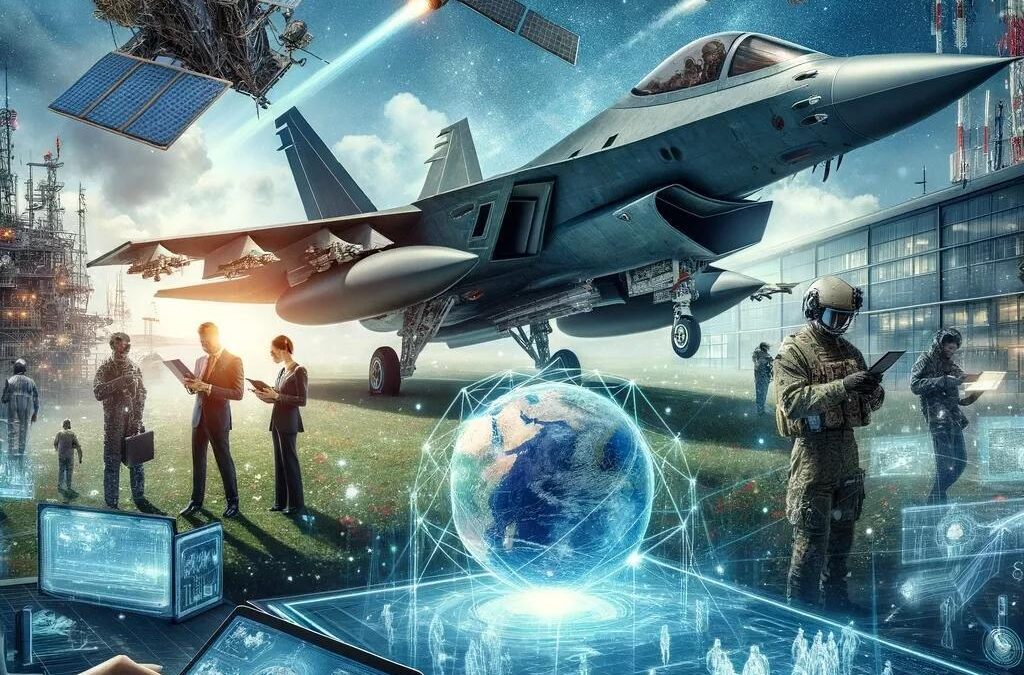
by Nikos Chatzis | 5 Aug, 2026 | Space, Strategic Governance, Supply Chains, The Techne–Phronesis Negotiation Framework™
This essay examines how recent developments in U.S. defense inventories and the rapid expansion of SpaceX’s commercial technology businesses illustrate the changing relationship between military capability and technological innovation. Through the analytical perspective of the Techne–Phronesis Negotiation Framework™ (TPNF), it argues that future strategic advantage will increasingly depend upon integrated technological ecosystems rather than military hardware alone.
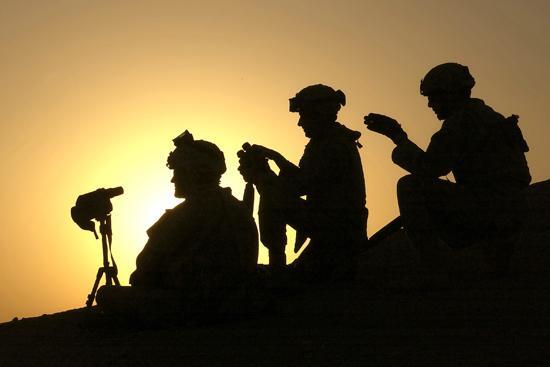
by Nikos Chatzis | 4 Aug, 2026 | Geopolitics, The Techne–Phronesis Negotiation Framework™, War
This essay examines how domestic political dynamics in democratic societies interact with the wars in Ukraine and Iran. Through the analytical perspective of the Techne–Phronesis Negotiation Framework™ (TPNF), it argues that strategic decisions are increasingly influenced by the interaction between external security challenges and internal political, economic, and societal pressures.
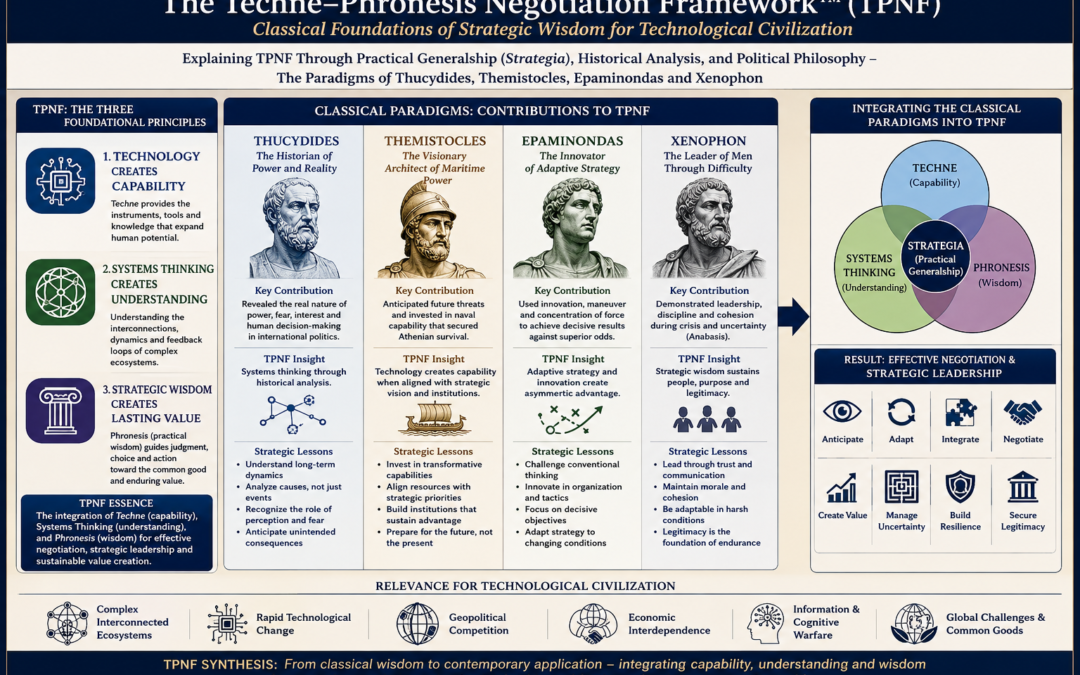
by Nikos Chatzis | 4 Aug, 2026 | Ancient Greek Philosopphy, Strategic Theory, Strategic Thinking, The Techne–Phronesis Negotiation Framework™
This essay explores the philosophical and historical foundations of TPNF by examining four influential figures from classical Greece. It argues that their contributions to leadership, strategy, diplomacy, military command, and political judgment provide timeless insights that can be reinterpreted through TPNF to address the interconnected technological, geopolitical, and institutional challenges of the twenty-first century.
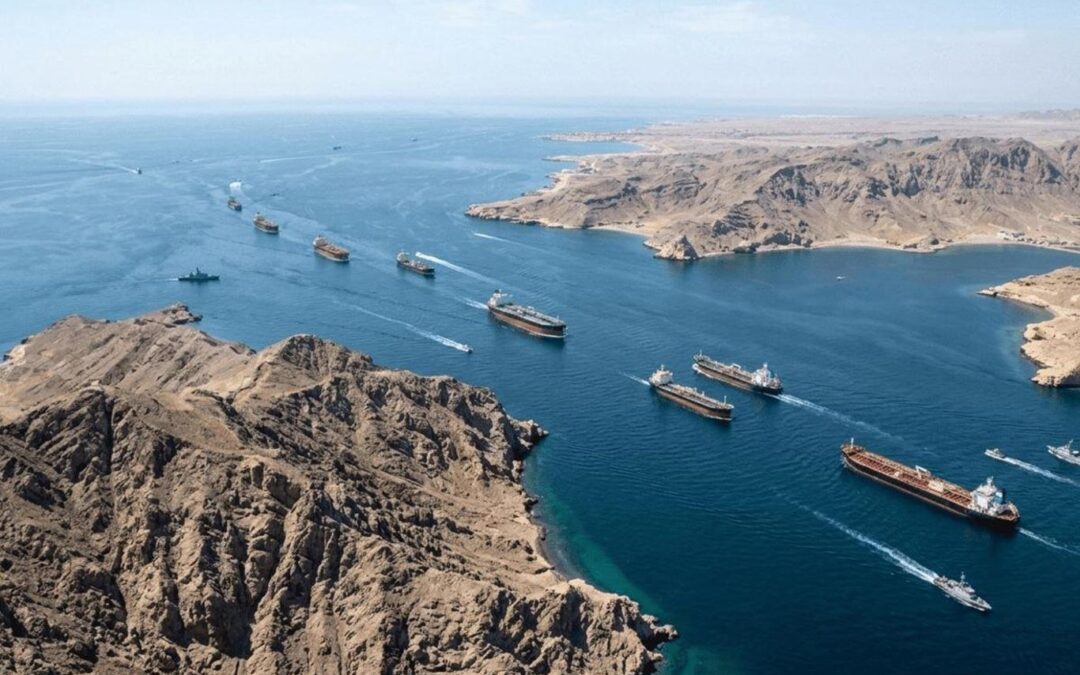
by Nikos Chatzis | 4 Aug, 2026 | Geopolitics, Middle East Trade, The Techne–Phronesis Negotiation Framework™
This essay examines how regional trade corridors and maritime chokepoints can become strategic assets during geopolitical crises. Using the analytical perspective of the Techne–Phronesis Negotiation Framework™ (TPNF), it explores how geoeconomic pressure, strategic negotiation, adaptive governance, and networked resilience shape the contemporary security environment.

by Nikos Chatzis | 3 Aug, 2026 | Geoeconomy, Negotiation Ecosystems, Network Ecosystems, Technology Ecosystems, The Techne–Phronesis Negotiation Framework™
This essay develops a comprehensive TPNF perspective on the evolution of three fundamental ecosystem categories that increasingly shape global affairs. It argues that technological innovation, strategic negotiation, and geoeconomic interdependence should be understood not as separate domains but as interconnected ecosystem dynamics that collectively determine long-term competitiveness and societal development.
by Nikos Chatzis | 3 Aug, 2026 | Global Finance, The Techne–Phronesis Negotiation Framework™
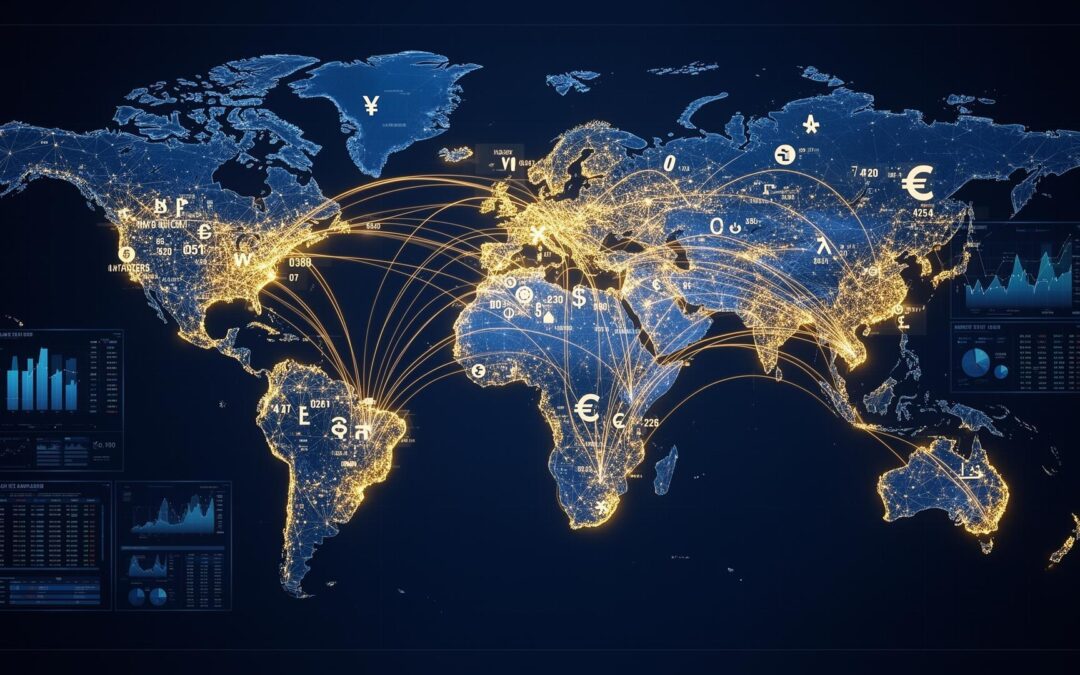
This essay analyzes the strategic significance of the coordinated U.S.–Japan intervention to support the Japanese yen. Using the analytical perspective of the Techne–Phronesis Negotiation Framework™ (TPNF), it argues that modern financial markets should be understood as interconnected strategic ecosystems in which technology, governance, strategic negotiation, and adaptive coordination are essential for preserving long-term economic resilience and future value creation.
by Nikos Chatzis | 2 Aug, 2026 | Strategic Resilience, Tech Economy of Software, Technological Civilization, Technology Evolution, The Techne–Phronesis Negotiation Framework™, Value Creation
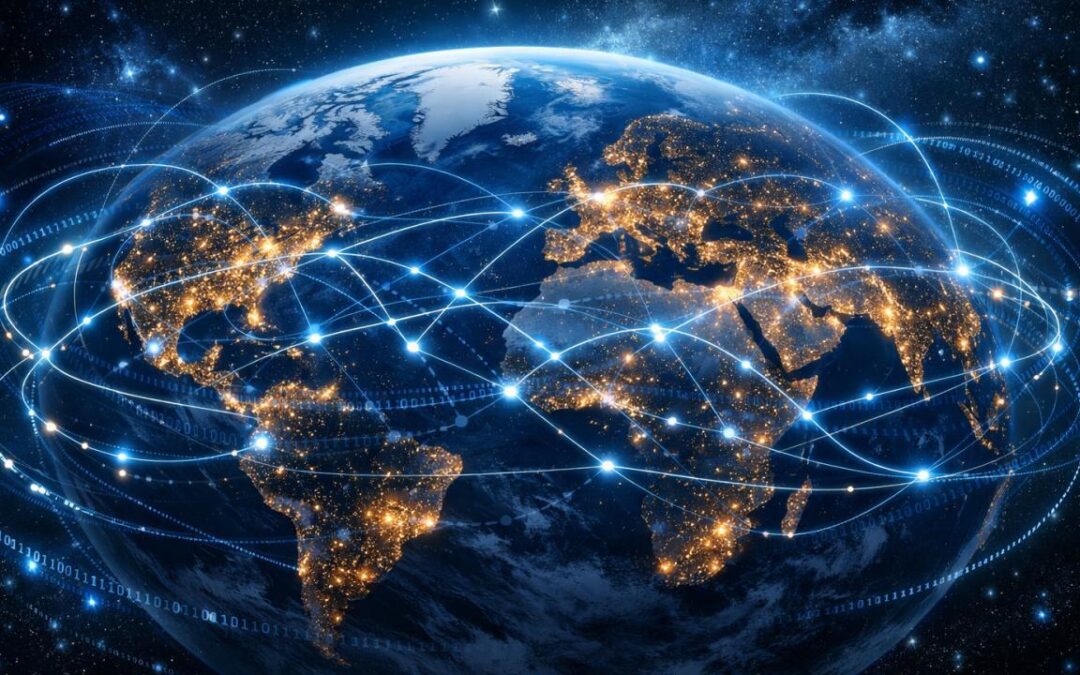
This essay presents an integrative perspective on the evolution of technological civilization by examining the interaction between global connectivity, technology, adaptation, governance, resilience, and value creation. Through the analytical lens of the Techne–Phronesis Negotiation Framework™ (TPNF), it argues that future prosperity will increasingly depend on the ability to coordinate these interconnected dimensions rather than optimize them independently.

by Nikos Chatzis | 2 Aug, 2026 | Institutional Adaptation, The Techne–Phronesis Negotiation Framework™, Value Creation
This essay examines the strategic importance of institutional adaptation in the emerging technological civilization. Through the analytical perspective of the Techne–Phronesis Negotiation Framework™ (TPNF), it argues that institutions capable of continuous learning and adaptation become the principal generators of resilience, innovation, legitimacy, and long-term strategic competitiveness.

by Nikos Chatzis | 2 Aug, 2026 | Strategic Resilience, The Techne–Phronesis Negotiation Framework™, Value Creation
This essay examines the evolution of resilience from a defensive concept focused on recovery into a proactive capability that enables continuous adaptation, innovation, and long-term value creation. Through the analytical lens of the Techne–Phronesis Negotiation Framework™ (TPNF), it argues that future competitiveness will depend on the resilience of networks rather than on the strength of individual organizations.
by Nikos Chatzis | 2 Aug, 2026 | Innovation Ecosystems, Innovation Networks, The Techne–Phronesis Negotiation Framework™
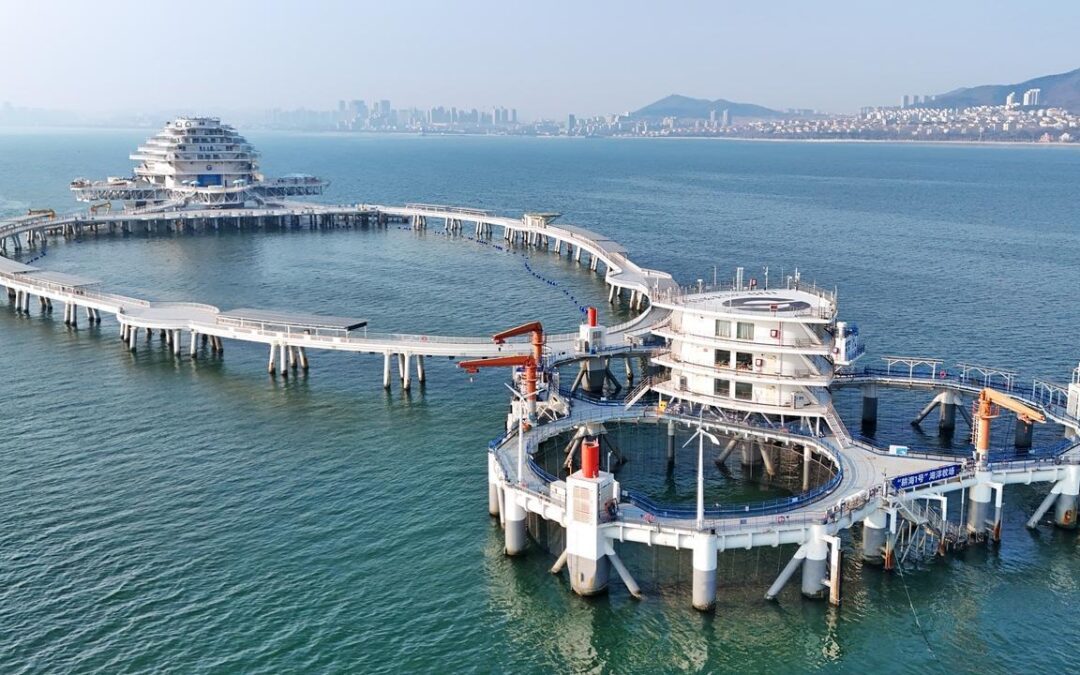
This essay examines the innovative Genghai No. 1 marine ranch in Yantai, Shandong Province, through the analytical lens of the Techne–Phronesis Negotiation Framework™ (TPNF). It argues that the project’s greatest significance lies in demonstrating how technology, systems thinking, strategic coordination, and practical wisdom can transform traditional fisheries into multidimensional blue economy ecosystems.

by Nikos Chatzis | 31 Jul, 2026 | Tech Economy of Software, Tech Sovereignty, Technological Civilization, The Techne–Phronesis Negotiation Framework™
This essay examines the historical evolution of technological civilization through the analytical lens of the Techne–Phronesis Negotiation Framework™ (TPNF). It argues that the defining characteristic of the twenty-first century is the emergence of interconnected technological ecosystems that require not only innovation but also systems understanding and practical wisdom to generate lasting strategic value.

by Nikos Chatzis | 31 Jul, 2026 | Geopolitics, The Techne–Phronesis Negotiation Framework™, War
This essay analyzes the geopolitical significance of the recent drone attack near the Suez Canal, examines its implications for global maritime security and energy transportation, and explains why the protection of strategic logistics corridors is becoming one of the defining challenges of contemporary geopolitics. Through the Techne–Phronesis Negotiation Framework™ (TPNF), the incident illustrates how strategic maritime chokepoints are evolving into interconnected geopolitical ecosystems where military technology, energy security, logistics, and international trade converge.
by Nikos Chatzis | 30 Jul, 2026 | Technology Ecosystems, Technology Evolution, The Techne–Phronesis Negotiation Framework™, UCAV, UnManned Aerial Vehicles, US Army
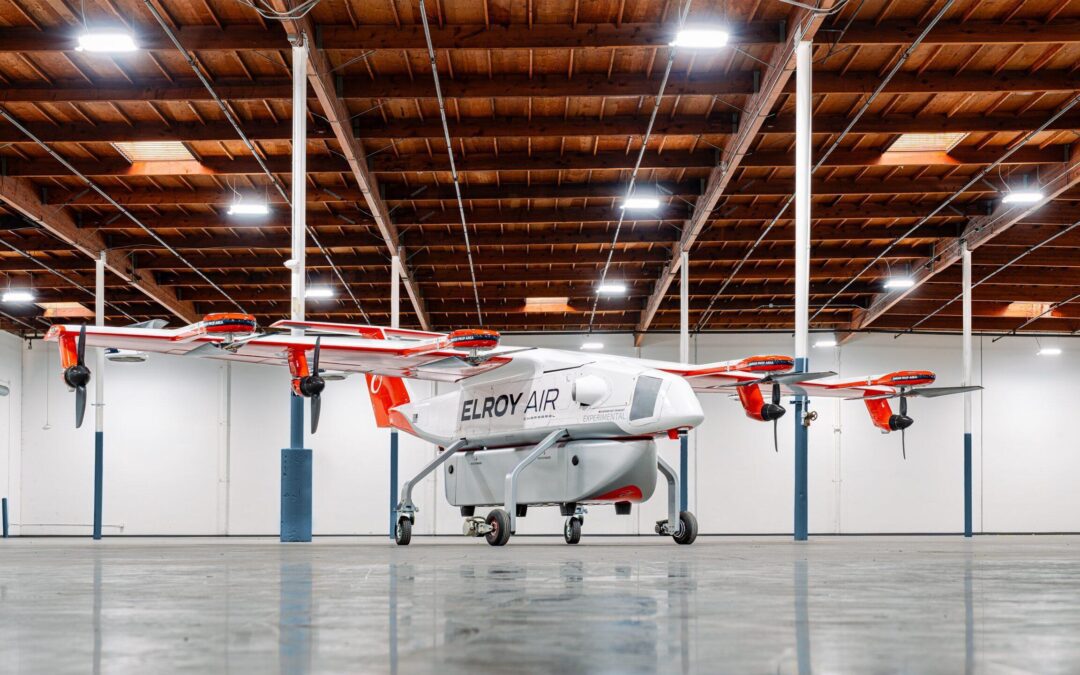
This essay examines how autonomous heavy-cargo drones are reshaping military logistics, analyzes the strategic significance of Elroy Air’s latest U.S. Army-supported capabilities, and explains why autonomous logistics systems are becoming a critical element of future multi-domain warfare. Through the Techne–Phronesis Negotiation Framework™ (TPNF), this evolution demonstrates how autonomous logistics platforms are becoming essential components of future operational ecosystems, increasing resilience, operational tempo, and survivability while reducing risk to personnel.
by Nikos Chatzis | 30 Jul, 2026 | Defense & Security, Geopolitics, The Techne–Phronesis Negotiation Framework™
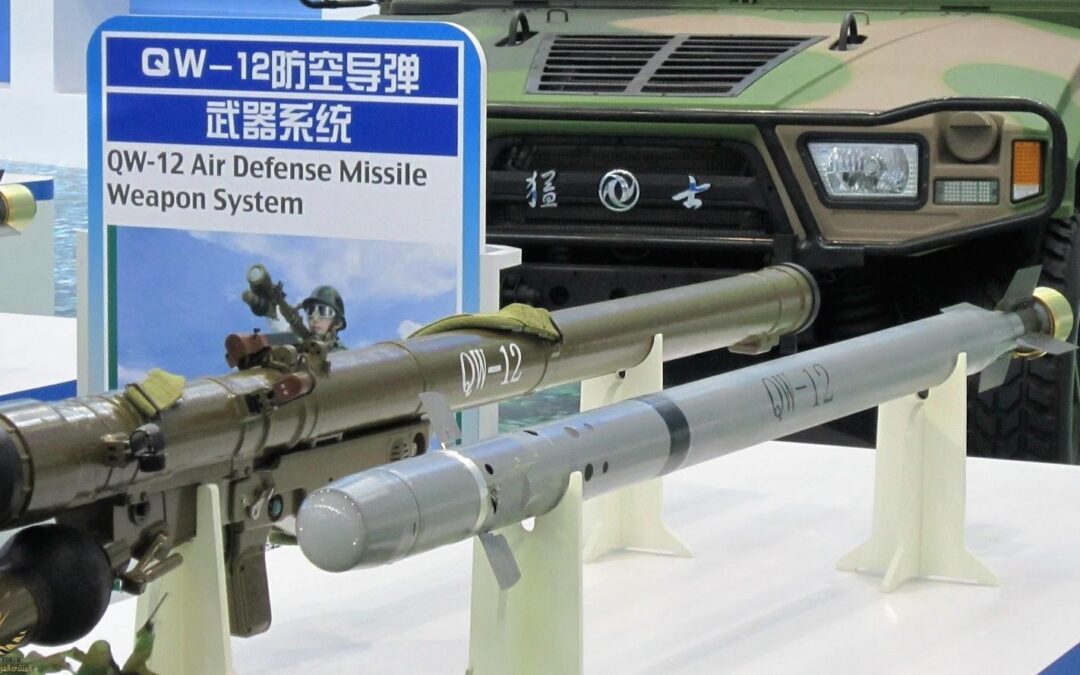
This essay explains how the reported acquisition (Reuters) of Chinese portable air-defence systems could influence Iran’s military recovery, reshape regional deterrence dynamics, deepen Sino-Iranian strategic cooperation, and affect the strategic calculations of the United States, Israel, the Gulf States, and Europe.
by Nikos Chatzis | 29 Jul, 2026 | Ecosystem Dynamics, Ecosystem Governance, Ecosystem Strategy, Supply Chains, The Techne–Phronesis Negotiation Framework™
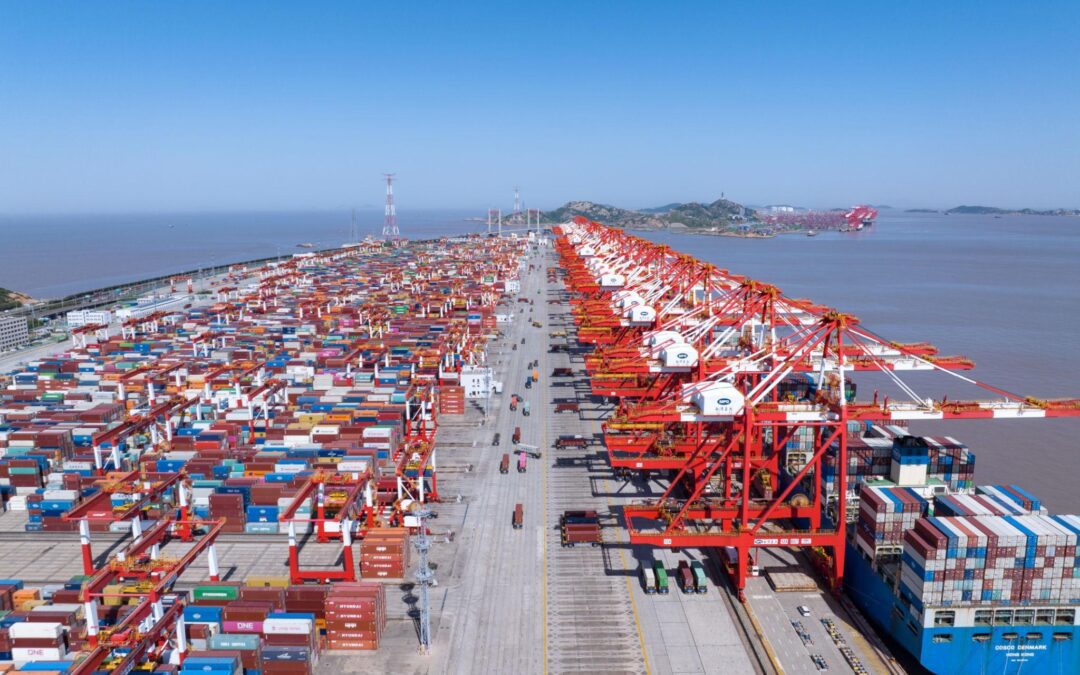
This essay explains how China’s supply chain logistics are evolving into a comprehensive strategic ecosystem that integrates technology, industrial policy, artificial intelligence, digital infrastructure, diplomacy, finance, and strategic negotiation. Using the Techne–Phronesis Negotiation Framework™ (TPNF), it demonstrates why future logistics should be understood as a complex adaptive ecosystem rather than a collection of isolated transportation activities.

by Nikos Chatzis | 29 Jul, 2026 | Robotics, Technology Ecosystems, Technology Geopolitics, The Techne–Phronesis Negotiation Framework™
This essay applies the Techne–Phronesis Negotiation Framework™ (TPNF) to examine the strategic implications of the United States’ decision to restrict imports of advanced Chinese humanoid and quadruped robots. It argues that the policy reflects a broader transition toward robotics sovereignty,
by Nikos Chatzis | 29 Jul, 2026 | Ecosystem Dynamics, Technological Civilization, Technology Corridors, Technology Evolution, The Techne–Phronesis Negotiation Framework™
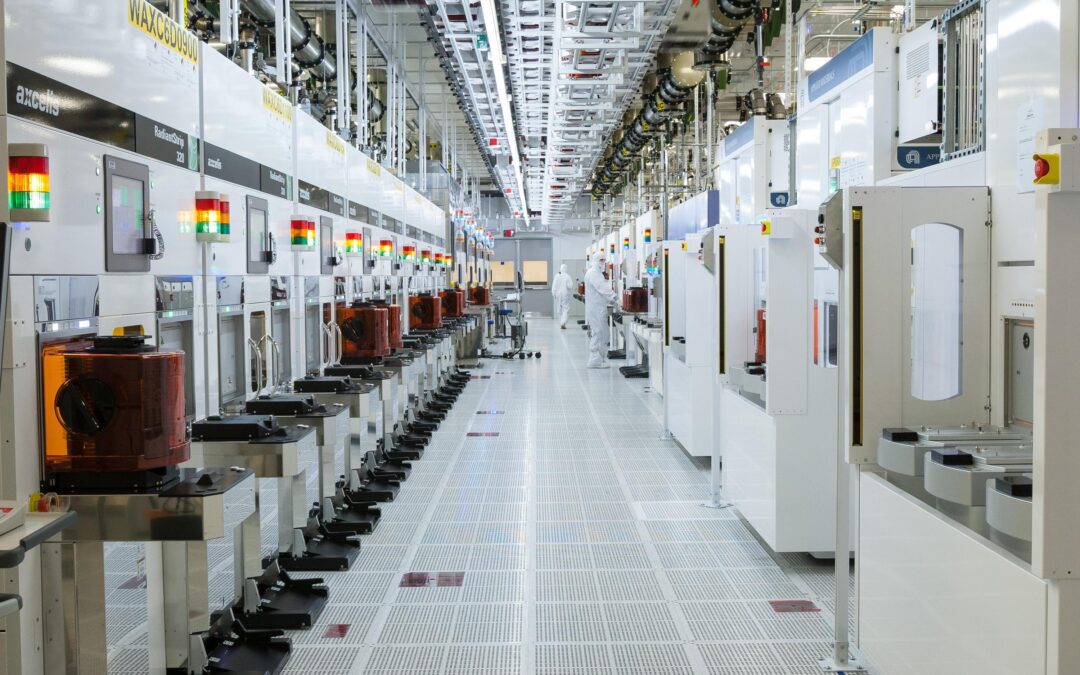
This essay applies the Techne–Phronesis Negotiation Framework™ (TPNF) to analyze the strategic significance of CXMT’s historic Shanghai STAR Market debut. It argues that memory semiconductor production has evolved from a commercial activity into a strategic capability that shapes technological ecosystems, AI competitiveness, national security, and the future balance of global economic power. The essay argues that future geopolitical competition will increasingly revolve around technological ecosystems rather than individual products, with semiconductor memory becoming a decisive element of long-term strategic value creation.
by Nikos Chatzis | 28 Jul, 2026 | Ecosystem Dynamics, Geopolitics, The Techne–Phronesis Negotiation Framework™
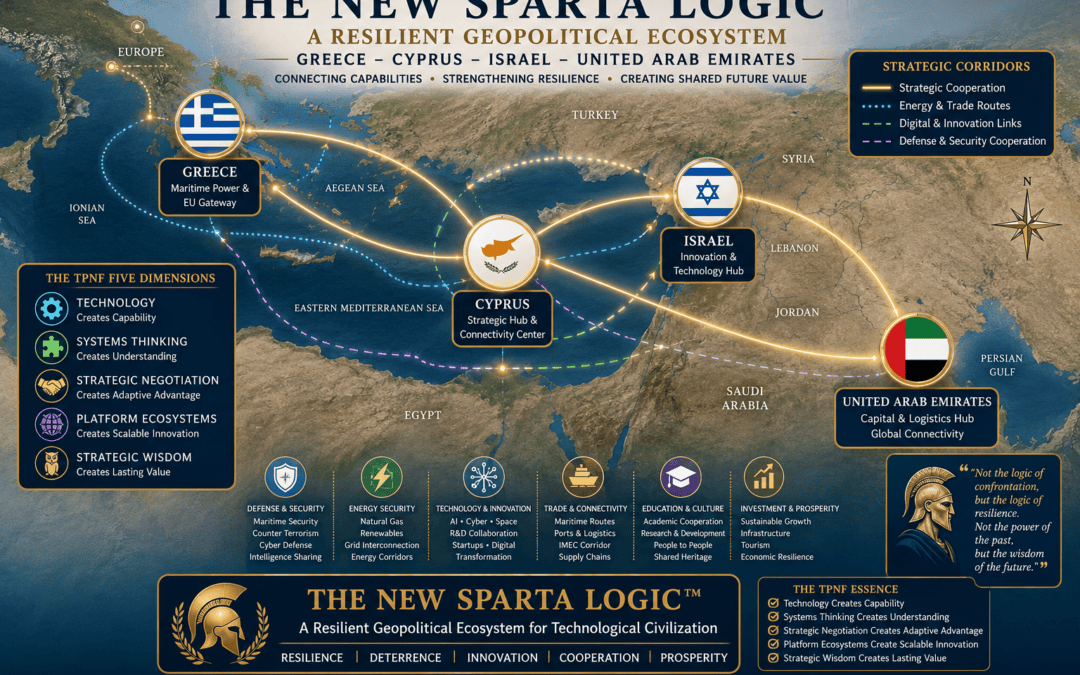
This essay explains how the Techne–Phronesis Negotiation Framework™ (TPNF) interprets the evolving Greece–Israel–UAE relationship as an integrated geopolitical ecosystem. It introduces the concept of the “New Sparta Logic” to describe a modern strategic approach based on technological leadership, adaptive cooperation, and multidimensional security rather than territorial expansion or military dominance alone.

by Nikos Chatzis | 28 Jul, 2026 | Platform Ecosystems, Sustainable Value Creation, Systems Integration, The Techne–Phronesis Negotiation Framework™
This manifesto introduces the origins, intellectual foundations, problem-solving philosophy, core principles, and future evolution of the Techne–Phronesis Negotiation Framework™ (TPNF). It presents TPNF as an evolving strategic framework designed to help leaders understand complexity, negotiate adaptation, and create sustainable value in an era of accelerating technological transformation.

by Nikos Chatzis | 27 Jul, 2026 | Artificial Intelligence, Comparative Advantage, The Techne–Phronesis Negotiation Framework™
This essay examines how Artificial Intelligence is reshaping comparative advantage in the contemporary global economy through the analytical perspective of the Techne–Phronesis Negotiation Framework™ (TPNF). It identifies the characteristics of future winners and losers and argues that long-term prosperity depends upon the strategic integration of technology, institutions, ecosystems, leadership, and wisdom.
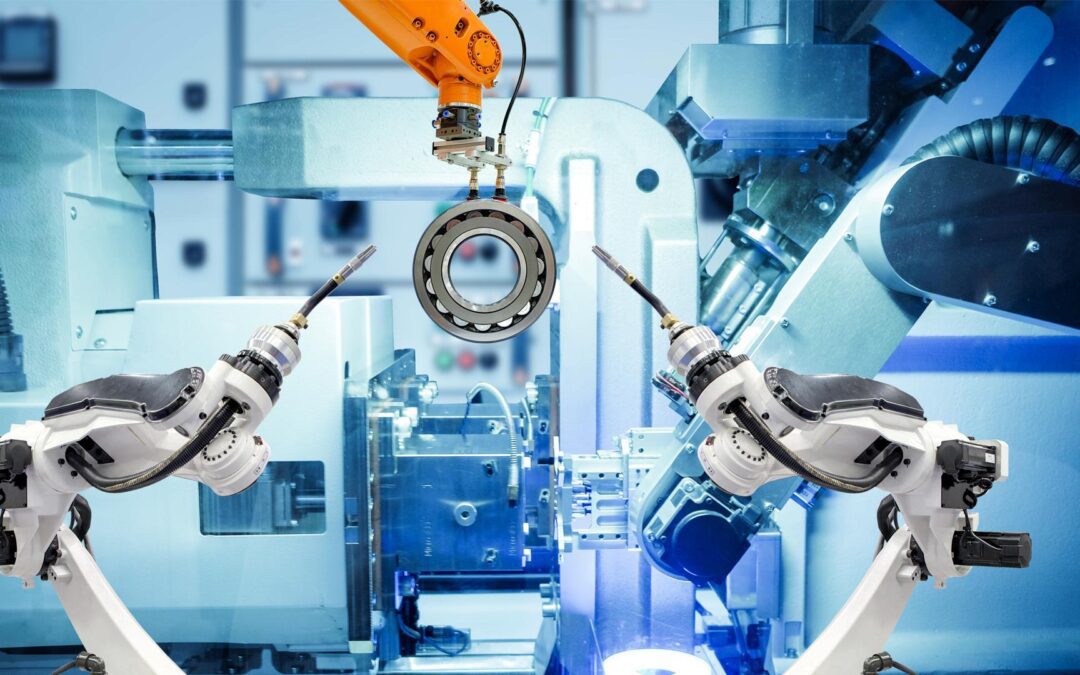
by Nikos Chatzis | 26 Jul, 2026 | Industrial Production, Technology Ecosystems, Technology Evolution, Technology Geopolitics, Technology Transfer, The New Economy, The Techne–Phronesis Negotiation Framework™
This essay applies the Techne–Phronesis Negotiation Framework™ (TPNF) to examine the contemporary challenges of AI adoption in technology and industrial production. Using China as a case study, it argues that successful AI transformation requires more than technological investment; it demands systemic integration, organizational adaptation, collaborative governance, and strategic leadership capable of creating sustainable long-term value.
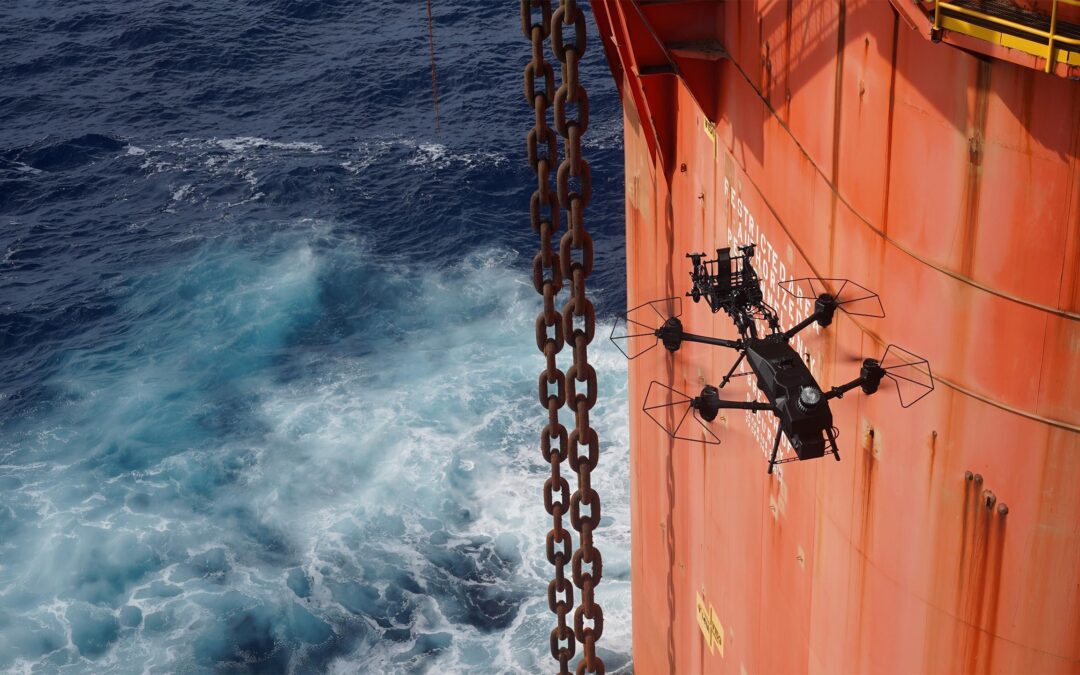
by Nikos Chatzis | 26 Jul, 2026 | Blue economy, The Techne–Phronesis Negotiation Framework™
This essay demonstrates how the Techne–Phronesis Negotiation Framework™ explains the strategic challenges and opportunities emerging from the convergence of the Blue Economy and the global drone industry. Using Greece as a case study, it argues that sustainable competitive advantage will increasingly depend on integrating technological capability, systems thinking, strategic negotiation, platform ecosystems, and strategic wisdom.

by Nikos Chatzis | 24 Jul, 2026 | Uncategorized
This essay explains the intellectual architecture of the Techne–Phronesis Negotiation Framework™ (TPNF) by demonstrating how its theoretical foundations (strategy) and practical applications (tactics) operate as complementary dimensions of a single adaptive system. It argues that TPNF is both a conceptual framework for understanding complexity and a multidimensional strategic and tactical methodology for solving real-world problems across business, geopolitics, technology, and organizational leadership.

by Nikos Chatzis | 24 Jul, 2026 | Geopolitics, Nuclear Energy, The Techne–Phronesis Negotiation Framework™
This essay analyzes the geopolitical implications of linking a U.S.–Saudi nuclear cooperation agreement with Saudi–Israeli normalization through the Techne–Phronesis Negotiation Framework™ (TPNF). It argues that the strategic consequences extend beyond the immediate negotiating parties, influencing regional power balances, multilevel diplomatic ecosystems, technological cooperation, energy security, and long-term strategic value creation.
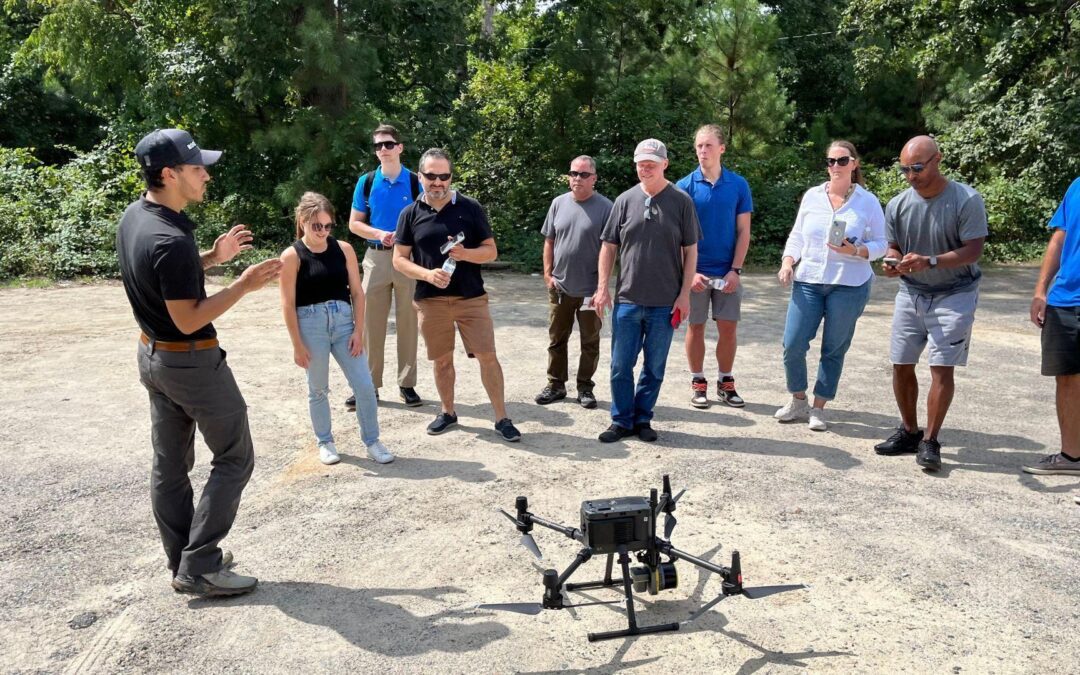
by Nikos Chatzis | 23 Jul, 2026 | Drone Economy, Drone Training, Drones' Technology Management, The Techne–Phronesis Negotiation Framework™, Value Creation
This essay examines the contemporary challenges facing drone training through the Techne–Phronesis Negotiation Framework™ (TPNF). It argues that future drone education must evolve beyond flight proficiency toward developing adaptive professionals capable of integrating technological innovation, regulatory compliance, ecosystem collaboration, and strategic decision-making to generate long-term value across commercial, governmental, and societal applications.
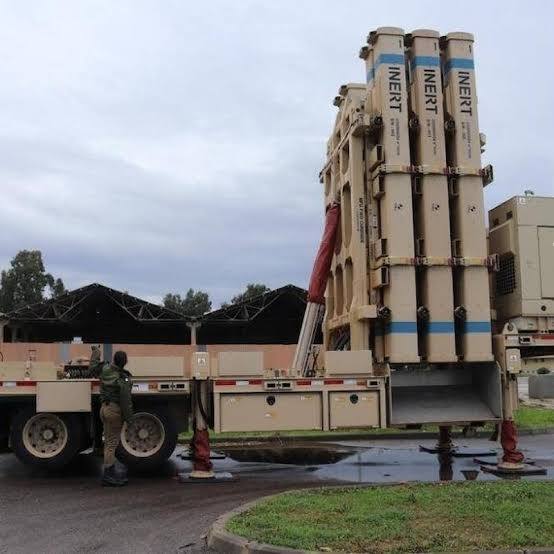
by Nikos Chatzis | 23 Jul, 2026 | Defense & Security, Geopolitics, The Techne–Phronesis Negotiation Framework™
This essay examines the geopolitical significance of Greece’s proposed Achilles’ Shield through the Techne–Phronesis Negotiation Framework™ (TPNF). It argues that the integration of David’s Sling, Barak MX, SPYDER, Patriot, HAWK, Drone Dome, ELM-2084, and complementary non-kinetic anti-drone capabilities should be understood not as separate defense acquisitions but as interconnected components of a resilient strategic ecosystem that strengthens national security, NATO interoperability, regional deterrence, and long-term strategic resilience.

by Nikos Chatzis | 22 Jul, 2026 | Strategic Governance, Strategic Negotiation, Sustainable Value Creation, Systems Integration, Systems Leadership, Systems Thinking, The Techne–Phronesis Negotiation Framework™, Value Creation
This essay explores the concept of lasting strategic value as the ultimate outcome of the Techne–Phronesis Negotiation Framework™ (TPNF). It demonstrates that sustainable strategic success depends on continuously adapting, learning, negotiating, and governing complex ecosystems rather than pursuing isolated or short-term victories. Lasting strategic value is created through the continuous integration of technological capability, systems thinking, strategic negotiation, and practical wisdom across resilient multilevel network ecosystems.

by Nikos Chatzis | 22 Jul, 2026 | 3-D Negotiation, Ecosystem Dynamics, Ecosystem Strategy, Ecosystem Thinking, The Techne–Phronesis Negotiation Framework™, Value Creation
This essay demonstrates that negotiation is no longer a discrete event occurring at the end of decision-making. Rather, it is a continuous strategic capability that enables adaptation, innovation, resilience, and cooperation across complex adaptive systems. The Techne–Phronesis Negotiation Framework™ (TPNF) explains negotiation as the strategic process that transforms technological capability and systems understanding into adaptive leadership and long-term value creation.
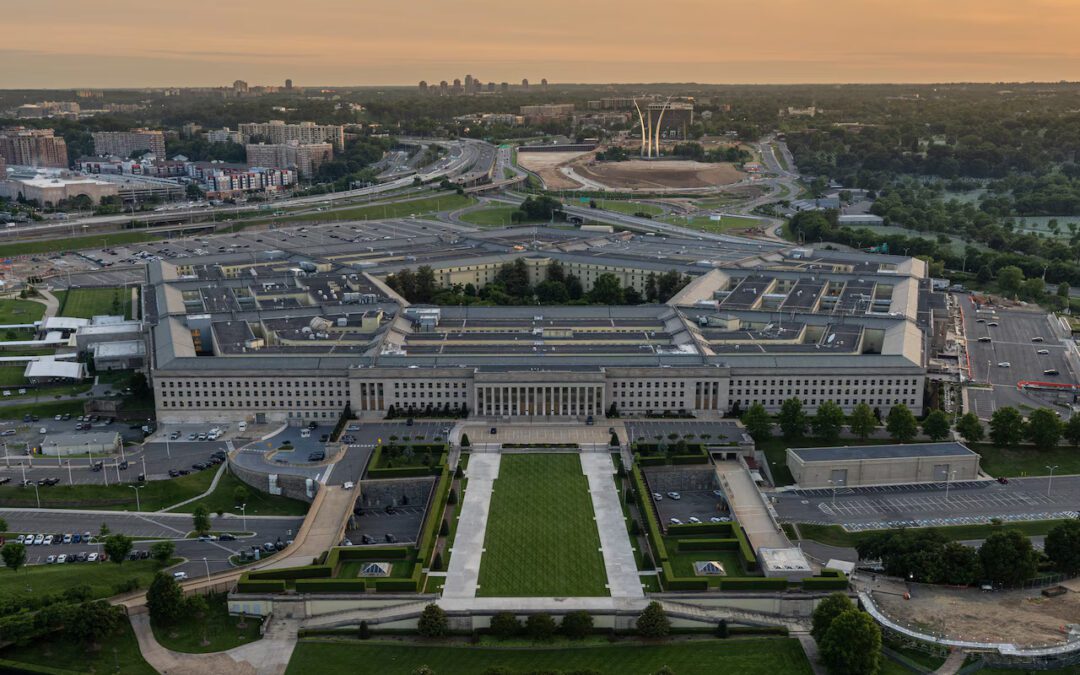
by Nikos Chatzis | 22 Jul, 2026 | Geopolitics, The Techne–Phronesis Negotiation Framework™, War
This essay examines the Pentagon’s reported cost estimate through the analytical perspective of the Techne–Phronesis Negotiation Framework™ (TPNF). It argues that the economic burden of contemporary conflict is only one dimension of a broader ecosystem whose consequences extend to defence-industrial capacity, alliance cohesion, technological innovation, fiscal policy, strategic resilience, and the future balance of power.
by Nikos Chatzis | 21 Jul, 2026 | Ecosystem Dynamics, Ecosystem Governance, Ecosystem Strategy, Ecosystem Thinking, The Techne–Phronesis Negotiation Framework™
Technological progress has fundamentally altered the nature of strategic assets. This essay argues that the Techne–Phronesis Negotiation Framework™ (TPNF) provides an analytical foundation for understanding this transformation. It demonstrates that contemporary strategic assets derive their significance from their participation in complex adaptive ecosystems, where relationships, interoperability, technological integration, and strategic coordination become the principal sources of enduring advantage.
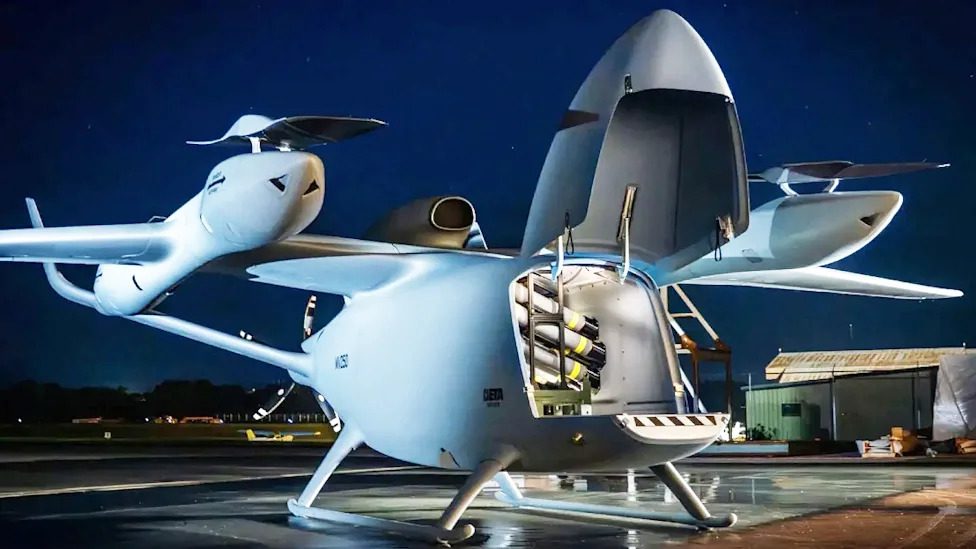
by Nikos Chatzis | 21 Jul, 2026 | Systems Integration, Technology Ecosystems, The Techne–Phronesis Negotiation Framework™, UAVs
Through the Techne–Phronesis Negotiation Framework™ (TPNF), the MV250 is understood not merely as an advanced unmanned aircraft, but as a strategic node within multilevel network ecosystems that integrate technology, practical wisdom, systems thinking, and strategic negotiation to enhance operational resilience and sustainable military effectiveness.
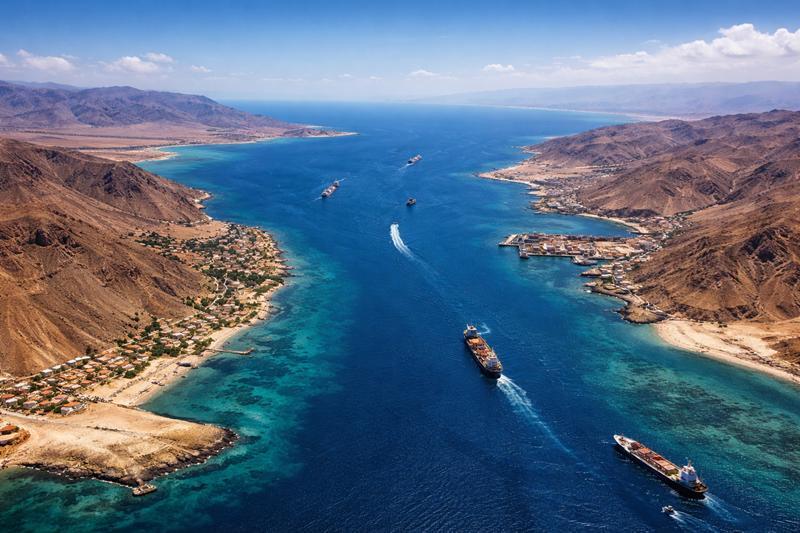
by Nikos Chatzis | 21 Jul, 2026 | geoeconomics, Geoeconomy, Geopolitics, The Techne–Phronesis Negotiation Framework™
The purpose of this essay is to examine how Houthi maritime operations influence Saudi maritime security and the wider U.S.–Iran confrontation through the analytical lens of the Techne–Phronesis Negotiation Framework™ (TPNF). The essay explores how technological capabilities, strategic negotiation, systems thinking, and adaptive network ecosystems shape the evolving security architecture of the Red Sea and the Arabian Peninsula.

by Nikos Chatzis | 21 Jul, 2026 | The Techne–Phronesis Negotiation Framework™
The Techne–Phronesis Negotiation Framework™ (TPNF) is founded upon a set of interconnected first principles that explain how technological capability, practical wisdom, systems thinking, strategic negotiation, and multilevel network ecosystems collectively generate sustainable strategic value within contemporary technological civilization. These principles constitute the theoretical foundation upon which the entire TPNF architecture is constructed. This essay defines and explains the first principles of the Techne–Phronesis Negotiation Framework™ (TPNF), demonstrating how they provide a coherent intellectual foundation for strategic decision-making, governance, innovation, and future value creation in complex adaptive systems.

by Nikos Chatzis | 20 Jul, 2026 | The Techne–Phronesis Negotiation Framework™
The Techne–Phronesis Negotiation Framework™ (TPNF) provides a comprehensive strategic theory for understanding and navigating contemporary technological civilization by integrating technological capability, practical wisdom, systems thinking, strategic negotiation, and multilevel network ecosystems. Defining the framework through the questions “Why?”, “How?”, and “Where?” clarifies its philosophical foundations, methodological architecture, and broad applicability across technological, organizational, geopolitical, and societal domains.

by Nikos Chatzis | 20 Jul, 2026 | Technological Civilization, Technology Ecosystems, Technology Evolution, The Techne–Phronesis Negotiation Framework™, Value Creation
The Techne–Phronesis Negotiation Framework™ (TPNF) represents a strategic theory for understanding and governing today’s technological civilization. By integrating Technology (Techne), Practical Wisdom (Phronesis), Systems Thinking, Strategic Negotiation, Complex Adaptive Systems, and Platform Ecosystems, the framework explains how societies, organizations, and states can create sustainable value while navigating technological disruption and geopolitical uncertainty.
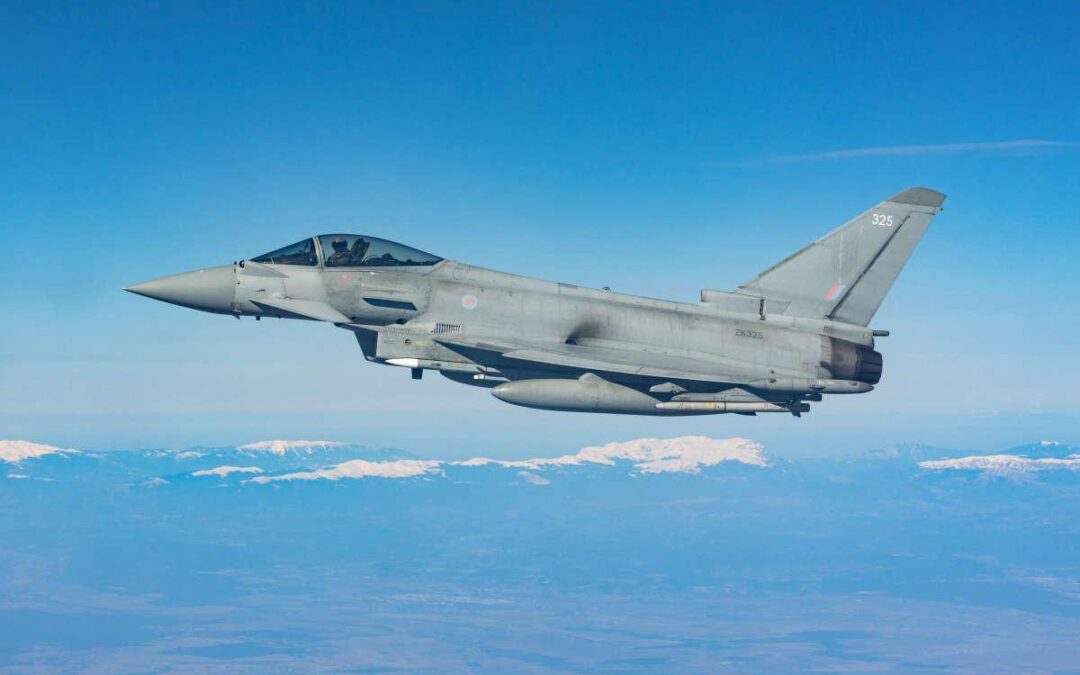
by Nikos Chatzis | 20 Jul, 2026 | Technology Geopolitics, The Techne–Phronesis Negotiation Framework™, UCAV
The purpose of this essay is to examine the strategic implications of the United Kingdom’s Storm Fighter Loyal Wingman Program through the analytical lens of the Techne–Phronesis Negotiation Framework™ (TPNF). The United Kingdom’s Storm Fighter Loyal Wingman Program represents far more than the introduction of autonomous collaborative combat aircraft into Royal Air Force operations.

by Nikos Chatzis | 19 Jul, 2026 | The Techne–Phronesis Negotiation Framework™, UnManned Aerial Vehicles, War Robotis
The purpose of this essay is to examine the strategic implications of the United States Navy’s interest in future carrier-based tactical drone fleets capable of conducting long-range strike, reconnaissance, electronic warfare, and supporting missions. The essay applies the Techne–Phronesis Negotiation Framework™ (TPNF) to analyze how such unmanned systems may reshape carrier aviation, distributed maritime operations, alliance interoperability, defence-industrial cooperation, operational resilience, and network-centric warfare.

by Nikos Chatzis | 19 Jul, 2026 | Strategic Resilience, Strategic Theory, Strategic Thinking, Strategic Wisdom, Strategy Evolution - Business Strategy, The Techne–Phronesis Negotiation Framework™
The TPNF Strategic Decision Laboratory™ (SDL) is a multidimensional strategic and tactical methodology designed to transform strategic theory into structured decision-making practice. Rather than asking participants merely to analyze a case or negotiate a dispute, the SDL requires them to understand complex adaptive systems, map multilevel network ecosystems, negotiate competing interests, evaluate strategic alternatives, and develop an evidence-based TPNF Ecosystem Negotiation Strategic and Tactical Plan of Action™. This essay explains the conceptual foundations of the SDL, its relationship to the TPNF Case Method™, and its contribution to strategic leadership education.
by Nikos Chatzis | 16 Jul, 2026 | Geopolitics, Network Ecosystems, The Techne–Phronesis Negotiation Framework™
The purpose of this essay is to introduce the concept of the non-polar state as an analytical perspective for understanding contemporary geopolitics. Rather than viewing states solely through traditional models of polarity, the TPNF explains how influence increasingly arises from participation in multilevel network ecosystems that integrate technology, diplomacy, finance, innovation, governance, and international cooperation. The essay argues that strategic adaptation and resilient ecosystem governance are becoming defining characteristics of successful states in technological civilization. The Techne–Phronesis Negotiation Framework™ (TPNF) argues that the contemporary Non-Polar State is defined by its capacity to understand, influence, and adapt to these interconnected ecosystems through techne, phronesis, systems thinking, and strategic negotiation.
by Nikos Chatzis | 16 Jul, 2026 | Ecosystem Dynamics, Ecosystem Strategy, Ecosystem Thinking, The Techne–Phronesis Negotiation Framework™, Value Creation
The purpose of this essay is to explain how technological innovation and contemporary geoeconomy increasingly operate through interconnected ecosystems rather than independent sectors. The Techne–Phronesis Negotiation Framework™ (TPNF) argues that contemporary geoeconomic competitiveness depends on the ability to cultivate adaptive ecosystems in which technical capability (techne), practical wisdom (phronesis), systems thinking, and strategic negotiation continuously interact to generate resilience, innovation, and sustainable strategic value.
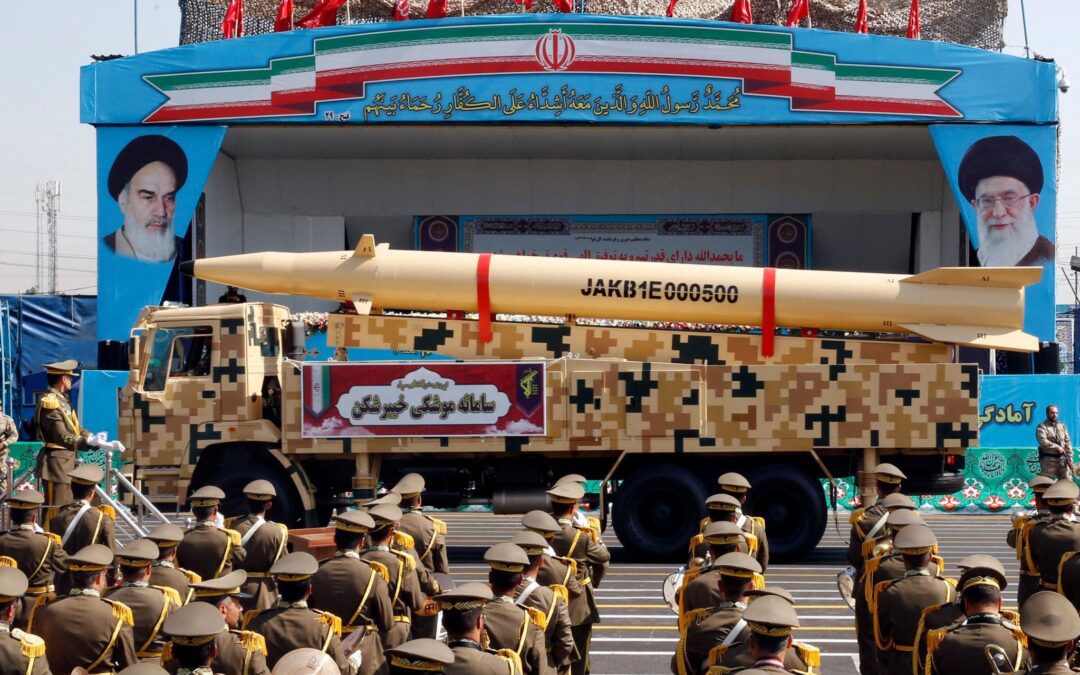
by Nikos Chatzis | 16 Jul, 2026 | Geopolitics, The Techne–Phronesis Negotiation Framework™
Iran’s missile program has become one of the central elements of its national defense and regional deterrence strategy. Beyond its military dimension, The Techne–Phronesis Negotiation Framework™ (TPNF) argues that the geopolitical significance of Iran’s missile capabilities should be understood within a broader strategic ecosystem where technology, deterrence, diplomacy, industrial capability, and adaptive governance continuously interact. Strategic influence therefore emerges not solely from military assets but from their integration with political, economic, technological, and institutional systems.
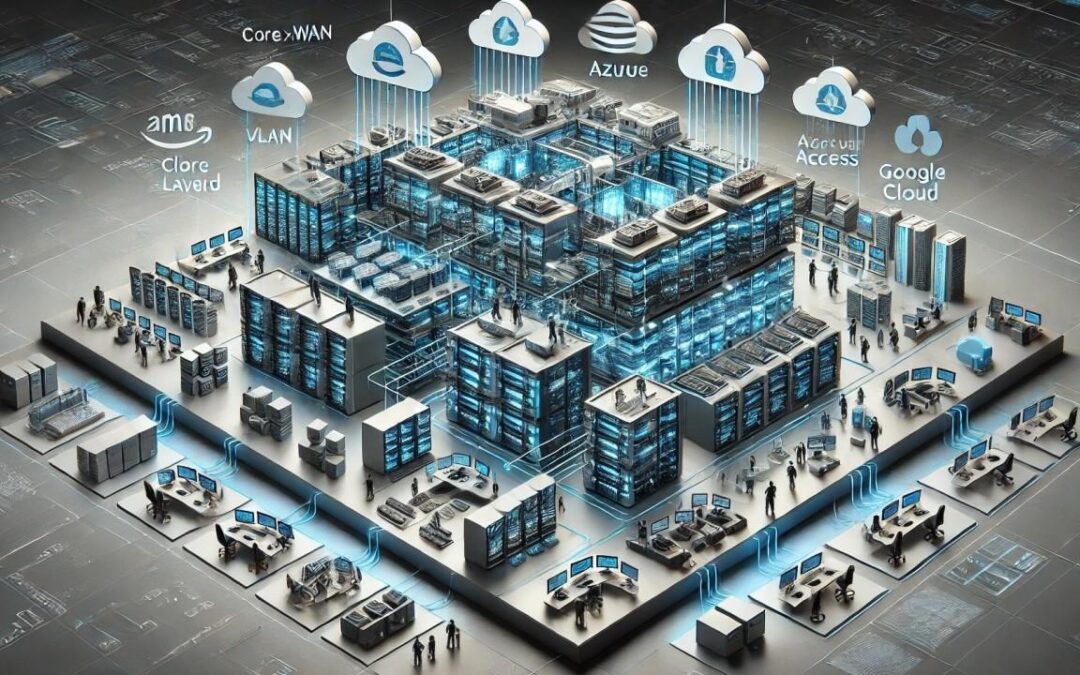
by Nikos Chatzis | 15 Jul, 2026 | Strategic Adaptation, Technological Civilization, The Techne–Phronesis Negotiation Framework™
The purpose of this essay is to present the Techne–Phronesis Negotiation Framework™ (TPNF) as an interdisciplinary conceptual architecture for understanding strategic adaptation in contemporary technological civilization. Rather than offering another sector-specific model, the framework provides an integrative perspective capable of connecting technology, governance, economics, organizational learning, innovation, geopolitics, and human judgment within a coherent theoretical structure. The essay explains the intellectual foundations, conceptual relationships, and practical relevance of the TPNF while positioning it as a framework for analyzing complexity, resilience, and sustainable strategic value creation.
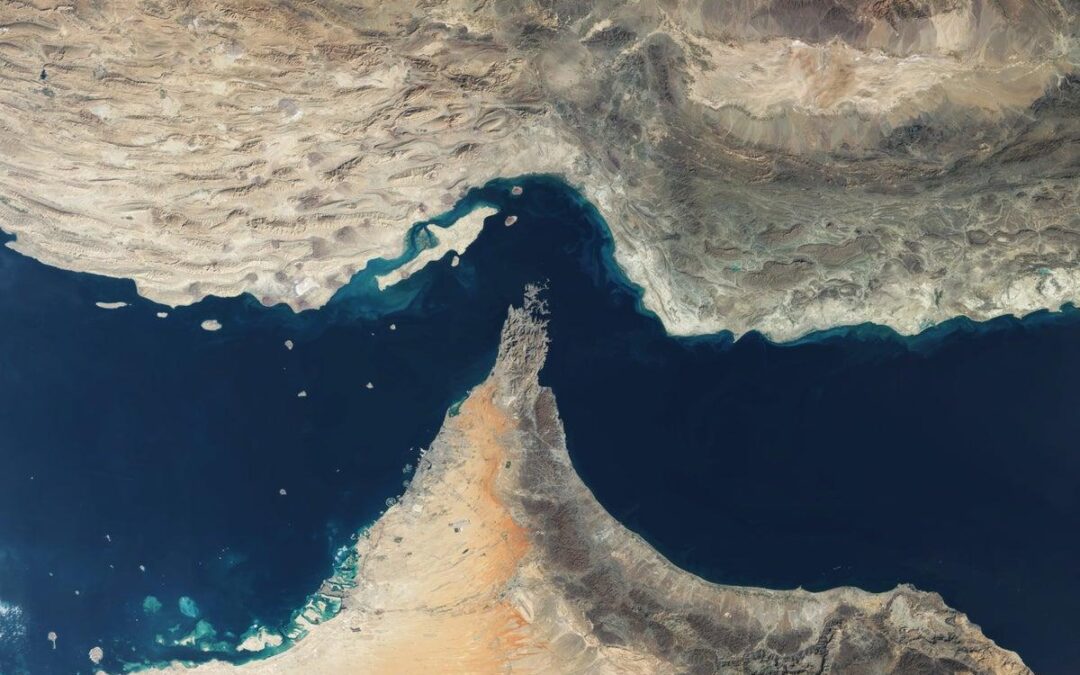
by Nikos Chatzis | 15 Jul, 2026 | Geopolitics, The Techne–Phronesis Negotiation Framework™
The purpose of this essay is to explain why the Strait of Hormuz remains one of the world’s most strategically significant maritime corridors. Rather than analyzing it solely through military or energy-security perspectives, The Strait of Hormuz is far more than a maritime chokepoint. It is a strategic ecosystem where geography, energy security, international trade, technology, naval power, diplomacy, industrial policy, and national strategy intersect. The Techne–Phronesis Negotiation Framework™ (TPNF) argues that the strategic importance of the Strait of Hormuz lies not merely in its geography, but in its role as an interconnected ecosystem linking global energy markets, technological infrastructure, geopolitical competition, and international governance. Understanding its significance therefore requires integrating techne, phronesis, systems thinking, and adaptive strategic negotiation.

by Nikos Chatzis | 15 Jul, 2026 | Geopolitics, The Techne–Phronesis Negotiation Framework™
Recent Iranian attacks against U.S. military facilities in the Middle East have intensified debate regarding deterrence, alliance assurance, and regional stability. These developments occur within a broader geopolitical environment in which China continues to expand its commercial, technological, financial, and diplomatic relationships across the Gulf. Rather than interpreting these developments exclusively through military outcomes, the Techne–Phronesis Negotiation Framework™ (TPNF) examines how strategic credibility emerges from the interaction of military capability, diplomacy, economic influence, technological leadership, institutional resilience, and adaptive governance. The framework argues that credibility is not a static attribute but an emergent property of interconnected strategic ecosystems. States sustain influence not only through force projection but also through resilient partnerships, innovation, trusted institutions, and long-term strategic adaptation.
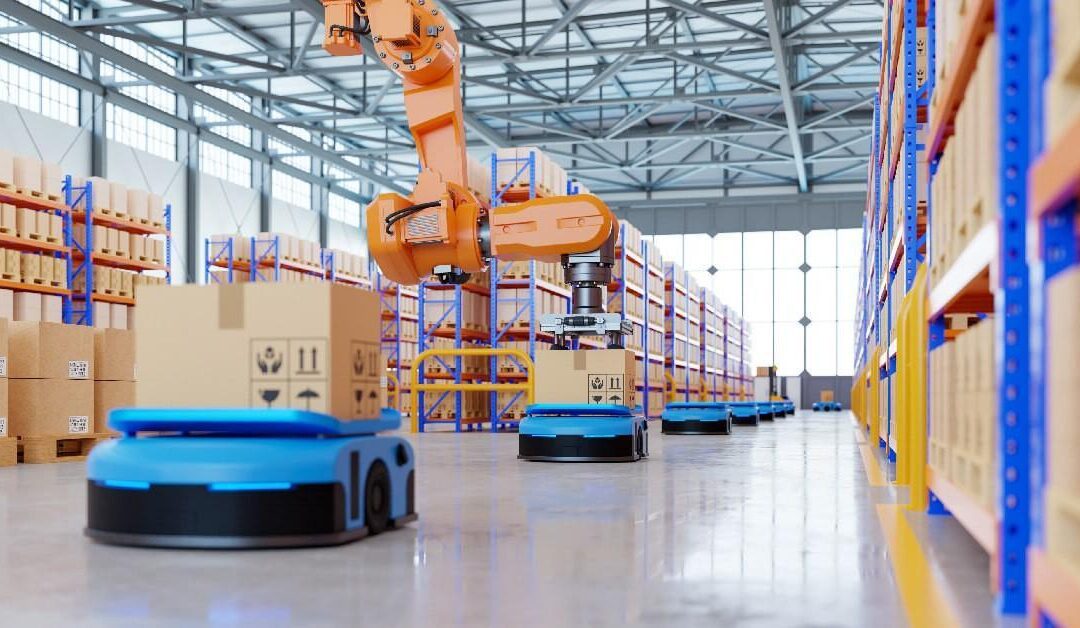
by Nikos Chatzis | 15 Jul, 2026 | Industrial Policy, Supply Chains, Technology Corridors, Technology Diplomacy, Technology Ecosystems, Technology Evolution, Technology Geopolitics, Technology Transfer
The purpose of this essay is to explain how contemporary supply chains have become multidimensional strategic ecosystems operating at the intersection of technology, industrial policy, finance, diplomacy, and national strategy. The Techne–Phronesis Negotiation Framework™ (TPNF) argues that future prosperity depends not upon optimizing individual supply chains, but upon governing interconnected strategic ecosystems through the integration of technical capability (techne), practical wisdom (phronesis), systems thinking, and adaptive strategic negotiation.

by Nikos Chatzis | 15 Jul, 2026 | Ecosystem Dynamics, Ecosystem Governance, Ecosystem Strategy, Ecosystem Thinking, Logistics, Strategic Governance, Strategic Leadership, Strategic Management, Strategic Resilience, The Techne–Phronesis Negotiation Framework™
The purpose of this essay is to explain how logistics is evolving into a multidimensional strategic ecosystem connecting technology, governance, infrastructure, supply chains, innovation, and geopolitics. The Techne–Phronesis Negotiation Framework™ (TPNF) argues that future logistics should no longer be understood simply as the management of physical flows, but as the orchestration of interconnected technological and institutional ecosystems that create resilience, adaptability, and sustainable strategic value. The evolution of logistics therefore reflects the broader evolution of contemporary technological civilization.

by Nikos Chatzis | 14 Jul, 2026 | Technological Civilization, The Techne–Phronesis Negotiation Framework™
The purpose of this essay is to present the conceptual architecture of the Techne–Phronesis Negotiation Framework™ as an integrative theory for understanding contemporary technological civilization. Rather than examining isolated technological, organizational, or geopolitical phenomena, the framework explains how interconnected concepts collectively describe the processes through which capability becomes governance, governance becomes adaptation, and adaptation becomes resilient civilization. The essay establishes the theoretical relationships among the principal concepts developed throughout the TPNF and positions them within a coherent interdisciplinary architecture.

by Nikos Chatzis | 14 Jul, 2026 | Advanced Technologies, Contemporary Geopolitics, Strategic Resilience, The Techne–Phronesis Negotiation Framework™
The defining characteristic of strategic resilience in the twenty-first century is no longer the strength of isolated institutions, technologies, or states, but the resilience of the networks that connect them. The purpose of this essay is to explain why resilience should no longer be understood as the capacity of individual organizations or states to withstand shocks in isolation. Instead, resilience increasingly emerges from the quality of relationships linking governments, industries, universities, international organizations, technology firms, financial institutions, infrastructure providers, and civil society. Through the TPNF, resilience becomes a networked capability created through cooperation, technological innovation, institutional learning, and strategic governance operating within complex adaptive systems.
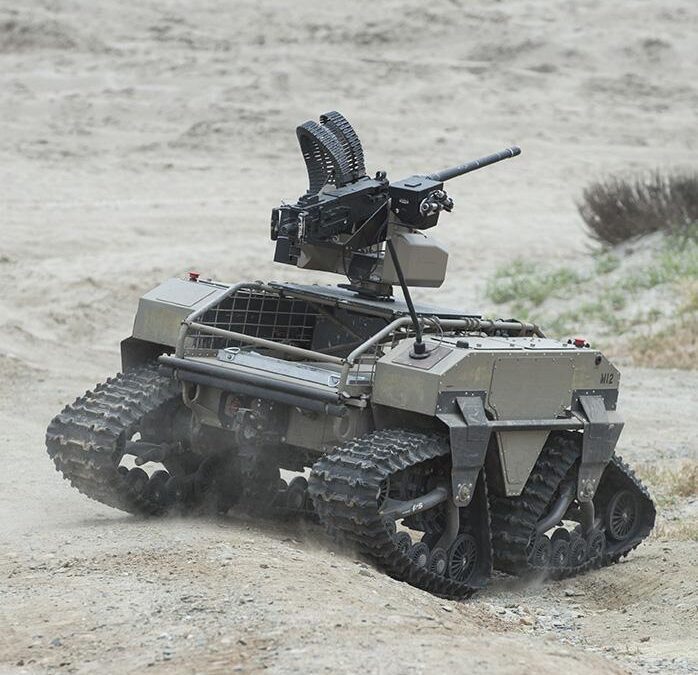
by Nikos Chatzis | 14 Jul, 2026 | Geopolitics, Robotics, Strategic Governance, Strategic Leadership, The Techne–Phronesis Negotiation Framework™, War Robotis
The deployment of an armed ground robot from an unmanned naval platform during combat represents more than a technological milestone; it signals the emergence of a new paradigm in warfare. Autonomous systems increasingly operate across land, sea, air, cyberspace, and the electromagnetic spectrum as interconnected ecosystems rather than isolated platforms. The Techne–Phronesis Negotiation Framework™ (TPNF) argues that this transformation reflects the evolution of Revolutionary War Robotics, where technical capability (techne), practical wisdom (phronesis), systems thinking, and adaptive strategic negotiation collectively shape the future of military innovation, strategic resilience, and responsible governance. The purpose of this essay is to examine how recent battlefield developments illustrate a broader transformation in military affairs.
by Nikos Chatzis | 14 Jul, 2026 | Drone warfare, Drones' Technology Management, The Techne–Phronesis Negotiation Framework™, Value Creation
The global drone economy is rapidly evolving from a specialized aerospace market into a strategic technological ecosystem that integrates artificial intelligence, autonomous systems, advanced manufacturing, digital infrastructure, logistics, agriculture, energy, environmental monitoring, public safety, and defense. The Techne–Phronesis Negotiation Framework™ (TPNF) argues that long-term competitiveness emerges through the integration of technical capability (techne), practical wisdom (phronesis), systems thinking, and adaptive strategic negotiation, enabling societies to convert technological innovation into enduring strategic prosperity.

by Nikos Chatzis | 14 Jul, 2026 | Strategic Governance, The Techne–Phronesis Negotiation Framework™
The Techne–Phronesis Negotiation Framework™ (TPNF) argues that institutional resilience emerges through the integration of technical capability (techne), practical wisdom (phronesis), systems thinking, and adaptive strategic negotiation. Institutions that successfully transform these capacities into governance practices will be better equipped to sustain legitimacy, innovation, and long-term strategic value in complex technological civilizations. The purpose of this essay is to explain why institutional transformation has become a strategic imperative for governments, international organizations, businesses, universities, and public institutions. It argues that future governance depends less on hierarchical control than on adaptive learning, interdisciplinary collaboration, technological capability, and resilient institutional ecosystems. Through the TPNF, institutions are understood as complex adaptive systems whose effectiveness depends upon their capacity to negotiate change, integrate innovation, and continuously evolve.

by Nikos Chatzis | 13 Jul, 2026 | Strategic Negotiation, Technology Geopolitics, The Techne–Phronesis Negotiation Framework™
The purpose of this essay is to introduce Negotiating Ecosystems as a foundational concept of the Techne–Phronesis Negotiation Framework™. It argues that technology geopolitics should no longer be interpreted primarily through bilateral negotiations or isolated national competition. Instead, strategic outcomes emerge through continuous interactions among multiple interconnected actors operating within complex adaptive technological ecosystems. The essay demonstrates how the TPNF provides an integrative theoretical architecture for understanding these evolving relationships.
by Nikos Chatzis | 13 Jul, 2026 | Geoeconomy, The Techne–Phronesis Negotiation Framework™
The purpose of this essay is to explain how the Black Sea, the Eastern Mediterranean, and the Vertical Corridor collectively constitute one of the most dynamic geoeconomic regions of the twenty-first century. Rather than examining these regions separately, the essay demonstrates that they form an interconnected strategic ecosystem linking Europe with Southeast Europe, the Caucasus, the Middle East, and global markets. Through the TPNF, regional development is understood as a continuous process of strategic negotiation among governments, industries, infrastructure networks, international organizations, and technological ecosystems.
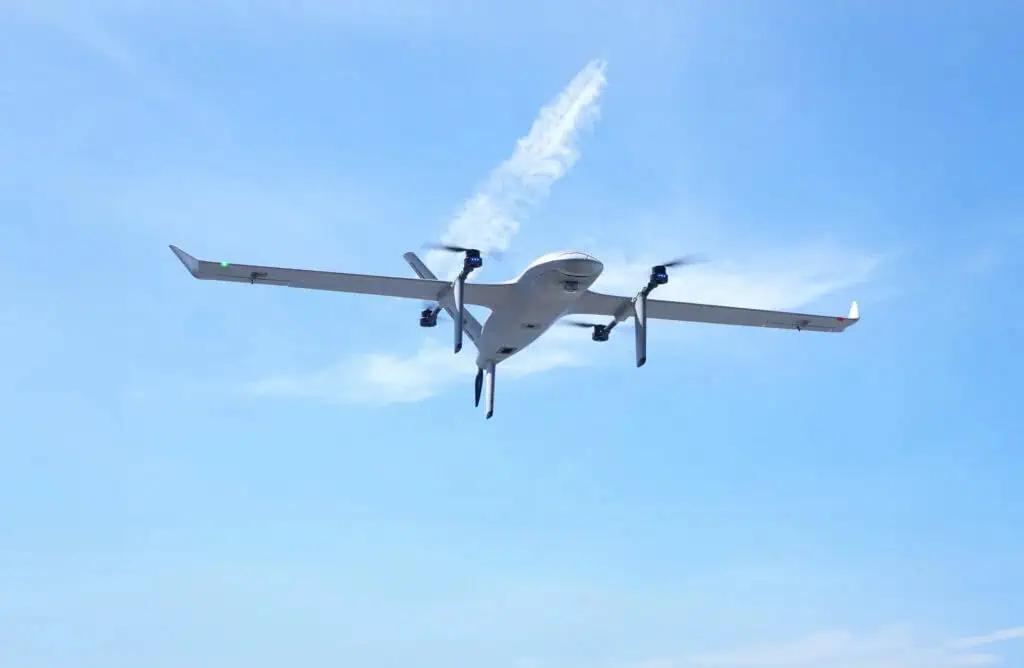
by Nikos Chatzis | 13 Jul, 2026 | Global Drone Industry, The Techne–Phronesis Negotiation Framework™
The drone industry has become one of the fastest-evolving sectors of the global technological economy. Artificial intelligence, autonomous navigation, advanced sensors, telecommunications, cloud computing, and data analytics have transformed drones into strategic platforms supporting defense, emergency response, infrastructure inspection, agriculture, logistics, environmental monitoring, and public administration. At the same time, geopolitical competition has increased investment in drone manufacturing, counter-drone capabilities, and resilient industrial ecosystems. The Techne–Phronesis Negotiation Framework™ (TPNF) explains these developments by viewing the drone industry as a complex adaptive system where technological capability (techne), practical wisdom (phronesis), systems thinking, and strategic negotiation interact continuously.

by Nikos Chatzis | 13 Jul, 2026 | Strategic Theory, The Techne–Phronesis Negotiation Framework™
The purpose of this essay is to establish the Techne–Phronesis Negotiation Framework™ (TPNF) as a comprehensive theoretical architecture for understanding strategic adaptation within complex technological civilizations. The framework argues that enduring success no longer depends upon technological superiority alone, but upon the continuous integration of innovation, learning, ethics, and strategic adaptation across complex technological civilizations.

by Nikos Chatzis | 12 Jul, 2026 | Technology Diplomacy, Technology Ecosystems, Technology Evolution, Technology Geopolitics, Technology Transfer, The Techne–Phronesis Negotiation Framework™
This essay introduces the Techne–Phronesis Negotiation Framework™ (TPNF) as an interdisciplinary strategic framework that integrates technical excellence (Techne), practical wisdom (Phronesis), and strategic negotiation to explain and govern this civilizational transition. Drawing upon Aristotelian philosophy, systems thinking, strategic leadership, and technology governance, The accelerating pace of technological innovation is fundamentally transforming the structure of modern civilization. Technology is no longer merely a collection of tools that support economic and social development; it is increasingly becoming the organizing principle through which institutions govern, economies create value, societies interact, and geopolitical power is exercised. The essay concludes that the defining challenge of the twenty-first century is not technological advancement itself, but humanity’s capacity to govern technological transformation responsibly through adaptive leadership, resilient institutions, and practical wisdom.

by Nikos Chatzis | 12 Jul, 2026 | Artificial Intelligence, Contemporary Diplomacy, Geopolitics, The Techne–Phronesis Negotiation Framework™
The Techne–Phronesis Negotiation Framework™ (TPNF) proposes that AI should be understood as a strategic capability embedded within complex adaptive diplomatic systems rather than as an autonomous decision-maker. The essay explores the implications of AI for contemporary diplomacy and demonstrates that resilient geopolitical decision-making depends upon the continuous interaction between technological innovation and practical wisdom.
by Nikos Chatzis | 12 Jul, 2026 | Geopolitics, Technology Ecosystems, The Techne–Phronesis Negotiation Framework™
The Techne–Phronesis Negotiation Framework™ (TPNF) proposes that technological ecosystems should be understood as complex adaptive systems governed through the interaction of technical capability (techne), practical wisdom (phronesis), systems thinking, and strategic negotiation. Rather than viewing technological competition as a purely economic or military phenomenon, the framework explains how innovation, governance, institutional learning, and geopolitical strategy co-evolve. This essay demonstrates that sustainable geopolitical influence depends upon the ability to negotiate resilient technological ecosystems capable of adapting continuously to an increasingly uncertain international environment.

by Nikos Chatzis | 12 Jul, 2026 | Geopolitics, Technological Civilization, The Techne–Phronesis Negotiation Framework™
The Techne–Phronesis Negotiation Framework™ (TPNF) argues that technological civilization should be understood as a complex adaptive system in which strategic outcomes emerge through the continuous interaction of technical capability (techne), practical wisdom (phronesis), systems thinking, and adaptive negotiation. Rather than treating technology as an end in itself, the framework emphasizes that its strategic value depends upon wise governance, institutional resilience, ethical leadership, and international cooperation. This essay explores the geopolitical implications of technological civilization and demonstrates how the TPNF provides an integrative architecture for understanding both today’s realities and future ambitions.

by Nikos Chatzis | 12 Jul, 2026 | Technological Civilization, Technology Corridors, Technology Diplomacy, Technology Ecosystems, Technology Evolution, Technology Geopolitics, Technology Transfer, The Techne–Phronesis Negotiation Framework™
The Techne–Phronesis Negotiation Framework™ (TPNF) proposes that operational excellence emerges through the integration of technical capability (techne), practical wisdom (phronesis), systems thinking, and adaptive negotiation. Technology becomes practical when innovation is embedded within organizational processes, and learning becomes capability when knowledge is continuously transformed into resilient institutional performance. This essay argues that future competitiveness depends less upon acquiring technology than upon developing the organizational capacity to operationalize knowledge, adapt continuously, and negotiate complexity effectively.
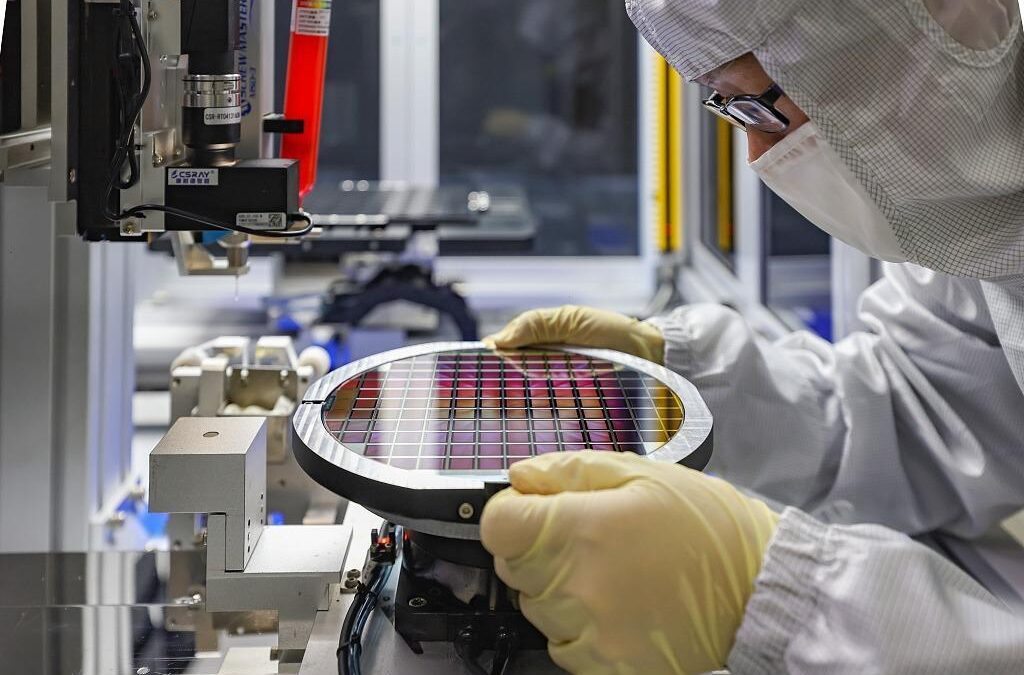
by Nikos Chatzis | 12 Jul, 2026 | Geopolitics, Technological Civilization, The Techne–Phronesis Negotiation Framework™
The Techne–Phronesis Negotiation Framework™ (TPNF) proposes that technological civilization should be understood as a complex adaptive system in which strategic outcomes emerge through the continuous interaction of technical capability (techne), practical wisdom (phronesis), systems thinking, and adaptive negotiation. Rather than viewing technology as an independent source of power, the framework demonstrates that its strategic value depends upon the capacity to integrate innovation with governance, ethics, institutional learning, and international cooperation. This essay explores the geopolitical implications of technological civilization and argues that future ambitions will be realized through resilient networks rather than isolated capabilities.
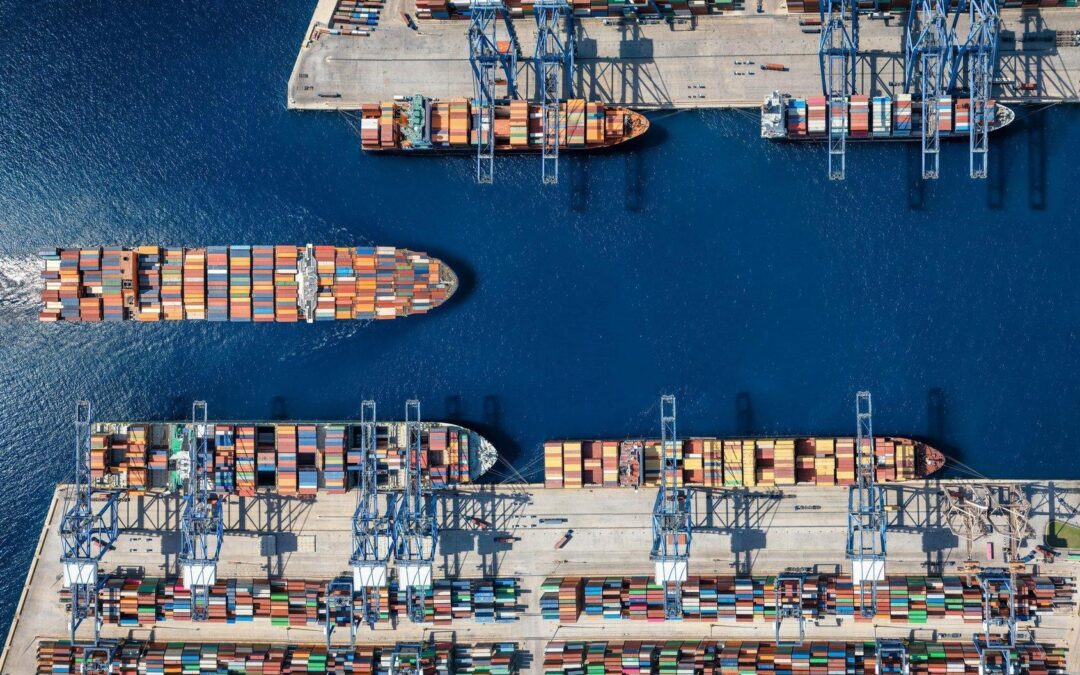
by Nikos Chatzis | 12 Jul, 2026 | Supply Chains, The Techne–Phronesis Negotiation Framework™
The Techne–Phronesis Negotiation Framework™ (TPNF) argues that strategic supply-chain resilience emerges through the integration of technical capability (techne), practical wisdom (phronesis), systems thinking, and adaptive negotiation. Using China as a case study, this essay examines how long-term investment in manufacturing capacity, technological innovation, infrastructure, and global connectivity has transformed supply chains into instruments of national strategy.

by Nikos Chatzis | 12 Jul, 2026 | strategic autonomy, Strategic Governance, Strategic Leadership, Strategic Management, Strategic Thinking, Strategic Wisdom, The Techne–Phronesis Negotiation Framework™
Techne–Phronesis Negotiation Framework™ (TPNF) proposes a meta-framework for strategic governance that integrates technical capability (techne), practical wisdom (phronesis), systems thinking, and adaptive negotiation into a unified approach for managing complexity. Rather than replacing existing governance structures, the TPNF provides an overarching architecture that connects diverse institutional processes, strengthens strategic resilience, and enables continuous adaptation within international organizations.

by Nikos Chatzis | 12 Jul, 2026 | Strategic Leadership, The Techne–Phronesis Negotiation Framework™
The Techne–Phronesis Negotiation Framework™ (TPNF) argues that negotiation is not merely the pursuit of agreement but the continuous process through which individuals, organizations, and nations shape uncertain futures. This essay proposes that the future is not negotiated with certainty; it is negotiated with courage, wisdom, and preparation. Together, these three qualities enable strategic resilience across complex adaptive systems where change is constant and certainty remains elusive.

by Nikos Chatzis | 11 Jul, 2026 | Critical Minerals, The Techne–Phronesis Negotiation Framework™
The Techne–Phronesis Negotiation Framework™ (TPNF) argues that strategic resilience emerges through the integration of technical capability (techne) and practical wisdom (phronesis) within complex adaptive systems. This essay examines how critical minerals and technology have become the strategic equivalent of “today’s oil,” reshaping global competition and requiring new models of negotiation, governance, and leadership.
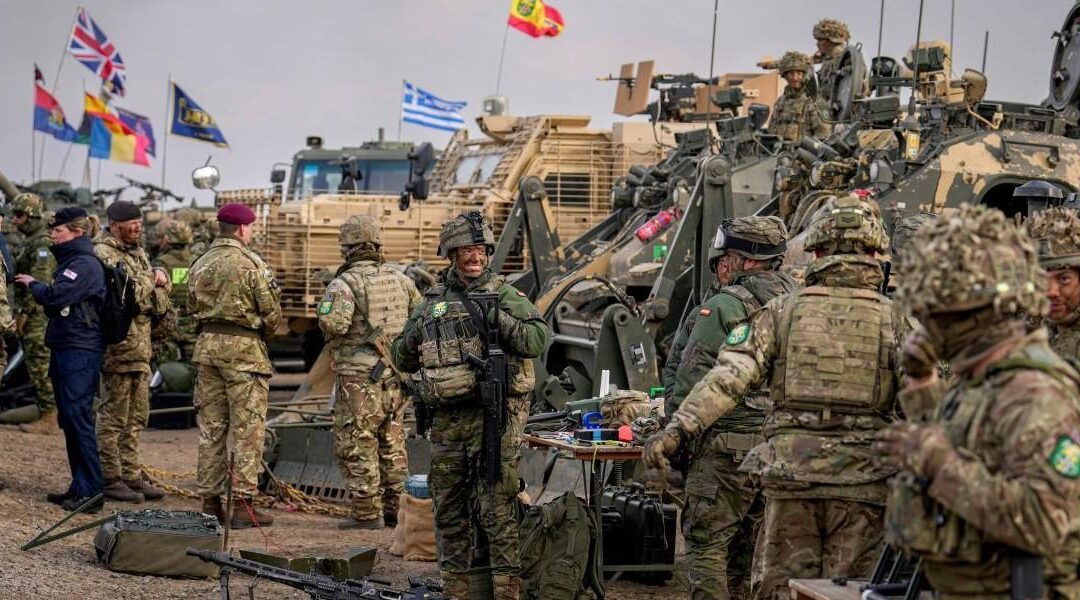
by Nikos Chatzis | 9 Jul, 2026 | Geopolitics, NATO, The Techne–Phronesis Negotiation Framework™
The Turkey Out of NATO Project 2028: This thesis applies the Techne–Phronesis Negotiation Framework™ (TPNF) to explain the project’s logic. Techne refers to NATO’s operational, technological, legal, and institutional capacity. Phronesis refers to strategic wisdom, ethical judgment, alliance prudence, and long-term political legitimacy. Through TPNF, Turkey Out of NATO Project 2028 can be understood not simply as a demand for expulsion, but as a strategic warning: NATO 3.0 cannot remain credible if it modernizes technologically while tolerating internal behavior that weakens trust, interoperability, and collective discipline.
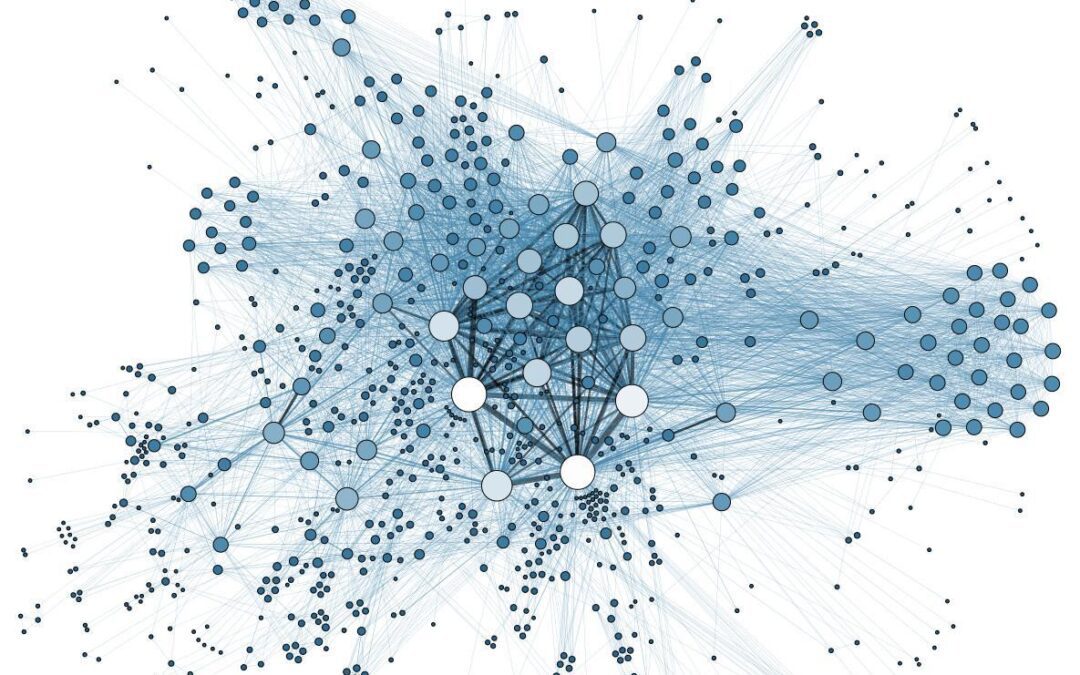
by Nikos Chatzis | 9 Jul, 2026 | The Techne–Phronesis Negotiation Framework™
This paper compares the TPNF with Aristotle’s five distinct ways of knowing—episteme (scientific knowledge), techne (craft knowledge), phronesis (practical wisdom), nous (intuitive understanding), and sophia (philosophical wisdom). It argues that the TPNF operationalizes techne and phronesis as the framework’s principal strategic dimensions while recognizing that the remaining forms of knowledge function as complementary foundations for effective leadership, negotiation, and resilience in complex adaptive systems.

by Nikos Chatzis | 8 Jul, 2026 | Technological Civilization
“Courage is not the absence of uncertainty. It is the decision that something important is worth preparing for despite uncertainty.” Technology will continue to evolve.
The decisive question is whether civilization will evolve with it…
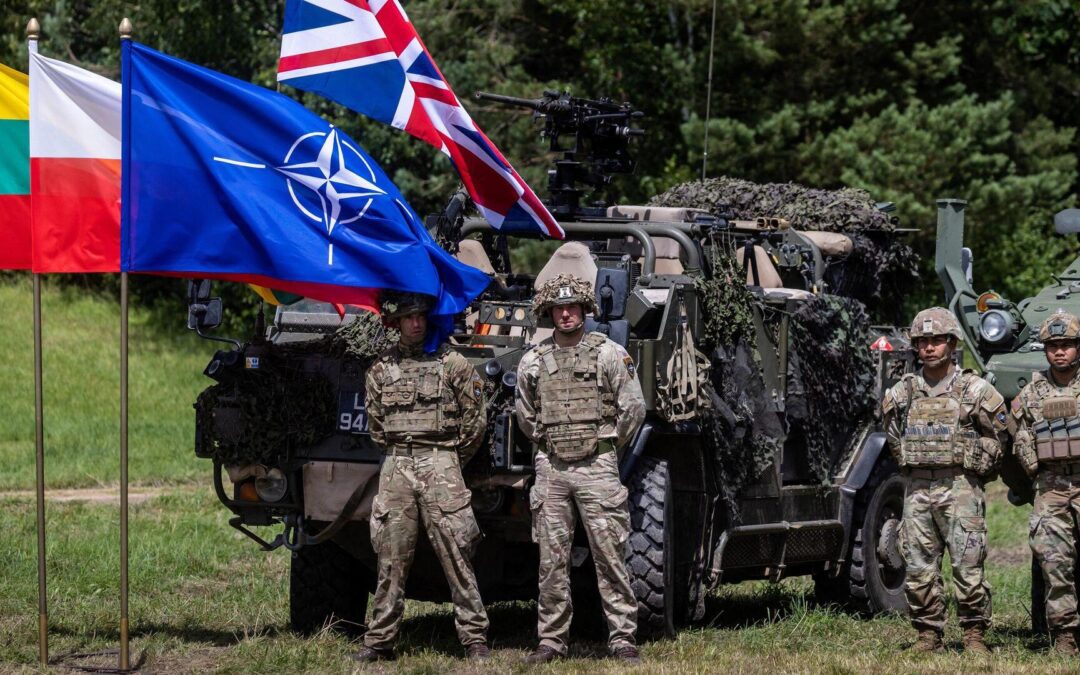
by Nikos Chatzis | 8 Jul, 2026 | Geopolitics, The Techne–Phronesis Negotiation Framework™
The essay integrates the Techne–Phronesis Negotiation Framework™, arguing that NATO 3.0 must combine technological superiority with strategic wisdom. NATO’s future credibility will depend not only on weapons, artificial intelligence, and industrial capacity, but also on institutional judgment, alliance discipline, democratic resilience, and the ability to manage opportunistic allies without becoming strategically dependent on them.

by Nikos Chatzis | 8 Jul, 2026 | Geopolitics, The Techne–Phronesis Negotiation Framework™
This thesis argues that no single actor controls modern technology alone. Instead, technological power is distributed across specialized national ecosystems: the United States dominates design, AI platforms and cloud; Taiwan controls leading-edge semiconductor manufacturing through TSMC; the Netherlands and Europe control key semiconductor equipment through ASML and industrial standards; Japan and South Korea remain essential in materials, equipment, memory and advanced manufacturing; China seeks self-sufficiency under export-control pressure; India is rising as a strategic technology and manufacturing platform; and the Middle East is using capital, energy and data-center infrastructure to become an AI and cloud hub. The Techne–Phronesis Negotiation Framework™ explains this transformation as a struggle to organize technological ecosystems into sustainable long-term geopolitical value.

by Nikos Chatzis | 7 Jul, 2026 | Geopolitics, The Techne–Phronesis Negotiation Framework™
The Techne–Phronesis Negotiation Framework™ provides a multidimensional analytical perspective for understanding this transformation by integrating technological capability, strategic wisdom, systems thinking, platform ecosystems, and long-term value creation into a unified geopolitical model.
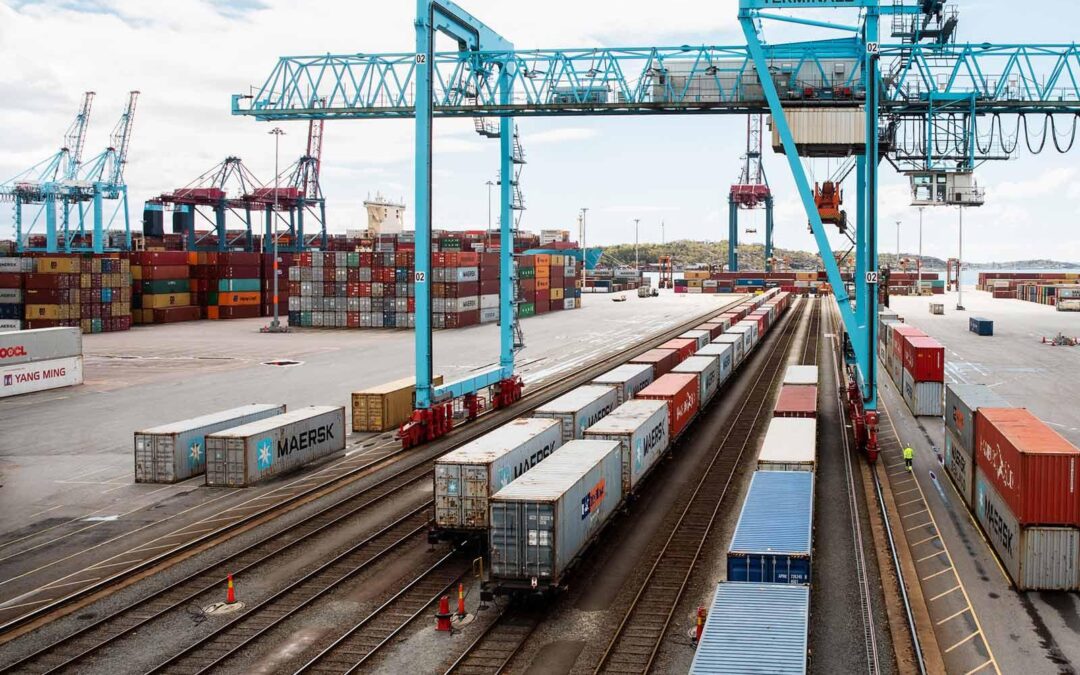
by Nikos Chatzis | 7 Jul, 2026 | Geopolitics, New Economy, Strategic Leadership, Strategic Management, Strategic Negotiation, Strategic Thinking
Greece is increasingly more strategically important and useful for U.S. interests because it combines NATO membership, EU membership, energy infrastructure, democratic alignment, access to the Balkans, proximity to Ukraine, cooperation with Israel and Cyprus, and potential connectivity with India through IMEC. This thesis argues that the Greece–Cyprus–Israel–UAE–India grouping better serves long-term U.S. interests than the competing Turkey–China–Pakistan–Saudi Arabia–Qatar configuration.

by Nikos Chatzis | 7 Jul, 2026 | Γεωπολιτική
Η διαπραγματευτική διαδικασία καταρρέει αν οι πλευρές που συμμετέχουν στις διαπραγματεύσεις αδυνατούν να συντονίσουν κατάλληλα τους σκιώδεις παίκτες που βρίσκονται πίσω από αυτές…

by Nikos Chatzis | 7 Jul, 2026 | Uncategorized
Επιδίωξη “de facto” αλλαγής της Συνθήκης του Μοντρέ στη Μαύρη Θάλασσα από τον Ερντογάν

by Nikos Chatzis | 5 Jul, 2026 | 3-D Negotiation, Collective Strategic Intelligence, Platform Ecosystems, The Techne–Phronesis Negotiation Framework™
This essay argues that Collective Strategic Intelligence represents the next stage in the evolution of technological civilization. Building upon The Techne–Phronesis Negotiation Framework™, it explains how Technology (Techne), Systems Thinking, Strategic Wisdom (Phronesis), Strategic Negotiation, and Platform Ecosystems collectively generate higher-order adaptive capabilities that strengthen resilience, responsible governance, and sustainable value creation.

by Nikos Chatzis | 5 Jul, 2026 | 3-D Negotiation, Platform Ecosystems, The Techne–Phronesis Negotiation Framework™
This essay argues that The Techne–Phronesis Negotiation Framework™ explains why Platform Ecosystems create future value today by integrating Technology (Techne), Systems Thinking, Strategic Wisdom (Phronesis), Strategic Negotiation, and Platform Ecosystems into a unified architecture for resilient innovation and sustainable value creation.

by Nikos Chatzis | 5 Jul, 2026 | 3-D Negotiation, Lasting Value, Technological Civilization, The Techne–Phronesis Negotiation Framework™
Negotiation.gr | Strategic Wisdom for the Technological Age Central Thesis The defining challenge of the twenty-first century is not simply accelerating technological innovation, but leading technological civilization so that innovation consistently creates lasting...
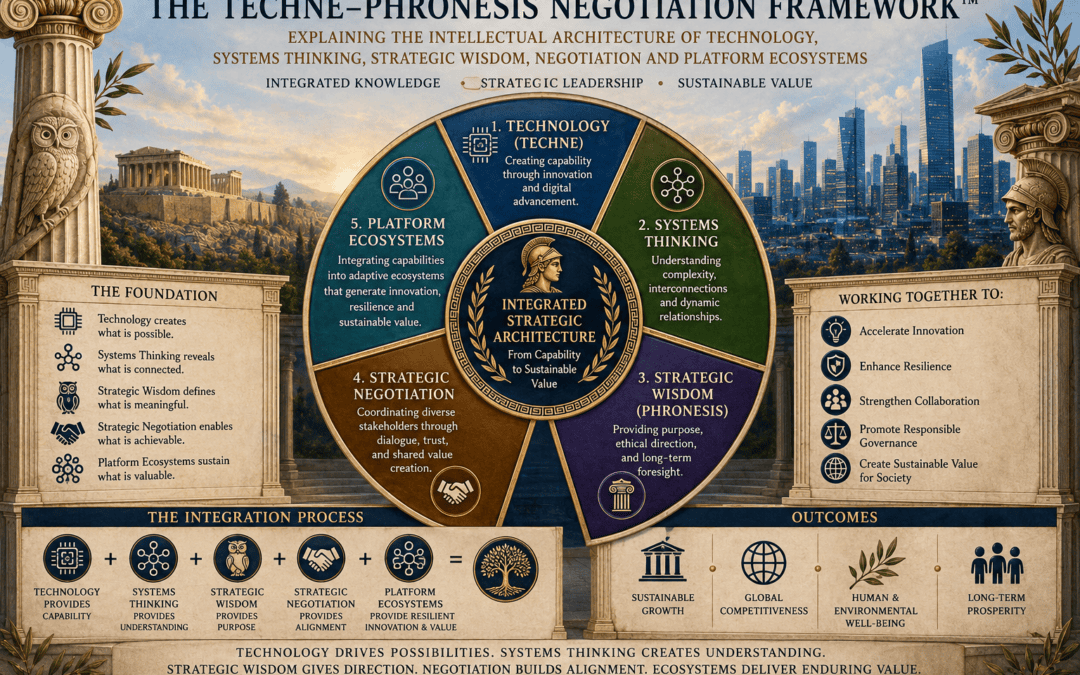
by Nikos Chatzis | 5 Jul, 2026 | 3-D Negotiation, Platform Ecosystems, Strategic Negotiation, Strategic Thinking, Strategic Wisdom, Systems Integration, Systems Thinking, Tech Economy of Software, Tech Sovereignty, Technology Corridors, Technology Diplomacy, Technology Ecosystems, Technology Evolution, Technology Geopolitics
The Techne–Phronesis Negotiation Framework™ proposes an integrated intellectual architecture that combines Technology (Techne), Systems Thinking, Strategic Wisdom (Phronesis), Strategic Negotiation, and Platform Ecosystems into a coherent strategic perspective. This essay explains how these five complementary dimensions interact to guide technological leadership, ecosystem governance, resilient innovation, and sustainable value creation in the Human–Technology Revolution.
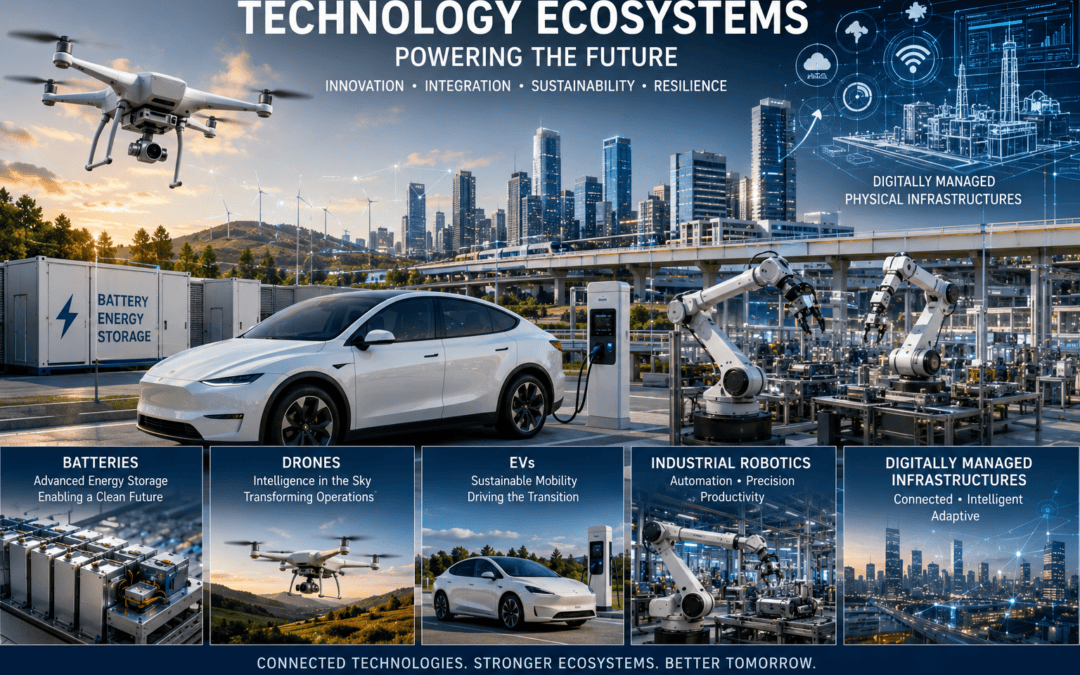
by Nikos Chatzis | 5 Jul, 2026 | 3-D Negotiation, Robotics, Technology Ecosystems, The Techne–Phronesis Negotiation Framework™
Technological progress increasingly results from the interaction of interconnected innovation ecosystems (Batteries, drones, Electric Vehicles (EVs), industrial robotics, Artificial Intelligence, cloud computing). The Techne–Phronesis Negotiation Framework™ explains how Technology, Systems Thinking, Strategic Wisdom, Strategic Negotiation, and Platform Ecosystems transform these coordinated capabilities into resilient innovation and sustainable value creation.
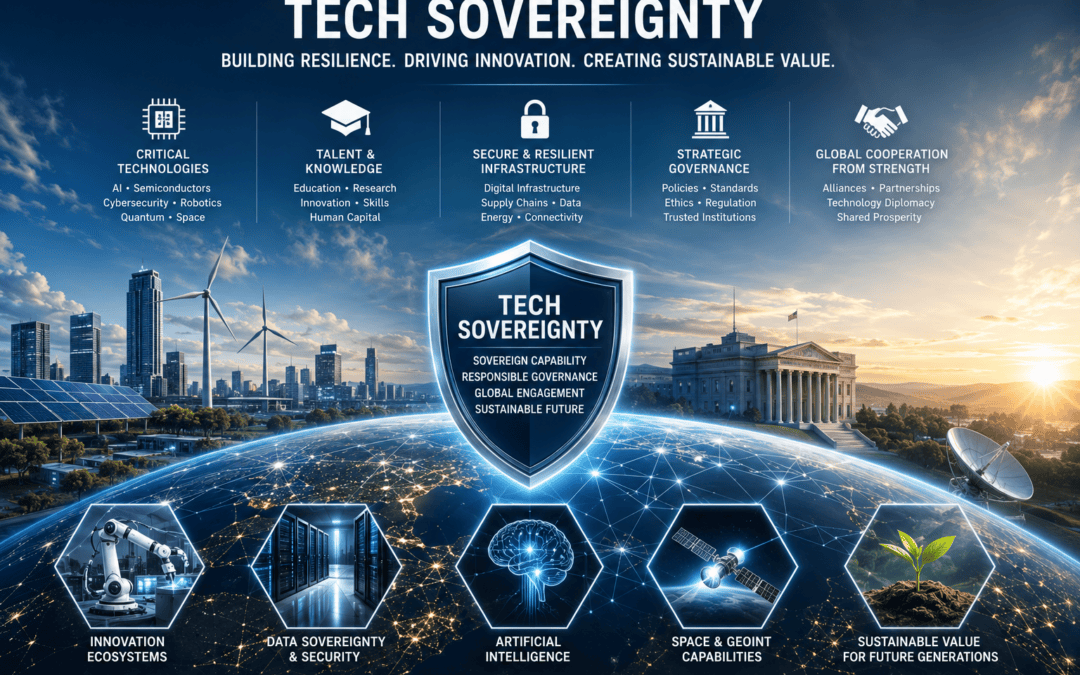
by Nikos Chatzis | 5 Jul, 2026 | 3-D Negotiation, Sustainability, Sustainable Value Creation, Tech Sovereignty, The Techne–Phronesis Negotiation Framework™
This essay argues that The Techne–Phronesis Negotiation Framework™ provides an integrated perspective for understanding how Tech Sovereignty can become a foundation for sustainable value creation through the interaction of Technology (Techne), Systems Thinking, Strategic Wisdom (Phronesis), Strategic Negotiation, and Platform Ecosystems.
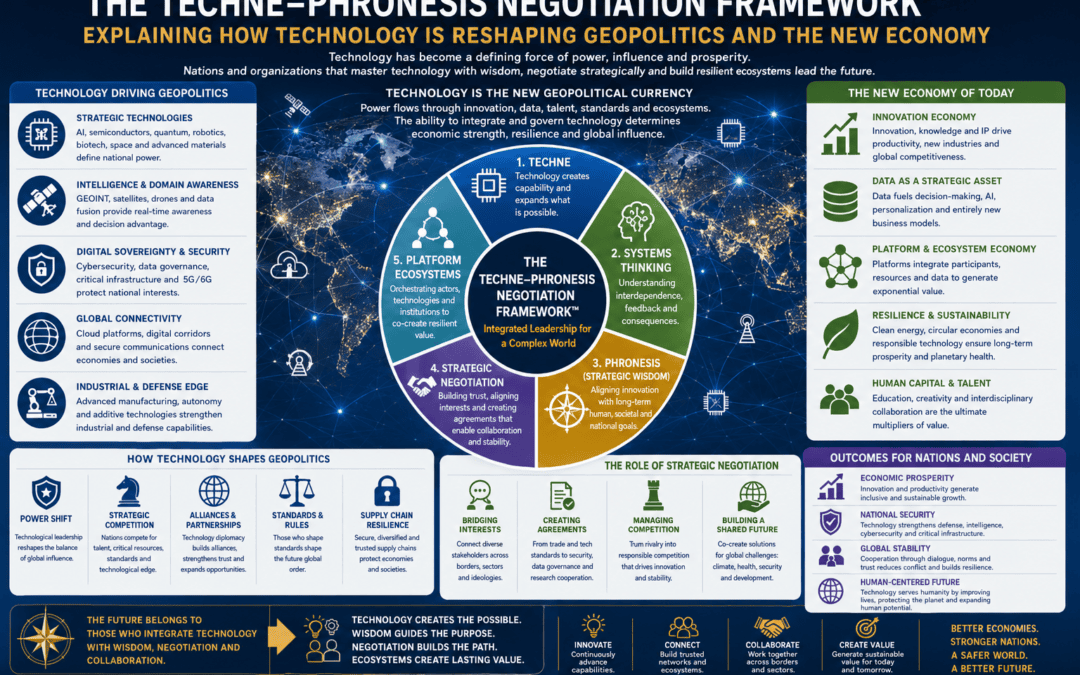
by Nikos Chatzis | 4 Jul, 2026 | 3-D Negotiation, New Economy, Systems Thinking, Technology Corridors, Technology Diplomacy, Technology Ecosystems, Technology Evolution, Technology Geopolitics, Technology Transfer, The Techne–Phronesis Negotiation Framework™
Economic power is progressively determined by the capacity to innovate, coordinate ecosystems, govern critical technologies, and transform knowledge into sustainable value. This essay argues that The Techne–Phronesis Negotiation Framework™ provides an integrated perspective for understanding this transformation by combining Technology (Techne), Systems Thinking, Strategic Wisdom (Phronesis), Strategic Negotiation, and Platform Ecosystems into a unified model for technological leadership in the twenty-first century.
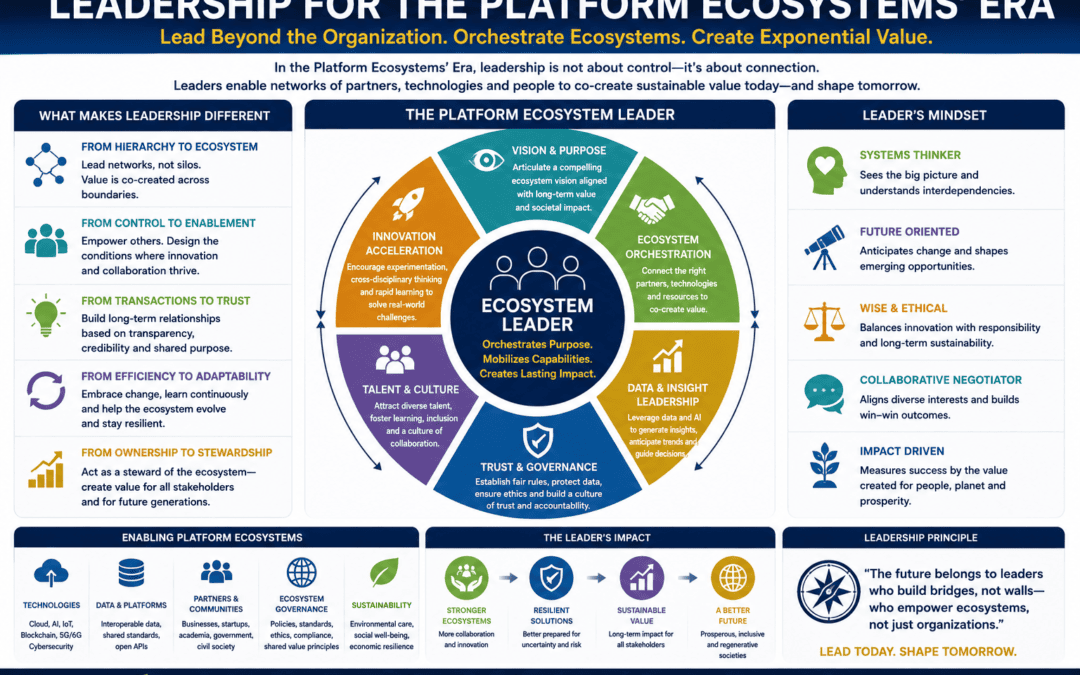
by Nikos Chatzis | 4 Jul, 2026 | 3-D Negotiation, Platform Ecosystems, Sustainable Value Creation, The Techne–Phronesis Negotiation Framework™
This essay argues that The Techne–Phronesis Negotiation Framework™ explains how Platform Ecosystems integrate Technology (Techne), Systems Thinking, Strategic Wisdom (Phronesis), and Strategic Negotiation to create resilient innovation and tomorrow’s value today.
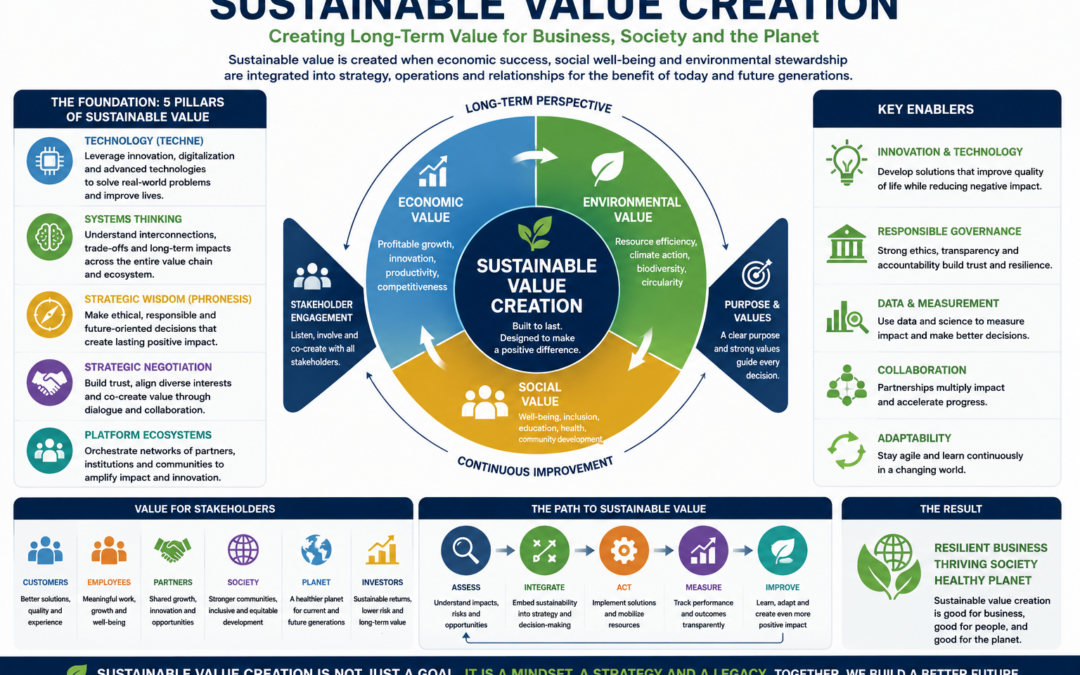
by Nikos Chatzis | 4 Jul, 2026 | 3-D Negotiation, Platform Ecosystems, The Techne–Phronesis Negotiation Framework™
This essay argues that The Techne–Phronesis Negotiation Framework™ explains how Platform Ecosystems transform coordinated capabilities into resilient innovation and sustainable value by integrating Technology (Techne), Systems Thinking, Strategic Wisdom (Phronesis), and Strategic Negotiation into a unified ecosystem perspective.
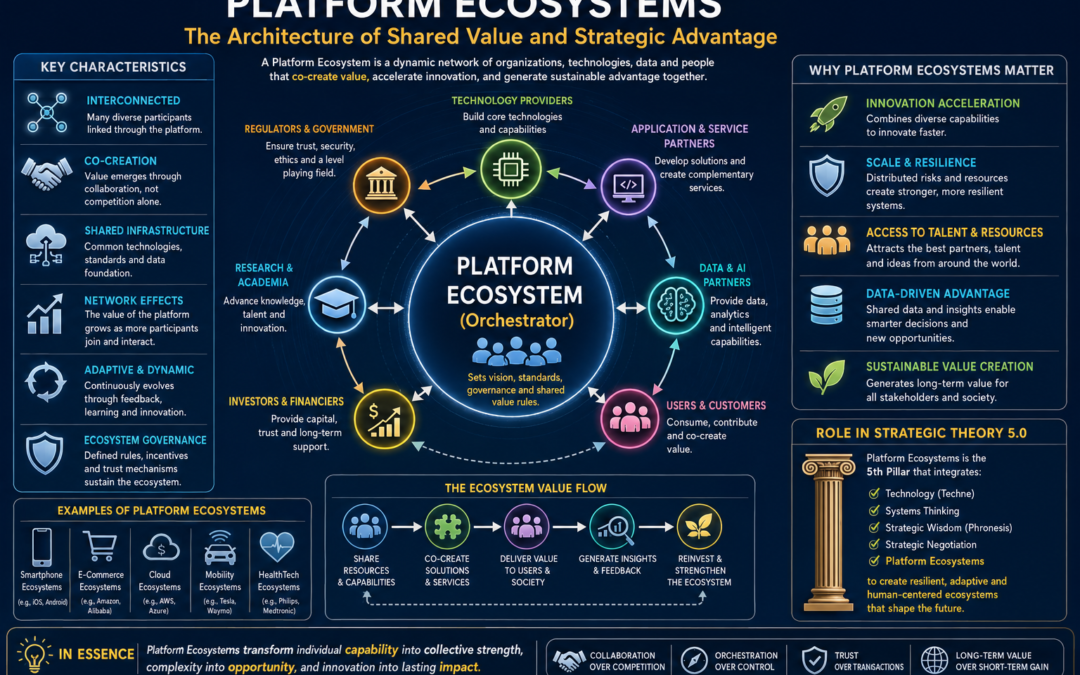
by Nikos Chatzis | 4 Jul, 2026 | 3-D Negotiation, Platform Ecosystems, The Techne–Phronesis Negotiation Framework™
This essay explains why Platform Ecosystems naturally emerged as the fifth pillar of the framework, providing the conceptual foundation for Strategic Theory 5.0.
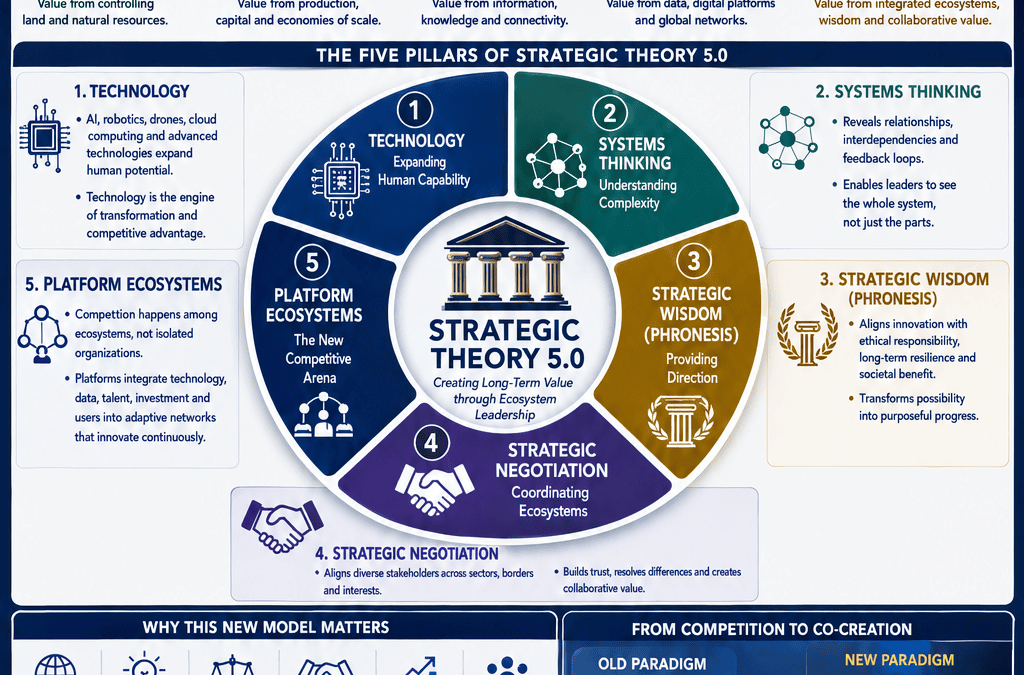
by Nikos Chatzis | 4 Jul, 2026 | 3-D Negotiation, The Techne–Phronesis Negotiation Framework™
This essay proposes Strategic Theory 5.0 as a conceptual evolution in strategic thought. Rather than replacing earlier theories, Strategic Theory 5.0 integrates technological capability, Systems Thinking, Strategic Wisdom, Strategic Negotiation, and Platform Ecosystems into a comprehensive framework for leading innovation, governing complexity, and creating long-term value. The Techne–Phronesis Negotiation Framework™ provides the intellectual architecture supporting this perspective.
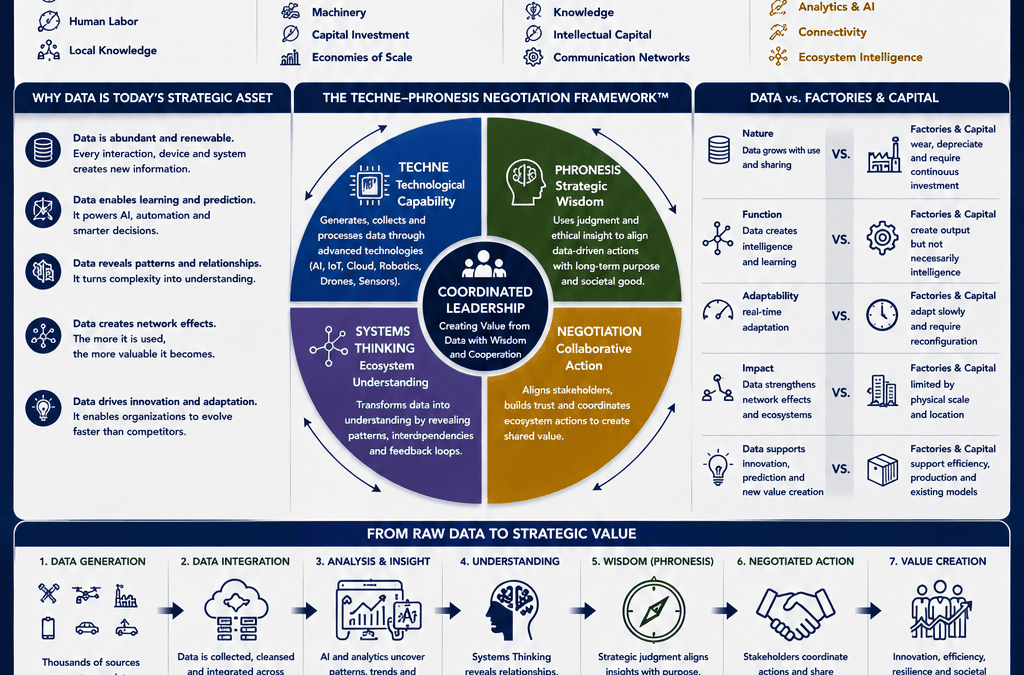
by Nikos Chatzis | 4 Jul, 2026 | 3-D Negotiation, The Techne–Phronesis Negotiation Framework™
This essay argues that The Techne–Phronesis Negotiation Framework™ explains this transformation by demonstrating how technological capability, Systems Thinking, Strategic Wisdom, and collaborative negotiation convert data into sustainable competitive advantage.
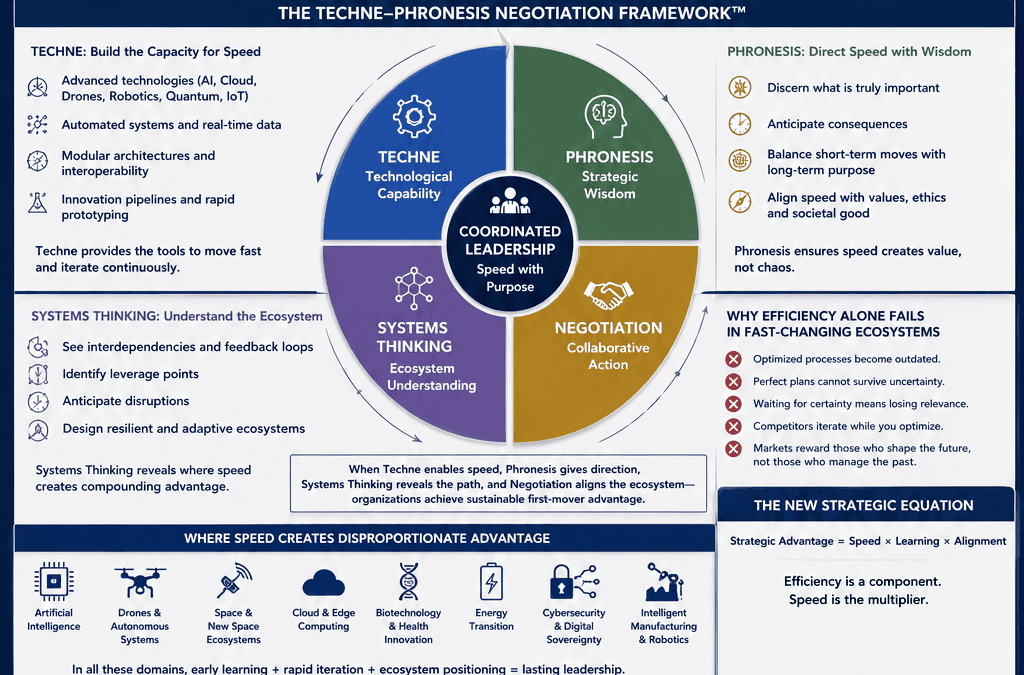
by Nikos Chatzis | 4 Jul, 2026 | 3-D Negotiation, Ecosystem Dynamics, The Techne–Phronesis Negotiation Framework™
The Techne–Phronesis Negotiation Framework™ explains why strategic speed, guided by Systems Thinking, Strategic Wisdom, and collaborative negotiation, has become the defining capability of technological civilization.
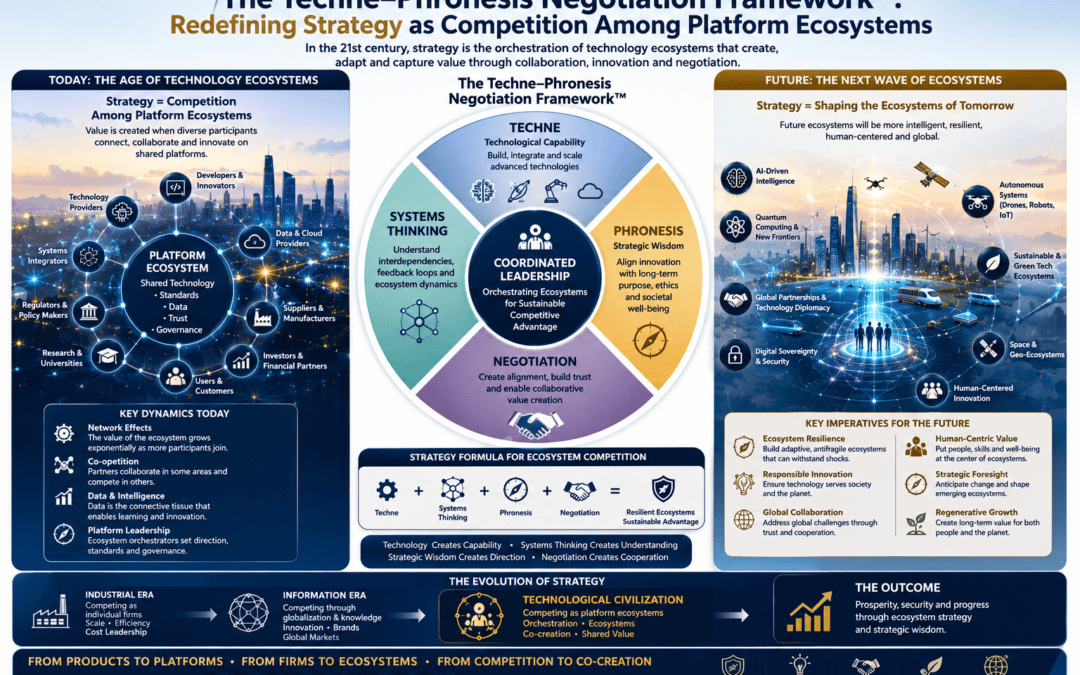
by Nikos Chatzis | 4 Jul, 2026 | 3-D Negotiation, Ecosystem Strategy, Strategic Management, Strategy Evolution - Business Strategy, The Techne–Phronesis Negotiation Framework™
This essay argues that The Techne–Phronesis Negotiation Framework™ provides a multidisciplinary approach for understanding this transformation by integrating technological capability, Systems Thinking, Strategic Wisdom, and negotiation into a comprehensive model of ecosystem strategy.
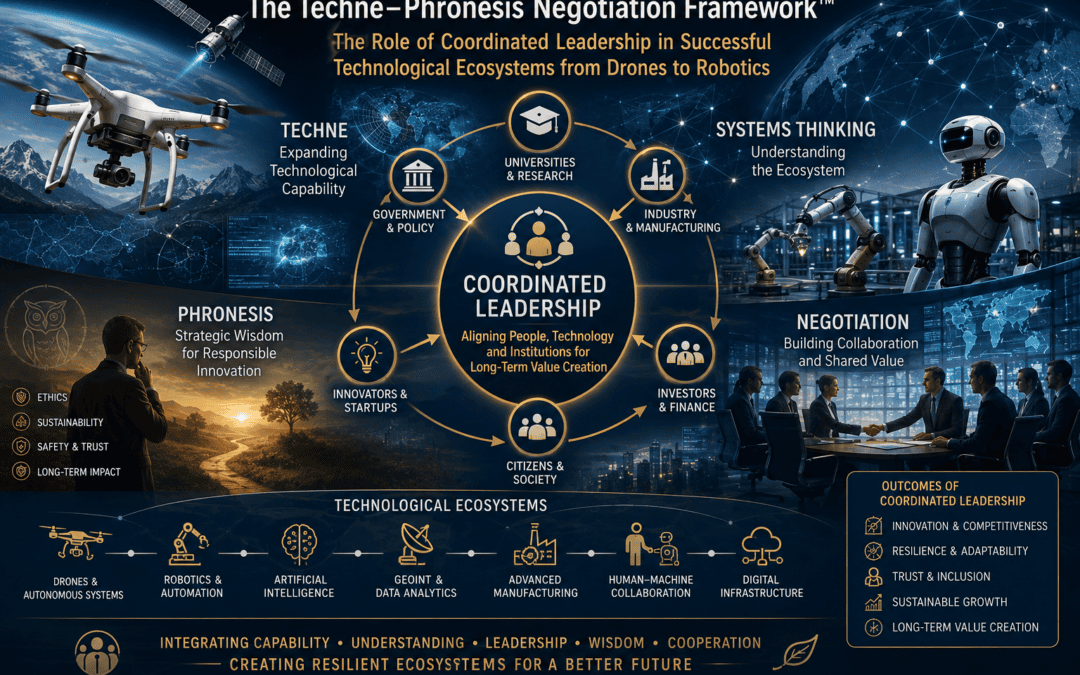
by Nikos Chatzis | 3 Jul, 2026 | 3-D Negotiation, The Techne–Phronesis Negotiation Framework™
This essay applies The Techne–Phronesis Negotiation Framework™ to demonstrate that coordinated leadership represents the critical link connecting technological capability, Systems Thinking, Strategic Wisdom, and collaborative negotiation. Sustainable competitive advantage emerges not from isolated innovation but from the continuous orchestration of interconnected technology ecosystems.
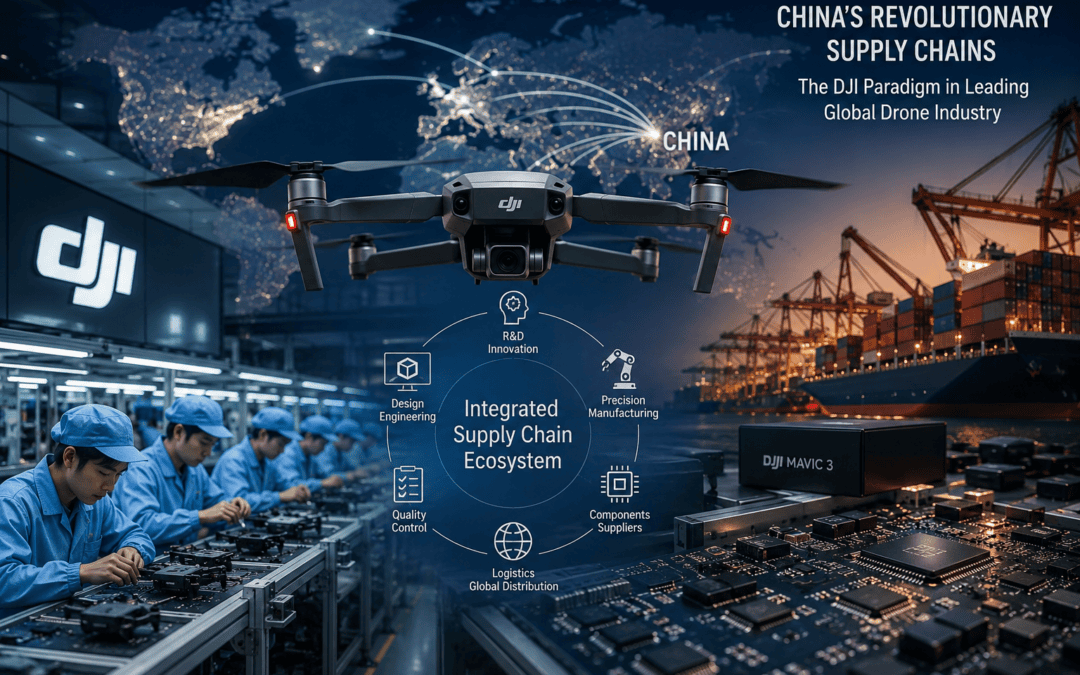
by Nikos Chatzis | 2 Jul, 2026 | 3-D Negotiation, Supply Chains, The Techne–Phronesis Negotiation Framework™
This essay applies The Techne–Phronesis Negotiation Framework™ to explain how China’s revolutionary supply chains transform technological capability into global industrial leadership. It argues that future competitiveness will increasingly depend not upon isolated technological inventions but upon the ability to build resilient ecosystems that continuously generate innovation, adaptability, and long-term value.

by Nikos Chatzis | 2 Jul, 2026 | 3-D Negotiation, The Techne–Phronesis Negotiation Framework™
This thesis argues that enduring value emerges only when innovation is integrated into resilient technology ecosystems through Systems Thinking, Strategic Wisdom, and collaborative negotiation. The Techne–Phronesis Negotiation Framework™ provides a multidisciplinary approach for transforming technological capability into sustainable economic, societal, and geopolitical value.
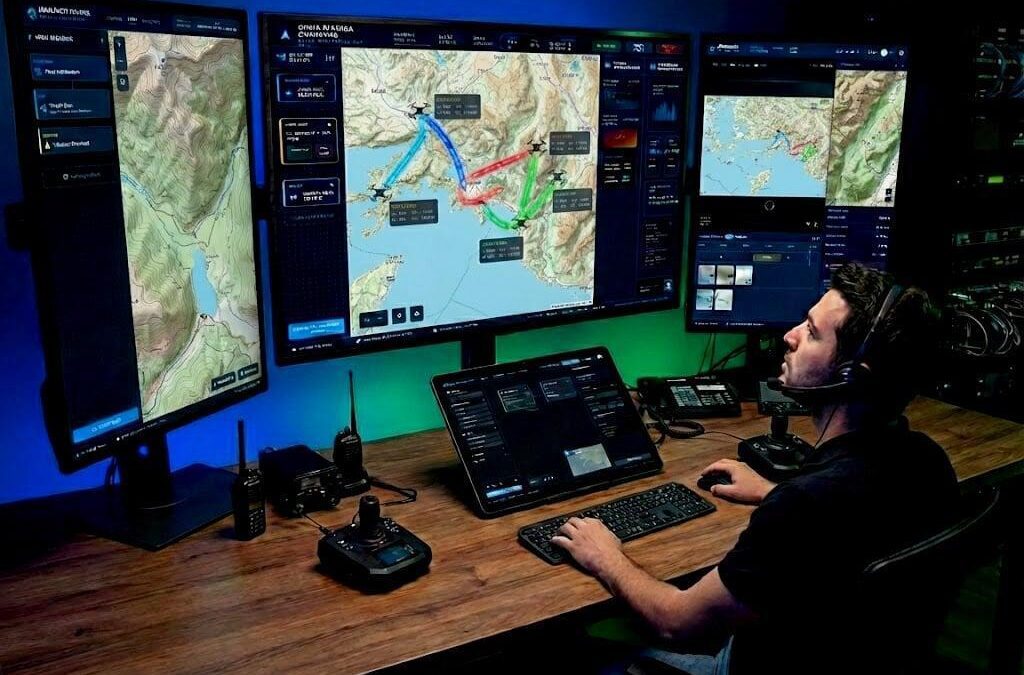
by Nikos Chatzis | 2 Jul, 2026 | 3-D Negotiation, The Techne–Phronesis Negotiation Framework™
This essay applies The Techne–Phronesis Negotiation Framework™ to demonstrate how drones, GEOINT, and Systems Thinking interact to create resilient technology ecosystems that enable strategic leadership, collaborative innovation, and sustainable value creation. The accelerating convergence of drones, Artificial Intelligence, Geospatial Intelligence (GEOINT), robotics, cloud computing, and digital infrastructure is redefining how nations, organizations, and industries operate.

by Nikos Chatzis | 1 Jul, 2026 | 3-D Negotiation, The Techne–Phronesis Negotiation Framework™
This essay introduces The Techne–Phronesis Negotiation Framework™, a multidisciplinary framework that integrates technology, Systems Thinking, Strategic Wisdom, and negotiation into a coherent model for governing resilient technology ecosystems. It argues that technological capability alone cannot ensure sustainable progress. Lasting value emerges only when technological innovation is understood systemically, guided by practical wisdom, and implemented through collaborative negotiation among diverse stakeholders.

by Nikos Chatzis | 1 Jul, 2026 | Strategic Leadership, Strategic Negotiation, Strategic Thinking, Systems Thinking, Technology Corridors, Technology Diplomacy, Technology Ecosystems, Technology Evolution, Technology Transfer
This thesis argues that the future of civilization will depend not only on inventing increasingly powerful technologies but on integrating technological capability, systemic understanding, and practical wisdom into resilient ecosystems that generate enduring economic, societal, and strategic value.
by Nikos Chatzis | 30 Jun, 2026 | Strategic Leadership, Strategic Thinking, Strategic Wisdom, Technology Ecosystems
This essay argues that Strategic Wisdom, supported by Systems Thinking, provides the intellectual foundation for leading multiple technology ecosystems in an era where the future is no longer a distant concept but an everyday reality. The leaders who succeed will be those capable of integrating technology, human talent, institutions, innovation, and ethical judgment into resilient ecosystems that create lasting economic, societal, and strategic value.
by Nikos Chatzis | 30 Jun, 2026 | Ecosystem Governance, Ecosystem Thinking, Systems Thinking, Technology Diplomacy, Technology Ecosystems
This thesis argues that the meeting point between philosophy and modern technology represents one of the defining turning points of the twenty-first century. Systems Thinking provides the analytical framework for understanding complexity, while philosophy provides the ethical and strategic guidance necessary to govern technological ecosystems that create sustainable economic, societal, and strategic value.

by Nikos Chatzis | 30 Jun, 2026 | Complexity Management, Ecosystem Thinking, Ethical Leadership, Strategic Leadership, Strategic Thinking, Systems Integration
This thesis argues that Systems Thinking provides the intellectual foundation for effective leadership in the governance of modern technology ecosystems. By understanding relationships rather than isolated components, leaders can promote innovation, strengthen resilience, manage complexity, and guide technological transformation in ways that create sustainable economic, societal, and strategic value.
by Nikos Chatzis | 29 Jun, 2026 | drone ecosystems, Drones' Technology Management, GEOINT, Geospatial Intelligence, Research & Development, Technology Corridors, Technology Diplomacy, Technology Ecosystems, Technology Evolution, Technology Transfer, UAVs
This essay argues that the evolution of drone technology reflects the broader transition from industrial civilization to technological civilization.
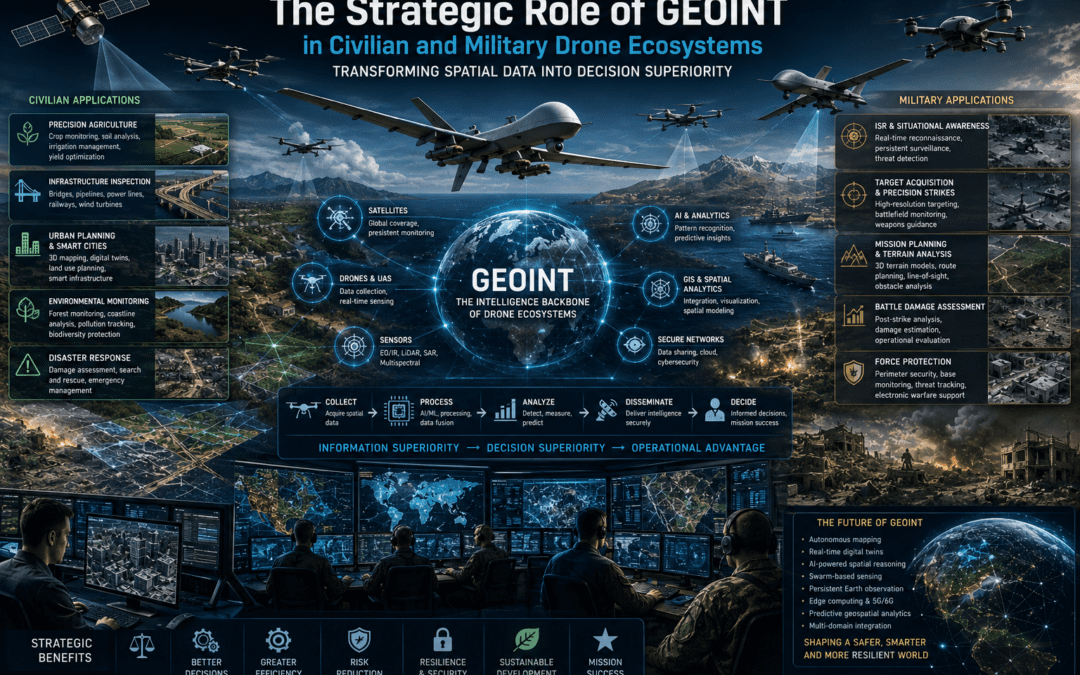
by Nikos Chatzis | 29 Jun, 2026 | drone imagery, Geographic Information Systems, GEOINT, Geospatial Intelligence, photogrammetry
This thesis argues that Geospatial Intelligence (GEOINT) has become the strategic backbone of both civilian and military drone ecosystems, enabling innovation, operational effectiveness, resilience, and strategic advantage across an increasingly interconnected world
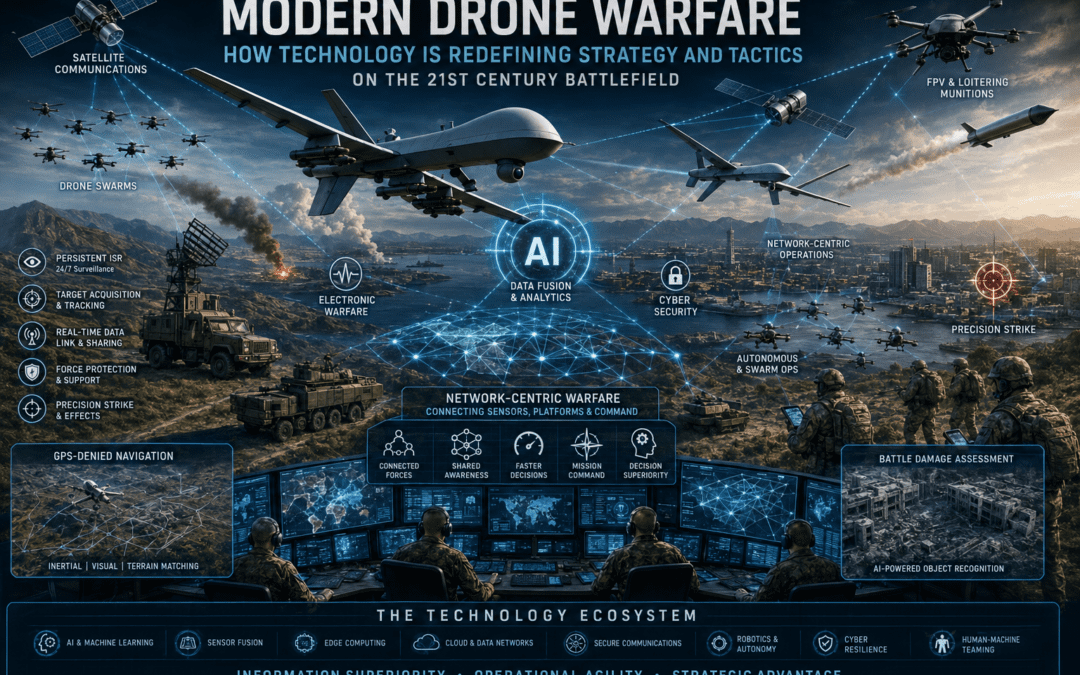
by Nikos Chatzis | 29 Jun, 2026 | Modern Network-Centric Warfare, Network-Centric Warfare
This essay argues that contemporary battlefields are increasingly shaped by interconnected technological networks in which drones serve as intelligent nodes within broader ecosystems of information superiority, rapid decision-making, and multidomain operations.
by Nikos Chatzis | 29 Jun, 2026 | Drone warfare, Ecosystem Governance, Geopolitics, Innovation Ecosystems, Innovation Networks, NATO, Network-Centric Warfare, Technology Corridors, Technology Diplomacy, Technology Ecosystems, Technology Evolution, Technology Transfer
This essay argues that NATO is increasingly evolving into a multidomain technology ecosystem in which military capability depends upon the integration of innovation, digital infrastructure, research institutions, industry, governments, and allied cooperation. Within this transformation, drone technologies and network-centric warfare represent central pillars of NATO’s future operational effectiveness.
by Nikos Chatzis | 29 Jun, 2026 | drone ecosystems, Ecosystem Governance, Geopolitics, Innovation Ecosystems, Innovation Networks, NATO, Technology Diplomacy, Technology Ecosystems
This essay argues that NATO is evolving from a traditional military alliance into a multidomain security and technology ecosystem in which military capability, technological innovation, industrial resilience, and international cooperation increasingly determine strategic effectiveness.

by Nikos Chatzis | 29 Jun, 2026 | Ancient Greek Philosophy, infrastructure diplomacy, Innovation Ecosystems, Innovation Networks
This thesis argues that the future depends upon humanity’s ability to integrate technology, diplomacy, innovation, and human cooperation into resilient ecosystems capable of continuous adaptation.
by Nikos Chatzis | 28 Jun, 2026 | 3-D Negotiation, International Partnerships, Smart Infrastructure, strategic autonomy, Strategic Negotiation, Strategic Thinking, Sustainability, Technology Diplomacy, Technology Ecosystems, Technology Evolution
This thesis argues that the future of the drone industry will be determined less by the individual performance of unmanned aircraft and more by the ability of organizations to build, govern, and continuously evolve collaborative technology ecosystems.
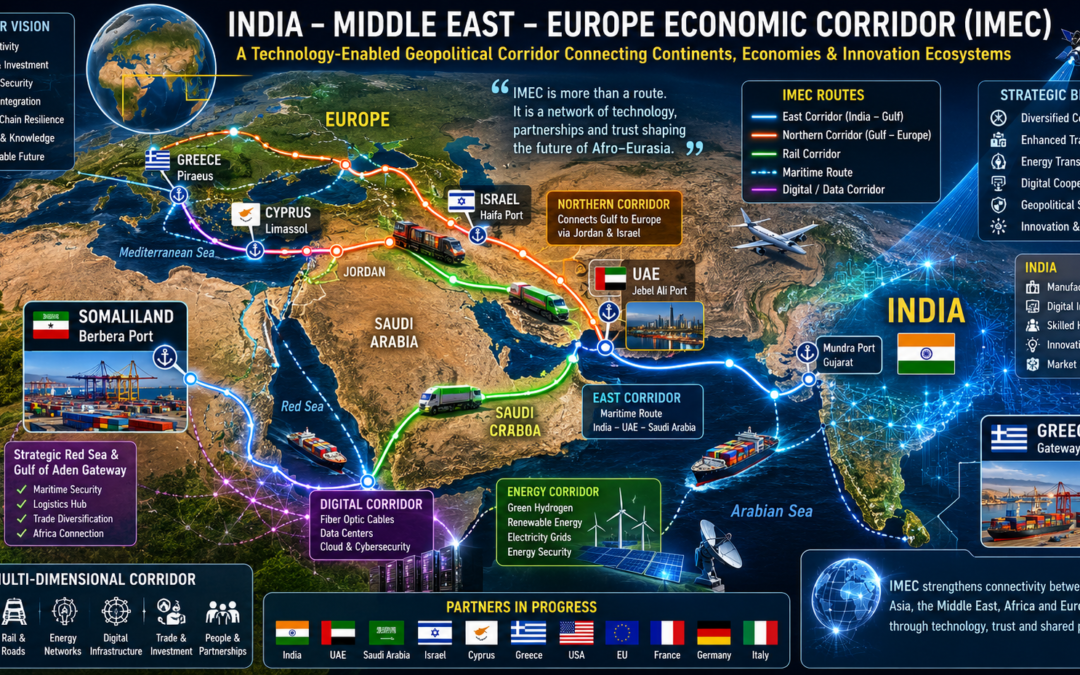
by Nikos Chatzis | 28 Jun, 2026 | digital sovereignty, energy security, geoeconomics, Geopolitics, Global Gateway, infrastructure diplomacy, strategic autonomy, Technology Diplomacy, Technology Ecosystems, Technology Evolution, trade diversification
This thesis argues that IMEC should be understood not merely as a route connecting India to Europe, but as a technology-enabled geopolitical ecosystem linking the Indo-Pacific, the Gulf, the Red Sea, the Eastern Mediterranean, and Europe.
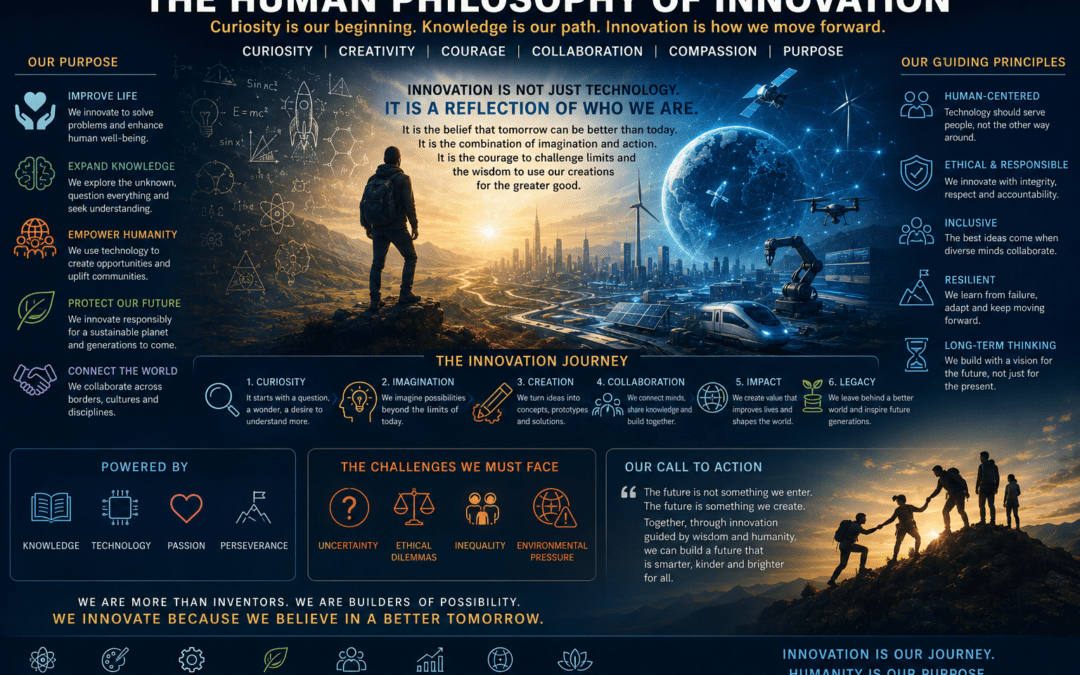
by Nikos Chatzis | 28 Jun, 2026 | 3-D Negotiation, Ecosystem Governance, Human Philosophy, Technology Diplomacy, Technology Ecosystems, Technology Evolution
This essay argues that technology should not be viewed merely as a collection of machines or inventions but as a philosophical expression of humanity’s enduring desire to improve life, expand knowledge, solve complex problems, and create opportunities for future generations. Technological innovation is therefore not simply an economic activity; it is one of the most powerful manifestations of human curiosity, cooperation, resilience, and hope.
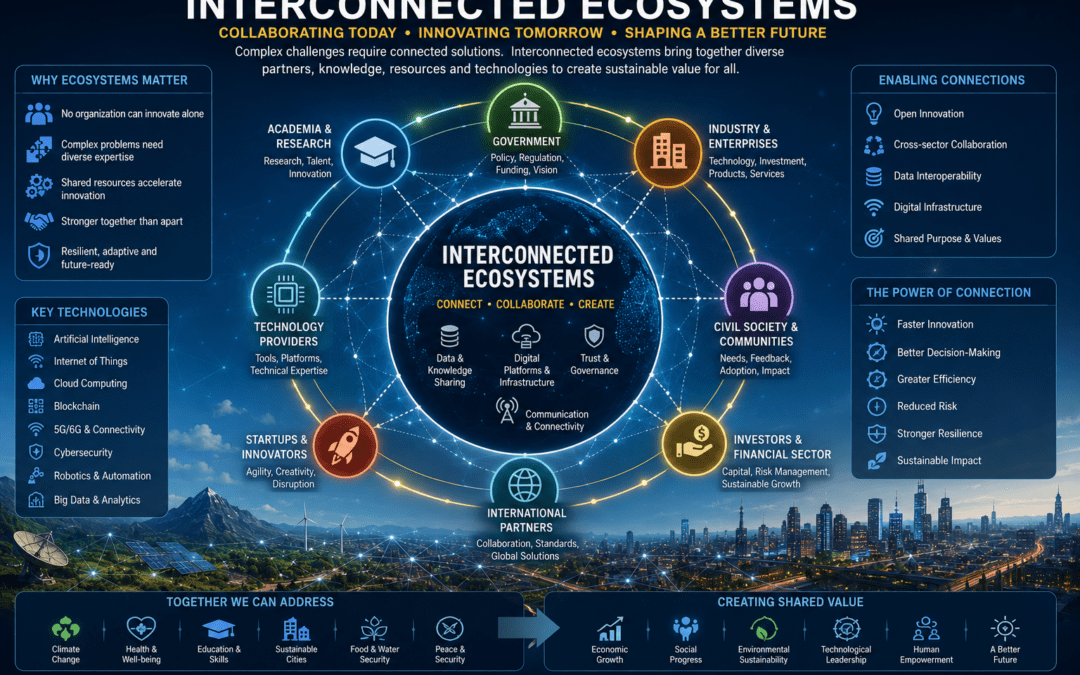
by Nikos Chatzis | 27 Jun, 2026 | Innovation Ecosystems, Technology Ecosystems, Technology Evolution
This essay argues that interconnected ecosystems have become the principal engine of technological progress.
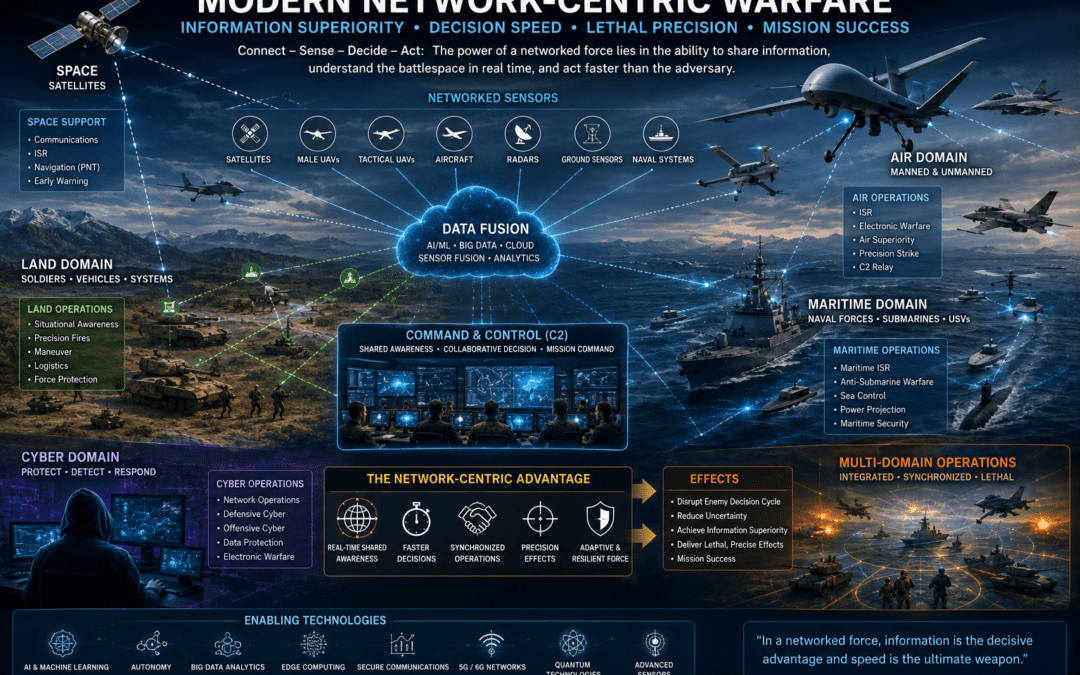
by Nikos Chatzis | 27 Jun, 2026 | MALE UAVs, Modern Network-Centric Warfare, Network-Centric Warfare
This thesis argues that the revolutionary impact of drones lies not only in their ability to fly or strike, but in their ability to compress the decision cycle, expand battlefield transparency, distribute intelligence, and integrate military operations into a real-time digital combat network.
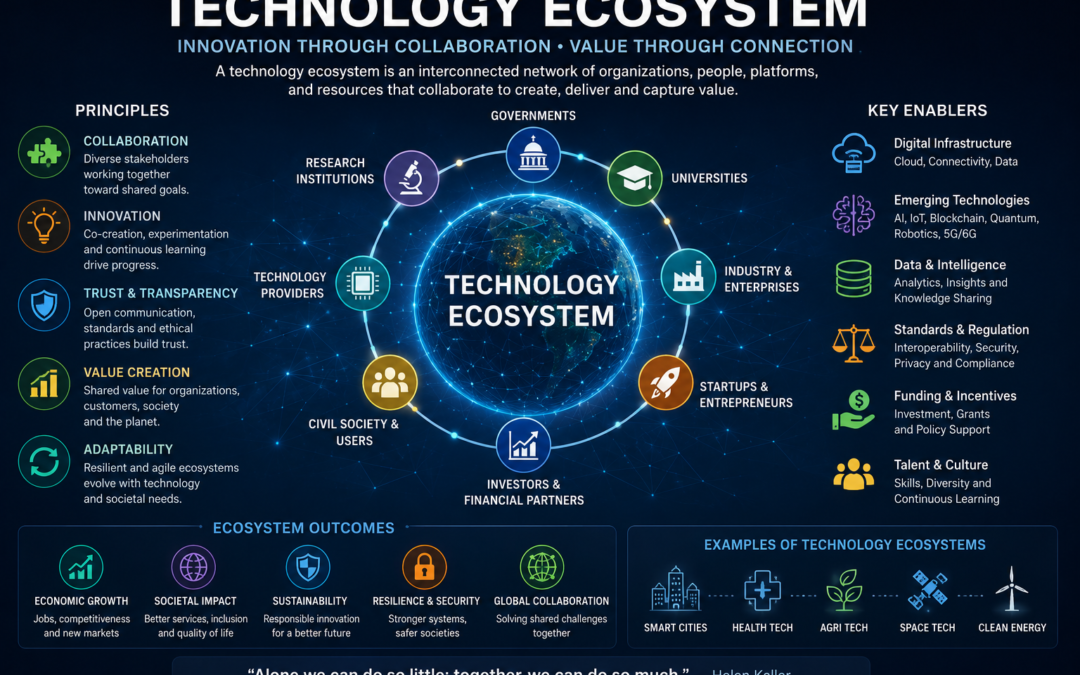
by Nikos Chatzis | 27 Jun, 2026 | Ecosystem Governance, Strategic Negotiation, Strategic Thinking, Technology Diplomacy, Technology Ecosystems, Technology Evolution
The accelerating pace of technological innovation is transforming the way organizations, governments, universities, and industries collaborate. Sustainable innovation therefore requires governance frameworks capable of aligning stakeholders, fostering collaboration, managing risk, and translating long-term objectives into daily organizational behavior.
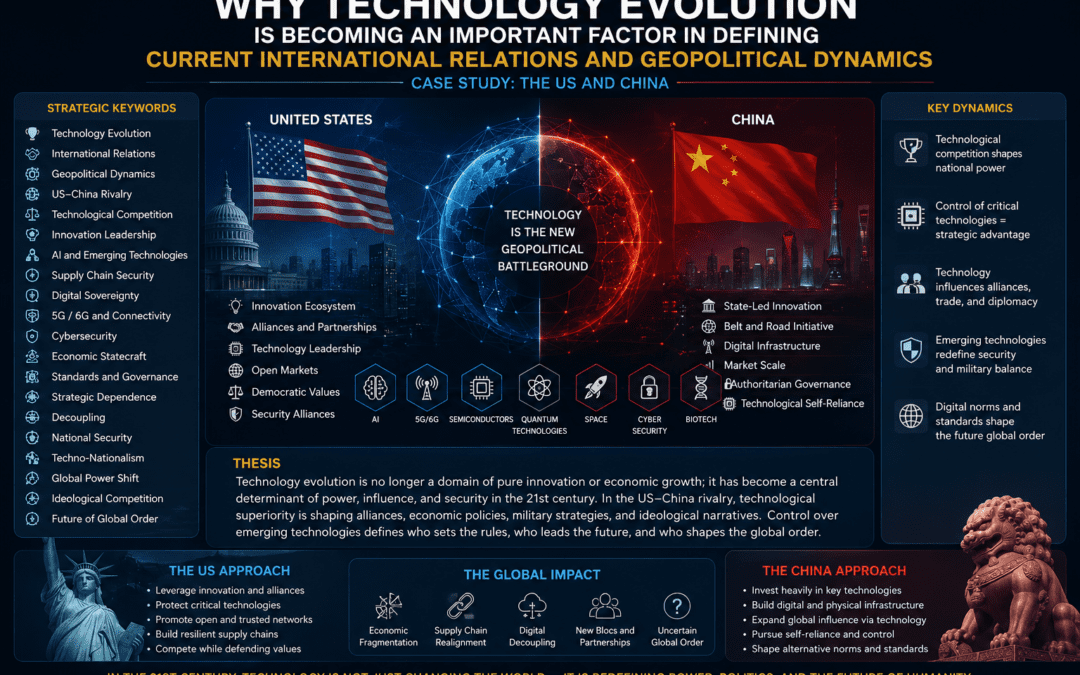
by Nikos Chatzis | 27 Jun, 2026 | 3-D Negotiation, Autonomus Systems, Practical Innovation, Semiconductors, Strategic Negotiation, Supply Chains, Technology Diplomacy, Technology Evolution
Technological innovation has become one of the defining forces shaping the international system of the twenty-first century. This thesis argues that technology evolution has fundamentally transformed the nature of international relations.

by Nikos Chatzis | 26 Jun, 2026 | 3-D Negotiation, Innovation Ecosystems, Technology Evolution
The Fourth Industrial Revolution has fundamentally transformed the way technological innovation is created, developed, and commercialized. The Technology Ecosystem 3D Negotiator by integrating strategic negotiation, technology diplomacy, stakeholder management, and ecosystem governance, this professional contributes to sustainable technological development and international cooperation.
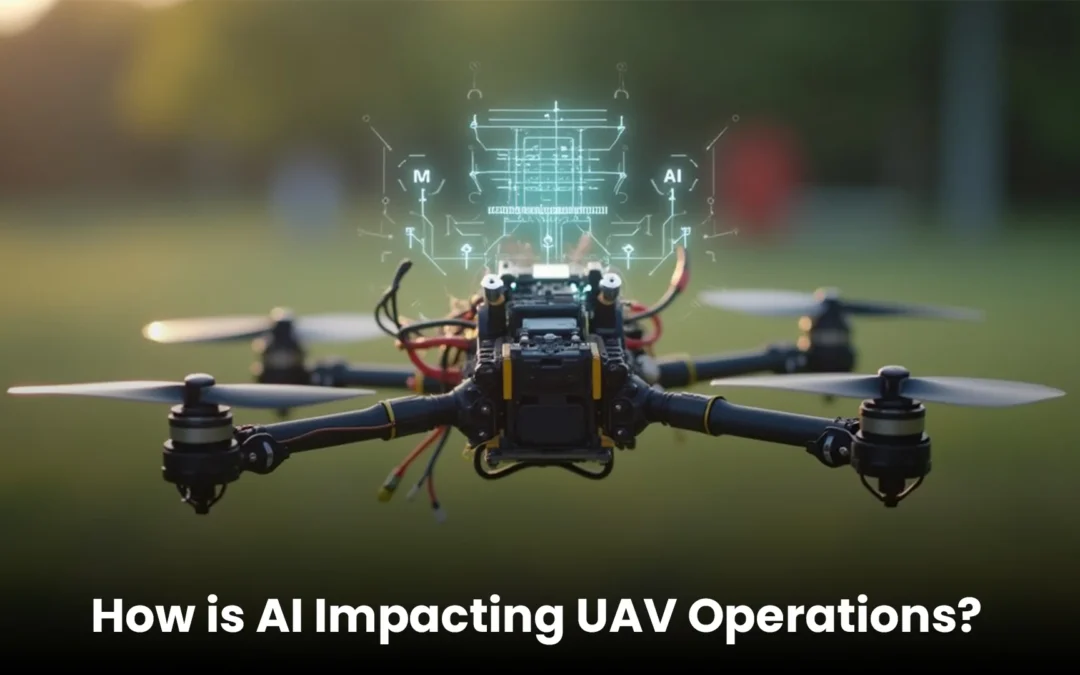
by Nikos Chatzis | 25 Jun, 2026 | Advanced Air Mobility / Urban Air Mobility (AAM) (UAM), Artificial Intelligence, Aviation Technology, Electric Aviation, eVTOL, Geospatial Intelligence, UAVs
The drone industry is entering a new era of technological transformation. For more than two decades, innovation in Unmanned Aircraft Systems (UAS) focused primarily on improving hardware performance, including flight endurance, payload capacity, sensor integration, navigation systems, and communications capabilities. These advances enabled drones to become indispensable tools across a growing range of civilian and defense applications. Just as the combination of computers and the internet revolutionized the global economy, the convergence of Artificial Intelligence and drone technology is poised to redefine the future of aviation, geospatial intelligence, public safety, infrastructure management, logistics, and national defense.

by Nikos Chatzis | 24 Jun, 2026 | 3-D Negotiation, 3-D Διαπραγμάτευση, Aviation Technology, Digital Age, Drone Economy, Drones' Technology Management, eVTOL, Geopolitics, Innovation Ecosystems
The twenty-first century economy is increasingly organized around innovation ecosystems rather than isolated organizations. Emerging technologies such as artificial intelligence, unmanned aircraft systems, geospatial intelligence, advanced telecommunications, autonomous systems, and digital platforms are no longer developed within the boundaries of a single company or institution. The Technology Ecosystem 3D Negotiator is not merely a negotiator, diplomat, manager, or technology expert. Rather, this individual operates at the intersection of technology diplomacy, innovation ecosystem development, strategic negotiation, and international cooperation. Their primary mission is to design and sustain the environments in which innovation can flourish.

by Nikos Chatzis | 22 Jun, 2026 | 3-D Negotiation, Drones' Technology Management, Innovation Ecosystems, UAVs
The accelerating pace of technological innovation is transforming the structure of modern economies and international relations. Emerging technologies such as artificial intelligence, unmanned aircraft systems (UAS), geospatial intelligence, autonomous systems, quantum computing, and digital infrastructure increasingly operate within complex innovation ecosystems involving governments, corporations, universities, regulators, investors, research institutions, and civil society. Drawing upon the principles of the Harvard 3D Negotiation Framework, technology diplomacy, innovation management, and geopolitical analysis, the study argues that future technology leaders will increasingly require the ability to design, align, and sustain collaborative ecosystems rather than merely negotiate individual transactions.
by Nikos Chatzis | 22 Jun, 2026 | 3-D Negotiation, Aviation Technology, Drones' Technology Management, UAS Investment, UAV, UAVs
The rapid expansion of Unmanned Aircraft Systems (UAS) and associated technological ecosystems is transforming economic activity, national security, international cooperation, and global innovation networks. By examining the intersection of drone technology, international relations, innovation governance, and strategic negotiation, the paper demonstrates that the future competitiveness of UAV ecosystems will depend as much on cooperation and stakeholder alignment as on technological innovation itself.
by Nikos Chatzis | 22 Jun, 2026 | Air Mobility Initiative (AIM), Artificial Intelligence, Aviation Technology, Electric Aircraft, Electric Aviation, eVTOL, Investing in Unmanned Aviation, UAV, UAVs
The early development of the drone industry was largely centered on the aircraft itself. Manufacturers competed to build platforms that could fly longer, carry heavier payloads, transmit higher-resolution imagery, and operate more reliably in diverse environments. In this phase, the drone was viewed primarily as a product. The future drone economy will therefore be shaped not only by aircraft manufacturers but also by training organizations, geospatial intelligence providers, artificial intelligence developers, regulatory specialists, data service companies, research institutions, and international partnerships.
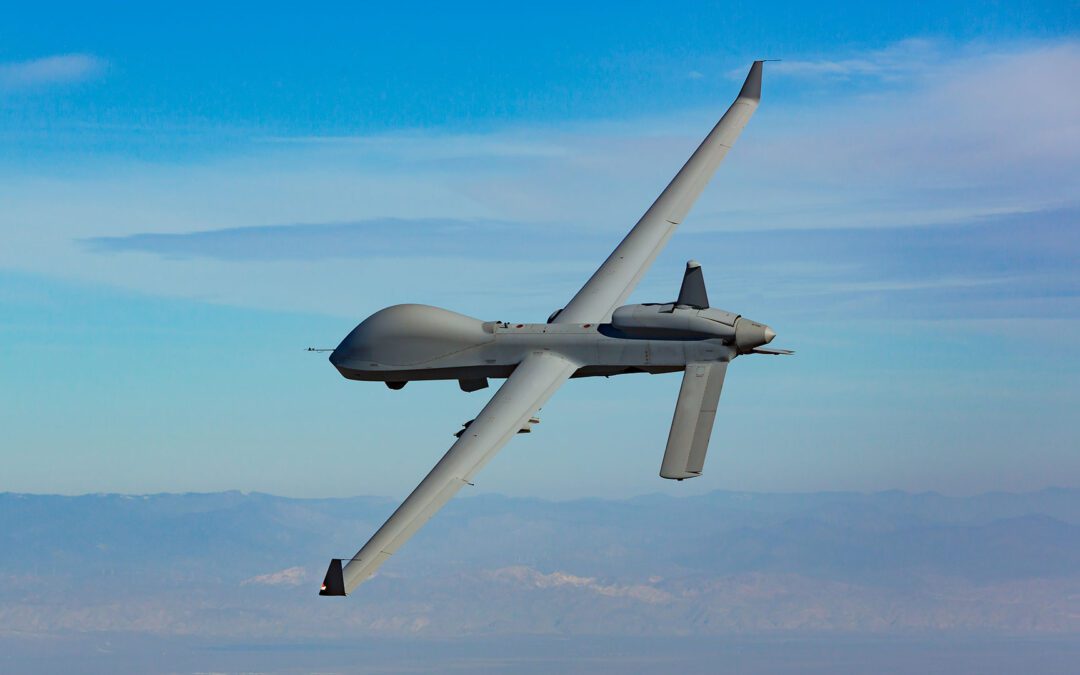
by Nikos Chatzis | 22 Jun, 2026 | 3-D Negotiation, 3-D Διαπραγμάτευση, Advanced Air Mobility / Urban Air Mobility (AAM) (UAM), Air Mobility Initiative (AIM), Artificial Intelligence, Aviation Technology, Defense & Security, Drones' Technology Management, Electric Aircraft, Electric Aviation, eVTOL, Geopolitics, UAS Investment, UAVs, UnManned Aerial Vehicles
Few technologies have transformed international affairs as rapidly as Unmanned Aircraft Systems (UA S). Once regarded primarily as military surveillance platforms, drones have evolved into versatile tools that influence economic development, security policy, technological competition, environmental management, humanitarian operations, and international cooperation. The geopolitics of UAV technology is therefore not simply about who builds the best drone. It is about who controls the ecosystems, standards, data, partnerships, and innovation networks that will shape the future of unmanned aviation.
by Nikos Chatzis | 22 Jun, 2026 | 3-D Negotiation, 3-D Διαπραγμάτευση, Advanced Air Mobility / Urban Air Mobility (AAM) (UAM), Air Mobility Initiative (AIM), Artificial Intelligence, Aviation Technology, Electric Aircraft, Electric Aviation, eVTOL, Geopolitics, Investing in Unmanned Aviation, UAS Investment, UAV, UAVs
Emerging technologies are transforming the global economy at an unprecedented pace. Artificial intelligence, unmanned aircraft systems (UAS), autonomous systems, quantum computing, advanced robotics, geospatial intelligence, biotechnology, and next-generation communications are reshaping industries, institutions, and societies. In the technology sectors of the twenty-first century, success increasingly depends upon the ability to negotiate not only deals, but entire systems of cooperation.
by Nikos Chatzis | 21 Jun, 2026 | Advanced Air Mobility / Urban Air Mobility (AAM) (UAM), Air Mobility Initiative (AIM), Artificial Intelligence, Defense & Security, Drones' Technology Management, Electric Aircraft, Electric Aviation, eSTOL, eVTOL, Geopolitics, Investing in Unmanned Aviation, Military UAS Technology, UAS Investment, UAV, UAVs, UCAV, UnManned Aerial Vehicles, War, Τεχνολογία Αεροσκαφών
The global drone industry has evolved from a niche aerospace segment into one of the most dynamic technology ecosystems of the twenty-first century. Unmanned Aircraft Systems (UAS), including small Unmanned Aircraft Systems (sUAS), commercial drones, tactical military drones, and Medium Altitude Long Endurance (MALE) platforms, now play an increasingly important role in economic development, national security, infrastructure management, environmental monitoring, logistics, agriculture, and intelligence gathering. The next five years are likely to witness a transformation comparable to the early development of the internet ecosystem, where value creation increasingly shifts from hardware toward software, services, data analytics, and integrated operational platforms.
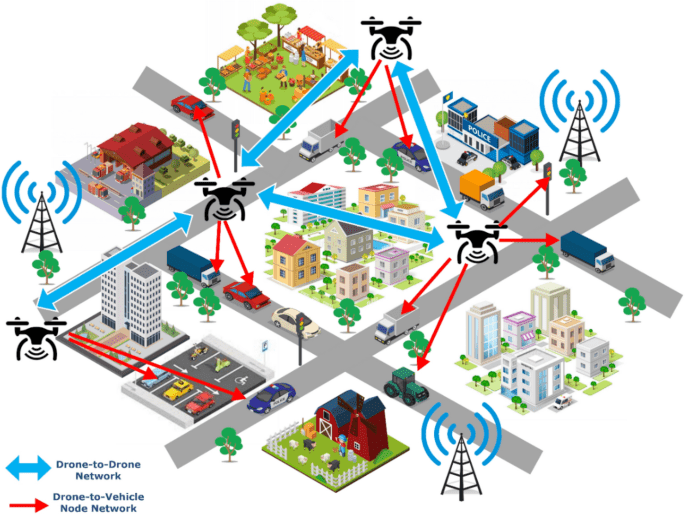
by Nikos Chatzis | 21 Jun, 2026 | 3-D Negotiation, Advanced Air Mobility / Urban Air Mobility (AAM) (UAM), Artificial Intelligence, Aviation Technology, Drones' Technology Management, Geopolitics
The rapid development of Unmanned Aircraft Systems (UAS) represents one of the most significant technological transformations in modern aviation. Drones are no longer merely flying platforms; they have evolved into integrated systems that combine aviation, artificial intelligence, geospatial intelligence, telecommunications, data analytics, remote sensing, and autonomous decision-making. As a result, the future of the drone industry will not be shaped solely by technological innovation but also by the ability of diverse stakeholders to cooperate across organizational, national, and disciplinary boundaries.

by Nikos Chatzis | 19 Jun, 2026 | 3-D Negotiation
A 3-D Negotiation approach aims at offering the multidimensional view of a given negotiation setting. The main point is that it is not always the situation you see or understand at the beginning of the negotiation process or when you read te relative documents. With a given emphasis on: Applying 3-D Negotiation, diplomacy, and communication frameworks to technology-driven sectors such as aviation, geospatial systems, and unmanned systems (UAS, sUAS).
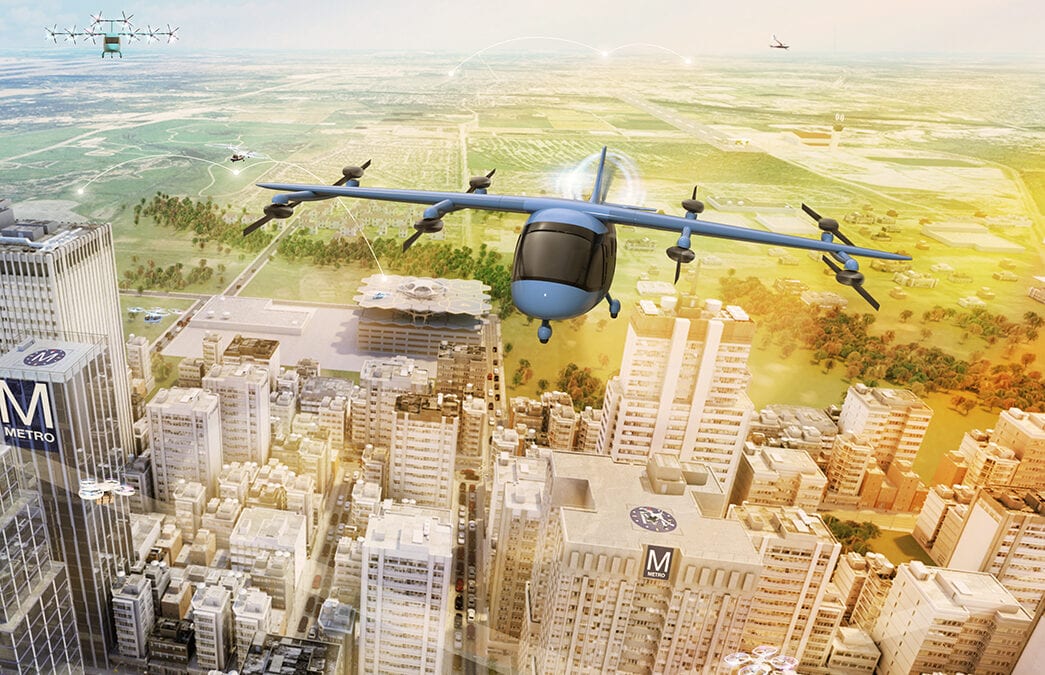
by Nikos Chatzis | 8 Sep, 2021 | Advanced Air Mobility / Urban Air Mobility (AAM) (UAM), Artificial Intelligence, Aviation Technology, Drones' Technology Management, NASA, UAS Investment, UAVs, UnManned Aerial Vehicles, Γεωπολιτική, Τεχνολογία Αεροσκαφών
Μέρος Δεύτερο Απλά drones ή ένας καθημερινός πρακτικός τρόπος ζωής της διπλανής πόρτας; Από τη φιλοσοφία της τεχνολογίας, στην καθημερινή...
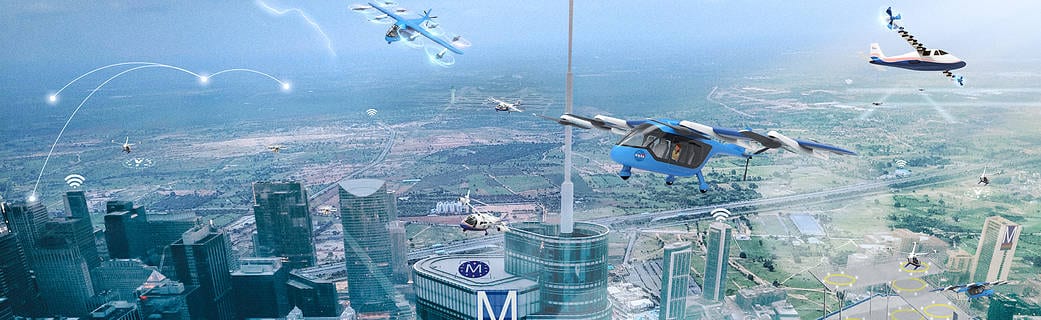
by Nikos Chatzis | 8 Sep, 2021 | Advanced Air Mobility / Urban Air Mobility (AAM) (UAM), Artificial Intelligence, Aviation Technology, Drones' Technology Management, NASA, UAS Investment, UAVs, UnManned Aerial Vehicles, Γεωπολιτική, Τεχνολογία Αεροσκαφών
Μέρος Πρώτο To «βουητό της μέλισσας» ή Drone… Του Νίκου Χατζή ...

by Nikos Chatzis | 10 Nov, 2019 | ΒΙΒΛΙΑ-Γεωπολιτική, Γεωπολιτική
Νίκος Χατζής, Γεωπολιτική Ο ΜΕΓΑΛΟΣ ΑΔΕΛΦΟΣ ΚΑΙ Ο ΚΟΣΜΟΣ ΤΟΥ ΜΙΑ ΔΙΑΔΡΟΜΗ ΔΗΜΟΣΙΟΓΡΑΦΙΚΩΝ ΚΕΙΜΕΝΩΝ ΣΤΟ ΠΑΓΚΟΣΜΙΟΠΟΙΗΜΕΝΟ ΔΙΕΘΝΕΣ ΣΥΣΤΗΜΑ ΠΑΡΟΥΣΙΑΣΗ: «Οι αμερικανικές στρατιωτικές επιχειρήσεις στον Περσικό Κόλπο, την περίοδο 1990-1991, σηματοδότησαν την έναρξη...