Negotiation.gr | Strategic Wisdom for the Technological Age
“Strategic resilience emerges when technical capability (techne) is
continuously guided by practical wisdom (phronesis) through adaptive
negotiation across interconnected systems.”
Central Idea
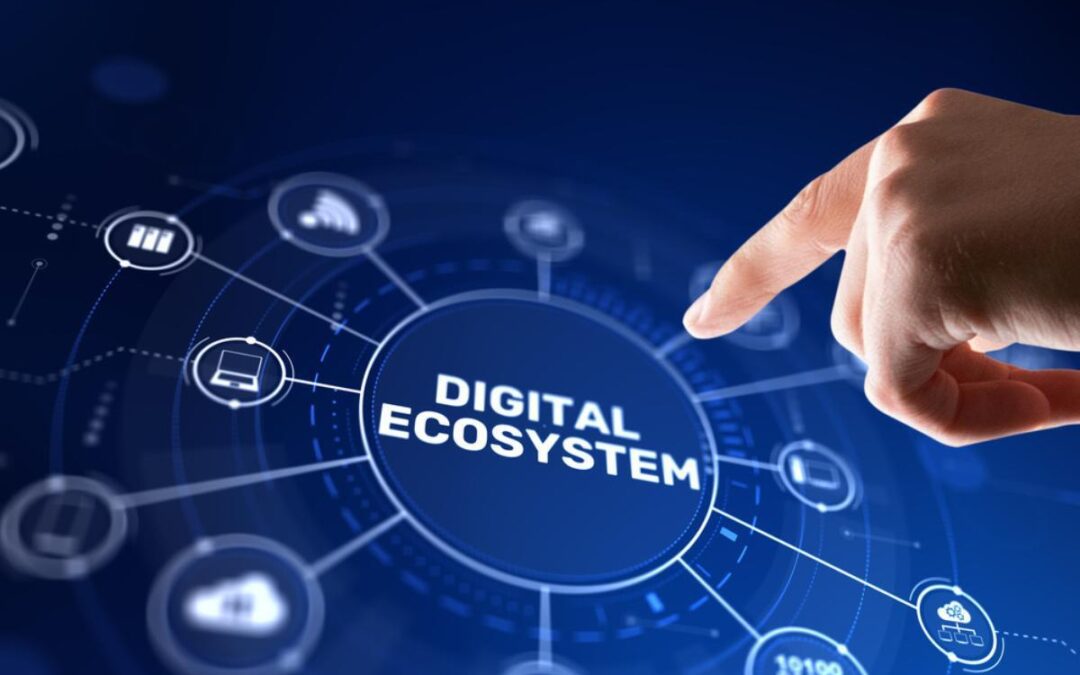
In contemporary technological civilization, strategic assets no longer derive their value primarily from their individual capabilities. Instead, they generate strategic advantage through their integration into interconnected technological, organizational, economic, and geopolitical ecosystems. The Techne–Phronesis Negotiation Framework™ (TPNF) explains this transformation by demonstrating that sustainable strategic value emerges from relationships, interoperability, adaptation, and strategic governance rather than from isolated platforms or technologies.
Purpose of the Essay
The purpose of this essay is to explain why strategic assets—including military systems, artificial intelligence, critical infrastructure, autonomous platforms, digital networks, and industrial capabilities—should be understood as components of multilevel network ecosystems rather than as independent objects. Through the TPNF, the essay develops a systems-oriented interpretation of strategic value suited to the realities of contemporary technological civilization.
TPNF Strategic Proposition
The strategic value of any contemporary asset is determined less by its intrinsic characteristics than by its capacity to connect, coordinate, and adapt within multilevel network ecosystems that continuously generate knowledge, resilience, innovation, and sustainable strategic value.
Abstract
Technological progress has fundamentally altered the nature of strategic assets. Historically, military platforms, industrial facilities, transportation infrastructure, and communication systems were often evaluated as largely self-contained objects whose value depended on their physical capabilities. In contrast, today’s strategic environment is characterized by interconnected technologies, digital platforms, multinational supply chains, alliance networks, data ecosystems, and adaptive governance structures.
This essay argues that the Techne–Phronesis Negotiation Framework™ (TPNF) provides an analytical foundation for understanding this transformation. It demonstrates that contemporary strategic assets derive their significance from their participation in complex adaptive ecosystems, where relationships, interoperability, technological integration, and strategic coordination become the principal sources of enduring advantage.
Introduction
Throughout much of history, strategic analysis focused on individual assets: a battleship, an aircraft, a factory, a satellite, or a government institution. Such an approach reflected an era in which technological systems were comparatively independent and organizational structures were largely hierarchical.
Contemporary technological civilization has transformed this reality. Artificial intelligence, autonomous systems, digital platforms, cloud computing, global logistics, cyber infrastructure, and multinational innovation networks have created environments in which no strategically important asset operates independently. Every significant capability now exists within an interconnected ecosystem whose performance depends upon coordination, adaptation, and continuous interaction.
The TPNF explains this transition by shifting analytical attention from isolated objects to the ecosystems that generate, sustain, and amplify strategic value.
From Objects to Ecosystems
An isolated object possesses technical characteristics.
An ecosystem possesses relationships.
A modern fighter aircraft, for example, no longer derives its effectiveness solely from aerodynamic performance or weapon systems. Its operational value depends upon satellites, secure communications, artificial intelligence, logistics, maintenance networks, pilot training, industrial supply chains, cyber resilience, and alliance interoperability.
The aircraft is therefore best understood as a node within a broader ecosystem.
Technology Creates Capability
Technology remains essential because it expands human capability.
However, technology alone does not explain strategic effectiveness.
The TPNF recognizes that technological capability must be integrated into broader organizational and institutional relationships before it generates sustainable strategic value.
Systems Thinking Explains Strategic Reality
Systems Thinking demonstrates that strategic performance emerges from interactions rather than isolated components.
Feedback loops, interdependence, emergence, redundancy, and adaptation determine the resilience and effectiveness of modern strategic assets.
The ecosystem therefore becomes the primary unit of strategic analysis.
Strategic Negotiation Coordinates Ecosystems
Modern ecosystems require continuous coordination among diverse participants.
Governments, defence industries, universities, technology firms, financial institutions, international organizations, and civil society must negotiate shared objectives, standards, investments, regulations, and innovation pathways.
Strategic Negotiation transforms diverse capabilities into coordinated strategic action.
Complex Adaptive Systems Continuously Evolve
Strategic ecosystems never remain static.
Technological innovation, geopolitical competition, market dynamics, regulatory change, and societal expectations continuously reshape their structure.
Consequently, successful strategic assets must possess the capacity for continuous adaptation.
Multilevel Network Ecosystems
Within the TPNF, strategic assets exist simultaneously within multiple interconnected ecosystems.
For example, an autonomous logistics drone participates in:
- a technological ecosystem,
- a defence industrial ecosystem,
- a logistics ecosystem,
- a regulatory ecosystem,
- an alliance ecosystem,
- an innovation ecosystem,
- a geopolitical ecosystem.
Its strategic significance emerges through the interaction of all these domains.
Networked Strategic Resilience
Traditional resilience emphasized protecting individual assets.
The TPNF expands this concept by demonstrating that resilience increasingly depends upon protecting the relationships among assets.
Network redundancy, interoperability, distributed operations, cyber security, adaptive governance, and collaborative innovation collectively determine ecosystem resilience.
Case Illustrations
The ecosystem perspective applies across multiple domains:
- Artificial Intelligence functions through data, algorithms, cloud infrastructure, semiconductor manufacturing, regulation, and skilled human capital.
- Modern combat aircraft depend upon satellites, sensor fusion, logistics, secure communications, maintenance, and coalition interoperability.
- Ports derive strategic importance from shipping networks, customs systems, digital platforms, energy infrastructure, finance, and international trade.
- Healthcare systems rely upon hospitals, pharmaceutical industries, research institutions, digital records, supply chains, and public governance.
- Energy infrastructure connects production, transmission, storage, regulation, finance, cybersecurity, and international markets.
Each strategic asset therefore represents an ecosystem rather than an isolated object.
Strategic Implications
Viewing strategic assets as ecosystems transforms strategic planning.
Decision-makers increasingly prioritize:
- interoperability,
- ecosystem governance,
- technological integration,
- adaptive partnerships,
- resilient supply chains,
- collaborative innovation,
- strategic learning.
The focus shifts from maximizing the performance of individual platforms to strengthening the adaptive capacity of the entire ecosystem.
The transition from isolated objects to interconnected ecosystems represents one of the defining characteristics of contemporary technological civilization. Strategic advantage no longer resides primarily in individual assets but in the quality of the relationships that connect them across technological, organizational, economic, and geopolitical domains.
Through the Techne–Phronesis Negotiation Framework™ (TPNF), this transformation becomes both understandable and actionable. The framework demonstrates that technology creates capability, systems thinking reveals interdependence, strategic negotiation enables coordination, and practical wisdom guides adaptation toward sustainable strategic value.
Ultimately, the most valuable strategic assets of the twenty-first century are not standalone objects but dynamic ecosystems capable of learning, evolving, and generating resilience through continuous interaction. Understanding this shift is essential for governments, businesses, defence organizations, and societies seeking to thrive in an increasingly interconnected technological age.
Key Takeaways
- Contemporary strategic assets derive value from ecosystem relationships rather than isolated capabilities.
- Systems Thinking shifts analysis from platforms to interactions.
- Strategic Negotiation coordinates complex ecosystems and aligns stakeholders.
- Networked Strategic Resilience depends on adaptive relationships rather than individual asset protection.
- The TPNF provides an integrated theoretical framework for understanding ecosystem-based strategic value creation.
Author’s Reflection
The ecosystem perspective marks a conceptual evolution in strategic thought. By redefining strategic assets as interconnected systems rather than isolated objects, the Techne–Phronesis Negotiation Framework™ (TPNF) provides an analytical foundation for understanding the architecture of contemporary technological civilization. This perspective encourages leaders to cultivate connectivity, interoperability, adaptive governance, and practical wisdom as the primary drivers of long-term strategic success.
Source: Open Sources Analysis, Relative Data Analysis by Nikos Chatzis
© Nikolaos Chatzis. All Rights Reserved.
The Techne–Phronesis Negotiation Framework™
An Integrative Theory of Strategic Negotiation, Complex Adaptive Systems & Practical Wisdom
Technology Creates Capability • Systems Thinking Creates Understanding • Strategic Wisdom Creates Lasting Value.
Negotiation.gr | Strategic Wisdom for the Technological Age