by Nikos Chatzis | 11 Oct, 2026 | Ancient Greek Philosopphy, Technological Civilization, Technology Ecosystems, Technology Evolution, Technology Transfer, The Techne–Phronesis Negotiation Framework™
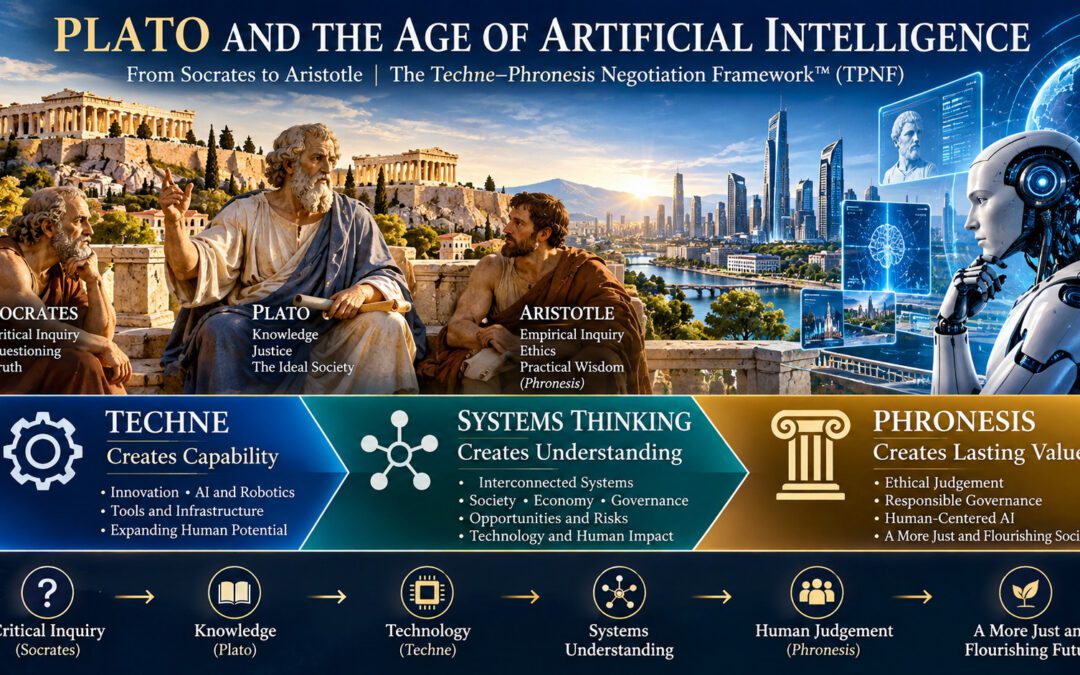
This TPNF essay examines the intellectual progression from Socrates through Plato to Aristotle and explores its relevance to contemporary technological evolution. Its purpose is not to suggest that ancient Greek philosophers anticipated artificial intelligence. Rather, it investigates how their questions about knowledge, human judgement, education and governance can help societies evaluate emerging technological capabilities.
by Nikos Chatzis | 1 Oct, 2026 | Ancient Greek Philosopphy, Technological Civilization, Technology Ecosystems, The Techne–Phronesis Negotiation Framework™
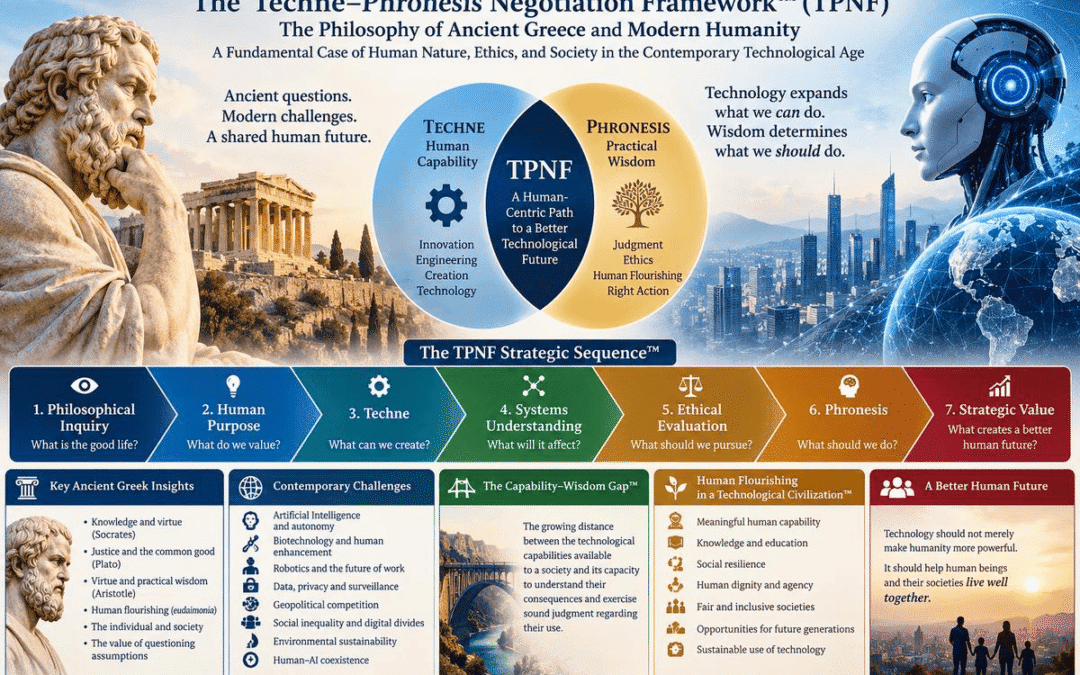
This TPNF essay does not claim that Ancient Greek philosophy contains ready-made answers to Artificial Intelligence, robotics or contemporary technological governance. It proposes something different. Ancient Greek philosophical inquiry created enduring intellectual methods for examining human nature, ethics, knowledge, society and practical judgment. TPNF argues that these questions can provide Strategic Intellectual Infrastructure™ for evaluating the purposes and consequences of technological civilization. The central challenge becomes: How can humanity ensure that technological evolution contributes not merely to greater capability, but to better human and societal outcomes?
by Nikos Chatzis | 5 Aug, 2026 | Ancient Greek Philosophy, Ancient Greek Philosopphy, The Techne–Phronesis Negotiation Framework™
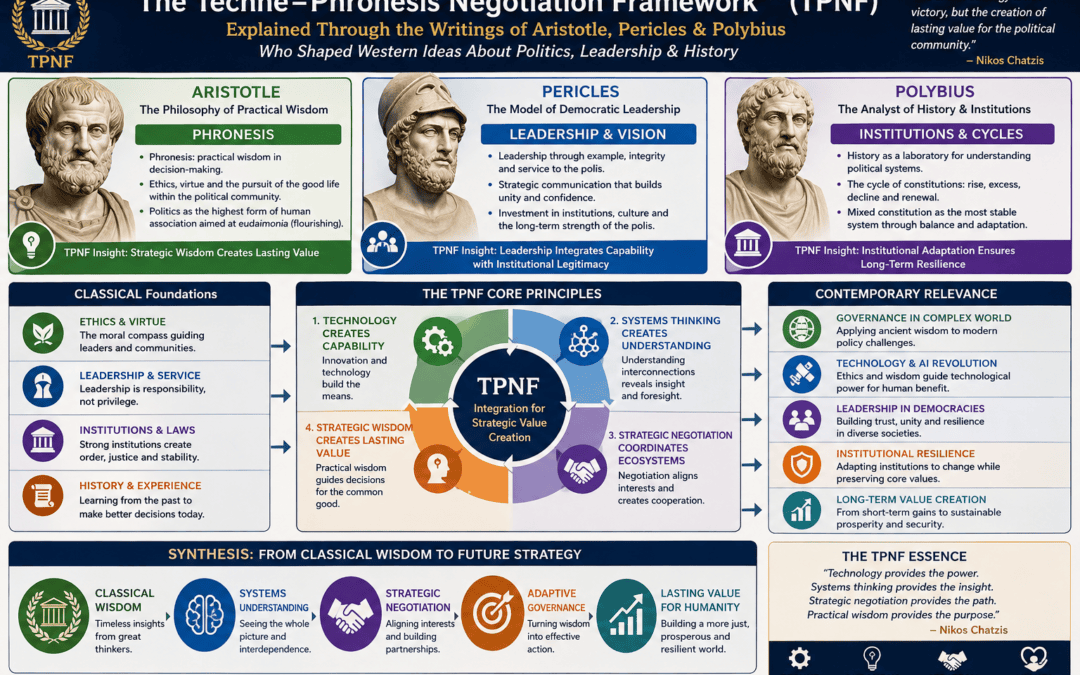
This essay explores how Aristotle’s philosophy of practical wisdom, Pericles’ vision of democratic leadership, and Polybius’ analysis of political systems and historical cycles collectively illuminate the theoretical foundations of the Techne–Phronesis Negotiation Framework™ (TPNF). It argues that these classical thinkers provide complementary perspectives that help explain strategic adaptation, governance, institutional resilience, and long-term value creation in the twenty-first century.
by Nikos Chatzis | 4 Aug, 2026 | Ancient Greek Philosopphy, Strategic Theory, Strategic Thinking, The Techne–Phronesis Negotiation Framework™
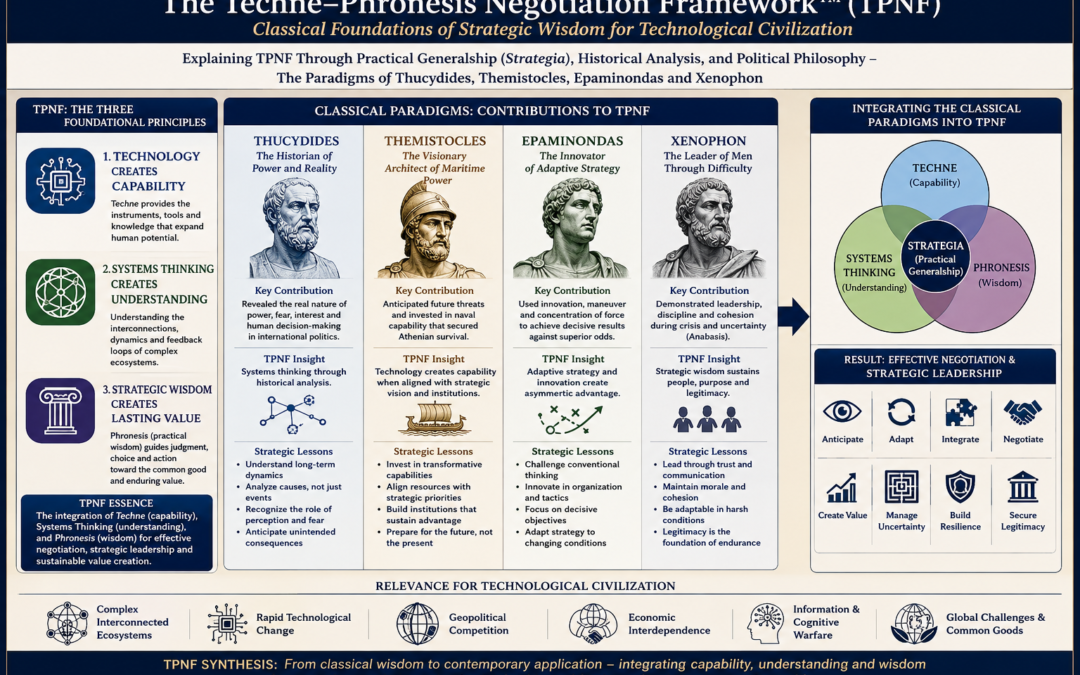
This essay explores the philosophical and historical foundations of TPNF by examining four influential figures from classical Greece. It argues that their contributions to leadership, strategy, diplomacy, military command, and political judgment provide timeless insights that can be reinterpreted through TPNF to address the interconnected technological, geopolitical, and institutional challenges of the twenty-first century.