by Nikos Chatzis | 11 Oct, 2026 | Ancient Greek Philosophy, Technological Civilization, The Techne–Phronesis Negotiation Framework™
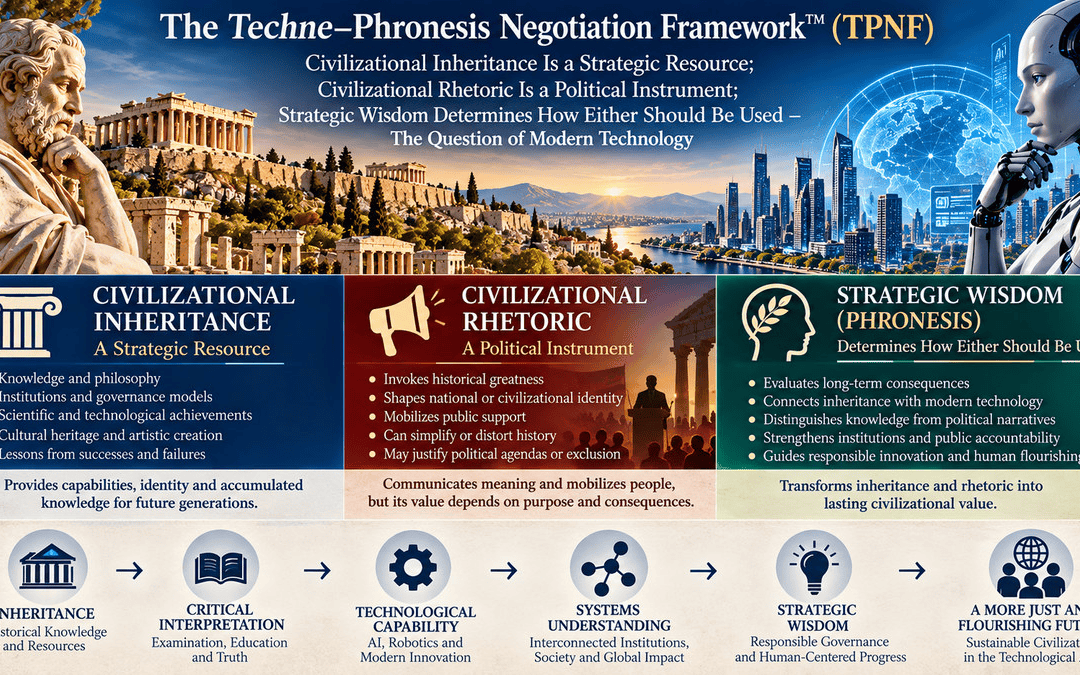
This TPNF essay examines the relationship between civilizational inheritance, political rhetoric and modern technological evolution. It investigates how societies can transform historical knowledge into contemporary capabilities while avoiding the instrumentalization of civilization as an unquestionable political justification. Its purpose is to develop a TPNF analytical distinction between inherited resources, political narratives and the practical wisdom required to govern technological change.
by Nikos Chatzis | 11 Oct, 2026 | Ancient Greek Philosopphy, Technological Civilization, Technology Ecosystems, Technology Evolution, Technology Transfer, The Techne–Phronesis Negotiation Framework™
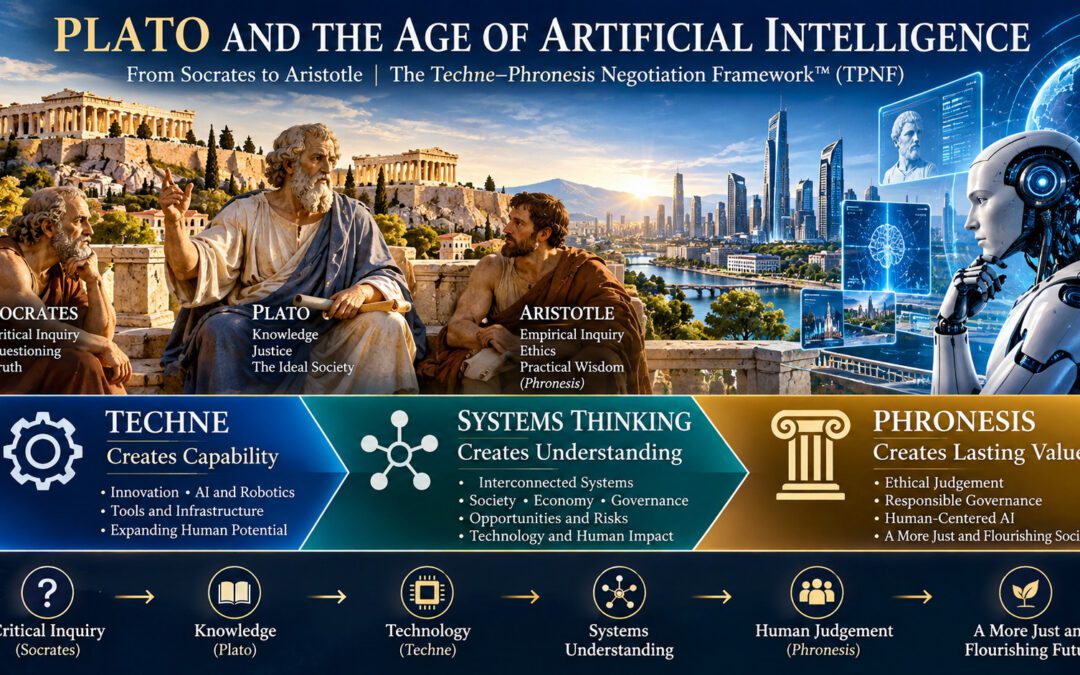
This TPNF essay examines the intellectual progression from Socrates through Plato to Aristotle and explores its relevance to contemporary technological evolution. Its purpose is not to suggest that ancient Greek philosophers anticipated artificial intelligence. Rather, it investigates how their questions about knowledge, human judgement, education and governance can help societies evaluate emerging technological capabilities.

by Nikos Chatzis | 7 Oct, 2026 | Technological Civilization, Technology Diplomacy, Technology Ecosystems, The Techne–Phronesis Negotiation Framework™
The purpose of this TPNF essay is to examine the recent China–UK research breakthrough in wireless charging for NEVs through the analytical perspective of TPNF. Rather than evaluating the technology only through efficiency or engineering performance, the essay examines the transition from technological capability to ecosystem-level value creation. The central question is therefore: Can an exceptional technical achievement evolve into infrastructure capable of generating lasting value across a wider mobility ecosystem?
by Nikos Chatzis | 1 Oct, 2026 | Ancient Greek Philosopphy, Technological Civilization, Technology Ecosystems, The Techne–Phronesis Negotiation Framework™
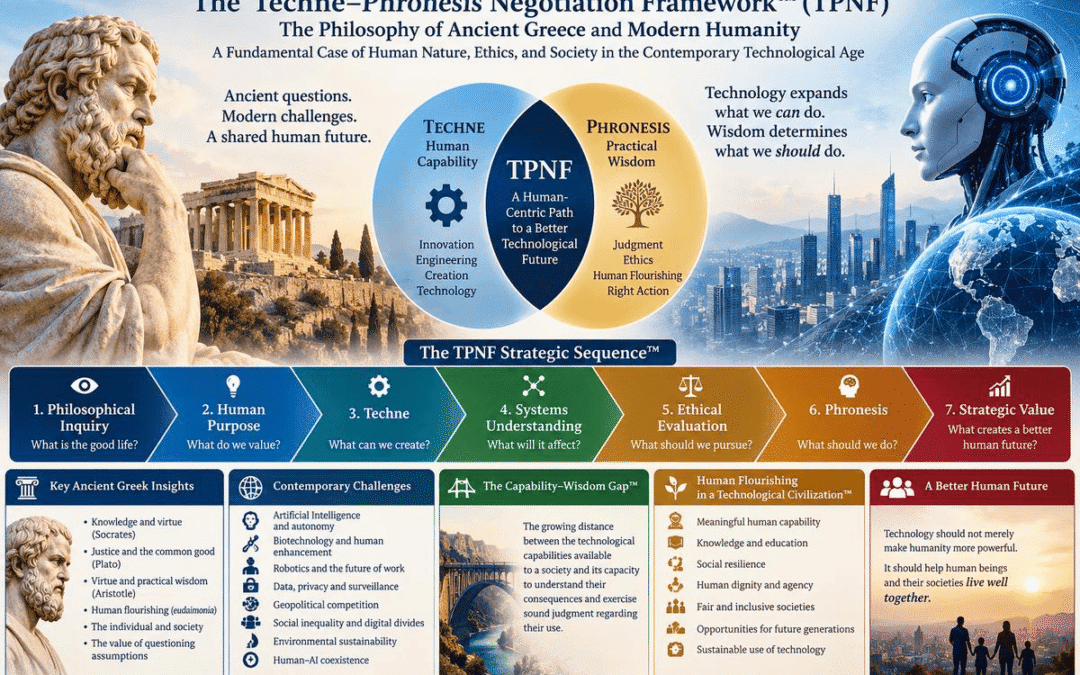
This TPNF essay does not claim that Ancient Greek philosophy contains ready-made answers to Artificial Intelligence, robotics or contemporary technological governance. It proposes something different. Ancient Greek philosophical inquiry created enduring intellectual methods for examining human nature, ethics, knowledge, society and practical judgment. TPNF argues that these questions can provide Strategic Intellectual Infrastructure™ for evaluating the purposes and consequences of technological civilization. The central challenge becomes: How can humanity ensure that technological evolution contributes not merely to greater capability, but to better human and societal outcomes?
by Nikos Chatzis | 30 Sep, 2026 | Ancient Greek Philosophy, Ecosystem Dynamics, Ecosystem Strategy, Ecosystem Thinking, Tech Sovereignty, Technological Civilization, The Techne–Phronesis Negotiation Framework™
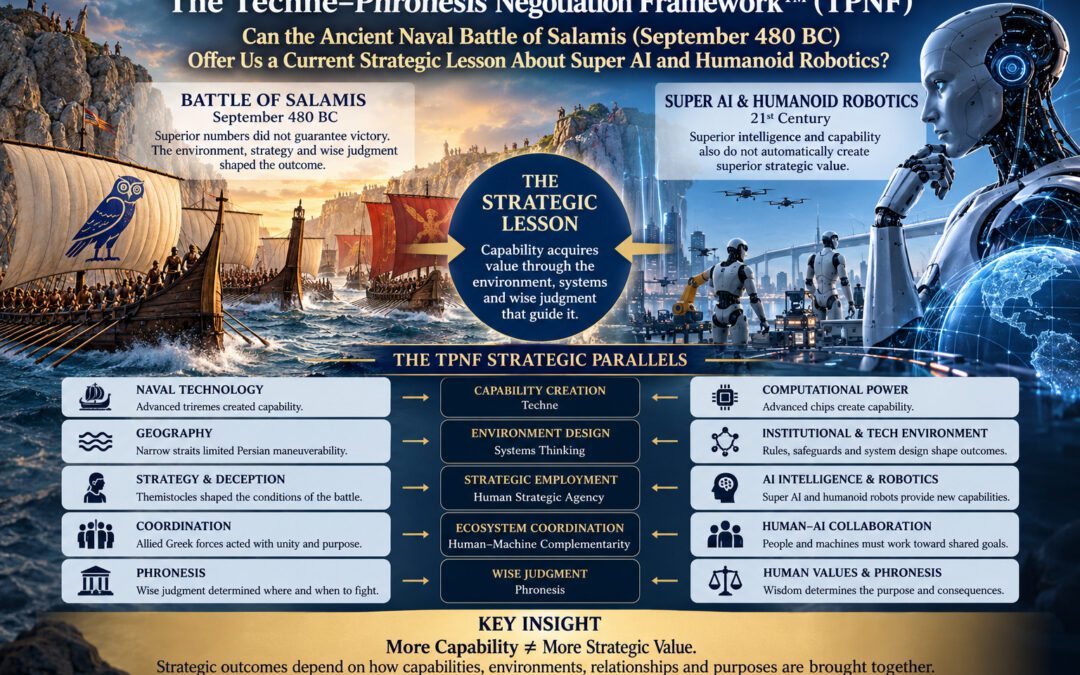
This TPNF essay does not compare Persian ships with robots or Themistocles with Artificial Intelligence. Instead, it uses Salamis as a strategic analogy. The purpose is to examine whether an ancient lesson about capability, systems, environmental constraints and human judgment can illuminate the emerging relationship between humans, Super AI and humanoid robotics.

by Nikos Chatzis | 7 Sep, 2026 | Artificial Intelligence AI, Technological Civilization, Technology Ecosystems, The Techne–Phronesis Negotiation Framework™
This TPNF essay examines the boundary between myth and reality surrounding claims that AI and digital technologies will fundamentally transform human existence. It rejects two extremes.
The first is technological fatalism: the assumption that AI will inevitably determine humanity’s future.
The second is technological trivialization: the belief that AI is merely another neutral tool whose effects depend entirely upon individual users.