Negotiation.gr | Strategic Wisdom for the Technological Age
“Strategic resilience emerges when technical capability (techne) is
continuously guided by practical wisdom (phronesis) through adaptive
negotiation across interconnected systems.”
Central Idea
The magnitude-7.4 earthquake that struck western Colombia demonstrates that a major natural disaster should not be analyzed merely as a geological event. In contemporary technological civilization, an earthquake becomes a systemic shock transmitted across interconnected platform ecosystems involving transportation, healthcare, telecommunications, energy, government, finance, logistics, and communities.
Through the Techne–Phronesis Negotiation Framework™ (TPNF), the strategic question therefore moves beyond the earthquake itself:
How effectively can interconnected societal platforms absorb a sudden shock, preserve essential functions, coordinate resources, and regenerate value?
The Colombian earthquake demonstrates that modern disaster resilience increasingly depends upon the resilience of the relationships connecting critical systems.
Purpose of the Essay
This essay applies TPNF to the Colombian earthquake as a case of Platform-Ecosystem Disruption.
It examines how physical destruction can propagate .beyond the epicentral area through interconnected infrastructures and identifies the wider peripheral consequences for transportation, healthcare, economic activity, communications, governance, and regional resilience
Abstract
A powerful magnitude-7.4 earthquake struck western Colombia on August 10, 2026, killing more than 100 people and causing widespread damage. Cali, Quibdó, Pereira, Armenia and Manizales were among the affected urban areas. Buildings collapsed, hospitals sustained damage, airports suspended operations for structural inspections, and authorities faced continuing aftershocks while rescue operations proceeded.
The earthquake illustrates a central characteristic of technological civilization: modern societies function through interconnected platforms.
Transportation supports healthcare.
Telecommunications support emergency services.
Electricity supports communications.
Digital systems support government.
Financial networks support reconstruction.
When one platform is disrupted, consequences can migrate into others.
TPNF interprets this process through Systems Thinking, Platform-Ecosystem Analysis, Adaptive Governance, Networked Strategic Resilience, and Phronesis.
1. The Earthquake as a Systemic Shock
An earthquake begins as a geological event.
Its strategic consequences, however, are socially constructed through the systems it encounters.
The same magnitude earthquake can produce radically different outcomes depending upon:
- building standards,
- population density,
- emergency preparedness,
- infrastructure resilience,
- healthcare capacity,
- communications,
- institutional effectiveness.
This distinction is fundamental.
The hazard originates in nature. The scale of systemic disruption depends substantially upon the resilience of human ecosystems.
The Colombian event therefore provides more than a case of seismic risk. It provides a test of societal architecture.
2. From Infrastructure to Platform Ecosystems
Traditional disaster analysis frequently divides infrastructure into sectors: roads, airports, hospitals, electricity, telecommunications.
TPNF encourages another analytical step.
These systems should also be understood as platforms enabling other systems to function.
An airport is not simply infrastructure.
It enables:
People + Emergency Personnel + Medical Supplies + Humanitarian Assistance + Commercial Logistics.
A telecommunications network enables:
Government + Emergency Coordination + Families + Businesses + Financial Transactions + Information.
A hospital depends upon:
Electricity + Water + Telecommunications + Transport + Pharmaceuticals + Medical Personnel.
The strategic unit of analysis therefore becomes the Platform Ecosystem.
3. Cascading Systemic Risk
The principal danger following a major disaster is not always the initial failure.
It is the cascade.
Consider:
Earthquake
↓
Transport Infrastructure Damage
↓
Logistical Delays
↓
Medical-Supply Constraints
↓
Reduced Healthcare Capacity
↓
Greater Human Impact
Or:
Electricity Disruption
↓
Telecommunications Problems
↓
Reduced Emergency Coordination
↓
Slower Rescue Operations
↓
Economic and Social Disruption
Systems Thinking therefore changes the analytical question from:
What was damaged?
to:
What other systems depend upon what was damaged?
That is a far more strategic question.
4. Transportation as a Strategic Platform
Reports that airports temporarily suspended operations for structural inspections demonstrate the systemic importance of transportation infrastructure.
Following a disaster, airports, highways and other transport networks acquire strategic significance.
They determine how quickly:
- rescue teams arrive,
- medical equipment moves,
- displaced populations receive assistance,
- economic activity resumes.
Transportation resilience is therefore not simply mobility resilience.
It is an enabler of ecosystem recovery.
5. Healthcare and Networked Dependency
Damage to hospitals creates another important lesson.
Hospitals may remain physically standing while still becoming operationally vulnerable if surrounding systems fail.
Modern healthcare requires electricity, communications, transportation, water, digital records, pharmaceuticals, and specialized personnel.
Consequently:
Critical infrastructure is only as resilient as the ecosystem supporting it.
This principle applies far beyond natural disasters.
It is equally relevant to cyberattacks, warfare, pandemics and major technological failures.
6. The Peripheral Impact
The consequences of the Colombian earthquake do not stop at the physical damage zone.
Strong shaking was felt beyond the most severely affected locations, including neighboring areas of the region.
But TPNF defines Peripheral Impact more broadly than geographic distance.
The peripheral impact includes indirect consequences transmitted through networks:
Economic: business interruption, reconstruction costs and disrupted commerce.
Logistical: damaged transport nodes and supply delays.
Social: displacement, education disruption and psychological pressure.
Institutional: pressure on emergency services and government coordination.
Financial: insurance losses, public expenditure and reconstruction requirements.
A localized physical shock can therefore create non-local strategic consequences.
7. Techne: Technology as a Resilience Multiplier
The first foundational TPNF proposition states:
Technology Creates Capability.
Technology can significantly strengthen disaster response through:
- satellites,
- drones,
- emergency telecommunications,
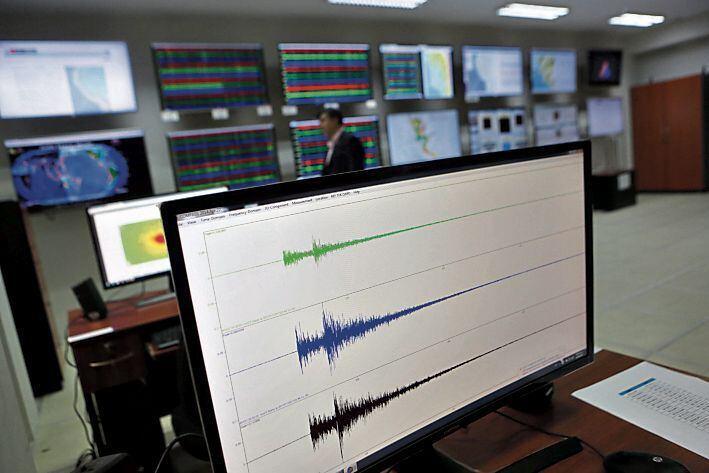
- seismic sensors,
- AI-assisted damage assessment,
- digital mapping,
- resilient energy systems.
Drones are particularly valuable because they can rapidly inspect inaccessible areas, identify damaged infrastructure and support search-and-rescue teams without immediately exposing personnel to unstable structures.
But technology alone is insufficient.
A drone image creates information.
Institutions must transform that information into coordinated action.
8. Adaptive Governance
Major disasters compress decision time.
Authorities cannot wait for perfect information.
They must coordinate emergency services, military assets, municipalities, hospitals, transport operators, utilities, humanitarian organizations and citizens simultaneously.
This is precisely the environment in which TPNF’s Adaptive Governance becomes essential.
The strongest institutions are not merely those possessing detailed emergency plans.
They are those capable of modifying those plans intelligently when reality differs from expectations.
9. Networked Strategic Resilience
The earthquake also illustrates Networked Strategic Resilience™.
Resilience does not mean preventing every failure.
That is impossible during a sufficiently powerful natural shock.
Resilience means preserving enough functionality across the network that society can:
Absorb → Adapt → Recover → Reconnect → Regenerate.
Redundant communications, alternative transport routes, backup electricity, distributed medical capacity and emergency logistics therefore become strategically valuable.
Some redundancy may appear economically inefficient during normal conditions.
During crisis, it becomes invaluable.
This is the logic of Resilient Efficiency™.
10. Platform-Ecosystem Resilience
The Colombian case suggests another useful analytical concept:
Platform-Ecosystem Resilience™
Platform-Ecosystem Resilience is the capacity of interconnected enabling systems to preserve essential societal functions when individual platforms suffer disruption.
The distinction matters.
A resilient airport is useful.
A resilient hospital is useful.
A resilient telecommunications network is useful.
But genuine societal resilience emerges when all three can continue interacting sufficiently well under stress.
This moves resilience analysis:
From protecting assets → to protecting relationships among critical assets.
11. Phronesis: Prioritizing Under Extreme Uncertainty
After a major disaster, resources are finite while needs are immediate.
Decision-makers must choose:
Which infrastructure should be restored first?
Where should rescue teams be deployed?
Which populations are most vulnerable?
When should airports reopen?
How should scarce medical resources be distributed?
These are not merely technical calculations.
They involve human judgment, ethics, uncertainty and competing priorities.
This is the domain of Phronesis.
Technology may reveal where damage exists.
Strategic wisdom determines what should be done first.
Strategic Implications
The Colombian earthquake offers several broader lessons for technological civilization.
First, natural disasters increasingly produce systemic rather than merely local consequences.
Second, critical infrastructure should be understood as interconnected platform ecosystems.
Third, resilience planning must identify dependencies between infrastructure systems before disaster occurs.
Fourth, technology—including drones, satellites, AI and digital mapping—can dramatically improve situational awareness.
Fifth, institutional adaptability is as important as technological capability.
Finally, governments should measure resilience not simply by whether individual infrastructures survive, but by whether essential societal functions remain operational across the network.
Colombia’s magnitude-7.4 earthquake demonstrates the destructive power of nature.
But it simultaneously demonstrates something about the architecture of modern civilization.
Our societies are increasingly built upon interconnected platforms.
Hospitals depend upon electricity.
Emergency services depend upon communications.
Communications depend upon energy.
Humanitarian assistance depends upon transportation.
Economic recovery depends upon all of them.
The TPNF analytical sequence therefore becomes:
Natural Shock
↓
Infrastructure Disruption
↓
Platform Interdependency
↓
Cascading Systemic Risk
↓
Adaptive Governance
↓
Networked Strategic Resilience
↓
Ecosystem Recovery
The fundamental strategic lesson is clear:
In technological civilization, resilience no longer means protecting individual systems. It means preserving the relationships that allow interconnected systems to continue creating societal value under conditions of extreme disruption.
The Colombian earthquake is therefore not only a natural disaster.
It is a real-world stress test of the platform ecosystems upon which contemporary society depends.
Key Takeaways
- The magnitude-7.4 earthquake is reported as Colombia’s strongest of the 21st century.
- Natural hazards become systemic crises through infrastructure interdependencies.
- Airports, hospitals and telecommunications should be analyzed as enabling platforms.
- Peripheral Impact includes economic, logistical, financial, social and institutional consequences.
- Technology can significantly increase disaster-response capability.
- Adaptive Governance determines how effectively information becomes coordinated action.
- Networked Strategic Resilience requires redundancy and alternative pathways.
- Platform-Ecosystem Resilience™ shifts attention from individual assets toward relationships among critical systems.
- Resilient Efficiency™ accepts some redundancy to preserve functionality during crisis.
- Phronesis remains essential for prioritizing scarce resources under extreme uncertainty.
Author’s Reflection
The Colombian earthquake demonstrates why contemporary strategic analysis must increasingly extend beyond geopolitics and technological competition.
Natural disasters also reveal how technological civilization actually functions.
Modern societies derive extraordinary value from interconnected infrastructures, but those same connections can transmit disruption across sectors.
The Techne–Phronesis Negotiation Framework™ (TPNF) suggests that resilience must therefore be designed systemically.
Technology provides better observation and response capability. Systems Thinking reveals dependencies. Adaptive Governance coordinates institutions. Networked Strategic Resilience preserves functionality. Phronesis guides difficult choices involving human lives and scarce resources.
The strategic objective should not be to construct societies in which nothing ever fails.
That is impossible.
The objective is to construct societies capable of continuing to function, adapting intelligently, and regenerating value when failure inevitably occurs.
Nikos Chatzis
Source: Open Sources Analysis, Relative Data Analysis by Nikos Chatzis
© Nikolaos Chatzis. All Rights Reserved.
The Techne–Phronesis Negotiation Framework™
An Integrative Theory of Strategic Negotiation, Complex Adaptive Systems and Practical Wisdom
Technology Creates Capability • Systems Thinking Creates Understanding • Strategic Wisdom Creates Lasting Value.
Negotiation.gr | Strategic Wisdom for the Technological Age