by Nikos Chatzis | 5 Oct, 2026 | Ancient Greek Philosophy, Strategic Governance, Strategic Leadership, Technology Evolution, The Techne–Phronesis Negotiation Framework™
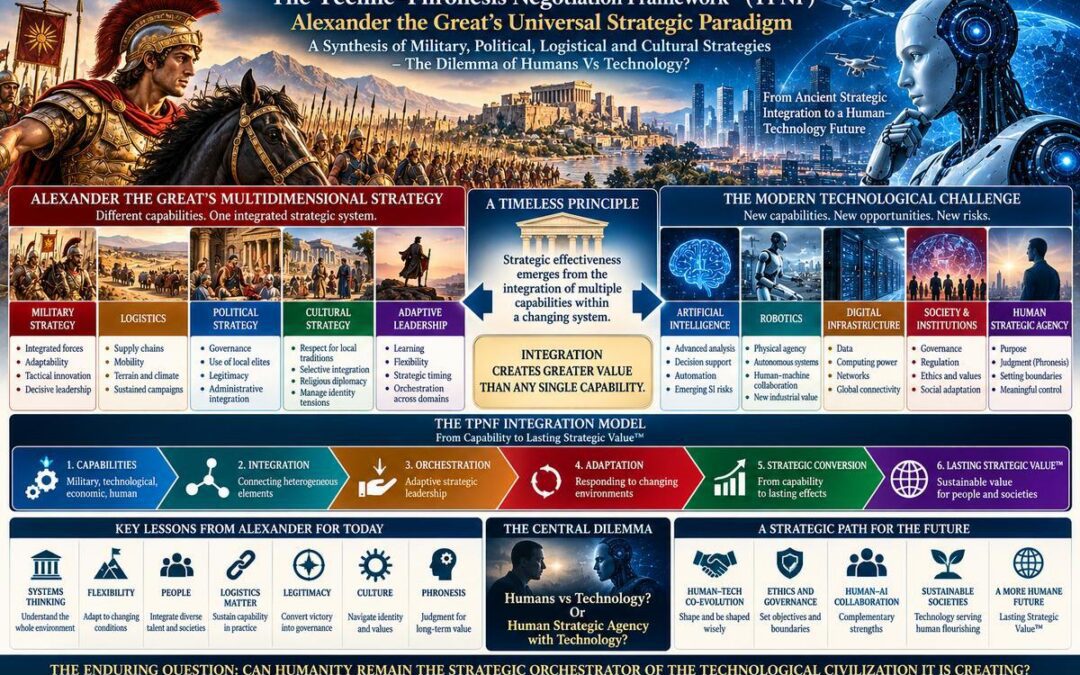
This TPNF essay does not argue that Alexander developed a timeless strategic formula applicable directly to modern technology. Nor does it idealize his empire or ignore its violence and contradictions.
Instead, Alexander provides a historical case through which TPNF can examine a broader principle:
Strategic effectiveness emerges from the integration of multiple capabilities within a changing system.
The modern dilemma of Humans versus Technology may therefore be incorrectly formulated.
The deeper question is whether humanity can remain the strategic orchestrator of the technological ecosystem it is creating.

by Nikos Chatzis | 31 Aug, 2026 | Strategic Adaptation, Strategic Analysis, strategic autonomy, Strategic Financial Ecosystems, Strategic Governance, Strategic Leadership, Strategic Management, Sustainability, Sustainable Value Creation, The Techne–Phronesis Negotiation Framework™
This essay examines one of the most fundamental problems of strategy: the conversion of power into sustainable outcomes. Through TPNF, it argues that strategic power must pass through several stages—understanding, orchestration, negotiation, conversion, stabilization and adaptation—before it can generate Lasting Strategic Value™.

by Nikos Chatzis | 25 Aug, 2026 | Strategic Financial Ecosystems, Strategic Governance, Strategic Leadership, Strategic Management, Strategic Negotiation, Strategic Resilience, Strategic Theory, Strategic Thinking, Strategic Wisdom, Strategy Evolution - Business Strategy, Technological Civilization, Technology Ecosystems, Technology Evolution, Technology Geopolitics, The Techne–Phronesis Negotiation Framework™
This essay examines how strategic decision-making is changing as artificial intelligence, technological convergence, autonomous systems and complex ecosystems reshape organizations, markets and geopolitics. Its purpose is to explain how TPNF can provide an integrative framework connecting technological capability, systems understanding, human judgment, negotiation and adaptive learning.

by Nikos Chatzis | 24 Aug, 2026 | Strategic Analysis, Strategic Governance, Strategic Leadership, Strategic Management, Strategic Negotiation, Technological Civilization, Technology Ecosystems, Technology Transfer, The Techne–Phronesis Negotiation Framework™, Value Creation
This essay explores one of the foundational questions of TPNF: What makes strategic value last?
Its purpose is to distinguish temporary advantage from sustainable strategic value and explain why long-term value increasingly depends upon adaptability, ecosystem relationships, institutional legitimacy, learning and practical wisdom.
by Nikos Chatzis | 10 Aug, 2026 | Artificial Intelligence AI, Strategic Leadership, Strategic Management, Strategic Thinking, The Techne–Phronesis Negotiation Framework™
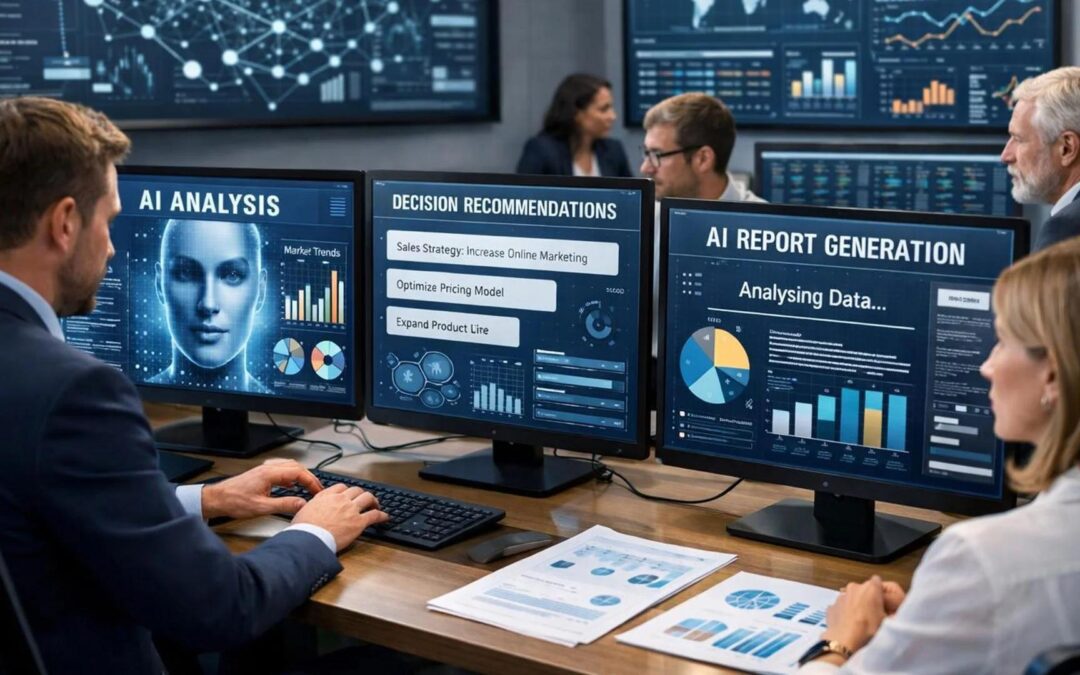
This essay examines how AI is changing the role of business decision strategy in technological civilization. Using TPNF, it argues that AI should not be understood merely as another productivity technology. It increasingly becomes part of the strategic decision architecture of the firm, influencing how organizations perceive markets, allocate resources, manage risk, negotiate, innovate, and create long-term value.

by Nikos Chatzis | 15 Jul, 2026 | Ecosystem Dynamics, Ecosystem Governance, Ecosystem Strategy, Ecosystem Thinking, Logistics, Strategic Governance, Strategic Leadership, Strategic Management, Strategic Resilience, The Techne–Phronesis Negotiation Framework™
The purpose of this essay is to explain how logistics is evolving into a multidimensional strategic ecosystem connecting technology, governance, infrastructure, supply chains, innovation, and geopolitics. The Techne–Phronesis Negotiation Framework™ (TPNF) argues that future logistics should no longer be understood simply as the management of physical flows, but as the orchestration of interconnected technological and institutional ecosystems that create resilience, adaptability, and sustainable strategic value. The evolution of logistics therefore reflects the broader evolution of contemporary technological civilization.