Negotiation.gr | Strategic Wisdom for the Technological Age
“Strategic resilience emerges when technical capability (techne) is
continuously guided by practical wisdom (phronesis) through adaptive
negotiation across interconnected systems.”
Central Idea
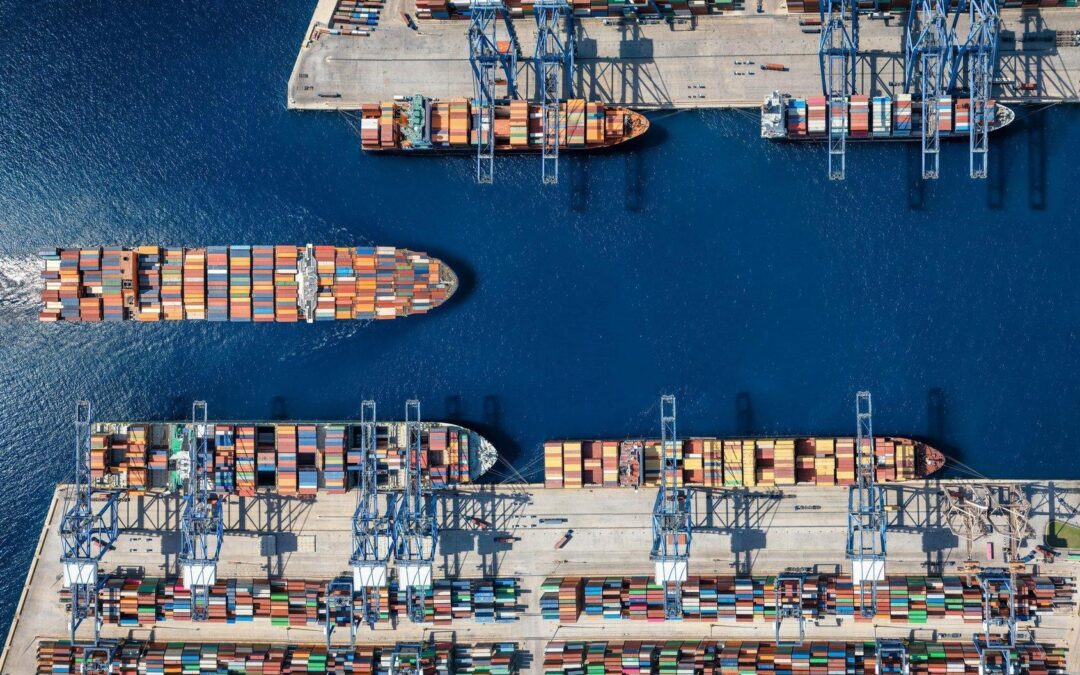
Global supply chains have evolved beyond logistical systems into strategic instruments of economic power, technological innovation, and geopolitical influence. In the twenty-first century, value creation depends not merely on the production of goods but on the capacity to design, coordinate, secure, and continuously negotiate resilient supply networks. The Techne–Phronesis Negotiation Framework™ (TPNF) argues that sustainable competitive advantage emerges when technical capability (techne) is combined with practical wisdom (phronesis) to manage complex adaptive supply-chain ecosystems. China’s strategic investment in manufacturing, logistics, critical minerals, digital infrastructure, and global connectivity demonstrates how supply chains have become one of the principal foundations of future economic and geopolitical influence.
Abstract
Supply chains have become one of the defining strategic assets of the twenty-first century. No longer confined to the movement of products from producers to consumers, they now constitute globally interconnected systems that generate technological innovation, economic competitiveness, industrial resilience, and geopolitical influence. Artificial intelligence, digital platforms, advanced manufacturing, critical minerals, logistics infrastructure, and international trade are increasingly integrated into adaptive networks whose strategic value extends far beyond traditional operations management.
The Techne–Phronesis Negotiation Framework™ (TPNF) argues that strategic supply-chain resilience emerges through the integration of technical capability (techne), practical wisdom (phronesis), systems thinking, and adaptive negotiation. Using China as a case study, this essay examines how long-term investment in manufacturing capacity, technological innovation, infrastructure, and global connectivity has transformed supply chains into instruments of national strategy. The framework demonstrates that future value creation depends not solely upon efficiency but upon the continuous negotiation of resilient relationships across complex adaptive systems.
Introduction
Throughout history, economic power has depended upon the ability to organize production and exchange more effectively than competitors.
During the Industrial Revolution, manufacturing capacity became the principal source of national wealth.
During the twentieth century, oil, maritime transportation, and global trade reshaped international commerce.
Today, integrated supply chains have become the strategic infrastructure of modern civilization.
Products are no longer manufactured within isolated national economies.
They are created through globally distributed ecosystems linking research laboratories, mining operations, semiconductor fabrication plants, logistics providers, ports, cloud computing platforms, financial institutions, and digital marketplaces.
Consequently, supply chains have become strategic networks rather than operational pipelines.
From Logistics to Strategic Ecosystems
Traditional supply-chain management emphasized cost reduction, inventory optimization, transportation efficiency, and operational coordination.
These objectives remain important.
However, contemporary supply chains increasingly determine technological leadership, industrial competitiveness, energy security, and geopolitical influence.
Resilience has become equally important as efficiency.
Redundancy has become as valuable as optimization.
Strategic flexibility has become more valuable than short-term cost reduction.
The TPNF interprets these transformations as evidence that supply chains function as complex adaptive systems requiring continuous negotiation among governments, industries, technology firms, financial institutions, and international organizations.
China as a Case Study
China offers one of the most significant examples of strategic supply-chain development in modern history.
Over several decades, the country has invested extensively in manufacturing capability, transportation infrastructure, port development, high-speed rail, digital technologies, advanced logistics, industrial clusters, and technological innovation.
Rather than viewing supply chains solely as commercial mechanisms, China has increasingly integrated them into broader national development strategies emphasizing long-term industrial capability, technological upgrading, and international connectivity.
This approach demonstrates how supply-chain strategy can become a central instrument of national competitiveness.
The significance of this case lies not in imitation but in understanding the strategic principles underlying coordinated long-term planning.
Techne and Phronesis in Supply-Chain Governance
Within the TPNF, techne represents the technological capabilities required to create high-performing supply networks.
Artificial intelligence improves forecasting.
Digital twins optimize production.
Automation enhances manufacturing.
Data analytics strengthen decision-making.
Advanced logistics increase operational agility.
However, technical capability alone cannot guarantee resilience.
Phronesis guides strategic choices concerning diversification, ethical sourcing, environmental sustainability, geopolitical risk, stakeholder relationships, and long-term institutional trust.
The interaction between techne and phronesis transforms supply chains into resilient strategic ecosystems rather than merely efficient production systems.
Supply Chains as Complex Adaptive Systems
Modern supply chains exhibit the defining characteristics of complex adaptive systems.
They consist of numerous autonomous actors.
They evolve continuously.
They respond dynamically to disruption.
Small disturbances often produce disproportionate systemic effects.
Strategic resilience therefore depends upon learning, adaptation, distributed coordination, and continuous negotiation.
The TPNF explains these characteristics through systems thinking, demonstrating that supply chains generate value through relationships rather than isolated transactions.
Future Value Creation
The future economy will increasingly reward organizations capable of integrating technological innovation with adaptive governance.
Artificial intelligence will reshape production planning.
Critical minerals will redefine industrial priorities.
Digital platforms will transform global commerce.
Sustainability will become a strategic imperative.
Organizations capable of negotiating resilient relationships across these interconnected systems will create lasting competitive advantage.
Future value will emerge not simply from products but from intelligently governed networks.
Strategic Implications
For governments, resilient supply chains become instruments of economic security.
For businesses, they become platforms for innovation and sustainable growth.
For international organizations, they become mechanisms for global cooperation and crisis response.
For society, they represent the infrastructure supporting technological progress and long-term prosperity.
The TPNF provides an integrative framework through which these diverse strategic objectives can be coordinated.
The strategic importance of supply chains has fundamentally changed. They are no longer peripheral operational functions but central determinants of technological leadership, economic resilience, and geopolitical influence.
Using China as a case study, this essay demonstrates that long-term investment in integrated supply-chain ecosystems can generate enduring strategic value. However, the true source of resilience lies not merely in physical infrastructure or manufacturing capacity. It lies in the continuous integration of technological capability (techne), practical wisdom (phronesis), systems thinking, and adaptive negotiation.
The Techne–Phronesis Negotiation Framework™ (TPNF) therefore positions supply chains as dynamic strategic ecosystems through which future value is continuously created, negotiated, and sustained within an increasingly interconnected global economy.
Source: Open Sources Analysis, Relative Data Analysis by Nikos Chatzis
© Nikolaos Chatzis. All Rights Reserved.
The Techne–Phronesis Negotiation Framework™
An Integrative Theory of Strategic Negotiation, Complex Adaptive Systems & Practical Wisdom
Technology Creates Capability • Systems Thinking Creates Understanding • Strategic Wisdom Creates Lasting Value.
Negotiation.gr | Strategic Wisdom for the Technological Age