by Nikos Chatzis | 6 Oct, 2026 | Ancient Greek Philosophy, Robotics, Super Intelligence (SI), The Techne–Phronesis Negotiation Framework™
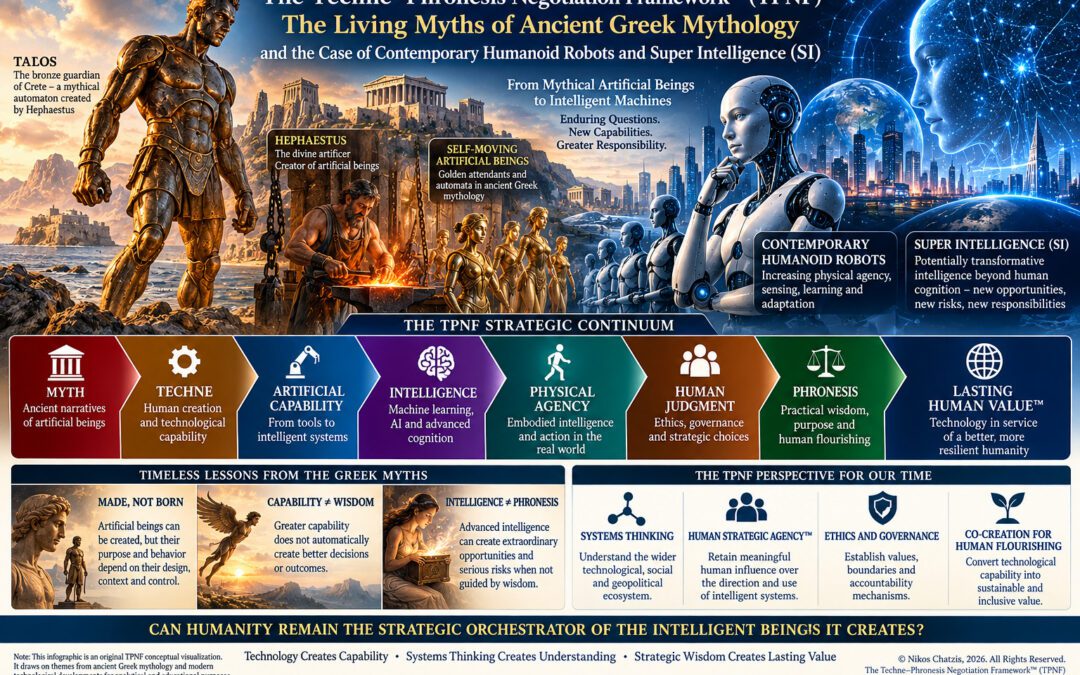
The purpose of this TPNF essay is to examine how selected myths of Ancient Greek mythology can provide enduring conceptual lenses for understanding the strategic challenges emerging from contemporary humanoid robotics, embodied artificial intelligence, and the possible future development of Artificial Superintelligence (SI). Through the analytical perspective of the Techne–Phronesis Negotiation Framework™ (TPNF), the essay does not argue that Ancient Greek mythology predicted modern artificial intelligence. Rather, it explores how figures such as Hephaestus, Talos, Prometheus, Daedalus and Icarus represent recurring human dilemmas concerning technological creation, delegated agency, expanding capability, control, responsibility and the limits of human judgement.
by Nikos Chatzis | 30 Sep, 2026 | Robotics, Super Intelligence (SI), The Techne–Phronesis Negotiation Framework™
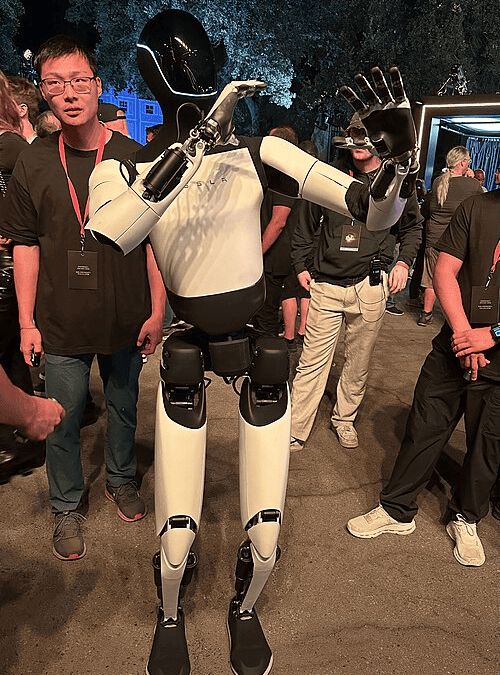
Debate about Super Intelligence frequently gravitates toward two extremes. One imagines extraordinary prosperity, scientific discovery and technological abundance. The other anticipates loss of control, displacement of human decision-making or potentially catastrophic consequences. Both possibilities deserve examination. But neither should be treated as inevitable. This essay proposes a TPNF framework for identifying the real boundaries separating Intelligence, Autonomy, Agency, Strategic Power and Wisdom.
by Nikos Chatzis | 10 Sep, 2026 | Artificial Intelligence AI, Big Data, Robotics, The Techne–Phronesis Negotiation Framework™, trade diversification
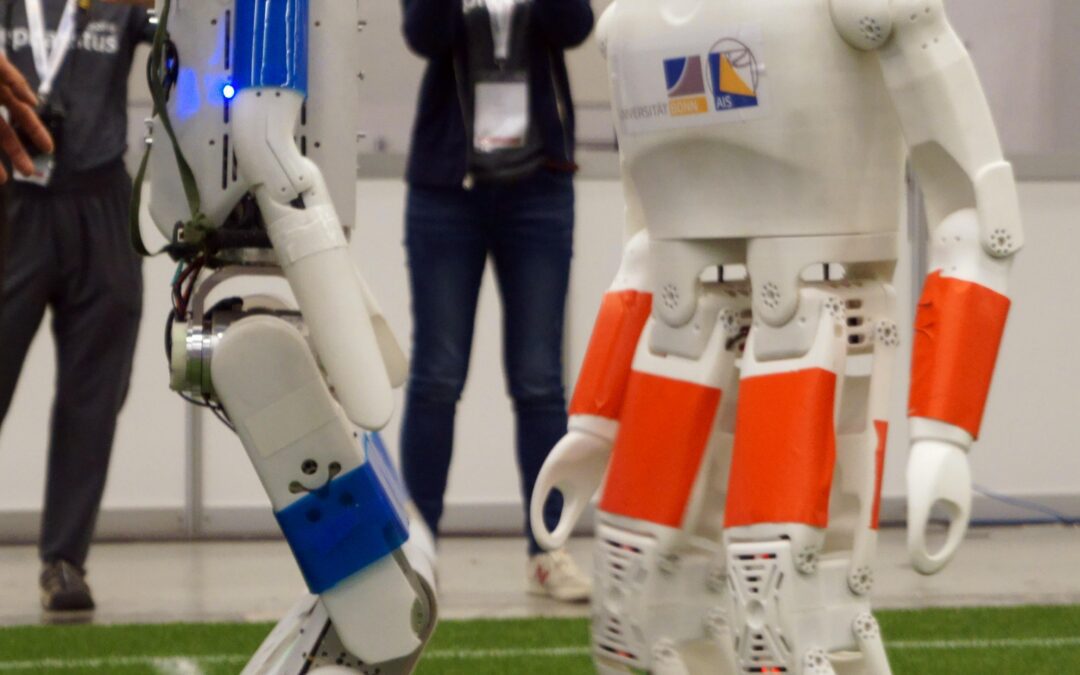
This TPNF essay examines why humanoid robot competitions should be interpreted not merely as sporting spectacles but also as technological experimentation. It explores how artificial intelligence, Big Data, sensors, robotics engineering and repeated physical testing interact to improve humanoid reliability and prepare robots for everyday applications.
by Nikos Chatzis | 23 Aug, 2026 | Robotics, Technology Ecosystems, Technology Evolution, Technology Geopolitics, The Techne–Phronesis Negotiation Framework™
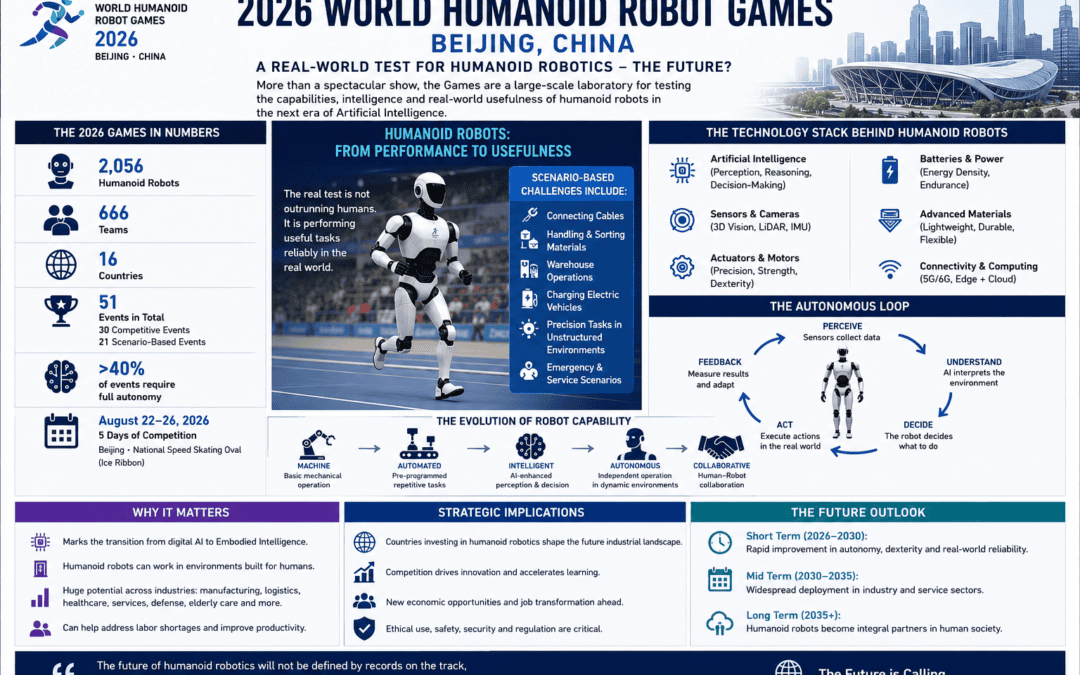
This essay examines the five-day 2026 World Humanoid Robot Games as a real-world testing laboratory for humanoid robotics. Using TPNF, it explores the convergence of artificial intelligence, robotics, sensors, autonomous decision-making, manufacturing and human–machine collaboration, while asking a larger question: Are we approaching the transition from the Information Age toward the age of Physical AI?
by Nikos Chatzis | 11 Aug, 2026 | Artificial Intelligence AI, Robotics, Semiconductors, The Techne–Phronesis Negotiation Framework™
This essay examines why robotics, semiconductors and AI increasingly constitute a central geopolitical capability of the twenty-first century. It argues that strategic advantage will depend not simply upon leadership in any individual technology, but upon the capacity to connect research, chips, computing infrastructure, AI models, energy, robotics, manufacturing, talent, capital and institutions into resilient technological ecosystems.
by Nikos Chatzis | 29 Jul, 2026 | Robotics, Technology Ecosystems, Technology Geopolitics, The Techne–Phronesis Negotiation Framework™
This essay applies the Techne–Phronesis Negotiation Framework™ (TPNF) to examine the strategic implications of the United States’ decision to restrict imports of advanced Chinese humanoid and quadruped robots. It argues that the policy reflects a broader transition toward robotics sovereignty,