Negotiation.gr | Strategic Wisdom for the Technological Age
“Strategic resilience emerges when technical capability (techne) is
continuously guided by practical wisdom (phronesis) through adaptive
negotiation across interconnected systems.”
Central Idea
The development of three unattended cargo delivery modes for Elroy Air’s Chaparral autonomous VTOL aircraft represents a strategic shift in military logistics. Through the Techne–Phronesis Negotiation Framework™ (TPNF), this evolution demonstrates how autonomous logistics platforms are becoming essential components of future operational ecosystems, increasing resilience, operational tempo, and survivability while reducing risk to personnel.
Purpose of the Essay
This essay examines how autonomous heavy-cargo drones are reshaping military logistics, analyzes the strategic significance of Elroy Air’s latest U.S. Army-supported capabilities, and explains why autonomous logistics systems are becoming a critical element of future multi-domain warfare.
Introduction
For decades, military innovation has focused primarily on combat platforms such as fighter aircraft, tanks, missiles, and armed drones. Increasingly, however, operational success depends on logistics. Supplying dispersed units in contested environments is often as decisive as battlefield firepower.
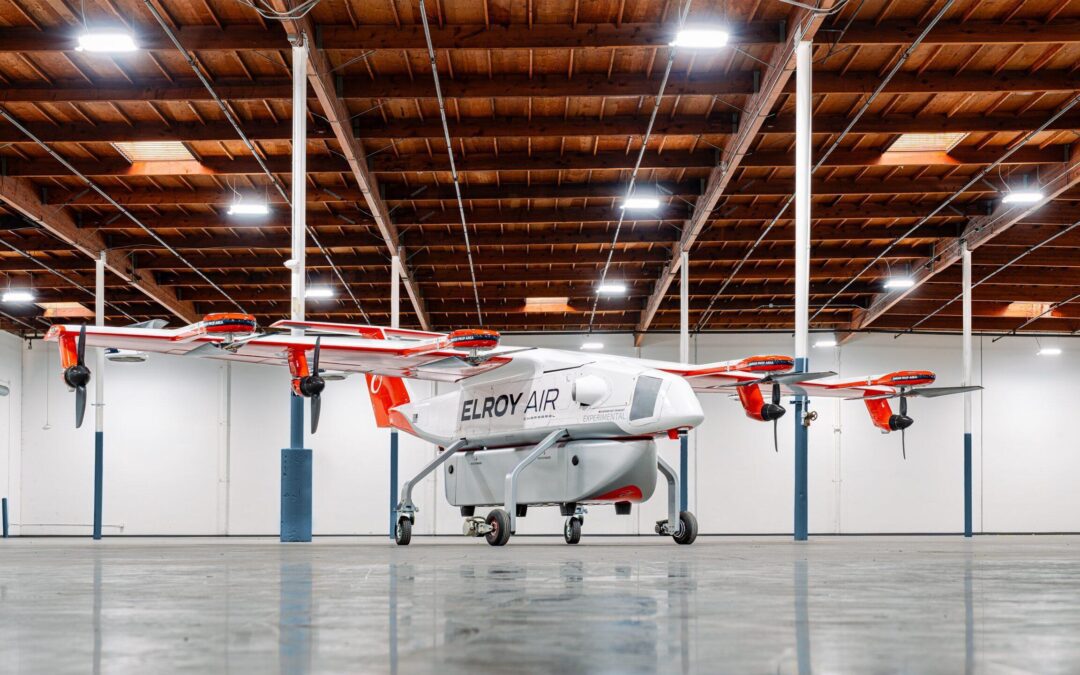
Elroy Air’s Chaparral—a hybrid-electric autonomous VTOL cargo aircraft—has reached an important milestone by adding three unattended delivery modes under a U.S. Army contract. The new capabilities allow precision airdrop from hover, precision airdrop during forward flight, and autonomous ground delivery without personnel or infrastructure at the receiving site.
From a TPNF perspective, this is more than a technological upgrade. It reflects the emergence of logistics as a strategic ecosystem enabled by autonomy.
Technology Creates Capability
The first principle of the Techne–Phronesis Negotiation Framework™ states:
Technology Creates Capability.
The Chaparral demonstrates how autonomous systems can transform logistics by combining:
- Vertical takeoff and landing (VTOL)
- Hybrid-electric propulsion
- Autonomous navigation
- Modular cargo pods
- Precision delivery
- Extended operational range
According to Elroy Air, the production-oriented Chaparral is designed to carry payloads exceeding 500 pounds (227 kg) over distances of up to 450 miles (724 km) without requiring traditional airport infrastructure.
The addition of unattended delivery modes expands its operational flexibility in environments where landing may be impossible or unsafe.
Autonomous Logistics as a Strategic Ecosystem
Traditional logistics often depends on:
- secure roads,
- supply convoys,
- helicopters,
- airfields,
- and personnel at both ends of the delivery chain.
Autonomous cargo drones change this model.
The Chaparral can now execute:
- Precision airdrop while hovering
- Precision airdrop during forward flight
- Autonomous ground cargo delivery
Each option reduces the need for exposed personnel while increasing mission flexibility.
From a systems perspective, the platform becomes part of an integrated logistics network rather than an isolated aircraft.
Modern Warfare Beyond Combat Platforms
Contemporary conflicts have shown that logistics nodes are prime targets. Supply routes, fuel depots, and transport vehicles are increasingly vulnerable to long-range precision strikes and unmanned systems.
Autonomous cargo drones address this challenge by:
- reducing exposure of soldiers,
- shortening delivery times,
- enabling distributed logistics,
- supporting expeditionary operations,
- and maintaining operational continuity when conventional infrastructure is degraded.
The emphasis shifts from protecting logistics to making logistics inherently more resilient through autonomy.
The TPNF Perspective
The Techne–Phronesis Negotiation Framework™ analyzes this development through three interconnected dimensions.
Technology
Autonomous VTOL aircraft extend operational capability by delivering supplies with minimal human intervention.
Systems Thinking
The drone should be viewed as one element within a broader logistics ecosystem that includes artificial intelligence, sensors, communications, mission planning, supply-chain management, and command-and-control networks.
Strategic Wisdom (Phronesis)
The greatest value lies not simply in replacing helicopters or trucks, but in redesigning military logistics around distributed, adaptive, and resilient autonomous networks. Strategic success increasingly depends on integrating technology into coherent operational concepts.
Strategic Implications
The evolution of autonomous heavy-cargo drones carries several implications:
- Military logistics is becoming increasingly autonomous.
- Distributed resupply reduces the vulnerability of centralized logistics hubs.
- Autonomous cargo systems can sustain dispersed units in contested environments.
- Human exposure during resupply missions can be significantly reduced.
- Similar technologies are likely to influence disaster relief, humanitarian operations, and commercial logistics, illustrating the dual-use nature of advanced autonomous systems.
Future Warfare
Heavy autonomous cargo aircraft are likely to become standard components of future military force structures.
Future capabilities may include:
- AI-managed logistics networks,
- cooperative drone swarms,
- autonomous battlefield resupply,
- predictive logistics based on sensor data,
- and integration with multi-domain command-and-control systems.
In this environment, logistics evolves from a support function into a decisive operational capability.
The Chaparral’s new unattended delivery modes represent more than an incremental improvement in cargo transport. They illustrate a broader transformation in which autonomy, artificial intelligence, and systems integration redefine how military forces sustain operations.
The Techne–Phronesis Negotiation Framework™ highlights that autonomous logistics is not merely about moving supplies more efficiently. It is about creating adaptive technological ecosystems that enhance resilience, accelerate operational tempo, and strengthen strategic decision-making. As modern warfare becomes increasingly networked and technology-driven, autonomous heavy-cargo drones will play a growing role in shaping both military effectiveness and geopolitical competition.
Key Takeaways
- Elroy Air’s Chaparral now supports three unattended delivery modes developed under a U.S. Army contract.
- Autonomous heavy-cargo drones reduce risk to personnel while increasing operational flexibility.
- Military logistics is evolving toward distributed, AI-enabled autonomous ecosystems.
- Heavy-lift VTOL drones have significant dual-use potential for defense, disaster response, and commercial logistics.
- TPNF demonstrates that technological capability creates lasting strategic value when integrated through systems thinking and practical wisdom.
Author’s Reflection
The evolution of autonomous heavy-cargo drones demonstrates that the future of military power depends not only on superior combat systems but also on superior logistics. Platforms such as the Chaparral illustrate how autonomy, artificial intelligence, and resilient supply networks are redefining operational effectiveness. Through the Techne–Phronesis Negotiation Framework™, these developments should be understood as part of a broader transformation in which logistics becomes a strategic ecosystem, enabling forces to operate with greater adaptability, sustainability, and strategic resilience in increasingly contested environments.
Nikolaos Chatzis
Source: Open Sources Analysis, Relative Data Analysis by Nikos Chatzis
© Nikolaos Chatzis. All Rights Reserved.
The Techne–Phronesis Negotiation Framework™
An Integrative Theory of Strategic Negotiation, Complex Adaptive Systems & Practical Wisdom
Technology Creates Capability • Systems Thinking Creates Understanding • Strategic Wisdom Creates Lasting Value.
Negotiation.gr | Strategic Wisdom for the Technological Age