Negotiation.gr | Strategic Wisdom for the Technological Age
“Strategic resilience emerges when technical capability (techne) is
continuously guided by practical wisdom (phronesis) through adaptive
negotiation across interconnected systems.”
Central Idea
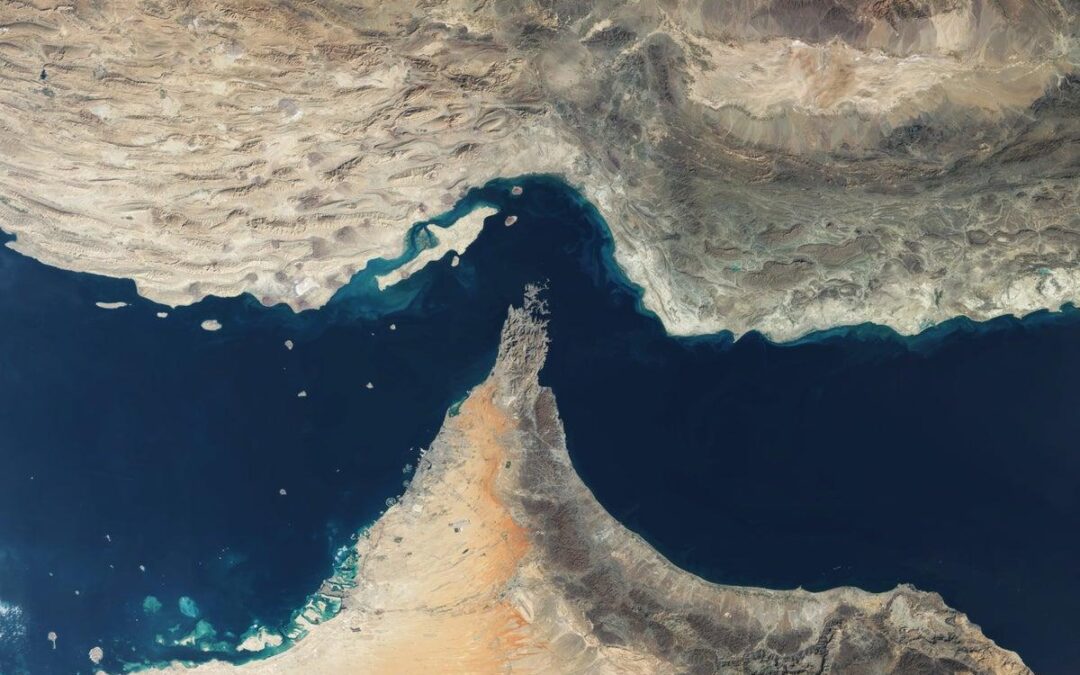
The Strait of Hormuz is far more than a maritime chokepoint. It is a strategic ecosystem where geography, energy security, international trade, technology, naval power, diplomacy, industrial policy, and national strategy intersect. Approximately one-fifth of globally traded oil and a substantial share of liquefied natural gas exports pass through this narrow waterway, making it one of the world’s most consequential maritime corridors. The Techne–Phronesis Negotiation Framework™ (TPNF) argues that the strategic importance of the Strait of Hormuz lies not merely in its geography, but in its role as an interconnected ecosystem linking global energy markets, technological infrastructure, geopolitical competition, and international governance. Understanding its significance therefore requires integrating techne, phronesis, systems thinking, and adaptive strategic negotiation.
Purpose of the Essay
The purpose of this essay is to explain why the Strait of Hormuz remains one of the world’s most strategically significant maritime corridors. Rather than analyzing it solely through military or energy-security perspectives, the TPNF interprets the Strait as a multidimensional strategic ecosystem connecting logistics, global energy markets, maritime security, diplomacy, finance, industrial policy, technology, and geopolitical competition. The essay compares its strategic value for the United States, the European Union, Iran, and the Arab Gulf States while demonstrating how resilience increasingly depends upon adaptive governance and international cooperation.
Abstract
The Strait of Hormuz remains one of the world’s most strategically important maritime corridors, linking the energy-producing Gulf region with global markets. Its significance extends beyond hydrocarbon exports to encompass maritime logistics, international finance, naval security, digital infrastructure, diplomatic relations, and technological competition. Consequently, disruptions within the Strait influence not only regional stability but also the resilience of global economic and technological systems.
The Techne–Phronesis Negotiation Framework™ (TPNF) interprets the Strait of Hormuz as a strategic ecosystem rather than merely a geographical passage. Through the integration of technical capability (techne), practical wisdom (phronesis), systems thinking, and adaptive strategic negotiation, the framework explains how governments, industries, energy markets, financial institutions, logistics providers, and international organizations continuously interact to sustain stability, resilience, and long-term strategic value.
Introduction
Throughout history, maritime corridors have shaped commerce, security, and political influence.
Today, the Strait of Hormuz remains one of the most strategically significant waterways in the international system.
It connects energy producers with global consumers.
It supports maritime trade.
It influences financial markets.
It shapes military planning.
It affects diplomatic relations.
Its importance therefore extends well beyond geography.
The Strait of Hormuz as a Strategic Ecosystem
The TPNF argues that the Strait should not be understood solely as a maritime passage.
It increasingly integrates:
Energy infrastructure.
Global shipping.
Digital navigation systems.
Maritime logistics.
Financial markets.
Defense capabilities.
Diplomatic relationships.
International law.
Technological monitoring.
These interconnected dimensions transform the Strait into a strategic ecosystem.
Strategic Importance for the United States
For the United States, the Strait of Hormuz represents:
- Regional security commitments.
- Freedom of navigation.
- Stability of global energy markets.
- Alliance assurance.
- Protection of international maritime commerce.
- Crisis deterrence.
Within the TPNF, these responsibilities form part of a broader ecosystem of strategic credibility, alliance management, and maritime governance.
Strategic Importance for the European Union
For the European Union, the Strait contributes to:
- Energy diversification.
- Economic stability.
- Secure maritime trade.
- Inflation management.
- Industrial competitiveness.
- International supply chain resilience.
The EU therefore has a strong interest in maintaining open and secure maritime routes while promoting diplomatic solutions that reduce regional instability.
Strategic Importance for Iran
For Iran, the Strait represents:
- Geographic leverage.
- National security.
- Economic interests.
- Strategic deterrence.
- Regional influence.
- Diplomatic bargaining power.
At the same time, sustained disruption would also affect Iran’s own economic interests and regional relationships, illustrating the mutual interdependence that characterizes complex strategic ecosystems.
Strategic Importance for the Arab Gulf States
For the Arab Gulf States, the Strait remains essential for:
- Hydrocarbon exports.
- National revenue.
- Economic diversification.
- Foreign investment.
- Maritime security.
- Regional stability.
Consequently, these states seek to balance energy security, infrastructure investment, international partnerships, and diplomatic engagement while expanding alternative export routes where feasible.
The Four Pillars of the TPNF
The strategic significance of the Strait can be understood through the four foundational dimensions of the TPNF.
Techne develops maritime technologies, digital infrastructure, energy systems, logistics, and naval capabilities.
Phronesis provides strategic judgment, prudent diplomacy, contextual understanding, and responsible leadership.
Systems Thinking explains the interdependence among energy markets, shipping, finance, defense, diplomacy, and technological infrastructure.
Strategic Negotiation coordinates governments, energy companies, international organizations, naval coalitions, financial institutions, and regional partners.
Together these dimensions sustain resilience across one of the world’s most important maritime ecosystems.
Strategic Implications
Governments should strengthen maritime cooperation while preserving freedom of navigation.
Energy-producing and energy-consuming states should diversify infrastructure and improve supply chain resilience.
International organizations should promote dialogue, confidence-building measures, and maritime security cooperation.
Businesses should invest in resilient logistics networks capable of adapting to geopolitical uncertainty.
Strategic leaders should recognize that maritime chokepoints increasingly function as interconnected strategic ecosystems rather than isolated geographic locations.
The Strait of Hormuz remains one of the defining strategic assets of contemporary technological civilization.
Its significance arises not simply from its location, but from its ability to connect global energy markets, maritime logistics, technology, diplomacy, finance, and geopolitical competition.
The Techne–Phronesis Negotiation Framework™ (TPNF) explains that enduring stability depends upon integrating techne, phronesis, systems thinking, and adaptive strategic negotiation across these interconnected ecosystems.
The future of maritime security will therefore depend not only upon naval power, but upon the collective capacity of states and institutions to govern complexity, sustain cooperation, and transform strategic geography into sustainable strategic value.
Source: Open Sources Analysis, Relative Data Analysis by Nikos Chatzis
© Nikolaos Chatzis. All Rights Reserved.
The Techne–Phronesis Negotiation Framework™
An Integrative Theory of Strategic Negotiation, Complex Adaptive Systems & Practical Wisdom
Technology Creates Capability • Systems Thinking Creates Understanding • Strategic Wisdom Creates Lasting Value.
Negotiation.gr | Strategic Wisdom for the Technological Age