by Nikos Chatzis | 11 Oct, 2026 | Ancient Greek Philosopphy, Technological Civilization, Technology Ecosystems, Technology Evolution, Technology Transfer, The Techne–Phronesis Negotiation Framework™
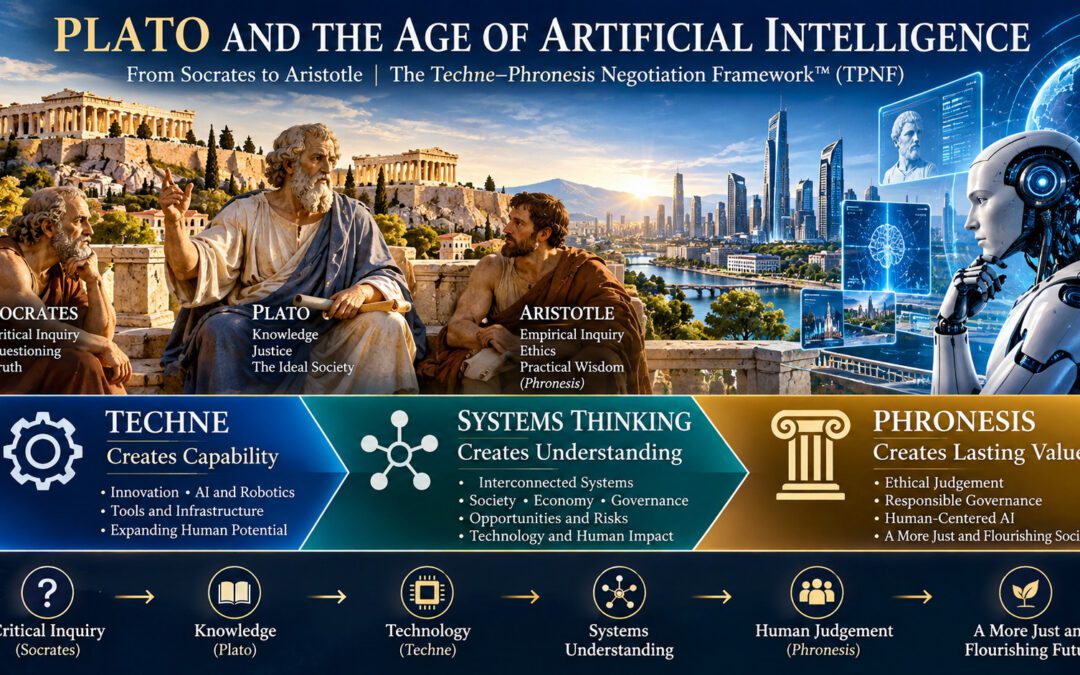
This TPNF essay examines the intellectual progression from Socrates through Plato to Aristotle and explores its relevance to contemporary technological evolution. Its purpose is not to suggest that ancient Greek philosophers anticipated artificial intelligence. Rather, it investigates how their questions about knowledge, human judgement, education and governance can help societies evaluate emerging technological capabilities.
by Nikos Chatzis | 9 Oct, 2026 | Ancient Greek Philosophy, Ecosystem Dynamics, Technology Ecosystems, Technology Evolution, The Techne–Phronesis Negotiation Framework™
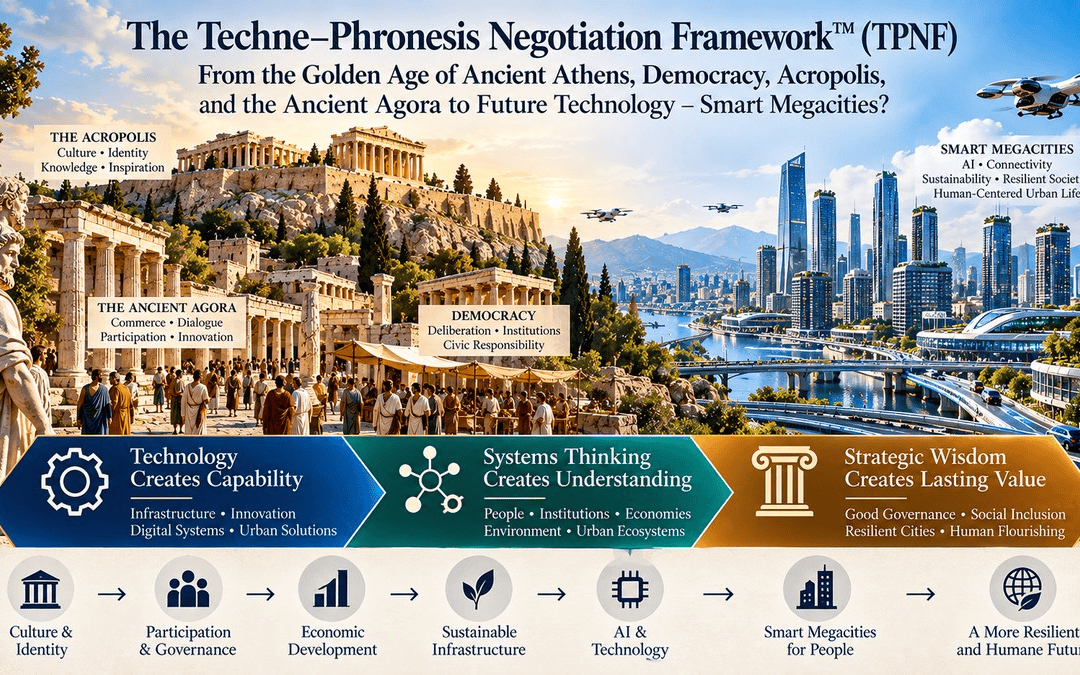
This TPNF essay explores how the institutional, cultural and technological achievements of classical Athens can inform contemporary thinking about smart megacities. It examines the Acropolis, Ancient Agora and democratic institutions as interconnected elements of an urban ecosystem. The objective is to identify strategic principles relevant to future cities governed increasingly through artificial intelligence, automated infrastructure and complex technological networks.

by Nikos Chatzis | 7 Oct, 2026 | Technological Civilization, Technology Diplomacy, Technology Ecosystems, The Techne–Phronesis Negotiation Framework™
The purpose of this TPNF essay is to examine the recent China–UK research breakthrough in wireless charging for NEVs through the analytical perspective of TPNF. Rather than evaluating the technology only through efficiency or engineering performance, the essay examines the transition from technological capability to ecosystem-level value creation. The central question is therefore: Can an exceptional technical achievement evolve into infrastructure capable of generating lasting value across a wider mobility ecosystem?
by Nikos Chatzis | 2 Oct, 2026 | Artificial Intelligence, Strategic Adaptation, Super Intelligence (SI), Technology Ecosystems, The Techne–Phronesis Negotiation Framework™, War, War Robotis
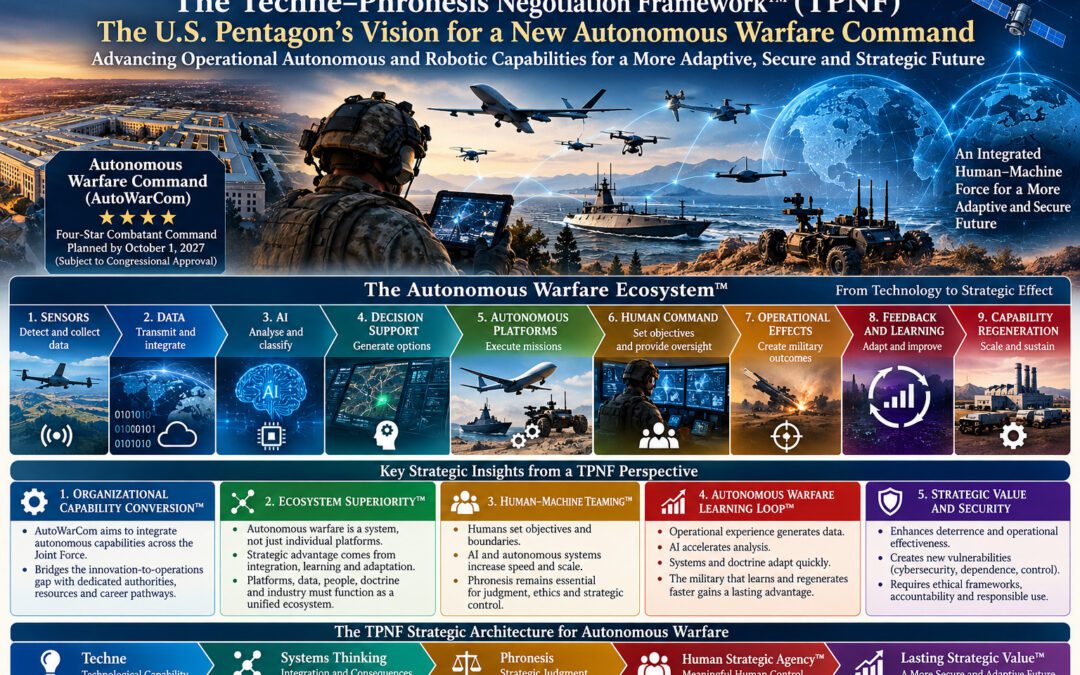
The Pentagon announced plans on September 30, 2026, to establish Autonomous Warfare Command, or AutoWarCom, as a four-star combatant command with service-like authorities. The stated objective is to accelerate and scale autonomous and robotic capabilities across the Joint Force. This essay examines the development through TPNF. The central question is: Does autonomous warfare primarily represent technological evolution, or does it require the emergence of an entirely new military capability ecosystem?
by Nikos Chatzis | 1 Oct, 2026 | Ancient Greek Philosopphy, Technological Civilization, Technology Ecosystems, The Techne–Phronesis Negotiation Framework™
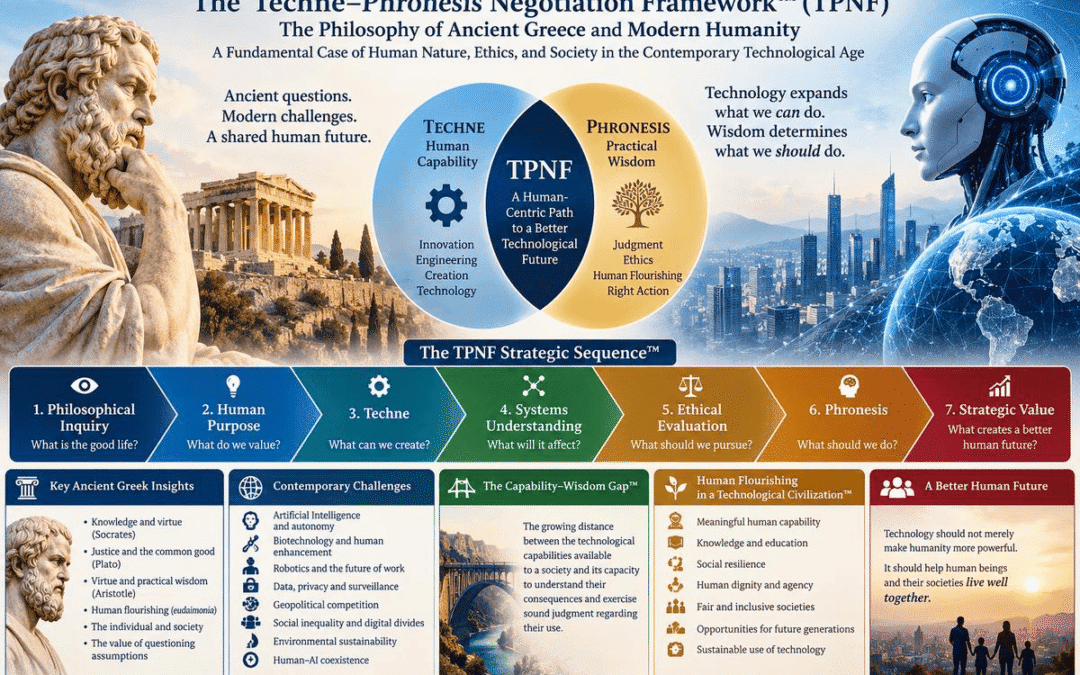
This TPNF essay does not claim that Ancient Greek philosophy contains ready-made answers to Artificial Intelligence, robotics or contemporary technological governance. It proposes something different. Ancient Greek philosophical inquiry created enduring intellectual methods for examining human nature, ethics, knowledge, society and practical judgment. TPNF argues that these questions can provide Strategic Intellectual Infrastructure™ for evaluating the purposes and consequences of technological civilization. The central challenge becomes: How can humanity ensure that technological evolution contributes not merely to greater capability, but to better human and societal outcomes?
by Nikos Chatzis | 29 Sep, 2026 | Supply Chains, Sustainable Value Creation, Systems Integration, Systems Leadership, Systems Thinking, Tech Economy of Software, Technology Ecosystems, The Techne–Phronesis Negotiation Framework™, Value Creation
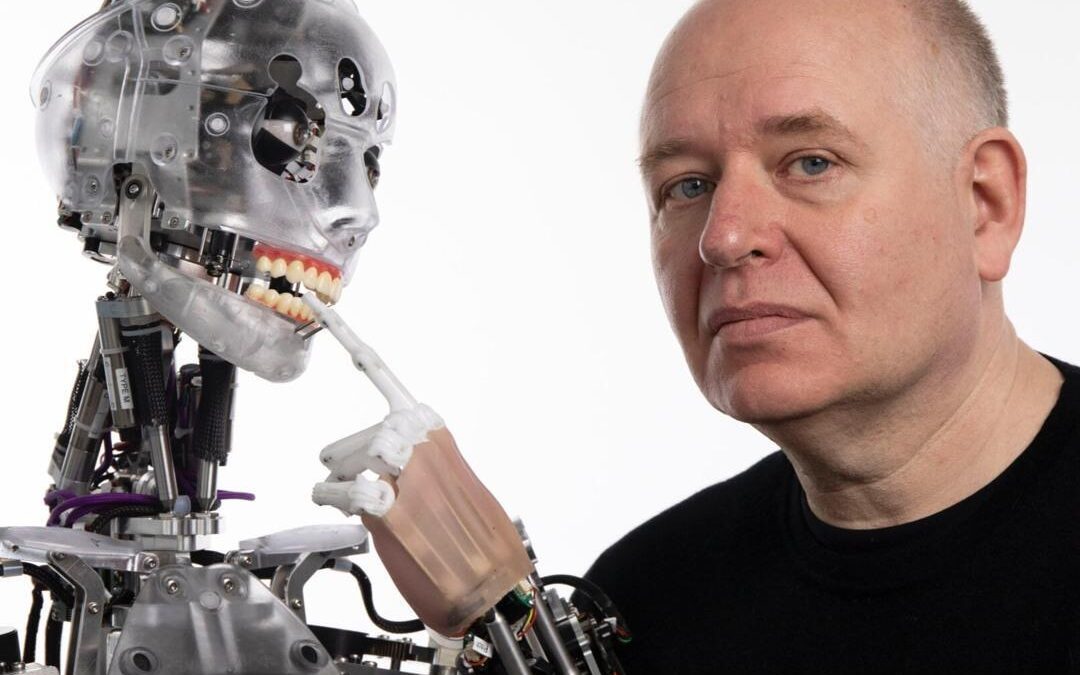
This TPNF essay explains why chips, AI and robotics should increasingly be understood as interacting platform ecosystems rather than isolated technological sectors. The strategic question is no longer simply who produces the fastest chip, the most capable AI model or the most advanced robot. It is increasingly: Which ecosystems can integrate these capabilities, learn from their interaction and continuously convert that learning into new technological, economic and human value?