by Nikos Chatzis | 15 Oct, 2026 | Byzantine Empire, The Techne–Phronesis Negotiation Framework™
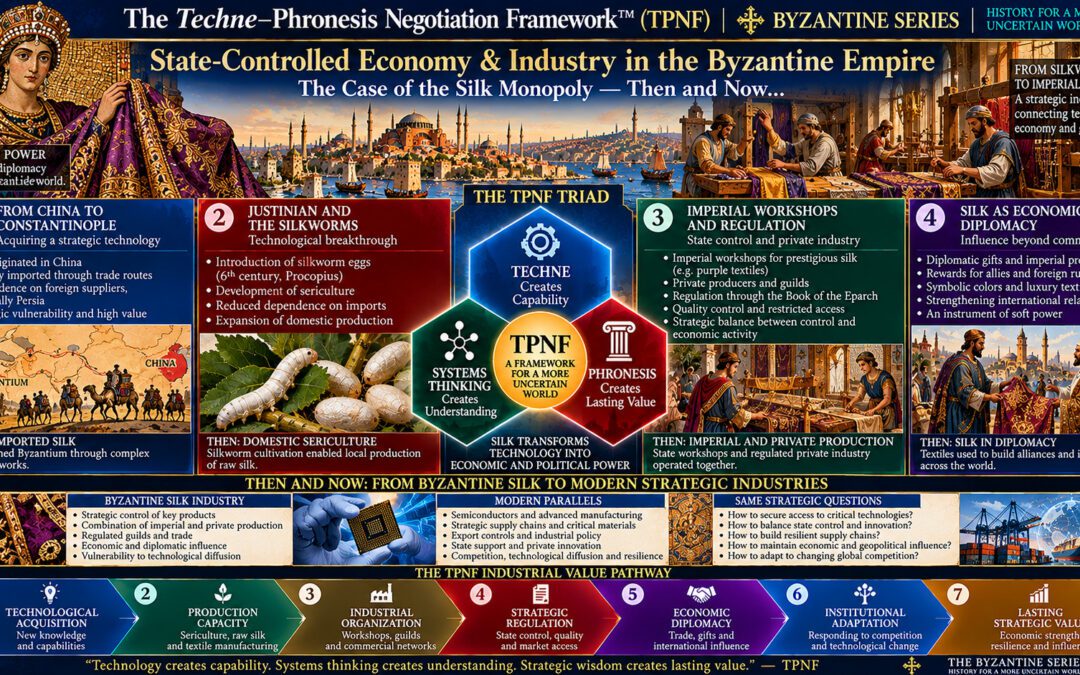
This seventh essay in the TPNF Byzantine Series examines silk as a case of strategic industrial organization. It explores technological acquisition, imperial workshops, regulated guilds, international trade and diplomatic applications. The essay also investigates functional parallels with contemporary industrial policy, technological sovereignty and strategic supply chains.
by Nikos Chatzis | 15 Oct, 2026 | Byzantine Empire, The Techne–Phronesis Negotiation Framework™
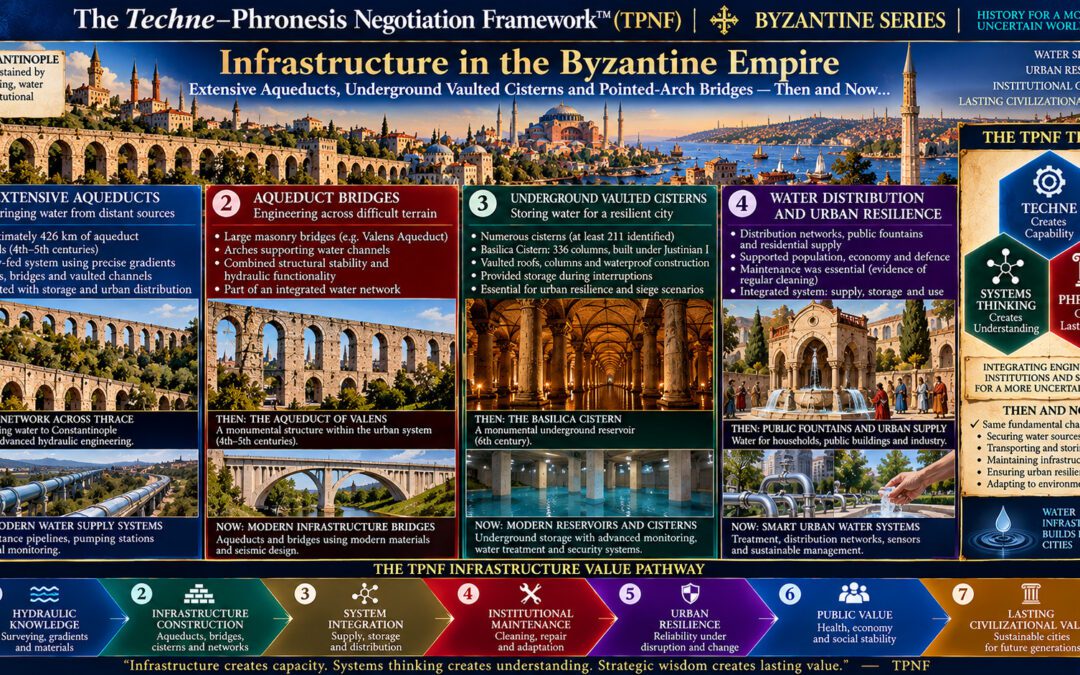
This sixth essay in the TPNF Byzantine Series examines Constantinople’s water infrastructure as an example of technological integration and institutional resilience. It explores extensive aqueduct networks, masonry bridges, underground vaulted cisterns and water-storage strategies. It also investigates how these historical systems illuminate contemporary challenges involving water security, infrastructure governance and sustainable urban development.
by Nikos Chatzis | 14 Oct, 2026 | Byzantine Empire, The Techne–Phronesis Negotiation Framework™
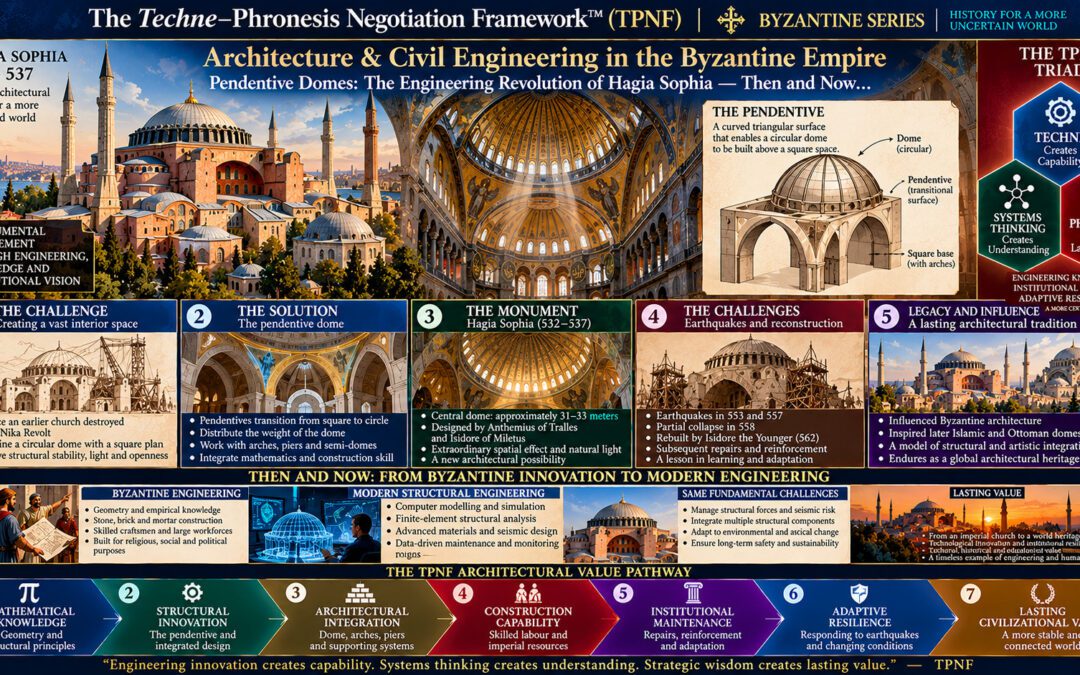
This fifth essay in the TPNF Byzantine Series examines the pendentive dome as an architectural and engineering achievement. It focuses on Hagia Sophia, its construction under Emperor Justinian I, the structural challenges encountered by its designers and the subsequent adaptations that contributed to its survival. The essay also explores conceptual parallels with contemporary civil engineering, seismic resilience and sustainable infrastructure.
by Nikos Chatzis | 14 Oct, 2026 | Byzantine Empire, The Techne–Phronesis Negotiation Framework™
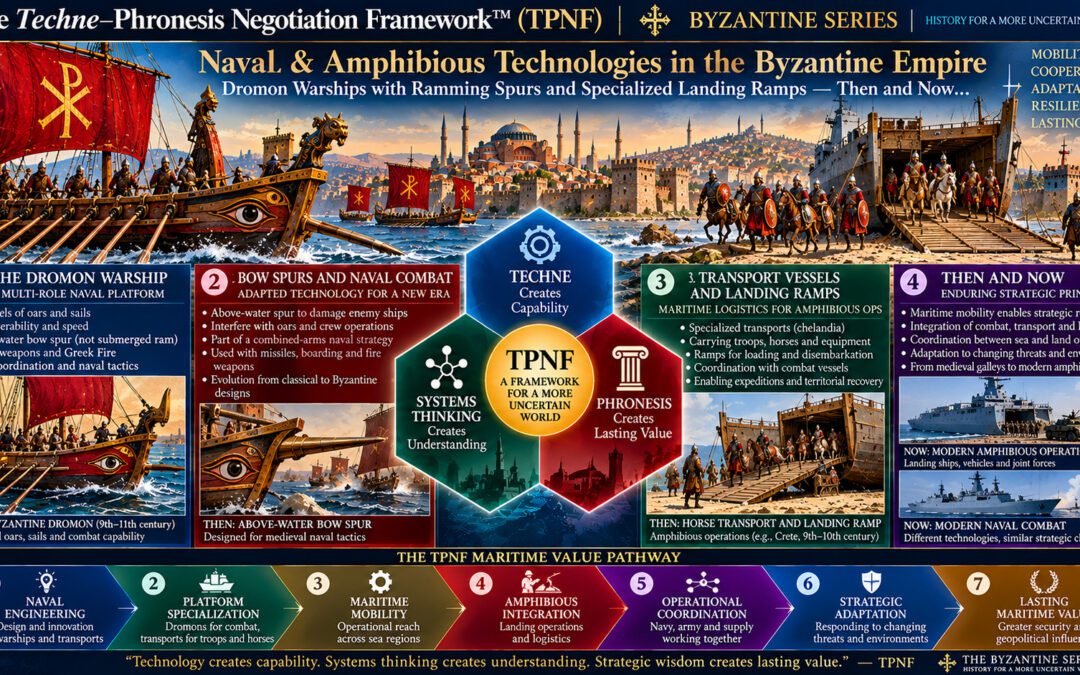
This fourth essay in the TPNF Byzantine Series examines the evolution of Byzantine naval and amphibious technologies. It explores dromon warships, their above-water bow spurs, specialized transport vessels and landing arrangements. Its purpose is to identify how naval engineering, logistical organization and strategic decision-making contributed to Byzantine military operations, and to examine functional parallels with contemporary maritime defense.
by Nikos Chatzis | 13 Oct, 2026 | Byzantine Empire, The Techne–Phronesis Negotiation Framework™
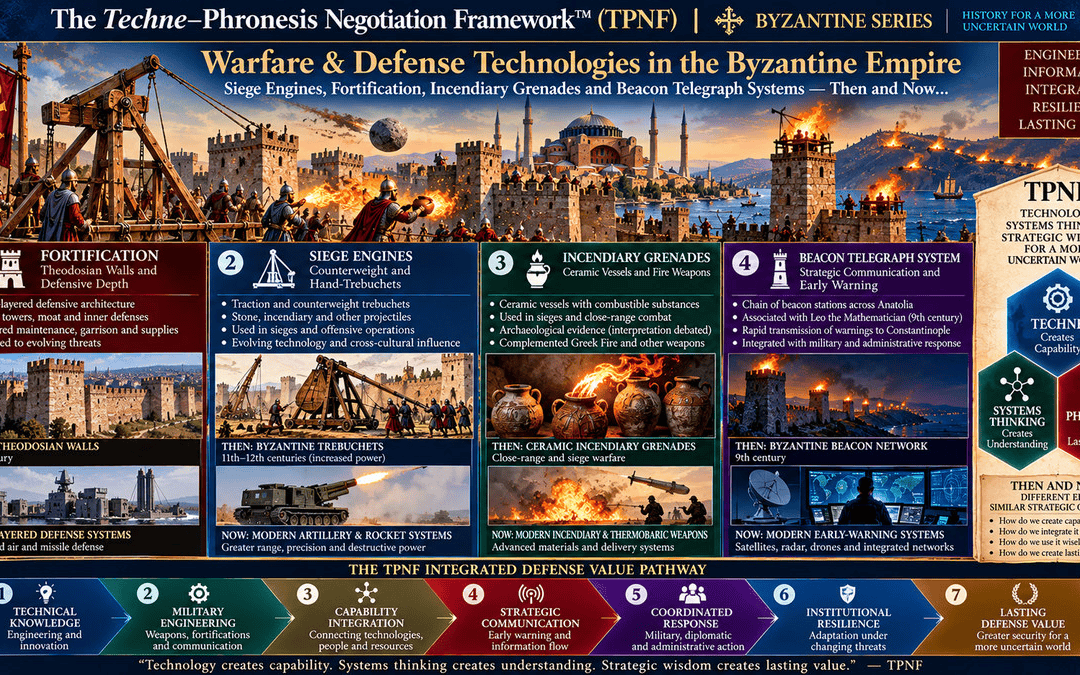
This third essay in the TPNF Byzantine Series examines the relationship between military engineering, fortification and strategic communication. It explores mechanical artillery, including traction and counterweight trebuchets, portable incendiary weapons and the Byzantine beacon network. Its objective is to identify the institutional and strategic principles connecting these historical technologies with modern defense ecosystems.
by Nikos Chatzis | 13 Oct, 2026 | Byzantine Empire, The Techne–Phronesis Negotiation Framework™
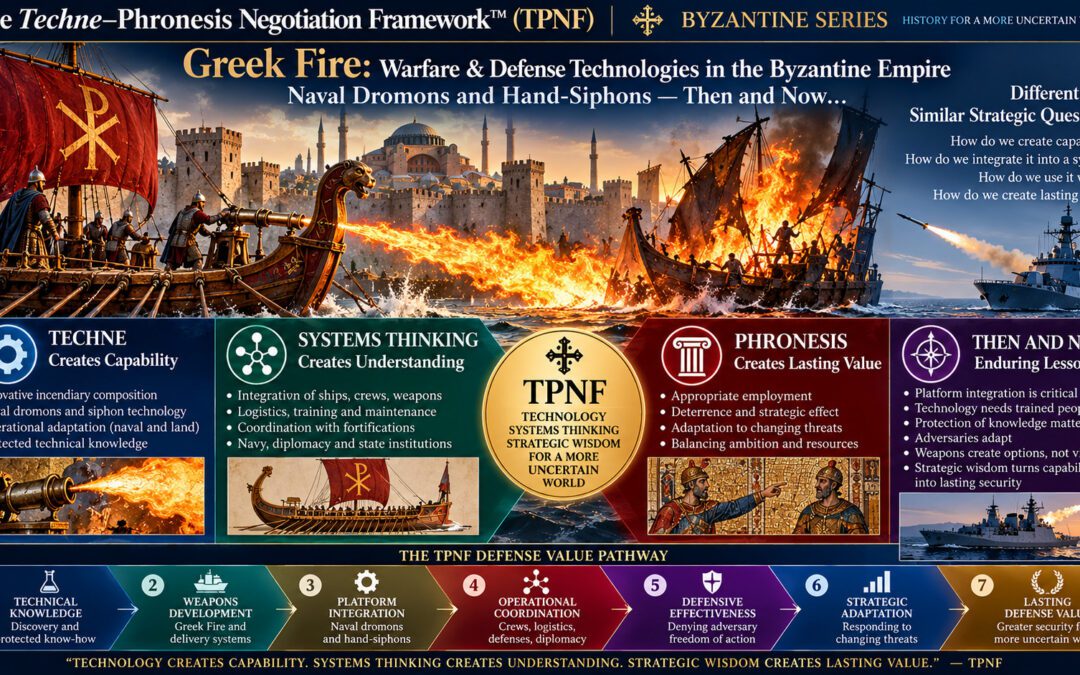
This second essay in the TPNF Byzantine Series examines Greek Fire as a historical case of military technological innovation and strategic integration. It focuses on naval dromons, ship-mounted siphons and portable hand-siphons, investigating how these technologies contributed to Byzantine defensive capabilities. The essay also identifies conceptual parallels with modern military innovation, without treating medieval incendiary weapons as direct technological predecessors of contemporary systems.