Negotiation.gr | Strategic Wisdom for the Technological Age
Abstract
The twenty-first century has entered a second phase of technological geopolitics. If the first phase concerns access to critical minerals, semiconductor manufacturing, cloud infrastructure, and artificial intelligence, the second concerns the governance of technology itself. International standards organizations, telecommunications infrastructure, cybersecurity, biotechnology platforms, and space systems increasingly determine the distribution of global power. Technological leadership no longer depends exclusively upon innovation but upon the capacity to govern, secure, coordinate, and negotiate increasingly complex technological ecosystems. This paper argues that The Techne–Phronesis Negotiation Framework™ provides a multidimensional analytical perspective for understanding this transformation by integrating technological capability, strategic wisdom, systems thinking, platform ecosystems, and long-term value creation into a unified geopolitical model.
Introduction
Technology has fundamentally altered the nature of geopolitical competition.
Previous centuries measured national power through territory, military strength, industrial production, and energy resources.
Today, power increasingly depends upon something less visible but considerably more influential.
Technological governance.
The competition among states is no longer limited to inventing new technologies. Increasingly, it concerns who establishes international standards, controls digital communications, secures cyberspace, develops biotechnology, and operates strategic space infrastructure.
Technology is gradually becoming the institutional architecture of geopolitical power.
Understanding this transformation requires moving beyond traditional geopolitics toward the study of technological civilization.
Standards Bodies: The Invisible Architecture of Global Power
Modern civilization functions because billions of technological devices operate according to common technical rules.
Mobile phones communicate because telecommunications standards exist.
Aircraft operate safely because international engineering standards exist.
Medical equipment, industrial automation, autonomous vehicles, cloud platforms, and digital payments all depend upon international interoperability.
Organizations such as the International Organization for Standardization (ISO), the International Electrotechnical Commission (IEC), the International Telecommunication Union (ITU) and the 3rd Generation Partnership Project (3GPP) have therefore become strategic institutions.
Although largely invisible to the general public, they influence international markets worth trillions of dollars.
Countries capable of actively participating in standards development shape future technological markets before products even reach consumers.
Standardization has become a geopolitical instrument.
Telecommunications Infrastructure: The Nervous System of Technological Civilization
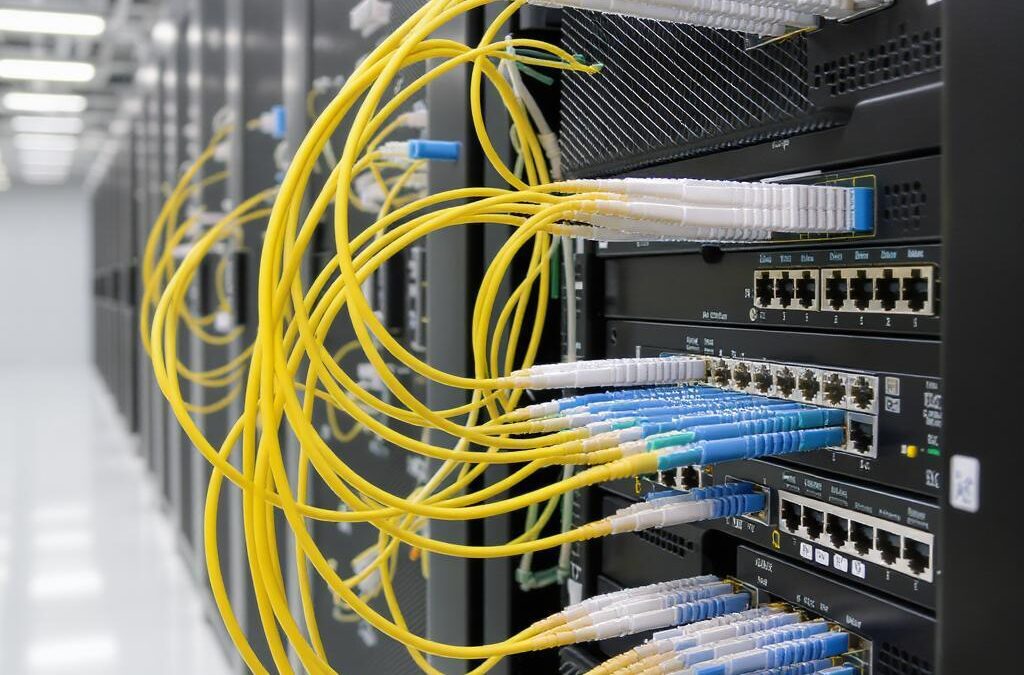
Telecommunications infrastructure constitutes the nervous system of modern civilization.
Fiber-optic cables.
Submarine communications networks.
Satellite communications.
5G.
Future 6G.
Cloud connectivity.
Every sector of contemporary society depends upon reliable communications.
Government administration.
Military operations.
Air traffic management.
Financial transactions.
Healthcare.
Transportation.
Industrial automation.
Artificial Intelligence.
National resilience increasingly depends upon communications resilience.
Consequently, telecommunications infrastructure has evolved from commercial infrastructure into critical national infrastructure.
Control over communications increasingly translates into strategic influence.
Cybersecurity: Protecting the Digital State
Digital transformation inevitably creates digital vulnerability.
Every connected system introduces new opportunities for innovation while simultaneously creating new forms of strategic risk.
Cybersecurity therefore becomes a permanent geopolitical necessity.
Modern cyber defense extends far beyond protecting computers.
It protects:
critical infrastructure,
energy systems,
water management,
transportation,
banking,
scientific research,
defense industries,
government institutions,
electoral systems,
space infrastructure,
and artificial intelligence platforms.
The battlefield of the twenty-first century increasingly includes cyberspace as a permanent operational domain.
National security and cybersecurity have become inseparable.
Biotechnology Platforms: The Next Strategic Frontier
Biotechnology is emerging as one of the defining geopolitical sectors of the twenty-first century.
Advances in genomics, synthetic biology, precision medicine, pharmaceutical innovation, agricultural biotechnology, and bio-manufacturing increasingly influence national resilience.
The COVID-19 pandemic demonstrated that biotechnology is not merely a medical issue.
It is a geopolitical capability.
Countries capable of rapidly developing vaccines, securing pharmaceutical supply chains, applying genomic technologies, and integrating biotechnology into broader innovation ecosystems possess strategic advantages extending well beyond public health.
Biotechnology therefore becomes both an economic sector and an element of national security.
Space Systems: The New Strategic High Ground
Space is no longer reserved for scientific exploration.
It has become essential infrastructure.
Satellites support:
navigation,
communications,
weather forecasting,
precision agriculture,
shipping,
aviation,
financial synchronization,
disaster management,
intelligence gathering,
and military operations.
Modern economies function because space systems continuously support terrestrial infrastructure.
The rapid development of Low Earth Orbit satellite constellations is transforming space into an operational platform for global connectivity.
The geopolitical competition increasingly concerns not only access to space but also the governance of orbital ecosystems.
Technological Interdependence
These technological domains cannot be understood independently.
International standards enable telecommunications.
Telecommunications depend upon cybersecurity.
Cybersecurity protects cloud computing.
Cloud computing accelerates biotechnology research.
Space systems enable telecommunications, navigation, and logistics.
Artificial Intelligence integrates every technological layer.
The result is a continuously evolving ecosystem in which technological sectors reinforce one another through permanent interaction.
Future geopolitical leadership will therefore depend less upon isolated technological superiority than upon the capacity to organize resilient technological ecosystems.
Technology Diplomacy and Strategic Negotiation
The growing complexity of technological civilization creates a new diplomatic environment.
Technology has become an object of international negotiation.
States increasingly negotiate over:
semiconductor supply chains,
cybersecurity norms,
telecommunications standards,
space governance,
artificial intelligence,
critical infrastructure,
biotechnology regulation,
digital sovereignty,
and data governance.
Traditional diplomacy increasingly converges with technology diplomacy.
Strategic negotiation becomes essential because technological ecosystems require cooperation among governments, industries, research institutions, international organizations, and private companies.
Technological competition and technological cooperation increasingly coexist.
The Techne–Phronesis Negotiation Framework™
The Techne–Phronesis Negotiation Framework™ explains this transformation by integrating five complementary dimensions.
Techne represents technological capability and scientific innovation.
Systems Thinking explains how technological sectors interact as integrated ecosystems rather than isolated industries.
Phronesis provides strategic wisdom by balancing innovation with ethics, resilience, national security, and long-term societal interests.
Strategic Negotiation enables governments, corporations, universities, and international organizations to coordinate increasingly complex technological systems.
Finally, Platform Ecosystems transform individual technological capabilities into multidimensional architectures capable of generating sustainable long-term value.
The Framework therefore argues that technological leadership increasingly depends upon ecosystem governance rather than technological invention alone.
Toward Technological Sovereignty
Technological sovereignty should not be misunderstood as technological isolation.
No nation can independently master every advanced technology.
Instead, technological sovereignty requires participation in trusted international ecosystems while maintaining sufficient domestic capability to protect critical national interests.
The most successful technological powers will therefore be those capable of balancing openness with resilience, cooperation with strategic autonomy, and innovation with security.
Technological sovereignty becomes ecosystem sovereignty.
The geopolitics of technology has entered a new historical phase.
The strategic competition among nations no longer concerns only the production of technology.
It increasingly concerns the governance of technological civilization itself.
International standards.
Telecommunications.
Cybersecurity.
Biotechnology.
Space systems.
Together they form the institutional architecture upon which economic competitiveness, scientific innovation, national security, and geopolitical influence increasingly depend.
The Techne–Phronesis Negotiation Framework™ demonstrates that future leadership will belong not simply to those who invent the most advanced technologies, but to those capable of organizing resilient technological ecosystems through strategic wisdom, technological diplomacy, systems thinking, and long-term value creation.
The twenty-first century will therefore be defined not only by technological innovation, but by humanity’s capacity to govern technological civilization responsibly, cooperatively, and strategically.
Source: Open Sources Analysis, Relative Data Analysis by Nikos Chatzis
© Nikolaos Chatzis. The Techne–Phronesis Negotiation Framework™
Technology Creates Capability • Systems Thinking Creates Understanding • Strategic Wisdom Creates Lasting Value.
Negotiation.gr | Strategic Wisdom for the Technological Age