Negotiation.gr | Strategic Wisdom for the Technological Age
“Strategic resilience emerges when technical capability (techne) is
continuously guided by practical wisdom (phronesis) through adaptive
negotiation across interconnected systems.”
Central Idea
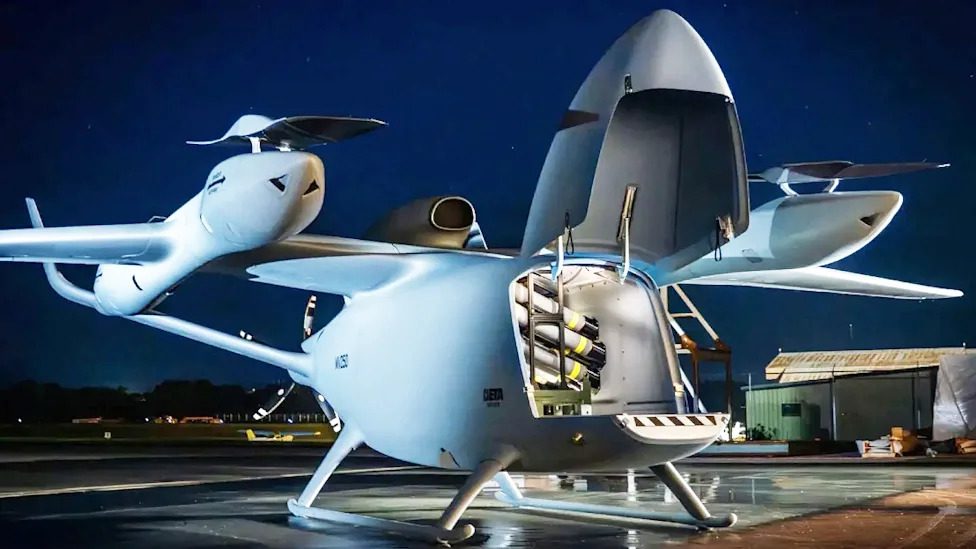
The emergence of the MV250 Hybrid-Electric VTOL Combat Cargo Drone illustrates the transformation of modern tactical warfare from platform-centric operations toward intelligent, networked, and autonomous logistics ecosystems. Through the Techne–Phronesis Negotiation Framework™ (TPNF), the MV250 is understood not merely as an advanced unmanned aircraft, but as a strategic node within multilevel network ecosystems that integrate technology, practical wisdom, systems thinking, and strategic negotiation to enhance operational resilience and sustainable military effectiveness.
Purpose of the Essay
This essay examines how the MV250 Hybrid-Electric VTOL Combat Cargo Drone contributes to the evolution of modern tactical warfare through the analytical lens of the Techne–Phronesis Negotiation Framework™ (TPNF). It explores how autonomous logistics, distributed operations, hybrid-electric propulsion, and adaptive military ecosystems reshape strategic decision-making and future battlefield operations.
TPNF Strategic Proposition
The future of tactical warfare will be determined not by individual combat platforms alone, but by the capacity to integrate autonomous logistics, intelligent technologies, strategic negotiation, systems thinking, and resilient network ecosystems into adaptive operational architectures capable of sustaining military effectiveness in highly contested environments.
Abstract
Contemporary warfare increasingly depends upon resilient logistics, autonomous systems, and distributed operational networks rather than solely on conventional combat platforms. Hybrid-electric Vertical Take-Off and Landing (VTOL) cargo drones represent an important technological development by enabling flexible resupply missions without reliance on traditional runways or vulnerable supply routes.
Using the Techne–Phronesis Negotiation Framework™ (TPNF), this essay argues that the strategic significance of the MV250 extends beyond its technical specifications. Its true value lies in strengthening adaptive military ecosystems by connecting technology, operational decision-making, logistics, alliance interoperability, and resilient command networks that collectively enhance mission effectiveness.
Introduction
Military history demonstrates that logistics often determines strategic success as much as battlefield performance. As armed forces prepare for increasingly contested, dispersed, and technologically sophisticated operational environments, autonomous cargo systems are becoming critical components of future military capability.
The MV250 Hybrid-Electric VTOL Combat Cargo Drone exemplifies this transition. Combining vertical lift capability, autonomous flight technologies, and hybrid-electric propulsion, it provides operational flexibility while reducing dependence on traditional logistics infrastructure. Through the TPNF, the MV250 can be understood as an enabling technology within broader military ecosystems that continuously adapt to emerging threats and opportunities.
The Evolution of Tactical Logistics
Traditional logistics depended upon secure roads, large airfields, and predictable supply routes. Modern conflicts increasingly challenge these assumptions through precision weapons, electronic warfare, cyber operations, and persistent surveillance.
Autonomous VTOL logistics platforms enable dispersed forces to maintain operational effectiveness despite these challenges by providing flexible, responsive, and lower-risk resupply capabilities.
Technology Creates Capability
The MV250 demonstrates how hybrid-electric propulsion, autonomous navigation, advanced sensors, and VTOL capability collectively expand operational possibilities.
These technologies enable military organizations to:
- support dispersed units,
- reduce exposure of personnel,
- operate from austere environments,
- improve logistical responsiveness,
- increase operational flexibility.
Within the TPNF, technology creates capability but does not, by itself, ensure strategic success.
Practical Wisdom Directs Capability
Technological capability must be guided by informed strategic judgment.
Military leaders must determine:
- appropriate operational roles,
- acceptable levels of autonomy,
- ethical use of autonomous logistics,
- integration with human decision-making,
- long-term force development priorities.
Phronesis ensures that technological innovation serves strategic objectives rather than becoming an end in itself.
Systems Thinking and Distributed Operations
Modern military operations function as interconnected systems rather than isolated platforms.
The MV250 interacts with:
- intelligence networks,
- command-and-control systems,
- communications infrastructure,
- manned aircraft,
- autonomous ground systems,
- naval forces,
- coalition partners.
Systems Thinking reveals that its strategic value emerges through these relationships.
Strategic Negotiation Across Defence Ecosystems
Future military capability depends upon continuous negotiation among governments, defence industries, research institutions, military organizations, technology companies, and allied nations.
Strategic Negotiation facilitates:
- technology acquisition,
- interoperability,
- multinational logistics,
- industrial partnerships,
- defence innovation,
- operational coordination.
Complex Adaptive Systems
Modern battlefields evolve continuously.
Artificial intelligence, autonomous systems, cyber operations, electronic warfare, and rapidly changing operational environments require military organizations to adapt dynamically.
The MV250 contributes to this adaptive capacity by increasing logistical flexibility and supporting decentralized operations.
Multilevel Network Ecosystems
The TPNF recognizes that future defence capability emerges through cooperation among multiple interconnected actors, including:
- armed forces,
- defence manufacturers,
- governments,
- research universities,
- technology companies,
- logistics providers,
- NATO allies,
- regulatory institutions.
The MV250 strengthens these ecosystems by serving as a technological connector across operational domains.
Networked Strategic Resilience
Resilient logistics are increasingly essential for operational success.
Hybrid-electric VTOL cargo drones contribute to resilience by:
- reducing dependence on fixed infrastructure,
- supporting distributed force structures,
- maintaining supply continuity,
- increasing operational adaptability,
- strengthening logistical redundancy.
Networked resilience therefore becomes a defining characteristic of modern tactical warfare.
Strategic Implications
The evolution of autonomous combat cargo drones reflects broader changes in military strategy.
Future military advantage will increasingly depend upon:
- autonomous logistics,
- resilient operational ecosystems,
- intelligent command networks,
- alliance interoperability,
- technological adaptability,
- sustainable force projection.
The MV250 Hybrid-Electric VTOL Combat Cargo Drone symbolizes a significant step in the evolution of modern tactical warfare. While its technical innovations are important, its greatest strategic contribution lies in strengthening adaptive, resilient, and interconnected military ecosystems.
Through the Techne–Phronesis Negotiation Framework™ (TPNF), the MV250 is understood not simply as an unmanned logistics platform but as an integral element of a broader strategic architecture that combines technological capability, practical wisdom, systems thinking, strategic negotiation, and multilevel network ecosystems.
As military operations continue to evolve toward distributed, technology-enabled, and highly interconnected environments, autonomous logistics platforms such as the MV250 will become increasingly central to sustaining operational effectiveness, alliance cooperation, and long-term strategic resilience.
Key Takeaways
- Hybrid-electric VTOL cargo drones are transforming military logistics.
- Technology creates capability, while practical wisdom determines strategic value.
- Systems Thinking explains the MV250’s role within interconnected defence ecosystems.
- Strategic Negotiation supports interoperability, innovation, and alliance coordination.
- Networked Strategic Resilience is becoming a defining characteristic of future tactical warfare.
Author’s Reflection
The MV250 illustrates a broader transformation in military affairs: the shift from viewing logistics as a supporting function to recognizing it as a strategic capability embedded within complex technological ecosystems. Through the Techne–Phronesis Negotiation Framework™ (TPNF), autonomous logistics emerge as a catalyst for adaptive decision-making, resilient operational architectures, and sustainable strategic value in the evolving landscape of modern warfare.
Source: Open Sources Analysis, Relative Data Analysis by Nikos Chatzis
© Nikolaos Chatzis. All Rights Reserved.
The Techne–Phronesis Negotiation Framework™
An Integrative Theory of Strategic Negotiation, Complex Adaptive Systems & Practical Wisdom
Technology Creates Capability • Systems Thinking Creates Understanding • Strategic Wisdom Creates Lasting Value.
Negotiation.gr | Strategic Wisdom for the Technological Age