Γεωπολιτική
3-D Διαπραγμάτευση
Geopolitics
3-D Negotiation
ΟΙ ΗΠΑ ΤΟΥ ΤΡΑΜΠ: PAX TRUMPIANA -ΝΙΚΟΣ ΧΑΤΖΗΣ @Πτηση.
Καλά λόγια στον Ερντογάν, ενώ το “οπλισμένο 45άρι” έχει ο Νετανιάχου…
Read More
ΣΑΟΥΔΙΚΗ ΑΡΑΒΙΑ: ΕΛΛΕΙΜΜΑ ΣΤΡΑΤΗΓΙΚΗΣ ΑΠΟΤΕΛΕΣΜΑΤΙΚΟΤΗΤΑΣ -ΝΙΚΟΣ ΧΑΤΖΗΣ @Πτηση. / First External Professional Publication / Citation of TPNF™
TPNF: Μπορούν οι μεγάλες αμυντικές δαπάνες, η αμυντική τεχνολογία αιχμής, αλλά και τα έσοδα από τις εξαγωγές του πετρελαίου να εξασφαλίσουν αποτελεσματική ικανότητα αμυντικής αποτροπής;
Read More

The Techne–Phronesis Negotiation Framework™ (TPNF): Examining Israel’s Role in a Potential Operation Epic Fury II — When Erdoğan Is a Close Friend of Trump By Nikos Chatzis / Goal Consulting
This TPNF essay examines Israel’s potential role in renewed American military operations against Iran, considering Trump’s relationship with Erdoğan, Turkish ambitions in Syria and the strategic contradictions affecting Washington’s regional partnerships. It distinguishes documented developments from prospective scenarios and evaluates their implications through TPNF.
Read More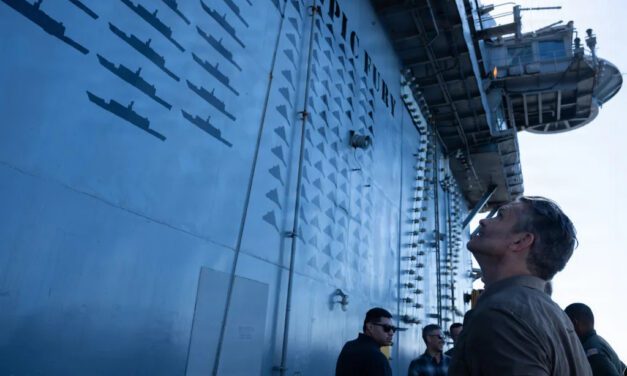
The Techne–Phronesis Negotiation Framework™ (TPNF): USS Abraham Lincoln – The Drone and Ship Kill Marks Visualize the Role the Lincoln Carrier Strike Group Played in the War with Iran By Nikos Chatzis / Goal Consulting
This TPNF essay examines the operational significance of the Abraham Lincoln Carrier Strike Group during Operation Epic Fury and evaluates its achievements through TPNF. It explores carrier aviation, unmanned aerial threats, layered defense, operational endurance and the relationship between battlefield success and strategic outcomes.
Read More

The Techne–Phronesis Negotiation Framework™ (TPNF): Negotiation as the Dynamic Mechanism for Achieving Strategic Adaptation and Future Value Creation By Nikos Chatzis / Goal Consulting
This essay demonstrates that negotiation is no longer a discrete event occurring at the end of decision-making. Rather, it is a continuous strategic capability that enables adaptation, innovation, resilience, and cooperation across complex adaptive systems. The Techne–Phronesis Negotiation Framework™ (TPNF) explains negotiation as the strategic process that transforms technological capability and systems understanding into adaptive leadership and long-term value creation.
Read More
The Techne–Phronesis Negotiation Framework™: An Integrated Strategic Framework for Technological Civilization by Nikos Chatzis / Goal Consulting
This essay argues that The Techne–Phronesis Negotiation Framework™ constitutes an integrated strategic framework for technological civilization. By combining Technology (Techne), Systems Thinking, Strategic Wisdom (Phronesis), Strategic Negotiation, and Platform Ecosystems into a coherent strategic architecture, the framework explains how leaders can create resilient innovation, adaptive institutions, and sustainable long-term value in an increasingly interconnected world.
Read More
Περισσότερα Άρθρα

ΒΙΒΛΙΑ-ΓΕΩΠΟΛΙΤΙΚΗ: ΣΥΓΓΡΑΦΙΚΟ ΕΡΓΟ ΝΙΚΟΣ ΧΑΤΖΗΣ
Νίκος Χατζής, Γεωπολιτική Ο ΜΕΓΑΛΟΣ ΑΔΕΛΦΟΣ ΚΑΙ Ο ΚΟΣΜΟΣ ΤΟΥ ΜΙΑ ΔΙΑΔΡΟΜΗ ΔΗΜΟΣΙΟΓΡΑΦΙΚΩΝ ΚΕΙΜΕΝΩΝ...
Read More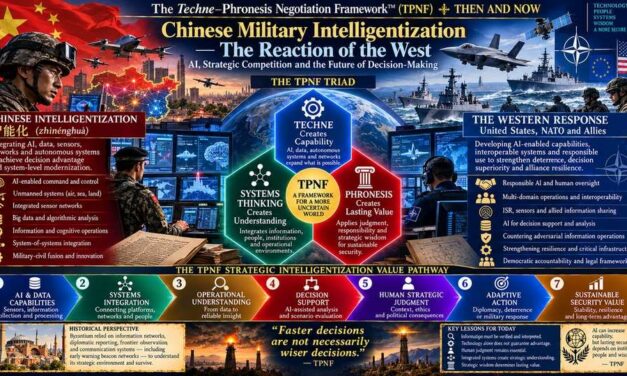
The Techne–Phronesis Negotiation Framework™ (TPNF): Analyzing the Chinese Term of Intelligentization — The Reaction of the West… By Nikos Chatzis / Goal Consulting
This TPNF essay examines the meaning of Chinese military intelligentization, its relationship to the People’s Liberation Army’s modernization, and the responses emerging within the United States and NATO. It evaluates whether intelligentization represents a technological revolution, an organizational transformation or a new form of strategic competition.
Read More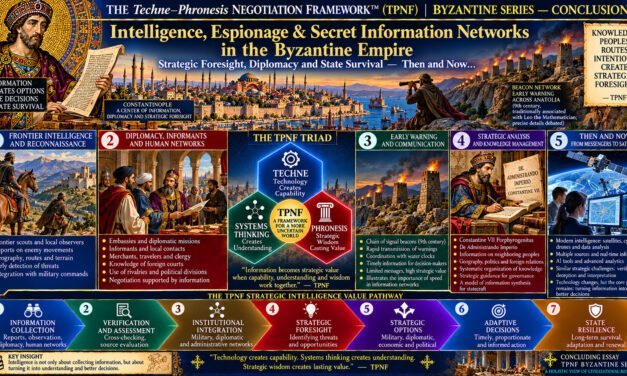
The Techne–Phronesis Negotiation Framework™ (TPNF): Intelligence, Espionage & Secret Information Networks in the Byzantine Empire — Strategic Foresight, Diplomacy and State Survival, Then and Now… By Nikos Chatzis / Goal Consutling
This concluding TPNF essay examines Byzantine intelligence practices and their relationship with diplomacy, military preparedness and political survival. It investigates how information moved through institutional networks and how rulers attempted to convert knowledge into strategic advantage.
It also brings together the technological, institutional and philosophical dimensions explored throughout the Byzantine Series.
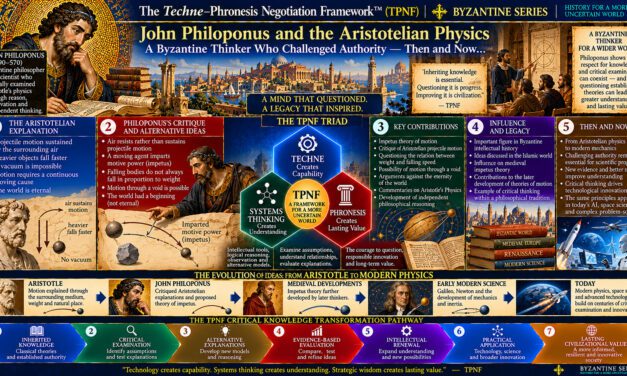
The Techne–Phronesis Negotiation Framework™ (TPNF): Thinkers in the Byzantine Empire – John Philoponus and Aristotelian Physics: Then and Now… By Nikos Chatzis / Goal Consulting
This twelfth essay in the TPNF Byzantine Series examines John Philoponus’s contributions to natural philosophy, particularly his criticism of Aristotelian theories of motion. It explores how inherited scientific knowledge can become the foundation for intellectual innovation rather than unquestioned authority. The essay also investigates functional parallels between Philoponus’s reasoning and contemporary scientific inquiry, technological development and strategic decision-making.
Read More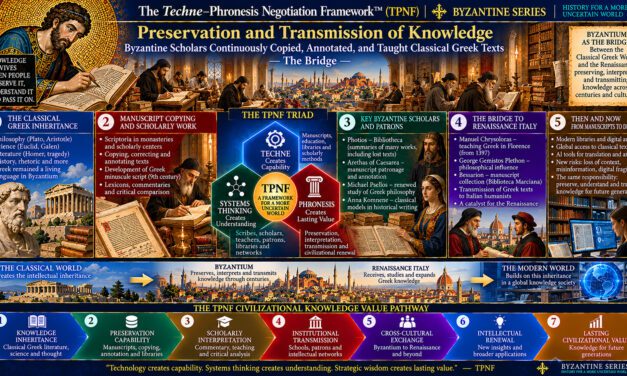
The Techne–Phronesis Negotiation Framework™ (TPNF): Preservation and Transmission of Knowledge – Byzantine Scholars Continuously Copied, Annotated, and Taught Classical Greek Texts: The Bridge By Nikos Chatzis / Goal Consulting
This eleventh essay in the TPNF Byzantine Series examines how knowledge survived through scholarly activity, educational institutions and manuscript transmission. It explores the contribution of Byzantine intellectuals to the preservation of classical Greek philosophy, science and literature. It also investigates the strategic importance of transmitting knowledge across institutional, geographical and political boundaries.
Read More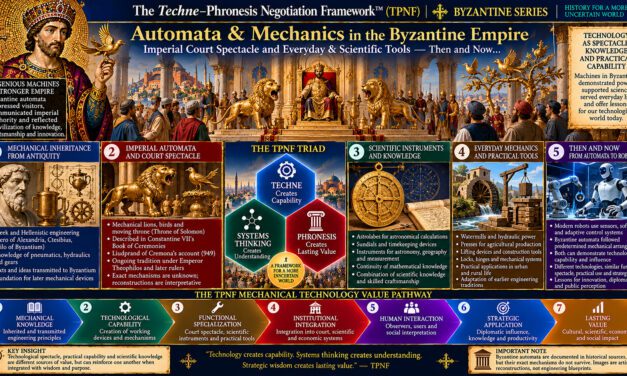
The Techne–Phronesis Negotiation Framework™ (TPNF): Automata & Mechanics in the Byzantine Empire – Imperial Court Spectacle and Everyday & Scientific Tools: Then and Now… By Nikos Chatzis / Goal Consulting
This tenth essay in the TPNF Byzantine Series examines mechanical technologies through three interconnected dimensions: imperial spectacle, scientific instrumentation and practical applications.
It investigates the relationship between inherited engineering knowledge, Byzantine craftsmanship and political communication. It also explores functional parallels with contemporary robotics, automation and technologically mediated demonstrations of power.