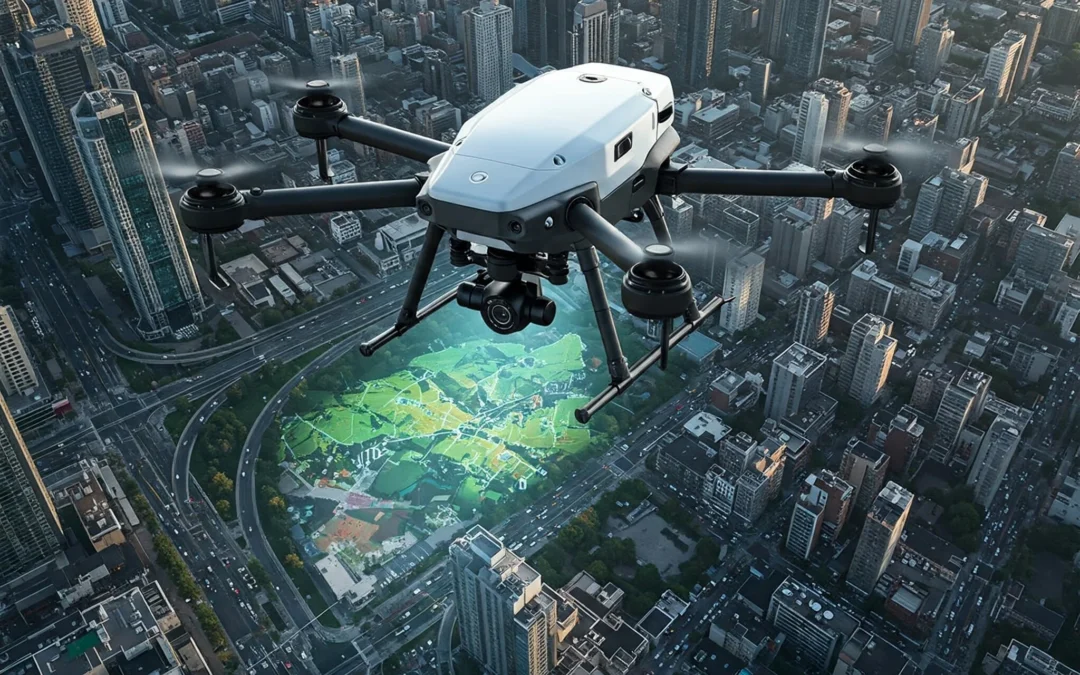
The global drone industry has evolved from a niche aerospace segment into one of the most dynamic technology ecosystems of the twenty-first century. Unmanned Aircraft Systems (UAS), including small Unmanned Aircraft Systems (sUAS), commercial drones, tactical military drones, and Medium Altitude Long Endurance (MALE) platforms, now play an increasingly important role in economic development, national security, infrastructure management, environmental monitoring, logistics, agriculture, and intelligence gathering.
The industry’s future will be shaped by five principal drivers:
Artificial Intelligence and autonomy.
Geopolitical competition.
Integration into civilian airspace.
Defense modernization.
Data-driven business models.
The next five years are likely to witness a transformation comparable to the early development of the internet ecosystem, where value creation increasingly shifts from hardware toward software, services, data analytics, and integrated operational platforms.
China: The Global Manufacturing Powerhouse
China remains the dominant producer of commercial and consumer drones. Companies such as DJI have established overwhelming leadership in global small-drone manufacturing, controlling a substantial share of the commercial and prosumer markets.
China’s strengths include:
Massive manufacturing scale.
Vertical supply-chain integration.
Battery technology leadership.
Rapid prototyping capability.
Strong government support.
Commercial UAV revenues in China are projected to grow rapidly through 2030, supported by agriculture, infrastructure inspection, smart-city applications, logistics, and industrial monitoring. Forecasts indicate annual growth approaching 20% in some segments.
Investment Profile
Chinese investment focuses on:
swarm technologies,
autonomous navigation,
AI-enabled systems,
logistics drones,
urban air mobility,
dual-use military-civilian technologies.
Relative Valuation
China dominates low-cost and medium-cost drone production. Its competitive advantage lies in manufacturing efficiency rather than premium margins.
Outlook 2026–2031
China will likely remain the world’s largest producer of commercial drones while simultaneously expanding military UAV exports throughout Asia, Africa, Latin America, and the Middle East.
United States and North America: Innovation and Defense Leadership
The United States dominates the high-value segment of the global UAV market.
While China leads commercial drone manufacturing, the United States remains the leader in:
MALE systems,
HALE systems,
military UAV technology,
autonomy software,
aerospace innovation,
venture-capital investment.
Companies such as AeroVironment, General Atomics, Anduril, Shield AI, Skydio, and numerous defense startups are attracting substantial investment.
Market Characteristics
The North American market increasingly emphasizes:
secure supply chains,
domestic manufacturing,
counter-UAS technologies,
AI-enabled autonomy,
defense applications.
Relative Valuation
American firms generally command higher valuations than Chinese manufacturers because investors place greater value on:
software,
AI capabilities,
defense contracts,
intellectual property.
Outlook 2026–2031
The United States is expected to remain the global leader in high-end UAV systems, especially MALE and autonomous military platforms.
The most significant growth may actually occur in:
drone software,
mission management systems,
AI decision-support tools,
counter-drone technologies.
Europe: The Regulatory and Integration Leader
Europe’s competitive advantage lies neither in manufacturing scale nor military dominance.
Instead, Europe leads in:
regulatory frameworks,
airspace integration,
certification,
safety standards,
commercial drone operations.
The European market continues to expand rapidly. Estimates suggest that commercial drone activities could nearly double by 2030 depending on market definitions.
Key Industrial Players
Europe hosts major UAV actors including:
Airbus
Leonardo
Thales
*Baykar
Investment Trends
Investment focuses on:
U-space infrastructure,
drone traffic management,
inspection services,
environmental monitoring,
energy infrastructure,
public safety applications.
Outlook 2026–2031
Europe will likely become the world’s most sophisticated operational drone environment.
The greatest opportunities will emerge not from hardware manufacturing but from:
services,
software,
geospatial analytics,
industrial applications.
*Recent cooperation between Leonardo and Baykar illustrates Europe’s growing effort to strengthen indigenous UAV production capabilities.
The Balkans: Emerging Regional Competitor
The Balkans are becoming increasingly relevant because of:
lower production costs,
growing engineering capabilities,
defense modernization,
strategic geography.
The most advanced drone producer in the region is clearly Turkey.
Turkish manufacturers, especially Baykar, have demonstrated how a regional actor can become a global exporter through innovation, operational validation, and aggressive international marketing.
Regional Characteristics
The Balkans increasingly serve as:
testing grounds,
production hubs,
innovation clusters,
defense technology ecosystems.
Countries such as Greece, Romania, Serbia, Bulgaria, and Croatia are investing more heavily in indigenous drone capabilities.
Greece: From Consumer Market to Drone Ecosystem
Greece’s drone market remains relatively small compared with larger European states.
However, the country possesses several advantages:
strong engineering talent,
growing defense investment,
geostrategic location,
maritime applications,
environmental monitoring needs,
wildfire management requirements.
Current Ecosystem
Companies and institutions are active in:
UAV training,
geospatial technologies,
photogrammetry,
mapping,
defense innovation,
academic research.
Examples include organizations such as GeoSense and several university-linked research initiatives.
Defense-Led Growth
Recent developments indicate that Greece is attempting to create a domestic UAV industry.
Projects include:
Archytas,
LOTUS,
Kerveros,
Centauros anti-drone systems.
The Greek government has incorporated drones and counter-drone systems into broader defense modernization programs.
Investment Characteristics
Greek investment is increasingly concentrated in:
ISR drones,
anti-drone technologies,
border surveillance,
maritime monitoring,
civil protection,
wildfire detection.
Defense-Led Growth
The next five years may represent the most important period in the history of the Greek drone sector.
The country is attempting to move from:
drone consumer to drone producer.
Success will depend on:
export capability,
university-industry cooperation,
venture investment,
participation in European programs,
strategic partnerships.
MALE UAVs: The Most Strategic Segment
MALE (Medium Altitude Long Endurance) systems occupy the highest-value segment of the UAV market.
Examples include:
MQ-9 Reaper
Bayraktar Akıncı
MALE platforms are expensive, technologically sophisticated, and heavily influenced by geopolitical considerations.
This segment will experience sustained growth due to:
border security,
maritime surveillance,
intelligence missions,
defense modernization.
The global drone industry is transitioning from a hardware-driven market to a technology ecosystem driven by data, autonomy, software, and international cooperation.
China will likely remain the dominant manufacturer.
The United States will retain leadership in advanced military and AI-enabled systems.
Europe will lead operational integration and regulatory innovation.
The Balkans will emerge as an increasingly important regional production and innovation zone.
Greece possesses a unique opportunity to leverage its geopolitical position, engineering talent, academic institutions, and defense investments to establish itself as a specialized drone technology hub in Southeastern Europe.
Over the next five years, the greatest value creation will not come from selling aircraft alone. It will come from creating integrated ecosystems that combine drones, geospatial intelligence, artificial intelligence, communications networks, training, regulatory compliance, and international partnerships.
The future winners will be those capable of connecting technology, industry, policy, and cooperation into a single operational framework.
Source: Open Sources & Relative Data Valuation -Nikos Chatzis
© 2026 Nikolaos Chatzis – negotiation.gr. All Rights Reserved. No part of this publication may be reproduced, distributed, or transmitted without prior written permission, except for brief quotations with proper attribution.