Negotiation.gr | Strategic Wisdom for the Technological Age
Central Thesis
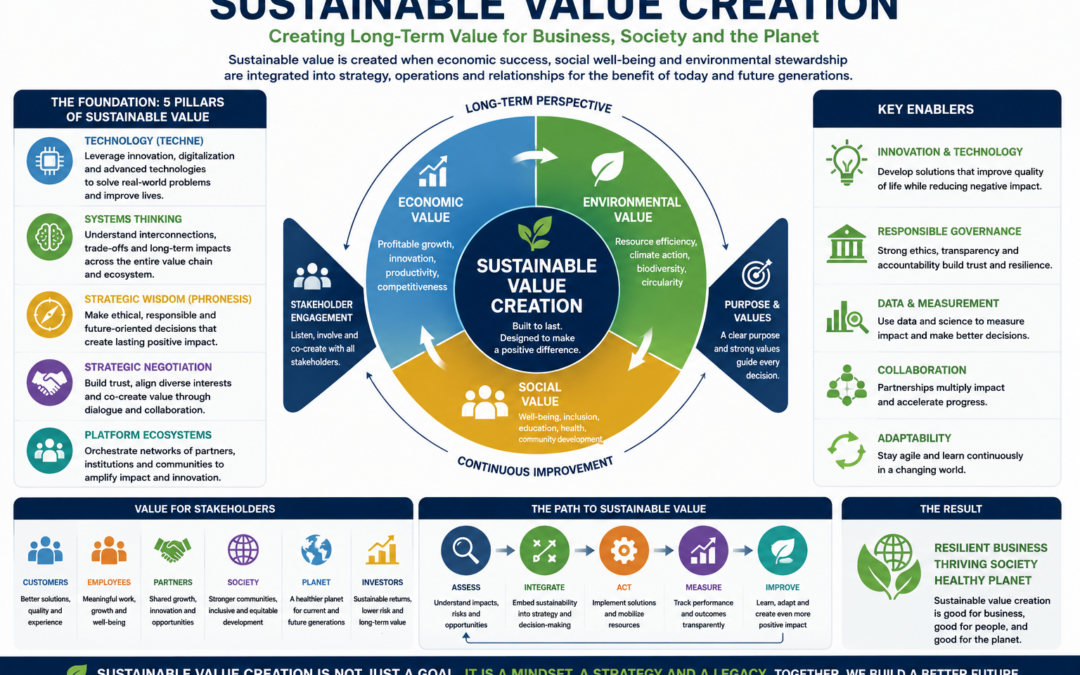
Platform Ecosystems create strategic advantage by transforming individual technological capabilities into coordinated capabilities. Through Systems Thinking, Strategic Wisdom, and Strategic Negotiation, these coordinated capabilities generate resilient innovation, continuous learning, and sustainable value that no single organization could achieve independently. The Techne–Phronesis Negotiation Framework™ explains this transformation as the defining mechanism of technological civilization.
Abstract
Technological civilization is changing the foundations of competitive advantage. Artificial Intelligence, robotics, drones, cloud computing, digital platforms, Geospatial Intelligence (GEOINT), and advanced communications have created unprecedented technological capabilities. Yet technological capability alone does not generate lasting leadership. Sustainable advantage increasingly emerges when diverse capabilities are coordinated through platform ecosystems that connect organizations, technologies, institutions, knowledge, and people into adaptive networks of continuous innovation. This essay argues that The Techne–Phronesis Negotiation Framework™ explains how Platform Ecosystems transform coordinated capabilities into resilient innovation and sustainable value by integrating Technology (Techne), Systems Thinking, Strategic Wisdom (Phronesis), and Strategic Negotiation into a unified ecosystem perspective.
Introduction
The Human–Technology Revolution has fundamentally changed the meaning of organizational capability.
In previous industrial models, competitive advantage depended primarily on the internal strengths of individual organizations.
Today, leadership increasingly depends upon the ability to coordinate capabilities distributed across entire ecosystems.
Technology companies collaborate with universities.
Governments cooperate with industry.
Research institutions share knowledge with startups.
Investors accelerate innovation.
Users contribute continuous feedback.
Competitive advantage therefore becomes an ecosystem achievement rather than an organizational accomplishment.
From Individual Capability to Coordinated Capability
Every organization possesses valuable resources.
However, no organization possesses all the knowledge, technologies, talent, capital, regulatory authority, and market access required to address the complexity of technological civilization.
Platform Ecosystems overcome this limitation by coordinating complementary capabilities.
Technology developers contribute innovation.
Universities generate research.
Governments establish governance frameworks.
Industry commercializes solutions.
Investors finance growth.
Users continuously improve products and services through participation and feedback.
Coordination transforms isolated strengths into collective capability.
Systems Thinking Explains Ecosystem Integration
Systems Thinking reveals that ecosystem performance depends less on the excellence of individual participants than on the quality of their relationships.
Information flows rapidly.
Knowledge circulates continuously.
Feedback accelerates learning.
Trust strengthens collaboration.
Adaptive governance improves resilience.
The ecosystem therefore behaves as a living, evolving system rather than a collection of independent organizations.
Understanding these interdependencies enables leaders to strengthen the entire ecosystem instead of optimizing only individual institutions.
The Role of Strategic Wisdom
Technological capability expands what organizations can accomplish.
Strategic Wisdom determines why and how those capabilities should be employed.
Phronesis aligns innovation with long-term societal benefit, ethical responsibility, sustainability, and resilience.
Without wisdom, ecosystems may become technologically sophisticated while losing strategic coherence.
Strategic Wisdom therefore transforms coordination into purposeful progress.
Strategic Negotiation as the Coordination Mechanism
Platform Ecosystems depend upon continuous negotiation.
Organizations negotiate standards.
Governments negotiate regulatory frameworks.
Industries negotiate partnerships.
Universities negotiate research collaboration.
International organizations negotiate interoperability.
Strategic Negotiation therefore functions as the governance mechanism through which diverse stakeholders coordinate interests, resolve differences, build trust, and create shared value.
Negotiation transforms diversity into cooperation.
Platform Ecosystems and Resilient Innovation
Innovation becomes resilient when it no longer depends upon isolated breakthroughs.
Instead, continuous innovation emerges through:
- interdisciplinary collaboration,
- rapid learning,
- knowledge sharing,
- ecosystem adaptation,
- distributed experimentation,
- coordinated leadership.
Resilient ecosystems recover more quickly from disruption because knowledge, capability, and decision-making are distributed rather than concentrated.
Resilience becomes a strategic capability.
Sustainable Value Creation
The ultimate purpose of Platform Ecosystems extends beyond technological innovation.
Their objective is to create sustainable value for:
- organizations,
- governments,
- investors,
- researchers,
- citizens,
- future generations.
Long-term value emerges when technological progress is aligned with responsible governance, collaborative leadership, economic competitiveness, and societal well-being.
This represents the practical application of The Techne–Phronesis Negotiation Framework™.
Platform Ecosystems represent the strategic environment of technological civilization.
Their greatest contribution is not merely connecting organizations.
It is transforming individual capabilities into coordinated capabilities capable of generating resilient innovation and sustainable value.
The Techne–Phronesis Negotiation Framework™ explains this transformation through five complementary dimensions.
Technology (Techne) creates capability.
Systems Thinking creates understanding.
Strategic Wisdom provides direction.
Strategic Negotiation creates alignment.
Platform Ecosystems integrate these capabilities into resilient networks that continuously innovate, adapt, and create long-term value.
In the twenty-first century, strategic leadership will increasingly belong not to organizations possessing the greatest individual capabilities, but to ecosystems capable of coordinating those capabilities most effectively for the benefit of society.
Source: Open Sources Analysis, Relative Data Analysis by Nikos Chatzis
© Nikolaos Chatzis. The Techne–Phronesis Negotiation Framework™
Technology Creates Capability • Systems Thinking Creates Understanding • Strategic Wisdom Creates Lasting Value.
Negotiation.gr | Strategic Wisdom for the Technological Age