
by Nikos Chatzis | 15 Jul, 2026 | Ecosystem Dynamics, Ecosystem Governance, Ecosystem Strategy, Ecosystem Thinking, Logistics, Strategic Governance, Strategic Leadership, Strategic Management, Strategic Resilience, The Techne–Phronesis Negotiation Framework™
The purpose of this essay is to explain how logistics is evolving into a multidimensional strategic ecosystem connecting technology, governance, infrastructure, supply chains, innovation, and geopolitics. The Techne–Phronesis Negotiation Framework™ (TPNF) argues that future logistics should no longer be understood simply as the management of physical flows, but as the orchestration of interconnected technological and institutional ecosystems that create resilience, adaptability, and sustainable strategic value. The evolution of logistics therefore reflects the broader evolution of contemporary technological civilization.
by Nikos Chatzis | 14 Jul, 2026 | Geopolitics, Robotics, Strategic Governance, Strategic Leadership, The Techne–Phronesis Negotiation Framework™, War Robotis
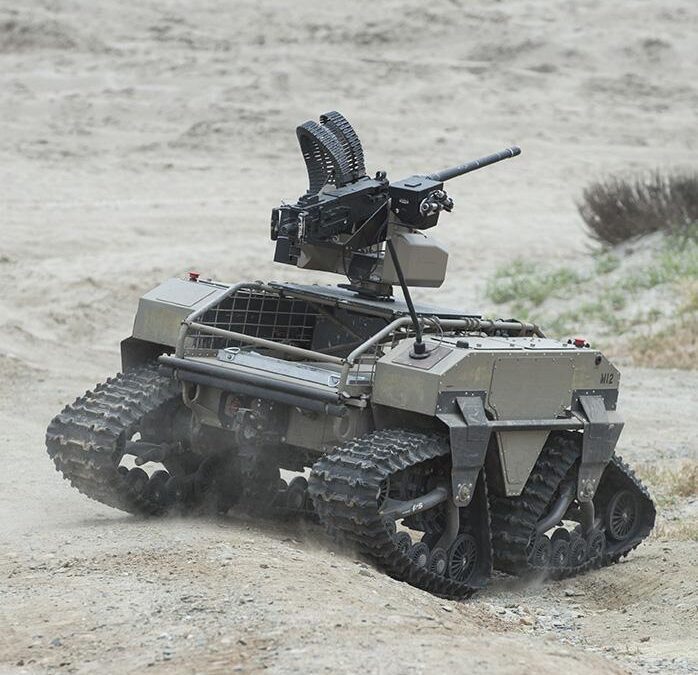
The deployment of an armed ground robot from an unmanned naval platform during combat represents more than a technological milestone; it signals the emergence of a new paradigm in warfare. Autonomous systems increasingly operate across land, sea, air, cyberspace, and the electromagnetic spectrum as interconnected ecosystems rather than isolated platforms. The Techne–Phronesis Negotiation Framework™ (TPNF) argues that this transformation reflects the evolution of Revolutionary War Robotics, where technical capability (techne), practical wisdom (phronesis), systems thinking, and adaptive strategic negotiation collectively shape the future of military innovation, strategic resilience, and responsible governance. The purpose of this essay is to examine how recent battlefield developments illustrate a broader transformation in military affairs.

by Nikos Chatzis | 14 Jul, 2026 | Strategic Governance, The Techne–Phronesis Negotiation Framework™
The Techne–Phronesis Negotiation Framework™ (TPNF) argues that institutional resilience emerges through the integration of technical capability (techne), practical wisdom (phronesis), systems thinking, and adaptive strategic negotiation. Institutions that successfully transform these capacities into governance practices will be better equipped to sustain legitimacy, innovation, and long-term strategic value in complex technological civilizations. The purpose of this essay is to explain why institutional transformation has become a strategic imperative for governments, international organizations, businesses, universities, and public institutions. It argues that future governance depends less on hierarchical control than on adaptive learning, interdisciplinary collaboration, technological capability, and resilient institutional ecosystems. Through the TPNF, institutions are understood as complex adaptive systems whose effectiveness depends upon their capacity to negotiate change, integrate innovation, and continuously evolve.

by Nikos Chatzis | 12 Jul, 2026 | strategic autonomy, Strategic Governance, Strategic Leadership, Strategic Management, Strategic Thinking, Strategic Wisdom, The Techne–Phronesis Negotiation Framework™
Techne–Phronesis Negotiation Framework™ (TPNF) proposes a meta-framework for strategic governance that integrates technical capability (techne), practical wisdom (phronesis), systems thinking, and adaptive negotiation into a unified approach for managing complexity. Rather than replacing existing governance structures, the TPNF provides an overarching architecture that connects diverse institutional processes, strengthens strategic resilience, and enables continuous adaptation within international organizations.