by Nikos Chatzis | 5 Oct, 2026 | Ancient Greek Philosophy, Strategic Governance, Strategic Leadership, Technology Evolution, The Techne–Phronesis Negotiation Framework™
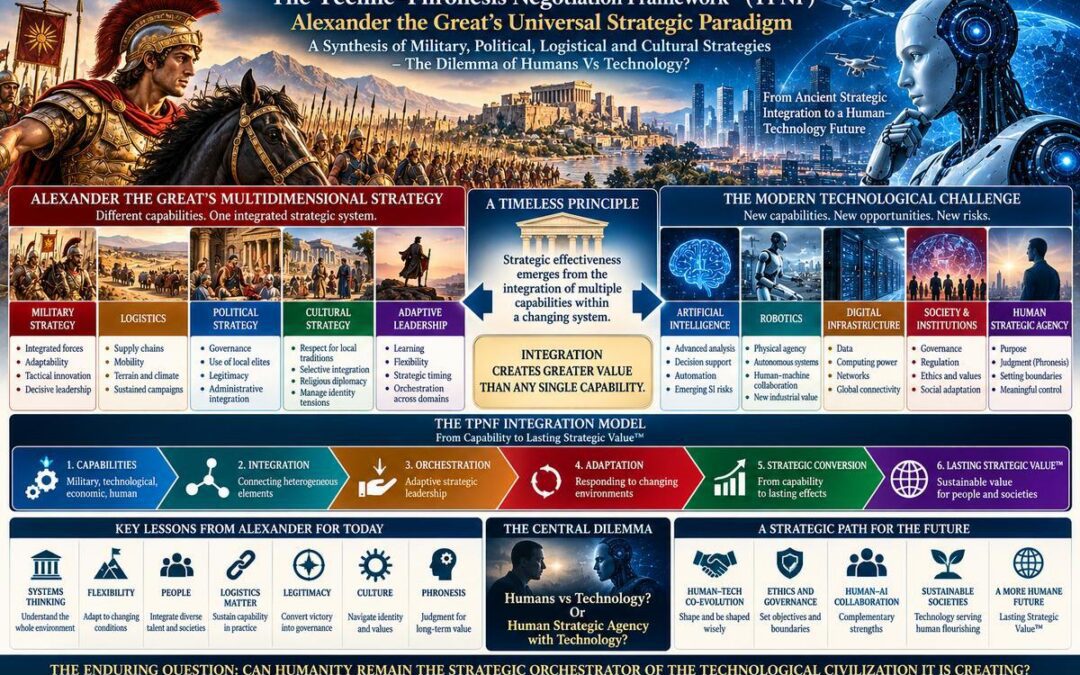
This TPNF essay does not argue that Alexander developed a timeless strategic formula applicable directly to modern technology. Nor does it idealize his empire or ignore its violence and contradictions.
Instead, Alexander provides a historical case through which TPNF can examine a broader principle:
Strategic effectiveness emerges from the integration of multiple capabilities within a changing system.
The modern dilemma of Humans versus Technology may therefore be incorrectly formulated.
The deeper question is whether humanity can remain the strategic orchestrator of the technological ecosystem it is creating.
by Nikos Chatzis | 30 Sep, 2026 | Ancient Greek Philosophy, Ecosystem Dynamics, Ecosystem Strategy, Ecosystem Thinking, Tech Sovereignty, Technological Civilization, The Techne–Phronesis Negotiation Framework™
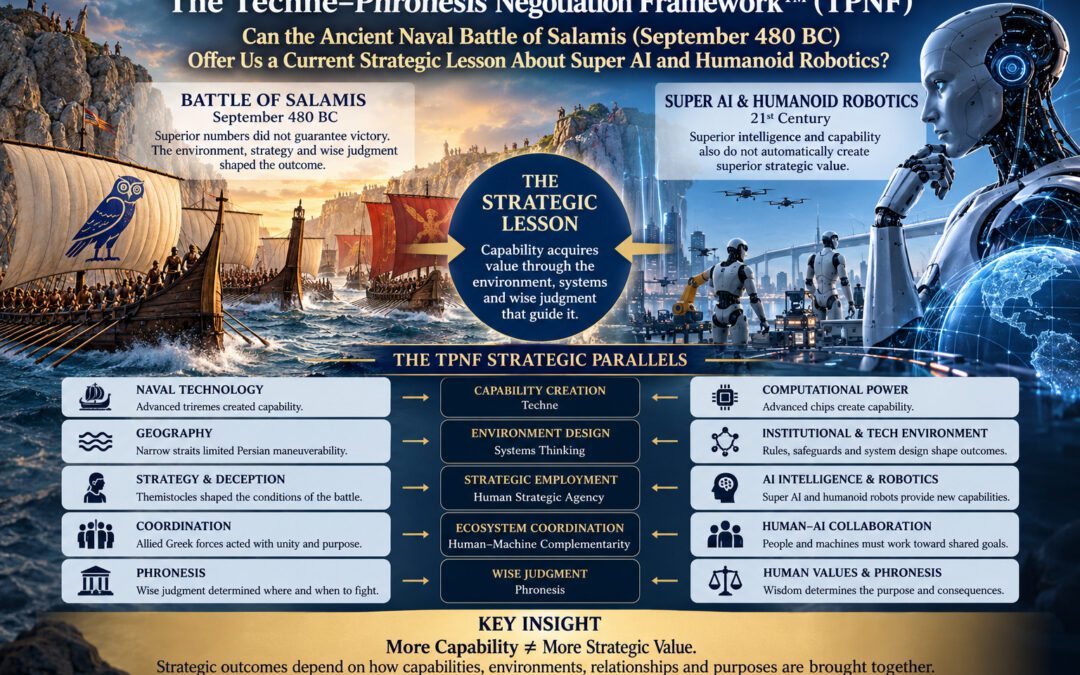
This TPNF essay does not compare Persian ships with robots or Themistocles with Artificial Intelligence. Instead, it uses Salamis as a strategic analogy. The purpose is to examine whether an ancient lesson about capability, systems, environmental constraints and human judgment can illuminate the emerging relationship between humans, Super AI and humanoid robotics.
by Nikos Chatzis | 24 Sep, 2026 | Ancient Greek Philosophy, Geopolitics, The Techne–Phronesis Negotiation Framework™, War
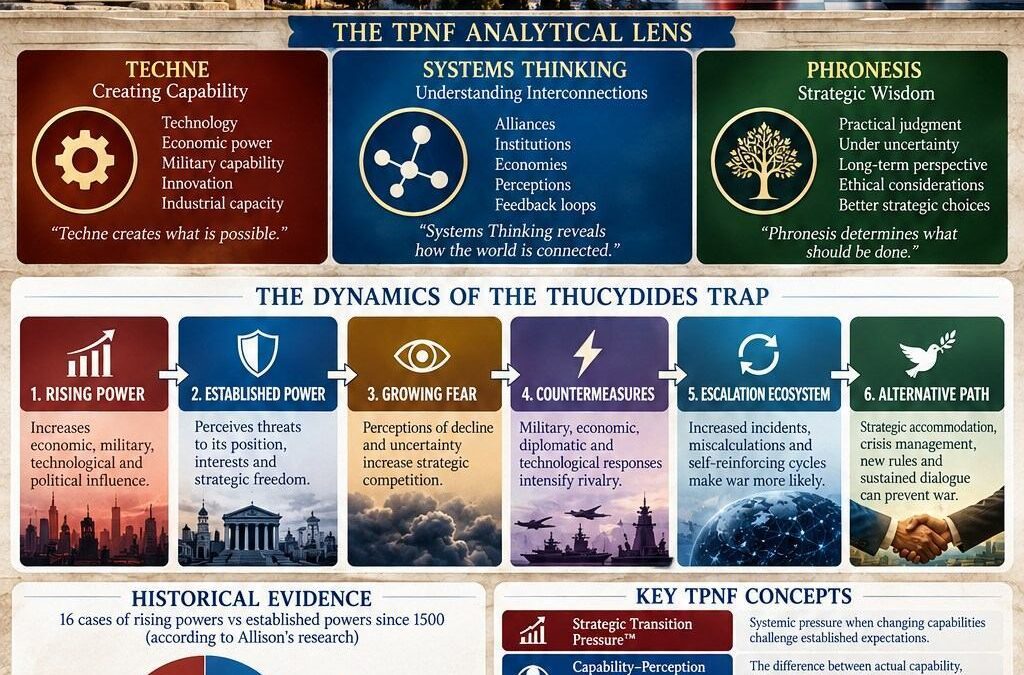
This essay examines the Thucydides Trap through TPNF and asks whether great-power transitions should be understood as predetermined pathways toward war or as complex adaptive processes whose outcomes remain influenced by strategic judgment. The argument is that structural pressure creates strategic risk—but Phronesis determines how actors respond to that risk.
by Nikos Chatzis | 23 Sep, 2026 | Ancient Greek Philosophy, The Techne–Phronesis Negotiation Framework™
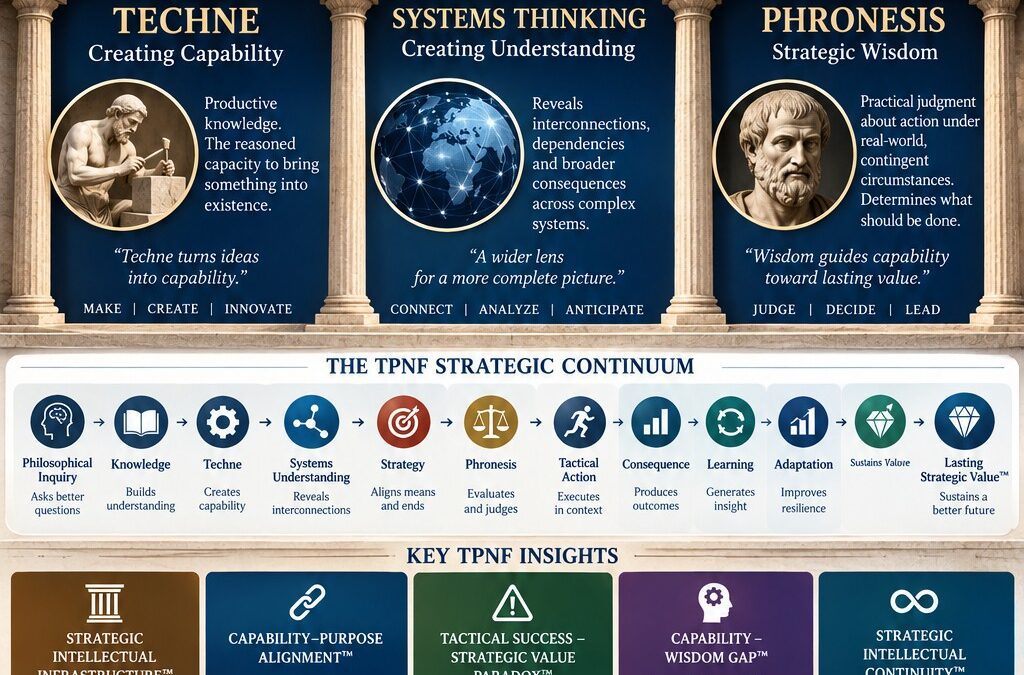
This TPNF essay examines ancient Greek philosophy not as historical nostalgia but as Strategic Intellectual Infrastructure™: accumulated ways of reasoning that help civilizations understand capability, uncertainty, choice and consequence. Its central argument is that strategy and tactics become meaningful only when connected to deeper philosophical questions concerning knowledge, judgment, purpose and value.
by Nikos Chatzis | 6 Aug, 2026 | Ancient Greek Philosophy, Strategic Theory, Strategic Thinking, Strategic Wisdom, The Techne–Phronesis Negotiation Framework™
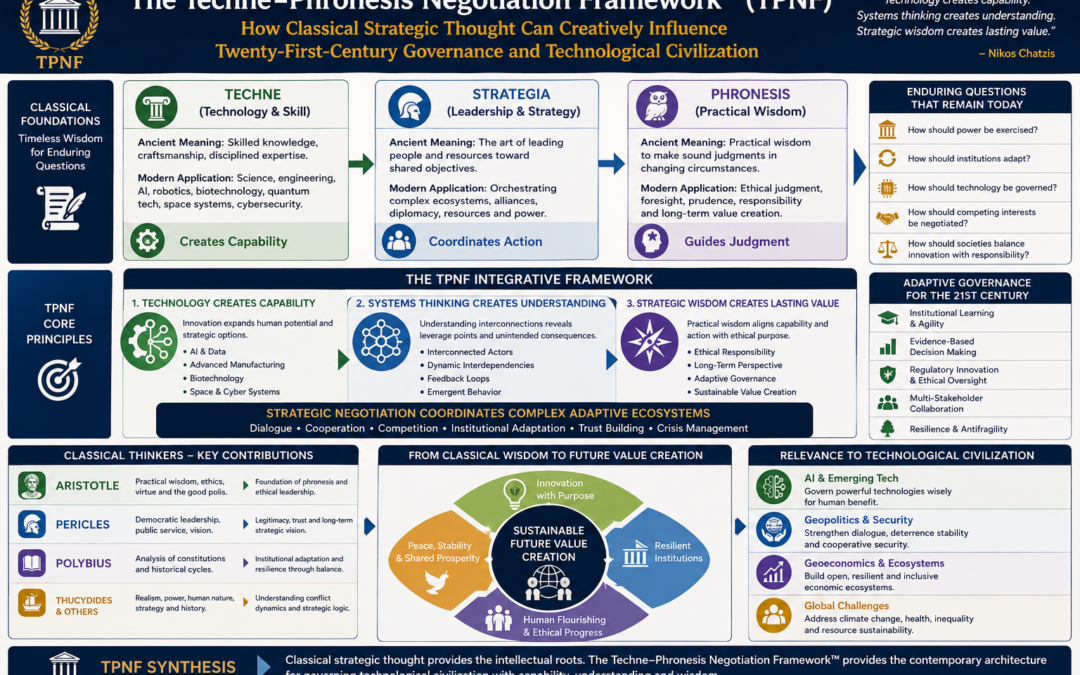
This essay examines how classical strategic thought can contribute creatively to contemporary governance and technological civilization. Through the analytical perspective of the Techne–Phronesis Negotiation Framework™ (TPNF), it argues that the wisdom of classical thinkers should not be regarded merely as historical heritage but as an active intellectual resource for understanding and governing complex technological ecosystems.
by Nikos Chatzis | 5 Aug, 2026 | Ancient Greek Philosophy, Ancient Greek Philosopphy, The Techne–Phronesis Negotiation Framework™
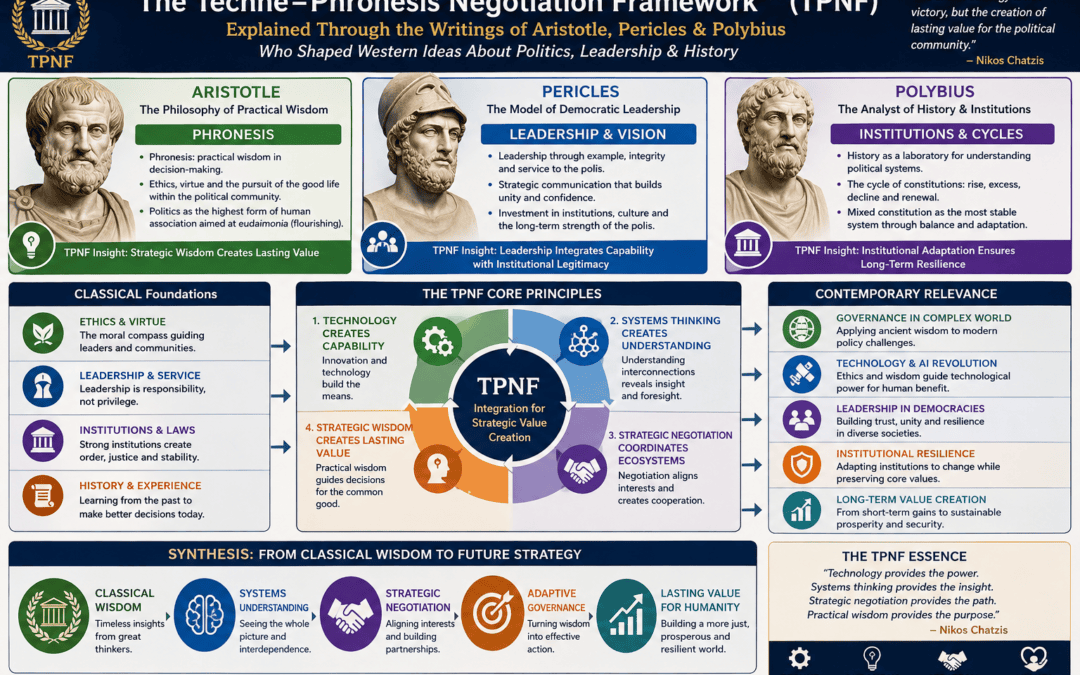
This essay explores how Aristotle’s philosophy of practical wisdom, Pericles’ vision of democratic leadership, and Polybius’ analysis of political systems and historical cycles collectively illuminate the theoretical foundations of the Techne–Phronesis Negotiation Framework™ (TPNF). It argues that these classical thinkers provide complementary perspectives that help explain strategic adaptation, governance, institutional resilience, and long-term value creation in the twenty-first century.