Negotiation.gr | Strategic Wisdom for the Technological Age
“Strategic resilience emerges when technical capability (techne) is
continuously guided by practical wisdom (phronesis) through adaptive
negotiation across interconnected systems.”
Central Idea (Thesis)
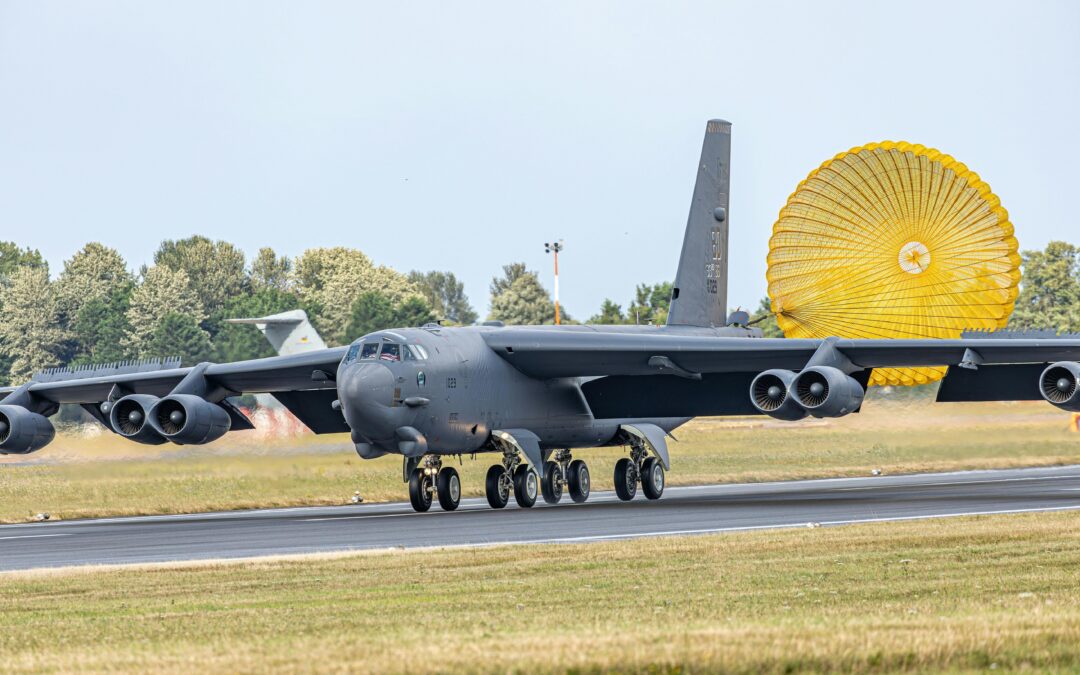
Integrating the AGM-158C Long Range Anti-Ship Missile (LRASM) into the U.S. Air Force’s B-52 Stratofortress represents more than an aircraft-weapons modernization initiative.
It potentially transforms an established strategic bomber into an additional long-range maritime strike platform, strengthening conventional deterrence and operational flexibility.
However, through the Techne–Phronesis Negotiation Framework™ (TPNF), technological integration does not automatically produce strategic value.
The central proposition is that lasting defense value emerges when new weapons capabilities are integrated into effective operational ecosystems, supported by sustainable resources and governed by strategic wisdom.
Purpose of the Essay
This TPNF essay evaluates the proposed B-52–LRASM integration through the TPNF analytical framework.
It examines the relationship among technological capability, defense modernization, maritime deterrence, operational coordination and long-term strategic outcomes.
Its objective is to distinguish successful weapons integration from sustainable defense value creation.
Abstract
On October 7, 2026, the U.S. Naval Air Systems Command announced its intention to negotiate a contract with Lockheed Martin for LRASM integration support on the B-52.
The initiative could expand the U.S. Air Force’s capacity to conduct long-range anti-ship operations, particularly in geographically demanding maritime theaters.
Yet its effectiveness will depend upon technical certification, intelligence support, logistics, fleet availability and operational coordination.
TPNF suggests that the strategic significance of this development lies not simply in combining a bomber and missile, but in connecting their capabilities within a resilient defense ecosystem.
Introduction: An Old Bomber, a New Maritime Role
The B-52 Stratofortress is among the most enduring military aircraft in operational service.
Originally developed during the early Cold War, it has remained relevant through successive generations of weapons, sensors and operational concepts.
Its longevity demonstrates the potential value of adaptable military platforms.
The AGM-158C LRASM introduces a different technological generation.
Developed from the Joint Air-to-Surface Standoff Missile family, LRASM is designed to engage maritime targets in contested environments.
Integrating this weapon with the B-52 could combine the bomber’s long-range endurance and substantial payload capacity with a specialized anti-ship capability.
The strategic question, however, extends beyond technical compatibility.
The October 2026 Integration Initiative
NAVAIR’s October 7 notice identifies anticipated work involving missile software updates, associated testing, test asset repair and failure review boards.
The notice establishes an intended acquisition direction rather than an operationally fielded capability.
The B-52 already possesses substantial conventional weapons capacity, including carriage arrangements for up to 20 JASSM-family missiles.
Because LRASM shares important characteristics with that family, analysts have discussed the possibility of a comparable loadout.
Nevertheless, actual LRASM carriage configurations, certification and operational employment must be established through integration and testing.
This distinction is fundamental.
Potential weapons capacity is not equivalent to demonstrated operational capability.
Techne: Creating New Military Capability
The first TPNF dimension states:
Technology Creates Capability.
LRASM offers the prospect of engaging hostile surface vessels from standoff distances, reducing reliance on aircraft operating close to heavily defended naval formations.
The B-52 contributes range, payload capacity and operational flexibility.
Together, these characteristics could expand the options available to U.S. commanders.
Such integration also illustrates technological adaptation.
Rather than replacing every established platform, defense organizations can introduce new weapons and digital systems to extend the usefulness of existing assets.
However, weapons integration requires more than physical compatibility.
Software interfaces, safety certification, mission planning, maintenance arrangements and operational testing determine whether the combined system performs reliably.
Technological capability therefore emerges from successful integration, not merely acquisition.
Systems Thinking: The Maritime Strike Ecosystem
The second TPNF dimension states:
Systems Thinking Creates Understanding.
A long-range anti-ship missile does not operate independently of its surrounding defense ecosystem.
Its effectiveness depends upon reliable maritime intelligence, target identification, communications, mission planning and coordinated operational decision-making.
The B-52 itself depends upon air bases, maintenance organizations, trained crews, logistics and supporting aircraft.
Consequently, the strategic value of LRASM integration cannot be assessed exclusively through missile performance or bomber payload.
It must be evaluated through the relationships connecting these components.
An advanced missile provides limited operational value if intelligence is insufficient, aircraft availability is constrained or logistical support cannot sustain deployments.
Conversely, effective coordination can increase the value of existing capabilities without requiring entirely new platforms.
The strategic value of a defense ecosystem derives not only from the capabilities it contains, but from its ability to connect, mobilize and convert those capabilities into effective outcomes.
The Indo-Pacific Strategic Dimension
The Indo-Pacific presents particular challenges because of its geographical scale, contested maritime spaces and the increasing sophistication of regional military capabilities.
Long-range conventional strike platforms can contribute to deterrence by complicating an adversary’s operational calculations.
A B-52 equipped with LRASM could provide another maritime strike option alongside naval aircraft, submarines, surface combatants and other bombers.
Such flexibility may strengthen the credibility of U.S. defense commitments.
However, additional strike capacity does not automatically guarantee deterrence.
Deterrence depends upon the perceived credibility of capabilities, political intentions, operational readiness and the adversary’s interpretation of risks.
Moreover, military modernization can generate competitive responses.
TPNF therefore treats deterrence as a strategic relationship rather than a simple accumulation of weapons.
B-52 Modernization and Long-Term Sustainability
The LRASM initiative forms part of a broader effort to sustain the B-52 fleet into the coming decades.
The U.S. Air Force is pursuing engine replacement, radar modernization and additional avionics and communications improvements.
These programs are intended to preserve the aircraft’s relevance through 2050 and beyond.
Yet modernization introduces substantial challenges.
A July 2026 U.S. Government Accountability Office report identified cost, schedule or performance problems across ten of thirteen B-52 modernization efforts.
The report also highlighted significant risks associated with the engine replacement program.
This evidence illustrates an important TPNF distinction.
Extending an aircraft’s operational life may create considerable value, but modernization costs and delays can undermine the expected benefits.
The appropriate measure is therefore not simply whether the B-52 can carry another weapon.
It is whether the combined modernization effort delivers reliable capabilities at an acceptable long-term cost.
The Capability–Wisdom Gap in Defense Modernization
TPNF identifies the Capability–Wisdom Gap as the difference between what technology enables and what institutions can responsibly understand, sustain and employ.
Defense modernization can widen this gap when procurement ambitions exceed logistical, financial or organizational capacity.
A technically successful integration program may still produce disappointing results if ammunition inventories are insufficient or maintenance demands reduce aircraft availability.
Similarly, impressive weapons capabilities may encourage unrealistic expectations about the political outcomes of military operations.
The Capability–Wisdom Gap therefore requires decision-makers to distinguish tactical effectiveness from strategic success.
The ability to strike an adversary’s naval forces does not automatically establish how a conflict can be prevented, controlled or concluded.
Phronesis: Strategic Wisdom and Defense Value
The third TPNF dimension states:
Strategic Wisdom Creates Lasting Value.
Ancient Greek phronesis concerns practical judgement about appropriate action under particular circumstances.
Applied to defense modernization, it requires decision-makers to evaluate technological advantages alongside operational limitations, financial sustainability and political consequences.
The B-52–LRASM initiative should therefore be assessed through several questions.
Does integration produce a meaningful capability improvement?
Can the wider defense ecosystem sustain that improvement?
Does the investment strengthen deterrence without creating disproportionate costs?
Can the capability support credible political objectives?
These questions transform procurement analysis into strategic evaluation.
The ultimate purpose of defense technology is not technological superiority as an isolated achievement.
It is the protection of legitimate security interests through sustainable and responsible power.
The TPNF Defense Value Creation Pathway
The proposed integration illustrates a broader TPNF analytical sequence:
Technological Integration → Operational Capability → Defense Ecosystem Coordination → Sustainable Readiness → Credible Deterrence → Strategic Wisdom → Long-Term Defense Value
Each stage introduces distinct requirements.
Technological integration must be verified.
Operational capability must be demonstrated.
Ecosystem coordination must connect platforms, intelligence and supporting institutions.
Sustainable readiness requires adequate maintenance, personnel and resources.
Credible deterrence depends upon political and strategic context.
Strategic wisdom determines whether the resulting military power serves achievable security objectives.
The pathway is therefore an analytical model, not a prediction of operational success.
Strategic Implications
The B-52–LRASM initiative suggests that defense modernization increasingly depends upon integrating established platforms with emerging technologies.
This approach may generate value by extending useful service lives and diversifying operational options.
However, it also creates interdependencies among weapons development, software engineering, fleet modernization and sustainment.
For defense planners, the challenge is to evaluate the complete system rather than isolated technological achievements.
For policymakers, the challenge is to connect military investment with sustainable strategic objectives.
For TPNF, the case demonstrates that technological adaptation becomes strategically valuable only when supported by effective systems and disciplined judgement.
Integrating AGM-158C LRASM missiles into the B-52 Stratofortress could strengthen U.S. long-range maritime strike capabilities.
The initiative also demonstrates the continuing adaptability of established military platforms.
Yet its long-term value remains contingent upon successful testing, operational integration, sustainable readiness and strategic effectiveness.
The TPNF triad provides the governing perspective:
Technology Creates Capability. Systems Thinking Creates Understanding. Strategic Wisdom Creates Lasting Value.
The decisive achievement will not be the integration of a missile into an aircraft.
It will be the creation of a sustainable defense capability that contributes to credible deterrence and responsible strategic outcomes.
Key Takeaways
- LRASM integration could expand the B-52’s maritime strike role.
- The October 2026 announcement concerns planned integration, not completed operational deployment.
- Weapons effectiveness depends upon the wider intelligence, logistics and operational ecosystem.
- B-52 modernization costs and delays must be included in long-term value assessments.
- Greater strike capacity does not automatically guarantee deterrence.
- Strategic wisdom connects technological investment with sustainable security objectives.
Author’s Reflection
The B-52’s remarkable longevity illustrates that technological progress does not always require replacing established systems.
Sometimes, innovation creates value by transforming the capabilities of platforms already available.
Yet military history repeatedly demonstrates that superior weapons do not automatically produce superior strategic outcomes.
The central challenge is converting technological adaptation into operational effectiveness, sustainable readiness and credible political influence.
From the perspective of TPNF, the most important question is therefore not whether the B-52 can employ LRASM.
It is whether this new capability can be governed wisely enough to create lasting defense value.
Military technology creates strategic opportunity. Only systems understanding and practical wisdom can transform that opportunity into sustainable security.
Nikolaos Chatzis
Sources and verification
The essay draws upon the following published sources, with particular attention to the distinction between planned integration and operational capability.
-
U.S. Naval Air Systems Command, October 7, 2026: LRASM B-52 Integration and Test Support — official acquisition notice, N00019-26-RFPREQ-WPM201-0237.
sam.gov -
U.S. Air Force, September 15, 2026: B-52 achieves key milestones for engine, radar modernization — modernization milestones and planned weapons integration.
af.mil -
U.S. Government Accountability Office, July 31, 2026: B-52 Bomber: Air Force Actions Needed to Improve Major Modernization and Sustainment Efforts — independent assessment of modernization costs, schedules and risks.
files.gao.gov -
Air & Space Forces Magazine, October 8, 2026: Long-Range Anti-Ship Missile Will Integrate onto B-52 — operational context and potential payload considerations.
Air & Space Forces Magazine
Source: Open Sources Analysis, Relative Data Analysis by Nikos Chatzis
© Nikolaos Chatzis. All Rights Reserved.
The Techne–Phronesis Negotiation Framework™
An Integrative Theory of Strategic Negotiation, Complex Adaptive Systems and Practical Wisdom
Technology Creates Capability • Systems Thinking Creates Understanding • Strategic Wisdom Creates Lasting Value.
Negotiation.gr | Strategic Wisdom for the Technological Age