Negotiation.gr | Strategic Wisdom for the Technological Age
“Strategic resilience emerges when technical capability (techne) is
continuously guided by practical wisdom (phronesis) through adaptive
negotiation across interconnected systems.”
Central Idea — Thesis
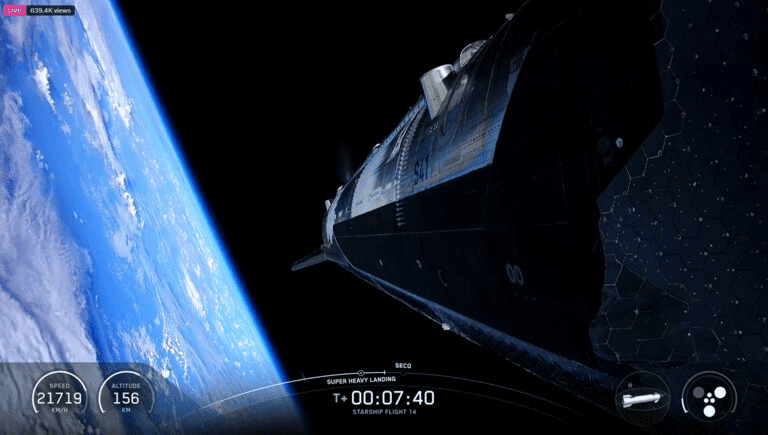
Starship reaching Earth orbit for the first time on September 28, 2026, represents more than another successful rocket test.
By simultaneously deploying 26 operational Starlink V3 satellites, Starship crossed an important threshold from experimental technological capability toward operational value creation.
The Techne–Phronesis Negotiation Framework™ (TPNF) argues that the strategic importance of this milestone should therefore not be measured solely by whether Starship reached orbit.
The deeper question is:
Can Starship convert increasingly mature technological capability into a repeatable, scalable and regenerative space ecosystem capable of creating Long-Term Space Value™?
TPNF defines this transition as Capability-to-Ecosystem Conversion™.
Reaching orbit demonstrates capability.
Deploying useful infrastructure begins converting capability into value.
Repeatedly performing both at sustainable cost and increasing scale would begin transforming Starship into strategic infrastructure.
Purpose of the Essay
This TPNF essay examines Starship Flight 14 through the TPNF distinction between technological achievement and lasting strategic value.
The central argument is that the September 28 mission matters because Starship did not merely fly into orbit. It delivered operational infrastructure into space.
This represents a movement from:
Experiment → Capability → Operational Utility → Ecosystem Expansion → Regeneration → Long-Term Space Value™.
Abstract
Starship’s 14th integrated flight became the vehicle’s first orbital mission and deployed 26 Starlink V3 satellites into low Earth orbit.
The mission did not proceed entirely as planned. An engine shut down unexpectedly, leading SpaceX to shorten a mission originally designed to last approximately ten hours.
Yet the fundamental objectives—reaching orbit and deploying operational satellites—demonstrated an important evolution.
TPNF interprets the milestone through Capability-to-Ecosystem Conversion™, Orbital Value Conversion™, Reusable Capability Regeneration™, Space Ecosystem Scaling™, Strategic Future Value™ and Long-Term Space Value™.
The strategic importance of Starship will ultimately depend not on a single successful orbital mission but on whether orbital capability becomes repeatable, economically sustainable and capable of continuously expanding humanity’s space infrastructure.
1. From Experimental Flight to Orbital Capability
Starship’s previous integrated flights deliberately followed suborbital trajectories.
Flight 14 changed that.
Reaching orbit means that Starship has crossed one of the fundamental technological thresholds required of a genuine space transportation system.
But TPNF distinguishes between achieving capability and converting capability into strategic value.
A rocket reaching orbit demonstrates Techne.
A rocket repeatedly transporting economically or scientifically valuable payloads begins creating an ecosystem.
That difference is fundamental.
2. Capability-to-Ecosystem Conversion™
TPNF defines Capability-to-Ecosystem Conversion™ as:
the process through which an emerging technological capability becomes integrated into a wider network of infrastructure, users, institutions, economic activity and cumulative technological learning capable of generating recurring strategic value.
Starship Flight 14 provides an unusually clear example.
Starship created transportation capability.
Starlink provided an operational payload.
Orbital deployment connected the two.
The result was no longer simply a rocket experiment.
It became an early operational value chain.
3. The Importance of the 26 Starlink V3 Satellites
The deployment of operational Starlink V3 satellites changes the strategic meaning of the flight.
A test vehicle carrying test hardware primarily generates engineering knowledge.
A vehicle deploying operational communications infrastructure generates both engineering knowledge and economic capability.
This produces:
Launch Capability → Satellite Deployment → Network Expansion → Connectivity → Economic Activity → New Demand → Further Launches.
TPNF describes this as an Orbital Value Conversion Loop™.
Space transportation creates infrastructure.
Infrastructure creates services.
Services generate economic value and demand.
Demand can finance further technological capability.
The system begins reinforcing itself.
4. From Rocket to Space Technology Ecosystem
Starship should therefore not be analyzed independently from Starlink.
The launcher and satellite constellation can become complementary components of a wider technological ecosystem.
Starship potentially provides very large transportation capacity.
Starlink provides continuing demand for orbital deployment.
Starlink expansion can therefore support Starship utilization, while Starship’s capacity can accelerate Starlink expansion.
This is Ecosystem Capability Reinforcement™:
the process through which different capabilities within the same technological ecosystem increase one another’s strategic and economic value.
The value resides increasingly in their interaction.
5. Reusability and Reusable Capability Regeneration™
The larger Starship strategy depends heavily upon reusability.
If launch systems can fly, return, be prepared rapidly and fly again, space transportation begins moving away from a predominantly consumptive model.
TPNF describes the desired condition as Reusable Capability Regeneration™:
the capacity of a technological system to restore operational capability repeatedly without reconstructing the principal system after every use.
This distinction matters enormously.
Traditional expendable launch:
Production → Launch → Consumption → Replacement.
Fully reusable launch aspires toward:
Production → Launch → Recovery → Learning → Refurbishment → Relaunch.
The second architecture potentially creates cumulative economic and technological advantages.
6. Imperfection as Strategic Learning
Flight 14 was not flawless.
An engine shut down unexpectedly and the mission ended earlier than originally planned.
But complex technological systems rarely evolve through uninterrupted success.
The relevant strategic question is whether anomalies generate learning.
TPNF therefore distinguishes:
Failure → Loss
from:
Failure → Data → Understanding → Adaptation → Improved Capability.
The second pathway converts technological difficulty into Cumulative Learning Capital™.
If the organization learns faster than technological complexity generates new problems, imperfect missions can still contribute to long-term capability.
7. Space Ecosystem Scaling™
Starship’s enormous potential payload capacity becomes strategically important only if the wider ecosystem can use it.
Launch capacity without sufficient satellites, customers, infrastructure, missions and economic demand creates unused capability.
TPNF defines Space Ecosystem Scaling™ as:
the coordinated expansion of transportation, orbital infrastructure, economic demand, technological capability and institutional support necessary to transform increasing launch capacity into sustainable space activity.
This is why Starlink matters.
It provides an existing ecosystem capable of absorbing increasing launch capacity.
8. Strategic Future Value™
The value of Flight 14 is therefore partly located in the future.
One orbital mission creates limited direct strategic transformation.
But it may establish capabilities enabling thousands of future missions.
TPNF defines Strategic Future Value™ as the capacity created today to generate productive, adaptive and sustainable value under tomorrow’s changing technological conditions.
Starship’s future value could extend beyond Starlink.
Large-scale launch capability could eventually support scientific observatories, commercial stations, lunar infrastructure, deep-space missions and other capabilities not yet fully developed.
The rocket therefore creates Strategic Optionality™.
9. From Strategic Future Value to Long-Term Space Value™
Long-Term Space Value™ requires something more demanding.
It requires technological capability to remain productive across time.
For Starship, that would require:
Reliability + Reusability + Launch Frequency + Economic Sustainability + Payload Demand + Infrastructure + Continuous Learning.
No single flight can demonstrate all these conditions.
September 28 should therefore be understood as an important milestone rather than final validation.
TPNF avoids the Technological Milestone Trap™: assuming that achievement of a spectacular technical objective automatically proves sustainable strategic value.
Orbit is necessary.
But orbit alone is insufficient.
10. Toward Regenerative Space Infrastructure™
The ultimate strategic transformation would occur if Starship evolves from a rocket into infrastructure.
Infrastructure differs from technological demonstration because society can repeatedly build other capabilities upon it.
Roads enable commerce.
Electric grids enable industry.
Digital networks enable information economies.
Reliable, high-capacity and economically sustainable space transportation could similarly enable new forms of orbital and extraterrestrial activity.
This would represent Regenerative Space Infrastructure™:
space transportation capability that repeatedly enables new technological, scientific and economic activity while generating learning that strengthens the ecosystem supporting subsequent activity.
At that point, Starship’s greatest value would not be the rocket itself.
It would be what the rocket makes possible.
Strategic Implications
Flight 14 suggests that Starship may be moving from technological experimentation toward operational ecosystem development.
The deployment of Starlink V3 satellites is particularly important because it connects launch capability directly with functioning space infrastructure.
The mission also demonstrates that technological imperfection does not necessarily prevent strategic progress when anomalies can be converted into learning.
But Long-Term Space Value™ requires much more than orbital success.
Starship must demonstrate reliability, repeatability, reusability, economically meaningful launch cadence and continuing demand.
The strategic transition is therefore:
Can Fly → Can Operate → Can Repeat → Can Scale → Can Regenerate → Can Create Lasting Value.
September 28, 2026, may eventually be remembered as the moment Starship began transitioning from experimental rocket toward operational space infrastructure.
For the first time, Starship reached orbit.
More importantly, it carried operational Starlink satellites with it.
TPNF interprets the milestone through its fundamental triad.
Techne created the capability to reach orbit.
Systems Thinking reveals that the rocket derives strategic value from its relationship with satellites, communications networks, manufacturing, launch infrastructure, customers and wider space activity.
Phronesis asks whether these capabilities can be developed responsibly and sustainably into lasting human value.
The decisive achievement therefore may not be that Starship reached orbit.
It may be that orbital capability began connecting with an already functioning economic and technological ecosystem.
If Starship can make that connection repeatable, scalable and regenerative, September 28 will represent something larger than a successful flight.
It will represent another step toward transforming access to space from an exceptional technological achievement into Long-Term Space Value™.
Key Takeaways
- Flight 14 marked Starship’s first successful orbital mission.
- The deployment of 26 operational Starlink V3 satellites moved the mission beyond pure experimentation.
- Capability-to-Ecosystem Conversion™ explains how technological achievement becomes recurring strategic value.
- Starship and Starlink demonstrate Ecosystem Capability Reinforcement™.
- Reusability could create Reusable Capability Regeneration™.
- Mission anomalies can generate Cumulative Learning Capital™.
- Space Ecosystem Scaling™ requires launch capacity and economic demand to evolve together.
- One orbital success does not automatically create Long-Term Space Value™.
- Starship creates Strategic Optionality™ for future space activities.
- The ultimate transformation occurs when a rocket becomes Regenerative Space Infrastructure™.
Author’s Reflection
Humanity has been launching rockets into orbit for decades.
What makes Starship strategically interesting is therefore not orbit alone.
It is the possibility that enormous launch capacity, reusability, satellite infrastructure and continuous technological learning may begin interacting as one regenerative system.
The rocket is the visible machine.
The ecosystem is the deeper strategic capability.
And the lasting value may ultimately emerge from everything that increasingly routine access to orbit allows humanity to build next.
Nikos Chatzis
Source: Open Sources Analysis, Relative Data Analysis by Nikos Chatzis
© Nikolaos Chatzis. All Rights Reserved.
The Techne–Phronesis Negotiation Framework™
An Integrative Theory of Strategic Negotiation, Complex Adaptive Systems and Practical Wisdom
Technology Creates Capability • Systems Thinking Creates Understanding • Strategic Wisdom Creates Lasting Value.
Negotiation.gr | Strategic Wisdom for the Technological Age