Negotiation.gr | Strategic Wisdom for the Technological Age
“Strategic resilience emerges when technical capability (techne) is
continuously guided by practical wisdom (phronesis) through adaptive
negotiation across interconnected systems.”
Central Idea — Thesis
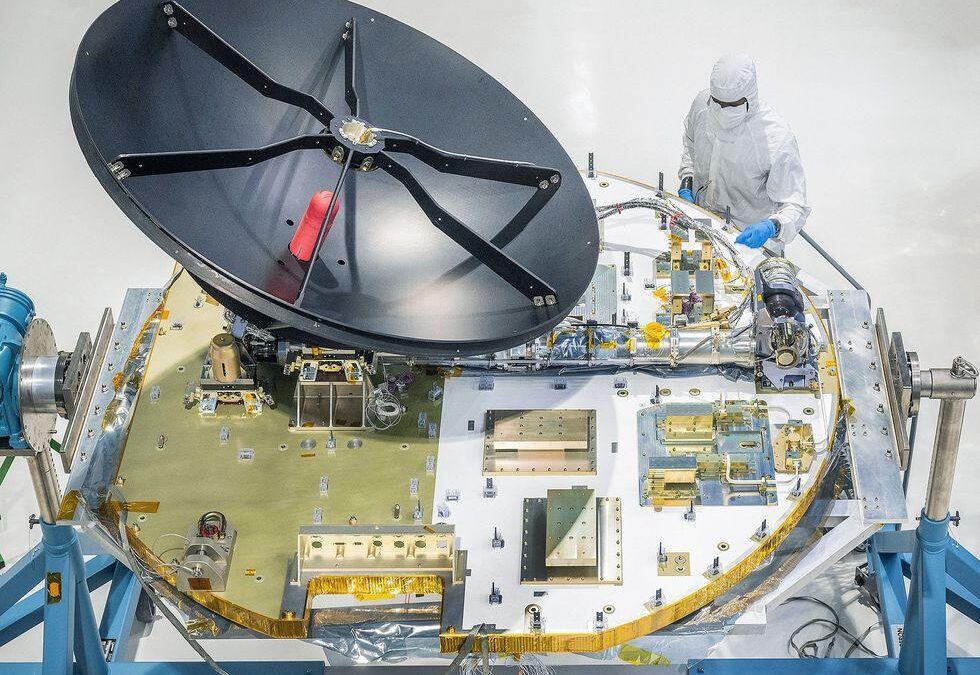
The Nancy Grace Roman Space Telescope illustrates a fundamental transformation in scientific exploration.
Observing the universe is no longer primarily about building a powerful telescope.
It requires an interconnected technological ecosystem capable of observing, transmitting, receiving, processing, storing, interpreting and distributing enormous quantities of information.
NASA has now confirmed that the ground stations supporting Roman’s science-data downlink are ready to receive approximately 1.4 terabytes every day once science operations begin—more daily data than any previous NASA astrophysics mission.
The Techne–Phronesis Negotiation Framework™ (TPNF) therefore proposes:
The strategic scientific value of an advanced observatory is determined not only by what it can observe, but by the capacity of the surrounding knowledge ecosystem to convert observation into accessible data, data into understanding and understanding into cumulative human knowledge.
TPNF defines this as Observation-to-Knowledge Conversion™.
Purpose of the Essay
This essay examines the Roman ground-station network as more than supporting infrastructure.
It argues that global communications, Big Data, computing, artificial intelligence and international scientific collaboration are becoming inseparable from the telescope itself.
The strategic unit of modern astronomy is increasingly the Scientific Knowledge Ecosystem™.
Abstract
Roman is travelling toward the Sun–Earth L2 region approximately one million miles from Earth.
Its Wide Field Instrument contains a 300-megapixel infrared camera, while Roman’s field of view will be at least 100 times larger than Hubble’s. NASA expects the observatory potentially to measure light from a billion galaxies during its lifetime.
Such observational capability creates an enormous data challenge.
Ground stations in New Mexico, Japan and Australia have successfully demonstrated their ability to receive Roman’s data, including testing at rates reaching 500 megabits per second.
TPNF interprets this architecture through Observation-to-Knowledge Conversion™, Scientific Data Infrastructure™, Distributed Knowledge Resilience™, Space Knowledge Infrastructure™ and Discovery Optionality™.
The telescope observes the universe.
The ecosystem converts those observations into knowledge.
1. The Telescope Is Only the Beginning
Roman represents extraordinary Techne.
Its instruments will investigate dark energy, dark matter, exoplanets and the evolution of cosmic structures.
But an observation that cannot reach scientists has limited scientific value.
This creates a chain:
Cosmic Phenomenon → Observation → Data → Transmission → Reception → Processing → Analysis → Scientific Interpretation → Knowledge.
Every stage matters.
A failure anywhere within the chain reduces the value created by the observatory.
Scientific capability therefore exists not in a single machine but throughout an interconnected system.
2. From Telescope to Scientific Knowledge Ecosystem™
Roman’s ground architecture demonstrates this transformation.
NASA’s Near Space Network station in New Mexico works alongside JAXA infrastructure in Japan and ESA infrastructure in Australia.
The Deep Space Network additionally provides tracking, telemetry and command capabilities.
The result is a geographically distributed international infrastructure connecting a spacecraft approximately one million miles away with scientists on Earth.
TPNF defines a Scientific Knowledge Ecosystem™ as:
an interconnected network of instruments, infrastructure, institutions, technologies and human expertise capable of converting scientific observation into cumulative accessible knowledge.
Roman is therefore simultaneously a telescope and a node inside a much larger knowledge system.
3. Big Data Becomes Scientific Infrastructure
Roman will produce approximately 1.4 terabytes of data each day.
NASA estimates its primary five-year mission could generate around 20 petabytes.
The significance is not simply quantitative.
Scientific discovery increasingly depends upon humanity’s ability to manage information at extraordinary scale.
Storage becomes scientific infrastructure.
Cloud computing becomes scientific infrastructure.
Algorithms become scientific infrastructure.
Data transmission becomes scientific infrastructure.
Big Data management is therefore no longer an administrative activity surrounding science.
It becomes part of the process through which science itself is possible.
4. Observation-to-Knowledge Conversion™
TPNF defines Observation-to-Knowledge Conversion™ as:
the systemic process through which raw observations are transmitted, organized, processed, analyzed and interpreted until they become scientifically meaningful knowledge.
This distinction is essential.
More Data ≠ More Knowledge.
Data creates potential knowledge.
The surrounding ecosystem determines whether that potential can be converted.
Roman therefore illustrates the same strategic principle TPNF encounters in technology, economics and defence:
Capability creates potential. Strategic conversion creates value.
5. Distributed Knowledge Resilience™
The geographic distribution of Roman’s ground stations provides another important lesson.
New Mexico, Japan and Western Australia experience different weather conditions and operational environments.
NASA specifically notes that rain can interfere with Roman’s high-frequency communications. If a transmission is disrupted, automated systems can identify missing data and request retransmission from Roman’s onboard recorder.
TPNF describes this as Distributed Knowledge Resilience™:
the capacity of geographically and technologically distributed infrastructure to preserve the continuity of knowledge flows when individual components experience disruption.
Redundancy therefore creates scientific resilience.
6. International Cooperation Creates Capability
Roman is a NASA mission.
But its knowledge infrastructure is international.
ESA and JAXA contribute critical ground capabilities.
This demonstrates an important principle:
Scientific sovereignty does not necessarily require scientific isolation.
International cooperation can expand capability when partners contribute complementary infrastructure and expertise.
The relationship creates Collaborative Scientific Capability™.
No individual ground station needs to provide every function continuously.
The network creates capability collectively.
7. Artificial Intelligence and the Data Frontier
Roman’s enormous data flows create another transformation.
NASA expects artificial intelligence, machine learning and citizen scientists to help identify potentially important discoveries within Roman’s observations.
This changes the relationship between human beings and scientific instruments.
The telescope observes.
Algorithms identify patterns.
Computing infrastructure processes information.
Scientists interpret significance.
This creates:
Instrument → Data → AI Analysis → Human Interpretation → Scientific Judgment.
TPNF describes this as Human–AI Scientific Complementarity™.
AI can expand the scale of analysis.
But scientific meaning still requires human questions, theory, validation and judgment.
8. Discovery Optionality™
Roman’s greatest discoveries may not be those currently predicted.
Large scientific datasets create possibilities for future researchers to ask questions that were not anticipated when observations were originally collected.
This creates Discovery Optionality™:
the capacity of scientific infrastructure and accumulated data to enable future discoveries beyond the questions for which the system was originally designed.
The strategic value of Roman therefore extends beyond its initial scientific objectives.
Every well-preserved dataset becomes potential infrastructure for future knowledge.
9. Space Knowledge Infrastructure™
This leads to a broader TPNF concept already emerging from our analysis of Roman.
A space telescope should not be understood only as a scientific instrument.
It becomes Space Knowledge Infrastructure™.
Roman integrates:
Spacecraft + Sensors + Communications + Ground Stations + Cloud Computing + AI + Scientists + International Partners + Data Archives.
Together these components create an infrastructure capable of continuously expanding humanity’s understanding of the universe.
Its output is not merely images.
Its output is cumulative intellectual capability.
10. From Cosmic Observation to Strategic Future Value™
Roman’s data will remain valuable long after individual observations occur.
Scientists will compare datasets.
New algorithms will reanalyze old observations.
Future telescopes will provide complementary measurements.
Researchers may discover phenomena not originally anticipated.
The strategic chain therefore becomes:
Observation → Data → Accessibility → Analysis → Knowledge → New Questions → New Research → New Capability → Strategic Future Value™.
Knowledge becomes regenerative.
One discovery creates another question.
One dataset enables another hypothesis.
One scientific capability creates the foundations for another.
Strategic Implications
Roman demonstrates several broader principles of technological civilization.
First, advanced scientific instruments increasingly depend upon complex supporting ecosystems.
Second, Big Data infrastructure is becoming inseparable from scientific capability.
Third, international technological cooperation can generate capabilities exceeding those available to individual institutions.
Fourth, distributed infrastructure creates resilience.
Fifth, AI can amplify scientific analysis without eliminating the need for human judgment.
Finally, accumulated scientific data creates Discovery Optionality™ extending far beyond the original objectives of a mission.
The Nancy Grace Roman Space Telescope will observe some of the farthest reaches of the cosmos.
But humanity’s ability to benefit from those observations depends upon infrastructure on Earth.
Antennas in New Mexico, Japan and Australia will receive enormous streams of information.
Computing systems will process them.
Algorithms will help identify patterns.
Scientists will interpret their meaning.
Future researchers may discover knowledge that today’s mission designers cannot yet anticipate.
Roman therefore illustrates the fundamental TPNF triad.
Techne creates observational capability.
Systems Thinking reveals the interconnected knowledge ecosystem required to transform observations into understanding.
Phronesis guides how humanity interprets, shares and uses that expanding knowledge.
The telescope may look outward toward the universe.
But the strategic value of what it sees ultimately depends upon what happens after its signals reach Earth.
That leads to a deeper TPNF proposition:
The strategic value of scientific infrastructure lies not merely in its capacity to observe what humanity does not yet understand, but in its ability to create a regenerative knowledge ecosystem through which every new observation expands humanity’s capacity to ask the next question.
Key Takeaways
- Roman will generate the highest daily data volume of any NASA astrophysics mission so far.
- Its international ground network demonstrates the importance of distributed scientific infrastructure.
- Observation-to-Knowledge Conversion™ distinguishes data collection from knowledge creation.
- Big Data management is becoming an integral component of scientific capability.
- Distributed Knowledge Resilience™ protects scientific information flows.
- International cooperation creates Collaborative Scientific Capability™.
- AI and human scientists will increasingly operate through Human–AI Scientific Complementarity™.
- Scientific archives generate Discovery Optionality™.
- Roman represents Space Knowledge Infrastructure™, not merely a telescope.
- Scientific knowledge creates Strategic Future Value™ when it continuously generates new questions and capabilities.
Author’s Reflection
When humanity looks toward the farthest reaches of the cosmos, the most visible technological achievement is naturally the telescope.
Yet Roman reminds us that discovery does not occur inside the telescope alone.
Discovery occurs across a chain connecting photons travelling through the universe with instruments in space, radio signals crossing a million miles, antennas distributed across Earth, computing systems processing enormous datasets and human minds asking what those data mean.
Perhaps this is one of the defining characteristics of twenty-first-century science.
Our instruments are becoming extraordinarily powerful.
But our greatest discoveries increasingly depend upon the ecosystems connecting those instruments with human understanding.
The future of astronomy may therefore be shaped not simply by humanity’s ability to see farther.
It may depend equally upon our ability to receive more, understand more, connect more—and transform unprecedented quantities of information into wisdom about our place in the universe.
Nikos Chatzis
Source: Open Sources Analysis, Relative Data Analysis by Nikos Chatzis
© Nikolaos Chatzis. All Rights Reserved.
The Techne–Phronesis Negotiation Framework™
An Integrative Theory of Strategic Negotiation, Complex Adaptive Systems and Practical Wisdom
Technology Creates Capability • Systems Thinking Creates Understanding • Strategic Wisdom Creates Lasting Value.
Negotiation.gr | Strategic Wisdom for the Technological Age