Negotiation.gr | Strategic Wisdom for the Technological Age
“Strategic resilience emerges when technical capability (techne) is
continuously guided by practical wisdom (phronesis) through adaptive
negotiation across interconnected systems.”
Central Idea — Thesis
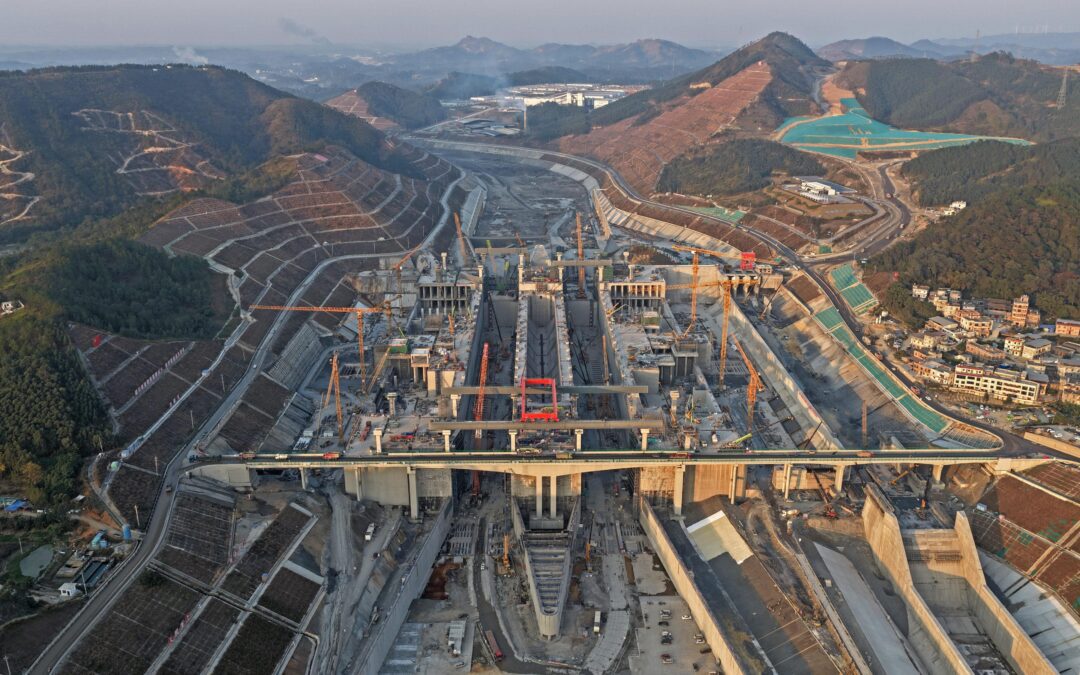
China’s opening of the Pinglu Canal on September 16, 2026, should not be understood simply as the completion of another major infrastructure project.
The 134.2-kilometer canal creates a new river-to-sea connection between China’s southwestern hinterland and the Beibu Gulf, shortening access toward Southeast Asia and global maritime markets.
Its deeper strategic significance, however, lies in what can develop around it.
Ports connect with inland waterways.
Waterways connect with railways.
Logistics connect producers with markets.
Lower transportation costs influence investment.
Investment generates industrial clusters.
Industrial clusters attract capital, technology, knowledge and human capability.
The Techne–Phronesis Negotiation Framework™ (TPNF) therefore interprets the Pinglu Canal as emerging Strategic Connectivity Infrastructure™:
infrastructure whose value derives not merely from moving goods, but from its capacity to connect previously separated capabilities and enable new economic relationships, industrial activity and strategic options.
The canal itself is infrastructure.
What develops around it could become an ecosystem.
Purpose of the Essay
This TPNF essay examines the Pinglu Canal through the TPNF perspective of ecosystem development and strategic value creation.
The central question is not simply how many ships will use the canal.
It is:
How can a new physical connection reorganize economic geography and generate capabilities that did not previously exist?
Abstract
The Pinglu Canal officially opened to navigation on September 16, 2026, after approximately four years of construction.
Built at a reported cost of 72.7 billion yuan, approximately $10.75 billion, the canal connects the Xijiang River shipping system with the Beibu Gulf.
It can accommodate vessels of up to 5,000 tonnes and reduces the inland shipping distance from southwest China toward the sea by more than 560 kilometers compared with traditional routes through Guangdong.
Authorities estimate logistics-cost reductions of 18–30% and annual transport savings exceeding 5 billion yuan.
Yet the strategic significance extends beyond transportation.
By connecting China’s western regions with ASEAN and global maritime networks, the canal can become an enabling layer for logistics, industrial development, investment and cross-border supply chains.
1. Geography Has Been Strategically Modified
Geography imposes constraints.
Infrastructure modifies them.
Much of southwestern China historically lacked efficient direct access to maritime transportation.
Cargo moving through inland waterways often had to travel eastward toward Guangdong before reaching international shipping networks.
The Pinglu Canal changes that geometry.
It creates a shorter southward connection through Guangxi toward the Beibu Gulf.
This demonstrates a fundamental strategic principle:
Geographical disadvantage is not always permanent. Technology and infrastructure can alter the economic consequences of geography.
TPNF describes this as Strategic Geography Conversion™:
the use of infrastructure and technology to transform geographical constraints into new forms of economic and strategic connectivity.
2. The Canal Is Part of a Larger System
The Pinglu Canal should not be analyzed independently.
It forms part of China’s New International Land-Sea Trade Corridor.
That network integrates inland regions with railways, ports, maritime shipping and international markets.
At its southern end, Beibu Gulf Port has expanded rapidly. Its container throughput increased from 2.28 million TEUs in 2017 to more than 10 million TEUs in 2025.
The canal therefore does not create connectivity from nothing.
It adds a new layer to an expanding logistics architecture.
This distinction is critical.
Infrastructure becomes strategically powerful when it connects with other infrastructure.
A canal connected to ports, railways, industrial zones and international shipping networks can generate far greater value than an isolated transportation project.
3. From Infrastructure to Ecosystem
A ship passing through a canal represents transportation.
Thousands of companies reorganizing production and logistics around that canal represent an ecosystem.
Guangxi officials describe the expected sequence clearly:
Corridor → Logistics → Trade → Industry.
TPNF extends the sequence:
Infrastructure → Connectivity → Accessibility → Logistics → Trade → Investment → Industrial Clustering → Ecosystem Development → Strategic Value.
This is the mechanism through which physical infrastructure can become economic architecture.
4. Strategic Connectivity Infrastructure™
The Pinglu Canal provides a useful foundation for a broader TPNF concept.
Strategic Connectivity Infrastructure™
Physical or digital infrastructure that creates strategic value by connecting previously separated capabilities, markets, institutions or ecosystems and enabling new patterns of economic interaction.
Its value cannot therefore be measured exclusively through toll revenues or shipping volumes.
The strategic calculation must include what the infrastructure enables.
New supply chains.
New investment.
New industrial locations.
New market access.
New commercial relationships.
New technological cooperation.
New strategic options.
The infrastructure becomes valuable partly because other actors can build upon it.
5. China and ASEAN
The canal’s opening occurs within a rapidly expanding China–ASEAN economic relationship.
Trade between China and ASEAN reached approximately 4.34 trillion yuan in the first half of 2026, increasing 18.2% year-on-year.
China has remained ASEAN’s largest trading partner for 17 consecutive years, while ASEAN has been China’s largest trading partner for six.
The Pinglu Canal adds another physical connection between these enormous economic spaces.
The relationship is also bidirectional.
Southwestern Chinese products can move more efficiently toward Southeast Asia.
ASEAN agricultural products, raw materials and manufactured goods can move more efficiently toward China’s inland markets.
Connectivity therefore creates reciprocal accessibility.
6. The Connectivity–Value Multiplier™
Reducing transportation distance by 560 kilometers creates an immediate logistics benefit.
But the strategic effect may become larger over time.
Lower transportation costs can increase trade.
Growing trade can attract logistics companies.
Logistics infrastructure can attract manufacturers.
Manufacturers create supplier networks.
Suppliers attract investment.
Investment creates employment and specialized knowledge.
This produces what TPNF can define as the Connectivity–Value Multiplier™:
the cumulative increase in strategic value that occurs when improved connectivity activates additional economic, technological and institutional relationships throughout an ecosystem.
The canal’s long-term value may therefore exceed its direct transportation savings.
7. Infrastructure Creates Strategic Optionality™
Before the canal existed, businesses faced one configuration of transportation possibilities.
After its opening, they possess another.
They can choose different ports.
Different routes.
Different supply chains.
Different production locations.
Different combinations of rail, river and sea transportation.
This creates Strategic Optionality™.
The value of infrastructure lies partly in the choices it creates.
Additional routes can improve efficiency during normal conditions while also providing alternatives during disruption.
Connectivity therefore contributes both to economic competitiveness and potential resilience.
8. The Canal as an Ecosystem Platform
The most important TPNF distinction is between infrastructure as a project and infrastructure as a platform.
A project is completed.
A platform enables continuing development.
The Pinglu Canal was completed on September 16.
The ecosystem surrounding it is only beginning.
New industrial zones may emerge.
Ports may expand.
Logistics companies may reorganize networks.
Manufacturers may relocate activities.
Cross-border investment may increase.
Digital logistics systems may develop.
Shipbuilding may evolve.
Financial services may follow trade flows.
Universities and technical institutions may develop relevant expertise.
The strategic question becomes:
What new capabilities will the canal make possible ten or twenty years from now?
9. Infrastructure–Ecosystem Conversion™
This introduces another useful TPNF concept:
Infrastructure–Ecosystem Conversion™
The process through which physical infrastructure generates networks of economic, technological, institutional and human interaction that progressively create capabilities beyond the original infrastructure itself.
Not every infrastructure project achieves this.
Some roads remain roads.
Some ports remain underused.
Some industrial parks fail to attract industries.
Infrastructure creates potential.
Ecosystem development converts potential into strategic value.
The distinction mirrors the broader TPNF principle:
Capability does not automatically become value. It must be strategically converted.
10. From China’s Interior to Global Markets
The Pinglu Canal also illustrates how national and international ecosystems increasingly overlap.
Its northern economic connections extend toward inland China.
Its southern maritime connections extend toward ASEAN.
Through the wider New International Land-Sea Trade Corridor, those connections can interact with rail and maritime networks reaching other regions.
The canal therefore functions as an interface between:
Domestic Production Ecosystems → Regional ASEAN Ecosystems → Global Trade Ecosystems.
This layered connectivity is strategically important.
Modern economic power increasingly depends not simply on possessing resources, but on the ability to move information, capital, components, energy, technology and goods efficiently across networks.
11. Infrastructure and Geoeconomic Power
Infrastructure is rarely geopolitically neutral.
A new trade corridor changes patterns of dependence.
It can redirect trade.
It can strengthen particular ports.
It can create new industrial centers.
It can increase the strategic importance of particular regions.
It can deepen economic relationships between countries.
The Pinglu Canal therefore contributes to China’s broader economic integration with Southeast Asia.
But influence will depend on whether surrounding countries and businesses perceive the emerging networks as economically beneficial, reliable and sufficiently reciprocal.
Connectivity creates opportunity.
Trust and mutual value determine whether connectivity becomes durable cooperation.
12. The Ecosystem Strategic Value Principle
The Pinglu Canal provides a powerful empirical example of the broader proposition developed recently within TPNF:
An ecosystem’s strategic value derives not only from the capabilities it contains, but from its ability to connect, mobilize and convert those capabilities into lasting value.
The canal creates connection.
But connection alone is insufficient.
Ports must operate efficiently.
Companies must use the corridor.
Investment must occur.
Supply chains must develop.
Institutions must coordinate.
Markets must remain accessible.
The canal’s strategic success will therefore depend on Ecosystem Orchestration™.
Strategic Implications
First, the Pinglu Canal demonstrates that infrastructure can reshape economic geography rather than merely operate within it.
Second, Strategic Connectivity Infrastructure™ should be evaluated by the capabilities and relationships it enables, not only by direct transportation revenue.
Third, lower logistics costs can create a Connectivity–Value Multiplier™ by stimulating trade, investment and industrial clustering.
Fourth, infrastructure creates Strategic Optionality™ by increasing the number of viable routes available to economic actors.
Fifth, Infrastructure–Ecosystem Conversion™ determines whether a megaproject becomes a genuine generator of long-term strategic value.
Finally, the canal strengthens China’s physical economic connectivity with ASEAN at a time when Southeast Asia is becoming increasingly important within global trade and manufacturing networks.
The Pinglu Canal is 134.2 kilometers long.
But its strategic significance cannot be measured in kilometers.
Its deeper value lies in connections.
Between rivers and seas.
Between inland factories and ports.
Between China’s western regions and Southeast Asia.
Between transportation and industry.
Between infrastructure and investment.
Between national economic capability and global markets.
Techne created the engineering capability to alter physical geography.
Systems Thinking reveals the economic networks surrounding the canal.
Ecosystem Orchestration™ will determine whether those networks become productive.
Phronesis asks whether the resulting connectivity generates sustainable and mutually beneficial strategic value.
The Pinglu Canal therefore represents more than a new route to the sea.
It represents an attempt to transform infrastructure into connectivity, connectivity into ecosystem capability, and ecosystem capability into lasting strategic value.
Key Takeaways
- The Pinglu Canal opened on September 16, 2026.
- The 134.2-km canal accommodates vessels of up to 5,000 tonnes.
- It shortens southwest China’s route to the sea by more than 560 km.
- Logistics costs are projected to decline by 18–30%.
- Strategic Geography Conversion™ explains how infrastructure can alter the economic consequences of geography.
- Strategic Connectivity Infrastructure™ creates value by connecting previously separated capabilities and markets.
- The Connectivity–Value Multiplier™ explains how transportation improvements can generate wider industrial and economic effects.
- Infrastructure–Ecosystem Conversion™ determines whether infrastructure develops into a self-reinforcing economic ecosystem.
- The canal creates additional Strategic Optionality™ within China’s trade architecture.
- Its lasting value will depend not simply upon ships passing through it, but upon the capabilities that emerge because those ships can pass through it.
Author’s Reflection
There is something strategically fascinating about a canal.
Engineers excavate earth and move water.
But what they may ultimately change is human interaction.
A new waterway changes distances.
Changed distances alter costs.
Changed costs influence decisions.
Decisions redirect investment.
Investment creates relationships.
Relationships create ecosystems.
And ecosystems can eventually transform entire regions.
This is why infrastructure should never be understood simply as concrete, steel, water or machinery.
Its highest strategic value may lie in the connections it makes possible.
The Pinglu Canal opened on September 16, 2026.
The construction project is therefore largely finished.
The more important process may only now be beginning:
the conversion of a canal into an ecosystem.
Nikos Chatzis
Source: Open Sources Analysis, Relative Data Analysis by Nikos Chatzis
© Nikolaos Chatzis. All Rights Reserved.
The Techne–Phronesis Negotiation Framework™
An Integrative Theory of Strategic Negotiation, Complex Adaptive Systems and Practical Wisdom
Technology Creates Capability • Systems Thinking Creates Understanding • Strategic Wisdom Creates Lasting Value.
Negotiation.gr | Strategic Wisdom for the Technological Age