Negotiation.gr | Strategic Wisdom for the Technological Age
“Strategic resilience emerges when technical capability (techne) is
continuously guided by practical wisdom (phronesis) through adaptive
negotiation across interconnected systems.”
Central Idea (Thesis)
The return of USS Abraham Lincoln (CVN-72) from the 2026 war with Iran provides an opportunity to examine the changing nature of naval warfare.
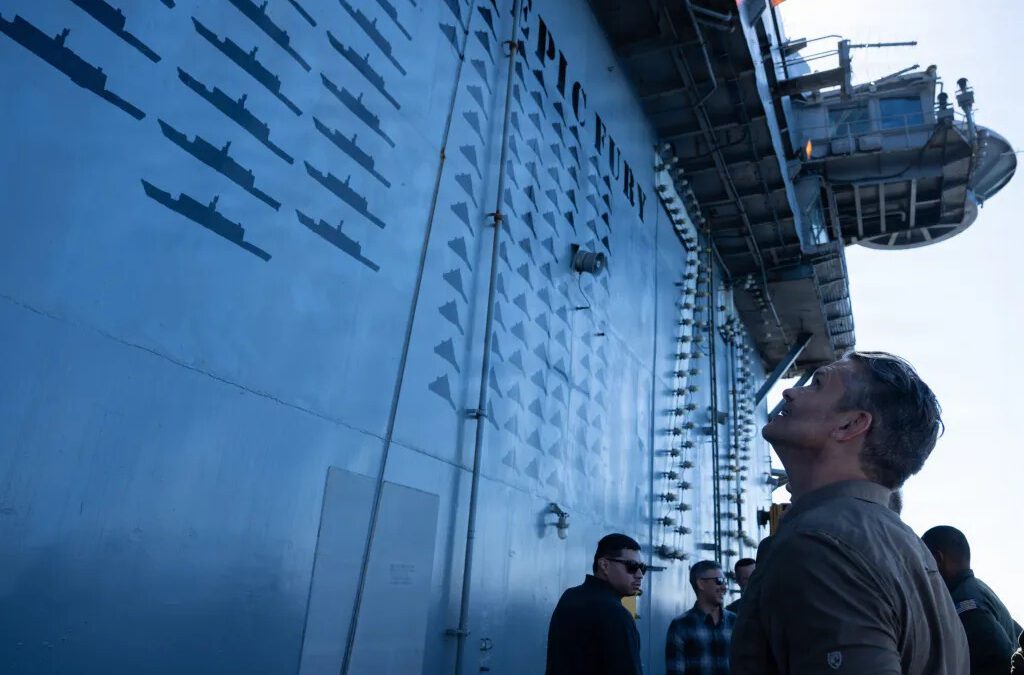
The drone and ship kill markings displayed on the aircraft carrier’s island superstructure symbolize the operational achievements of an integrated naval force.
Yet the Techne–Phronesis Negotiation Framework™ (TPNF) identifies a deeper strategic distinction: destroying enemy capabilities demonstrates military effectiveness, but lasting strategic value depends on how those achievements influence the broader political, military and geopolitical environment.
Modern naval power must therefore be understood through technological capability, systems integration and strategic wisdom.
Purpose of the Essay
This TPNF essay examines the operational significance of the Abraham Lincoln Carrier Strike Group during Operation Epic Fury and evaluates its achievements through TPNF.
It explores carrier aviation, unmanned aerial threats, layered defense, operational endurance and the relationship between battlefield success and strategic outcomes.
Abstract
USS Abraham Lincoln returned to San Diego on October 8, 2026, following an exceptionally demanding deployment.
Its strike group participated in extensive combat operations against Iran, including air strikes, missile engagements, drone interceptions and attacks against naval targets.
The markings displayed aboard the carrier provide a visible record of claimed military achievements.
However, TPNF suggests that the significance of these operations extends beyond the destruction of individual targets.
The carrier strike group functioned as an interconnected military ecosystem whose effectiveness depended upon coordination among aircraft, ships, sensors, weapons, personnel and command structures.
Its experience also illustrates the strategic challenges of prolonged high-intensity naval operations.
USS Abraham Lincoln: The Return of a Carrier Strike Group
The Abraham Lincoln Carrier Strike Group returned after a deployment lasting approximately eleven months.
During its participation in Operation Epic Fury, the force conducted thousands of combat sorties and employed substantial quantities of precision weapons.
According to the Presidential Unit Citation presented in October, the strike group conducted 3,693 combat sorties, launched 450 Tomahawk land-attack cruise missiles, destroyed 77 one-way attack drones and sank 64 Iranian vessels.
These figures describe the scale of reported operational activity.
They do not, by themselves, establish the campaign’s long-term strategic outcome.
Nevertheless, they demonstrate the continuing importance of carrier-based aviation and integrated naval strike capabilities in contemporary warfare.
The Kill Marks: Military Achievement and Strategic Communication
The markings painted on the carrier’s superstructure attracted particular attention.
Photographs examined by The War Zone appeared to show 103 drone silhouettes and 34 ship silhouettes.
These figures differed from those included in the official unit citation.
The reasons for the discrepancy have not been publicly established.
Military kill markings have a long tradition as symbols of operational achievement.
They communicate combat experience, reinforce unit identity and provide visible recognition of battlefield performance.
However, their interpretation requires caution.
A silhouette does not necessarily identify a specific platform type, nor does it independently verify the circumstances of its destruction.
From a TPNF perspective, these markings illustrate the relationship between operational achievement, institutional recognition and strategic communication.
They make military activity visible, but cannot substitute for comprehensive operational assessment.
Techne: The Technological Foundations of Naval Power
The first TPNF dimension states:
Technology Creates Capability.
A modern American carrier strike group combines numerous technological systems.
Carrier-based aircraft provide offensive and defensive airpower.
Guided-missile destroyers contribute air defense, missile strikes and maritime surveillance.
Electronic warfare systems, communications networks and intelligence platforms support coordinated operations.
The carrier itself provides a mobile aviation base capable of sustaining operations far from American territory.
During the Iran campaign, these capabilities were employed against aerial, maritime and land-based threats.
Yet no individual platform explains the strike group’s overall effectiveness.
A fighter aircraft requires intelligence, logistics, maintenance and command coordination.
A missile-defense system requires reliable detection, identification and engagement processes.
Technology creates military options, but the effectiveness of those options depends upon integration.
Systems Thinking: The Carrier Strike Group as a Combat Ecosystem
The second TPNF dimension states:
Systems Thinking Creates Understanding.
The Abraham Lincoln Carrier Strike Group was not simply an aircraft carrier accompanied by supporting warships.
It operated as an interconnected combat ecosystem.
Carrier Air Wing Nine, guided-missile destroyers, intelligence capabilities, logistics networks and command structures performed complementary functions.
The destroyers USS Frank E. Petersen Jr., USS Spruance and USS Michael Murphy contributed important capabilities to the formation.
This architecture allowed the force to conduct offensive operations while responding to incoming threats.
Its strategic significance emerges from relationships among components rather than from the capabilities of any single ship.
TPNF therefore proposes that the combat value of a naval formation depends not only on the weapons it possesses, but on its ability to connect, coordinate and employ those weapons effectively.
This distinction becomes especially important when confronting large numbers of relatively inexpensive unmanned systems.
Drone Warfare: A Challenge to Traditional Naval Superiority
Iranian one-way attack drones represented an important element of the operational environment.
Such weapons demonstrate how comparatively inexpensive unmanned platforms can challenge sophisticated military forces.
Their significance is not limited to destructive potential.
They can force defenders to maintain continuous surveillance, allocate weapons and personnel, and respond under uncertain conditions.
A carrier strike group may successfully intercept incoming drones while still facing substantial operational demands.
This creates a broader strategic challenge.
Military effectiveness cannot be assessed exclusively through the number of threats destroyed.
Decision-makers must also consider defensive costs, ammunition expenditure, system availability and operational sustainability.
The important question becomes whether defensive capabilities can remain effective over extended periods against persistent threats.
The Economics of Asymmetric Warfare
The confrontation between advanced naval systems and lower-cost unmanned weapons illustrates an enduring problem of asymmetric warfare.
An attacker may attempt to impose disproportionate defensive costs by employing inexpensive systems in significant numbers.
The defender must preserve expensive platforms while avoiding unsustainable consumption of scarce defensive resources.
However, the cost relationship cannot be evaluated through weapon prices alone.
An interception may prevent damage to a multibillion-dollar ship, protect personnel and preserve operational continuity.
Its value must therefore be assessed against the consequences of failing to intercept the threat.
TPNF identifies the importance of evaluating cost, capability, risk and strategic consequences within the same analytical system.
A financially expensive defensive engagement may still represent a strategically rational decision.
Carrier Aviation and Maritime Strike Operations
The campaign also demonstrated the continued relevance of carrier-based strike aviation.
Modern aircraft carriers provide flexible airpower without requiring permanent access to regional land bases.
Embarked aircraft can undertake strike missions, defensive patrols, surveillance and other operations.
The destruction of maritime targets further illustrates the changing relationship between airpower and naval warfare.
Surface vessels and submarines increasingly operate within contested environments shaped by aircraft, missiles, unmanned systems and advanced sensors.
The effectiveness of naval forces consequently depends upon their capacity to integrate capabilities across multiple operational domains.
This reinforces a central TPNF principle: technological superiority becomes operationally meaningful through systemic coordination.
Operational Endurance: The Human Dimension of Naval Power
The deployment also exposed the human and logistical demands of sustained naval operations.
USS Abraham Lincoln spent more than 260 consecutive days at sea without a port call.
The prolonged deployment generated scrutiny concerning personnel welfare, communication with families and living conditions.
Reported suicide attempts among strike-group personnel highlighted the importance of psychological support and human resilience.
These concerns should not be interpreted as negating the force’s operational achievements.
They demonstrate that military effectiveness has a human dimension.
Ships and aircraft cannot sustain combat operations independently of the people who operate and maintain them.
From a TPNF perspective, personnel welfare, organizational resilience and logistical support are integral elements of military capability.
Phronesis: From Operational Success to Strategic Outcomes
The third TPNF dimension states:
Strategic Wisdom Creates Lasting Value.
The reported destruction of Iranian drones, ships and missiles represents measurable military activity.
Yet operational effectiveness and strategic success are not identical.
The broader objectives of the campaign involved Iranian military capabilities, regional security and American geopolitical interests.
Whether particular military achievements produce lasting political outcomes requires a separate assessment.
Military action can weaken an adversary’s capabilities without necessarily resolving the political disagreements underlying a conflict.
Strategic wisdom therefore requires decision-makers to connect military operations with achievable political objectives.
It also requires consideration of escalation risks, resource expenditure, regional stability and post-conflict conditions.
The ultimate question is not merely what a military force can destroy.
It is what strategic conditions its operations can create and whether those conditions can be sustained.
The TPNF Naval Strategic Value Pathway
The Abraham Lincoln experience suggests a proposed analytical pathway:
Technological Capability → Combat Systems Integration → Operational Effectiveness → Strategic Coordination → Political Outcomes → Lasting Value
Each stage represents a distinct analytical requirement.
Advanced weapons may fail without effective integration.
Integrated forces may achieve operational success without securing broader political objectives.
Political achievements may prove temporary without sustainable arrangements.
The pathway therefore separates battlefield performance from the longer-term strategic value of military operations.
The kill markings aboard USS Abraham Lincoln provide a striking visual representation of contemporary naval warfare.
They symbolize the destructive capabilities of a modern carrier strike group operating against drones, ships and other military targets.
Yet their deeper significance lies in what they reveal about integrated military power.
The 2026 Iran campaign demonstrated the continuing relevance of carrier aviation, layered naval defense and coordinated maritime strike operations.
It also exposed the operational, economic and human challenges of prolonged warfare.
TPNF provides the broader strategic interpretation:
Technology Creates Capability. Systems Thinking Creates Understanding. Strategic Wisdom Creates Lasting Value.
The ultimate measure of naval power is not simply the number of targets destroyed, but its contribution to sustainable strategic objectives.
Key Takeaways
- USS Abraham Lincoln demonstrated substantial operational capabilities during the 2026 Iran campaign.
- The kill markings symbolize reported achievements but require careful interpretation.
- Carrier strike groups operate as integrated military ecosystems.
- Drone warfare challenges traditional assumptions about cost and naval superiority.
- Operational endurance depends on personnel, logistics and organizational resilience.
- Battlefield success does not automatically guarantee political success.
- TPNF connects technological capability, operational coordination and strategic outcomes.
Author’s Reflection
The markings displayed aboard USS Abraham Lincoln remind us that naval warfare remains a contest of technology, organization and human determination.
Yet modern warfare increasingly reveals another dimension.
A sophisticated carrier strike group must confront inexpensive drones, persistent threats, logistical pressures and uncertain geopolitical consequences.
The technological imbalance between opposing forces does not eliminate strategic complexity.
It may actually increase it.
The TPNF perspective suggests that future military superiority will depend not simply on possessing more advanced weapons, but on understanding how technological systems, human organizations and political objectives interact.
The greatest strategic achievement of military power is not destruction itself, but the creation of conditions in which lasting security becomes possible.
Nikolaos Chatzis
Principal research sources:
-
The War Zone — USS Abraham Lincoln Comes Home With Its Island Superstructure Covered in Kill Marks (October 8, 2026). Primary reporting on the markings, their discrepancies and the carrier strike group’s operations.
-
USNI News — Abraham Lincoln Carrier Strike Group Returns to San Diego After Nearly 11 Months (October 8, 2026). Deployment history, operational figures and naval-force composition.
-
Reuters — Hegseth Praises Sailors’ Resilience After Record-Breaking Carrier Deployment (October 7, 2026). Operational achievements, deployment conditions and personnel welfare.
-
The Aviationist — Marine F-35C Also Sports Three Submarine Kill Markings After Operation Epic Fury (October 5, 2026). Additional evidence of aircraft kill markings.
Source: Open Sources Analysis, Relative Data Analysis by Nikos Chatzis
© Nikolaos Chatzis. All Rights Reserved.
The Techne–Phronesis Negotiation Framework™
An Integrative Theory of Strategic Negotiation, Complex Adaptive Systems and Practical Wisdom
Technology Creates Capability • Systems Thinking Creates Understanding • Strategic Wisdom Creates Lasting Value.
Negotiation.gr | Strategic Wisdom for the Technological Age