Negotiation.gr | Strategic Wisdom for the Technological Age
“Strategic resilience emerges when technical capability (techne) is
continuously guided by practical wisdom (phronesis) through adaptive
negotiation across interconnected systems.”
Central Idea — Thesis
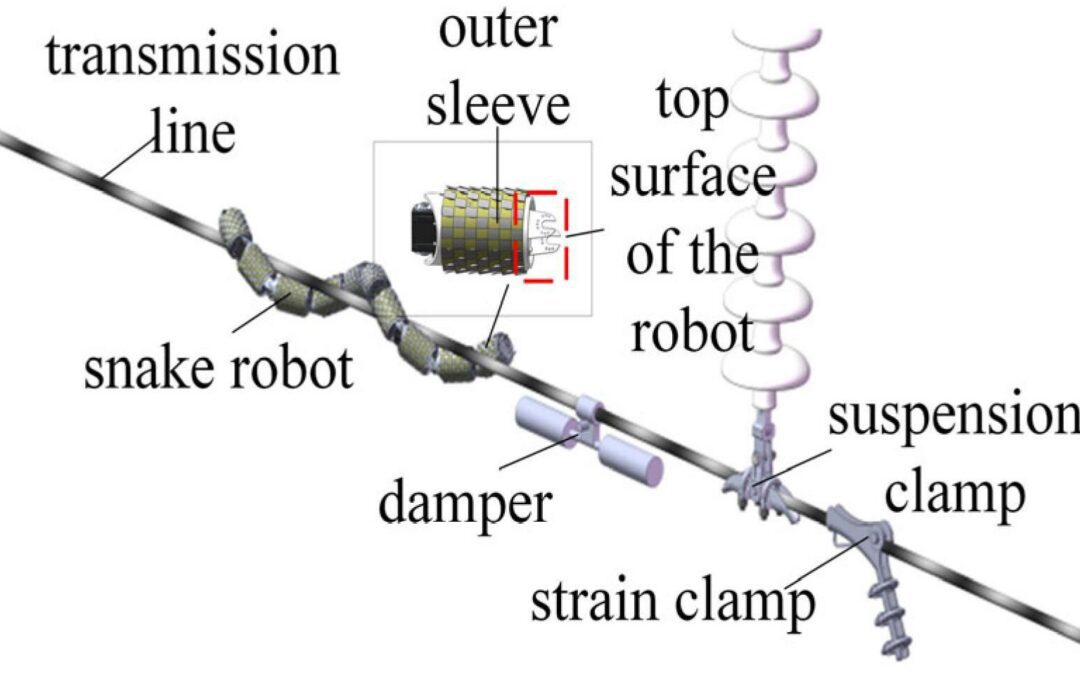
A snake-shaped robot crawling along a 10-kilovolt electricity line in Kunming may appear to be simply another interesting application of robotics.
From the perspective of the Techne–Phronesis Negotiation Framework™ (TPNF), however, its strategic importance is considerably greater.
The robot represents a transition from automation as task replacement toward robotics as an embedded component of critical infrastructure intelligence.
By combining mobility, sensors, autonomous obstacle avoidance, continuous inspection and data generation, the robot does not merely replace a human inspector.
It transforms the infrastructure itself into a system increasingly capable of observing, diagnosing and protecting its own condition.
TPNF defines this emerging phenomenon as Infrastructure Embodied Intelligence™:
the integration of sensing, autonomous physical agency and adaptive technological capability directly within critical infrastructure so that the system can continuously observe its own operational environment and support preventive action.
Purpose of the Essay
The snake-shaped inspection robot developed in Kunming provides an opportunity to examine how robotics may transform the maintenance of critical infrastructure.
The deeper TPNF question is not whether a robot can inspect a power line faster than a person.
It is:
What happens when infrastructure begins acquiring persistent technological perception and physical agency?
This essay argues that such systems could mark an evolutionary step toward Adaptive Infrastructure Ecosystems™.
Abstract
The Kunming robot can travel directly along power lines while using cameras, thermal imaging and specialized sensors to identify broken wires, component wear and abnormal temperatures.
Its articulated body allows it to negotiate obstacles that can constrain conventional inspection methods.
Its tail incorporates technology allowing it to obtain electrical energy from the line, supporting extended autonomous inspection.
These capabilities combine three previously separate functions:
Perception → Diagnosis → Physical Mobility.
From a TPNF perspective, their integration represents a form of Embodied Intelligence applied directly to critical infrastructure.
The strategic value is therefore not the robot itself.
It lies in the potential conversion of continuous machine perception into preventive maintenance, infrastructure resilience, operational learning and ultimately Lasting Infrastructure Value™.
1. From Human Inspection to Machine Perception
Electricity networks require continuous inspection.
Traditional inspection depends heavily upon human personnel who must observe lines, identify damage and evaluate potential hazards.
The work can be difficult, time-consuming and dangerous.
Drones have expanded inspection capability, but they also face limitations involving endurance, weather, electromagnetic interference and access to certain parts of infrastructure.
The snake robot introduces another model.
Instead of observing the power line primarily from outside, the machine moves along the infrastructure itself.
This distinction is strategically important.
The robot becomes a mobile sensor embedded temporarily within the physical system it monitors.
2. The Integration of Multiple Technological Capabilities
The strategic significance of the Kunming system does not originate from one technological breakthrough.
Its value emerges from integration.
The robot combines:
mobility + cameras + thermal sensing + distance measurement + autonomous navigation + energy harvesting.
Each technology individually already exists.
Their integration creates a new operational capability.
This reinforces a recurring TPNF principle:
Integration Creates Greater Strategic Value Than Isolated Capability™.
Technology becomes strategically significant when different capabilities are connected into a functioning system capable of producing useful outcomes.
3. Embodied Intelligence Meets Infrastructure
Artificial Intelligence is frequently discussed as software.
But intelligence increasingly possesses physical agency.
Robotics transforms digital sensing and computational decision-making into movement within the physical world.
TPNF describes this broader progression as:
Computation → Cognition → Perception → Physical Agency → Operational Effect.
The Kunming robot illustrates this progression at infrastructure scale.
It perceives its surroundings.
It detects obstacles.
It moves.
It gathers information.
It identifies anomalies.
Its intelligence therefore exists not only within computation but through interaction with the physical environment.
This is Infrastructure Embodied Intelligence™.
4. From Reactive Maintenance to Preventive Intelligence
Traditional maintenance often responds to visible deterioration or equipment failure.
Continuous robotic inspection potentially changes the temporal logic of maintenance.
Thermal imaging may identify abnormal heating.
Cameras may identify physical damage.
Sensors may reveal developing problems.
Information can therefore emerge before failure becomes catastrophic.
TPNF defines this transformation as Preventive Infrastructure Intelligence™:
the capacity to convert continuous technological observation into earlier recognition of emerging infrastructure risk.
The strategic sequence becomes:
Observation → Detection → Diagnosis → Preventive Intervention → Reduced Failure Risk → Infrastructure Resilience.
Technology therefore creates value by changing when humans become aware of problems.
5. The Infrastructure Perception Layer™
This suggests a broader concept.
Future critical infrastructure may increasingly acquire what TPNF defines as an Infrastructure Perception Layer™.
Power grids could use robots and fixed sensors.
Pipelines could use autonomous inspection systems.
Railways could deploy machine-vision platforms.
Bridges could contain structural sensors.
Factories could use mobile inspection robots.
Infrastructure would no longer remain technologically passive.
It would continuously generate information about its own condition.
The physical system would increasingly become capable of being observed from within itself.
6. Human–Robot Complementarity
Does this eliminate the human inspector?
Not necessarily.
The stronger strategic model is complementarity.
Robots can perform repetitive, hazardous or difficult inspections.
Machines can collect large quantities of sensor data.
Algorithms can detect patterns.
Humans remain important for interpreting unusual conditions, establishing maintenance priorities, managing complex interventions and evaluating consequences.
The architecture therefore becomes:
Machine Perception → Automated Analysis → Human Judgment → Operational Decision → Intervention.
This represents Human–Robot Strategic Complementarity™.
Machines expand perception.
Humans preserve judgment.
7. From Robot to Infrastructure Ecosystem
The most important analytical shift is to stop viewing the robot as an isolated machine.
Its strategic value depends upon its surrounding ecosystem.
The robot generates data.
Communications systems transmit information.
Software analyzes observations.
Engineers interpret results.
Maintenance teams respond.
Grid operators prioritize interventions.
Operational experience improves future inspection.
The real strategic architecture therefore becomes:
Robot → Sensors → Data → Analysis → Human Judgment → Maintenance → Infrastructure Learning → Improved Reliability.
TPNF defines this as an Adaptive Infrastructure Ecosystem™.
The robot is simply one node within that larger system.
8. The Infrastructure Learning Loop™
Once inspection becomes continuous, another possibility emerges.
Repeated observations create historical datasets.
Historical data can reveal patterns.
Patterns can improve prediction.
Prediction can improve maintenance scheduling.
Maintenance outcomes generate additional information.
This creates an Infrastructure Learning Loop™:
Inspection → Data → Analysis → Intervention → Outcome → Learning → Improved Inspection.
The strategic value of the system may therefore increase with experience.
The robot does not merely inspect infrastructure.
Its operation can contribute to an ecosystem that learns how infrastructure deteriorates.
9. The Autonomy–Dependency Paradox™
Greater technological intelligence also creates new dependencies.
If infrastructure increasingly depends upon robots, sensors, software and communications, failures or cyber vulnerabilities within those technologies can themselves become infrastructure risks.
This produces the Infrastructure Autonomy–Dependency Paradox™:
the more autonomous technologies improve infrastructure resilience, the more infrastructure may simultaneously become dependent upon the reliability and security of those technologies.
Phronesis therefore becomes essential.
Technological capability must be accompanied by redundancy, cybersecurity, human oversight and contingency planning.
10. From Smart Infrastructure to Adaptive Infrastructure
The term “smart infrastructure” usually describes systems using sensors, connectivity and digital control.
TPNF proposes a further evolutionary stage:
Adaptive Infrastructure™.
Smart infrastructure observes.
Adaptive infrastructure observes, learns and changes its operational behavior.
The progression can be expressed as:
Passive Infrastructure → Connected Infrastructure → Smart Infrastructure → Perceptive Infrastructure → Adaptive Infrastructure Ecosystem™.
The Kunming snake robot represents a small but practical step along this trajectory.
Strategic Implications
The case generates several strategic implications.
First, robotics is increasingly moving from controlled environments into critical infrastructure.
Second, Embodied Intelligence connects computation with real-world physical agency.
Third, sensor integration can shift maintenance from reactive response toward preventive intervention.
Fourth, infrastructure may increasingly acquire persistent technological perception.
Fifth, robots should be evaluated as components of wider operational ecosystems rather than isolated machines.
Sixth, Human–Robot Complementarity may provide greater strategic value than simple human replacement.
Seventh, accumulated inspection data can transform maintenance systems into learning systems.
Finally, increasing infrastructure autonomy also increases technological dependency, making human oversight, cybersecurity and strategic judgment indispensable.
A robotic snake moving along a power line may appear to represent a narrow engineering innovation.
Its deeper significance lies elsewhere.
The machine brings technological perception directly into the physical infrastructure it protects.
It observes.
It moves.
It measures.
It identifies abnormalities.
It generates data.
And through its connection with human operators and maintenance systems, that information can potentially become preventive action.
The TPNF architecture can therefore be expressed as:
Techne → Sensors → Perception → Embodied Intelligence → Data → Systems Understanding → Human Judgment → Preventive Action → Infrastructure Resilience → Lasting Infrastructure Value™.
The future of robotics may consequently be defined not merely by increasingly sophisticated machines.
It may be defined by the gradual integration of intelligent physical agents into the systems upon which civilization depends.
The strategic question is therefore changing.
Not simply:
What can the robot do?
But:
What new capability does the wider system acquire because the robot exists within it?
Key Takeaways
- The Kunming snake robot represents Embodied Intelligence applied to critical infrastructure.
- Its strategic value emerges from the integration of multiple technologies.
- Robotics can create an Infrastructure Perception Layer™.
- Continuous sensing can enable Preventive Infrastructure Intelligence™.
- Human–Robot Complementarity is more strategically important than simple human replacement.
- Inspection data can create an Infrastructure Learning Loop™.
- Robots increasingly function as nodes within Adaptive Infrastructure Ecosystems™.
- Greater autonomy simultaneously creates new technological dependencies.
- Systems Thinking is necessary to understand the robot’s true strategic value.
- Phronesis remains necessary to convert technological capability into resilient and lasting human value.
Author’s Reflection
The most interesting feature of the Kunming robot may not be that it resembles a snake.
Nor is it simply that it can travel where human inspection may be difficult.
Its deeper importance is conceptual.
For most of industrial history, infrastructure has been largely passive.
Humans built it.
Humans inspected it.
Humans discovered deterioration.
Humans repaired it.
We may now be entering a different technological stage.
Infrastructure is beginning to acquire technological senses.
It can increasingly observe temperature.
Movement.
Structural conditions.
Electrical abnormalities.
Environmental change.
Robots can move through infrastructure and expand this perception further.
Artificial Intelligence can interpret the resulting information.
Humans can use that understanding to intervene before failures occur.
The boundary between infrastructure and intelligence may therefore gradually become less distinct.
But this does not make humans irrelevant.
It makes human strategic judgment more important.
Technology may increasingly tell us what is happening.
Artificial Intelligence may increasingly predict what could happen next.
Robots may increasingly perform the physical inspection.
Yet humans must still determine what matters, which risks are acceptable, how systems should be governed and how technological capability should serve society.
This is precisely where TPNF places Phronesis.
The snake robot is therefore more than an unusual machine crawling along a power line.
It represents a small glimpse of a future in which civilization’s infrastructure may increasingly perceive, learn and adapt.
The challenge will be ensuring that this growing technological intelligence is converted not merely into more autonomous infrastructure, but into safer, more resilient and more sustainable human systems.
Nikos Chatzis
Source: Open Sources Analysis, Relative Data Analysis by Nikos Chatzis
© Nikolaos Chatzis. All Rights Reserved.
The Techne–Phronesis Negotiation Framework™
An Integrative Theory of Strategic Negotiation, Complex Adaptive Systems and Practical Wisdom
Technology Creates Capability • Systems Thinking Creates Understanding • Strategic Wisdom Creates Lasting Value.
Negotiation.gr | Strategic Wisdom for the Technological Age