Negotiation.gr | Strategic Wisdom for the Technological Age
“Strategic resilience emerges when technical capability (techne) is
continuously guided by practical wisdom (phronesis) through adaptive
negotiation across interconnected systems.”
Central Idea — Thesis
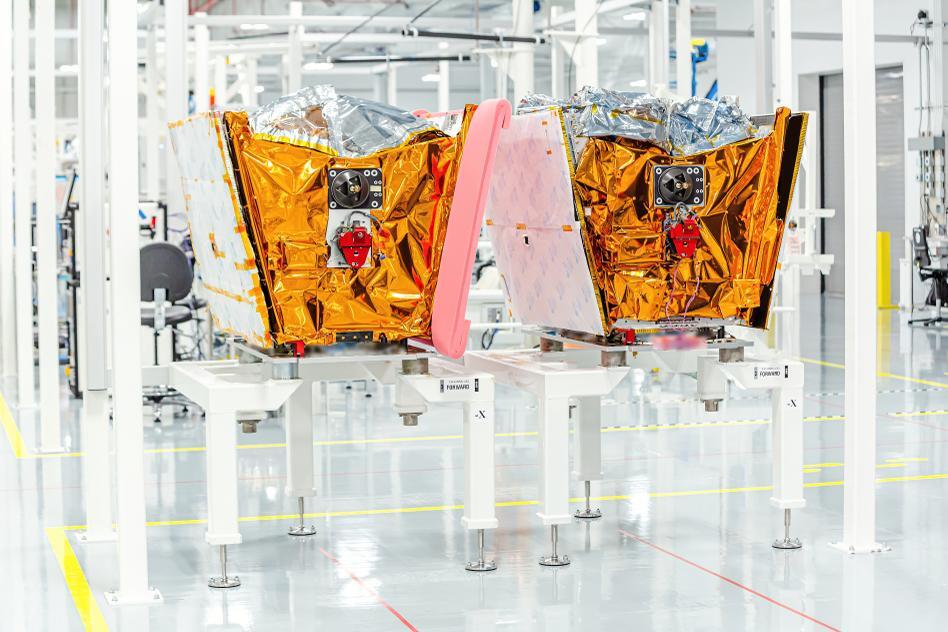
The delivery of the first 32 next-generation OneWeb satellites by Airbus to Eutelsat represents much more than another milestone in satellite manufacturing.
It illustrates an important transition in the space economy:
from building individual spacecraft toward continuously regenerating orbital infrastructure.
From the perspective of the Techne–Phronesis Negotiation Framework™ (TPNF), the strategic value of the OneWeb programme therefore cannot be measured primarily by the technological sophistication of individual satellites.
Its deeper value emerges from the ability of an interconnected industrial, orbital, digital and commercial ecosystem to manufacture, launch, operate, replace, improve and regenerate satellite capability continuously.
This essay proposes the concept of Regenerative Orbital Infrastructure™:
a space system whose long-term strategic value derives from its capacity not merely to deploy orbital capability, but to renew, adapt and improve that capability across successive technological generations.
Purpose of the Essay
Airbus announced on October 2, 2026, that it had completed the first 32 next-generation OneWeb Low Earth Orbit satellites for Eutelsat.
They represent the first wave of a programme eventually involving 669 new satellites.
The objective is not simply constellation expansion.
Older spacecraft approaching the end of their operational lives will progressively be replaced while network capabilities are enhanced.
This creates an ideal practical case for testing a fundamental TPNF question:
When does a collection of satellites become an ecosystem capable of creating Long-Term Space Value™?
Abstract
Traditional interpretations of space capability often concentrate upon technological achievements: launch vehicles, satellites, payloads and missions.
Constellations introduce a different strategic logic.
Their value emerges from continuity.
Satellites are manufactured repeatedly.
Launches replenish orbital capacity.
Software and payloads evolve.
Operational experience generates learning.
Industrial production incorporates improvements.
New spacecraft replace ageing ones.
The constellation consequently becomes a continuously evolving technological system.
TPNF defines this process as the Orbital Capability Regeneration Loop™.
The OneWeb renewal programme illustrates how space value can evolve from individual spacecraft toward Regenerative Orbital Infrastructure™, where manufacturing, launch, connectivity, operations, customers, technological learning and replacement cycles collectively generate Strategic Future Value™.
1. Thirty-Two Satellites — Or Something Larger?
The visible event is straightforward.
Thirty-two satellites leave a production facility.
But the strategic unit of analysis is much larger.
OneWeb already consists of hundreds of satellites operating as a coordinated LEO communications network.
The new spacecraft are therefore not isolated assets.
They enter an existing architecture involving:
satellites,
ground infrastructure,
launch providers,
digital networks,
operators,
customers,
manufacturing facilities,
supply chains,
and regulatory systems.
TPNF describes this as a Space Capability Ecosystem™.
The satellite creates capability.
The constellation creates connectivity.
The ecosystem converts connectivity into strategic value.
2. From Satellite Manufacturing to Space Infrastructure
Traditional spacecraft were often treated as individually valuable technological assets.
Constellations change this logic.
Individual satellites become replaceable nodes within a persistent network.
This is strategically important.
When one satellite eventually reaches end of life, the underlying service does not necessarily disappear.
Another spacecraft can replace it.
Capability survives the individual platform.
This produces Orbital Capability Continuity™:
the capacity of a space ecosystem to preserve operational function despite the ageing, replacement or loss of individual orbital assets.
The strategic asset therefore becomes the system rather than the spacecraft.
3. The Orbital Capability Regeneration Loop™
The OneWeb programme illustrates a broader TPNF architecture:
Manufacturing → Launch → Orbital Deployment → Service → Operational Experience → Learning → Technological Improvement → Replacement → Renewed Capability.
This is the Orbital Capability Regeneration Loop™.
Each cycle can potentially improve the next.
Production becomes more experienced.
Satellite technology evolves.
Software improves.
Network architecture adapts.
Operational knowledge accumulates.
Future spacecraft incorporate lessons from earlier generations.
Space infrastructure therefore becomes evolutionary.
4. Strategic Future Value™
TPNF defines Strategic Future Value™ as the capacity created today to generate productive, adaptive and sustainable value under tomorrow’s changing technological conditions.
OneWeb provides a practical example.
The immediate value is connectivity.
But future value may emerge through the capabilities created around that connectivity.
Governments gain resilient communications.
Businesses gain access to global digital infrastructure.
Remote regions gain connectivity options.
Future payloads can potentially provide additional functions.
Industrial production develops expertise.
European space manufacturing accumulates knowledge.
The constellation therefore creates both Current Operational Value and Future Capability Value™.
5. The Industrial Ecosystem Behind Orbital Capability
Satellites cannot be separated from their industrial base.
Airbus has transferred constellation serial production to Toulouse.
That matters strategically.
Producing hundreds of satellites requires a different industrial architecture from constructing occasional bespoke spacecraft.
High-rate production creates repetition.
Repetition creates learning.
Learning can improve quality, cost, speed and adaptability.
TPNF defines this as Space Industrial Learning Capital™:
the cumulative knowledge generated through repeated production, integration and improvement of space systems.
The factory therefore produces more than satellites.
It produces knowledge.
6. From Industrial Capability to European Strategic Capacity
The European dimension is especially important.
Space-based connectivity is increasingly associated with economic resilience, government communications, security and technological sovereignty.
OneWeb therefore exists within a wider European ecosystem.
Airbus is simultaneously involved in development of satellites for Europe’s IRIS² sovereign connectivity constellation.
This creates potential relationships between industrial capability developed through OneWeb and future European space infrastructure.
The strategic value lies partly in maintaining the capacity to:
design,
manufacture,
integrate,
operate,
replace,
and improve orbital infrastructure.
TPNF calls this Space Ecosystem Sovereignty™.
Sovereignty does not necessarily require technological isolation.
It requires sufficient ecosystem capability to preserve meaningful strategic options.
7. Connectivity as Strategic Infrastructure
Satellite connectivity increasingly functions as infrastructure.
It can support aviation.
Maritime operations.
Government communications.
Businesses.
Remote communities.
Emergency response.
Security applications.
Digital economic activity.
The strategic value of the constellation therefore extends beyond the space sector itself.
This produces Orbital–Terrestrial Value Conversion™:
the process through which capabilities deployed in space generate economic, institutional, societal or security value on Earth.
Without this conversion, satellites remain technological assets.
Through conversion, they become strategic infrastructure.
8. The Constellation Regeneration Paradox™
Constellations also reveal an important paradox.
Their strength partly derives from scale and distributed architecture.
But scale creates continuous replacement requirements.
Hundreds of satellites eventually age.
Technology becomes obsolete.
Launches are required.
Supply chains must remain functional.
Capital must continue flowing.
Industrial production must persist.
TPNF defines this as the Constellation Regeneration Paradox™:
the larger and more strategically important an orbital constellation becomes, the more its long-term value depends upon the ecosystem’s capacity continuously to replace and regenerate its distributed components.
Deployment is therefore not completion.
Deployment creates a long-term regeneration obligation.
9. From Space Assets to Adaptive Space Ecosystems
This distinction changes how space power should be evaluated.
The question should not simply be:
How many satellites does an actor possess?
A more strategic question is:
How effectively can the ecosystem sustain and regenerate the services those satellites provide?
An adaptive space ecosystem requires manufacturing capacity.
Launch access.
Software capability.
Ground infrastructure.
Skilled human capital.
Financial sustainability.
Operational learning.
Cybersecurity.
Supply-chain resilience.
Strategic advantage emerges from their integration.
10. Future Space Value Creation
The OneWeb case therefore illustrates a broader transformation in humanity’s relationship with space.
The first phase of the Space Age demonstrated that humanity could reach orbit.
The emerging phase asks whether humanity can build sustainable systems in orbit.
TPNF expresses this progression as:
Access to Space → Presence in Space → Infrastructure in Space → Services from Space → Regenerative Space Ecosystems → Long-Term Space Value™.
This is a fundamental change.
A spectacular mission can demonstrate capability.
Infrastructure creates continuity.
An adaptive ecosystem creates future capability.
Strategic Implications
Several strategic implications emerge.
First, future space competition will increasingly involve ecosystems rather than individual spacecraft.
Second, satellite manufacturing capacity becomes part of space power.
Third, constellation replacement should be understood as capability regeneration rather than routine maintenance.
Fourth, repeated production generates Space Industrial Learning Capital™.
Fifth, orbital infrastructure creates strategic value only when its services are converted into terrestrial economic, societal, institutional or security outcomes.
Sixth, distributed constellations create resilience but also long-term regeneration obligations.
Finally, European strategic autonomy in space will depend not merely upon owning satellites but upon maintaining the industrial, technological and operational ecosystem capable of continuously renewing them.
The delivery of 32 OneWeb satellites may appear modest when compared with a constellation containing hundreds of spacecraft.
From a TPNF perspective, however, that is precisely why the milestone matters.
The strategic significance lies not in 32 satellites.
It lies in the beginning of another cycle.
Older spacecraft will eventually disappear.
New spacecraft will replace them.
Technology will improve.
Operational knowledge will accumulate.
Industrial experience will deepen.
Connectivity will continue.
The constellation therefore becomes something more than hardware orbiting Earth.
It becomes Regenerative Orbital Infrastructure™.
The TPNF architecture can consequently be expressed as:
Techne → Satellite Capability → Constellation → Connectivity → Operational Learning → Industrial Regeneration → Strategic Future Value™ → Long-Term Space Value™.
Future space value will not be created simply by putting more technology into orbit.
It will emerge from ecosystems capable of repeatedly transforming orbital technology into useful services, learning from experience and regenerating themselves across technological generations.
Key Takeaways
- The strategic unit is increasingly the constellation ecosystem, not the individual satellite.
- OneWeb illustrates the transition from spacecraft toward persistent orbital infrastructure.
- Orbital Capability Continuity™ allows services to survive individual spacecraft.
- Replacement creates an Orbital Capability Regeneration Loop™.
- Serial satellite manufacturing generates Space Industrial Learning Capital™.
- Connectivity converts orbital capability into terrestrial strategic value.
- European space sovereignty depends partly upon regenerative industrial capacity.
- Distributed constellations create both resilience and continuing replacement obligations.
- Sustainable space power requires manufacturing, launch, operations, finance and technological learning.
- Long-Term Space Value™ emerges when space ecosystems can continuously learn, adapt and regenerate.
Author’s Reflection
The history of space exploration is filled with extraordinary individual achievements.
A rocket launches.
A spacecraft reaches another world.
A telescope reveals something humanity has never seen.
But the next stage of the Space Age may be defined by something less spectacular and potentially more important:
continuity.
Can humanity build space systems that persist?
Can they learn?
Can they adapt?
Can ageing technology be replaced without losing the capability it created?
Can industrial knowledge survive from one technological generation to another?
And can orbital infrastructure continuously create useful value for people on Earth?
The OneWeb renewal programme provides a practical glimpse of that future.
The satellites themselves will eventually disappear.
The capability they collectively create may continue.
Perhaps this is one of the clearest distinctions between technological achievement and Long-Term Strategic Value.
A satellite is temporary.
A regenerative capability can endure.
For TPNF, the future of space may therefore depend not simply upon humanity’s ability to reach orbit, but upon its capacity to create technological ecosystems capable of learning, renewing themselves and continuously transforming space capability into lasting human value.
Nikos Chatzis
Source: Open Sources Analysis, Relative Data Analysis by Nikos Chatzis
© Nikolaos Chatzis. All Rights Reserved.
The Techne–Phronesis Negotiation Framework™
An Integrative Theory of Strategic Negotiation, Complex Adaptive Systems and Practical Wisdom
Technology Creates Capability • Systems Thinking Creates Understanding • Strategic Wisdom Creates Lasting Value.
Negotiation.gr | Strategic Wisdom for the Technological Age