Negotiation.gr | Strategic Wisdom for the Technological Age
“Strategic resilience emerges when technical capability (techne) is
continuously guided by practical wisdom (phronesis) through adaptive
negotiation across interconnected systems.”
Central Idea — Thesis
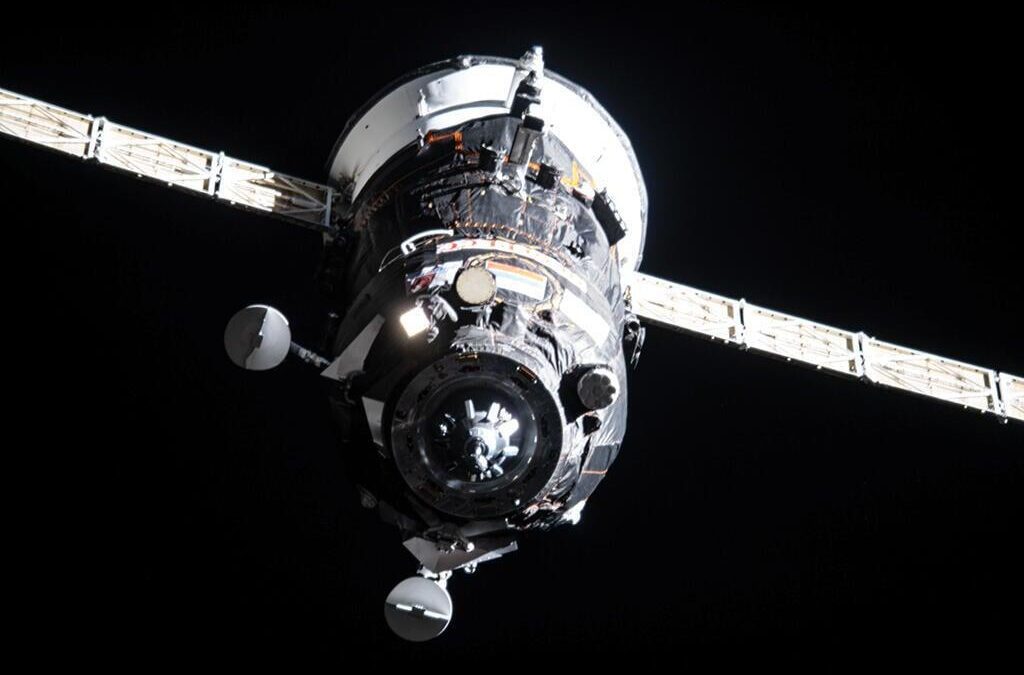
The arrival of Roscosmos Progress 96 at the International Space Station appears to be a routine logistical operation.
It is not.
Every successful resupply mission sustains human presence in orbit, preserves scientific infrastructure, replenishes consumable resources, supports experimentation, regenerates operational capacity and produces knowledge that can influence future exploration.
The Techne–Phronesis Negotiation Framework™ (TPNF) therefore proposes:
The strategic value of space logistics lies not merely in delivering resources to orbit, but in continuously converting terrestrial resources into sustained human presence, operational learning, scientific capability and future extraterrestrial capacity.
This process can be described as Continuous Space-Value Creation™.
Space exploration becomes strategically sustainable when individual missions cease to be isolated technological achievements and become parts of a regenerative ecosystem capable of continuously supporting, learning and creating new capabilities.
Purpose of the Essay
This TPNF essay examines the Progress 96 mission not simply as an ISS resupply flight but as an example of how repeated orbital logistics can generate cumulative strategic value.
The central question is:
Can routine space operations continuously transform consumable resources into enduring capabilities for humanity beyond Earth?
Abstract
The Roscosmos Progress 96 spacecraft docked automatically with the space-facing port of the International Space Station’s Poisk module on September 19, 2026.
Launched aboard a Soyuz rocket from Baikonur Cosmodrome three days earlier, the uncrewed spacecraft delivered approximately three tons of food, fuel and other supplies to the Expedition 75 crew.
Progress 96 will remain attached to the station for approximately five months before departing with waste for destructive atmospheric re-entry.
The mission belongs to a mature logistics architecture supporting continuous human operations in low Earth orbit.
TPNF interprets this through Continuous Space-Value Creation™, Orbital Logistics Infrastructure™, Space Capability Regeneration™ and the Orbital Regeneration Loop™.
The deeper significance of Progress 96 lies not in one delivery but in the system’s capacity to repeat it.
1. The Strategic Importance of the Routine
Spectacular space missions naturally attract attention.
Rocket launches.
Lunar landings.
New spacecraft.
Mars missions.
Yet mature technological ecosystems are not defined only by spectacular achievements.
They are defined by their capacity to make extraordinary activities increasingly routine.
Progress 96 represents precisely this transition.
A spacecraft launches.
It navigates toward an orbital station.
It docks automatically.
Cargo is transferred.
Waste is eventually loaded.
The spacecraft departs.
Another mission follows.
What once represented extraordinary technological achievement becomes infrastructure.
And infrastructure creates continuity.
2. Orbital Logistics Infrastructure™
Humans cannot maintain a permanent presence in space without logistics.
Astronauts require food.
Spacecraft require fuel.
Experiments require equipment.
Station systems require replacement components.
Crews require clothing, medical supplies and everyday necessities.
This creates Orbital Logistics Infrastructure™:
the interconnected launch, transportation, docking, storage, distribution and disposal capabilities required to sustain continuous human and technological operations beyond Earth.
The ISS is therefore not merely an orbital laboratory.
It is the destination of a continuously operating supply chain extending from Earth’s industrial ecosystem into space.
3. From Cargo to Capability
Three tons of supplies have obvious immediate value.
Food sustains people.
Fuel sustains spacecraft operations.
Equipment supports experiments and maintenance.
But TPNF asks what those resources ultimately enable.
Food enables human presence.
Human presence enables experimentation.
Experiments generate knowledge.
Knowledge influences future technologies.
Operational experience improves future missions.
The value-conversion sequence therefore becomes:
Terrestrial Resources → Orbital Logistics → Sustained Human Presence → Scientific Activity → Operational Learning → New Capability → Future Space Value.
Cargo is consumed.
Capability can accumulate.
That distinction is fundamental.
4. Continuous Space-Value Creation™
TPNF defines Continuous Space-Value Creation™ as:
the repeated conversion of terrestrial resources, technological operations and human knowledge into cumulative scientific, operational, economic and strategic capabilities that expand humanity’s capacity to operate beyond Earth.
A single resupply mission produces temporary logistical value.
A continuously functioning resupply architecture can produce cumulative strategic value.
The difference is repetition combined with learning.
5. The Orbital Regeneration Loop™
Progress 96 illustrates what TPNF can describe as the Orbital Regeneration Loop™:
Supply → Operation → Consumption → Learning → Waste Removal → Resupply → Improved Operation.
The spacecraft brings resources.
The station consumes them.
Astronauts conduct operations and experiments.
Experience accumulates.
Waste is transferred to the Progress spacecraft.
Progress eventually leaves and burns up in Earth’s atmosphere.
Another spacecraft replaces the consumed capability.
The system regenerates itself.
This is one of the fundamental characteristics of sustainable infrastructure.
6. Multiple Spacecraft, One Logistics Ecosystem
Progress is not operating alone.
Operational cargo transportation to the ISS now involves several spacecraft architectures, including Russia’s Progress, SpaceX’s Dragon, Northrop Grumman’s Cygnus and Japan’s HTV-X.
This creates redundancy and diversity.
Different spacecraft use different technological architectures, launch systems and operational models.
Yet they contribute to one wider objective:
sustaining the orbital ecosystem.
This demonstrates an important TPNF principle.
Strategic resilience often emerges not from one perfect system but from multiple capabilities contributing to a common function.
7. Space Capability Regeneration™
Space infrastructure inevitably consumes capability.
Equipment degrades.
Fuel disappears.
Food is consumed.
Components fail.
Experiments use materials.
Human activity generates waste.
Without replenishment, the station’s operational capability would progressively decline.
TPNF describes the counter-process as Space Capability Regeneration™:
the capacity of a space ecosystem to restore consumed resources, replace degraded capabilities and continuously preserve the conditions necessary for sustained operations.
This principle will become even more important beyond low Earth orbit.
A lunar base will require regeneration.
Mars exploration will require regeneration.
Future commercial stations will require regeneration.
Permanent space presence ultimately depends upon it.
8. The Earth-Dependency Problem
Progress 96 also exposes a major limitation.
The ISS remains heavily dependent upon Earth.
Food comes from Earth.
Many replacement components come from Earth.
New crews come from Earth.
Much of the fuel and scientific equipment originates on Earth.
This creates the Earth-Dependency Constraint™:
the structural limitation created when extraterrestrial operations depend upon continuous terrestrial resupply for essential resources and capabilities.
For low Earth orbit, this dependence is manageable.
For the Moon, logistics become harder.
For Mars, continuous terrestrial dependence becomes far more difficult.
Future space ecosystems must therefore progressively transform from resupply-dependent systems toward regenerative systems.
9. From Resupply to Regeneration
This transformation represents one of the greatest technological challenges of future space exploration.
Instead of continually transporting water from Earth, future systems may recycle it almost completely.
Instead of importing all fuel, future missions may produce propellants using extraterrestrial resources.
Instead of sending every replacement component, astronauts may manufacture parts locally.
Instead of disposing of waste, future systems may recycle materials.
The strategic progression becomes:
Resupply → Recycling → Local Manufacturing → Resource Utilization → Regenerative Space Ecosystem.
Progress 96 represents an advanced stage of the first step.
10. International Interdependence in Orbit
The mission also demonstrates another important reality.
Despite geopolitical tensions on Earth, ISS operations continue to involve complex international technological interdependence.
Russian spacecraft support station logistics.
American spacecraft support crews and cargo.
Japanese systems contribute logistics.
European, Canadian and other international technologies and researchers contribute to station operations and science.
The ISS therefore remains a remarkable example of Functional Strategic Interdependence™:
the preservation of operational cooperation in a specific technological ecosystem despite wider political competition among participating states.
This does not eliminate geopolitical rivalry.
It demonstrates that cooperation and competition can coexist.
11. Knowledge Is the Most Important Cargo Returning From Space
Progress 96 will not return scientific samples to Earth.
It will eventually be destroyed during re-entry.
Yet the wider ISS ecosystem continuously produces something far more durable than physical cargo:
knowledge.
Expedition 75 research includes work involving human health, manufacturing, materials and other scientific investigations.
The strategic flow therefore becomes circular:
Earth sends resources to space.
Space returns knowledge to Earth.
That knowledge influences technologies.
Those technologies enable better future space missions.
This creates a Space Knowledge Flywheel™:
Resources → Exploration → Knowledge → Technology → Improved Capability → Expanded Exploration → New Knowledge.
12. From ISS Logistics to Extraterrestrial Civilization
The Progress mission therefore belongs to a much longer trajectory.
Today’s orbital logistics systems are teaching humanity how to sustain people beyond Earth.
Future lunar stations will require similar capabilities.
Mars missions will require far more autonomous versions.
Commercial orbital stations will require reliable supply networks.
Eventually, extraterrestrial economic activity may require transportation networks connecting multiple destinations.
Routine ISS resupply missions are therefore creating operational knowledge for systems that do not yet fully exist.
This is Strategic Future Value™.
Strategic Implications
First, space logistics should be understood as strategic infrastructure rather than supporting activity.
Second, Continuous Space-Value Creation™ emerges when repeated operations generate cumulative capabilities.
Third, Orbital Logistics Infrastructure™ transforms terrestrial resources into sustained orbital operations.
Fourth, the Orbital Regeneration Loop™ demonstrates how mature space ecosystems preserve capability through repeated replenishment.
Fifth, Earth-Dependency Constraint™ reveals why future deep-space systems must become increasingly regenerative.
Finally, the Space Knowledge Flywheel™ demonstrates how today’s missions can generate capabilities required for tomorrow’s exploration.
Progress 96 delivered approximately three tons of supplies.
Those supplies will eventually be consumed.
The spacecraft itself will eventually disappear into Earth’s atmosphere.
Yet the strategic value created by the mission does not necessarily disappear with either.
Operations generate experience.
Experience generates knowledge.
Knowledge improves technology.
Technology creates new capability.
Capability expands future possibilities.
Techne creates the spacecraft, rockets, docking systems and orbital infrastructure.
Systems Thinking reveals the logistics ecosystem connecting Earth with sustained human activity in space.
Phronesis asks how those capabilities should be developed so that temporary technological achievements become lasting human value.
Progress 96 therefore represents something larger than three tons of cargo.
It represents another iteration in humanity’s continuing effort to transform spaceflight from exceptional exploration into sustainable presence.
The supplies are consumed. The spacecraft is expendable. But the capability and knowledge created through continuous operation can accumulate.
That is the essence of Continuous Space-Value Creation™.
Key Takeaways
- Progress 96 docked with the ISS Poisk module on September 19, 2026.
- It delivered approximately three tons of supplies for Expedition 75.
- Orbital Logistics Infrastructure™ enables continuous human operations beyond Earth.
- Continuous Space-Value Creation™ converts repeated missions into cumulative capability.
- Orbital Regeneration Loop™ connects supply, operation, learning and replenishment.
- Multiple cargo systems increase ecosystem resilience.
- Space Capability Regeneration™ preserves orbital operational capacity.
- Earth-Dependency Constraint™ remains a major limitation for future deep-space operations.
- Future space systems must evolve from resupply toward regeneration.
- The Space Knowledge Flywheel™ converts today’s orbital operations into tomorrow’s exploration capabilities.
Author’s Reflection
Progress 96 carries food, fuel and supplies.
But perhaps its most important contribution cannot be weighed in tons.
Every successful resupply mission strengthens humanity’s knowledge of how to live and operate continuously beyond Earth.
The individual spacecraft is temporary.
The learning is cumulative.
This distinction may become fundamental to understanding the strategic value of space exploration.
We often measure space activity by launches, spacecraft, payload mass or missions completed.
Perhaps we should increasingly measure something else:
How much future capability did today’s mission create?
When routine operations generate knowledge, when knowledge improves technology, when technology enables greater autonomy and when greater autonomy expands humanity’s ability to remain beyond Earth, logistics becomes something more than logistics.
It becomes a mechanism of civilizational learning.
Technology creates access to space. Logistics sustains presence. Systems Thinking reveals the ecosystem. Strategic wisdom converts repeated operations into lasting human value.
Nikos Chatzis
Source: Open Sources Analysis, Relative Data Analysis by Nikos Chatzis
© Nikolaos Chatzis. All Rights Reserved.
The Techne–Phronesis Negotiation Framework™
An Integrative Theory of Strategic Negotiation, Complex Adaptive Systems and Practical Wisdom
Technology Creates Capability • Systems Thinking Creates Understanding • Strategic Wisdom Creates Lasting Value.
Negotiation.gr | Strategic Wisdom for the Technological Age