Negotiation.gr | Strategic Wisdom for the Technological Age
“Strategic resilience emerges when technical capability (techne) is
continuously guided by practical wisdom (phronesis) through adaptive
negotiation across interconnected systems.”
Central Idea — Thesis
The Pentagon faces an unusual strategic problem.
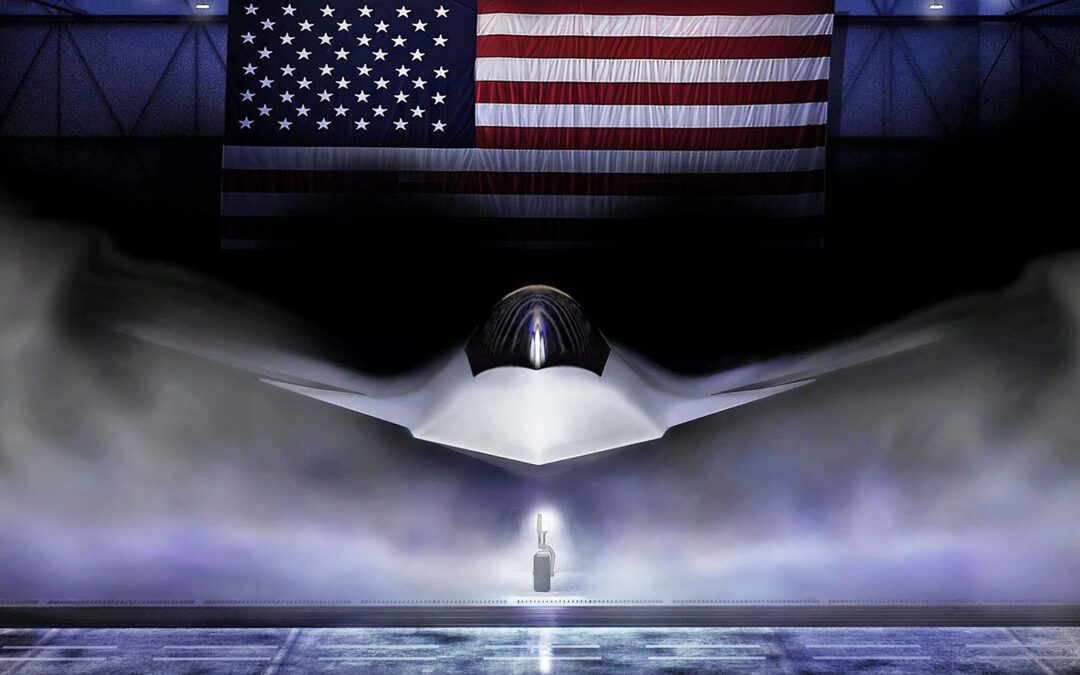
The United States possesses the technological knowledge to develop two sixth-generation combat-aircraft programs—the Air Force’s F-47 and the Navy’s F/A-XX—but questions remain over whether the American industrial base can develop and eventually produce both at high speed simultaneously.
This is not simply a manufacturing problem.
Nor is it merely about synchronizing two advanced aircraft programs.
Each fighter sits at the center of an emerging ecosystem connecting propulsion, stealth materials, sensors, artificial intelligence, software, weapons, autonomous aircraft, communications, digital engineering, suppliers, testing infrastructure and highly specialized human expertise.
The Techne–Phronesis Negotiation Framework™ (TPNF) therefore asks a deeper question:
Can a country possess sufficient technological capability to design multiple revolutionary systems while lacking sufficient ecosystem capacity to develop, integrate and industrialize them simultaneously?
The F-47/F/A-XX dilemma suggests the answer may be yes.
Purpose of the Essay
This TPNF essay examines the Pentagon’s industrial-base concerns surrounding simultaneous development of the F-47 and F/A-XX.
TPNF argues that the problem reveals a distinction between Technological Capability™ and Ecosystem Execution Capacity™—between knowing how to create advanced technology and possessing sufficient interconnected industrial, human and organizational capacity to convert multiple advanced concepts into operational capability at the required speed.
Abstract
The Pentagon previously slowed F/A-XX because officials believed the defense industrial base could not move rapidly on two sixth-generation fighter programs simultaneously. The F-47 became the priority.
Congress subsequently restored significant F/A-XX funding, while the Navy continued arguing that its future carrier fighter is operationally essential.
The resulting challenge extends beyond two aircraft.
Both programs require scarce engineering expertise, sophisticated suppliers, advanced manufacturing, software integration, propulsion, testing and continuing support for existing programs such as the F-35.
TPNF describes this as Advanced Technology Ecosystem Congestion™: the condition in which several strategically important technological programs simultaneously compete for scarce capabilities within overlapping industrial ecosystems.
1. Two Fighters, Two Different Missions
The F-47 and F/A-XX should not be understood as interchangeable aircraft.
The F-47 is the Air Force’s sixth-generation fighter, being developed by Boeing as part of a broader family-of-systems architecture.
Pentagon budget documentation describes it as an integrated weapon system involving air vehicle, ground, training and digital-infrastructure segments, emphasizing survivability, persistence, lethality, interoperability and open architecture.
F/A-XX serves a different environment.
It is intended to become the centerpiece of the Navy’s future carrier air wing and eventually replace the F/A-18E/F Super Hornet. It is expected to provide greater range, survivability and integration with uncrewed aircraft.
Different missions therefore generate different technological requirements.
But different requirements do not necessarily mean different industrial resources.
2. The Pentagon’s Concern
The Pentagon’s FY2026 position was unusually clear.
Officials argued that the industrial base could only move rapidly on one sixth-generation fighter program at a time and prioritized the F-47.
F/A-XX received only limited development funding intended partly to preserve its design work and ability to leverage F-47 developments.
The concern included shortages of qualified industrial-base engineers.
That distinction matters.
Money can be appropriated quickly.
Experienced aerospace engineers cannot be created instantly.
Advanced suppliers cannot necessarily double production immediately.
Specialized manufacturing facilities require investment and time.
The constraint is therefore not simply financial.
It is systemic.
3. Technological Capability Is Not Ecosystem Capacity
This creates an important TPNF distinction.
Technological Capability™
The knowledge and technical competence required to design and develop an advanced system.
Ecosystem Execution Capacity™
The ability of the surrounding industrial ecosystem to mobilize sufficient people, suppliers, infrastructure, capital, technologies and organizational resources to convert technological knowledge into operational capability within the required timeframe.
A country can possess extraordinary technological capability while experiencing limited execution capacity.
That appears to be the deeper concern surrounding F-47 and F/A-XX.
4. Two Aircraft Are Actually Two Ecosystems
A sixth-generation fighter is no longer adequately described as an aircraft.
It is a node within a larger combat architecture.
The fighter connects with:
Autonomous collaborative aircraft.
Sensors.
Electronic warfare.
Weapons.
Artificial intelligence.
Secure communications.
Space systems.
Cyber capabilities.
Command-and-control networks.
Digital engineering.
Maintenance and logistics.
Training systems.
Each fighter therefore represents a Combat Technology Ecosystem™.
The strategic problem is consequently not:
Can America build two fighters?
It is:
Can America simultaneously develop, integrate and industrialize two overlapping ecosystems of edge technology?
5. Advanced Technology Ecosystem Congestion™
This leads to a new TPNF concept:
Advanced Technology Ecosystem Congestion™
A condition in which multiple strategically important advanced-technology programs simultaneously compete for limited high-value capabilities within overlapping industrial, technological and human-capital ecosystems.
The scarce resource may be engineers.
Or propulsion expertise.
Or specialized materials.
Or software architects.
Or testing facilities.
Or subsystem suppliers.
Or production tooling.
Congestion emerges when demand across programs exceeds the ecosystem’s ability to regenerate those capabilities rapidly enough.
6. Synchronization Is Only Part of the Problem
Better synchronization can help.
F-47 research could potentially inform F/A-XX.
Open architectures can facilitate technology reuse.
Common standards can reduce unnecessary duplication.
Digital engineering can accelerate development.
Shared suppliers may generate scale.
But synchronization alone cannot create unlimited capacity.
If both programs require the same scarce engineers at the same time, scheduling becomes a zero-sum problem.
If suppliers cannot expand output, commonality can actually concentrate risk.
This produces the Commonality–Capacity Paradox™:
Sharing technologies and suppliers can reduce cost and complexity while simultaneously increasing systemic dependence on the same constrained industrial resources.
Efficiency and resilience are not always identical.
7. Human Capital May Be the Critical Bottleneck
Sixth-generation aircraft require extremely specialized knowledge.
Stealth engineering.
Aerodynamics.
Propulsion.
Mission systems.
AI and autonomy.
Electronic warfare.
Software.
Advanced manufacturing.
Systems integration.
Testing.
Certification.
Such expertise accumulates over decades.
An engineer who has participated in several generations of combat-aircraft development carries knowledge that cannot simply be purchased from a catalogue.
This makes Human Technological Capital™ part of national power.
The Pentagon’s concern about qualified engineers therefore exposes a strategic reality:
Industrial capacity ultimately depends upon human capability.
Factories can be expanded.
Expertise must be cultivated.
8. The Industrial Ecosystem Regeneration Problem™
This creates another issue.
For decades, consolidation reduced the number of major U.S. combat-aircraft prime contractors.
At the same time, highly specialized supply chains became increasingly concentrated.
When demand suddenly increases, the system cannot automatically regenerate the suppliers, engineers and manufacturing capacity that disappeared during periods of lower production.
TPNF defines this as the Industrial Ecosystem Regeneration Problem™:
the difficulty of rapidly recreating industrial capabilities after specialized human, organizational or manufacturing capacity has contracted over time.
Strategic capacity therefore depends not only upon what industry can produce today.
It depends upon how quickly industry can expand tomorrow.
9. F-47 and F/A-XX Are Also Learning Ecosystems
Developing both programs simultaneously also creates opportunity.
Experience from one program can accelerate another.
Materials research can migrate.
Digital engineering methods can improve.
Software architectures can mature.
Autonomy can advance.
Manufacturing techniques can spread across suppliers.
This creates Cross-Ecosystem Learning™:
the transfer of knowledge, methods and technological advances between related strategic ecosystems in ways that accelerate collective capability development.
The objective should therefore not necessarily be complete separation.
It should be carefully managed interdependence.
10. The China Factor
The strategic pressure becomes greater because the United States is not developing these systems in isolation.
China is rapidly advancing sophisticated combat aircraft and expanding its aerospace-industrial capacity.
The Navy argues that further F/A-XX delay could leave carrier aviation dependent on F/A-18E/Fs and F-35Cs deeper into the 2030s while potential adversaries field increasingly advanced aircraft.
The Pentagon therefore faces competing risks.
Develop both programs aggressively and potentially overstress the industrial base.
Slow one program and potentially create an operational capability gap.
This is the Capability–Capacity Dilemma™:
Strategic demand requires faster capability development precisely when industrial limitations constrain the speed at which that capability can be produced.
11. From Program Management to Ecosystem Strategy
The solution cannot come from managing F-47 and F/A-XX as isolated acquisition programs.
The United States must manage the industrial ecosystem supporting them.
That means identifying shared bottlenecks.
Expanding specialized suppliers.
Developing engineers.
Investing in manufacturing infrastructure.
Creating interoperable digital architectures.
Maintaining competition where possible.
Sharing technology where useful.
Avoiding dangerous single points of failure.
And building capacity beyond the immediate requirements of one aircraft.
The strategic unit of analysis must therefore move:
Program → Platform → Family of Systems → Industrial Ecosystem → National Technological Capability.
Strategic Implications
First, sixth-generation fighter development is increasingly an ecosystem-management problem rather than merely an aircraft-design problem.
Second, the Pentagon must distinguish technological capability from Ecosystem Execution Capacity™.
Third, simultaneous programs can create Advanced Technology Ecosystem Congestion™ when they compete for scarce engineers, suppliers and infrastructure.
Fourth, common technologies can create efficiencies but also the Commonality–Capacity Paradox™ if both programs depend excessively upon identical constrained resources.
Fifth, human expertise should be treated as strategic industrial infrastructure.
Finally, the objective should not simply be synchronizing F-47 and F/A-XX. It should be expanding the ecosystem sufficiently that America can develop multiple advanced capabilities simultaneously.
The F-47/F/A-XX debate reveals something larger than a Pentagon procurement problem.
The United States may possess the technology required for both aircraft.
The deeper question is whether it possesses enough ecosystem capacity to transform that knowledge into two operational sixth-generation combat systems at the speed strategic competition requires.
Techne creates advanced technological capability.
Systems Thinking reveals the industrial dependencies surrounding it.
Ecosystem Orchestration™ coordinates those capabilities.
Phronesis determines how scarce resources should be allocated without sacrificing future strategic options.
The real challenge is therefore not simply synchronizing two ecosystems of edge technology.
It is ensuring that the national technological ecosystem possesses sufficient depth, redundancy, human expertise and regenerative capacity to sustain both.
Because in future technological competition, possessing the knowledge to build the next generation may no longer be enough.
Strategic advantage will increasingly belong to the ecosystem capable of converting advanced knowledge into multiple operational capabilities—simultaneously, sustainably and faster than its competitors.
Key Takeaways
- F-47 and F/A-XX represent two different but overlapping advanced combat ecosystems.
- Ecosystem Execution Capacity™ distinguishes technological knowledge from the capacity to industrialize it rapidly.
- Advanced Technology Ecosystem Congestion™ occurs when strategic programs compete for scarce industrial capabilities.
- The Commonality–Capacity Paradox™ shows that shared suppliers can create efficiency and vulnerability simultaneously.
- Human Technological Capital™ may be one of the most important constraints on sixth-generation development.
- Cross-Ecosystem Learning™ can allow the two programs to reinforce rather than merely compete with each other.
- The Capability–Capacity Dilemma™ captures the Pentagon’s central challenge: strategic urgency demands speed while industrial limitations constrain it.
- Long-term advantage requires expanding and regenerating the industrial ecosystem, not simply prioritizing one aircraft.
Author’s Reflection
The F-47 and F/A-XX raise a question that extends far beyond aerospace.
What happens when technological ambition grows faster than the ecosystem capable of realizing it?
Money alone cannot solve the problem.
Factories alone cannot solve it.
Technology alone cannot solve it.
The decisive capability resides in the relationships among engineers, suppliers, universities, manufacturers, software developers, military users, laboratories and institutions.
Perhaps the most advanced weapon system a technological power possesses is therefore not any individual fighter.
It is the ecosystem capable of repeatedly creating advanced fighters—and simultaneously creating whatever must come next.
That is the difference between possessing technology and possessing lasting technological power.
Nikos Chatzis
Source: Open Sources Analysis, Relative Data Analysis by Nikos Chatzis
© Nikolaos Chatzis. All Rights Reserved.
The Techne–Phronesis Negotiation Framework™
An Integrative Theory of Strategic Negotiation, Complex Adaptive Systems and Practical Wisdom
Technology Creates Capability • Systems Thinking Creates Understanding • Strategic Wisdom Creates Lasting Value.
Negotiation.gr | Strategic Wisdom for the Technological Age