Negotiation.gr | Strategic Wisdom for the Technological Age
“Strategic resilience emerges when technical capability (techne) is
continuously guided by practical wisdom (phronesis) through adaptive
negotiation across interconnected systems.”
Central Idea — Thesis
The presentation of the 2025 RPA Squadron of the Year Award to the U.S. Air Force’s secretive 30th Reconnaissance Squadron provides a rare glimpse into a technological capability normally hidden behind classification.
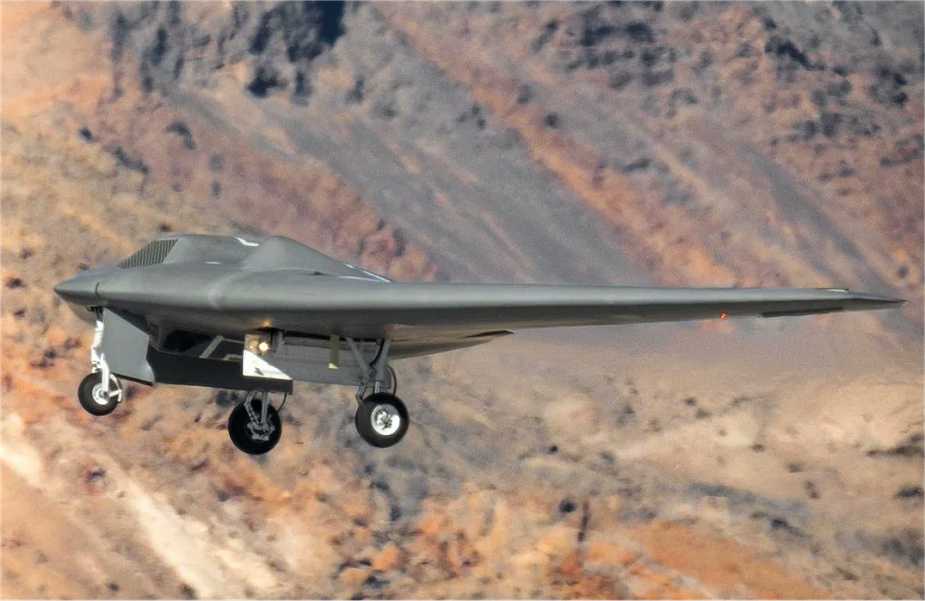
The squadron operates the low-observable RQ-170 Sentinel, one of America’s most secretive unmanned reconnaissance aircraft.
Yet the strategic significance of the award extends beyond the drone itself.
The citation emphasizes intrusive intelligence, surveillance and reconnaissance operations across three areas of responsibility, rapid establishment of forward operating locations, operational agility, intelligence collection and accelerated development of mission-ready aircrews.
The Techne–Phronesis Negotiation Framework™ (TPNF) therefore proposes a broader interpretation:
The strategic value of an advanced intelligence platform derives not merely from its technological sophistication, but from the ecosystem’s ability to position, operate, adapt, learn from and regenerate the capability under changing operational conditions.
The RQ-170 is the visible technological platform.
The largely invisible ecosystem surrounding it creates the operational capability.
Purpose of the Essay
This TPNF essay examines the 30th Reconnaissance Squadron’s award as evidence of the changing relationship between stealth, unmanned systems, intelligence and human expertise.
The central question is:
What transforms an exquisite technological platform into persistent strategic intelligence capability?
Abstract
The 30th Reconnaissance Squadron received the 2025 General Atomics RPA Squadron of the Year Award at the 2026 Air, Space & Cyber Conference.
The award recognizes exceptional performance among active-duty, Air Force Reserve and Air National Guard remotely piloted aircraft units.
The citation revealed that the Blackbirds conducted intrusive ISR missions across three areas of responsibility during 2025, filled critical intelligence gaps, disrupted adversary networks and rapidly established forward operating locations.
The Air Force publicly identifies the squadron as an operator of the RQ-170 Sentinel, a low-observable unmanned reconnaissance aircraft developed with Lockheed Martin’s Advanced Development Programs.
TPNF interprets the case through Penetrating Intelligence Ecosystem™, Operational Intelligence Adaptability™, and Human–Stealth Technology Integration™.
1. The Importance of a Rare Disclosure
The RQ-170 occupies an unusual position in American airpower.
Its existence has been publicly acknowledged for years, yet relatively little official information concerning its specifications and operations is available.
The Air Force describes its mission simply: reconnaissance and surveillance supporting joint-force commanders.
The aircraft’s low-observable characteristics allow intelligence collection in environments where less survivable platforms could face greater risk.
The award therefore provides something unusual.
Not technical specifications.
Not sensor descriptions.
Not operational locations.
But evidence about how the surrounding organization performs.
And that may be strategically more revealing.
2. From Drone to Penetrating Intelligence Ecosystem™
Calling the RQ-170 a “spy drone” communicates its general purpose but understates its systemic character.
The aircraft cannot generate strategic intelligence alone.
It requires operators.
Mission planners.
Intelligence analysts.
Communications.
Data processing.
Maintenance.
Secure infrastructure.
Command-and-control networks.
Forward operating locations.
Training.
Integration with joint forces.
TPNF can describe this architecture as a Penetrating Intelligence Ecosystem™:
an interconnected system of low-observable platforms, sensors, human expertise, data networks, analysis, operational infrastructure and command structures capable of generating intelligence inside highly contested environments.
The aircraft collects.
The ecosystem converts collection into strategic understanding.
3. Intrusive ISR
The award citation’s description of “intrusive” ISR is particularly significant.
Modern militaries increasingly operate in environments saturated with radar, electronic surveillance, integrated air defenses, cyber capabilities and counter-space systems.
Intelligence collection must therefore penetrate increasingly sophisticated defensive ecosystems.
Stealth consequently becomes more than an aircraft characteristic.
It becomes an access-enabling capability.
A low-observable platform can potentially position sensors where other systems cannot operate with acceptable risk.
The strategic sequence becomes:
Low Observability → Access → Persistence → Collection → Analysis → Intelligence → Decision Advantage.
Technology creates access.
The intelligence ecosystem converts access into knowledge.
4. Operational Intelligence Adaptability™
The award citation also emphasizes the squadron’s response to urgent deployment requirements.
Resources were rapidly redirected.
Forward operating locations were established.
Critical missions were executed under compressed timelines.
This suggests another strategic capability beyond stealth:
Operational Intelligence Adaptability™.
TPNF defines this as:
the capacity of an intelligence ecosystem to rapidly reposition technological, human and organizational capabilities in response to changing operational requirements without critically degrading mission effectiveness.
An exquisite aircraft that requires months to relocate may provide less strategic value than one embedded within an organization capable of rapid adaptation.
5. The Human Capability Behind the Sentinel
Perhaps the most revealing numbers concern people.
The squadron graduated its largest-ever combat mission-ready class.
Training occurred 30% ahead of schedule.
Mission-ready status was accelerated by 33%.
Total aircrew increased by 26%.
These achievements illuminate a central TPNF principle.
Advanced technology does not eliminate human capability requirements.
It transforms them.
Low-observable unmanned aircraft still require operators, instructors, evaluators, intelligence specialists, maintainers, planners and commanders.
The strategic capability therefore resides in Human–Stealth Technology Integration™:
the combination of advanced low-observable systems with specialized human knowledge required to transform technological potential into sustained operational effect.
6. Training Is Capability Regeneration
Training numbers might appear secondary to combat missions.
Strategically, they are fundamental.
Every advanced military ecosystem must regenerate itself.
Operators rotate.
Missions expand.
Technology evolves.
Experience must be transferred.
New personnel must become mission-ready.
The ability to accelerate training while maintaining operational performance represents Strategic Capability Regeneration™.
The squadron was therefore performing two missions simultaneously:
Executing today’s intelligence operations.
Creating tomorrow’s capacity to continue them.
This is precisely how technological capability becomes sustainable.
7. Intelligence as Decision Infrastructure
The ultimate product of the RQ-170 is not imagery.
It is improved decision-making.
Intelligence reduces uncertainty.
It identifies targets.
Tracks activity.
Reveals patterns.
Supports operational planning.
Improves situational awareness.
The aircraft therefore forms part of what TPNF can describe as Strategic Decision Infrastructure™.
This is infrastructure not because it resembles a road or port, but because it enables other capabilities to function more effectively.
Better intelligence can improve the employment of aircraft, missiles, special operations forces and other military assets.
The value of ISR therefore propagates across the wider force.
8. The Intelligence Conversion Chain™
Collection alone does not create strategic advantage.
Data must become information.
Information must become understanding.
Understanding must influence decisions.
Decisions must generate effective action.
TPNF describes this as the Intelligence Conversion Chain™:
Collection → Processing → Analysis → Understanding → Decision → Action → Learning.
Every transition represents a potential weakness.
Sensors can collect too much information.
Networks can become overloaded.
Analysis can arrive too late.
Decision-makers can misinterpret intelligence.
Operational circumstances can change.
The best reconnaissance platform cannot eliminate these problems.
Systems integration determines whether technological collection becomes usable strategic knowledge.
9. Secrecy and Strategic Ambiguity
The secrecy surrounding the RQ-170 creates another strategic dimension.
Potential adversaries know the aircraft exists.
But uncertainty remains regarding many of its capabilities, sensors, operating methods and deployments.
This creates Capability Ambiguity™.
Too much secrecy can make deterrence difficult because adversaries may not understand what a system can accomplish.
Too much disclosure can reveal vulnerabilities.
States therefore continuously negotiate the boundary between secrecy and signaling.
The 2025 award is fascinating precisely because it reveals organizational performance without disclosing operational details.
It communicates capability while preserving ambiguity.
10. Nearly Two Decades of Adaptation
The RQ-170 was publicly acknowledged after sightings associated with Afghanistan in 2009.
Nearly two decades later, the Sentinel remains operationally relevant.
That longevity matters.
Technological value should not be measured only by novelty.
A system can remain strategically important if its surrounding ecosystem continuously adapts operations, training, sensors, communications, software and tactics.
The relevant measure is therefore not simply technological age.
It is Adaptive Operational Relevance™:
the capacity of a technological system and its supporting ecosystem to remain strategically useful as operational environments, threats and mission requirements evolve.
11. The Future of Unmanned Intelligence
The RQ-170 also belongs to a broader evolution.
Future intelligence ecosystems will increasingly combine stealth, autonomy, artificial intelligence, space-based sensing, cyber capabilities, distributed sensors and machine-speed data analysis.
The human role will consequently move increasingly toward interpretation, orchestration and strategic judgment.
The progression becomes:
Remote Piloting → Distributed Sensing → AI-Assisted Analysis → Autonomous Adaptation → Human–Machine Intelligence Ecosystem.
The strategic advantage will not belong automatically to the military possessing the most drones.
It will belong to the force most capable of converting distributed technological observation into faster and better strategic understanding.
Strategic Implications
First, the 30th Reconnaissance Squadron demonstrates that advanced unmanned ISR should be understood as an ecosystem capability rather than a platform capability.
Second, Penetrating Intelligence Ecosystem™ explains how stealth, sensors, people, networks and analysis combine to generate access and intelligence.
Third, Operational Intelligence Adaptability™ becomes critical when missions must shift rapidly between theaters.
Fourth, accelerated training demonstrates that human-capability regeneration remains essential even in increasingly unmanned warfare.
Fifth, the Intelligence Conversion Chain™ determines whether collected data actually improves strategic decisions.
Finally, the continued relevance of the RQ-170 demonstrates that technological longevity depends partly upon Adaptive Operational Relevance™, not merely platform age.
The RQ-170 Sentinel attracts attention because of what remains unknown.
Its shape.
Its sensors.
Its missions.
Its capabilities.
But the 2025 RPA Squadron of the Year Award suggests that perhaps we should look beyond the aircraft.
The strategic capability resides in the entire system surrounding it.
Techne creates the low-observable platform and sensing capability.
Systems Thinking reveals the networks, personnel and infrastructure required to employ it.
Ecosystem Orchestration™ connects collection with analysis and operational action.
Phronesis determines how intelligence should inform strategic decisions under uncertainty.
The Sentinel may therefore be the most visible component of an otherwise largely invisible capability.
And that produces the deeper lesson:
In intelligence warfare, the decisive advantage may not belong to the platform that sees the most, but to the ecosystem that can most effectively convert what it sees into understanding, adaptation and timely strategic action.
Key Takeaways
- The 30th Reconnaissance Squadron received the 2025 RPA Squadron of the Year Award.
- The squadron is publicly identified as an operator of the low-observable RQ-170 Sentinel.
- Its award citation reports intrusive ISR operations across three undisclosed areas of responsibility.
- Penetrating Intelligence Ecosystem™ connects stealth platforms with sensors, people, networks and analysis.
- Operational Intelligence Adaptability™ explains the ability to rapidly reposition ISR capability.
- Human expertise remains fundamental to sophisticated unmanned operations.
- Training represents Strategic Capability Regeneration™.
- The Intelligence Conversion Chain™ transforms collection into strategic action.
- Secrecy creates Capability Ambiguity™ while protecting technological advantage.
- Long-term technological value depends upon Adaptive Operational Relevance™.
Author’s Reflection
The RQ-170 reminds us of an interesting paradox of technological power.
We can see the aircraft.
Yet much of the capability that makes the aircraft strategically valuable remains invisible.
We cannot see the accumulated experience of its operators.
We cannot see the analytical systems processing its intelligence.
We cannot see the organizational learning created by years of missions.
We cannot see the relationships connecting sensors, analysts and commanders.
But these invisible capabilities may ultimately matter more than the aircraft’s distinctive shape.
A drone can collect information.
An ecosystem can transform information into understanding.
And strategic wisdom determines what human beings ultimately do with that understanding.
Perhaps that is the deeper significance of the 30th Reconnaissance Squadron’s award.
It recognizes not simply an advanced unmanned aircraft.
It recognizes the human and technological ecosystem capable of turning stealthy observation into strategic knowledge.
Nikos Chatzis
Source: Open Sources Analysis, Relative Data Analysis by Nikos Chatzis
© Nikolaos Chatzis. All Rights Reserved.
The Techne–Phronesis Negotiation Framework™
An Integrative Theory of Strategic Negotiation, Complex Adaptive Systems and Practical Wisdom
Technology Creates Capability • Systems Thinking Creates Understanding • Strategic Wisdom Creates Lasting Value.
Negotiation.gr | Strategic Wisdom for the Technological Age