Negotiation.gr | Strategic Wisdom for the Technological Age
“Strategic resilience emerges when technical capability (techne) is
continuously guided by practical wisdom (phronesis) through adaptive
negotiation across interconnected systems.”
Central Idea — Thesis
The United States’ “Economic D-Day” against Iran represents an attempt to convert American dominance of international financial and commercial networks into decisive geopolitical leverage. But economic coercion does not operate in isolation. Tehran possesses its own asymmetric capabilities capable of transmitting the costs of confrontation outward through energy markets, maritime chokepoints, missiles, drones, regional partners and cyber operations.
The strategic danger is therefore the emergence of an Escalation Ecosystem™ in which pressure applied in one domain generates retaliation in another.
Through the Techne–Phronesis Negotiation Framework™ (TPNF), the central question is no longer simply whether Washington can impose greater economic pain on Tehran. It is whether Iran can make the international cost of isolating Iran greater than the international benefit of supporting American pressure.
That contest could determine the next phase of the war.
Purpose of the Essay
This essay through TPNF examines Iran’s principal options for responding to Washington’s intensified economic campaign and evaluates their wider geopolitical consequences.
It argues that Tehran’s strategic response is likely to depend less upon symmetrical retaliation against American economic power than upon asymmetric escalation across interconnected systems—particularly energy, maritime transportation, Gulf infrastructure, regional security and cyber networks.
Abstract
Washington has unveiled what it describes as an economic onslaught designed to isolate Iran from the global economy. The strategy seeks to expand secondary sanctions and pressure foreign governments, companies and financial institutions that continue supporting Iranian commerce.
Iran cannot match American financial power directly.
It does, however, possess alternative forms of leverage.
Tehran can further restrict the Strait of Hormuz, threaten Gulf energy infrastructure, mobilize regional partners, expand missile and drone operations, conduct cyberattacks or combine several instruments into a multidomain pressure campaign.
TPNF interprets this confrontation as a struggle between two forms of network power: American Financial Network Power™ and Iranian Disruption Network Power™.
The danger is that each side may increasingly attack the systems upon which the wider international economy depends.
1. “Economic D-Day”: Washington Changes the Battlefield
The Trump administration has now moved from threatening extraordinary economic pressure toward constructing a broader architecture for it.
Treasury Secretary Scott Bessent describes the objective as severing the financial connections sustaining Iran.
The logic is straightforward:
Sanctions → Economic Isolation → Resource Depletion → Domestic Pressure → Strategic Concession.
Washington’s advantage comes from the central position of American financial institutions, the dollar and access to U.S. markets.
Secondary sanctions extend that leverage internationally.
A Chinese refinery, shipping company or foreign bank does not necessarily need to agree politically with Washington.
It merely needs to conclude that losing access to American markets would cost more than maintaining commercial relations with Iran.
This is Network Power™.
The United States does not need to physically control every commercial transaction.
It influences the infrastructure through which much global commerce operates.
2. Iran Cannot Fight America Symmetrically
Iran’s problem is obvious.
It cannot retaliate against the United States through equivalent financial instruments.
The dollar remains globally dominant.
American access to capital is vastly greater.
Iran’s international financial position has already been weakened by decades of sanctions and nearly six months of war.
But strategic competition rarely requires symmetry.
Iran instead possesses capabilities capable of exploiting vulnerabilities elsewhere in the system.
This creates the Iranian counter-strategy:
Financial Pressure → Asymmetric Response → International Disruption → Third-Party Costs → Political Pressure on Washington.
The objective need not be defeating American economic power.
It may simply be making its exercise increasingly expensive.
3. Option One: Further Weaponizing Hormuz
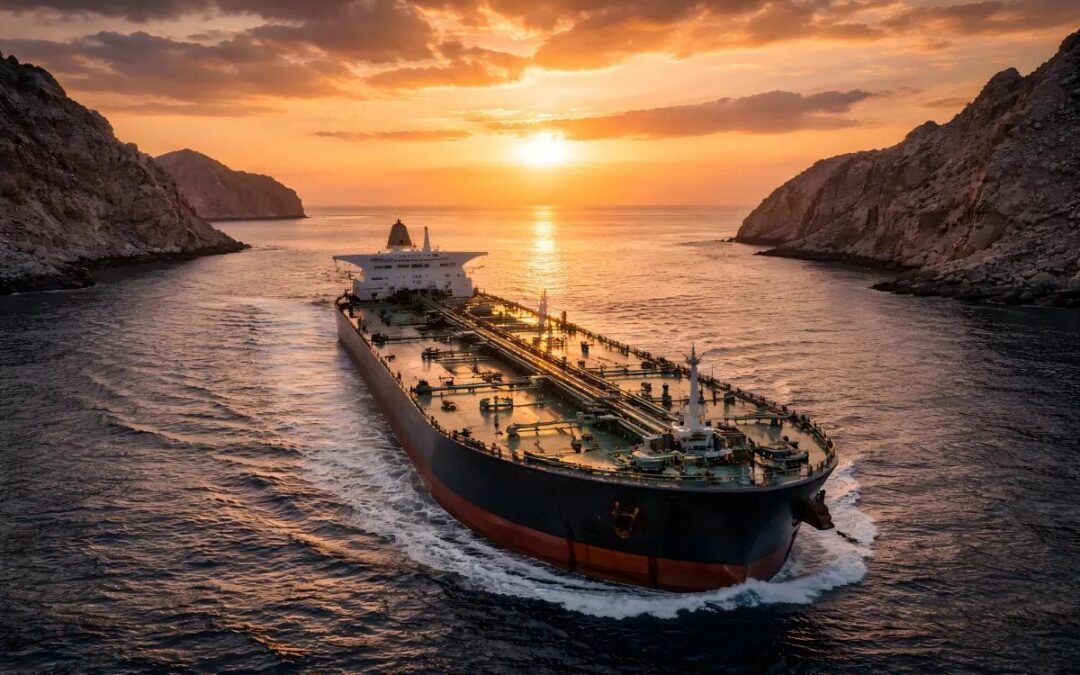
The Strait of Hormuz remains Iran’s most powerful instrument.
Traffic through the waterway has already collapsed dramatically. Reuters reports that commodity-vessel movements are roughly 90% below pre-conflict levels, while Iran has threatened fines, detention and confiscation against 45 tankers it says violated its transit rules.
Tehran could escalate further.
It could attempt to halt remaining tanker traffic.
Increase attacks against vessels.
Lay additional mines.
Expand inspections or seizures.
Or impose greater control over navigation.
The strategic logic would be brutal but clear:
If Iran cannot export normally, why should its competitors?
This would transform Iran’s economic isolation into a global energy problem.
But the strategy carries enormous risks.
It could provoke heavier American military intervention and alienate China and other Asian economies dependent upon Gulf energy.
Hormuz is therefore simultaneously Iran’s strongest leverage and one of its most dangerous escalation instruments.
4. Option Two: Targeting Gulf Energy Infrastructure
Iran has another option: expand pressure from maritime transportation toward the infrastructure supporting Gulf economies.
Tehran has previously warned Gulf states that oil, gas, electricity and water infrastructure could become targets if they facilitate further American attacks.
This creates potentially enormous systemic vulnerability.
Saudi Arabia.
The UAE.
Qatar.
Bahrain.
Kuwait.
These states contain some of the world’s most important oil, gas, refining, port and desalination infrastructure.
A missile or drone does not need to destroy an entire national energy system to influence markets.
It merely needs to demonstrate vulnerability.
The resulting effects could propagate:
Attack → Supply Concern → Insurance Costs → Shipping Risk → Energy Prices → Global Inflation.
Iran’s objective would therefore be to transform regional military capability into worldwide economic consequences.
5. Option Three: Expanding the Red Sea Front
Iran’s regional relationships create another possibility.
The Houthis in Yemen have already demonstrated their ability to disrupt Red Sea maritime traffic.
Reuters has previously reported Iranian signaling that Houthi pressure against the Bab el-Mandeb could intensify under further escalation.
This matters because Hormuz and Bab el-Mandeb together form two critical gateways in the global energy and maritime system.
Pressure on Hormuz affects Gulf exports.
Pressure on Bab el-Mandeb affects access between the Indian Ocean, Red Sea and Suez Canal.
Simultaneous disruption creates a Dual-Chokepoint Strategy™.
Ships reroute.
Journey times increase.
Insurance rises.
Transportation capacity tightens.
Supply chains become less efficient.
Iran thereby extends the conflict geographically without necessarily confronting American forces directly at every point.
6. Option Four: Missile and Drone Escalation
Iran retains substantial missile and drone capabilities despite months of conflict.
These systems provide Tehran with another form of asymmetric leverage.
Targets could include American regional bases, military logistics facilities, ports or infrastructure supporting U.S. operations.
The strategic objective would be to increase the direct military cost of continuing the economic campaign.
But escalation against Gulf territory presents a major political danger for Iran.
Every attack risks transforming neighboring states from cautious intermediaries into active members of an anti-Iran coalition.
TPNF therefore identifies an Escalation–Coalition Paradox™:
The more aggressively Iran attempts to deter regional cooperation with Washington, the more likely its actions may become to strengthen that cooperation.
Strategic coercion can generate the coalition it was intended to prevent.
7. Option Five: Cyber Warfare
Cyber operations offer Tehran another escalation pathway.
Unlike missile strikes, cyber operations can be difficult to attribute immediately and can operate below conventional thresholds of warfare.
Potential targets include:
energy infrastructure;
financial institutions;
transportation networks;
water systems;
government networks;
commercial platforms.
Reuters reports that Western governments have attributed recent disruptions affecting power and water infrastructure to Iranian-linked hackers, while Tehran denies involvement in some alleged operations.
Cyber capability therefore provides a mechanism for Distributed Strategic Disruption™.
The battlefield no longer needs to remain geographically close to Iran.
Digital networks allow confrontation to propagate internationally.
8. Option Six: Strategic Ambiguity and Global Fear
Iran does not necessarily need to execute every threat.
Sometimes uncertainty itself generates leverage.
Markets respond to expectations.
Insurance companies respond to risk.
Shipping companies alter routes.
Governments reconsider exposure.
Investors adjust portfolios.
Iran can therefore exploit Strategic Ambiguity™.
Will Hormuz close completely?
Will Gulf infrastructure be attacked?
Will the Houthis escalate?
Will cyberattacks expand?
Will American bases become targets?
Uncertainty forces adversaries and third parties to prepare for multiple possibilities simultaneously.
This imposes costs before an attack even occurs.
9. China Becomes Increasingly Important
China represents perhaps the most consequential external variable.
Reuters reports that Iranian crude shipments to China have already fallen significantly—from roughly 823,000 barrels per day in July to about 534,000 in August—while Washington is intensifying pressure on entities facilitating Iranian trade.
Beijing nevertheless opposes unilateral sanctions and remains economically important to Tehran.
This creates a strategic test.
How aggressively will Washington enforce secondary sanctions against major Chinese actors?
And how much economic or geopolitical risk will Beijing accept to preserve access to Iranian energy?
If Washington pushes too aggressively, the Iran confrontation could increasingly intersect with broader U.S.–China strategic competition.
The conflict would then migrate from Middle Eastern geopolitics toward the architecture of the international economic system itself.
10. The TPNF Escalation Ecosystem™
The emerging confrontation can be represented as:
U.S. Financial Pressure
↓
Iranian Economic Stress
↓
Iranian Asymmetric Escalation
↓
Energy / Maritime / Military / Cyber Disruption
↓
Global Economic Costs
↓
International Political Pressure
↓
New U.S. Strategic Choices
This is not a linear battlefield.
It is an adaptive system.
Every American move changes Iran’s incentives.
Every Iranian response changes market expectations.
Markets change political pressures.
Political pressures alter alliance behavior.
Alliance behavior changes the strategic calculations of Washington and Tehran.
The war consequently becomes an Escalation Ecosystem™.
Strategic Implications
Several implications follow.
First, America’s greatest advantage remains its ability to weaponize global financial connectivity.
Second, Iran’s strongest counter-leverage lies in disrupting the physical networks supporting global energy and commerce.
Third, further Iranian attacks on Gulf states could backfire by strengthening regional alignment against Tehran.
Fourth, simultaneous disruption of Hormuz and Bab el-Mandeb would internationalize the economic consequences of the conflict dramatically.
Fifth, cyber operations offer Iran mechanisms for widening confrontation without relying exclusively upon conventional military escalation.
Finally, pressure without a viable diplomatic exit creates the danger of recursive escalation.
Each side may possess sufficient capability to hurt the other without possessing sufficient capability to impose a sustainable political settlement.
Washington’s “Economic D-Day” demonstrates the extraordinary reach of American economic power.
But Iran’s response will demonstrate something equally important about contemporary geopolitics.
Power does not exist only in armies or financial systems.
It exists in networks, chokepoints, infrastructure, alliances, information and uncertainty.
America can threaten Iran’s access to the global economic system.
Iran can threaten the functioning of parts of that system.
That is the strategic confrontation now emerging.
Through the TPNF lens, the decisive question is therefore not:
Who can impose greater pain?
It is:
Who can convert pressure into a political outcome before the wider system generates unacceptable costs?
If neither side can accomplish that conversion, escalation becomes self-reinforcing.
Techne creates coercive capability.
But only Phronesis can determine when capability has produced sufficient leverage to return to negotiation.
Without that transition, “Economic D-Day” may not mark the beginning of the end of the war.
It may mark the beginning of its next, more globally disruptive phase.
Key Takeaways
- Iran cannot match U.S. financial power symmetrically, but it possesses significant asymmetric disruption capabilities.
- Hormuz remains Tehran’s strongest—and most dangerous—instrument of strategic leverage.
- Pressure on both Hormuz and Bab el-Mandeb could create a Dual-Chokepoint Strategy™ affecting global trade and energy.
- Further attacks against Gulf states risk producing an Escalation–Coalition Paradox™ that strengthens opposition to Tehran.
- The central strategic challenge is converting coercive capability into negotiation before an Escalation Ecosystem™ becomes self-sustaining.
Author’s Reflection
Perhaps the defining characteristic of contemporary geopolitical power is that weaker actors do not need to defeat stronger actors conventionally.
They need to identify the systems upon which stronger actors depend.
Iran cannot reproduce American financial power.
But geography gives it proximity to Hormuz.
Regional relationships provide access to additional pressure points.
Missiles and drones extend physical reach.
Cyber capabilities extend reach further still.
The resulting confrontation teaches an important TPNF lesson:
Interdependence creates value—but interdependence also creates leverage.
Washington’s challenge is therefore not simply to maximize economic pressure.
It is to understand how much pressure the wider geopolitical ecosystem can absorb before Iran successfully transfers its own costs onto everyone else.
That is where Techne ceases to be sufficient.
And where Phronesis becomes indispensable.
Nikos Chatzis
Source: Open Sources Analysis, Relative Data Analysis by Nikos Chatzis
© Nikolaos Chatzis. All Rights Reserved.
The Techne–Phronesis Negotiation Framework™
An Integrative Theory of Strategic Negotiation, Complex Adaptive Systems and Practical Wisdom
Technology Creates Capability • Systems Thinking Creates Understanding • Strategic Wisdom Creates Lasting Value.
Negotiation.gr | Strategic Wisdom for the Technological Age