Negotiation.gr | Strategic Wisdom for the Technological Age
“Strategic resilience emerges when technical capability (techne) is
continuously guided by practical wisdom (phronesis) through adaptive
negotiation across interconnected systems.”
Central Idea — Thesis
The defining strategic challenge of the technological age is no longer simply obtaining information, developing technological capability or predicting what will happen next. It is making wise decisions within increasingly complex technological ecosystems whose behavior cannot be completely predicted.
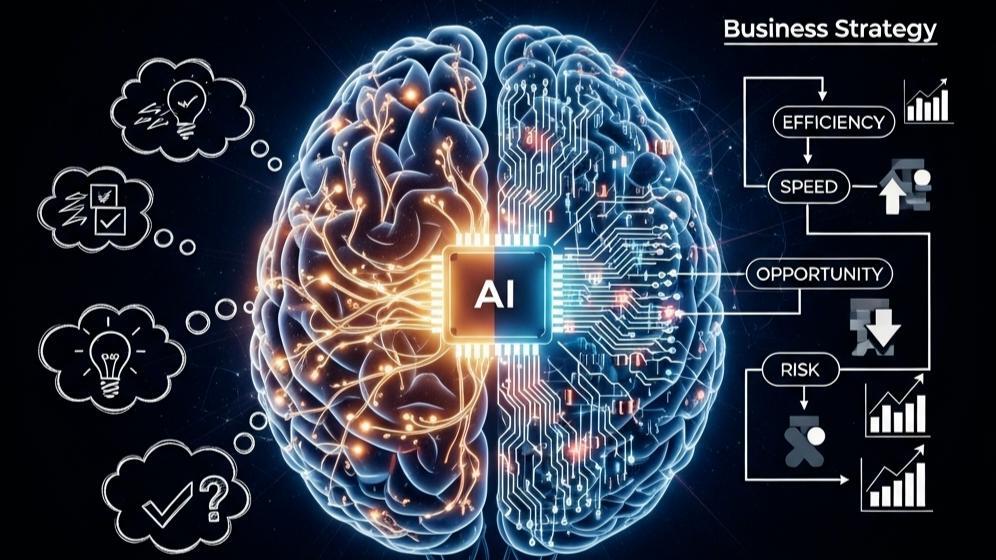
Artificial intelligence can analyze enormous quantities of information. Algorithms can identify patterns invisible to humans. Digital twins can simulate alternatives. Autonomous systems can execute decisions at extraordinary speed.
Yet none eliminates the fundamental human responsibility of deciding what objectives should be pursued, which risks are acceptable, whose interests matter, and what constitutes lasting strategic value.
The Techne–Phronesis Negotiation Framework™ (TPNF) therefore proposes an integrated architecture:
Techne → Capability
Systems Thinking → Understanding
Negotiation → Alignment
Phronesis → Strategic Judgment
Strategic Judgment → Lasting Strategic Value
In the technological age, the highest form of strategic capability may therefore not be knowing more than everyone else.
It may be deciding wisely when nobody can know everything.
Purpose of the Essay
This essay examines how strategic decision-making is changing as artificial intelligence, technological convergence, autonomous systems and complex ecosystems reshape organizations, markets and geopolitics.
Its purpose is to explain how TPNF can provide an integrative framework connecting technological capability, systems understanding, human judgment, negotiation and adaptive learning.
The central question is simple but fundamental:
How should leaders decide when technology expands both what they can know and what can go wrong?
Abstract
Strategic decision-making is undergoing a profound transformation.
AI dramatically expands analytical capability while technological convergence increases systemic complexity. Leaders simultaneously possess more information and confront more interdependence, faster change and unexpected consequences.
Recent research suggests that analytical competence alone is becoming less distinctive as AI democratizes access to sophisticated analysis. Human strategic advantage increasingly lies in framing problems, questioning assumptions, understanding systems, evaluating trade-offs and exercising judgment.
TPNF interprets this transformation through the integration of Techne and Phronesis. Technology expands capability. Systems Thinking reveals interdependence. Negotiation aligns actors and interests. Phronesis introduces judgment.
Strategic decision-making therefore becomes not the elimination of uncertainty, but the disciplined transformation of uncertainty into intelligent action.
1. The Paradox of the Technological Decision-Maker
Leaders have never possessed more information.
They have also rarely confronted greater complexity.
AI can process enormous datasets.
Sensors generate real-time information.
Satellites continuously observe physical environments.
Digital platforms track markets.
Predictive systems model alternative futures.
Yet every technological layer creates additional relationships.
An AI decision depends upon data.
Data depends upon infrastructure.
Infrastructure depends upon energy.
Semiconductors depend upon supply chains.
Supply chains depend upon geopolitics.
Geopolitics depends upon political decisions.
Those decisions influence markets, which influence investment, which influences technological development.
The decision-maker therefore faces a paradox:
More information does not necessarily create greater certainty.
Sometimes it reveals how much more complicated the system actually is.
2. AI Changes Analysis—but Not Responsibility
Artificial intelligence represents perhaps the greatest transformation of strategic analysis since the computer.
AI can summarize information, discover correlations, construct scenarios, evaluate alternatives and challenge assumptions.
Recent BCG research suggests that this very capability is changing the strategist’s comparative advantage. As conventional analytical work becomes increasingly accessible through AI, strategic value moves toward critical reasoning, problem framing and judgment.
This distinction is fundamental.
AI may answer:
Which option appears statistically preferable?
But leadership must still ask:
Preferable according to which objective?
AI may calculate expected return.
Humans must determine acceptable risk.
AI may identify the most efficient solution.
Humans must consider whether efficiency is the correct objective.
The strategic relationship should therefore not become:
Human → AI → Decision
but:
Human Judgment ↔ AI Analysis ↔ Systems Understanding → Decision.
3. The Danger of Cognitive Delegation
There is a subtler danger.
The more capable AI becomes, the easier it becomes for leaders gradually to outsource not only analysis but thinking itself.
UCL researchers describe this as Cognitive Risk: erosion of independent reasoning through repeated, insufficiently critical interaction with AI systems. Their 2026 work argues for explicit mechanisms that preserve human strategic agency and make reasoning traceable.
This presents a profound TPNF problem.
Techne has created machines capable of supporting judgment.
Phronesis must prevent support from becoming uncritical dependency.
The objective should therefore be Human–AI Strategic Collaboration™.
AI expands the cognitive environment.
Human beings retain responsibility for strategic judgment.
4. From Linear Decisions to Systems Decisions
Traditional decision-making models often imply a relatively linear sequence:
Problem → Information → Alternatives → Evaluation → Decision → Implementation.
Technological ecosystems complicate this logic.
A decision changes the system.
The system responds.
Competitors adapt.
Stakeholders react.
Technology evolves.
New information emerges.
The original decision may consequently change the conditions upon which it was based.
Strategic decision-making therefore becomes recursive:
Decision → System Reaction → Feedback → Learning → Adaptation → New Decision.
This is why Systems Thinking becomes indispensable.
Leaders must understand not only the immediate consequences of decisions but also second-order and third-order effects.
5. Technology Convergence Multiplies Interdependence
The World Economic Forum’s 2026 Technology Convergence Report identifies eight major technological domains—including AI, robotics, advanced materials, quantum technologies and next-generation energy—that increasingly combine to create capabilities unavailable through individual technologies.
This changes decision-making.
A company considering autonomous robotics is simultaneously making decisions about AI, cybersecurity, sensors, data, workforce design and infrastructure.
A government considering autonomous vehicles must simultaneously consider telecommunications, energy, urban infrastructure, insurance and regulation.
A military adopting AI-enabled autonomous systems must consider doctrine, command authority, communications, cybersecurity and human control.
Strategic decisions therefore increasingly cross conventional organizational boundaries.
The decision-maker must think in ecosystems.
6. From Prediction to Preparedness
Traditional strategic planning often attempts to predict the future.
But increasingly complex systems make precise long-term prediction unreliable.
TPNF therefore emphasizes a different objective:
preparedness.
Instead of asking only:
What will happen?
leaders should ask:
What could happen?
What would change our assumptions?
Which capabilities remain useful across several futures?
How quickly can we adapt if our expectations prove wrong?
This shifts strategic decision-making from prediction toward Adaptive Preparedness™.
Scenario planning, optionality, resilience and rapid learning become increasingly important.
The strongest strategy may not be the one optimized for a single predicted future.
It may be the one capable of adapting across several plausible futures.
7. Negotiation Is Part of Decision-Making
Strategic decisions rarely involve a single autonomous actor.
Companies depend upon partners.
Governments depend upon institutions.
States depend upon alliances.
Platforms depend upon developers and users.
Technological ecosystems depend upon standards.
Implementation therefore requires alignment.
This is why negotiation remains central to TPNF.
Strategic decision-making is partly the process of negotiating among:
Capabilities + Interests + Risks + Values + Stakeholders + Time Horizons.
A technically optimal decision that stakeholders reject may be strategically inferior to a slightly less efficient decision capable of generating durable cooperation.
Negotiation therefore converts individual choices into collective strategic action.
8. The Decision-Speed Paradox
Technology also accelerates decision-making.
AI processes information in seconds.
Autonomous systems respond in milliseconds.
Markets react instantaneously.
This creates pressure for leaders to decide faster.
But speed creates another paradox:
The faster technology allows us to decide, the more important it becomes to know when not to decide quickly.
Tactical decisions may benefit enormously from speed.
Strategic decisions often require reflection.
A military interception may demand milliseconds.
A decision to enter a war requires deeper judgment.
An AI system may optimize logistics instantly.
Redesigning an organization’s workforce requires consideration of long-term human consequences.
Strategic wisdom therefore includes Temporal Judgment™—understanding the appropriate decision speed for the problem.
9. Phronesis: The Human Strategic Advantage
This brings us to the core of TPNF.
Phronesis is practical wisdom.
It is not merely intelligence.
It is not information.
It is not calculation.
Phronesis involves judgment about what should be done under real conditions involving uncertainty, competing values and imperfect knowledge.
This may become increasingly valuable precisely because machines become increasingly intelligent.
AI can expand the range of available options.
But more options create more choices.
More choices increase the importance of judgment.
The technological age therefore does not eliminate the human decision-maker.
It potentially elevates the importance of genuinely human strategic judgment.
McKinsey makes a related argument: AI can accelerate many managerial activities, but setting aspirations, making difficult calls, establishing trust and accountability remain fundamentally leadership responsibilities.
10. The TPNF Strategic Decision Architecture™
TPNF can therefore conceptualize strategic decision-making through an integrated architecture:
1. Diagnose the Environment
What is actually happening?
2. Map the System
Which actors, technologies, relationships and dependencies matter?
3. Identify Capabilities
What can realistically be done?
4. Generate Strategic Options
What alternative pathways exist?
5. Evaluate Systemic Consequences
What second-order effects might each option generate?
6. Negotiate Alignment
Which stakeholders must cooperate?
7. Exercise Phronesis
Which choice best balances capability, risk, values and long-term consequences?
8. Decide and Implement
Transform judgment into action.
9. Observe Feedback
How is the system responding?
10. Adapt
Modify strategy as reality changes.
Strategic decision-making therefore becomes a continuous learning cycle rather than a single event.
Strategic Implications
Several implications follow.
First, AI literacy will become necessary but insufficient for strategic leadership.
Second, Systems Thinking must become a core decision-making competence.
Third, organizations must preserve human cognitive authority even while increasing AI augmentation.
Fourth, technology convergence requires decision structures capable of crossing conventional functional boundaries.
Fifth, leaders must balance decision speed with reflective judgment.
Sixth, adaptive capacity becomes more valuable as prediction becomes less reliable.
Finally, decision quality should ultimately be evaluated not merely by immediate performance but by whether decisions contribute to Lasting Strategic Value™.
This aligns with current research showing that competitive advantage increasingly belongs not simply to actors possessing advanced technology, but to those capable of integrating technologies, people, processes and ecosystems effectively.
Strategic decision-making in the technological age is becoming simultaneously more powerful and more difficult.
Technology provides unprecedented information.
AI provides unprecedented analytical capability.
Networks provide unprecedented connectivity.
But convergence creates unprecedented interdependence.
The challenge is therefore not simply learning how to use better technological tools.
It is developing better strategic judgment.
TPNF proposes that this requires integration:
Techne provides capability.
Systems Thinking provides understanding.
Negotiation creates alignment.
Phronesis provides judgment.
Adaptive learning sustains strategy.
The future will not belong simply to the organizations, governments or individuals possessing the most powerful technologies.
Nor will it necessarily belong to those capable of making decisions fastest.
It may belong to those capable of understanding complex systems, collaborating intelligently with machines, recognizing uncertainty, aligning human interests and adapting before changing circumstances make yesterday’s strategy obsolete.
Technology will increasingly tell us what we can do.
Strategic wisdom must still determine what we should do.
That is strategic decision-making in the technological age.
Key Takeaways
- AI makes analysis more abundant, increasing rather than eliminating the importance of human strategic judgment.
- Strategic decisions increasingly operate within technological ecosystems and must account for systemic consequences.
- Human–AI Strategic Collaboration™ should augment rather than surrender human cognitive authority.
- Adaptive Preparedness™ may be more valuable than attempting to predict one supposedly certain future.
- TPNF integrates Techne, Systems Thinking, Negotiation and Phronesis into a continuous Strategic Decision Architecture™ directed toward Lasting Strategic Value™.
Author’s Reflection
Perhaps the great paradox of the technological age is that machines are becoming better at answering questions precisely when human beings must become better at asking the right ones.
What are we trying to achieve?
What assumptions are we making?
What happens if we are wrong?
Who else will react?
What will today’s decision make possible tomorrow?
And, ultimately:
Will this decision create lasting strategic value?
Artificial intelligence can become an extraordinary partner in answering these questions.
But it should not inherit responsibility for deciding why the questions matter.
The technological age therefore requires neither rejection of machines nor surrender to them.
It requires a new synthesis.
Human wisdom amplified by technological capability.
That, perhaps, is the emerging essence of strategic decision-making through the Techne–Phronesis Negotiation Framework™.
Nikos Chatzis
Source: Open Sources Analysis, Relative Data Analysis by Nikos Chatzis
© Nikolaos Chatzis. All Rights Reserved.
The Techne–Phronesis Negotiation Framework™
An Integrative Theory of Strategic Negotiation, Complex Adaptive Systems and Practical Wisdom
Technology Creates Capability • Systems Thinking Creates Understanding • Strategic Wisdom Creates Lasting Value.
Negotiation.gr | Strategic Wisdom for the Technological Age