Negotiation.gr | Strategic Wisdom for the Technological Age
“Strategic resilience emerges when technical capability (techne) is
continuously guided by practical wisdom (phronesis) through adaptive
negotiation across interconnected systems.”
Central Idea — Thesis
Washington’s simultaneous confrontation with Iran and attempted re-engagement with North Korea reveals a fundamental strategic problem: superior military, technological and economic capability does not automatically produce superior negotiating leverage.
The United States possesses extraordinary Techne—military power, sanctions, intelligence, alliances and technological capabilities. Yet dealing effectively with Iran and North Korea requires Phronesis: understanding how adversaries perceive survival, deterrence, legitimacy, time and strategic risk.
The central lesson from the previous Trump–Kim diplomacy, reinforced by the continuing Iran confrontation, is therefore that personal diplomacy can open a negotiating space, but only strategic architecture can transform that opening into sustainable outcomes.
Purpose of the Essay
This essay uses the Techne–Phronesis Negotiation Framework™ (TPNF) to examine President Donald Trump’s attempt to reopen dialogue with Kim Jong Un while the U.S. remains trapped in a prolonged confrontation with Iran. It asks whether Washington has learned from the failed transformation of the 2018–2019 Trump–Kim summits and whether those lessons can inform a more sophisticated American approach toward nuclear-capable adversaries.
Abstract
President Trump wants to meet North Korean leader Kim Jong Un again, potentially reopening one of the most remarkable diplomatic relationships of his first presidency. But the strategic environment of 2026 differs fundamentally from that of 2018. North Korea possesses a larger and more mature nuclear arsenal, Pyongyang demands recognition of its nuclear status, and the geopolitical environment has become more fragmented.
Meanwhile, Washington remains engaged in a costly confrontation with Iran whose negotiated termination remains elusive.
Viewed through TPNF, these two situations expose the limits of coercive capability when it is disconnected from systems understanding and practical strategic wisdom. The challenge for Washington is no longer simply how to pressure adversaries into concessions. It is how to construct negotiating architectures capable of reconciling incompatible perceptions of security.
1. Trump Wants Another Meeting — Kim Wants Another Framework
Donald Trump has long considered leader-to-leader diplomacy one of his distinctive strategic instruments.
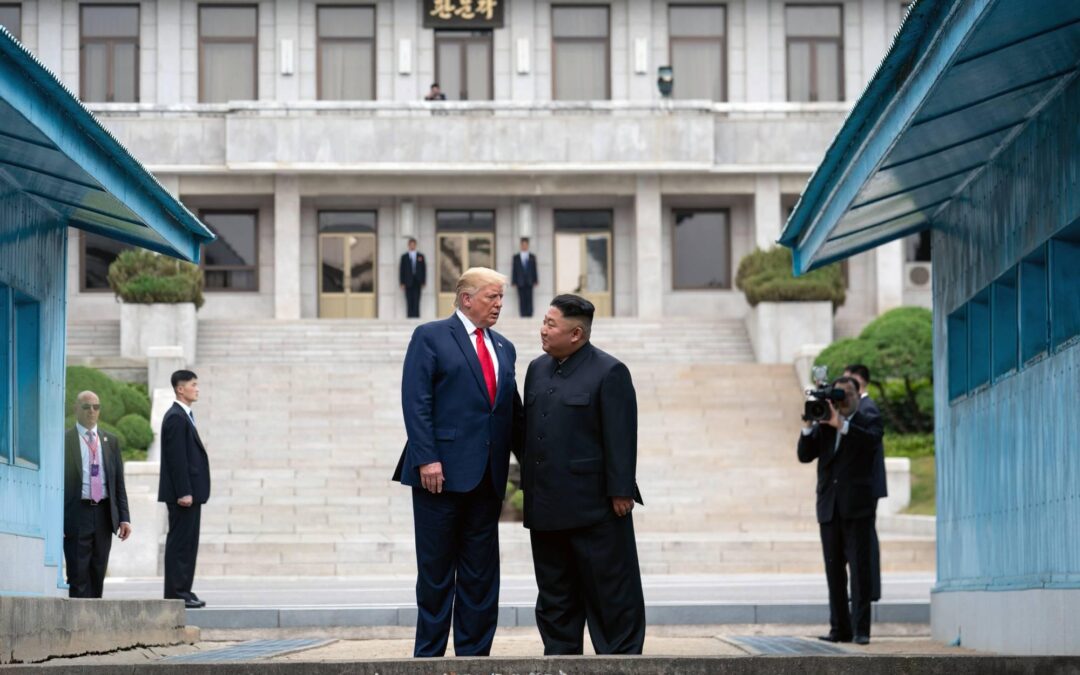
His meetings with Kim Jong Un in Singapore in 2018, Hanoi in 2019 and later at the Korean Demilitarized Zone broke decades of diplomatic convention.
Trump now wants another meeting.
But North Korea is signaling that returning to the negotiating table cannot mean returning to the negotiating framework of 2018.
Pyongyang’s position has hardened substantially. Kim has previously indicated willingness to talk with Washington if the United States abandons its insistence on North Korean denuclearization. North Korea increasingly presents its nuclear capability not as a bargaining chip awaiting exchange, but as a permanent component of national security.
That distinction transforms the negotiation.
The original American objective was:
Negotiation → Denuclearization → Normalization.
Pyongyang increasingly proposes something closer to:
Nuclear Recognition → Strategic Coexistence → Negotiation.
The sequencing has effectively been reversed.
2. The Nuclear Reality Has Changed
Washington also faces a materially different North Korea.
South Korea’s defence minister estimated this week that Pyongyang may possess approximately 80–120 nuclear warheads. Whatever the exact number, North Korea’s nuclear and missile capabilities have expanded considerably since Trump’s first meetings with Kim.
Time therefore did not freeze when diplomacy stopped.
This represents an important TPNF lesson.
Negotiating environments are complex adaptive systems.
When negotiations collapse, actors continue learning, investing, adapting and accumulating capability.
A negotiating position rejected today may consequently become unavailable tomorrow.
The Hanoi summit illustrates the danger.
Washington and Pyongyang could not reconcile sanctions relief with the extent and sequencing of nuclear dismantlement. The summit ended without agreement.
Seven years later, Washington confronts a North Korean nuclear capability considerably more developed than the one it attempted to negotiate away.
The strategic cost of diplomatic failure must therefore include the capability accumulated by the adversary during the negotiating vacuum.
3. Iran Is the Uncomfortable Parallel
This is where Iran becomes essential to understanding Trump’s renewed North Korean diplomacy.
The Iran war has approached its sixth month without producing a durable political settlement. Negotiations have stalled, while military pressure, sanctions, threats and disruptions surrounding the Strait of Hormuz continue generating geopolitical and economic consequences.
Washington therefore confronts an uncomfortable strategic question:
Can military superiority destroy capabilities without resolving the political motivations that created them?
Military power can destroy infrastructure.
Sanctions can constrain economic resources.
Naval power can restrict movement.
Intelligence can identify targets.
But none automatically produces political accommodation.
Iran, like North Korea, evaluates negotiations through its own perceptions of regime survival, deterrence and vulnerability.
TPNF therefore distinguishes between Capability Superiority and Strategic Conversion.
Capability superiority asks:
What can we do?
Strategic conversion asks:
What political outcome will doing it actually produce?
Confusing these questions is one of the recurring errors of great-power strategy.
4. Techne Without Phronesis
The United States possesses enormous Techne.
Its military operates globally. Its financial system gives Washington extraordinary sanctions power. Its intelligence and technological capabilities are formidable. Its alliance networks multiply national power.
But technological and material capability constitutes only one side of strategic effectiveness.
Phronesis asks different questions.
What does the adversary fear?
What does it consider non-negotiable?
What does leadership require for domestic legitimacy?
What concession can it politically survive?
What happens after coercion succeeds?
And perhaps most importantly:
How does the adversary interpret our actions?
North Korea interprets nuclear weapons principally through regime survival and deterrence.
Iran similarly views strategic capability partly through vulnerability to American and Israeli military power.
Demanding that an adversary surrender what it perceives as its ultimate survival mechanism therefore creates a profound negotiation problem.
The stronger Washington’s coercive demonstration becomes, the more valuable the adversary may perceive its deterrent to be.
This creates a Strategic Coercion Paradox:
Increasing coercive pressure can sometimes strengthen the opponent’s determination to retain precisely the capability the coercion was intended to eliminate.
5. Personal Diplomacy Is an Opening, Not an Architecture
Trump’s willingness to communicate personally with Kim should not automatically be dismissed.
Leader-level diplomacy can break institutional paralysis, generate political permission for negotiation and communicate intentions that conventional diplomatic channels cannot easily convey.
That is valuable.
But personal relationships cannot substitute for negotiating architecture.
Singapore demonstrated the possibilities of political opening.
Hanoi demonstrated its limitations.
When negotiations reached questions of sanctions, verification, sequencing, nuclear facilities and reciprocal concessions, personal chemistry could not resolve structural disagreement.
This distinction is fundamental:
Relationship creates access. Architecture creates agreements.
A successful renewed Trump–Kim process therefore requires extensive preparation beneath presidential diplomacy: technical working groups, sequencing mechanisms, verification procedures, reciprocal concessions, crisis-management channels and clearly defined intermediate objectives.
Otherwise, another summit risks producing political spectacle without strategic transformation.
6. From Denuclearization to Risk Reduction?
Washington may consequently confront an uncomfortable policy choice.
If immediate complete North Korean denuclearization has become strategically unrealistic, should diplomacy continue pretending otherwise?
Accepting nuclear reality politically is very different from legally legitimizing North Korea’s nuclear status.
But strategy requires distinguishing preferred outcomes from achievable outcomes.
An adaptive negotiating architecture could initially prioritize nuclear risk reduction: preventing proliferation, limiting additional fissile-material production, constraining testing, strengthening communication mechanisms and reducing the probability of accidental escalation.
This would represent neither surrender nor acceptance of North Korea’s nuclear ambitions.
It would represent strategic sequencing.
TPNF describes this as moving from an Absolute Objective toward a Progressive Strategic Objective:
Risk Reduction → Stabilization → Verification → Confidence → Expanded Negotiation.
The destination may remain denuclearization.
The pathway becomes adaptive.
7. The Iran Lesson Washington Should Study Now
Iran makes this lesson urgent.
If Washington believes that overwhelming coercive capability can rapidly transform political behavior, the prolonged confrontation should encourage reassessment.
Iran has absorbed substantial pressure while retaining the capacity to impose costs through missiles, drones, maritime disruption and regional networks.
North Korea will study that experience closely.
Pyongyang will ask what happened to a state confronting superior American military power.
It will not necessarily conclude that nuclear disarmament increases security.
It may conclude exactly the opposite.
This is the systemic connection between seemingly separate geopolitical theaters.
American strategy toward Iran sends negotiating signals to North Korea.
And American strategy toward North Korea sends signals to Iran.
Great-power negotiations therefore do not occur in isolation. They operate inside an interconnected Strategic Signaling Ecosystem.
8. What Washington Should Have Learned
The combined Iran and North Korea experience suggests five lessons.
First, coercion should support diplomacy rather than substitute for it.
Second, summit diplomacy requires institutional and technical preparation.
Third, adversary security perceptions must be understood even when Washington fundamentally rejects their political narratives.
Fourth, negotiating objectives must distinguish the desirable from the immediately achievable.
Finally, strategic patience works in both directions.
Time does not automatically favor the stronger actor.
North Korea used diplomatic stagnation to expand capability. Iran has demonstrated its capacity to endure extraordinary pressure while continuing to impose costs.
The strategic question is therefore not merely whether America can wait longer.
It is who benefits from waiting.
Strategic Implications
A renewed Trump–Kim summit could become strategically valuable if Washington treats it as the beginning of a structured process rather than the culmination of personal diplomacy.
The immediate objective need not be an impossible comprehensive settlement. It could be preventing further deterioration while constructing mechanisms for progressive strategic stabilization.
For American policymakers, the larger lesson extends beyond Korea.
The United States increasingly operates in an international environment populated by technologically capable states able to impose asymmetric costs despite overwhelming American conventional superiority.
Success therefore requires integrating military capability, technological intelligence, systems thinking, negotiation architecture and strategic wisdom.
That integration is precisely the territory between Techne and Phronesis.
Trump’s desire to meet Kim Jong Un while Washington struggles to terminate the Iran war presents more than an unusual diplomatic coincidence.
It offers a strategic mirror.
North Korea demonstrates what can happen when unresolved negotiations remain frozen while an adversary continues accumulating capability. Iran demonstrates the limits of expecting coercive superiority alone to produce sustainable political outcomes.
Washington should therefore approach another Trump–Kim encounter not by asking whether the two leaders can recreate their personal relationship.
It should ask a harder question:
Has the United States learned how to transform power into sustainable strategic outcomes?
Technology creates capability.
Military strength creates options.
Economic power creates leverage.
But none guarantees strategic success.
Only when capability is integrated with systems understanding, negotiation architecture and practical wisdom can power create lasting value.
That may be the most important lesson connecting Pyongyang, Tehran and Washington in 2026.
Key Takeaways
- Military and technological superiority does not automatically translate into negotiating superiority.
- North Korea’s growing nuclear capability demonstrates that failed negotiations have strategic opportunity costs.
- Iran and North Korea form part of the same Strategic Signaling Ecosystem: each watches how Washington treats the other.
- Personal diplomacy can create access, but negotiating architecture is required to create durable agreements.
- Washington may need to move from absolute objectives toward progressive strategic objectives without abandoning its long-term goals.
Author’s Reflection
The renewed possibility of a Trump–Kim meeting should not be judged simply by whether another summit takes place. The real test is whether Washington approaches that meeting with a more sophisticated understanding of the relationship between power, security perceptions and negotiation.
Iran makes that question particularly important.
An adversary observing the Iran war may reasonably ask whether reducing its deterrent capability would make it safer—or more vulnerable. That perception matters regardless of whether Washington considers it justified.
This is why Phronesis is indispensable to strategy. Strategic wisdom does not require accepting an adversary’s worldview. It requires understanding that worldview well enough to anticipate the decisions it produces.
Perhaps the deepest lesson for Washington is therefore straightforward:
Do not negotiate only from the power you possess. Negotiate from an understanding of the system your power is changing.
Nikos Chatzis
Source: Open Sources Analysis, Relative Data Analysis by Nikos Chatzis
© Nikolaos Chatzis. All Rights Reserved.
The Techne–Phronesis Negotiation Framework™
An Integrative Theory of Strategic Negotiation, Complex Adaptive Systems and Practical Wisdom
Technology Creates Capability • Systems Thinking Creates Understanding • Strategic Wisdom Creates Lasting Value.
Negotiation.gr | Strategic Wisdom for the Technological Age