Negotiation.gr | Strategic Wisdom for the Technological Age
“Strategic resilience emerges when technical capability (techne) is
continuously guided by practical wisdom (phronesis) through adaptive
negotiation across interconnected systems.”
Central Idea — Thesis
The rapid proliferation of inexpensive drones has created one of modern warfare’s most difficult economic and operational problems: relatively low-cost unmanned systems can force defenders to expend sophisticated and expensive weapons.
MORFIUS attempts to change that equation.
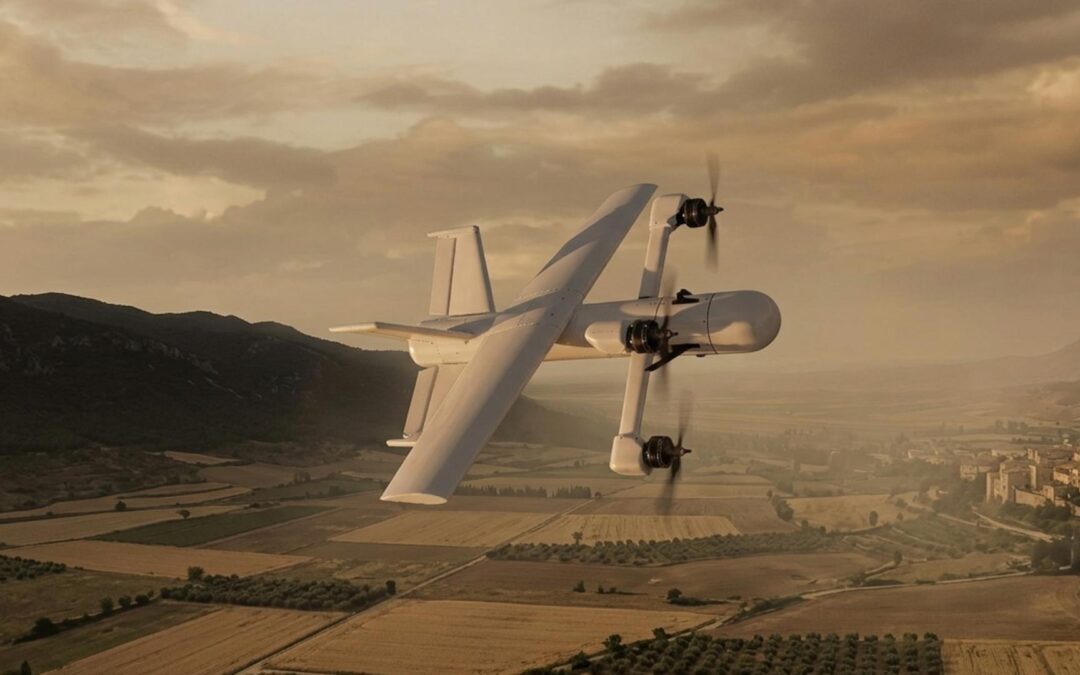
The reusable airborne system carries a High-Power Microwave (HPM) capability designed to disrupt or disable multiple hostile drones rather than kinetically destroying individual targets one by one. Lockheed Martin says the new X-Rotor configuration can neutralize more than 50 drones during a single flight and operate within different command-and-control architectures.
Through the Techne–Phronesis Negotiation Framework™ (TPNF), MORFIUS represents more than another counter-drone weapon. It illustrates an emerging transformation:
Future military advantage will increasingly depend upon matching the economics, scalability and adaptability of defensive technologies to the threats they are designed to defeat.
Purpose of the Essay
The purpose of this essay is to analyze MORFIUS through TPNF as an emerging example of airborne directed-energy counter-swarm capability.
The essay examines how drone swarms are changing the economics of air defense; why reusable HPM systems may offer an alternative to conventional one-target/one-interceptor models; and how autonomous platforms, electronic effects, command networks and layered defense increasingly form integrated technological ecosystems.
Its broader objective is to demonstrate that future military superiority will depend not merely upon possessing more powerful weapons, but upon creating adaptive defense ecosystems capable of defeating rapidly scalable technological threats at sustainable economic cost.
Abstract
Lockheed Martin’s MORFIUS X-Rotor is a reusable airborne counter-UAS system combining an unmanned platform with a high-power microwave payload. According to the company, it can neutralize more than 50 hostile drones in one flight, can be recovered and reused, does not depend upon a unique fire-control radar, and can integrate with different command-and-control systems.
MORFIUS is especially significant because drone warfare increasingly creates a cost-exchange problem. Defenders cannot sustainably answer every inexpensive drone with an expensive missile.
Directed-energy technologies potentially alter that equation by creating one-to-many defensive effects.
TPNF interprets MORFIUS through Technology, Systems Thinking, Networked Strategic Resilience and Phronesis, asking not merely whether the technology works, but how it changes the architecture and economics of future air defense.
1. The Drone-Swarm Challenge
Drones have changed warfare partly because they distribute capability.
Instead of concentrating combat power in a small number of expensive platforms, military forces can deploy larger numbers of relatively inexpensive unmanned systems.
Swarms intensify the challenge.
A traditional air-defense system may successfully intercept individual aircraft or missiles but become economically or operationally stressed when confronted with many simultaneous low-cost targets.
This produces a fundamental asymmetry:
Low-Cost Offensive Mass
↓
High-Cost Defensive Interception
The attacker does not necessarily need every drone to survive.
It may only need enough targets to saturate defensive capacity.
2. MORFIUS Changes the Equation
MORFIUS approaches the problem differently.
Instead of treating every hostile drone as requiring an individual kinetic interceptor, the system uses high-power microwave energy against electronic systems.
Lockheed Martin describes MORFIUS as a one-to-many capability specifically designed for counter-UAS and counter-swarm operations.
Conceptually, this changes the defense model:
One Threat → One Missile
becomes
Multiple Threats → One Reusable Directed-Energy Platform.
That distinction may be strategically more important than the platform itself.
3. High-Power Microwave as Counter-Drone Techne
High-power microwave technology attacks a fundamental dependency of modern drones: electronics.
Unmanned systems depend upon processors, sensors, navigation electronics, communication systems and flight-control computers.
HPM systems seek to interfere with or damage electronic components through electromagnetic energy rather than conventional explosive force.
This creates an interesting TPNF relationship.
The drone derives capability from electronics.
The counter-drone system targets precisely that dependency.
Technological capability creates technological vulnerability.
The more warfare becomes electronically sophisticated, the more electromagnetic resilience becomes strategically important.
4. The Capability–Dependency Paradox™
MORFIUS therefore provides another example of the TPNF Capability–Dependency Paradox™.
Advanced drones gain capability through:
AI + Sensors + Communications + Computing + Navigation + Electronics.
Yet dependence upon those systems can create vulnerabilities to electronic warfare, jamming and directed-energy effects.
The strategic competition consequently becomes recursive:
Better Drone
↓
Better Counter-Drone System
↓
More Resilient Drone Electronics
↓
More Advanced Countermeasure
Technological warfare becomes a continuous adaptation cycle.
5. From Kinetic Defense to Effect-Based Defense
Traditional air defense is strongly associated with physical destruction.
Missile hits aircraft.
Projectile hits drone.
Target is destroyed.
Directed energy introduces a different logic.
The objective may be to produce the necessary effect rather than physical destruction.
If a hostile drone can no longer navigate, communicate or function correctly, the defensive objective may already have been achieved.
This represents a transition toward Effect-Based Defensive Capability™.
The important question becomes:
What is the least costly reliable effect required to remove the threat?
That question has profound implications for future defense economics.
6. The Economics of Counter-Drone Warfare
The economics are crucial.
Using expensive missiles against inexpensive drones may succeed tactically while failing strategically if the defender exhausts its interceptor inventory or financial resources.
MORFIUS is designed for field recovery and reuse. Lockheed Martin explicitly presents this as a way to reduce stored-inventory requirements and cost compared with expendable weapons.
This creates a new strategic metric:
Cost per Defensive Effect™
Future defense planners must increasingly evaluate not simply:
Can we destroy the threat?
but:
Can we repeatedly defeat the threat at a sustainable cost?
7. The Importance of Mobility
MORFIUS adds another dimension because the microwave system itself flies.
Ground-based directed-energy systems can defend particular geographic areas.
An airborne HPM platform potentially moves the defensive effect closer to the incoming threat.
Lockheed Martin says MORFIUS has been designed for deployment from fixed and mobile platforms and for integration into wider defense architectures.
The defensive geometry therefore changes:
Fixed Defensive Point
becomes
Mobile Defensive Node.
That mobility could make future counter-swarm defenses more adaptive.
8. MORFIUS as a Platform Ecosystem
The aircraft alone does not create the complete capability.
MORFIUS interacts with:
Detection Systems
↓
Command and Control
↓
Target Identification
↓
Airborne Interceptor
↓
HPM Effect
↓
Battle-Damage Assessment
↓
Recovery and Reuse
This is a Counter-UAS Platform Ecosystem™.
Lockheed Martin emphasizes that MORFIUS is sensor- and command-and-control-agnostic, allowing integration into different architectures.
That interoperability may be as strategically significant as the microwave payload.
9. Layered Defense Remains Essential
MORFIUS should not be interpreted as making conventional air defense obsolete.
Different threats require different defensive tools.
Future protection may combine:
Electronic Warfare
High-Power Microwaves
Lasers
Kinetic Interceptors
Conventional Air Defense
Cyber and AI-enabled Detection.
MORFIUS itself has been conceived as part of layered defense rather than a universal replacement for other systems.
TPNF therefore emphasizes orchestration, not technological absolutism.
The strategic advantage comes from selecting the appropriate effect for the appropriate threat.
10. AI and Autonomous Counter-Swarm Warfare
The next evolutionary step is likely to involve increasingly sophisticated automation.
A defensive ecosystem confronting dozens or hundreds of drones may need to detect, classify, prioritize and assign countermeasures faster than humans can manually manage every engagement.
AI could increasingly support:
Detection → Classification → Prioritization → Resource Allocation → Engagement Recommendation.
Humans may progressively move from direct control toward supervisory command.
That creates significant questions of reliability, accountability and rules of engagement.
The future counter-drone battlefield may therefore become a contest between machine-enabled offensive mass and machine-enabled defensive orchestration.
11. The Strategic Technology–Economics Equation™
MORFIUS suggests a broader TPNF concept:
Strategic Technology–Economics Equation™
A defense technology creates sustainable strategic advantage only when its operational effectiveness can be reproduced at an economically acceptable scale.
The equation is:
Capability × Scalability × Reusability × Adaptability
divided by
Cost + Complexity + Dependency
The strongest military technology is not necessarily the most sophisticated.
It may be the technology that creates the best sustainable strategic effect.
Strategic Implications
MORFIUS illustrates several wider developments.
Drone swarms are accelerating the transition from platform-versus-platform warfare toward system-versus-system competition.
Directed energy potentially improves the economics of countering large numbers of inexpensive unmanned threats.
Reusable airborne counter-drone platforms may add mobility and operational flexibility to layered defenses.
Open integration with sensors and command networks reinforces the importance of platform ecosystems.
Most importantly, the competition will not stop with MORFIUS. Drone designers will seek greater electromagnetic resilience, producing another cycle of technological adaptation.
MORFIUS represents an important conceptual development in counter-drone warfare.
The central innovation is not simply putting a high-power microwave on a flying platform.
It is combining:
Mobility
Directed Energy
One-to-Many Engagement
Reusability
Open Command Integration
into a potentially scalable counter-swarm architecture.
Through TPNF, the evolution can be expressed as:
Drone Mass
↓
Defensive Saturation
↓
Technological Adaptation
↓
Directed-Energy Countermeasure
↓
One-to-Many Defensive Effect
↓
Lower Cost per Defensive Effect
↓
Layered Defense Ecosystem
↓
Strategic Resilience
The central strategic lesson is clear:
In the age of drone swarms, military superiority will increasingly depend not merely upon destroying threats, but upon defeating large numbers of rapidly evolving threats faster, more adaptively and at a sustainable economic cost.
MORFIUS therefore represents more than a drone designed to defeat drones.
It represents the emerging competition to determine who can scale technological defense as rapidly as an adversary can scale technological attack.
Key Takeaways
- MORFIUS X-Rotor is a reusable airborne HPM counter-drone system.
- Lockheed Martin says it can neutralize more than 50 hostile drones in one flight.
- HPM technology targets the electronic dependency underlying modern drone capability.
- One-to-many engagement could improve the economics of counter-swarm defense.
- Reusability changes the cost-per-engagement equation.
- Airborne directed energy creates a mobile defensive node.
- MORFIUS is designed to integrate with different sensors and command architectures.
- Counter-drone warfare will increasingly require layered defensive ecosystems.
- AI may become central to coordinating future mass counter-swarm engagements.
- Sustainable military advantage increasingly depends upon the Strategic Technology–Economics Equation™.
Author’s Reflection
MORFIUS demonstrates a recurring principle of technological civilization: every important technological capability eventually generates technologies designed to counter it.
Drones democratized access to increasingly sophisticated airborne capability. Swarms magnify that advantage through numbers. High-power microwave systems now attempt to restore defensive advantage by attacking the electronic foundations upon which unmanned systems depend.
The Techne–Phronesis Negotiation Framework™ (TPNF) suggests that the deeper lesson concerns neither drones nor microwaves alone.
It concerns adaptation.
Technological competition increasingly rewards actors capable of recognizing new vulnerabilities, developing counter-capabilities, integrating them into wider ecosystems and doing so at sustainable economic cost.
But Phronesis remains essential. The availability of increasingly autonomous and powerful defensive technologies raises questions about escalation, human control, proportionality and strategic purpose.
Technology creates the capability to defeat a swarm.
Strategic wisdom must determine how that capability should be integrated into a wider defense architecture capable of creating lasting security rather than simply another cycle of technological escalation.
Nikos Chatzis
Source: Open Sources Analysis, Relative Data Analysis by Nikos Chatzis
© Nikolaos Chatzis. All Rights Reserved.
The Techne–Phronesis Negotiation Framework™
An Integrative Theory of Strategic Negotiation, Complex Adaptive Systems and Practical Wisdom
Technology Creates Capability • Systems Thinking Creates Understanding • Strategic Wisdom Creates Lasting Value.
Negotiation.gr | Strategic Wisdom for the Technological Age