Negotiation.gr | Strategic Wisdom for the Technological Age
“Strategic resilience emerges when technical capability (techne) is
continuously guided by practical wisdom (phronesis) through adaptive
negotiation across interconnected systems.”
Central Idea — Thesis
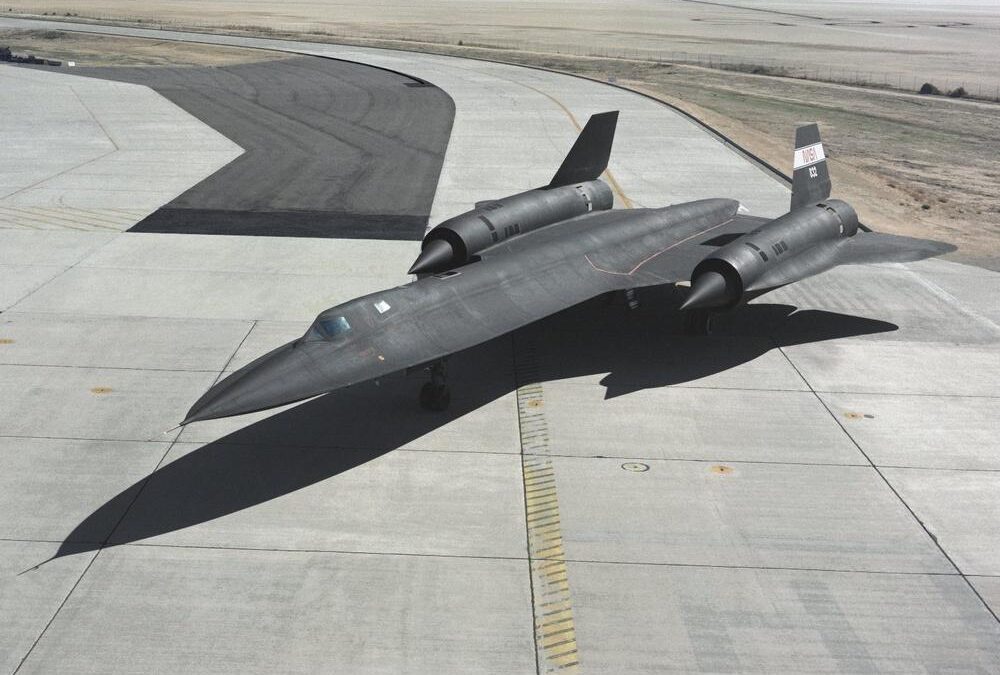
Creating a digital twin of the legendary SR-71 Blackbird—if such an effort becomes part of current attempts to examine or revive the aircraft—would represent far more than digitally reconstructing one of aviation history’s most remarkable machines.
It could transform accumulated technological knowledge from the past into a reusable capability for the future.
The Techne–Phronesis Negotiation Framework™ (TPNF) defines this process as Legacy-to-Future Capability Conversion™:
the systematic transformation of technological knowledge embedded within a legacy system into digital, adaptable and regenerative knowledge capable of supporting future technological development.
The strategic value of digitally reconstructing the SR-71 would therefore not reside primarily in recreating the aircraft.
Its greater value could lie in reconstructing the knowledge ecosystem that made extraordinary high-speed flight possible—and making that knowledge available for future aerospace innovation.
Purpose of the Essay
This TPNF essay examines the possible creation of an SR-71 digital twin as a theoretical case of technological evolution.
Current reporting has raised the possibility that digital engineering could support efforts surrounding NASA’s SR-71A tail number 844. No publicly confirmed NASA digital-twin program for the aircraft has been announced.
The case nevertheless provides an important strategic question:
Can digital engineering transform legacy technological achievements into Strategic Knowledge Infrastructure™ capable of generating new Long-Term Strategic Value?
Abstract
The SR-71 represents an extraordinary accumulation of aerospace knowledge involving materials, propulsion, aerodynamics, thermal management, manufacturing, flight control and high-speed operations.
Much of that knowledge was developed decades before contemporary digital engineering.
A sufficiently sophisticated digital representation could potentially integrate historical engineering information, physical inspection, simulation and new data into a reusable technological environment.
TPNF argues that this creates more than preservation.
Through Legacy Knowledge Regeneration™, Digital Capability Reconstruction™, Cross-Generational Engineering Learning™ and Virtual Strategic Optionality™, digital twins can potentially transform historical technological capability into an evolving resource for future innovation.
The strategic objective is therefore not necessarily to reproduce the past.
It is to make the past capable of contributing to the future.
1. The SR-71 as a Technological Ecosystem
The SR-71 should not be understood merely as an aircraft.
Its Mach 3-class performance emerged from an extraordinary combination of technologies.
Titanium structures.
Specialized propulsion.
Aerodynamics.
Thermal management.
Fuel systems.
Manufacturing processes.
Sensors.
Flight controls.
Maintenance procedures.
Highly specialized human expertise.
The aircraft was therefore the visible product of a much larger technological ecosystem.
TPNF describes this as Contained Technological Knowledge™: accumulated knowledge embedded within a technological system, its components, documentation, production processes and human expertise.
When the system disappears, part of that knowledge can disappear with it.
2. The Problem of Lost Technological Knowledge
Technology normally appears to evolve continuously.
Reality is more complicated.
Supply chains disappear.
Specialized tooling is discarded.
Engineers retire.
Manufacturing techniques become obsolete.
Tacit knowledge—knowledge acquired through experience rather than completely captured in documents—can be lost.
A technologically advanced civilization can therefore encounter a paradox:
Historical Capability ≠ Current Reproducibility.
A society may once have possessed the ability to create a particular system without retaining the complete ecosystem required to reproduce it decades later.
TPNF defines this as the Technological Knowledge Attrition Problem™.
3. What Changes with a Digital Twin?
A digital twin is more than a three-dimensional computer model.
At its most advanced, it can connect models of a physical system with engineering information and data across the system’s lifecycle.
For an aircraft, this could potentially incorporate:
Geometry → Materials → Structures → Propulsion → Aerodynamics → Thermal Behavior → Control Systems → Maintenance → Operational Data.
The aircraft becomes computationally explorable.
Engineers can examine interactions.
Simulate modifications.
Study failures.
Test hypotheses.
Compare historical solutions with contemporary technologies.
The physical aircraft remains finite.
Its digital knowledge environment can continue evolving.
4. Digital Capability Reconstruction™
TPNF defines Digital Capability Reconstruction™ as:
the conversion of knowledge embedded within a physical technological system into an integrated digital environment through which its design logic, behavior and technological relationships can be studied, tested and adapted.
Applied to the SR-71, this could mean something strategically significant.
The objective would not simply be:
Digitize the Blackbird.
It would be:
Recover the engineering relationships that made the Blackbird possible.
That difference is fundamental.
One preserves an object.
The other regenerates capability.
5. From Digital Twin to Learning Environment
Once reconstructed digitally, historical technology can become an experimental environment.
Modern computational tools could allow engineers to ask questions unavailable to the original designers.
What happens if contemporary materials replace historical ones?
Can additive manufacturing reproduce difficult components?
Can modern sensors improve health monitoring?
Could AI identify previously hidden relationships within historical engineering data?
Could new propulsion technologies interact with proven aerodynamic architectures?
The digital twin therefore becomes a Strategic Learning Environment™.
It creates the possibility of experimentation without immediately rebuilding every physical component.
6. The Digital Regeneration Loop™
The deeper strategic value appears when physical and digital engineering interact.
TPNF proposes the Digital Regeneration Loop™:
Physical Asset → Data → Digital Reconstruction → Simulation → Experimentation → New Knowledge → Physical Testing → New Data → Improved Digital Model → Future Capability.
This is not digital preservation.
It is regenerative engineering.
Each interaction between physical and digital environments potentially improves understanding.
Each experiment can generate new knowledge.
And that knowledge can contribute to technologies that may look very different from the original SR-71.
7. AI as an Engineering Knowledge Multiplier
Artificial Intelligence adds another dimension.
A digital twin can contain enormous quantities of interconnected engineering information.
AI can potentially help identify patterns across those data.
It may accelerate simulation.
Support predictive maintenance.
Search complex design spaces.
Compare alternative configurations.
Assist engineers in identifying relationships difficult to detect manually.
The emerging architecture becomes:
Legacy Technology → Digital Twin → AI Analysis → Simulation → Human Engineering Judgment → Experimentation → New Capability.
This represents Human–AI Engineering Complementarity™.
AI does not replace engineering judgment.
It potentially expands the space within which engineering judgment can operate.
8. The Digital Twin–Reality Gap™
But digital engineering creates its own danger.
A simulation is not reality.
Models contain assumptions.
Historical data may be incomplete.
Material aging may be difficult to reproduce digitally.
Unknown interactions may emerge only during physical testing.
TPNF therefore identifies the Digital Twin–Reality Gap™:
the unavoidable difference between the modeled behavior of a technological system and the full complexity of its physical operation.
The strategic lesson is important.
Digital twins should reduce uncertainty.
They cannot eliminate reality.
This is why experimental flight testing remains valuable.
9. Long-Term Strategic Value Creation
Why invest resources in digitally reconstructing technology created more than six decades ago?
Because technological value does not necessarily expire when operational use ends.
A platform may lose operational relevance while retaining enormous Knowledge Option Value™.
TPNF defines this as:
the future strategic value created by preserving technological knowledge in a form that allows new generations to reinterpret, recombine and apply it under different technological conditions.
The SR-71 may therefore have two lives.
Its first life was physical:
Reconnaissance → High-Speed Research → Flight-Test Capability.
Its second could become digital:
Knowledge Recovery → Simulation → Learning → Experimentation → Future Aerospace Capability.
10. From Technological Heritage to Future Capability
This changes how technological heritage should be understood.
Museums preserve objects.
Archives preserve documents.
Digital twins could increasingly preserve functional technological understanding.
The strategic progression becomes:
Historical Technology → Preserved Knowledge → Digital Reconstruction → Computational Experimentation → Human–AI Learning → New Technology → Strategic Future Value™ → Lasting Strategic Value™.
This creates Cross-Generational Engineering Learning™.
Future engineers do not simply observe what previous generations created.
They can potentially interact computationally with the technological logic behind those achievements.
Strategic Implications
The SR-71 case suggests several broader implications.
First, retired technological systems may contain strategic knowledge whose future value exceeds their remaining operational value.
Second, digital engineering can potentially reduce technological knowledge attrition.
Third, AI can transform digital twins from passive representations into increasingly powerful learning environments.
Fourth, physical experimentation remains essential because models cannot perfectly reproduce reality.
Fifth, digital reconstruction may allow defense and aerospace ecosystems to preserve technological options that would otherwise disappear with aging infrastructure and retiring experts.
Finally, the greatest return from reconstructing a legacy system may not be reproducing that system at all.
It may be accelerating the creation of something entirely new.
The SR-71 was one of the extraordinary achievements of twentieth-century aerospace engineering.
But its future strategic importance may not depend upon whether the Blackbird itself flies again.
The deeper opportunity lies in whether the knowledge embodied within it can fly again.
A digital twin could potentially transform an aging physical aircraft into a dynamic engineering environment.
Techne created the original technological capability.
Systems Thinking can reconstruct the relationships among its materials, propulsion, aerodynamics, controls, operations and human expertise.
Phronesis must determine which parts of that recovered knowledge deserve investment and how they should contribute to future capability.
From a TPNF perspective, technological evolution should therefore not always mean abandoning old technology and replacing it with new technology.
Sometimes evolution may require returning to extraordinary achievements of the past—not to reproduce them, but to understand them differently.
The ultimate strategic objective is not:
Rebuild the SR-71.
It is:
Recover Knowledge → Reconstruct Capability → Generate Learning → Create Future Capability.
That is the point at which a digital twin stops being a digital copy.
It becomes an investment in Long-Term Strategic Value Creation.
Key Takeaways
- The SR-71 represents an ecosystem of accumulated technological knowledge.
- Historical capability does not guarantee present-day reproducibility.
- Technological Knowledge Attrition™ can occur when expertise, tooling and supply chains disappear.
- Digital Capability Reconstruction™ can convert legacy technology into an interactive knowledge environment.
- A digital twin can become a Strategic Learning Environment™.
- The Digital Regeneration Loop™ connects physical systems, simulation, experimentation and new knowledge.
- AI can become an engineering knowledge multiplier.
- The Digital Twin–Reality Gap™ means physical experimentation remains essential.
- Legacy systems can retain substantial Knowledge Option Value™.
- Long-Term Strategic Value emerges when historical knowledge contributes to future capability regeneration.
Author’s Reflection
Perhaps the most interesting question about the SR-71 is no longer whether humanity can make a Blackbird fly again.
The more important question may be whether we can make its knowledge fly again.
For decades, technological progress often meant replacing yesterday’s machines with tomorrow’s machines.
Digital engineering changes that relationship.
A physical aircraft can age.
Its supply chain can disappear.
Its engineers can retire.
But if we learn to reconstruct the technological relationships embedded within it, knowledge that once seemed trapped in history can become part of a living learning system.
The SR-71 could therefore symbolize something larger than aerospace nostalgia.
It could demonstrate how a technologically advanced civilization learns not only to create new capability, but also to regenerate knowledge from its own technological past.
The aircraft belonged to the twentieth century.
The knowledge it contains does not necessarily have to.
Nikos Chatzis
Source: Open Sources Analysis, Relative Data Analysis by Nikos Chatzis
© Nikolaos Chatzis. All Rights Reserved.
The Techne–Phronesis Negotiation Framework™
An Integrative Theory of Strategic Negotiation, Complex Adaptive Systems and Practical Wisdom
Technology Creates Capability • Systems Thinking Creates Understanding • Strategic Wisdom Creates Lasting Value.
Negotiation.gr | Strategic Wisdom for the Technological Age