Negotiation.gr | Strategic Wisdom for the Technological Age
“Strategic resilience emerges when technical capability (techne) is
continuously guided by practical wisdom (phronesis) through adaptive
negotiation across interconnected systems.”
Central Idea — Thesis
Contemporary technological civilization is increasingly shaped not by individual technologies operating independently, but by the interaction of technological systems.
Artificial intelligence attracts enormous attention.
Yet AI itself depends upon something deeper.
It requires energy.
It requires computing infrastructure.
It increasingly interacts with quantum technologies.
It accelerates biotechnology.
It depends upon terrestrial and space-based communications.
It operates within an expanding technological ecosystem whose components reinforce one another.
Four technological domains therefore deserve particular strategic attention:
Energy.
Quantum Technologies.
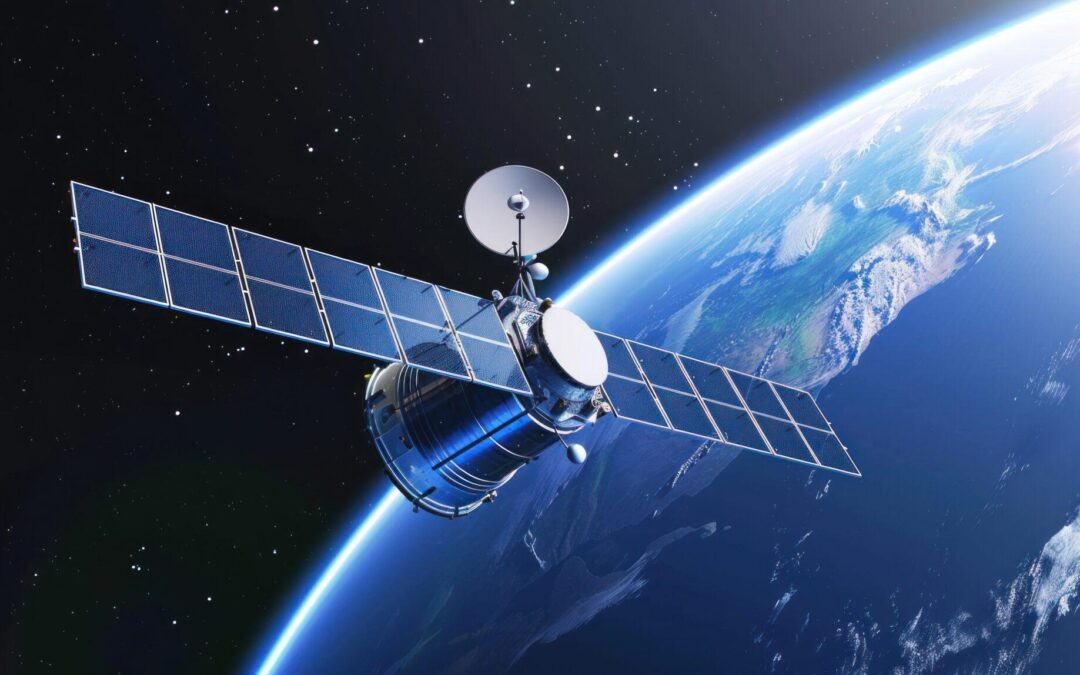
Space Infrastructure.
Biotechnology.
They perform different functions, but together they increasingly shape the capability frontier of contemporary civilization.
Through the Techne–Phronesis Negotiation Framework™ (TPNF), their strategic significance can be expressed as:
Energy enables technological activity.
Quantum expands the frontier of computation, sensing and communication.
Space extends technological infrastructure beyond Earth.
Biotechnology extends technological capability into living systems.
Their convergence creates something greater:
a continuously expanding technological capability system.
The central TPNF proposition is therefore:
The strategic power of technological civilization increasingly depends not upon superiority in individual technologies, but upon the capacity to integrate foundational technological domains into adaptive ecosystems capable of continuously generating new capabilities.
Purpose of the Essay
This essay examines the strategic roles of energy, quantum technologies, space infrastructure and biotechnology within contemporary technological civilization.
Rather than treating them as separate industries, it analyzes their growing interdependence through Systems Thinking and technology convergence.
The central question is:
How does the interaction among foundational technologies transform scientific capability, economic power, national resilience and long-term value creation?
Abstract
Technological civilization is entering an era of convergence.
Energy systems increasingly interact with AI and autonomous grids.
Quantum technologies promise new capabilities in computation, sensing and secure communications.
Space infrastructure is evolving from satellites and launch systems toward communications, navigation, observation, computation and potentially increasingly autonomous orbital infrastructure.
Biotechnology is merging with AI, robotics, advanced computing and automation.
The strategic significance of these developments lies increasingly at their intersections.
TPNF therefore introduces the concept of Foundational Technology Interdependence™:
the condition in which strategically important technological domains increasingly depend upon and reinforce one another, making systemic integration more important than isolated technological superiority.
The strategic architecture becomes:
Energy → Computational Capability → Quantum Expansion → Space Infrastructure → Biological Capability → Technology Convergence → Ecosystem Orchestration™ → Strategic Future Value™ → Lasting Strategic Value™.
1. Technology Is Becoming a System
The industrial age was frequently understood through individual technological revolutions.
Steam.
Electricity.
Automobiles.
Aviation.
Computers.
The internet.
Today the structure is different.
Multiple foundational technologies are advancing simultaneously.
AI interacts with robotics.
Advanced materials improve energy storage.
Quantum computing may transform molecular simulation.
Biotechnology increasingly uses computational modelling.
Space systems depend upon AI, advanced materials, energy and communications.
The strategic unit of analysis must therefore change.
We should no longer examine only:
Technology X.
We increasingly need to examine:
Technology X + Technology Y + Technology Z → New Capability.
This is technological convergence.
2. Energy: The Enabling Layer of Technological Civilization
Every technological system ultimately confronts energy.
Data centers consume electricity.
Semiconductor fabrication requires enormous energy.
Robots require power.
Electric vehicles require charging infrastructure.
Satellites require energy generation and storage.
Industrial biotechnology requires energy-intensive production.
AI dramatically reinforces this relationship.
As computational demand grows, access to reliable, affordable and scalable energy becomes increasingly strategic.
Energy is therefore not simply another economic sector.
It is an Enabling Technology Layer™.
Without sufficient energy, technological capability cannot scale.
3. From Energy Security to Technology Security
This changes the traditional understanding of energy security.
Historically, energy security focused primarily on:
oil;
natural gas;
electricity;
transportation;
industrial production.
Today energy security increasingly becomes inseparable from technology security.
If electricity becomes constrained, computing becomes constrained.
If computing becomes constrained, AI development becomes constrained.
If AI becomes constrained, automation and scientific discovery may slow.
The dependency architecture becomes:
Energy → Computing → AI → Automation → Innovation → Economic Capability.
Energy policy therefore increasingly becomes technology policy.
4. Intelligent Energy Systems
Technology also transforms energy itself.
AI can predict electricity demand.
Sensors can monitor infrastructure.
Distributed energy resources can interact dynamically with grids.
Storage systems can compensate for intermittency.
Electric vehicles can potentially become flexible components of energy networks.
The grid consequently evolves from relatively passive infrastructure toward an increasingly intelligent technological system.
This illustrates an important principle:
Foundational technologies do not simply support technological convergence—they are themselves transformed by convergence.
5. Quantum Technologies: Expanding the Frontier of Possibility
Quantum technologies occupy a different strategic position.
Their importance derives from the possibility of performing certain forms of computation, sensing and communication beyond conventional technological limitations.
Quantum computing could eventually contribute to:
materials discovery;
drug development;
optimization;
cryptography;
complex simulation.
Quantum sensing could improve measurement.
Quantum communications could transform secure information architectures.
The significance lies not simply in faster computing.
It lies in potentially making previously inaccessible problems technologically tractable.
6. Quantum and Strategic Optionality™
Quantum therefore creates Strategic Optionality™.
Its greatest value today may not be the applications already commercially mature.
It may be the range of future capabilities it could unlock.
Consider materials science.
Improved molecular simulation could contribute to:
better batteries;
new industrial materials;
advanced pharmaceuticals;
new catalysts;
energy technologies.
One breakthrough domain could therefore accelerate several others.
Quantum becomes strategically important because it may expand the possibility frontier of technological civilization.
7. The Quantum Security Transition
But quantum also illustrates the dual nature of technological progress.
The same capability that can create value can create vulnerability.
Advanced quantum computers could threaten important forms of contemporary cryptography.
Financial systems.
Government communications.
Military networks.
Commercial information.
Digital identity.
All depend heavily upon secure cryptographic infrastructure.
Quantum development therefore creates both:
Capability Opportunity + Systemic Vulnerability.
Phronesis becomes essential because technological advancement must be accompanied by strategic preparation for its consequences.
8. Space Infrastructure: Extending Civilization’s Technological Geography
Space technology is undergoing another important transformation.
Satellites were once primarily specialized government instruments.
Today space infrastructure increasingly supports:
communications;
navigation;
weather forecasting;
Earth observation;
agriculture;
finance;
logistics;
military operations;
internet connectivity;
scientific research.
Space is becoming part of everyday terrestrial infrastructure.
Civilization’s technological geography is therefore expanding.
Infrastructure no longer exists only:
On Earth.
It increasingly exists:
Earth + Orbit.
9. From Space Assets to Space Infrastructure
This distinction matters.
A satellite is an asset.
A constellation is a network.
Launch systems provide access.
Ground stations provide connectivity.
Cloud systems process information.
AI interprets data.
Together they create infrastructure.
The strategic architecture becomes:
Launch → Satellite → Network → Data → Computation → Application → Economic and Strategic Value.
Space power therefore increasingly depends not simply upon possessing spacecraft but upon integrating complete technological ecosystems.
10. Orbital Infrastructure and Strategic Resilience
Space infrastructure also creates resilience.
Satellite communications can support areas where terrestrial infrastructure fails.
Earth observation can monitor disasters.
Navigation supports transportation and logistics.
Weather satellites improve forecasting.
Military constellations strengthen situational awareness.
But dependence creates vulnerability.
Satellites can be disrupted.
Ground stations can fail.
Signals can be jammed.
Cyber systems can be attacked.
Orbital congestion can increase.
Space infrastructure therefore becomes both a source of capability and a new domain requiring strategic resilience.
11. Biotechnology: Technology Enters Living Systems
Biotechnology represents perhaps the most profound technological frontier.
Humanity has always modified biological systems through agriculture and medicine.
But contemporary biotechnology increasingly allows biological processes to be understood, designed and manipulated with far greater precision.
Genomics.
Synthetic biology.
Gene editing.
Bioengineering.
Precision medicine.
Biomanufacturing.
These developments transform biology from something primarily observed into something increasingly programmable.
This represents a civilizational shift:
Technology increasingly enters the architecture of life itself.
12. AI, Automation and Biotechnology
Biotechnology is also becoming computational.
AI can assist protein modelling.
Algorithms can identify potential drug candidates.
Robotics can automate laboratory experiments.
Digital models can simulate biological processes.
Automated laboratories can generate experimental data continuously.
This creates another convergence architecture:
Biological Knowledge + AI + Robotics + Data + Advanced Computing → Accelerated Discovery.
Scientific discovery itself becomes increasingly technological.
The laboratory begins evolving into an intelligent learning system.
13. When Quantum Meets Biotechnology
The intersections become even more strategically important.
Quantum simulation may eventually improve understanding of molecular behavior.
That could accelerate:
drug discovery;
protein research;
materials development;
biochemical engineering.
AI could then analyze results.
Robotic laboratories could test hypotheses.
Biotechnology could convert discoveries into applications.
One technological domain therefore expands another.
The strategic value emerges from the connection.
This is precisely why Systems Thinking becomes indispensable.
14. When Space Meets Biotechnology
Space and biotechnology also increasingly interact.
Microgravity creates unusual experimental environments.
Biological systems behave differently in space.
Space research may contribute to understanding:
human physiology;
materials;
pharmaceuticals;
cellular processes;
long-duration human spaceflight.
Future space settlements would require advanced biological capabilities involving:
food;
medicine;
human health;
closed-loop environmental systems.
Space exploration therefore increasingly becomes a biological challenge as well as an engineering challenge.
15. When Energy Connects Everything
Energy ultimately reconnects the entire architecture.
Quantum computers require energy and cooling.
Biotechnology laboratories require energy.
Space infrastructure requires power generation and storage.
AI requires enormous computing resources.
Robotics requires electricity.
Advanced manufacturing requires reliable power.
Energy therefore sits beneath technological civilization like an invisible foundation.
This suggests another TPNF proposition:
Every technological strategy ultimately contains an energy strategy—even when decision-makers fail to recognize it.
16. From Technology Stacks to Civilization Stacks™
These relationships allow TPNF to expand the idea of the Technology Stack™.
A contemporary technological civilization increasingly possesses interconnected layers:
Energy Layer
↓
Computational Layer
↓
Quantum Layer
↓
AI and Automation Layer
↓
Biological Layer
↓
Space Infrastructure Layer
↓
Economic and Institutional Applications
↓
Human and Societal Value
TPNF can describe this broader architecture as a Civilization Technology Stack™:
the interconnected set of foundational technological systems through which contemporary societies generate, scale and regenerate economic, scientific and strategic capability.
17. Strategic Sovereignty Becomes Systemic
This also changes the meaning of technological sovereignty.
A state may possess advanced AI researchers.
But where are its semiconductors manufactured?
Where does its energy originate?
Whose satellites provide connectivity?
Who controls cloud infrastructure?
Does it possess quantum research capability?
Can it manufacture critical biological inputs?
Technological sovereignty therefore cannot realistically mean complete technological independence.
It increasingly means resilient access to critical capabilities across interconnected technology ecosystems.
18. Ecosystem Orchestration Becomes Strategic Power
This returns directly to TPNF’s concept of Ecosystem Orchestration™.
No organization or country is likely to dominate every technological domain.
Universities create knowledge.
Companies commercialize technology.
Governments finance research.
Start-ups experiment.
Infrastructure providers enable scale.
International partnerships provide complementary capability.
The decisive strategic advantage therefore increasingly belongs to actors capable of connecting these capabilities.
The transition becomes:
Technology Ownership → Technology Integration → Ecosystem Orchestration™.
19. The Convergence Multiplier™
TPNF can describe the resulting effect as the Convergence Multiplier™:
the additional strategic value created when complementary technological domains interact to generate capabilities greater than the value obtainable from each technology independently.
Thus:
Energy + AI can create intelligent grids.
Quantum + biotechnology can expand molecular discovery.
AI + biotechnology can accelerate autonomous laboratories.
Space + AI can create increasingly intelligent orbital systems.
Space + advanced energy can enable longer-duration missions.
The strategic objective is not simply technological accumulation.
It is productive technological combination.
20. From Capability to Lasting Strategic Value™
Technological convergence does not automatically create beneficial outcomes.
It can also generate:
dependency;
security vulnerabilities;
concentrated power;
ethical challenges;
environmental pressures;
inequality;
geopolitical competition.
Techne therefore remains insufficient.
Phronesis must ask:
Which capabilities should be developed?
For what purposes?
Under what governance?
With what dependencies?
Who benefits?
What risks accumulate?
And what future does the resulting technological system create?
The TPNF architecture becomes:
Scientific Knowledge
↓
Technological Capability
↓
Technology Convergence
↓
Systems Integration
↓
Ecosystem Orchestration™
↓
Strategic Conversion™
↓
Strategic Future Value™
↓
Adaptive Regeneration
↓
Lasting Strategic Value™
Strategic Implications
First, governments should increasingly design technology strategies across interconnected domains rather than isolated ministries and sectors.
Second, energy infrastructure should be recognized as foundational technological infrastructure.
Third, quantum investment should be evaluated not only through immediate commercial applications but through Strategic Optionality™.
Fourth, space should increasingly be treated as critical infrastructure rather than an isolated aerospace sector.
Fifth, biotechnology strategy must integrate computing, AI, robotics and advanced manufacturing.
Sixth, technological sovereignty should emphasize resilient ecosystem access rather than unrealistic technological autarky.
Finally, competitive advantage increasingly depends upon the capacity to orchestrate technological convergence.
Energy, quantum technologies, space infrastructure and biotechnology appear to represent four different technological worlds.
Increasingly, they do not.
They are becoming parts of one interconnected technological civilization.
Energy powers computation.
Computation accelerates science.
Quantum expands computational possibilities.
Biotechnology transforms biological knowledge into capability.
Space expands the geographical architecture of technological infrastructure.
AI increasingly connects and accelerates them all.
The strategic transformation is therefore:
Individual Technologies → Connected Technologies → Convergent Systems → Technological Ecosystems → Civilization-Level Capability.
This changes the meaning of technological power.
The strongest actor may not be the country possessing the world’s best individual technology.
It may increasingly be the actor capable of integrating multiple technologies into an adaptive system that continuously produces new capabilities.
That is the deeper strategic challenge of contemporary technological civilization.
Technology creates possibility.
Systems Thinking reveals interdependence.
Phronesis determines direction.
And Ecosystem Orchestration™ converts technological possibility into lasting strategic value.
Key Takeaways
- Energy is the enabling layer beneath virtually every major technological system and is increasingly inseparable from technology security.
- Quantum technologies can expand the possibility frontier of computation, sensing, communications and scientific discovery while simultaneously creating new systemic vulnerabilities.
- Space is evolving from a collection of specialized assets into critical technological infrastructure integrated with terrestrial civilization.
- Biotechnology increasingly combines biological knowledge with AI, robotics and advanced computing, transforming scientific discovery itself.
- The greatest strategic value may emerge not from any one of these technologies, but from the Convergence Multiplier™ created when they are intelligently integrated and orchestrated.
Author’s Reflection
Perhaps one of the greatest intellectual mistakes we can make in understanding technological civilization is to divide technology into separate boxes.
Energy.
Quantum.
Space.
Biotechnology.
Artificial intelligence.
Robotics.
Semiconductors.
Each has its specialists.
Each has its companies.
Each has its institutions.
Each has its strategic debates.
But civilization does not experience them separately.
They increasingly interact.
A breakthrough in energy storage can transform robotics.
A quantum breakthrough could transform materials discovery.
New materials can transform spacecraft.
Space infrastructure can transform communications.
AI can accelerate biotechnology.
Biotechnology can transform medicine, manufacturing and eventually human activity in space.
The strategic unit therefore becomes larger than technology itself.
It becomes the system of technologies.
This has important implications for the Techne–Phronesis Negotiation Framework™.
Techne can no longer be understood simply as possession of individual technical capabilities.
Modern Techne increasingly emerges from the capacity to combine capabilities.
But combinations produce consequences.
They create dependencies.
They redistribute power.
They create vulnerabilities.
They generate new ethical questions.
They transform institutions.
They alter what humanity becomes capable of doing.
That is why Phronesis becomes more important as technology becomes more powerful.
The central challenge of technological civilization is therefore not simply:
What technologies can humanity create?
It is increasingly:
How should humanity connect these technologies, govern their interaction and convert their combined capability into a future worth creating?
Perhaps that is the deeper architecture of the technological age:
Energy provides power.
Quantum expands possibility.
Space expands reach.
Biotechnology expands our capacity to understand and shape life.
Systems Thinking connects them.
Phronesis gives them direction.
And strategic wisdom must determine whether their convergence ultimately produces merely greater capability—or genuine Lasting Strategic Value™.
Nikos Chatzis
Source: Open Sources Analysis, Relative Data Analysis by Nikos Chatzis
© Nikolaos Chatzis. All Rights Reserved.
The Techne–Phronesis Negotiation Framework™
An Integrative Theory of Strategic Negotiation, Complex Adaptive Systems and Practical Wisdom
Technology Creates Capability • Systems Thinking Creates Understanding • Strategic Wisdom Creates Lasting Value.
Negotiation.gr | Strategic Wisdom for the Technological Age