by Nikos Chatzis | 13 Oct, 2026 | Byzantine Empire, The Techne–Phronesis Negotiation Framework™
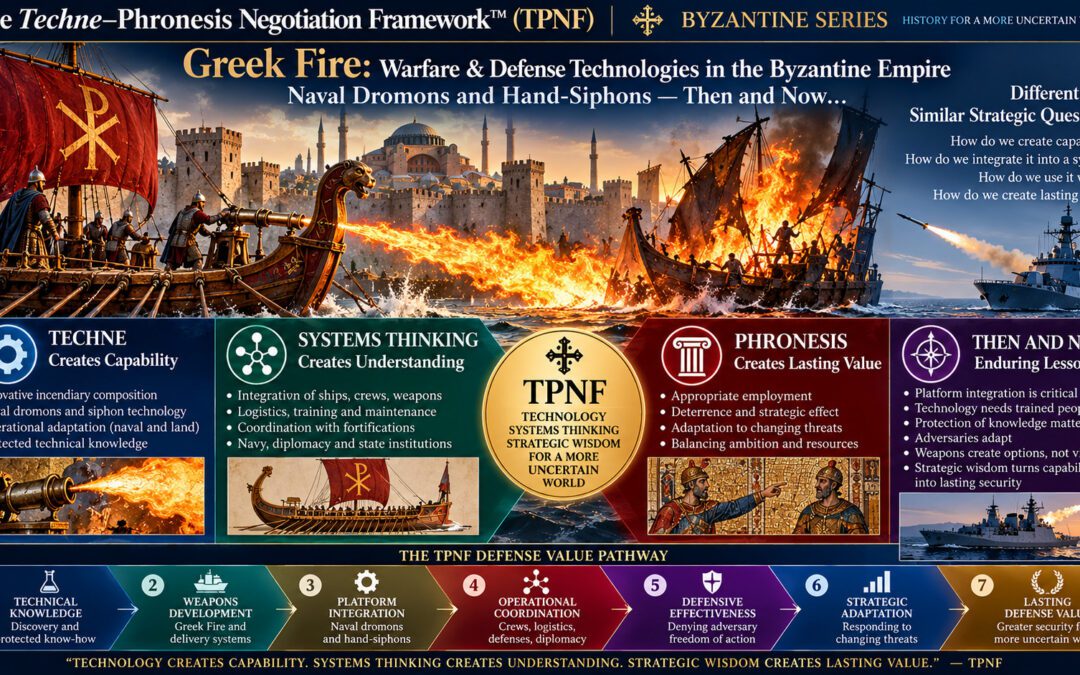
This second essay in the TPNF Byzantine Series examines Greek Fire as a historical case of military technological innovation and strategic integration. It focuses on naval dromons, ship-mounted siphons and portable hand-siphons, investigating how these technologies contributed to Byzantine defensive capabilities. The essay also identifies conceptual parallels with modern military innovation, without treating medieval incendiary weapons as direct technological predecessors of contemporary systems.
by Nikos Chatzis | 12 Oct, 2026 | The Byzantine Empire, The Techne–Phronesis Negotiation Framework™
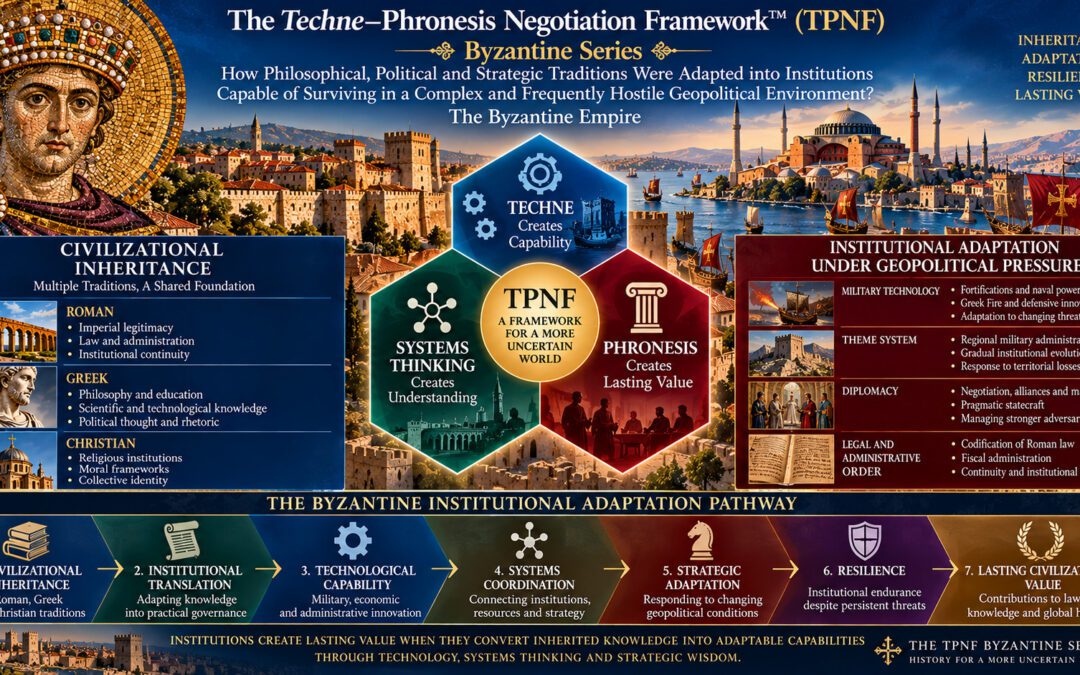
This essay inaugurates a TPNF research series examining Byzantine civilization through technology, Systems Thinking and strategic wisdom. Its purpose is to investigate how inherited philosophical, political and strategic traditions contributed to institutional adaptation under persistent geopolitical pressure. It also explores what Byzantine experience can teach contemporary societies confronting technological disruption, geopolitical rivalry and institutional uncertainty.

by Nikos Chatzis | 12 Oct, 2026 | Defense & Security, Defense Systems, The Techne–Phronesis Negotiation Framework™
This TPNF essay evaluates the proposed B-52–LRASM integration through the TPNF analytical framework. It examines the relationship among technological capability, defense modernization, maritime deterrence, operational coordination and long-term strategic outcomes. Its objective is to distinguish successful weapons integration from sustainable defense value creation.
by Nikos Chatzis | 11 Oct, 2026 | Super Intelligence (SI), The Techne–Phronesis Negotiation Framework™
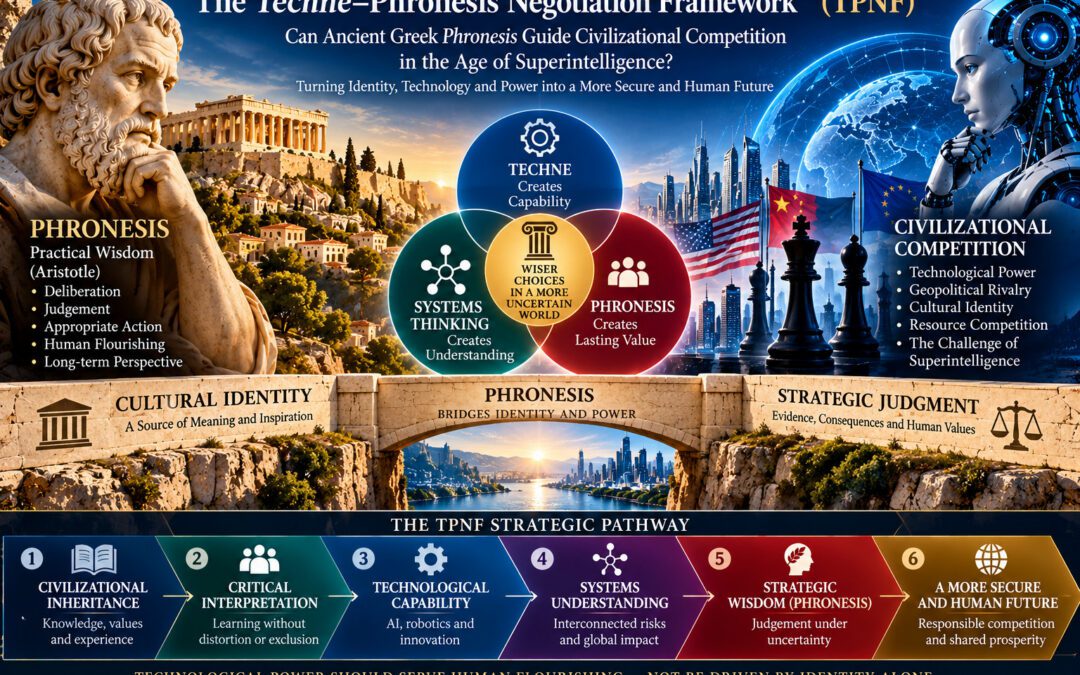
This TPNF essay examines whether ancient Greek practical wisdom can contribute to managing civilizational competition in the emerging age of advanced artificial intelligence. It distinguishes cultural inheritance from political rhetoric and explores how technological rivalry can be governed without sacrificing strategic judgment. Its objective is to develop a TPNF analytical approach connecting civilizational identity, technological capability, Systems Thinking and phronesis.
by Nikos Chatzis | 11 Oct, 2026 | Ancient Greek Philosophy, Technological Civilization, The Techne–Phronesis Negotiation Framework™
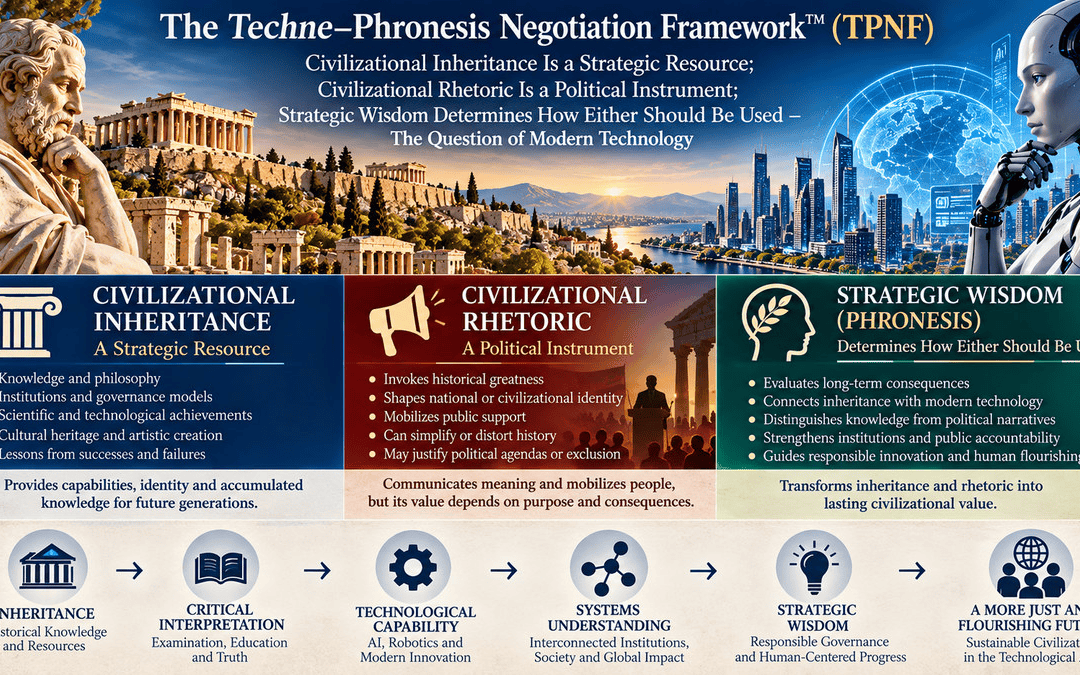
This TPNF essay examines the relationship between civilizational inheritance, political rhetoric and modern technological evolution. It investigates how societies can transform historical knowledge into contemporary capabilities while avoiding the instrumentalization of civilization as an unquestionable political justification. Its purpose is to develop a TPNF analytical distinction between inherited resources, political narratives and the practical wisdom required to govern technological change.