Negotiation.gr | Strategic Wisdom for the Technological Age
“Strategic resilience emerges when technical capability (techne) is
continuously guided by practical wisdom (phronesis) through adaptive
negotiation across interconnected systems.”
Central Idea
Typhoon Dolphin demonstrates that a major natural hazard in technological civilization is never merely a meteorological event. It becomes a systemic stress test across interconnected ecosystems.
As the typhoon struck Japan’s Okinawa and approached China’s eastern coastline, its effects propagated through electricity networks, aviation, maritime transportation, ports, railways, manufacturing, communities and regional trade. Even maritime governance in the politically sensitive Taiwan Strait became entangled with the emergency.
Through the Techne–Phronesis Negotiation Framework™ (TPNF), Typhoon Dolphin can therefore be understood as a practical demonstration of a central proposition: the resilience of technological civilization depends not simply upon the strength of individual infrastructures but upon the capacity of interconnected ecosystems to anticipate disruption, coordinate responses, adapt dynamically and regenerate value.
Purpose of the Essay
The purpose of this essay is to use Typhoon Dolphin as a contemporary case through which to evaluate the systemic interdependence of technological, logistical, institutional, societal and geoeconomic ecosystems.
Rather than examining the typhoon solely as a weather emergency, TPNF analyzes how disruption propagates through networks and how technology, systems thinking, strategic coordination, adaptive governance and practical wisdom can collectively strengthen Networked Strategic Resilience.
Abstract
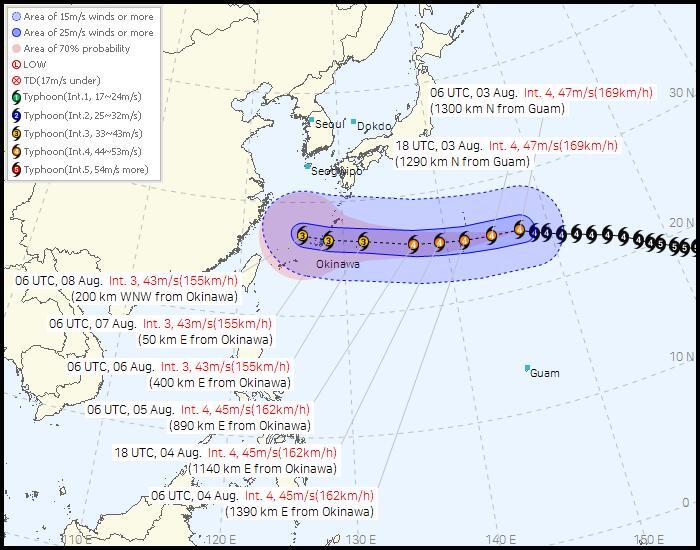
Typhoon Dolphin struck Japan’s Okinawa on August 8, 2026, bringing powerful winds, injuries, electricity outages and transportation disruption before moving toward China’s eastern coast. Chinese authorities responded by closing ports in Zhejiang and Fujian, suspending ferry routes and interrupting some aviation and railway operations as preparations intensified for landfall.
The consequences demonstrate the interconnected character of contemporary technological civilization.
A meteorological event becomes an electricity problem.
An electricity problem becomes a communications and infrastructure problem.
Port closures become a logistics problem.
Logistics disruption becomes a supply-chain problem.
Flight cancellations become an economic and mobility problem.
Manufacturing interruptions become an industrial resilience problem.
Maritime safety measures can even intersect with existing geopolitical disputes.
The Techne–Phronesis Negotiation Framework™ (TPNF) provides an integrative architecture for understanding these interactions. It argues that resilience must increasingly be created across networks rather than within individual organizations and that sustainable value depends upon the ability of interconnected ecosystems to anticipate, absorb, adapt to and recover from disruption.
Introduction
A Typhoon Becomes a Systems Event
Natural disasters have always affected human societies.
What has changed is the density of interconnection.
Contemporary societies depend upon highly integrated networks of:
- electricity,
- telecommunications,
- transportation,
- ports,
- airports,
- manufacturing,
- logistics,
- finance,
- digital infrastructure,
- emergency services.
This connectivity creates extraordinary economic efficiency.
It simultaneously creates pathways through which disruption can propagate.
Typhoon Dolphin therefore offers a valuable real-world laboratory for systems thinking.
1. The Immediate Shock: Okinawa
Typhoon Dolphin struck Okinawa with sustained winds reported at approximately 162 km/h, with gusts reaching around 216 km/h.
Six people were reported injured across Okinawa and Kagoshima.
More than 50,000 buildings across the affected Japanese prefectures experienced electricity outages, while major airlines cancelled domestic flights serving Okinawa.
These consequences illustrate the first stage of systemic disruption:
Natural System
↓
Physical Infrastructure
↓
Electricity
↓
Transportation
↓
Economic and Societal Activity
The significance lies not simply in each disruption independently but in the relationships connecting them.
2. China: Preventive Disconnection to Protect the System
As Dolphin moved toward China’s eastern coastline, authorities increased emergency preparations.
Ports in Zhejiang and Fujian were closed.
Hundreds of ferry connections were suspended.
Some airport and railway operations were halted.
The apparent paradox is important.
To preserve the resilience of an interconnected system, authorities sometimes have to temporarily disconnect parts of it.
Closing a port reduces immediate economic activity.
But continuing operations under dangerous conditions may produce considerably greater losses involving ships, infrastructure, cargo, personnel and subsequent recovery.
Within TPNF, this represents Strategic Adaptive Disconnection:
Temporary reduction of connectivity may sometimes be necessary to preserve the long-term resilience of the wider ecosystem.
3. Technology Creates Capability
The first foundational principle of TPNF states:
Technology Creates Capability.
Technology enables governments and institutions to anticipate and manage natural hazards through:
- meteorological satellites,
- numerical weather prediction,
- radar networks,
- artificial intelligence,
- telecommunications,
- emergency-warning systems,
- maritime tracking,
- digital logistics platforms.
The same technological civilization that creates systemic complexity also provides the capabilities required to manage it.
The strategic challenge is therefore not simply acquiring technology.
It is integrating technological capability into effective decision-making.
4. Systems Thinking Creates Understanding
The second foundational principle states:
Systems Thinking Creates Understanding.
A typhoon cannot be understood adequately by studying wind speed alone.
Consider the cascading sequence:
Typhoon
↓
Port Closures
↓
Shipping Delays
↓
Supply-Chain Disruption
↓
Inventory Pressure
↓
Manufacturing Delays
↓
Commercial Costs
↓
Potential International Economic Effects
At the same time:
Typhoon
↓
Electricity Outages
↓
Communications Disruption
↓
Reduced Institutional Capability
↓
Slower Recovery
The event therefore produces multiple interacting feedback loops.
Systems thinking enables decision-makers to identify these relationships before they become crises.
5. Ports as Geoeconomic Ecosystems
The closure of Chinese ports demonstrates why modern ports should not be regarded merely as physical infrastructure.
Ports connect:
- shipping companies,
- manufacturers,
- freight operators,
- warehouses,
- railways,
- trucking networks,
- customs authorities,
- financial institutions,
- insurance markets,
- global customers.
They are therefore Geoeconomic Ecosystems.
Disrupting a major port potentially affects actors thousands of kilometers away.
This demonstrates one of the defining characteristics of technological civilization:
Local disruption can generate global consequences through network connectivity.
6. Aviation, Manufacturing and Mobility Ecosystems
Japan had already cancelled hundreds of flights as Dolphin approached, while industrial operations were affected as precautionary measures expanded.
Such disruptions illustrate how apparently independent sectors actually belong to a broader mobility and production ecosystem.
An airport depends upon electricity.
Manufacturing depends upon transportation.
Transportation depends upon weather information.
Supply chains depend upon ports.
Ports depend upon digital communications.
Every system depends upon others.This is why resilience cannot be designed exclusively at organizational level.
This is why resilience cannot be designed exclusively at organizational.
7. Taiwan Strait: When Natural Hazards Meet Geopolitics
Perhaps the most intellectually revealing dimension of Typhoon Dolphin is its interaction with the Taiwan Strait.
China issued maritime traffic instructions associated with typhoon safety, while Taiwan rejected Beijing’s authority to impose such controls over waters it regards as international.
A natural hazard therefore intersected with an existing geopolitical dispute.
This creates a remarkable systemic interaction:
Meteorological Ecosystem
↓
Maritime Safety Ecosystem
↓
Commercial Shipping Ecosystem
↓
Political Governance
↓
Geopolitical Competition
The episode demonstrates that different ecosystems do not merely coexist.
They overlap.
And when they overlap, decisions made for one purpose may acquire completely different strategic meanings within another system.
8. Strategic Negotiation as Ecosystem Coordination
Emergency management also involves negotiation.
Governments must coordinate with:
- municipalities,
- transportation companies,
- port operators,
- airlines,
- utilities,
- emergency services,
- businesses,
- citizens.
International shipping requires further coordination among governments, shipowners, insurers, port authorities and maritime organizations.
TPNF therefore conceptualizes negotiation as more than bargaining.
It becomes ecosystem coordination under uncertainty.
9. Adaptive Governance
Typhoon Dolphin illustrates the importance of institutions capable of adjusting rapidly.
Adaptive governance requires:
- early warning,
- decentralized decision-making,
- information sharing,
- emergency coordination,
- infrastructure protection,
- transportation management,
- rapid reassessment.
The quality of governance becomes especially visible during disruption.
Institutions designed only for normal conditions may struggle during extreme events.
Adaptive institutions are designed for both continuity and change.
10. Networked Strategic Resilience
Traditional resilience asks:
Can this organization recover?
TPNF asks a broader question:
Can the ecosystem continue creating value when several interconnected components are simultaneously disrupted?
This is Networked Strategic Resilience.
It requires:
- infrastructure redundancy,
- diversified logistics,
- alternative transportation,
- resilient energy networks,
- communications backups,
- strategic inventories,
- institutional coordination,
- trusted partnerships.
Resilience therefore becomes a property of relationships, not simply individual assets.
11. From Efficiency to Resilient Efficiency
Globalization has historically rewarded efficiency.
Companies minimized inventories.
Supply chains became geographically specialized.
Ports became increasingly concentrated.
Logistics systems optimized delivery times.
These developments generated enormous economic value.
But extreme weather, pandemics, geopolitical conflict and infrastructure disruptions have demonstrated the vulnerabilities created by excessive optimization.
The strategic objective should therefore not be maximum efficiency.
It should increasingly become:
Resilient Efficiency
A resiliently efficient ecosystem remains economically productive while retaining sufficient redundancy, adaptability and alternative pathways to withstand disruption.
12. Strategic Wisdom Creates Lasting Value
The third foundational principle of TPNF states:
Strategic Wisdom Creates Lasting Value.
Closing ports and cancelling flights creates immediate economic costs.
But attempting to maintain operations during dangerous conditions may create substantially greater human and economic losses.
Phronesis therefore becomes essential.
Decision-makers must balance:
- economic continuity,
- human safety,
- infrastructure protection,
- uncertainty,
- long-term recovery.
Strategic wisdom recognizes that preserving future capability may sometimes require accepting temporary economic sacrifice.
Strategic Implications
Typhoon Dolphin generates several broader lessons for technological civilization.
First, natural disasters increasingly become systemic ecosystem events because modern infrastructure is deeply interconnected.
Second, infrastructure resilience cannot be evaluated independently. Ports, electricity, telecommunications, aviation, railways and manufacturing belong to overlapping networks.
Third, geoeconomic resilience increasingly depends upon the ability to create alternative pathways when strategic nodes become temporarily unavailable.
Fourth, adaptive governance requires institutions capable of making rapid decisions under uncertainty.
Fifth, technology improves forecasting and coordination but does not eliminate the requirement for human judgment.
Sixth, geopolitical disputes can intersect unexpectedly with natural disasters, as demonstrated by the maritime disagreement surrounding the Taiwan Strait.
Finally, future value creation requires balancing efficiency with resilience.
Typhoon Dolphin is simultaneously a meteorological event, infrastructure disruption, logistics challenge, geoeconomic disturbance, governance test and—through developments surrounding the Taiwan Strait—even a geopolitical event.
This multidimensional character demonstrates why contemporary crises increasingly require systemic analysis.
The Techne–Phronesis Negotiation Framework™ (TPNF) provides such an architecture.
Technology creates the capability to observe, predict and respond.
Systems thinking reveals how disruptions propagate.
Strategic negotiation coordinates actors.
Adaptive governance enables institutions to respond dynamically.
Networked Strategic Resilience preserves functionality across interconnected systems.
Phronesis guides difficult decisions concerning risk, safety, continuity and long-term value.
Typhoon Dolphin therefore illustrates a broader reality of technological civilization:
The more interconnected our ecosystems become, the more resilience must be designed into the relationships connecting them.
The future will belong not simply to societies capable of building highly efficient systems, but to those capable of creating adaptive, interconnected and strategically resilient ecosystems that continue generating value under conditions of disruption and uncertainty.
Key Takeaways
- Typhoon Dolphin demonstrates how a natural hazard can rapidly become a systemic economic and technological event.
- Ports, aviation, electricity, manufacturing and logistics operate as interconnected ecosystems rather than independent infrastructures.
- Temporary disconnection—such as closing ports—can protect the resilience of the larger system.
- The Taiwan Strait episode demonstrates how meteorological, commercial and geopolitical ecosystems can unexpectedly overlap.
- Networked Strategic Resilience requires redundancy, adaptability, alternative pathways and institutional coordination.
- Future competitiveness will depend increasingly upon Resilient Efficiency rather than maximum efficiency alone.
- Phronesis remains essential because technology can predict danger, but human judgment must decide how societies respond.
Author’s Reflection
Typhoon Dolphin reminds us that technological civilization exists within nature rather than outside it. The sophistication of our technologies does not eliminate vulnerability; in many cases, increasing connectivity creates new forms of systemic interdependence.
The Techne–Phronesis Negotiation Framework™ (TPNF) proposes that future value creation requires more than technological capability and economic efficiency. It requires systems understanding, adaptive institutions, strategic coordination, networked resilience and practical wisdom.
The fundamental challenge is therefore not merely to construct increasingly connected ecosystems, but to ensure that those ecosystems remain capable of protecting people, adapting to disruption and regenerating value when unexpected events test their limits.
Source: Open Sources Analysis, Relative Data Analysis by Nikos Chatzis
© Nikolaos Chatzis. All Rights Reserved.
The Techne–Phronesis Negotiation Framework™
An Integrative Theory of Strategic Negotiation, Complex Adaptive Systems and Practical Wisdom
Technology Creates Capability • Systems Thinking Creates Understanding • Strategic Wisdom Creates Lasting Value.
Negotiation.gr | Strategic Wisdom for the Technological Age