Negotiation.gr | Strategic Wisdom for the Technological Age
“Strategic resilience emerges when technical capability (techne) is
continuously guided by practical wisdom (phronesis) through adaptive
negotiation across interconnected systems.”
Central Idea
The reported emergence of an interim Iran–Oman arrangement concerning the Strait of Hormuz has the potential to alter the strategic environment by changing the balance between military pressure and diplomatic engagement. At the same time, renewed regional security cooperation among countries such as Saudi Arabia, Turkey, and Pakistan, together with continued instability around maritime trade routes, illustrates that the Middle East is increasingly evolving into an interconnected strategic ecosystem where diplomacy, military deterrence, domestic politics, and geoeconomics continuously influence one another.
Purpose of the Essay
This essay analyzes the emerging regional dynamics through the analytical perspective of the Techne–Phronesis Negotiation Framework™ (TPNF). It argues that current developments demonstrate how negotiations, maritime chokepoints, alliance politics, domestic political pressures, and technological capabilities interact within a single complex adaptive ecosystem.
Abstract
The Middle East is entering a new phase in which diplomacy and strategic competition are unfolding simultaneously.
Recent reports indicate progress toward an Iran–Oman arrangement concerning shipping through the Strait of Hormuz, although important issues remain unresolved and implementation would depend on broader political developments. At the same time, security tensions continue through Houthi attacks, debates over shipping restrictions, and continuing concerns about maritime trade.
These developments occur while governments throughout the region continue strengthening security cooperation and while major powers evaluate military, diplomatic, and economic options.
The Techne–Phronesis Negotiation Framework™ (TPNF) explains these developments by treating them not as isolated events but as interactions within technological, negotiating, and geoeconomic ecosystems.
Introduction
A Dynamic Strategic Environment
Modern geopolitical competition rarely follows a linear path.
Military operations,
diplomatic initiatives,
economic pressure,
energy markets,
domestic political debates,
and alliance management increasingly evolve simultaneously.
Consequently, every diplomatic initiative changes—not ends—the strategic environment.
The reported Iran–Oman initiative illustrates precisely this phenomenon.
Main Discussion
1. Technology Creates Capability
The first principle of TPNF states:
Technology Creates Capability.
Today’s regional competition depends upon:
- satellite surveillance,
- drones,
- missile systems,
- cyber capabilities,
- maritime monitoring,
- artificial intelligence,
- integrated command systems.
Technology increasingly determines both military effectiveness and diplomatic leverage.
2. The Strait of Hormuz as a Strategic Ecosystem
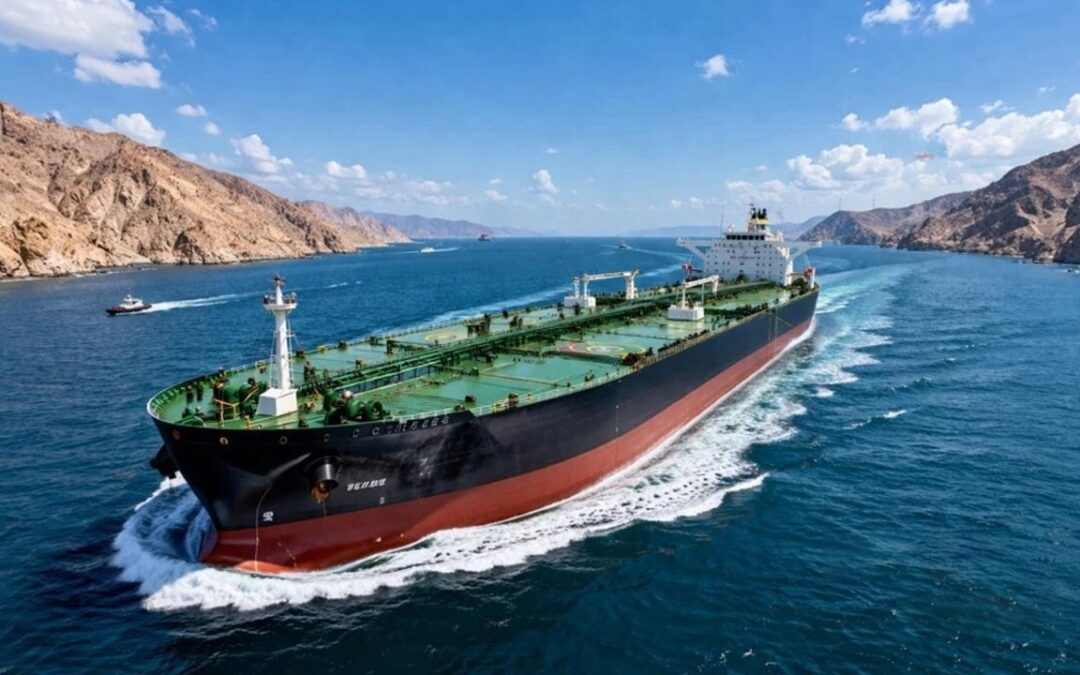
Within TPNF, the Strait of Hormuz represents far more than a maritime passage.
It is a Geoeconomic Ecosystem connecting:
- global energy markets,
- maritime logistics,
- insurance,
- international finance,
- naval security,
- regional diplomacy,
- global supply chains.
Any change affecting this ecosystem rapidly influences markets worldwide. Reports indicate that negotiations concerning shipping arrangements continue while significant legal and political questions remain unresolved.
3. Interim Agreements Change Strategic Calculations
Interim arrangements do not necessarily resolve underlying disputes.
Instead, they often:
- reduce immediate escalation risks,
- create diplomatic space,
- modify bargaining positions,
- reshape alliance calculations,
- influence domestic political expectations.
Within TPNF, negotiation is therefore viewed as a continuous adaptive process rather than a single diplomatic event.
4. Internal Political Ecosystems
Foreign policy decisions increasingly interact with domestic political realities.
In democratic societies, leaders must also consider:
- public opinion,
- economic performance,
- inflation,
- energy prices,
- fiscal pressures,
- electoral calendars.
For the United States, these domestic considerations can affect the range of politically feasible policy options, particularly when energy prices and broader economic conditions become salient public concerns. They are one factor among many that shape strategic decision-making rather than a sole determinant.
5. Regional Security Cooperation
Simultaneously, regional actors continue strengthening security relationships.
Any expansion of defense cooperation among Middle Eastern and neighboring states should be viewed as part of a broader pattern of regional security adaptation rather than as a fixed alliance architecture.
From the TPNF perspective, such developments contribute to an evolving Negotiating Ecosystem, in which states continuously reassess partnerships in response to changing strategic conditions.
It is also important to distinguish between emerging regional security cooperation and the persistence of unresolved regional disputes. Since Turkey’s military intervention in Cyprus in 1974 and its continued military presence in the northern part of the island, relations between Ankara, Greece, and the Republic of Cyprus have remained affected by longstanding disagreements (caused by Turkish claims) over sovereignty, maritime jurisdiction, and security in the Aegean Sea and the Eastern Mediterranean.
Turkey’s maritime claims and related activities are inconsistent with international law, including the United Nations Convention on the Law of the Sea (UNCLOS), while Turkey, which is not a party to UNCLOS, advances different legal and strategic interpretations.
At the same time, Ankara has expressed opposition to the expanding geopolitical and energy cooperation among Greece, Cyprus, and Israel in the Eastern Mediterranean, viewing aspects of these initiatives as affecting its own regional interests. These overlapping disputes continue to influence the regional security environment and remain unresolved through international diplomacy.
6. Houthi Activity and Regional Risk
Recent Houthi attacks, including incidents affecting Saudi Arabia and regional shipping, demonstrate that non-state actors continue influencing the wider strategic environment beyond Yemen itself. Such developments reinforce concerns about the vulnerability of critical energy infrastructure and maritime transportation.
The resulting uncertainty extends beyond military considerations to include insurance costs, shipping decisions, and energy markets.
7. Systems Thinking Creates Understanding
The second principle of TPNF states:
Systems Thinking Creates Understanding.
An event in the Strait of Hormuz influences:
- oil prices,
- inflation,
- domestic politics,
- alliance cohesion,
- shipping costs,
- financial markets,
- diplomatic negotiations.
Similarly, domestic political developments influence governments’ willingness and ability to sustain particular foreign policy choices.
Understanding these feedback loops is essential for effective strategic leadership.
8. Strategic Wisdom Creates Lasting Value
The third principle of TPNF states:
Strategic Wisdom Creates Lasting Value.
Strategic wisdom requires balancing:
- deterrence with diplomacy,
- security with economic stability,
- technological capability with institutional adaptation,
- national interests with regional stability.
Lasting value emerges when leaders manage interconnected ecosystems rather than focusing on isolated tactical victories.
Strategic Implications
The TPNF perspective suggests several important conclusions.
First, interim diplomatic arrangements may significantly alter strategic calculations even when they do not resolve underlying disputes.
Second, maritime chokepoints remain central components of global geoeconomic ecosystems.
Third, domestic political dynamics increasingly interact with foreign policy decisions.
Fourth, regional security cooperation continues evolving in response to changing geopolitical conditions.
Finally, systems thinking enables leaders to understand how diplomacy, technology, energy, economics, and security continuously reinforce one another.
The reported diplomatic developments surrounding Iran and Oman, continuing instability affecting maritime trade, and evolving regional security relationships demonstrate that contemporary Middle Eastern geopolitics is increasingly shaped by interconnected ecosystems rather than isolated bilateral disputes. Negotiation, deterrence, economic interdependence, technological capability, and domestic political considerations now operate simultaneously within a dynamic strategic environment.
The Techne–Phronesis Negotiation Framework™ (TPNF) explains these developments by integrating technological capability, systems thinking, strategic negotiation, adaptive governance, and practical wisdom into a unified analytical framework. In this perspective, sustainable strategic advantage depends not merely on military power or diplomatic success, but on the ability to understand, coordinate, and govern increasingly interconnected geopolitical ecosystems.
Key Takeaways
- Interim diplomatic arrangements can reshape strategic incentives without fully resolving conflicts.
- The Strait of Hormuz remains one of the world’s most important geoeconomic ecosystems.
- Domestic political factors interact with foreign policy but are only one part of broader strategic decision-making.
- Regional security partnerships continue adapting to changing geopolitical conditions.
- Systems thinking provides a more comprehensive understanding of interconnected crises than analyzing individual events in isolation.
Author’s Reflection
Contemporary geopolitics is increasingly defined by the interaction of diplomacy, military capability, technological innovation, domestic political dynamics, and geoeconomic interdependence. The Techne–Phronesis Negotiation Framework™ (TPNF) proposes that understanding these interconnected ecosystems is essential for navigating strategic uncertainty. Lasting stability will depend not on isolated victories but on the wise governance of continuously evolving relationships among states, institutions, technologies, and societies.
Author: Nikos Chatzis
Source: Open Sources Analysis, Relative Data Analysis by Nikos Chatzis
© Nikolaos Chatzis. All Rights Reserved.
The Techne–Phronesis Negotiation Framework™
An Integrative Theory of Strategic Negotiation, Complex Adaptive Systems and Practical Wisdom
Technology Creates Capability • Systems Thinking Creates Understanding • Strategic Wisdom Creates Lasting Value.
Negotiation.gr | Strategic Wisdom for the Technological Age