Negotiation.gr | Strategic Wisdom for the Technological Age
“Strategic resilience emerges when technical capability (techne) is
continuously guided by practical wisdom (phronesis) through adaptive
negotiation across interconnected systems.”
Central Idea
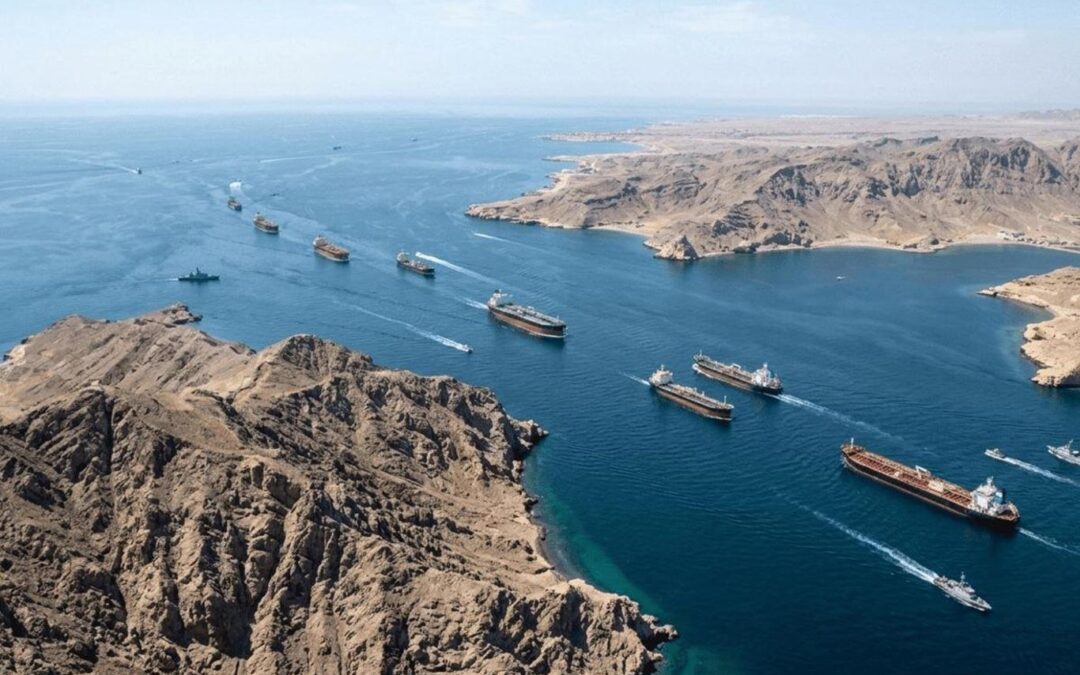
The current confrontation involving Iran illustrates that contemporary geopolitical competition extends beyond conventional military operations. Regional trade corridors and maritime chokepoints can become instruments of strategic coercion by increasing the economic costs faced by opponents and the wider international system. Through the Techne–Phronesis Negotiation Framework™ (TPNF), these developments can be analyzed as interactions within interconnected geoeconomic ecosystems, where transportation infrastructure, financial markets, energy flows, and diplomacy influence one another. Recent reporting indicates that Tehran is seeking leverage by applying pressure around strategic maritime routes while attempting to increase the costs of continued confrontation.
Purpose of the Essay
This essay examines how regional trade corridors and maritime chokepoints can become strategic assets during geopolitical crises. Using the analytical perspective of the Techne–Phronesis Negotiation Framework™ (TPNF), it explores how geoeconomic pressure, strategic negotiation, adaptive governance, and networked resilience shape the contemporary security environment.
Abstract
In the twenty-first century, strategic competition increasingly extends into the economic infrastructure that sustains global commerce. Maritime chokepoints, logistics corridors, ports, energy routes, and digital infrastructure have become essential components of national and international security.
Recent developments surrounding Iran and the Strait of Hormuz illustrate how pressure on critical transport corridors may be used to influence the strategic calculations of other states. Rather than focusing solely on military confrontation, this approach seeks to alter incentives by increasing economic uncertainty, transportation costs, insurance premiums, and market volatility. Reuters reports that Iranian strategy has emphasized using regional trade routes and energy infrastructure as leverage while avoiding an unrestricted conventional confrontation.
The Techne–Phronesis Negotiation Framework™ (TPNF) explains these developments by viewing trade corridors as components of broader geoeconomic ecosystems whose stability depends upon technological capability, institutional coordination, strategic negotiation, and practical wisdom.
Introduction
From Military Competition to Geoeconomic Competition
Historically, strategic power was often measured by military capabilities alone.
Today, influence increasingly depends on the ability to shape:
- maritime trade routes
- energy transportation
- logistics networks
- financial systems
- digital infrastructure
- supply chains
The disruption—or perceived vulnerability—of these systems can produce effects far beyond the immediate area of conflict.
Consequently, trade corridors have become strategic assets as well as economic infrastructure.
Main Discussion
1. Technology Creates Capability
The first principle of TPNF states:
Technology Creates Capability.
Modern maritime competition depends upon advanced technologies, including:
- satellite surveillance
- drones
- anti-ship missiles
- cyber capabilities
- maritime domain awareness
- artificial intelligence
- autonomous systems
These technologies enhance the ability of both states and non-state actors to influence maritime traffic and strategic infrastructure.
2. Trade Corridors as Geoeconomic Ecosystems
Trade corridors should not be understood merely as transportation routes.
They integrate:
- ports
- shipping companies
- insurance markets
- energy exporters
- financial institutions
- logistics providers
- manufacturing networks
- governments
Within TPNF, these interactions form Geoeconomic Ecosystems whose stability influences global economic performance.
3. Strategic Pressure Through Economic Costs
One observable feature of recent regional tensions has been the effort to increase the economic costs associated with instability around major maritime corridors.
These costs may include:
- higher insurance premiums
- increased freight rates
- shipping delays
- energy price volatility
- rerouting of cargo
- investor uncertainty
The strategic objective is not necessarily to halt trade entirely but to influence the decision-making environment by increasing uncertainty and expense. Reuters reports that Tehran’s current approach is centered on raising the costs of continued pressure through disruption risks around key regional routes.
4. Systems Thinking Creates Understanding
The second principle of TPNF states:
Systems Thinking Creates Understanding.
Events affecting a maritime chokepoint influence:
- energy markets
- global inflation
- manufacturing
- financial markets
- food supply chains
- strategic reserves
- international diplomacy
Systems thinking helps explain why local disruptions can produce global economic consequences.
5. Strategic Negotiation and Crisis Management
Periods of heightened tension require continuous negotiation among:
- regional governments
- global powers
- shipping companies
- international organizations
- energy producers
- financial institutions
Negotiation becomes a mechanism for reducing uncertainty, coordinating responses, and preventing escalation.
6. Networked Strategic Resilience
Recent disruptions have highlighted the importance of:
- diversified shipping routes
- resilient supply chains
- strategic energy reserves
- maritime security cooperation
- infrastructure redundancy
These capabilities strengthen the resilience of global geoeconomic ecosystems against future disruptions.
7. Strategic Wisdom Creates Lasting Value
The third principle of TPNF states:
Strategic Wisdom Creates Lasting Value.
Long-term stability cannot rely solely on military deterrence or economic pressure.
It also requires:
- adaptive governance
- institutional cooperation
- confidence-building
- resilient infrastructure
- effective crisis communication
Strategic wisdom seeks sustainable stability while recognizing the interconnected nature of modern economic systems.
Strategic Implications
The TPNF perspective suggests several important conclusions.
First, regional trade corridors have become strategic assets within broader geoeconomic ecosystems.
Second, economic disruption can influence strategic calculations even without direct military escalation.
Third, technological capabilities increasingly shape both economic opportunity and strategic vulnerability.
Fourth, systems thinking is essential for understanding the cascading consequences of disruptions to critical infrastructure.
Finally, adaptive governance, strategic negotiation, and resilient logistics networks are essential for preserving long-term global economic stability.
The contemporary geopolitical environment demonstrates that regional trade corridors are no longer merely commercial infrastructure; they are integral components of global strategic competition. Disruptions affecting maritime chokepoints, energy transportation, and logistics networks can influence markets, diplomatic relations, and national security far beyond the immediate region.
The Techne–Phronesis Negotiation Framework™ (TPNF) provides an integrative analytical perspective by explaining how technological capability, geoeconomic ecosystems, systems thinking, strategic negotiation, adaptive governance, and practical wisdom interact during periods of strategic competition. Understanding these interdependencies enables decision-makers to better anticipate risks, strengthen resilience, and support sustainable future value creation.
Key Takeaways
- Regional trade corridors have become strategic components of modern geopolitical competition.
- Geoeconomic ecosystems connect maritime infrastructure, finance, energy, and global trade.
- Economic disruption can be used to influence strategic decision-making by raising costs and uncertainty.
- Systems thinking helps explain how local disruptions produce global economic effects.
- Strategic negotiation and adaptive governance remain essential for maintaining long-term stability.
Author’s Reflection
In an increasingly interconnected world, strategic influence depends not only on military capability but also on the governance and resilience of the networks that sustain global commerce. The Techne–Phronesis Negotiation Framework™ (TPNF) proposes that understanding the interaction between technology, geoeconomic ecosystems, strategic negotiation, and practical wisdom is essential for interpreting contemporary geopolitical competition and for creating lasting value through resilient international systems.
Author: Nikos Chatzis
Source: Open Sources Analysis, Relative Data Analysis by Nikos Chatzis
© Nikolaos Chatzis. All Rights Reserved.
The Techne–Phronesis Negotiation Framework™
An Integrative Theory of Strategic Negotiation, Complex Adaptive Systems and Practical Wisdom
Technology Creates Capability • Systems Thinking Creates Understanding • Strategic Wisdom Creates Lasting Value.
Negotiation.gr | Strategic Wisdom for the Technological Age