Negotiation.gr | Strategic Wisdom for the Technological Age
“Strategic resilience emerges when technical capability (techne) is
continuously guided by practical wisdom (phronesis) through adaptive
negotiation across interconnected systems.”
Central Idea
The drone attack that damaged two gas tankers near Egypt’s Damietta Port has elevated the Suez Canal into a new focal point of regional security concerns. Through the Techne–Phronesis Negotiation Framework™ (TPNF), the incident illustrates how strategic maritime chokepoints are evolving into interconnected geopolitical ecosystems where military technology, energy security, logistics, and international trade converge.
Purpose of the Essay
This essay analyzes the geopolitical significance of the recent drone attack near the Suez Canal, examines its implications for global maritime security and energy transportation, and explains why the protection of strategic logistics corridors is becoming one of the defining challenges of contemporary geopolitics.
Introduction
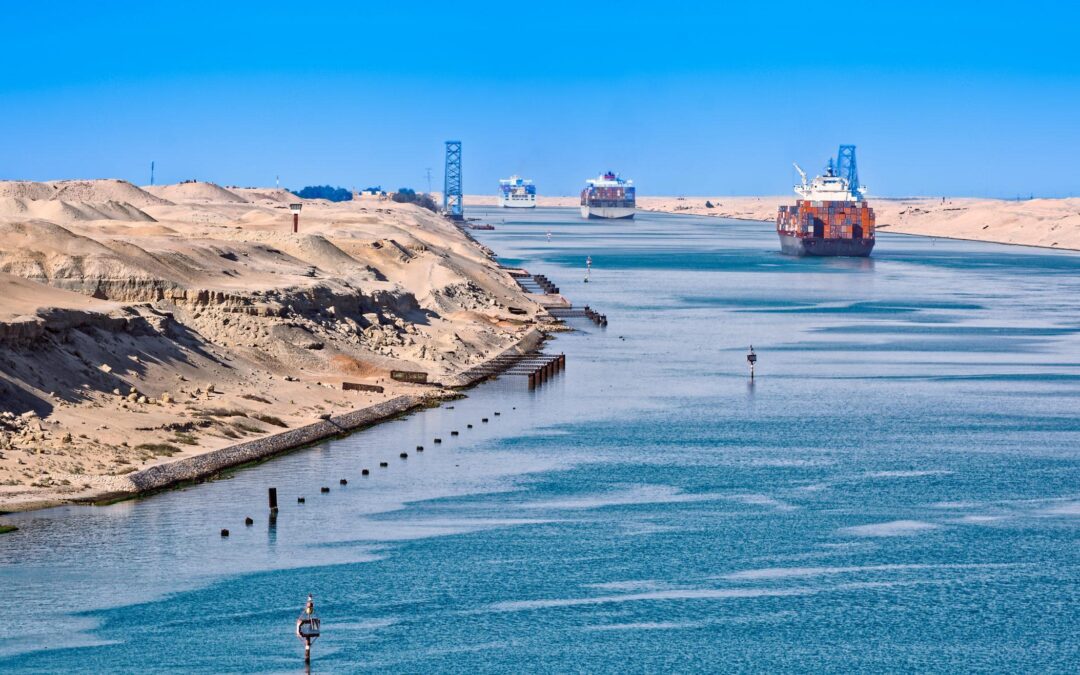
For more than 150 years, the Suez Canal has been one of the world’s most important maritime arteries, connecting Europe, the Middle East, and Asia. Recent geopolitical developments, however, have transformed it from a commercial waterway into a strategic security asset.
On 30 July 2026, Egyptian authorities confirmed that a drone attack struck two gas vessels at Damietta Port, near the Suez Canal, damaging the U.S.-owned Energos Winter and affecting a second vessel, Gaslog Salem. Although the fire was quickly contained and no casualties were reported, the attack immediately raised concerns about the security of one of the world’s most critical energy and shipping corridors.
From the perspective of the Techne–Phronesis Negotiation Framework™, the significance of the incident extends far beyond the physical damage inflicted on two vessels. It represents an emerging transformation in the strategic geography of global commerce.
Technology Creates Capability
The first principle of TPNF states:
Technology Creates Capability.
Modern drone technology enables relatively inexpensive systems to threaten infrastructure worth billions of dollars.
The attack demonstrates how unmanned systems can:
- threaten commercial shipping,
- disrupt energy logistics,
- increase insurance costs,
- create psychological uncertainty,
- influence commodity markets,
- and generate geopolitical leverage disproportionate to their cost.
This growing asymmetry is redefining maritime security.
The Suez Canal as a Strategic Ecosystem
The Suez Canal should no longer be viewed simply as a transportation route.
It has become an ecosystem connecting:
- global energy markets,
- international shipping,
- European industrial supply chains,
- Asian manufacturing,
- Middle Eastern energy exports,
- military logistics,
- insurance markets,
- and geopolitical competition.
Recent disruptions in the Strait of Hormuz and the Bab el-Mandeb have already increased the strategic importance of the Suez route for Saudi and regional energy exports. Any perceived threat to the canal therefore has implications far beyond Egypt itself.
The Regional Geopolitical Impact
The attack has implications for several regional actors.
Egypt
Egypt faces increasing responsibility for protecting both the Suez Canal and associated energy infrastructure. Maintaining confidence in the canal’s security is vital for national revenue and international credibility.
Saudi Arabia
With pressure on alternative maritime routes, Saudi exports increasingly depend on secure access through the Red Sea and Suez corridor, making the protection of these routes a strategic priority.
Europe
European economies remain heavily dependent on uninterrupted maritime trade through the Eastern Mediterranean and Suez Canal. Disruptions can affect energy supplies, industrial production, and shipping costs.
United States
The United States has a strong interest in maintaining freedom of navigation, protecting allied energy infrastructure, and preserving confidence in international maritime commerce.
The Emerging Chokepoint Network
The recent crisis illustrates that today’s geopolitical competition is no longer centered on a single maritime bottleneck.
Instead, several interconnected strategic chokepoints form a global security network:
- Strait of Hormuz
- Bab el-Mandeb
- Suez Canal
- Eastern Mediterranean
- Turkish Straits
- Indian Ocean sea lanes
Pressure on one corridor increases the importance—and vulnerability—of the others.
This networked perspective is central to TPNF systems thinking.
Applying the Techne–Phronesis Negotiation Framework™
TPNF examines this development through three integrated dimensions.
Technology
Drone systems have become strategic instruments capable of influencing global logistics without requiring conventional military superiority.
Systems Thinking
The attack affects multiple interconnected systems simultaneously:
- maritime transportation,
- energy security,
- insurance,
- financial markets,
- diplomacy,
- military planning,
- and global supply chains.
Strategic Wisdom (Phronesis)
The challenge is not merely responding to individual attacks but designing resilient international security architectures that anticipate evolving technological threats while preserving freedom of navigation and economic stability.
Strategic Implications
Several broader implications emerge:
- Maritime infrastructure is becoming increasingly vulnerable to low-cost autonomous technologies.
- The protection of strategic logistics corridors will require closer multinational cooperation.
- Energy security and maritime security are becoming inseparable.
- Insurance costs and shipping patterns may increasingly reflect geopolitical risk rather than purely commercial considerations.
- The competition for control of strategic maritime ecosystems is likely to intensify.
The drone attack near Egypt’s Damietta Port demonstrates that the security of the Suez Canal cannot be assessed solely in terms of physical infrastructure. It must be understood within a broader geopolitical ecosystem linking technology, energy, logistics, and international commerce.
The Techne–Phronesis Negotiation Framework™ highlights that the future of maritime security depends not only on stronger defenses but also on systems thinking and strategic wisdom. As autonomous technologies continue to reshape modern conflict, safeguarding global chokepoints will require integrated international strategies capable of protecting both economic resilience and geopolitical stability.
Key Takeaways
- The drone attack on two gas vessels near Damietta has heightened concerns over the security of the Suez Canal corridor.
- The Suez Canal has become a critical strategic ecosystem connecting global trade, energy, and security.
- Low-cost autonomous systems can generate disproportionate geopolitical and economic effects.
- Maritime chokepoints are increasingly interconnected, making regional crises global in impact.
- TPNF demonstrates that technology, systems thinking, and strategic wisdom are essential for understanding contemporary maritime security.
Author’s Reflection
The events surrounding the Suez Canal illustrate a profound transformation in global geopolitics. Strategic waterways are no longer simply commercial routes; they are interconnected ecosystems where technology, logistics, diplomacy, and security converge. The Techne–Phronesis Negotiation Framework™ encourages decision-makers to move beyond isolated incident analysis and adopt a systemic perspective that recognizes how a single drone attack can influence global energy markets, maritime confidence, and the strategic calculations of states across multiple regions. In the technological age, protecting maritime resilience requires not only advanced capabilities but also the practical wisdom to anticipate how interconnected systems evolve under pressure.
Nikolaos Chatzis
Source: Open Sources Analysis, Relative Data Analysis by Nikos Chatzis
© Nikolaos Chatzis. All Rights Reserved.
The Techne–Phronesis Negotiation Framework™
An Integrative Theory of Strategic Negotiation, Complex Adaptive Systems & Practical Wisdom
Technology Creates Capability • Systems Thinking Creates Understanding • Strategic Wisdom Creates Lasting Value.
Negotiation.gr | Strategic Wisdom for the Technological Age