Negotiation.gr | Strategic Wisdom for the Technological Age
“Strategic resilience emerges when technical capability (techne) is
continuously guided by practical wisdom (phronesis) through adaptive
negotiation across interconnected systems.”
Central Idea
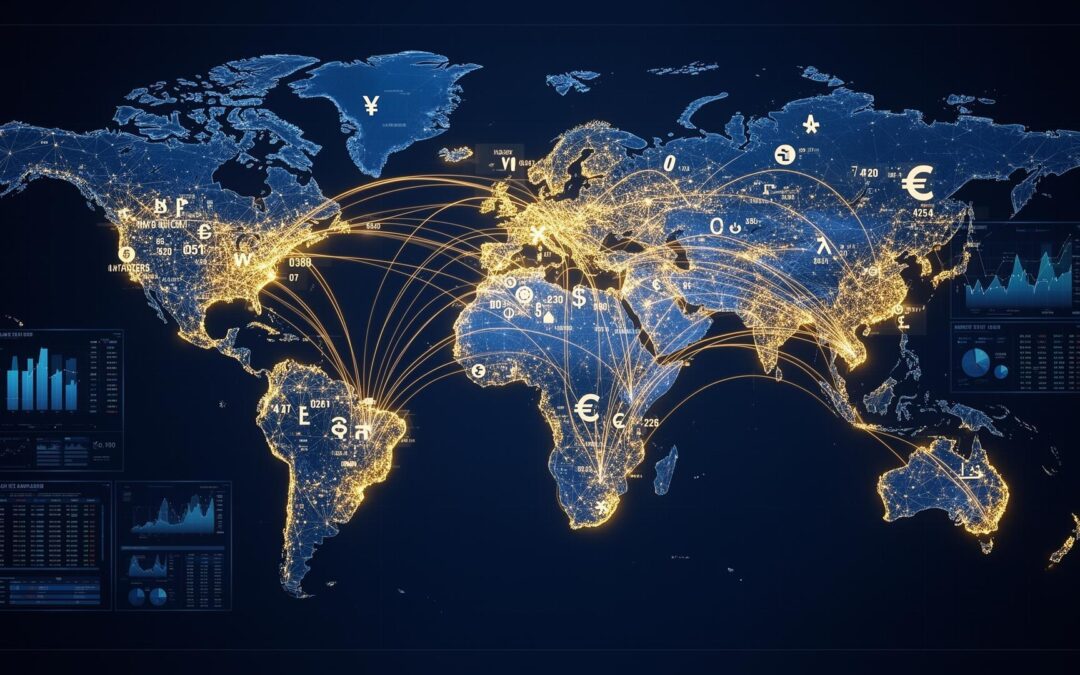
The joint decision of the United States and Japan to intervene in support of the Japanese yen illustrates that financial stability has become a strategic ecosystem requiring international coordination rather than purely national monetary action. Through the Techne–Phronesis Negotiation Framework™ (TPNF), this intervention can be understood as a coordinated effort to preserve systemic resilience, protect confidence in global markets, and reduce the risk of cascading financial instability. Recent reports indicate that Washington and Tokyo confirmed a rare coordinated yen-buying intervention in response to excessive currency volatility.
Purpose of the Essay
This essay analyzes the strategic significance of the coordinated U.S.–Japan intervention to support the Japanese yen. Using the analytical perspective of the Techne–Phronesis Negotiation Framework™ (TPNF), it argues that modern financial markets should be understood as interconnected strategic ecosystems in which technology, governance, strategic negotiation, and adaptive coordination are essential for preserving long-term economic resilience and future value creation.
Abstract
Financial markets are among the most interconnected systems in contemporary technological civilization. Exchange rates influence trade, investment, sovereign debt, inflation, energy prices, and global capital flows. Consequently, severe currency instability may rapidly propagate across international markets.
The recent coordinated intervention by the United States and Japan to support the yen demonstrates that financial stability increasingly depends upon strategic cooperation among major economic powers. According to public statements, both governments acted in response to what they described as excessive exchange-rate volatility and expressed readiness for further coordinated action if necessary.
The Techne–Phronesis Negotiation Framework™ (TPNF) provides an integrative explanation of this development by viewing international finance as a complex adaptive ecosystem in which technological capability, systems thinking, strategic negotiation, institutional coordination, and practical wisdom collectively contribute to long-term stability.
Introduction
Financial Stability in an Interconnected World
The globalization of finance has transformed national currencies into strategic international assets.
Movements in major currencies increasingly influence:
- international trade
- sovereign borrowing
- energy markets
- investment decisions
- multinational corporations
- pension funds
- banking systems
- global supply chains
The Japanese yen occupies a particularly significant position within this global architecture due to Japan’s role as one of the world’s largest economies and a major holder of international financial assets.
Consequently, significant instability in the yen extends beyond Japan itself.
It becomes an issue of international systemic importance.
Main Discussion
1. Technology Creates Capability
The first principle of TPNF states:
Technology Creates Capability.
Modern currency markets operate through advanced technological infrastructure.
Artificial intelligence, algorithmic trading, high-frequency transactions, real-time settlement systems, cloud computing, and global communications enable financial markets to react within milliseconds.
These technologies increase market efficiency.
However, they also accelerate the transmission of volatility.
Technology therefore simultaneously strengthens opportunity and amplifies systemic risk.
2. Systems Thinking Creates Understanding
Exchange rates cannot be analyzed independently.
The value of the yen influences:
- export competitiveness
- inflation
- interest rates
- sovereign debt markets
- international investment
- energy imports
- global capital allocation
TPNF therefore emphasizes systems thinking.
Understanding the broader financial ecosystem enables policymakers to evaluate indirect consequences rather than isolated market movements.
3. Strategic Negotiation and International Coordination
The coordinated intervention itself demonstrates the importance of strategic negotiation.
Rather than acting independently, Washington and Tokyo coordinated policy responses to address market volatility.
This reflects an understanding that financial confidence increasingly depends upon credible international cooperation.
According to official statements reported by Reuters and AP, both governments emphasized coordination and indicated their willingness to take additional measures if excessive volatility continues.
Within TPNF, negotiation extends beyond diplomatic dialogue.
It becomes the mechanism through which strategic ecosystems preserve stability.
4. Financial Markets as Strategic Ecosystems
Traditional economic analysis often treats exchange-rate intervention as an isolated monetary event.
TPNF proposes a broader interpretation.
Financial stability emerges from interactions among:
- central banks
- finance ministries
- commercial banks
- institutional investors
- multinational corporations
- international organizations
- technology platforms
- global capital markets
Each actor influences the resilience of the overall financial ecosystem.
5. Networked Strategic Resilience
The intervention also illustrates the concept of Networked Strategic Resilience.
Rather than allowing market instability to escalate, governments coordinated their actions to reinforce confidence before broader contagion developed.
Resilience therefore becomes proactive rather than reactive.
It focuses on preserving confidence throughout interconnected networks.
6. Adaptive Governance
Adaptive governance requires institutions capable of responding rapidly to evolving financial conditions.
This includes:
- policy coordination
- transparent communication
- technological monitoring
- international consultation
- evidence-based decision-making
The coordinated intervention reflects adaptive governance operating within a rapidly changing global financial environment.
7. Strategic Wisdom Creates Lasting Value
The third principle of TPNF states:
Strategic Wisdom Creates Lasting Value.
Financial interventions cannot permanently replace economic fundamentals.
However, strategic wisdom recognizes that preserving confidence during periods of exceptional volatility may prevent disproportionate economic disruption.
The objective extends beyond exchange-rate management.
It seeks to preserve trust in the international financial system itself.
Strategic Implications
The coordinated U.S.–Japan intervention offers several important strategic lessons.
First, financial stability increasingly requires international coordination.
Second, technological markets demand faster institutional adaptation.
Third, resilience depends upon credible partnerships among major economic actors.
Fourth, strategic negotiation strengthens confidence within interconnected financial ecosystems.
Finally, sustainable value creation depends upon balancing market flexibility with systemic stability.
The joint decision of the United States and Japan to support the yen illustrates a broader transformation in global economic governance. In an era of deeply interconnected financial markets, currency stability has become a shared strategic concern rather than a purely domestic issue. Coordinated action reflects recognition that excessive volatility in one major currency can quickly transmit risks across global markets.
The Techne–Phronesis Negotiation Framework™ (TPNF) explains this development by integrating technological capability, systems thinking, strategic negotiation, adaptive governance, networked resilience, and practical wisdom into a unified analytical framework. From this perspective, the intervention is not merely a monetary policy measure; it is an example of ecosystem governance aimed at protecting confidence, preserving stability, and enabling sustainable future value creation in an increasingly interconnected technological civilization.
Key Takeaways
- The coordinated U.S.–Japan intervention reflects the strategic importance of international financial cooperation.
- Currency markets function as interconnected technological ecosystems.
- Systems thinking is essential for understanding the wider effects of exchange-rate instability.
- Strategic negotiation strengthens confidence and policy coordination during periods of volatility.
- TPNF explains financial resilience as the product of technology, governance, adaptation, and practical wisdom working together.
Author’s Reflection
Financial stability has become one of the defining strategic challenges of the technological age. As global markets become increasingly interconnected, preserving confidence requires more than monetary instruments—it requires international coordination, adaptive governance, systems thinking, and strategic wisdom. The Techne–Phronesis Negotiation Framework™ (TPNF) proposes that lasting economic value is created when financial ecosystems are governed through collaboration, resilience, and informed strategic judgment rather than isolated national action.
Author: Nikos Chatzis
Source: Open Sources Analysis, Relative Data Analysis by Nikos Chatzis
© Nikolaos Chatzis. All Rights Reserved.
The Techne–Phronesis Negotiation Framework™
An Integrative Theory of Strategic Negotiation, Complex Adaptive Systems and Practical Wisdom
Technology Creates Capability • Systems Thinking Creates Understanding • Strategic Wisdom Creates Lasting Value.
Negotiation.gr | Strategic Wisdom for the Technological Age