Negotiation.gr | Strategic Wisdom for the Technological Age
“Strategic resilience emerges when technical capability (techne) is
continuously guided by practical wisdom (phronesis) through adaptive
negotiation across interconnected systems.”
Central Idea
The recent Houthi attacks on Saudi oil installations and the resulting slowdown of maritime traffic through the Bab el-Mandeb Strait illustrate how contemporary geopolitical competition increasingly targets interconnected technological, energy, and maritime ecosystems rather than isolated military objectives. Through the Techne–Phronesis Negotiation Framework™ (TPNF), these events demonstrate that sustainable regional security depends upon integrating technological capability, systems thinking, strategic negotiation, platform ecosystems, and strategic wisdom.
Purpose of the Essay
This essay applies the Techne–Phronesis Negotiation Framework™ (TPNF) to examine the regional and international geopolitical implications of Houthi attacks on Saudi oil infrastructure and the subsequent slowdown of commercial shipping through the Bab el-Mandeb Strait. It argues that this strategic maritime corridor should be understood not merely as a geographical chokepoint but as a multidimensional platform ecosystem whose disruption generates cascading effects across global energy markets, maritime logistics, regional diplomacy, and international security.
Abstract
The Bab el-Mandeb Strait is one of the world’s most strategically significant maritime chokepoints, linking the Red Sea with the Gulf of Aden and the Indian Ocean. Recent Houthi attacks on Saudi oil installations and shipping have contributed to a reduction in commercial maritime traffic through this vital corridor, highlighting the vulnerability of global trade and energy networks to regional instability. Rather than viewing these events solely through a military or regional lens, the Techne–Phronesis Negotiation Framework™ (TPNF) interprets them as disruptions within an interconnected ecosystem composed of energy infrastructure, maritime logistics, digital technologies, geopolitical relationships, and international markets. The essay demonstrates that effective responses require systemic understanding, coordinated international action, technological innovation, and strategic wisdom.
Introduction
Modern geopolitics is increasingly defined by the competition to secure and influence strategic infrastructures rather than simply controlling territory.
Critical maritime routes, energy corridors, digital communications, and technological networks now constitute the foundations of global economic stability.
Among these infrastructures, the Bab el-Mandeb Strait occupies a uniquely strategic position.
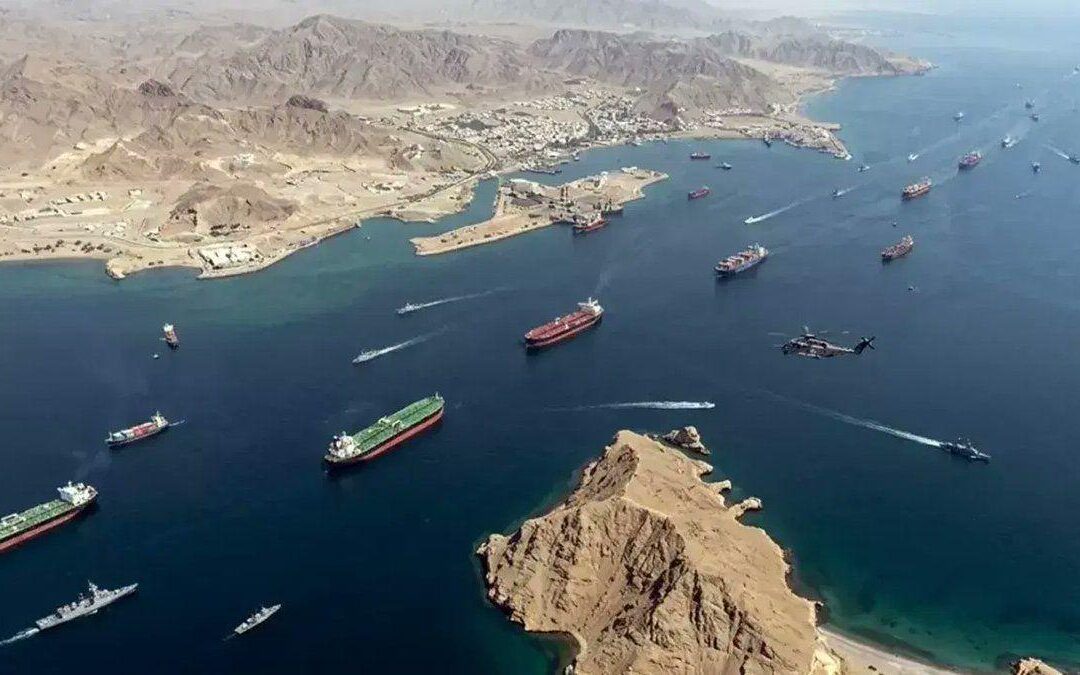
Connecting the Red Sea to the Gulf of Aden and the Indian Ocean, it serves as one of the world’s principal maritime arteries for transporting crude oil, liquefied natural gas, manufactured goods, and containerized trade between Asia, Europe, Africa, and the Middle East.
Recent Houthi attacks against Saudi oil installations along the Red Sea coast, combined with threats against commercial shipping, have demonstrated how regional conflict can generate consequences extending far beyond the immediate battlefield.
Shipping companies have increasingly reassessed transit risks, insurers have adjusted premiums, and governments have intensified efforts to protect freedom of navigation. These developments illustrate the growing interdependence between regional security and global economic stability.
Bab el-Mandeb as a Strategic Platform Ecosystem
Traditional geopolitical analysis often describes Bab el-Mandeb as a maritime chokepoint.
The Techne–Phronesis Negotiation Framework™ expands this understanding.
Bab el-Mandeb functions as a strategic platform ecosystem connecting multiple actors and infrastructures simultaneously.
Its ecosystem includes:
- Global shipping companies
- Oil producers
- Energy consumers
- Ports and logistics hubs
- Insurance markets
- Naval forces
- Satellite surveillance systems
- Maritime communications networks
- Digital navigation platforms
- Financial institutions
Disruption of any single component rapidly affects the performance of the entire ecosystem.
Consequently, attacks against oil facilities or commercial vessels produce ripple effects extending across global supply chains, commodity markets, transportation costs, and investor confidence.
Systems Thinking Creates Understanding
The Bab el-Mandeb crisis demonstrates why systems thinking is indispensable.
A reduction in maritime traffic does not merely affect shipping companies.
Its consequences extend across interconnected systems including:
- Global energy markets
- European supply chains
- Asian manufacturing
- Insurance industries
- Inflationary pressures
- Food transportation
- National energy security
- Maritime commerce
Understanding these relationships enables policymakers to anticipate cascading consequences rather than reacting only to immediate tactical events.
Systems thinking therefore transforms isolated incidents into comprehensive strategic understanding.
Strategic Negotiation Creates Adaptive Advantage
Military deterrence alone cannot guarantee long-term maritime security.
The complexity of the Red Sea environment requires continuous negotiation among diverse stakeholders.
These include:
- Saudi Arabia
- Yemen
- Gulf Cooperation Council members
- Iran
- Egypt
- The United States
- The European Union
- China
- International maritime organizations
- Commercial shipping companies
Strategic negotiation provides mechanisms for balancing security, diplomacy, economic interests, humanitarian considerations, and regional stability.
Adaptive advantage emerges when negotiation complements technological capability and military preparedness.
Platform Ecosystems Create Strategic Resilience
One of the central insights of the Techne–Phronesis Negotiation Framework™ is that resilience increasingly depends upon platform ecosystems rather than isolated infrastructures.
Energy security today is sustained through interconnected systems comprising:
- Pipelines
- Export terminals
- Oil installations
- Commercial shipping
- Ports
- Digital logistics
- Satellite communications
- Financial markets
- Strategic reserves
Strengthening only one component offers limited protection.
Sustainable resilience requires coordinated governance across the entire ecosystem.
Platform ecosystems enable continuous information sharing, collaborative decision-making, adaptive logistics, and rapid responses to emerging disruptions.
Strategic Wisdom Creates Lasting Value
The final pillar of TPNF emphasizes practical wisdom.
Strategic wisdom requires leaders to distinguish between tactical achievements and long-term strategic outcomes.
Temporary disruption of maritime commerce may generate immediate political or military leverage.
However, prolonged instability risks:
- Increasing global energy prices
- Raising transportation costs
- Weakening investor confidence
- Disrupting international supply chains
- Escalating regional military tensions
- Slowing economic growth
Strategic wisdom therefore prioritizes resilient stability over continuous escalation.
Its objective is to create conditions supporting prosperity, cooperation, and sustainable regional development.
Regional Geopolitical Impact
The consequences of the Bab el-Mandeb crisis extend throughout the broader international system.
For Saudi Arabia, attacks increase pressure on Red Sea energy infrastructure while reinforcing the importance of diversified export routes.
For Egypt, reduced maritime traffic directly affects Suez Canal revenues and national economic interests.
For Europe, longer shipping routes and increased insurance costs may influence industrial production, inflation, and supply-chain resilience.
For China, continued instability creates additional uncertainty regarding energy imports and maritime trade linking Asia with European markets.
For Greece, one of the world’s leading maritime nations, disruptions reinforce the strategic importance of maritime security, resilient logistics, and international freedom of navigation.
At the broader geopolitical level, the crisis highlights how regional conflicts increasingly affect the global economy through interconnected technological and maritime systems.
Strategic Implications
The Techne–Phronesis Negotiation Framework™ suggests five strategic priorities:
- Strengthen multinational maritime security cooperation in the Red Sea.
- Expand technological surveillance using satellites, artificial intelligence, autonomous maritime systems, and drones.
- Diversify critical energy transportation routes to reduce excessive dependence on individual maritime chokepoints.
- Develop resilient platform ecosystems connecting governments, industry, insurers, logistics providers, and technology companies.
- Pursue sustained diplomatic engagement that combines credible deterrence with regional de-escalation.
These priorities recognize that long-term resilience depends upon integrating technological capability with strategic governance rather than relying exclusively on military responses.
The recent Houthi attacks demonstrate that contemporary geopolitical competition increasingly targets interconnected ecosystems rather than isolated assets.
The Bab el-Mandeb Strait should therefore be understood as a strategic platform ecosystem linking global energy, maritime transportation, digital technologies, international finance, and regional security.
The Techne–Phronesis Negotiation Framework™ provides an integrated methodology for understanding this complexity.
Technology creates capability.
Systems thinking creates understanding.
Strategic negotiation creates adaptive advantage.
Platform ecosystems create strategic resilience.
Strategic wisdom creates lasting value.
Together, these five pillars offer decision-makers a comprehensive framework for addressing the geopolitical challenges of technological civilization while promoting sustainable regional and global stability.
Key Takeaways
- Bab el-Mandeb functions as a strategic platform ecosystem rather than merely a maritime chokepoint.
- Regional attacks on energy infrastructure generate global consequences across trade, logistics, finance, and energy markets.
- Technological capabilities must be integrated with systemic understanding and international cooperation.
- Platform ecosystems strengthen resilience by connecting governments, industry, technology providers, and maritime stakeholders.
- The Techne–Phronesis Negotiation Framework™ provides an integrative methodology for understanding and governing complex geopolitical crises.
Author’s Reflection
The Bab el-Mandeb crisis illustrates a defining feature of contemporary technological civilization: the increasing strategic importance of interconnected systems. Maritime routes, energy infrastructures, digital technologies, and geopolitical relationships now operate as integrated ecosystems whose resilience depends upon coordination rather than isolation. The Techne–Phronesis Negotiation Framework™ suggests that future strategic leadership will require not only technological capability but also systemic understanding, collaborative governance, adaptive negotiation, and practical wisdom capable of transforming geopolitical uncertainty into sustainable long-term value.
Source: Open Sources Analysis, Relative Data Analysis by Nikos Chatzis
© Nikolaos Chatzis. All Rights Reserved.
The Techne–Phronesis Negotiation Framework™
An Integrative Theory of Strategic Negotiation, Complex Adaptive Systems & Practical Wisdom
Technology Creates Capability • Systems Thinking Creates Understanding • Strategic Wisdom Creates Lasting Value.
Negotiation.gr | Strategic Wisdom for the Technological Age