Negotiation.gr | Strategic Wisdom for the Technological Age
“Strategic resilience emerges when technical capability (techne) is
continuously guided by practical wisdom (phronesis) through adaptive
negotiation across interconnected systems.”
Central Idea
The proposed Achilles’ Shield represents far more than a modern integrated air and missile defense program. It is the construction of a strategic technological ecosystem that combines kinetic and non-kinetic capabilities, artificial intelligence, advanced radar systems, electronic warfare, network-centric command and control, and allied interoperability into a unified architecture of deterrence. Through the Techne–Phronesis Negotiation Framework™ (TPNF), Achilles’ Shield demonstrates how technological superiority becomes lasting strategic value only when integrated through systems thinking, strategic negotiation, and practical wisdom.
Purpose of the Essay
This essay examines the geopolitical significance of Greece’s proposed Achilles’ Shield through the Techne–Phronesis Negotiation Framework™ (TPNF). It argues that the integration of David’s Sling, Barak MX, SPYDER, Patriot, HAWK, Drone Dome, ELM-2084, and complementary non-kinetic anti-drone capabilities should be understood not as separate defense acquisitions but as interconnected components of a resilient strategic ecosystem that strengthens national security, NATO interoperability, regional deterrence, and long-term strategic resilience.
TPNF Strategic Proposition
Achilles’ Shield illustrates that future deterrence will be determined not by individual weapon systems but by the successful integration of sensors, interceptors, artificial intelligence, electronic warfare, strategic negotiation, and allied cooperation into adaptive multilevel defense ecosystems capable of responding to rapidly evolving technological threats.
Abstract
The security environment of the Eastern Mediterranean is undergoing a profound transformation driven by hypersonic weapons, long-range precision missiles, loitering munitions, autonomous drones, electronic warfare, cyber operations, and artificial intelligence. Traditional air-defense systems operating independently are no longer sufficient to address this multidimensional threat environment.
The proposed Achilles’ Shield represents Greece’s effort to construct an integrated, multilayered defense ecosystem capable of protecting national territory, critical infrastructure, military installations, and strategic economic assets. By combining systems such as David’s Sling, Barak MX, SPYDER, Patriot, HAWK, Drone Dome, ELM-2084, and advanced non-kinetic anti-drone technologies, Greece seeks to establish a network-centric architecture of deterrence.
Through the Techne–Phronesis Negotiation Framework™ (TPNF), this initiative demonstrates that the future of national security depends upon integrating technological capability, systems thinking, strategic negotiation, and practical wisdom into resilient multilevel strategic ecosystems.
Introduction: From Air Defense to Strategic Ecosystems
For decades, air defense focused primarily on intercepting hostile aircraft. Today, however, national security requires defending against a far broader spectrum of threats, including ballistic missiles, cruise missiles, unmanned aerial systems, loitering munitions, electronic attacks, cyber disruptions, and coordinated multi-domain operations.
Consequently, the challenge is no longer acquiring the “best” missile system. Rather, it is designing an integrated ecosystem capable of detecting, identifying, prioritizing, communicating, and neutralizing multiple simultaneous threats in real time.
The concept of Achilles’ Shield reflects precisely this transformation. It represents a shift from platform-centric defense toward ecosystem-centric security. This evolution aligns directly with the central philosophy of the Techne–Phronesis Negotiation Framework™, which argues that sustainable strategic advantage emerges through the integration of technological capability, systems thinking, strategic negotiation, and practical wisdom.
Technology Creates Capability
The first pillar of TPNF—Techne—focuses on technological capability.
Each component of Achilles’ Shield contributes a distinct operational function within the overall ecosystem.
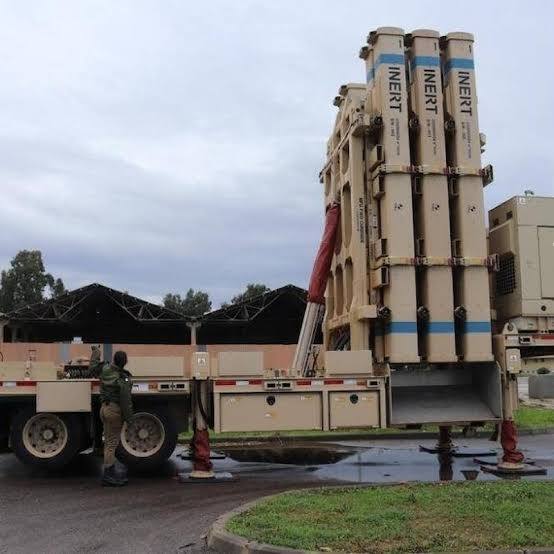
David’s Sling provides advanced interception against medium- and long-range missiles.
Barak MX offers highly flexible layered air-defense capabilities against multiple aerial threats.
SPYDER contributes rapid-response protection against aircraft, helicopters, precision-guided munitions, and unmanned systems.
Patriot remains one of NATO’s most capable long-range air and missile defense systems, while HAWK, despite its age, can continue providing valuable secondary defensive coverage after modernization.
Complementing these interceptor systems are Drone Dome and other non-kinetic anti-drone technologies capable of detecting, jamming, disrupting, or neutralizing hostile unmanned aerial systems without requiring kinetic interception. These capabilities become increasingly important as low-cost drones reshape modern battlefields.
The technological foundation of the ecosystem is further strengthened by ELM-2084, one of the world’s most advanced multifunction radars. Its ability to simultaneously detect, classify, track, and support engagement decisions against multiple targets significantly enhances situational awareness and command effectiveness.
Viewed independently, each system provides valuable capabilities. Viewed collectively, they become something far more significant: an integrated technological ecosystem.
Systems Thinking Creates Understanding
Technology alone cannot guarantee national security.
The second pillar of the TPNF—Systems Thinking—demonstrates that the effectiveness of Achilles’ Shield depends upon the interaction among its components rather than their individual performance.
Sensors must communicate seamlessly with command-and-control networks.
Artificial intelligence must assist operators in prioritizing threats.
Radar systems must share information across multiple defensive layers.
Electronic warfare capabilities must coordinate with kinetic interceptors.
Cybersecurity must protect communication networks against disruption.
Military services must operate through common operational pictures.
Only when these relationships function effectively does the ecosystem achieve true resilience.
This systems perspective also extends beyond military technology. Achilles’ Shield connects Greece’s armed forces with NATO command structures, allied intelligence networks, defense industries, research institutions, cybersecurity organizations, and strategic partners throughout Europe and the Eastern Mediterranean.
Consequently, the project becomes not simply a military modernization program but a national strategic ecosystem supporting deterrence, technological innovation, industrial cooperation, and geopolitical stability.
Strategic Negotiation as Force Integration
The third pillar of the TPNF—Strategic Negotiation—recognizes that complex defense ecosystems cannot be created solely through procurement contracts.
Achilles’ Shield requires continuous negotiation among governments, defense industries, military organizations, research institutions, international partners, technology suppliers, and operational users.
Negotiation determines technology transfer agreements, industrial participation, logistics, maintenance, interoperability standards, cybersecurity protocols, intelligence sharing, financing mechanisms, and future modernization pathways.
Equally important is diplomatic negotiation. Greece’s growing defense cooperation with Israel, the United States, France, and other NATO allies demonstrates that modern defense systems simultaneously function as instruments of foreign policy, alliance building, and regional strategic cooperation.
From this perspective, Achilles’ Shield strengthens not only Greece’s military posture but also its geopolitical position within the evolving security architecture of the Eastern Mediterranean and Europe.
Complex Adaptive Systems and the Evolution of Modern Deterrence
The contemporary security environment is best understood as a Complex Adaptive System (CAS), where states, alliances, defense industries, emerging technologies, cyber capabilities, and non-state actors continuously adapt to one another. Threats evolve rapidly, and military superiority is no longer determined solely by numerical force or individual weapon systems but by the speed with which an integrated defense ecosystem can learn, adapt, and respond.
Within this context, Achilles’ Shield represents an adaptive security architecture rather than a static military installation. Every hostile action—whether a swarm of unmanned aerial systems, precision-guided missiles, cyber attacks, or electronic warfare operations—requires the ecosystem to process information, coordinate responses, and continuously adjust its operational behavior. Artificial intelligence, sensor fusion, and automated command-and-control systems significantly accelerate this adaptive cycle, enabling military decision-makers to respond more effectively to complex, simultaneous threats.
The TPNF emphasizes that resilience emerges from adaptation rather than rigidity. Consequently, Achilles’ Shield should not be viewed as a finished project but as a continuously evolving strategic ecosystem capable of incorporating future technologies, including autonomous systems, next-generation radar, quantum-enabled communications, advanced electronic warfare, and AI-supported decision-making.
Networked Strategic Resilience
One of the central concepts of the Techne–Phronesis Negotiation Framework™ is Networked Strategic Resilience.
Historically, military resilience depended primarily upon the strength of individual armed forces. Today, resilience increasingly derives from the quality of interconnected strategic networks.
Achilles’ Shield exemplifies this transformation.
Its effectiveness depends upon the interaction of multiple interconnected networks:
- Air-defense systems
- Radar and sensor networks
- Electronic warfare capabilities
- Cybersecurity infrastructure
- Artificial intelligence decision-support systems
- NATO command-and-control architecture
- Intelligence-sharing mechanisms
- Defense industrial cooperation
- Research and technological innovation
- Allied interoperability
Collectively, these interconnected components create a resilient ecosystem capable of maintaining operational effectiveness even under conditions of uncertainty, technological disruption, or sustained attack.
This represents a significant evolution in military strategy. The objective is no longer merely to intercept hostile missiles but to preserve the operational integrity of the entire national security ecosystem.
The Geopolitical Impact of Achilles’ Shield
The geopolitical significance of Achilles’ Shield extends well beyond Greece’s territorial defense.
First, it strengthens deterrence across the Eastern Mediterranean by increasing the cost and uncertainty associated with any hostile military action against Greece.
Second, it reinforces NATO’s southeastern flank by enhancing interoperability with allied air and missile defense systems.
Third, it supports the broader European effort to strengthen Integrated Air and Missile Defense (IAMD) capabilities in response to the rapidly evolving security environment.
Fourth, Greece’s expanding defense cooperation with Israel, the United States, France, and other allied partners creates a technological ecosystem that extends beyond national borders. Technology transfer, joint exercises, operational cooperation, intelligence sharing, industrial partnerships, and collaborative research contribute to a wider regional architecture of collective security.
From a geopolitical perspective, Achilles’ Shield therefore becomes an instrument of strategic diplomacy as much as military defense.
It signals that Greece is investing not only in protecting its own territory but also in contributing to regional stability, NATO’s collective deterrence posture, and the security architecture of Europe’s southeastern frontier.
Practical Wisdom Creates Lasting Strategic Value
The final pillar of the TPNF—Phronesis, or practical wisdom—reminds us that technological superiority alone cannot guarantee strategic success.
History demonstrates that technologically advanced military systems can fail if political leadership lacks strategic judgment, institutional coordination, or long-term planning.
Practical wisdom therefore requires balancing military effectiveness with diplomatic responsibility, fiscal sustainability, industrial development, alliance management, technological innovation, and regional stability.
Achilles’ Shield should not become an end in itself.
Rather, it should function as part of a comprehensive national security strategy integrating diplomacy, defense policy, technological innovation, industrial cooperation, cyber resilience, and strategic communication.
Only through such integration can technological capability be transformed into sustainable strategic advantage.
The TPNF therefore argues that lasting security emerges not from possessing the most sophisticated weapons but from governing advanced technological ecosystems wisely, responsibly, and adaptively.
Strategic Implications
Achilles’ Shield represents one of the clearest examples of the transition from platform-centric defense toward ecosystem-centric security.
Its successful implementation could significantly enhance Greece’s strategic position within NATO while strengthening regional deterrence, supporting technological innovation, and encouraging deeper cooperation among allied defense industries.
The project also illustrates the increasing convergence of military technology, artificial intelligence, cybersecurity, electronic warfare, industrial policy, and international diplomacy.
Future strategic competition will increasingly revolve around the governance of these interconnected technological ecosystems rather than individual military platforms.
For Greece, Achilles’ Shield therefore represents an opportunity not only to modernize its armed forces but also to position itself as a regional hub of technological cooperation, strategic resilience, and advanced defense integration.
The development of Achilles’ Shield illustrates one of the defining characteristics of contemporary technological civilization: national security is increasingly determined not by the acquisition of individual military platforms but by the ability to integrate diverse technologies into resilient, adaptive, and interoperable strategic ecosystems. Systems such as David’s Sling, Barak MX, SPYDER, Patriot, HAWK, Drone Dome, ELM-2084, together with non-kinetic anti-drone capabilities, represent complementary elements of a comprehensive defense architecture designed to address the multidimensional threats of the twenty-first century.
Through the Techne–Phronesis Negotiation Framework™ (TPNF), Achilles’ Shield is understood as far more than an integrated air and missile defense network. It is a dynamic strategic ecosystem in which technological capability (Techne) must be continuously coordinated through Systems Thinking, strengthened by Strategic Negotiation, and ultimately guided by Practical Wisdom (Phronesis). Technology alone cannot guarantee security; its effectiveness depends upon institutional cooperation, political leadership, international partnerships, industrial innovation, operational integration, and long-term strategic governance.
Ultimately, Achilles’ Shield demonstrates the central proposition of the TPNF: lasting strategic value emerges when technological capability is transformed into resilient strategic ecosystems through systems thinking, strategic negotiation, and practical wisdom. In the technological age, sustainable deterrence belongs not to the strongest individual weapon system but to the wisest, most adaptive, and most interconnected strategic ecosystem.
Key Takeaways
- Achilles’ Shield represents an integrated strategic ecosystem rather than a collection of individual weapon systems.
- Network-centric integration is becoming the defining characteristic of modern deterrence.
- Artificial intelligence, sensor fusion, cyber resilience, and electronic warfare are increasingly as important as missile interceptors.
- Greece’s defense modernization strengthens both national security and NATO’s southeastern strategic architecture.
- Sustainable strategic advantage depends upon the integration of technology, systems thinking, strategic negotiation, and practical wisdom.
Author’s Reflection
Achilles’ Shield illustrates a broader transformation occurring across international security. Military power is no longer measured exclusively by firepower but by the ability to integrate technology, institutions, alliances, information, and adaptive governance into resilient strategic ecosystems. The Techne–Phronesis Negotiation Framework™ suggests that the future of deterrence belongs to those who can govern complexity with wisdom as effectively as they master technology.
Source: Open Sources Analysis, Relative Data Analysis by Nikos Chatzis
© Nikolaos Chatzis. All Rights Reserved.
The Techne–Phronesis Negotiation Framework™
An Integrative Theory of Strategic Negotiation, Complex Adaptive Systems & Practical Wisdom
Technology Creates Capability • Systems Thinking Creates Understanding • Strategic Wisdom Creates Lasting Value.
Negotiation.gr | Strategic Wisdom for the Technological Age