Negotiation.gr | Strategic Wisdom for the Technological Age
“Strategic resilience emerges when technical capability (techne) is
continuously guided by practical wisdom (phronesis) through adaptive
negotiation across interconnected systems.”
Executive Assessment
The U.S.–Iran war is no longer adequately understood as a sequence of reciprocal airstrikes between two principal adversaries. It has evolved into a regional systems confrontation involving military bases, commercial shipping, energy flows, proxy forces, digital narratives, defence-industrial capacity and international transport corridors.
The United States completed an 11th consecutive night of strikes against Iranian targets, while Washington simultaneously maintained that diplomacy remained possible. Iran continued retaliatory operations against American and allied interests across the region. At the maritime level, traffic through the Strait of Hormuz fell to exceptionally low levels, while Houthi threats against Saudi-linked shipping extended the crisis toward Bab el-Mandeb and the Red Sea.
The strategic centre of gravity is therefore shifting. The principal question is no longer simply whether U.S. air power can destroy Iranian military assets. It is whether the United States and its partners can protect the wider ecosystem that converts military capability into lasting strategic influence: secure waterways, functioning alliances, resilient supply chains, credible deterrence, political legitimacy and a viable diplomatic exit.
Under the Techne–Phronesis Negotiation Framework™, the war demonstrates a central principle:
Technology can generate destructive capability, but only systems understanding and strategic wisdom can transform operational power into sustainable political value.
The current campaign displays considerable techne—precision-strike capability, surveillance, missile defence and long-range force projection. It remains uncertain, however, whether it is supported by sufficient phronesis: a coherent understanding of escalation dynamics, regional political consequences, economic interdependence and the conditions required for an enforceable settlement.
1. Current Operational Picture
Continued U.S. air operations
U.S. Central Command stated on X that American forces completed their 11th consecutive night of strikes against Iran. Reporting indicates that recent target sets included drone-storage facilities, aircraft infrastructure and sites connected to Iran’s ability to threaten commercial shipping.
The conclusion of an individual strike cycle should not be interpreted as the end of the campaign. It represents an operational pause within a continuing confrontation. Washington also continues to threaten attacks against additional Iranian nuclear-related facilities should Tehran refuse U.S. conditions or expand its retaliation.
Iranian retaliation and horizontal escalation
Iran has demonstrated that it does not need to match American air power symmetrically. It can instead impose costs across a distributed regional network by targeting:
- U.S. military installations;
- bases and infrastructure in Gulf partner states;
- commercial maritime traffic;
- energy and desalination infrastructure;
- politically vulnerable allied governments;
- supply routes connecting the Gulf, Red Sea and Mediterranean.
Recent reporting describes Iranian attacks or attempted attacks affecting Kuwait, Bahrain and Jordan. This horizontal expansion increases the number of political actors whose territory, infrastructure and domestic stability are exposed to the conflict.
Iran’s strategic purpose appears broader than battlefield retaliation. Tehran is attempting to demonstrate that continued American pressure will produce regional costs that Washington cannot completely contain.
U.S. casualties and financial pressure
The conflict has reportedly resulted in 18 U.S. military deaths, while the estimated cost cited during U.S. congressional proceedings reached approximately $37.5 billion. The administration is seeking substantial supplemental funding, although legislators are questioning both the scale of the expenditure and the absence of a clearly articulated exit strategy.
These costs matter strategically. Even when the United States maintains military superiority, the political sustainability of the campaign may diminish if casualties, energy prices and budgetary requirements continue to rise without visible movement toward a political settlement.
2. The Maritime and Energy Centre of Gravity
Strait of Hormuz
The Strait of Hormuz has become the principal strategic bargaining asset in the war. Shipping data reported by Reuters indicated that only three commodity vessels crossed the strait on Tuesday, with no very large crude carriers or LNG tankers recorded. This followed an already severe decline in crossings during the previous day.
Iran does not necessarily need to achieve a complete physical closure of Hormuz. It can produce strategic effects through:
- missile and drone threats;
- ship seizures or harassment;
- uncertainty over insurance coverage;
- disruption of crew availability;
- elevated freight and war-risk premiums;
- selective passage and coercive regulation;
- repeated attacks creating perceptions of uncontrollable risk.
The economic effect arises from uncertainty as much as from physical destruction. A limited number of attacks can therefore generate consequences disproportionate to the weapons employed.
Bab el-Mandeb and the Red Sea
The Houthi announcement of a naval blockade against Saudi Arabia has introduced a second interconnected maritime front. Two Saudi oil tankers reportedly changed course near Bab el-Mandeb following the threats.
This creates the possibility of correlated chokepoint disruption. Hormuz and Bab el-Mandeb should not be analysed as separate geographical problems. They constitute two nodes of the same energy, trade and military-logistics ecosystem.
If both become persistently contested:
- Gulf energy exports become less predictable.
- Asian and European supply chains face longer and more expensive routing.
- Saudi Arabia and the UAE become more exposed to attacks on both their production systems and export corridors.
- Egypt risks reduced Suez Canal revenues.
- European inflationary and industrial pressures intensify.
- Russia may benefit indirectly from higher energy prices and increased demand for alternative supplies.
Energy-market consequences
Oil prices moved above $91 per barrel amid fears of further disruption. The precise daily price is less strategically important than the emerging risk premium: markets increasingly perceive that the war affects not only Iranian exports but the reliability of the entire Gulf–Red Sea energy system.
The conflict is therefore converting Iran’s geographical position into negotiating leverage. Tehran’s military systems may be inferior to those of the United States, but its location allows it to threaten networks whose value far exceeds the value of the individual weapons employed.
3. Diplomatic Situation
U.S. Secretary of State Marco Rubio stated that Washington remains willing to negotiate, while accusing Iran of lacking seriousness. Iran has acknowledged receiving proposals through mediators, including diplomatic activity involving Pakistan, but the military campaign has continued.
This creates a familiar coercive-negotiation problem: both sides claim to support diplomacy, but each seeks to alter the bargaining environment through continued force.
The principal barriers are:
- absence of trust following the collapse of earlier arrangements;
- disagreement over control and freedom of navigation in Hormuz;
- the future of Iran’s nuclear and missile programmes;
- sanctions and maritime restrictions;
- responsibility for attacks against regional states;
- the role of Iranian-aligned non-state actors;
- demands for guarantees that neither side currently appears able to provide.
The United States may seek Iranian compliance before reducing military pressure. Iran may require a credible cessation of strikes and maritime coercion before accepting substantive restrictions. These positions create a circular sequencing problem.
A viable settlement will therefore require more than a ceasefire declaration. It will need an ecosystem-level agreement connecting military de-escalation, maritime passage, sanctions relief, verification, proxy restraint and regional security guarantees.
4. Assessment of Narratives on X
X is functioning as both an operational information channel and a contested psychological environment.
Verified and relatively reliable content
The most dependable X material comes from official or institutionally identifiable accounts, including:
- U.S. Central Command operational announcements;
- government ministries;
- recognised international organisations;
- established news agencies;
- specialist maritime and security-research institutions.
CENTCOM’s announcement regarding the completion of the 11th night of strikes is an example of an attributable primary-source statement. However, official statements still represent the issuing actor’s perspective and may omit operational losses, failed missions or politically damaging information.
Dominant narrative clusters
Four broad narratives are competing on X:
The U.S. escalation narrative:
American and allied accounts emphasise freedom of navigation, deterrence, punishment for attacks on U.S. personnel and the degradation of Iranian strike capabilities.
The Iranian resistance narrative:
Iranian and aligned accounts present the campaign as proof that U.S. technological superiority cannot compel political surrender and highlight attacks against American bases and maritime vulnerabilities.
The regional-abandonment narrative:
Gulf-oriented commentary increasingly questions whether reliance on the United States provides sufficient protection when U.S. actions expose partner states to retaliation.
The no-exit-strategy narrative:
Critics focus on mounting financial costs, American casualties, higher oil prices and uncertainty regarding the political end state.
Specialist analysis on X has also highlighted the Houthi blockade threat and the connection between Iranian maritime coercion and U.S. strikes against possible missile-launch locations.
Information-warfare warning
Visual material, casualty claims and reports of destroyed ships or military facilities should not be accepted solely because they have accumulated large numbers of views or reposts.
X rewards immediacy and emotional intensity rather than verification. Research into online information flows during the 2026 conflict suggests that a small number of elite or high-reach accounts can create concentrated information cascades that significantly shape interpretation.
For strategic analysis, every major claim circulating on X should be classified as:
- verified;
- officially claimed but independently unconfirmed;
- geolocated or visually supported;
- plausible but unverified;
- contradicted;
- demonstrably false.
5. Implications for Greece
Greece is not a direct belligerent, but it is exposed through shipping, energy, alliance commitments and regional connectivity.
Maritime exposure
Greek-owned shipping is structurally important to international energy and commodity transport. Prolonged insecurity in Hormuz, the Arabian Sea, Bab el-Mandeb and the Red Sea creates immediate risks involving:
- crews and vessel safety;
- marine insurance;
- chartering decisions;
- freight rates;
- sanctions compliance;
- rerouting;
- possible pressure to participate in protected convoys.
Athens should establish or reinforce a permanent coordination mechanism linking the Ministry of Foreign Affairs, Ministry of National Defence, Ministry of Maritime Affairs, intelligence services and the Greek shipping community.
Greece as a European gateway
The disruption reinforces the value of Greece as an entry point for alternative energy and commercial flows into Europe. Greek ports, LNG infrastructure, pipelines, rail links and the Vertical Corridor acquire increased strategic significance when traditional maritime routes become insecure.
Greece should therefore position itself not merely as a stable territory but as a provider of networked strategic resilience.
Recommended Greek posture
Greece should pursue a calibrated three-part policy:
- Support maritime freedom and allied deterrence without embracing uncontrolled escalation.
- Advocate an enforceable diplomatic framework protecting navigation and regional states.
- Accelerate alternative European connectivity, including LNG capacity, the Vertical Corridor, port modernisation, civil protection and maritime-domain awareness.
Greece should avoid appearing to support unlimited military action while simultaneously making clear that attacks on international shipping, Gulf states and civilian infrastructure are unacceptable.
6. NATO
The war risks diverting American munitions, air-defence assets, surveillance resources and political attention from European security and Ukraine. European defence planning must therefore assume that U.S. capabilities may be redistributed rapidly in response to crises outside the Euro-Atlantic area.
Recent NATO discussions have placed strong emphasis on procurement, surveillance aircraft, drones, long-range fires and industrial capacity. The Iran conflict reinforces the need for European stockpiles, integrated air and missile defence, unmanned systems, secure communications and resilient logistics.
NATO should avoid formally transforming the Iran war into an alliance-wide conflict unless a clear treaty basis and collective political decision exist. At the same time, it must strengthen protection of member-state bases, logistics hubs and airspace against possible Iranian or proxy retaliation.
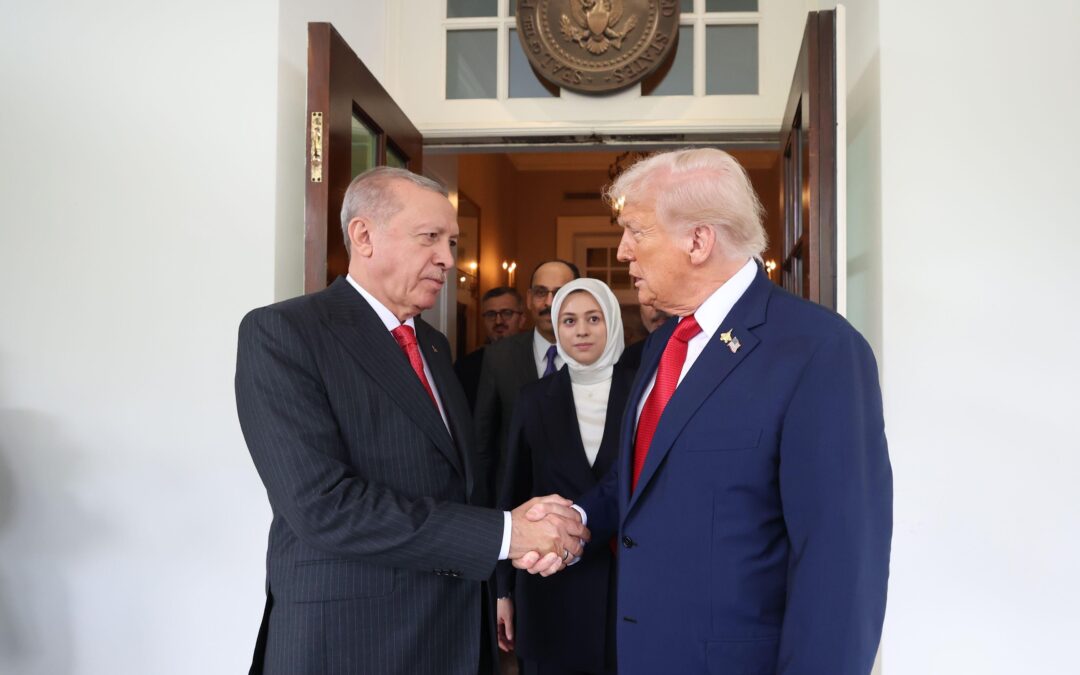
*Turkey: Erdoğan’s Trump Dilemma: Personal Diplomacy Meets Strategic Constraint
President Recep Tayyip Erdoğan would face an exceptionally difficult diplomatic and defence reality should President Donald Trump decide to intensify direct U.S. military operations against Iran once again. Erdoğan has invested considerable political capital in cultivating a practical personal relationship with Trump, partly because this relationship may help Ankara advance sensitive objectives involving U.S. sanctions, defence-industrial restrictions and the possible restoration of access to advanced American weapons systems. Trump’s recent defence of Erdoğan, his willingness to reconsider sanctions connected to Turkey’s acquisition of the Russian S-400 system and his positive signals concerning the F-35 question have reinforced Ankara’s expectation that leader-to-leader diplomacy can deliver results that conventional institutional negotiations have failed to produce.
A renewed and expanded American confrontation with Iran would, however, expose the limits of this personal diplomacy. Turkey is simultaneously a NATO member, a neighbour of Iran, an economic partner of Tehran, a critic of Israeli regional military action and a self-appointed mediator between Washington and the Iranian leadership. Erdoğan has repeatedly argued that disputes with Iran should be resolved diplomatically, while Turkey has transmitted messages between the two sides and attempted to preserve ceasefire arrangements.
Trump could therefore confront Erdoğan with choices that Ankara would prefer to avoid. Washington might request Turkish airspace access, intelligence cooperation, logistical support, greater protection of NATO installations or a clearer Turkish political endorsement of U.S. operations. Refusing such requests could weaken Erdoğan’s privileged relationship with Trump and complicate Ankara’s ambitions regarding sanctions relief, F-35 aircraft and broader defence cooperation. Accepting them could expose Turkey to Iranian retaliation, undermine Ankara’s mediator role, intensify domestic opposition and damage its relations with Tehran.
The defence implications would be equally serious. Turkey shares a long border with Iran and could face missile or drone threats, cyberattacks, disrupted energy supplies, refugee movements and increased instability involving Iraq, Syria and Kurdish armed networks. Incirlik and other NATO-linked facilities could also acquire greater strategic sensitivity even without Turkey formally joining the campaign. Ankara would consequently be required to strengthen air and missile defence while confronting the unresolved contradiction created by possessing the Russian S-400 system but remaining excluded from the fully integrated Western architecture associated with the F-35.
Erdoğan’s central strategic problem would therefore be that his friendship with Trump could no longer remain merely transactional or symbolic. It could generate concrete expectations of Turkish alignment at precisely the moment when Turkey’s geography, economic interests and regional ambitions favour strategic restraint.
From a TPNF perspective, this represents a collision between personalised negotiation and ecosystem reality. Erdoğan may possess privileged access to the American president, but personal rapport cannot eliminate Turkey’s structural exposure to Iran, NATO obligations, energy dependencies, domestic political pressures and regional-security risks. The closer Erdoğan presents himself as Trump’s trusted partner, the more difficult it becomes to refuse American demands during a major crisis.
The resulting paradox is clear:
Erdoğan’s practical friendship with Trump may increase Turkey’s diplomatic access, while simultaneously reducing Ankara’s freedom of strategic manoeuvre.
A major U.S.–Iran confrontation would therefore test whether Erdoğan can transform personal diplomacy into genuine strategic influence—or whether Turkey will discover that proximity to presidential power also carries expectations, obligations and potentially severe defence consequences.
7. Israel and the Gulf States
Israel
Israel may benefit from the degradation of Iranian military capabilities, but it also faces the danger of strategic overextension. A prolonged American campaign can weaken Iran while simultaneously increasing proxy attacks, regional hostility and pressure on Israel’s air-defence inventory.
Israel’s long-term security cannot depend solely on repeated kinetic suppression. It requires a regional architecture integrating missile defence, intelligence, maritime security, diplomatic normalisation and economic connectivity.
Gulf States
The Gulf monarchies face an acute strategic dilemma. They depend substantially on the United States for security, yet American military operations can expose their territory to Iranian retaliation.
Recent attacks and threats will reinforce three Gulf trends:
- development of indigenous missile and drone defence;
- diversification of security partnerships;
- greater investment in strategic autonomy and defence production;
- reluctance to allow national territory to become an automatic platform for external wars.
Analytical assessments from the region increasingly argue that Gulf security cannot be entirely subcontracted to a single external guarantor.
Saudi Arabia and the UAE will therefore seek both stronger deterrence and stronger diplomatic control over decisions that directly affect their security.
8. IMEC and the Vertical Corridor
IMEC
The India–Middle East–Europe Economic Corridor was designed primarily as a connectivity and development project. The war demonstrates that it must also be designed as a security and resilience ecosystem.
The conflict has exposed vulnerabilities in both the Gulf maritime segment and the Israel–Jordan–Mediterranean segment. Current analysis increasingly argues that IMEC requires stronger institutional anchoring and a wartime redesign rather than remaining a collection of loosely coordinated infrastructure projects.
IMEC should incorporate:
- alternative Gulf ports;
- multiple rail connections;
- maritime-security arrangements;
- energy and data redundancy;
- cyber protection;
- political-risk insurance;
- emergency routing protocols;
- strategic reserves;
- interoperability among customs and logistics systems.
Greece and Cyprus can contribute by serving as reliable European terminal nodes connected to the EU market.
Vertical Corridor
The Vertical Corridor becomes more strategically important as Europe seeks to reduce dependence on vulnerable maritime energy routes. It can support flows from Greek LNG terminals through Bulgaria and Romania toward Central and Eastern Europe.
Its value is not confined to energy volume. It contributes to:
- diversification;
- bargaining power;
- crisis recovery;
- regional interdependence;
- reduced exposure to individual suppliers or routes;
- support for Ukraine and southeastern Europe.
The Vertical Corridor should be presented as part of a wider European strategic-resilience architecture, not merely as an energy infrastructure project.
9. Implications for EU Strategic Autonomy
The Iran war reveals that European strategic autonomy has at least five interconnected dimensions:
- Energy autonomy — diversified suppliers, reserves, LNG and alternative corridors.
- Military autonomy — air defence, munitions, surveillance and long-range capabilities.
- Industrial autonomy — production capacity and secure critical-technology supply chains.
- Diplomatic autonomy — the capacity to mediate and defend European interests independently.
- Connectivity autonomy — resilient ports, railways, pipelines, data cables and commercial routes.
European governments remain divided over the American approach. The conflict is nevertheless forcing the EU to consider alternatives to Hormuz-dependent energy and trade routes.
Strategic autonomy should not mean automatic opposition to the United States. It should mean that Europe possesses sufficient capability to make choices rather than merely absorb the consequences of choices made elsewhere.
10. TPNF Strategic Interpretation
The war provides a direct illustration of the three interacting dimensions of the Techne–Phronesis Negotiation Framework™.
Technology Creates Capability
The United States possesses superior long-range strike, ISR, command-and-control and air-defence technologies. Iran compensates through missiles, drones, dispersed infrastructure, proxies and geographic leverage.
Technology defines what each actor can do—but not what it should do or whether its actions will produce a sustainable outcome.
Systems Thinking Creates Understanding
The conflict connects multiple systems:
- military operations;
- energy markets;
- commercial shipping;
- alliance politics;
- domestic public opinion;
- information ecosystems;
- nuclear diplomacy;
- proxy warfare;
- industrial capacity;
- regional infrastructure.
An action that appears successful inside the military system may produce failure in the political or economic system.
Strategic Wisdom Creates Lasting Value
Strategic wisdom requires alignment between means, objectives, costs and the desired political settlement.
A campaign that destroys targets but strengthens regional anti-American sentiment, raises energy prices, divides allies and lacks an exit mechanism may achieve operational success while reducing long-term strategic value.
Conversely, Iran may demonstrate resilience but still suffer cumulative military, economic and institutional damage that cannot be converted into a favourable future.
The strategically successful actor will be the one able to connect coercion with negotiation, military power with legitimacy, and short-term survival with a workable regional order.
Strategic Warning Indicators
The following developments would indicate a movement toward a substantially more dangerous phase:
- confirmed attacks on major Saudi or Emirati energy-export infrastructure;
- prolonged physical closure of Hormuz;
- sustained Houthi attacks on Saudi shipping;
- attacks on U.S. facilities causing mass casualties;
- direct Israeli expansion of operations;
- attacks on nuclear facilities causing radiological risk;
- entry of additional Iranian-aligned armed groups;
- attacks on undersea cables or regional digital infrastructure;
- mobilisation for ground operations;
- breakdown of Pakistani or other mediation channels;
- activation of NATO collective-defence consultations;
- sustained oil prices above politically and economically destabilising levels.
Indicators of potential de-escalation would include a pause longer than an individual strike cycle, verified reopening of shipping lanes, reciprocal limits on attacks, release of detainees, agreement on mediation procedures and initial discussions over sanctions or maritime guarantees.
Strategic Recommendations
For Greece
Greece should protect shipping, reinforce maritime-domain awareness, strengthen the Vertical Corridor, expand LNG and port resilience, and support diplomacy linked to verifiable freedom of navigation.
For the European Union
The EU should create an integrated Hormuz–Red Sea contingency plan combining energy reserves, maritime protection, trade rerouting, industrial support and diplomatic engagement.
For NATO
NATO should reinforce defensive readiness and protect alliance infrastructure while avoiding uncontrolled institutional expansion into a war without a clearly defined collective mandate.
For IMEC participants
IMEC must be redesigned as a resilient, redundant and securitised network capable of functioning during regional crises—not only during peacetime.
For the United States
Washington requires a clearly defined political end state. Military operations should be connected to a negotiating framework covering maritime security, nuclear constraints, sanctions, proxy behaviour and regional guarantees.
Conclusion
The U.S.–Iran war is becoming a test of whether advanced military power can control the consequences of a highly interconnected regional system.
The United States can strike Iran repeatedly, but it cannot solve the crisis through target destruction alone. Iran can threaten shipping and regional infrastructure, but it cannot impose such costs indefinitely without deepening its own isolation and economic damage.
The conflict will ultimately be decided not only by missiles, aircraft or naval power, but by which side—or coalition—can build the more resilient strategic ecosystem and translate coercive capability into an acceptable political order.
The central TPNF conclusion is therefore clear:
The decisive strategic asset is not an individual weapon, base, port or corridor. It is the ecosystem that connects technology, geography, alliances, logistics, legitimacy and negotiation into lasting strategic value.
Key Judgments
- The war has developed from a bilateral military confrontation into a regional maritime, energy and alliance-system crisis.
- Hormuz and Bab el-Mandeb increasingly constitute a connected strategic theatre.
- U.S. military superiority has not yet produced a stable political end state.
- Iran is using geography, proxies and economic disruption to compensate for conventional inferiority.
- Gulf states will accelerate indigenous defence capacity and diversification of external partnerships.
- Greece can strengthen its role through shipping protection, the Vertical Corridor, energy diversification and institutional reliability.
- IMEC requires redundancy, security mechanisms and crisis-management architecture.
- The war strengthens the argument for a practical and capability-based form of EU strategic autonomy.
- X is a central conflict domain, but viral visibility must never be confused with verified intelligence.
- The absence of an enforceable coercive-negotiation framework remains the principal strategic weakness of the current campaign.
Source: Open Sources Analysis, Relative Data Analysis by Nikos Chatzis
© Nikolaos Chatzis. All Rights Reserved.
The Techne–Phronesis Negotiation Framework™
An Integrative Theory of Strategic Negotiation, Complex Adaptive Systems & Practical Wisdom
Technology Creates Capability • Systems Thinking Creates Understanding • Strategic Wisdom Creates Lasting Value.
Negotiation.gr | Strategic Wisdom for the Technological Age