Negotiation.gr | Strategic Wisdom for the Technological Age
“Strategic resilience emerges when technical capability (techne) is
continuously guided by practical wisdom (phronesis) through adaptive
negotiation across interconnected systems.”
Central Idea
Recent Houthi maritime operations against vessels linked to Saudi Arabia and the broader Red Sea region illustrate how localized maritime actions can generate strategic consequences across global trade, regional security, alliance politics, and U.S.–Iran relations. Through the Techne–Phronesis Negotiation Framework™ (TPNF), these developments are best understood as interactions within a multilevel network ecosystem in which state and non-state actors continuously adapt their strategies in response to technological, geopolitical, and economic change.
Purpose of the Essay
The purpose of this essay is to examine how Houthi maritime operations influence Saudi maritime security and the wider U.S.–Iran confrontation through the analytical lens of the Techne–Phronesis Negotiation Framework™ (TPNF). The essay explores how technological capabilities, strategic negotiation, systems thinking, and adaptive network ecosystems shape the evolving security architecture of the Red Sea and the Arabian Peninsula.
TPNF Strategic Proposition
In contemporary technological civilization, maritime security is no longer determined solely by naval superiority but by the ability to coordinate technological capability, strategic negotiation, intelligence, alliance interoperability, and multilevel network ecosystems to preserve freedom of navigation, regional stability, and sustainable strategic value.
Abstract
The Red Sea has become one of the world’s most strategically significant maritime corridors, linking Europe, the Middle East, Asia, and Africa. Houthi maritime attacks have demonstrated that relatively low-cost asymmetric capabilities—including drones, missiles, and unmanned maritime systems—can affect commercial shipping and regional security. These developments also intersect with the broader strategic competition involving Iran, Saudi Arabia, the United States, and international maritime coalitions.
Using the Techne–Phronesis Negotiation Framework™ (TPNF), this essay argues that the principal challenge extends beyond the tactical level. It concerns the governance of a complex adaptive maritime ecosystem in which technological innovation, strategic negotiation, alliance coordination, and networked resilience determine long-term stability.
Introduction
Modern maritime security has evolved beyond traditional naval competition. Contemporary conflicts increasingly involve state militaries, proxy organizations, autonomous technologies, cyber capabilities, commercial shipping companies, insurers, logistics providers, regional governments, and international organizations operating simultaneously within interconnected maritime ecosystems.
The Houthi movement’s maritime operations illustrate this transformation. Whether viewed as coercive signaling, disruption of shipping, or attempts to constrain maritime access, these actions generate consequences far beyond the immediate tactical environment. Through the Techne–Phronesis Negotiation Framework™ (TPNF), they can be understood as adaptive interactions within a multilevel network ecosystem shaped by technology, strategy, negotiation, and geopolitical competition.
Main Discussion
1. The Strategic Importance of the Red Sea
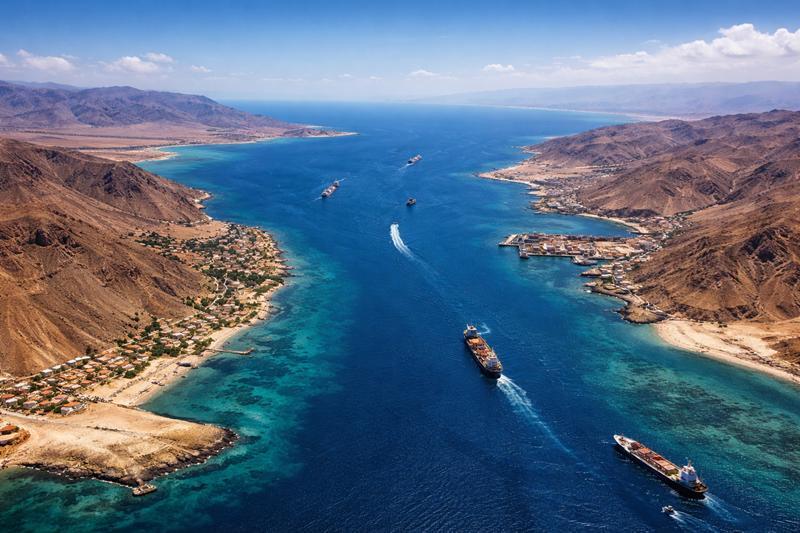
The Red Sea and the Bab el-Mandeb Strait remain vital arteries for global trade, energy transportation, and military logistics. Disruption in this region affects not only regional actors but also global supply chains and international markets.
2. Technology and Asymmetric Maritime Power
The Houthis have demonstrated how relatively inexpensive technologies—armed drones, anti-ship missiles, and unmanned surface systems—can challenge more conventionally powerful states. This reflects the broader trend of technological diffusion reshaping maritime competition.
3. Systems Thinking and Maritime Interdependence
The effects of maritime disruption extend beyond naval engagements. Shipping companies, insurers, ports, energy markets, governments, and consumers become interconnected participants in the evolving strategic environment.
4. Strategic Negotiation Beyond the Battlefield
Military operations occur alongside diplomatic negotiations involving regional governments, international organizations, maritime coalitions, and global commercial stakeholders. Strategic negotiation therefore becomes an essential component of crisis management.
5. Complex Adaptive Systems
The Red Sea security environment continually evolves as military innovation, diplomatic initiatives, economic pressures, and technological countermeasures interact. Each action by one actor influences the adaptive behavior of others.
6. Multilevel Network Ecosystems
Within the TPNF, the maritime ecosystem includes:
- Regional governments
- Naval forces
- International maritime coalitions
- Commercial shipping companies
- Energy producers
- Insurance markets
- Port authorities
- Technology firms
- Intelligence organizations
- International institutions
Disruptive non-state actors influence this ecosystem significantly while remaining analytically distinct from its governmental and institutional components.
7. Networked Strategic Resilience
Long-term maritime stability depends on resilient logistics, intelligence sharing, cyber protection, alliance interoperability, and adaptive governance rather than military power alone.
Strategic Implications
The evolving Red Sea security environment demonstrates several broader strategic trends:
- Technological innovation enables asymmetric maritime capabilities.
- Maritime security increasingly depends upon ecosystem coordination.
- Strategic negotiation complements military deterrence.
- Alliance interoperability strengthens resilience.
- Supply-chain security has become a strategic objective in its own right.
- Networked Strategic Resilience is becoming a defining characteristic of maritime governance.
The maritime activities of the Houthis illustrate how localized actions can generate regional and global strategic consequences within contemporary technological civilization. Through the Techne–Phronesis Negotiation Framework™ (TPNF), these developments are best understood not merely as isolated security incidents but as manifestations of a broader transformation in which technology, strategic negotiation, systems thinking, and multilevel network ecosystems interact continuously.
The future of maritime security in the Red Sea will depend not solely on naval strength but on the capacity of governments, alliances, commercial stakeholders, and international institutions to coordinate adaptive responses that preserve freedom of navigation, regional stability, and sustainable strategic value.
Ultimately, the TPNF demonstrates that effective maritime governance requires integrating technological capability with practical wisdom, ecosystem coordination, and strategic resilience in an increasingly interconnected geopolitical environment. memcite
Source: Open Sources Analysis, Relative Data Analysis by Nikos Chatzis
© Nikolaos Chatzis. All Rights Reserved.
The Techne–Phronesis Negotiation Framework™
An Integrative Theory of Strategic Negotiation, Complex Adaptive Systems & Practical Wisdom
Technology Creates Capability • Systems Thinking Creates Understanding • Strategic Wisdom Creates Lasting Value.
Negotiation.gr | Strategic Wisdom for the Technological Age