Negotiation.gr | Strategic Wisdom for the Technological Age
“Strategic resilience emerges when technical capability (techne) is
continuously guided by practical wisdom (phronesis) through adaptive
negotiation across interconnected systems.”
Central Idea
The United Kingdom’s Storm Fighter Loyal Wingman Program represents far more than the introduction of autonomous collaborative combat aircraft into Royal Air Force operations. It reflects a strategic transformation in modern tactical warfare in which combat effectiveness increasingly emerges from the interaction of human decision-makers, autonomous systems, digital networks, artificial intelligence, allied interoperability, industrial innovation, and resilient command architectures.
Through the Techne–Phronesis Negotiation Framework™ (TPNF), Storm Fighter should therefore be understood as a multidimensional strategic and tactical ecosystem rather than simply a new military platform. Its ultimate value depends not only upon technological capability but also upon practical wisdom, systems integration, strategic negotiation, and adaptive resilience within complex operational environments.
Purpose
The purpose of this essay is to examine the strategic implications of the United Kingdom’s Storm Fighter Loyal Wingman Program through the analytical lens of the Techne–Phronesis Negotiation Framework™ (TPNF).
Rather than focusing solely on the aircraft themselves, the essay explores how collaborative combat aircraft reshape military organizations, alliance interoperability, decision-making, technological ecosystems, and the future of network-centric warfare.
TPNF Strategic Proposition
In contemporary technological civilization, geopolitical influence emerges from a state’s capacity to understand, coordinate, and adapt within multilevel network ecosystems that include both state and non-state actors operating across technological, economic, diplomatic, societal, and security domains.
Applied to the Storm Fighter programme, this proposition suggests that operational superiority will depend less upon individual aircraft performance than upon the ability to coordinate an integrated ecosystem of human operators, autonomous aircraft, intelligence networks, cyber capabilities, industrial innovation, and allied cooperation.
Abstract
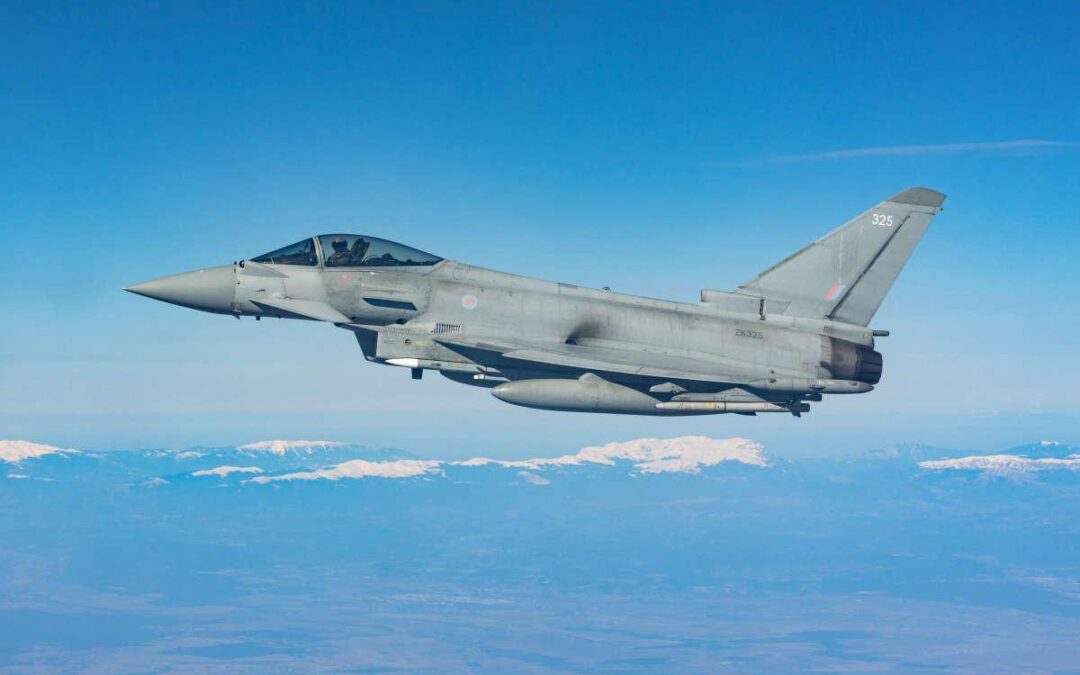
The Royal Air Force has introduced the Storm Fighter programme as its new Collaborative Combat Aircraft (CCA) initiative, intended to develop autonomous “loyal wingman” aircraft capable of operating alongside Typhoon, F-35, and the future Tempest fighter. British officials describe the programme as a central element in the ambition to create “Europe’s first sixth-generation air force,” emphasizing autonomous teaming, increased survivability, and enhanced lethality through crewed–uncrewed integration.
This essay argues that Storm Fighter represents not merely the introduction of advanced unmanned aircraft but the emergence of a new operational paradigm based upon human-machine collaboration, network-centric warfare, and complex adaptive systems.
Using the Techne–Phronesis Negotiation Framework™ (TPNF), the article demonstrates that future tactical superiority will depend upon integrating Techne, Phronesis, Systems Thinking, Strategic Negotiation, Multilevel Network Ecosystems, and Networked Strategic Resilience into a coherent strategic architecture.
Introduction
Modern tactical warfare is undergoing one of its most significant transformations since the introduction of precision-guided munitions and stealth aviation. Increasingly, combat effectiveness derives not from isolated platforms but from interconnected systems capable of sensing, communicating, adapting, and acting across multiple operational domains.
The United Kingdom’s Storm Fighter Loyal Wingman Program reflects this transformation. Rather than replacing human pilots, Storm Fighter seeks to create autonomous collaborative combat aircraft capable of operating alongside crewed fighters as trusted teammates that can extend sensing, electronic warfare, survivability, and operational flexibility. Officials have described these aircraft as both a “guardian angel” and an “attack dog” for crewed aircraft, illustrating the intended complementary role rather than simple substitution.
Within the Techne–Phronesis Negotiation Framework™ (TPNF), Storm Fighter is best understood not as a new aircraft programme alone but as the emergence of a multilevel network ecosystem in which technological innovation, institutional adaptation, strategic negotiation, and human judgment become inseparable components of military effectiveness.
1. From Individual Fighters to Collaborative Combat Ecosystems
For more than a century, air combat has centered on the capabilities of individual aircraft and pilots.
Storm Fighter signals a conceptual shift toward collaborative combat ecosystems in which multiple autonomous platforms cooperate with human pilots, sensors, command networks, cyber systems, satellites, and allied forces.
Success therefore depends less on the performance of any single aircraft than on the quality of the relationships among the participants within the operational network.
2. Techne: Engineering Tactical Advantage
Within the TPNF, Techne encompasses the technical knowledge required to create and integrate advanced military capabilities.
Storm Fighter illustrates Techne through:
- Artificial intelligence
- Autonomous mission management
- Human-machine teaming
- Secure communications
- Sensor fusion
- Electronic warfare
- Digital engineering
- Software-defined capabilities
- Modular payload integration
- Data-driven operational learning
Technology expands military capability, but capability alone does not determine strategic success.
3. Phronesis: Human Judgment in Autonomous Warfare
As autonomous systems become increasingly capable, Phronesis becomes more—not less—important.
Commanders must determine:
- When autonomous systems should act independently.
- When human authorization is required.
- How escalation risks are managed.
- How accountability is preserved.
- How alliance commitments influence operational decisions.
Storm Fighter therefore illustrates a central principle of the TPNF:
Technology extends human capability; practical wisdom governs its legitimate employment.
4. Systems Thinking and Tactical Network-Centric Warfare
Storm Fighter represents an application of Systems Thinking to modern air combat.
The aircraft itself is only one component of a much larger operational system including:
- Pilots
- Autonomous wingmen
- Command-and-control networks
- Space assets
- Intelligence systems
- Electronic warfare platforms
- Logistics
- Cyber infrastructure
- Allied air forces
Operational effectiveness emerges from the interaction of these elements rather than from any single technological advantage.
5. Complex Adaptive Systems
Modern air warfare is inherently adaptive.
As collaborative combat aircraft become operational, potential adversaries will respond through:
- Electronic attack
- Cyber operations
- Counter-autonomy technologies
- Artificial intelligence
- Advanced air defenses
- Distributed sensor networks
Storm Fighter should therefore be viewed as one evolving component within a continuously adapting strategic ecosystem.
6. Multilevel Network Ecosystems
The programme extends far beyond the Royal Air Force.
Its ecosystem includes:
Government
- UK Ministry of Defence
- Royal Air Force
- Parliament
Industry
- Aerospace manufacturers
- Artificial intelligence developers
- Software companies
- Cybersecurity firms
Research
- Universities
- Defence laboratories
- Think tanks
Allies
- NATO partners
- GCAP partners
- International defence industries
Disruptive actors—including cyber adversaries and hostile intelligence services—also shape the strategic environment, though they are analytically distinct from legitimate institutional actors.
7. Strategic Negotiation
Storm Fighter demonstrates that future military capability depends upon continuous negotiation involving:
- Government
- Defence industry
- International partners
- Research institutions
- Military organizations
Strategic negotiation influences:
- Technology sharing
- Procurement
- Industrial cooperation
- Export policy
- Alliance interoperability
- Data governance
- Artificial intelligence standards
Military innovation therefore becomes as much an institutional process as a technological one.
8. Networked Strategic Resilience
The operational success of collaborative combat aircraft depends upon resilient networks.
This includes:
- Cyber resilience
- Communications resilience
- Supply-chain resilience
- Industrial resilience
- Organizational resilience
- Alliance resilience
A technologically advanced aircraft operating within fragile networks cannot produce sustainable strategic value.
9. Human–Machine Teaming as Strategic Evolution
Storm Fighter illustrates the transition from automation toward human-machine collaboration.
Future pilots increasingly become:
- Mission commanders
- Information integrators
- Strategic decision-makers
- Coordinators of autonomous systems
Meanwhile, autonomous aircraft perform supporting roles that enhance operational flexibility while reducing risk to human crews.
The future pilot therefore commands an ecosystem rather than simply flying an aircraft.
Strategic Implications
The Storm Fighter programme illustrates six broader trends.
First, air power is becoming increasingly network-centric.
Second, tactical superiority will depend upon collaborative ecosystems rather than isolated platforms.
Third, artificial intelligence increases the importance of human strategic judgment.
Fourth, alliance interoperability becomes a strategic capability.
Fifth, resilience becomes as important as technological sophistication.
Sixth, military innovation increasingly depends upon institutional adaptation and strategic negotiation across government, industry, academia, and allied organizations.
The United Kingdom’s Storm Fighter Loyal Wingman Program represents an important milestone in the evolution of modern tactical warfare. Its significance extends beyond autonomous aircraft, reflecting a broader transformation toward collaborative combat ecosystems in which human operators, artificial intelligence, digital networks, industrial innovation, and allied partnerships function as an integrated strategic architecture.
Through the Techne–Phronesis Negotiation Framework™ (TPNF), Storm Fighter demonstrates that future military effectiveness cannot be understood solely through advances in aerospace engineering or autonomous technologies. Techne provides the technical capability, while Phronesis ensures that these capabilities are exercised with sound strategic judgment. Systems Thinking reveals the interdependence of platforms, organizations, and decision-making processes; Complex Adaptive Systems explain the continuous cycle of innovation and counter-innovation; Strategic Negotiation coordinates the interests of governments, armed forces, industry, and allies; and Networked Strategic Resilience ensures that military capability remains effective despite disruption, uncertainty, and evolving threats.
Ultimately, Storm Fighter is not simply about creating more advanced loyal wingman aircraft. It is about developing a new model of air power in which success emerges from the ability to integrate human judgment, autonomous systems, institutional cooperation, and resilient networks into a coherent strategic ecosystem.
As contemporary technological civilization continues to evolve, future military advantage will increasingly belong to those states capable of orchestrating these multidimensional ecosystems through wisdom as well as technology.
Technology creates capability. Networks create influence. Practical wisdom transforms both into sustainable strategic value.
© Nikolaos Chatzis. All Rights Reserved.
The Techne–Phronesis Negotiation Framework™
An Integrative Theory of Strategic Negotiation, Complex Adaptive Systems & Practical Wisdom
Technology Creates Capability • Systems Thinking Creates Understanding • Strategic Wisdom Creates Lasting Value.
Negotiation.gr | Strategic Wisdom for the Technological Age