Negotiation.gr | Strategic Wisdom for the Technological Age
“Strategic resilience emerges when technical capability (techne) is
continuously guided by practical wisdom (phronesis) through adaptive
negotiation across interconnected systems.”
Central Idea
The TPNF Strategic Decision Laboratory™ (SDL) is a multidimensional strategic and tactical methodology designed to transform strategic theory into structured decision-making practice. Rather than asking participants merely to analyze a case or negotiate a dispute, the SDL requires them to understand complex adaptive systems, map multilevel network ecosystems, negotiate competing interests, evaluate strategic alternatives, and develop an evidence-based TPNF Ecosystem Negotiation Strategic and Tactical Plan of Action™.
Purpose
This essay explains the concept, objectives, and conceptual architecture of the TPNF Strategic Decision Laboratory™ (SDL) and demonstrates how it complements the TPNF Case Method™ as an innovative approach to strategic negotiation education.
TPNF Strategic Proposition
In contemporary technological civilization, strategic competence depends not only on understanding complex problems but also on the ability to diagnose interconnected ecosystems, negotiate among diverse stakeholders, and implement adaptive strategies. The TPNF Strategic Decision Laboratory™ operationalizes these capabilities through structured experiential learning that integrates Techne, Phronesis, Systems Thinking, Strategic Negotiation, Complex Adaptive Systems, and Networked Strategic Resilience.
Abstract
The increasing complexity of technological civilization requires educational methodologies that extend beyond conventional case analysis and classroom discussion. The TPNF Strategic Decision Laboratory™ (SDL) represents the experiential component of the Techne–Phronesis Negotiation Framework™, enabling participants to apply interdisciplinary concepts to realistic strategic challenges. Unlike traditional teaching cases, the SDL integrates systems thinking, ecosystem mapping, strategic negotiation, resilience assessment, and adaptive planning within a single analytical process. This essay explains the conceptual foundations of the SDL, its relationship to the TPNF Case Method™, and its contribution to strategic leadership education.
Introduction
The accelerating complexity of contemporary technological civilization has transformed the nature of strategic decision-making. Governments, corporations, international organizations, and civil society increasingly operate within interconnected technological, economic, political, security, and social ecosystems characterized by uncertainty, interdependence, and continuous adaptation. Traditional educational approaches—including case studies, simulations, and role-playing exercises—remain valuable for developing analytical and negotiation skills; however, they often examine individual dimensions of strategic problems rather than the broader systemic relationships that shape decision outcomes.
The Techne–Phronesis Negotiation Framework™ (TPNF) responds to this challenge by integrating Techne, Phronesis, Systems Thinking, Strategic Negotiation, Complex Adaptive Systems, Multilevel Network Ecosystems, and Networked Strategic Resilience into a unified conceptual architecture for strategic analysis and decision-making.
Within this educational framework, the TPNF Strategic Decision Laboratory™ (SDL) serves as the practical learning environment where participants transform theoretical knowledge into structured strategic judgment. Rather than merely discussing historical cases or negotiating isolated disputes, participants systematically diagnose complex ecosystems, evaluate competing interests, develop adaptive strategic options, and formulate a TPNF Ecosystem Negotiation Strategic and Tactical Plan of Action™.
This essay explains the conceptual foundations, educational philosophy, and methodological structure of the Strategic Decision Laboratory™ while demonstrating its role within the broader TPNF Case Method™. It argues that the SDL represents a multidimensional strategic and tactical methodology for developing strategic judgment, preparing decision-makers to address the interconnected challenges of contemporary technological civilization.
From Case Analysis to Strategic Decision-Making
Traditional case studies have long been valuable educational tools in business, law, public policy, and international relations. They encourage learners to interpret evidence, discuss alternative courses of action, and defend recommendations. Negotiation education has similarly relied on simulations and role-playing exercises to develop practical competencies such as communication, bargaining, coalition building, and interest-based problem solving.
The TPNF recognizes the strengths of these approaches while arguing that contemporary strategic challenges require a broader methodology. Modern decision-makers confront problems characterized by uncertainty, technological disruption, interdependence, and rapidly evolving ecosystems. In such environments, isolated case analysis or bilateral negotiation exercises are often insufficient.
The Strategic Decision Laboratory™ addresses this educational gap.
Defining the Strategic Decision Laboratory™
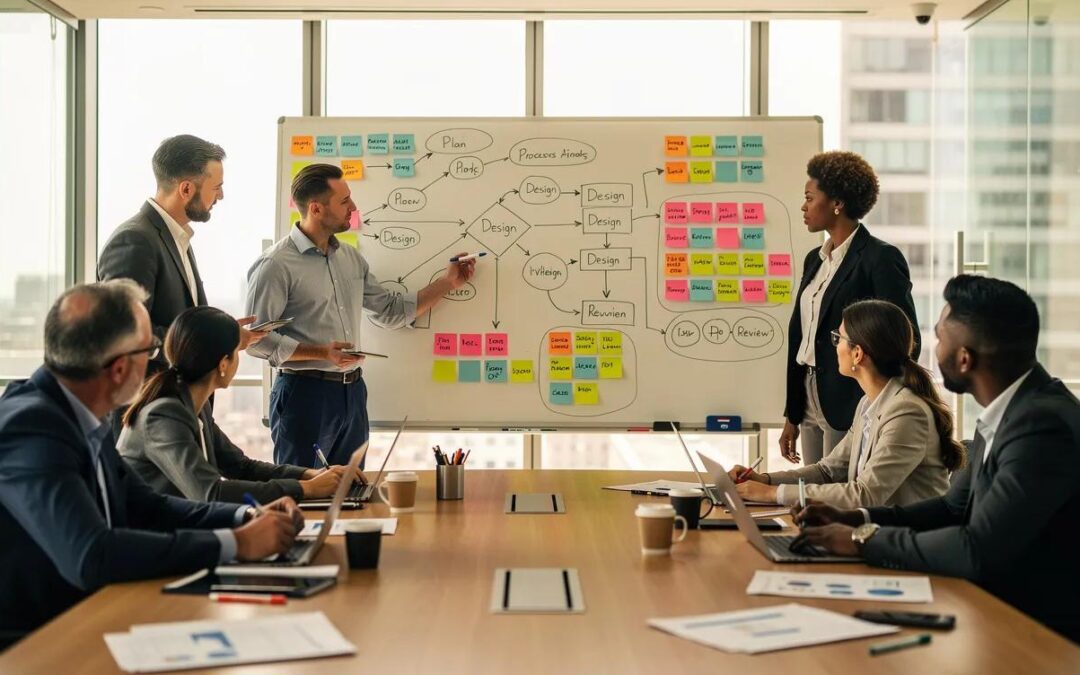
A TPNF Strategic Decision Laboratory™ (SDL) is a structured strategic and tactical learning environment in which participants analyze, negotiate, design, implement, and evaluate strategic responses to complex real-world challenges.
Unlike traditional case studies, the SDL requires participants to move through the complete strategic process:
- Diagnose the strategic environment.
- Identify interconnected stakeholders.
- Analyze technological and institutional ecosystems.
- Evaluate competing strategic interests.
- Conduct structured negotiation analysis.
- Assess systemic risks and resilience.
- Develop strategic alternatives.
- Produce a TPNF Ecosystem Negotiation Strategic and Tactical Plan of Action™.
- Defend and justify their recommendations.
The emphasis shifts from describing events to producing actionable, evidence-based strategic decisions.
The Relationship Between the TPNF Case Method™ and the SDL
The TPNF Case Method™ provides the pedagogical structure for organizing learning materials.
The Strategic Decision Laboratory™ is the experiential application of that methodology.
The relationship may be summarized as follows:
- TPNF provides the theoretical framework.
- TPNF Case Method™ provides the instructional design.
- Strategic Decision Laboratory™ provides the experiential learning environment.
- TPNF Ecosystem Negotiation Strategic and Tactical Plan of Action™ provides the analytical and implementation methodology.
Together, these components transform conceptual understanding into practical strategic competence.
The Six Intellectual Pillars of the SDL
Every Strategic Decision Laboratory™ is built upon six integrated dimensions of the TPNF:
- Techne – technical capability and professional competence.
- Phronesis – practical wisdom and sound judgment.
- Systems Thinking – understanding interconnected relationships.
- Strategic Negotiation – creating value, managing interests, and coordinating action.
- Complex Adaptive Systems – recognizing emergence, adaptation, and nonlinearity.
- Networked Strategic Resilience – strengthening the capacity to anticipate, absorb, recover from, and adapt to disruption.
These dimensions guide participants throughout the analytical process rather than being treated as separate academic subjects.
The SDL Learning Process
Each Strategic Decision Laboratory™ follows a structured progression.
Participants begin by defining the strategic challenge and identifying the desired end state. They then map the multilevel network ecosystem, identifying governments, international organizations, businesses, universities, civil society organizations, financial institutions, technology companies, and other relevant actors.
The analysis proceeds through stakeholder assessment, negotiation analysis, systems mapping, resilience evaluation, and strategic option development. Rather than stopping at diagnosis, participants are expected to produce a coherent implementation strategy using the TPNF Ecosystem Negotiation Strategic and Tactical Plan of Action™.
This process reflects the principle that effective education should cultivate not only analytical understanding but also strategic judgment and implementation capability.
Why Contemporary Technological Civilization Requires SDLs
Technological civilization is characterized by interconnected infrastructures, digital transformation, global supply chains, artificial intelligence, cybersecurity, climate risks, and geopolitical competition.
These issues cannot be understood through linear reasoning alone.
Instead, they require decision-makers capable of integrating technical expertise with practical wisdom while navigating competing interests across multiple sectors.
The Strategic Decision Laboratory™ provides an educational environment in which participants experience these complexities without reducing them to simplistic scenarios.
Beyond Simulation
Although simulations remain valuable educational tools, the SDL extends beyond simulation.
Its objective is not merely to recreate realistic situations but to cultivate a disciplined methodology for strategic thinking, negotiation, and governance.
Participants do not simply “play roles.”
They become strategic analysts responsible for developing recommendations that are analytically rigorous, ethically grounded, operationally feasible, and resilient under changing conditions.
In this sense, the Strategic Decision Laboratory™ functions simultaneously as a learning environment, an analytical framework, and a decision-support methodology.
Strategic Implications
The Strategic Decision Laboratory™ represents an evolution in strategic education by integrating conceptual theory with structured practice. It supports interdisciplinary learning, encourages collaborative problem-solving, and prepares participants to address the uncertainty and interconnectedness of contemporary technological civilization.
For universities, executive education providers, public institutions, and corporate organizations, the SDL offers a repeatable methodology that can be adapted to geopolitical crises, business strategy, technological innovation, public policy, cybersecurity, sustainability, and organizational leadership.
The TPNF Strategic Decision Laboratory™ is more than a case study or a negotiation exercise. It is the experiential expression of the Techne–Phronesis Negotiation Framework™, translating interdisciplinary theory into structured strategic action.
By integrating Techne, Phronesis, Systems Thinking, Strategic Negotiation, Complex Adaptive Systems, and Networked Strategic Resilience, the SDL equips participants to understand, negotiate, and govern within the interconnected realities of contemporary technological civilization.
Rather than asking learners what happened, the Strategic Decision Laboratory™ asks a more demanding question:
What is the most strategically sound course of action, why is it preferable, and how can it be implemented sustainably within a complex adaptive ecosystem?
Conclusion
The increasing complexity of contemporary technological civilization demands educational methodologies that extend beyond conventional case analysis, negotiation simulations, and classroom discussions. Strategic leaders must be capable of integrating technical expertise, practical wisdom, systems thinking, negotiation, and adaptive decision-making within dynamic and interconnected environments.
The TPNF Strategic Decision Laboratory™ (SDL) responds to this need by providing a multidimensional strategic and tactical methodology for developing strategic judgment. As the experiential component of the Techne–Phronesis Negotiation Framework™ (TPNF), the SDL enables participants to move beyond theoretical understanding by systematically diagnosing complex adaptive systems, mapping multilevel network ecosystems, evaluating competing strategic interests, and designing evidence-based courses of action through the TPNF Ecosystem Negotiation Strategic and Tactical Plan of Action™.
Unlike traditional educational approaches that often examine strategic issues from a single disciplinary perspective, the SDL integrates Techne, Phronesis, Systems Thinking, Strategic Negotiation, Complex Adaptive Systems, and Networked Strategic Resilience into a unified methodology for analysis, decision-making, and implementation. In doing so, it equips leaders with the intellectual and practical capabilities required to navigate uncertainty, manage interdependence, and create sustainable strategic value.
Ultimately, the TPNF Strategic Decision Laboratory™ is more than an instructional technique; it is a structured methodology for cultivating strategic judgment in an increasingly interconnected world. By transforming theoretical knowledge into disciplined strategic practice, the SDL contributes to the development of more adaptive leaders, more resilient institutions, and more effective governance across the technological, economic, political, and societal ecosystems that define contemporary civilization.
As technological civilization continues to evolve, so too must the methodologies used to educate its leaders. The TPNF Strategic Decision Laboratory™ represents an important step toward that objective, providing a systematic approach for understanding complexity, negotiating across multilevel network ecosystems, and transforming knowledge into sustainable strategic action.
Source: Open Sources Analysis, Relative Data Analysis by Nikos Chatzis
© Nikolaos Chatzis. All Rights Reserved.
The Techne–Phronesis Negotiation Framework™
An Integrative Theory of Strategic Negotiation, Complex Adaptive Systems & Practical Wisdom
Technology Creates Capability • Systems Thinking Creates Understanding • Strategic Wisdom Creates Lasting Value.
Negotiation.gr | Strategic Wisdom for the Technological Age