Negotiation.gr | Strategic Wisdom for the Technological Age
“Strategic resilience emerges when technical capability (techne) is
continuously guided by practical wisdom (phronesis) through adaptive
negotiation across interconnected systems.”
Central Idea
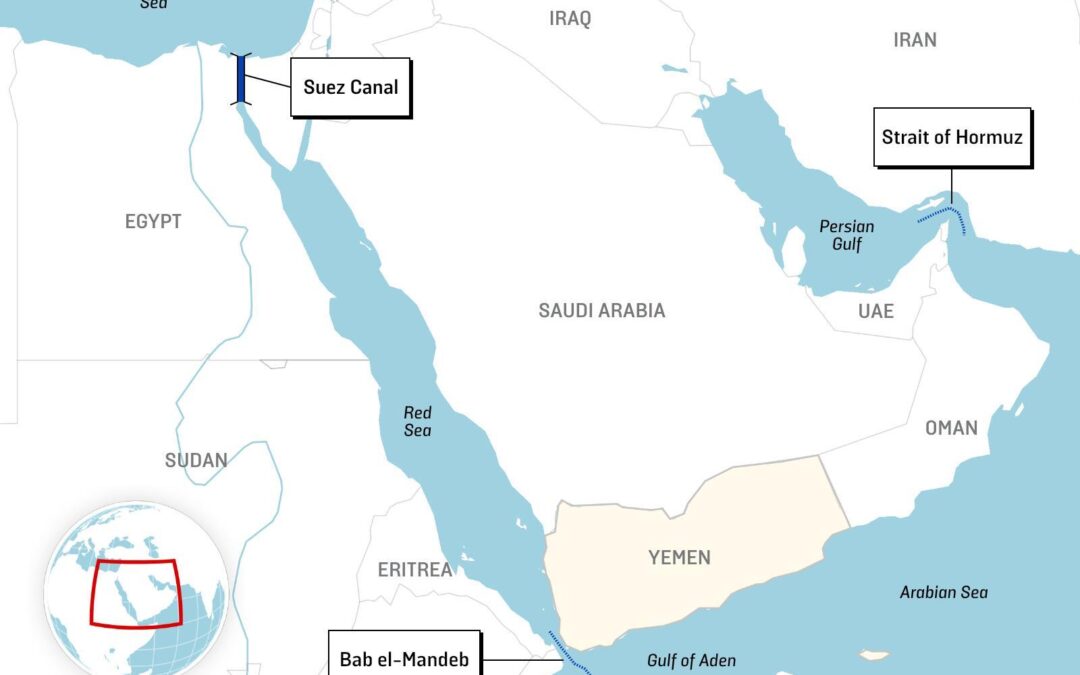
Escalation in the Middle East increasingly extends beyond conventional military operations into critical infrastructure, maritime chokepoints, and interconnected technological ecosystems. Recent reports indicate that Iran has warned it could encourage the Houthis to disrupt the Bab el-Mandeb gateway if U.S. strikes target Iranian power infrastructure, highlighting the strategic linkage between energy systems, maritime trade, and regional security.
The Techne–Phronesis Negotiation Framework™ (TPNF) argues that these developments should be understood as interactions within complex strategic ecosystems rather than isolated military events. Decisions concerning power infrastructure or maritime gateways have cascading effects across energy markets, logistics, diplomacy, finance, technological resilience, and alliance management.
Purpose of the Essay
The purpose of this essay is to examine the strategic implications of two potential escalation pathways—attacks on critical power infrastructure and disruption of the Red Sea maritime gateway—and to evaluate their consequences for the United States, the European Union, and the Arab Gulf States through the interdisciplinary perspective of the TPNF.
Abstract
Modern conflicts increasingly target the systems that sustain economic activity and societal resilience rather than focusing exclusively on conventional military objectives. Electrical grids, ports, maritime chokepoints, logistics networks, and energy infrastructure have become strategic assets whose disruption can generate consequences far beyond the battlefield.
Recent reporting has suggested that Iranian leaders warned they could encourage Houthi forces to threaten shipping through the Bab el-Mandeb Strait if U.S. attacks were directed against Iranian power infrastructure. Whether or not such contingencies materialize, they illustrate how infrastructure and maritime gateways have become interconnected strategic levers within regional competition.
The TPNF interprets these dynamics through the interaction of techne, phronesis, systems thinking, and strategic negotiation operating across complex adaptive ecosystems.
Introduction
Contemporary geopolitical competition increasingly revolves around interconnected systems.
Energy networks influence industrial production.
Maritime corridors sustain global trade.
Digital infrastructure enables economic activity.
Financial markets react rapidly to regional instability.
Strategic decisions therefore create effects across multiple ecosystems simultaneously rather than within isolated military domains.
Critical Infrastructure as a Strategic Ecosystem
Within the TPNF, power generation, logistics, ports, communications, transportation, and maritime routes constitute a single interconnected ecosystem.
Disruption in one component may propagate through:
- Energy markets
- Maritime trade
- Supply chains
- Financial systems
- Industrial production
- Diplomatic relationships
- Regional security
Strategic consequences therefore arise through systemic interdependence.
Strategic Implications
United States
The United States has an interest in maintaining freedom of navigation, alliance credibility, and the resilience of global trade while managing escalation risks.
European Union
The European Union has a strong interest in secure maritime commerce, stable energy markets, and diversified supply chains, making prolonged disruption in the Red Sea or Gulf strategically significant.
Arab Gulf States
Gulf states seek to protect energy exports, critical infrastructure, economic diversification, and regional stability while avoiding wider disruption to trade and investment.
The Four Pillars of the TPNF
Techne strengthens technological capability and infrastructure resilience.
Phronesis provides prudent strategic judgment and responsible leadership.
Systems Thinking explains cascading interactions across interconnected infrastructures.
Strategic Negotiation coordinates diplomacy, crisis management, alliance cooperation, and adaptive governance.
Together, these dimensions support resilient responses to complex geopolitical challenges.
The evolving Middle Eastern security environment illustrates that strategic competition increasingly concerns the resilience of interconnected ecosystems rather than the control of isolated assets.
The Techne–Phronesis Negotiation Framework™ (TPNF) explains that critical infrastructure, maritime gateways, energy systems, diplomacy, and technological capabilities should be analyzed as components of a single adaptive system.
Long-term strategic stability will therefore depend not only on deterrence and military capability but also on the capacity of states and institutions to protect interconnected infrastructures, reduce escalation risks, and strengthen adaptive governance across regional and global ecosystems.
Source: Open Sources Analysis, Relative Data Analysis by Nikos Chatzis
© Nikolaos Chatzis. All Rights Reserved.
The Techne–Phronesis Negotiation Framework™
An Integrative Theory of Strategic Negotiation, Complex Adaptive Systems & Practical Wisdom
Technology Creates Capability • Systems Thinking Creates Understanding • Strategic Wisdom Creates Lasting Value.
Negotiation.gr | Strategic Wisdom for the Technological Age