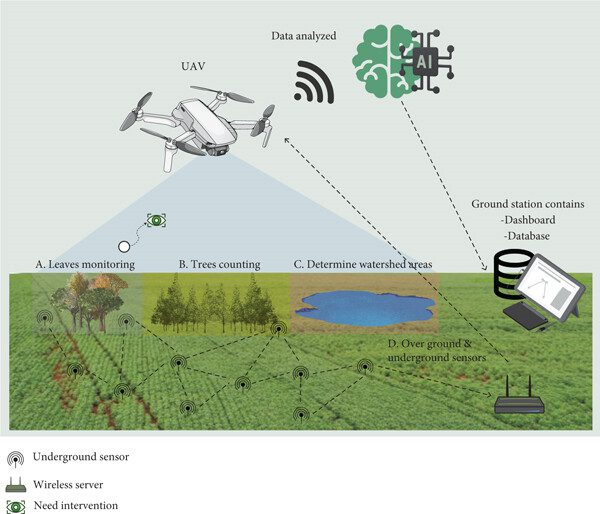
Drone technology is rapidly becoming one of the most transformative innovations of the twenty-first century. What began as a niche aerospace capability has evolved into a versatile platform with applications across agriculture, infrastructure management, environmental protection, logistics, public safety, geospatial intelligence, disaster response, and national defense. As the technological capabilities of Unmanned Aircraft Systems (UAS) continue to expand, governments, industries, and research institutions increasingly recognize their potential to generate substantial economic, societal, and strategic value.
Yet the future success of the drone industry will not be determined solely by advances in aircraft design, sensor performance, or autonomous navigation. The greatest challenge lies in building innovation ecosystems capable of integrating technology, regulation, education, research, investment, and international cooperation into coherent and sustainable frameworks of development.
The question facing policymakers, industry leaders, and innovators is therefore not simply how to build better drones, but how to create the ecosystems that enable drone technology to maximize its contribution to economic prosperity, societal well-being, and strategic resilience.
The Evolution of Drone Technology
The drone industry has undergone a remarkable transformation over the past two decades.
The first generation of drone development focused primarily on platform capabilities. Engineers concentrated on improving flight endurance, payload capacity, navigation systems, and operational reliability. Success was measured largely by technical performance.
As the technology matured, attention shifted toward applications. Drones began supporting practical missions in agriculture, surveying, infrastructure inspection, emergency management, and environmental monitoring. Organizations increasingly viewed drones not as products but as operational tools capable of solving specific challenges.
Today, the industry is entering a third phase characterized by ecosystem development. Drones are no longer isolated technologies. They function as components of broader systems involving artificial intelligence, geospatial intelligence, cloud computing, telecommunications, digital infrastructure, data analytics, and regulatory frameworks.
In this environment, value is generated through interconnected networks rather than individual products.
Economic Benefits: Beyond Manufacturing
Many discussions of the drone economy focus on aircraft production and sales. While manufacturing remains important, the greatest long-term economic value increasingly resides in the ecosystem surrounding drone operations.
Emerging opportunities include:
- Geospatial intelligence services
- Artificial intelligence applications
- Digital mapping
- Data analytics
- Infrastructure monitoring
- Precision agriculture
- Environmental intelligence
- Professional training
- Regulatory consulting
- U-space services
These sectors create highly skilled employment opportunities while supporting innovation across multiple industries.
The drone economy also encourages entrepreneurship. Startups and small technology companies often play critical roles in developing software platforms, specialized sensors, autonomous systems, and analytics tools. As a result, drones serve as catalysts for broader technological innovation and economic diversification.
Countries capable of nurturing comprehensive drone ecosystems are likely to capture significantly greater economic value than those focusing exclusively on manufacturing.
Societal Benefits and Public Value
Drone technology possesses enormous potential to improve quality of life and support public policy objectives.
In agriculture, drones help optimize resource use, reduce environmental impacts, and improve productivity.
In environmental management, they support conservation efforts, monitor biodiversity, assess climate-related risks, and assist in disaster response.
In urban environments, drones contribute to infrastructure maintenance, traffic management, and emergency services.
During natural disasters, they provide rapid situational awareness, enabling authorities to allocate resources more effectively and potentially save lives.
Public health applications continue to expand through medical deliveries, remote area support, and emergency logistics.
These examples demonstrate that drone technology can generate substantial societal value when deployed responsibly and integrated into broader public-service ecosystems.
However, realizing these benefits requires public trust.
Citizens must be confident that drone operations respect privacy, safety, transparency, and ethical standards. Building this trust is therefore a critical component of ecosystem development.
Strategic Benefits and National Resilience
The strategic importance of drone technology has become increasingly evident in recent years.
Drones contribute to:
- National security
- Border surveillance
- Maritime awareness
- Critical infrastructure protection
- Emergency preparedness
- Defense modernization
At the same time, they represent an important component of national technological competitiveness.
Countries that develop strong drone ecosystems gain expertise in areas such as:
- Artificial intelligence
- Autonomous systems
- Sensor technologies
- Geospatial intelligence
- Advanced manufacturing
- Digital infrastructure
These capabilities contribute not only to economic growth but also to national resilience and strategic autonomy.
The dual-use nature of many drone technologies creates opportunities for collaboration between civil and defense sectors. Innovations developed for commercial applications often possess strategic relevance, while defense research frequently generates civilian benefits.
Managing this relationship effecctively is one of the defining challenges of contemporary innovation policy.
Innovation Ecosystems as Strategic Infrastructure
Innovation ecosystems can be understood as networks of organizations and institutions that collectively generate, support, and apply knowledge.
Within the drone sector, key ecosystem participants include:
- Government agencies
- Regulatory authorities
- Universities
- Research institutions
- Technology firms
- Investors
- Training organizations
- Telecommunications providers
- End users
- International partners
Each stakeholder contributes unique resources and capabilities.
Governments establish policy frameworks.
Universities produce knowledge and talent.
Companies develop technologies and services.
Investors provide capital.
Regulators ensure safety and public confidence.
No single actor can achieve ecosystem success independently.
The challenge lies in aligning these diverse participants around shared objectives while maintaining flexibility and encouraging innovation.
The Role of Geospatial Intelligence
One of the most important developments in the drone economy is the growing significance of geospatial intelligence.
Modern drones collect vast quantities of spatial information through advanced sensors and imaging systems.
The true value emerges when this information is transformed into actionable intelligence supporting:
- Infrastructure management
- Agricultural optimization
- Environmental protection
- Urban planning
- Disaster response
- Security operations
Geospatial intelligence increasingly serves as the connective layer linking drone technology with broader digital transformation initiatives.
As a result, investment in geospatial capabilities may prove as important as investment in aircraft platforms themselves.
International Cooperation and Technology Diplomacy
Innovation ecosystems increasingly transcend national borders.
Research collaborations, technology partnerships, training initiatives, and investment networks often involve participants from multiple countries.
This reality creates opportunities for international cooperation but also introduces geopolitical complexity.
Technology diplomacy has emerged as a critical mechanism for managing these relationships.
Through technology diplomacy, governments, companies, universities, and international organizations can:
- Facilitate knowledge exchange
- Harmonize standards
- Support joint research
- Promote responsible innovation
- Build trust among stakeholders
The future of the drone industry will depend heavily on the ability of nations and organizations to cooperate while simultaneously managing strategic competition.
Strategic Negotiation and Ecosystem Leadership
Building innovation ecosystems requires more than technical expertise.
It requires leadership capable of managing complexity, aligning interests, and fostering cooperation.
The principles of strategic and 3D negotiation offer valuable insights in this regard.
Successful ecosystem leaders focus on:
- Stakeholder alignment
- Coalition building
- Value creation
- Institutional design
- Long-term relationship management
Rather than viewing innovation as a purely technological challenge, they recognize that sustainable progress depends upon networks of cooperation.
The future drone economy will increasingly reward those who can connect people, organizations, technologies, and institutions into effective systems of collaboration.
Looking Ahead
Over the next decade, the drone industry is likely to become increasingly integrated with:
- Artificial intelligence
- Autonomous systems
- Digital twins
- Smart cities
- Advanced communications networks
- Geospatial intelligence platforms
As these technologies converge, innovation ecosystems will become even more important.
Success will depend not only on technological breakthroughs but also on the ability to establish governance structures, regulatory frameworks, educational pathways, and international partnerships capable of supporting sustainable growth.
The countries and organizations that master ecosystem development will be best positioned to capture the economic, societal, and strategic benefits of drone technology.
Drone technology represents far more than a new category of aircraft. It is a foundational technology capable of transforming industries, enhancing public services, strengthening national resilience, and supporting sustainable development.
Yet these benefits will not emerge automatically.
Maximizing the potential of drones requires the deliberate construction of innovation ecosystems that integrate technology, research, regulation, education, investment, and international cooperation.
The future leaders of the drone economy will not necessarily be those who build the most advanced aircraft. They will be those who create the strongest ecosystems around them—ecosystems capable of generating economic growth, societal value, and strategic advantage simultaneously.
Meeting this challenge is not simply a technological imperative. It is an economic, societal, and geopolitical necessity that will help define the next phase of the global innovation economy.
Source: Open Sources Analysis, Relative Data Analysis by Nikos Chatzis
© 2026 Nikolaos Chatzis – negotiation.gr. All Rights Reserved. No part of this publication may be reproduced, distributed, or transmitted without prior written permission, except for brief quotations with proper attribution.